
Introduction
If you are searching for the ultimate restaurant-quality dinner that comes together effortlessly in your own kitchen, this Classic Chicken Francese Recipe is guaranteed to become your new go-to. Featuring tender chicken cutlets encased in a delicate, crispy golden coating and bathed in a glossy, bright lemon sauce, this dish delivers an irresistible balance of savory comfort and zesty freshness.
Ready in about 35 minutes, it has long been a family favorite across Italian-American homes and classic bistros alike. Traditional Italian-American comfort food often relies heavily on heavy frying and butter, but this recipe is slightly adapted for Mediterranean cooking using extra virgin olive oil while preserving authentic flavor and luxurious texture. Whether you are hosting a formal dinner party or simply elevating your routine weeknight meal, this lightened-up version brings classic flavor right to your dining table without keeping you stuck over the stove for hours.
What Is Chicken Francese?
Chicken Francese (frequently spelled Chicken Francaise) is a classic Italian-American dish created in Rochester, New York, by Italian immigrants. Despite what the name implies (“Francese” translates to “in the French manner”), the recipe is purely American in origin, born from cooks adapting traditional Italian techniques to local ingredients and preferences.
History and Origin
During the early-to-mid 20th century, veal was the primary protein used in Italian-American restaurants for dishes cooked alla Francese. As chicken became more affordable and widely popular, chefs substituted thin chicken cutlets. The term Francese originally referred to flouring and dipping protein into an egg batter before frying—a technique distinct from traditional Italian scaloppine, which uses flour alone.
Traditional Preparation and Signature Sauce
What sets Chicken Francese apart is its unique assembly order. Most breaded pan-fried chicken recipes call for flour, egg wash, and then breadcrumbs to create a firm crunch. In contrast, Chicken Francese omits breadcrumbs entirely. The chicken is dredged in flour first, then coated in a seasoned egg batter before hitting the hot pan. This creates a fluffy, silky golden jacket that binds exceptionally well to the signature lemon butter sauce.
[Flour Dredge] ➔ [Parmesan Egg Batter] ➔ [Olive Oil Pan-Fry] ➔ [Lemon-Broth Pan Reduction]
Spelling Differences and Variations
Whether you search for a chicken francaise recipe, chicken francese, or italian lemon chicken, you are looking for the exact same comforting flavor profile: tender egg-battered chicken bathed in citrusy goodness.
Why You’ll Love This Classic Chicken Francese Recipe
- Ready in 35 minutes: Fast enough for a hectic Tuesday night yet impressive enough for weekend entertaining.
- Restaurant quality: Delivers that sought-after bistro flavor and velvety sauce consistency at home.
- Crispy yet tender: The signature egg-and-Parmesan coating stays tender inside while holding onto pan-fried crispness.
- Bright lemon flavor: Pure, freshly squeezed lemon juice gives every bite a vibrant, refreshing lift.
- Mediterranean-friendly adaptation: Cooked primarily in heart-healthy extra virgin olive oil with reduced butter.
- Uses pantry ingredients: Made with simple staples like chicken breast, eggs, flour, broth, and fresh lemons.
- Perfect for weeknights: Simple cleanup using just one skillet and minimal prep bowls.
- Elegant enough for guests: Beautiful golden tones, lemon wheels, and fresh parsley present wonderfully on a platter.
Ingredients You’ll Need
Creating a magnificent Classic Chicken Francese Recipe relies on a few fresh, high-quality components.
Chicken
- Chicken Cutlets: Use 4 boneless, skinless chicken breasts sliced horizontally into thin cutlets and pounded evenly to a 1/4-inch thickness. Thin cutlets cook rapidly and evenly, preventing the delicate egg coating from scorching.
Egg Batter
- Large Eggs: Beaten vigorously to form a cohesive coating.
- Parmesan Cheese: Freshly grated parmesan cheese mixed into the egg batter adds a nuttiness and structural integrity to the crust.
- Salt & Black Pepper: Seasoning directly inside the batter ensures full flavor in every bite.
Lemon Sauce
- Olive Oil & Butter: High-quality extra virgin olive oil provides healthy fats and a high smoke point, while a small touch of cold unsalted butter finishes the sauce with a rich sheen.
- Chicken Broth: Rich chicken broth forms the aromatic base of our alcohol-free sauce.
- Fresh Lemon Juice: Always squeeze fresh lemons; bottled juice lacks the bright acidity required for an authentic pan sauce.
- Lemon Slices: Thin lemon wheels simmer directly alongside the cutlets, releasing delicate essential oils into the pan reduction.
Garnishes
- Parsley: Freshly chopped flat-leaf parsley provides a splash of green and a clean finish.
Ingredient Substitutions
- No Wine Option: This recipe is formulated completely without wine! Instead of white wine, we use extra rich low-sodium chicken broth combined with fresh lemon juice and a tiny splash of apple cider vinegar (optional) to achieve deep acidity without alcohol.
- Whole Wheat Flour: You can swap all-purpose flour for whole wheat flour or spelt flour to increase whole grains.
- Gluten-Free Flour: Substitute a 1:1 gluten-free baking flour blend or tapioca starch to keep the dredge gluten-free.
- Chicken Thighs: Boneless, skinless chicken thighs pounded thin offer a juicy, tender alternative to breasts.
- Pecorino Romano: Replace Parmesan with Pecorino Romano for a sharper, saltier note in the egg batter.
- Unsalted Butter: Vegan butter or extra virgin olive oil can replace butter when emulsifying the sauce.
- Extra Lemon: If you prefer an extra-tangy flavor, add a teaspoon of fresh lemon zest directly into the egg batter.
- Low-Sodium Broth: Using low-sodium broth grants complete control over the final seasoning level of the reduction sauce.
How to Make Classic Chicken Francese (Step-by-Step)
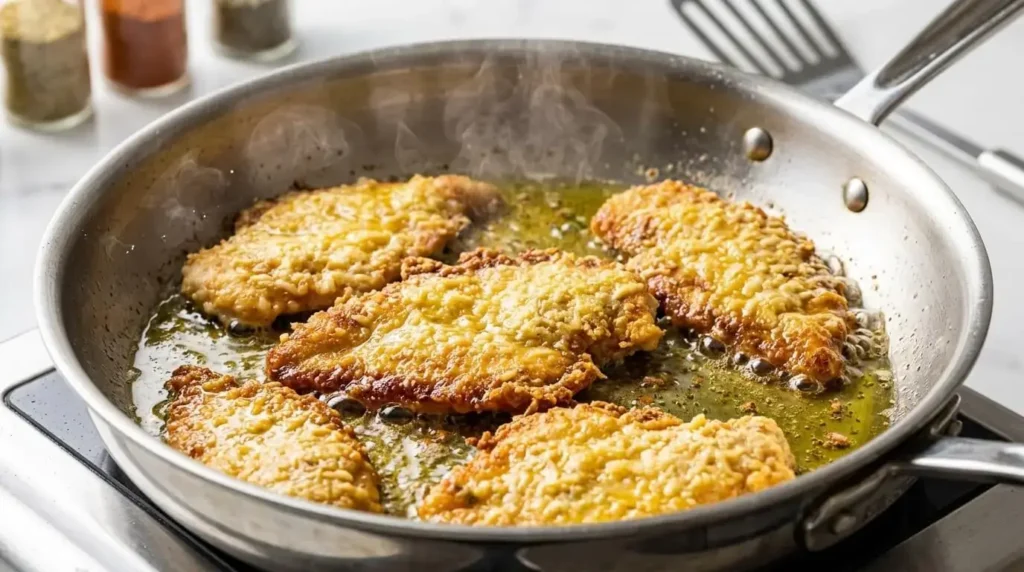
Follow these steps for a golden crust and a glossy sauce every single time.
Step 1: Prepare the Chicken
Place chicken breasts flat on a cutting board. Cut horizontally to create 8 thin cutlets. Cover with plastic wrap and pound evenly to 1/4-inch thickness using a meat mallet. Season both sides with salt and black pepper.
Step 2: Make the Egg Batter
In a shallow bowl, whisk 3 large eggs with 1/4 cup of finely grated Parmesan cheese, a pinch of salt, and freshly cracked black pepper until thoroughly combined.
Step 3: Dredge Properly
Place 1/2 cup of flour in a separate shallow bowl. Coat each chicken cutlet first in the flour, shaking off all excess dust. Immediately dip the cutlet into the Parmesan-egg batter, coating both sides completely.
Step 4: Pan Fry
Heat 3 tablespoons of extra virgin olive oil and 1 tablespoon of butter in a large skillet over medium-high heat. Carefully lay the egg-coated cutlets into the sizzling oil. Pan fry for 2 to 3 minutes per side until visually golden brown. Transfer cutlets to a warm side plate.
Step 5: Deglaze the Pan
Reduce skillet heat to medium. Pour in 1/4 cup of low-sodium chicken broth mixed with a teaspoon of lemon juice to deglaze the pan. Use a wooden spoon to scrape up all cooked brown bits (fond) stuck to the skillet floor.
Step 6: Build the Sauce
Add the remaining 3/4 cup of chicken broth and 3 tablespoons of freshly squeezed lemon juice to the skillet. Stir well and bring the liquid to a steady simmer.
Step 7: Simmer
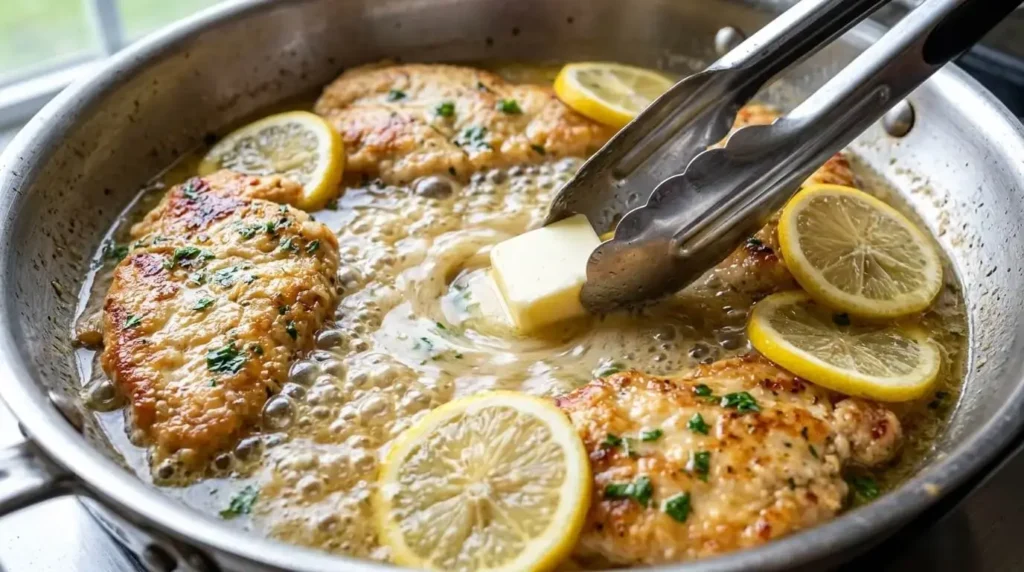
Return the golden chicken cutlets back into the pan in a single layer. Arrange thin lemon wheels over and around the cutlets. Simmer uncovered for 4 to 5 minutes as the liquid reduces into a silky, glossy sauce.
Step 8: Finish with Butter
Remove the skillet from heat. Swirl in 2 tablespoons of cold unsalted butter, gently agitating the pan so the butter emulsifies with the warm lemon broth without breaking.
Step 9: Garnish
Scatter finely chopped flat-leaf parsley over the cutlets and surrounding sauce for a clean, colorful presentation.
Step 10: Serve
Platter the chicken immediately while hot, spooning generously with the velvety lemon-butter sauce and cooked lemon wheels.
Pro Tips for the Best Chicken Francese
- Pound chicken evenly: Uniform thickness guarantees every cutlet cooks at the exact same rate without drying out.
- Don’t overcrowd: Fry cutlets in batches if your skillet is small so they sear and crisp rather than steam.
- Use fresh lemons: Squeezing fresh lemon juice is non-negotiable; bottled lemon juice introduces a harsh taste.
- Whisk eggs thoroughly: Incorporate the Parmesan completely so the batter clings smoothly to the flour layer.
- Use freshly grated Parmesan: Microplaned cheese dissolves smoothly into the eggs, ensuring a crisp, golden crust.
- Don’t boil after adding butter: Always remove the pan from heat before swirling cold butter; high heat causes the sauce to separate.
- Serve immediately: Chicken Francese is best enjoyed fresh off the stove while the coating remains crisp and light.
Common Mistakes to Avoid
- Too Much Flour: Shaking off excess flour prevents a gummy texture beneath the egg layer.
- Egg Coating Falling Off: Ensure cutlets are completely dry before flouring, and don’t flip the cutlets too early in the frying pan.
- Burning Garlic (if added): Garlic burns quickly in hot oil; add garlic only during the sauce reduction stage if desired.
- Sauce Too Sour: Balance sharp citrus by topping off with a touch more chicken broth or an extra cold pat of butter.
- Sauce Separating: Adding warm or melted butter causes fat separation. Use cold butter cubes and swirl off heat.
- Chicken Overcooking: Because thin cutlets cook rapidly, pan-sear them just until golden; they finish cooking during the simmer.
- Using Bottled Lemon Juice: Bottled citrus lacks natural aromatic oils and introduces metallic notes into your sauce.
What Does Chicken Francese Taste Like?
Chicken Francese delivers a vibrant contrast of flavors and textures. The egg coating sears into a savory, slightly nutty crust thanks to grated Parmesan cheese. Inside, the chicken stays tender and juicy.
The pan sauce is bright, tangy, and subtly rich. Finishing with cold butter transforms sharp lemon juice and savory chicken broth into a silky, mouth-coating reduction that lightly clings to each cutlet without feeling heavy.
Chicken Francese vs Chicken Piccata
While both dishes highlight pan-fried chicken in a bright lemon sauce, key differences set them apart:
| Feature | Chicken Francese | Chicken Piccata |
| Egg Coating | Yes (Floured then dipped in rich egg/Parmesan batter) | No (Dredged in flour only) |
| Flour Only | Floured before egg bath | Floured only before searing |
| Sauce | Velvety, emulsion-style lemon butter sauce | Light, punchy white wine, lemon, and caper sauce |
| Texture | Soft, delicate golden egg jacket | Crisp, thin seared crust |
| Lemon Flavor | Smooth, balanced citrus profile | Sharp, tangy citrus note |
| Capers | Typically no capers | Always features briny capers |
| Popularity | Loved for its soft egg crust and silky sauce | Loved for its quick, briny, pan-seared finish |
What to Serve with Chicken Francese
To round out your Mediterranean-style meal, pair your chicken cutlets with light, nutrient-rich side dishes:
- Roasted Vegetables: Pair your tender cutlets with vibrant greens, like our vibrant Roasted Asparagus and Carrots.
- Mediterranean Potatoes: Complement the bright lemon notes with Roasted Mediterranean Potatoes with Feta and Tomatoes.
- Fresh Salads: Balance the rich sauce with a crisp, refreshing Greek Chopped Feta Salad.
- Grains & Pasta: Whole wheat pasta, wild rice, farro, or fluffly quinoa soak up extra lemon-butter sauce beautifully.
- Crusty Bread: Serve alongside warm, artisanal crusty bread to scoop up every drop of sauce from your plate.
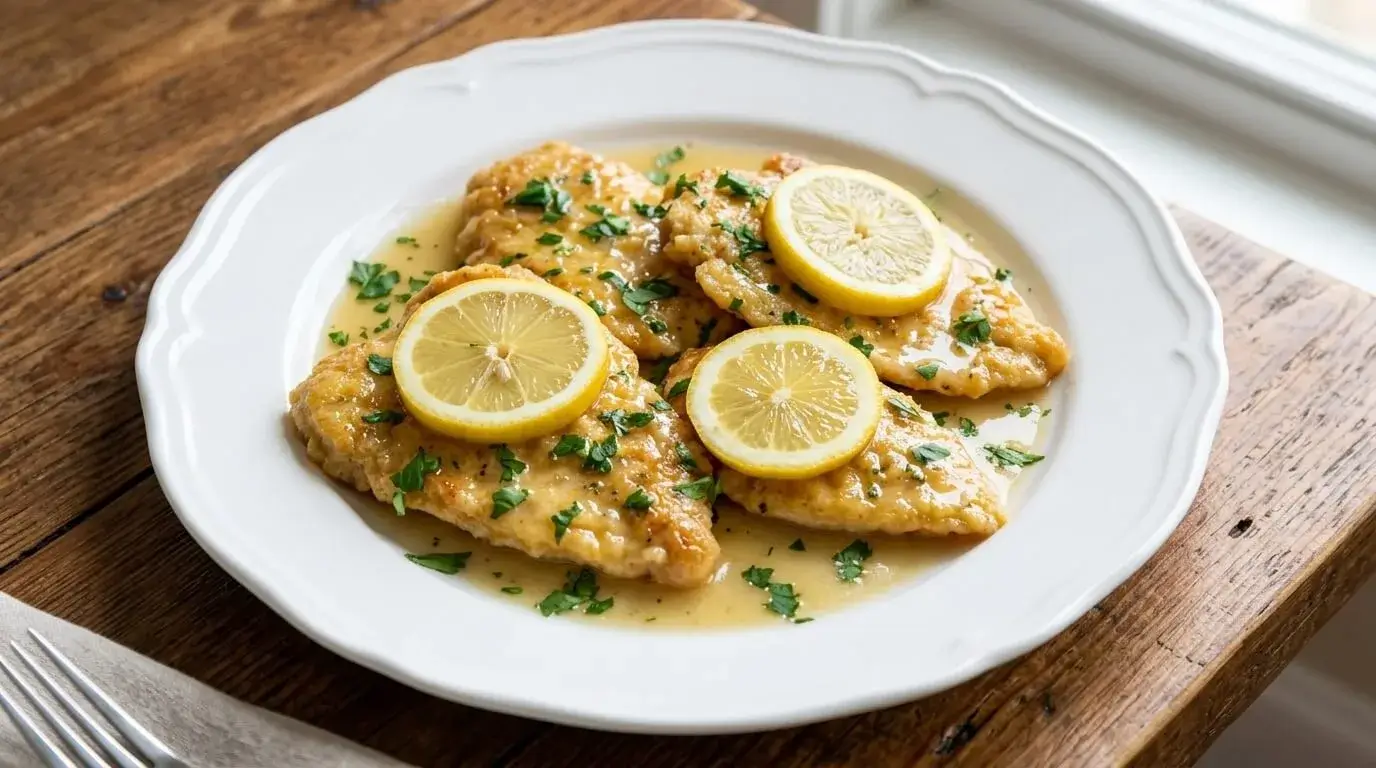
Classic Chicken Francese Recipe
Ingredients
Method
- Season pounded chicken cutlets on both sides with salt and black pepper.
- In a shallow bowl, whisk eggs, grated Parmesan cheese, a pinch of salt, and pepper until combined. Place flour in a separate shallow dish.
- Dredge cutlets in flour, shaking off excess. Dip thoroughly into Parmesan-egg batter to coat both sides.
- Heat extra virgin olive oil and 1 tbsp butter in a large skillet over medium-high heat. Add cutlets and fry for 2 to 3 minutes per side until golden brown. Transfer cutlets to a plate.
- Lower heat to medium. Add 1/4 cup chicken broth to deglaze, scraping up brown bits from the bottom of the pan.
- Stir in remaining 3/4 cup chicken broth and fresh lemon juice. Bring to a steady simmer.
- Return chicken cutlets to the pan in a single layer. Top with thin lemon wheels. Simmer for 4 to 5 minutes until sauce reduces and thickens slightly.
- Turn off heat. Swirl in remaining 2 tbsp cold butter until melted into a silky, glossy sauce.
- Garnish with chopped fresh parsley and serve hot immediately.
Notes
– Keep butter cold until adding off heat to properly emulsify the pan sauce.
====================================================================
Storage and Reheating
- Refrigerator: Store leftovers in an airtight container for up to 3 days. Keep excess sauce stored together with the chicken to maintain moisture.
- Freezer: Freeze cooked cutlets in a single layer on a parchment-lined baking sheet before transferring to a freezer bag for up to 2 months. Thaw overnight in the refrigerator before reheating.
- Microwave: Reheat on medium power in 30-second bursts. Note that microwaving will soften the delicate egg crust.
- Skillet (Recommended): Reheat in a warm skillet over low heat with a splash of broth. Cover loosely until heated through to help preserve the crisp coating.
Make Ahead Tips
- Prepare Chicken Ahead: Slice and pound chicken cutlets up to 24 hours in advance. Store covered in the refrigerator.
- Make Sauce Ahead: Prepare the lemon-broth reduction ahead of time. Reheat gently in a pan and swirl in fresh cold butter right before serving.
- Freeze Cutlets: Bread cutlets in flour and egg wash, place parchment between layers, and freeze raw for fast weeknight frying.
- Meal Prep: Divide cooked cutlets and cooked grain sides into glass containers for healthy, reheatable weekday lunches.
Frequently Asked Questions
What is Chicken Francese?
Chicken Francese is an Italian-American dish consisting of thin chicken cutlets dipped in a Parmesan-egg batter, pan-fried until golden, and simmered in a velvety lemon butter sauce.
Is Chicken Francese Italian?
Not originally from Italy! It was created by Italian-American immigrants in Rochester, New York, adaptation of traditional Italian cooking styles using local chicken cutlets.
Why is it called Francese?
“Francese” means “in the French style” in Italian. The term historically described flouring and egg-dipping meats prior to pan frying.
Can I make Chicken Francese without wine?
Yes! This recipe uses zero wine. Rich chicken broth paired with fresh lemon juice yields an authentic, bright pan sauce without alcohol.
Can I freeze Chicken Francese?
Yes. Allow the cooked chicken and sauce to cool completely, then freeze in an airtight container for up to 2 months.
Can I use chicken thighs?
Absolutely. Boneless, skinless chicken thighs work well—just pound them thin so they cook quickly and evenly.
What’s the difference between Francese and Piccata?
Francese features an egg batter coating and a smooth lemon sauce, whereas Piccata uses flour only and includes briny capers.
Can I make it gluten-free?
Yes. Swap all-purpose flour for any 1:1 gluten-free flour blend or tapioca starch for dredging.
How do I thicken the sauce?
Simmering the broth uncovered naturally reduces and thickens it. Swirling in cold butter off the heat emulsifies the liquid into a silky sauce.
Why did my coating fall off?
Coating usually slides off if the raw chicken was wet before flouring, or if cutlets were moved around too early in the pan before the egg set.
Recipe Variations
- Healthy Chicken Francese: Reduce butter to 1 tablespoon, use an air-fryer to cook egg-battered cutlets, and build a light lemon broth sauce.
- Mediterranean Chicken Francese: Include halved cherry tomatoes, artichoke hearts, and Kalamata olives in the lemon reduction.
- Creamy Chicken Francese: Stir 2 tablespoons of Greek yogurt or heavy cream into the pan sauce just before serving.
- Baked Chicken Francese: Pan-sear the battered cutlets for 1 minute per side, transfer to a baking dish, pour sauce over, and bake at 375°F (190°C) for 12 minutes.
- Garlic Chicken Francese: Add two cloves of minced fresh garlic to the olive oil just before deglazing the pan with broth.
- Spinach Chicken Francese: Wilt two cups of fresh baby spinach directly into the lemon butter sauce during the final minute of simmering.
Final Thoughts
This restaurant-quality Classic Chicken Francese Recipe brings timeless Italian-American comfort food right to your dinner table with a light, Mediterranean-inspired twist. Easy enough for kitchen beginners and fast enough for busy weeknights, it strikes the ideal balance between golden, tender chicken and a bright lemon-butter sauce.
If you made this recipe and loved it, please leave a 5-star rating and a review below! We’d love to hear how your dinner turned out.