
There is something undeniably luxurious about a perfectly cooked piece of fish. When done right, Pan Seared Salmon Fillets offer the ultimate culinary contrast: a crisp, golden-brown crust on the outside that locks in an incredibly flaky, tender, and moist interior. It is a restaurant-quality meal that you can easily master in your own kitchen in under twenty-five minutes.
In the Mediterranean, seafood is celebrated in its simplest, freshest forms. This recipe honors that tradition by pairing pristine salmon with a rich, velvety lemon dill cream sauce. The bright acidity of freshly squeezed lemon juice and the aromatic punch of fresh dill beautifully cut through the richness of the salmon, creating a perfectly balanced dish that feels both indulgent and nourishing. Whether you are prepping a quick weeknight dinner or hosting an elegant dinner party, this classic seafood centerpiece is guaranteed to impress.
Internal Linking Tip: If you love salmon as much as we do, expand your Mediterranean seafood repertoire by trying our rusticSpinach and Feta Stuffed Salmon Recipe, or dive into our cozy, skillet-basedGarlic Butter Salmon Spinach Mushroomfor another creamy, herb-infused weekday favorite.
Why You’ll Love This Salmon Recipe
This recipe is more than just another seafood dish; it is a reliable formula for perfect fish every single time. Here is why it deserves a spot in your weekly dinner rotation:
- Unbelievable Texture: Searing the salmon over high heat creates a beautiful crust while preserving the natural juiciness of the fish.
- Restaurant-Quality Cream Sauce: The pan sauce is built directly in the same skillet used to cook the salmon, capturing all the caramelized, savory bits (known as the fond) left behind.
- Simple Mediterranean Ingredients: This recipe relies on clean, accessible ingredients like extra virgin olive oil, garlic, lemon, and fresh herbs to build complex flavors.
- Quick & Fail-Proof: From prep to plate, this entire dish takes less than 25 minutes, making it ideal for busy weeknights without compromising on flavor.
The Science Behind Perfect Pan Seared Salmon Fillets
Achieving a restaurant-quality sear at home is surprisingly simple, but it requires understanding a few basic culinary principles. If you have ever struggled with salmon sticking to the pan, turning rubbery, or oozing white moisture (albumin), these essential tips will transform your cooking game:
1. Moisture Is the Enemy of Crispy
Before any seasoning touches your fish, take a paper towel and pat the salmon fillets completely dry on all sides. Any residual water on the surface of the fish will instantly turn to steam when it hits the hot oil. Steam prevents the Maillard reaction (the chemical reaction that produces that beautiful golden-brown crust) and leads to soggy, pale fish. Keep them dry for a perfect sear.
2. Get the Pan Hot—Really Hot
To sear successfully, you need high heat. Heat your skillet (cast iron or heavy stainless steel are best) over medium-high heat until the oil is shimmering but not smoking. When you place the salmon in the pan, you should hear an immediate, loud sizzle. If it is silent or quiet, your pan is not hot enough—remove the fish and let the pan heat up further.
3. Let It Cook Undisturbed
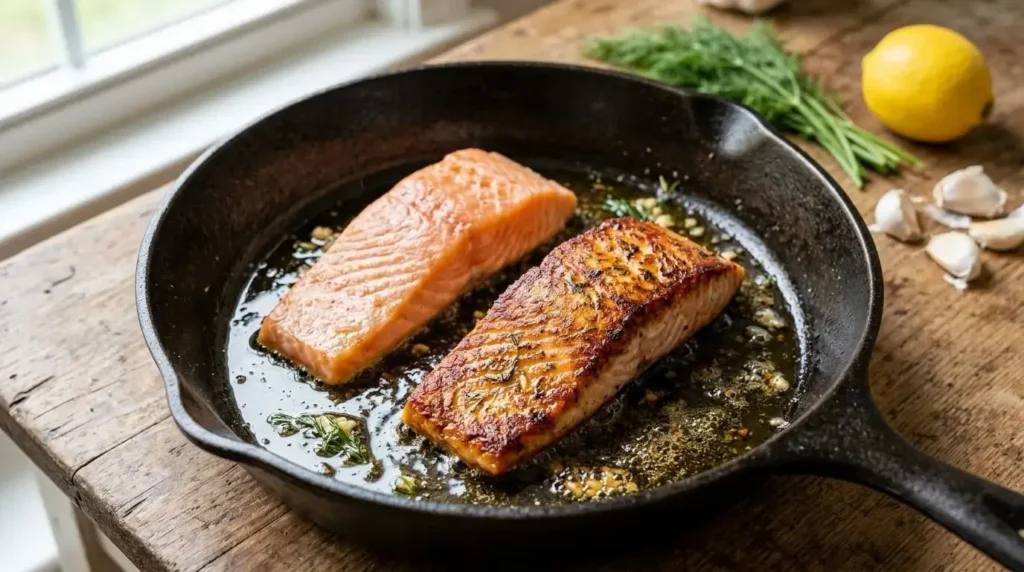
It is incredibly tempting to nudge, flip, or slide the salmon around as soon as it hits the skillet. Resist the urge! Salmon will naturally “stick” to the pan initially. As the protein cooks and forms a caramelized crust, it will naturally release itself from the surface of the pan. If you try to flip it too early, you will tear the delicate flesh. Let it cook undisturbed for a solid 4 minutes before attempting to slip your spatula underneath.
Pro-Tip on Selecting Fillets: For the absolute best results, choose center-cut fillets of uniform thickness. This ensures they cook evenly. While skin-on salmon is highly recommended because the skin acts as a protective barrier against overcooking, you can also use skinless fillets for this recipe. If using skin-on, always start cooking skin-side down first.
Mediterranean Ingredient Spotlight
While the technique of pan-searing is crucial, the soul of this dish lies in its vibrant Mediterranean flavor profile. Let’s look at the key elements that make this creamy lemon dill sauce spectacular:
- Extra Virgin Olive Oil: We use high-quality olive oil to coat the salmon before seasoning. It adds a fruity, authentic Mediterranean flavor and helps conduct the heat evenly.
- Fresh Dill: Do not substitute dried dill here if you can avoid it! Fresh dill has a unique anise-like, sweet, and grassy aroma that brings a remarkable brightness to heavy cream sauces.
- Lemon Zest & Juice: We use both the zest and the freshly squeezed juice. The zest contains the essential citrus oils that impart a deep, perfume-like lemon flavor, while the juice provides the necessary acidity to balance the rich butter and cream.
- Dijon Mustard: A tablespoon of Dijon acts as a natural emulsifier, helping the fat in the butter and cream bind beautifully with the chicken stock and lemon juice, preventing the sauce from separating.
- Parmesan Cheese: A sprinkle of finely grated Parmesan adds a subtle savory depth (umami) and helps thicken the cream sauce naturally without the need for flour or cornstarch, keeping this dish naturally gluten-free.
How to Cook Pan Seared Salmon Fillets (Skillet Walk-Through)
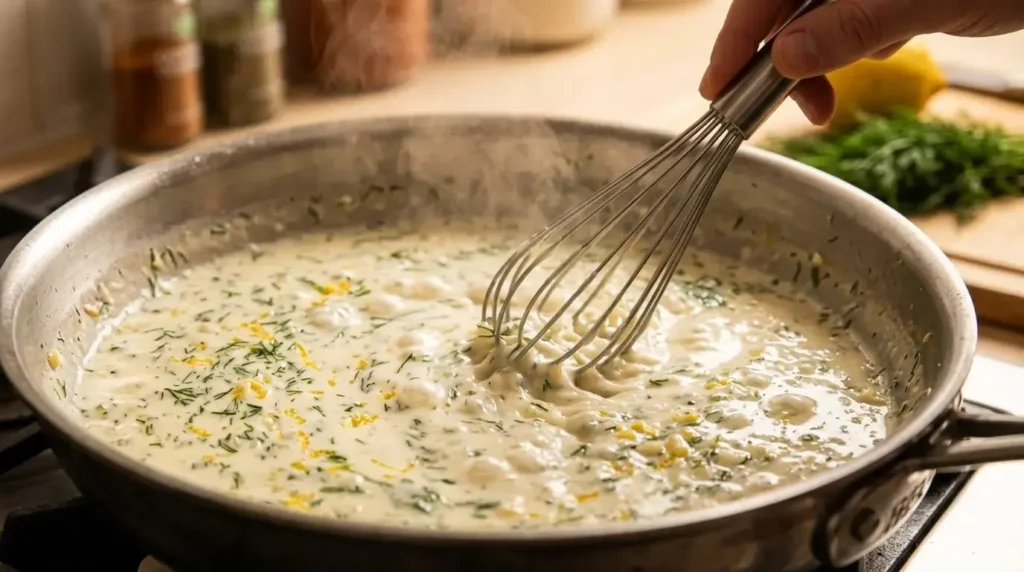
This single-pan meal is beautifully streamlined. First, we season and sear our salmon to golden perfection. Then, we transfer the salmon to a warm plate and use the exact same skillet to build our cream sauce. By sautéing minced garlic in melted butter, deglazing the pan with a rich chicken or fish stock, and simmering it with heavy cream, Dijon, and Parmesan, we create a sauce that is deeply savory and smooth. Finally, we stir in the fresh lemon zest, lemon juice, and chopped dill before nesting the salmon back into the skillet to let it absorb all those gorgeous, bright flavors.
Pan Seared Salmon Fillets
Ingredients
Method
- Pat the salmon fillets completely dry with a paper towel to get a good sear.
- Rub the fillets with olive oil, then season both sides with salt, pepper, and garlic powder.
- Heat a large skillet over medium-high heat. Lay the salmon in the pan (skin-side down first if using skin-on).
- Sear undisturbed for 4 minutes until golden. Flip and cook for 2–3 minutes more until almost cooked through. Remove to a clean plate.
- Build the Cream Sauce
- Lower the heat to medium. Melt the butter in the same pan, then sauté the minced garlic for 1 minute until fragrant.
- Pour in the chicken stock, scraping up any delicious browned bits from the bottom of the skillet. Let it simmer for 2 minutes to reduce slightly.
- Pour in the heavy cream and bring the mixture to a gentle simmer over low heat. Whisk in the Dijon mustard and Parmesan cheese until melted and smooth.
- Finish and Serve
- Stir the lemon juice, lemon zest, and chopped fresh dill directly into the simmering sauce. Taste and add a pinch of salt or pepper if needed.
- Nest the cooked salmon fillets back into the skillet.
- Spoon the rich sauce generously over the top of the fish. Let everything simmer together for 2–3 minutes until the salmon is completely opaque and heated through.
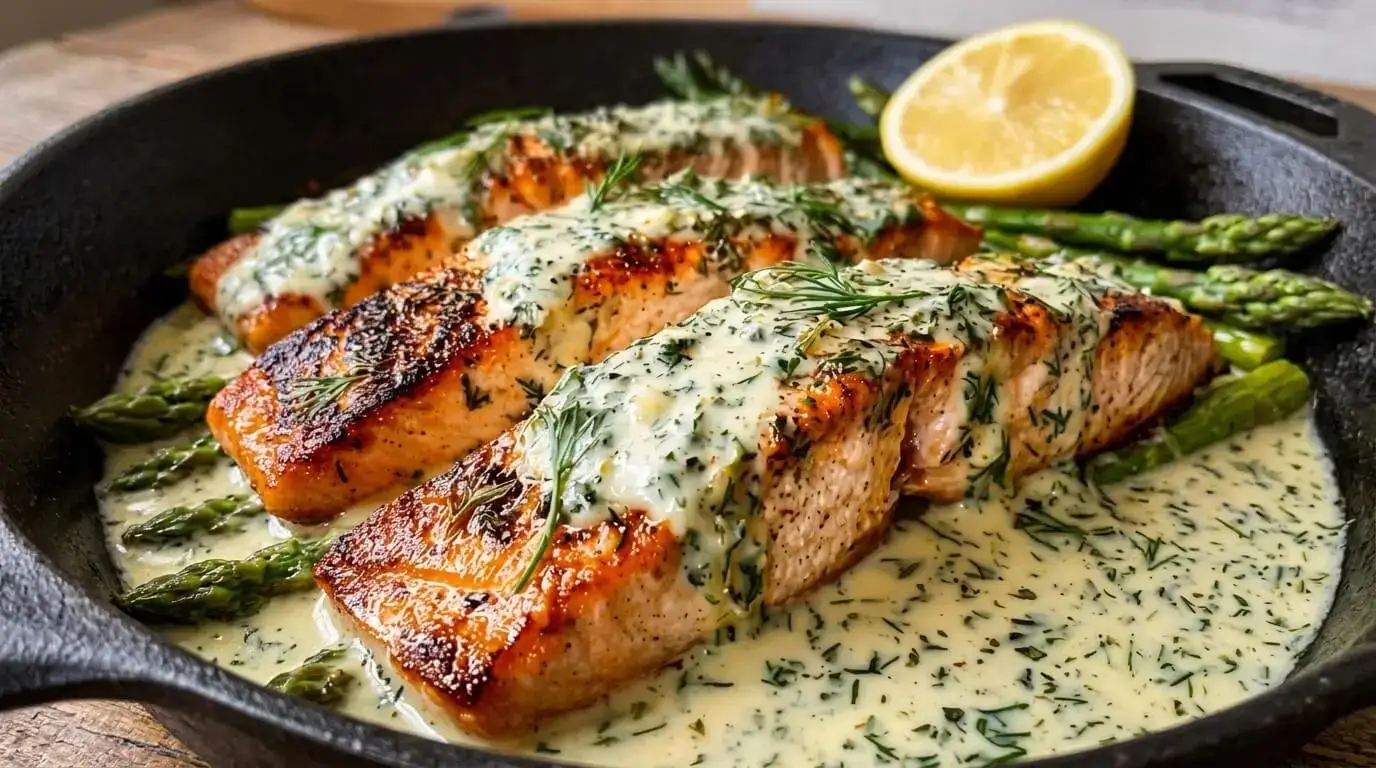
- Garnish with extra fresh dill fronds and lemon wedges just like the picture!
Notes
- Asparagus Base: For the perfect visual representation matching our images, serve these fillets resting over a beautiful bed of pan-charred or oven-roasted green asparagus.
- Yogurt Alternate: To make this lighter or dairy-free-friendly, you can substitute heavy cream with full-fat Greek yogurt or sour cream. Remember to stir the yogurt in off-heat at the very end to prevent separating or curdling.
- No Alcohol / No Pork: This dish is completely pork-free and wine-free. It relies entirely on chicken/fish stock and fresh lemon juice to deglaze and flavor the pan.
Perfect Pairings: What to Serve with Salmon
Because the creamy lemon dill sauce is incredibly rich and full-bodied, it pairs beautifully with clean, earthy, or acidic side dishes that help cleanse the palate.
Our absolute favorite pairing—and the one pictured in our serving suggestions—is a crisp bed of green asparagus. The natural bitterness and clean snap of fresh asparagus complement the rich, buttery dill sauce effortlessly. We highly recommend pairing this meal with our classic, oven-roasted roasted asparagus and carrots recipe. The caramelized sweetness of the carrots and the charred, savory asparagus spearheads absorb the extra lemon dill sauce beautifully, making every bite absolute perfection.
Other fantastic sides include Greek lemon potatoes, a crisp Greek salad with plenty of feta, or a light cucumber-tomato-red onion salad tossed in red wine vinegar and extra virgin olive oil.
Storage, Reheating, and Meal Prep Tips
If you happen to have leftovers, this dish stores beautifully when handled correctly:
- Storage: Store the leftover salmon fillets and the cream sauce together in an airtight container in the refrigerator for up to 3 days. Keeping the fish submerged in the sauce helps prevent it from drying out in the fridge.
- Reheating: Avoid the microwave if possible, as it will quickly overcook the salmon and cause the cream sauce to split. Instead, place the salmon and sauce in a small skillet over low heat. Add a splash of water or stock to loosen the sauce. Cover with a lid and heat gently for 5–7 minutes until warmed through.
- Freezing: We do not recommend freezing this dish. Cream-based sauces have a tendency to separate, curdle, and lose their smooth texture when frozen and thawed.
Frequently Asked Questions (FAQs)
How do I know when the salmon is fully cooked?
The most accurate way is to use an instant-read thermometer inserted into the thickest part of the fillet. Salmon is perfectly cooked at medium-rare to medium when it registers 130°F to 135°F (54°C to 57°C). It will rise to 140°F as it rests. Visually, the flesh should easily flake with a fork and transition from translucent pink to opaque.
What is the white stuff oozing out of my salmon?
The white substance is called albumin. It is a completely harmless protein that is liquid when raw but coagulates and hardens when cooked. It oozes out when the muscle fibers in the salmon contract quickly due to high heat or overcooking. To minimize albumin, ensure you do not overcook the salmon and sear it gently once flipped.
Can I use Greek Yogurt instead of heavy cream?
Yes, you can make a lighter version of this sauce! To prevent the Greek yogurt from curdling, build the sauce base with the stock and butter, let it simmer, then turn off the heat completely. Let the pan cool slightly for a minute, then whisk in the Greek yogurt, lemon juice, Dijon, and dill off the heat. Do not let the yogurt boil.