Imagine sitting down to a plate of perfectly cooked salmon: tender, flaky, and golden on the outside, crowned with a vibrant Greek-style salsa. Diced English cucumber, red and sweet yellow cherry tomatoes, briny Kalamata and green olives, creamy crumbled sheep’s milk feta, and freshly chopped parsley tumble over the warm fillets, pooling in a pool of golden extra virgin olive oil and lemon dressing.
This Mediterranean salmon dinner recipe delivers restaurant-quality flavors directly to your home kitchen in just 30 minutes. Whether you are looking for an effortless weeknight dinner or a stunning centerpiece meal for guests, this dish strikes the ultimate balance between healthy cooking and bold taste. With minimal preparation and fast cooking techniques, you can transform humble, fresh ingredients into a bright, heart-healthy feast that nourishes the body and delights the palate.
3. Why This Recipe Works & Mediterranean Diet Benefits
The Mediterranean diet has long been celebrated by nutritionists and food enthusiasts alike for its focus on whole, nutrient-dense foods, clean healthy fats, and vibrant produce. This Mediterranean salmon dinner recipe exemplifies those core principles by pairing high-quality protein with antioxidant-rich vegetables and cold-pressed extra virgin olive oil. Salmon serves as an exceptional source of omega-3 fatty acids, high-quality protein, and essential B vitamins, supporting heart health and lowering inflammation.
Beyond its health benefits, this recipe excels in flavor and texture contrast. Warm, savory, seasoned salmon with a delicate, crispy crust meets cold, bright, acid-forward fresh salsa. The saltiness of the feta and briny olives cuts through the natural richness of the fish, while fresh lemon juice and cucumber provide a refreshing crunch. Every bite combines warm and cool, crisp and tender, rich and tangy.
4. Ingredients & Flavor Notes
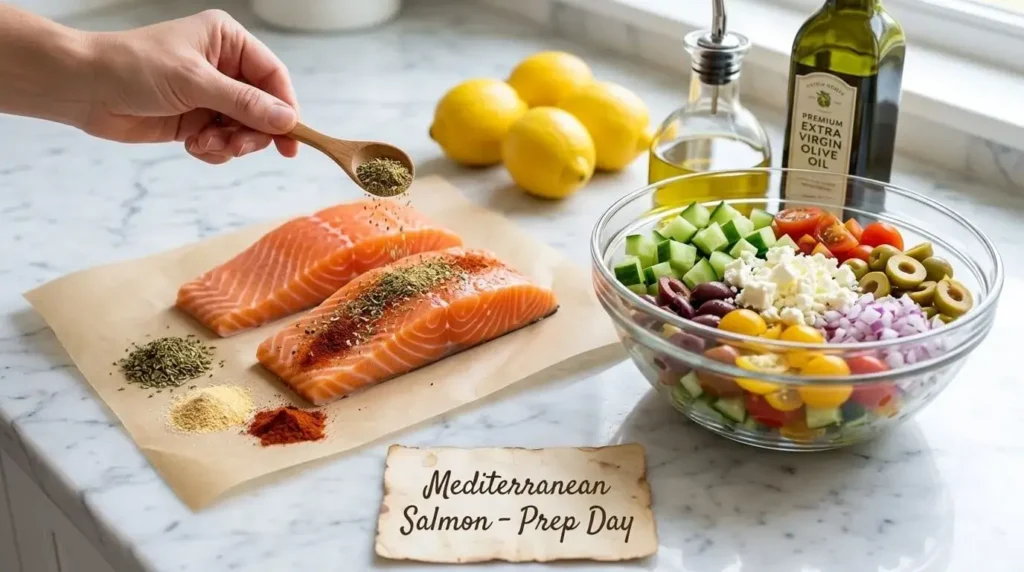
Creating a standout Mediterranean salmon dinner recipe relies on using fresh, balanced ingredients that enhance one another without overwhelming the fish.
- Salmon Fillets: Opt for fresh, sustainably sourced center-cut fillets of similar thickness to ensure even cooking. You can use skin-on or skinless fillets. Skin-on fillets are ideal for pan-searing because the skin creates a barrier that locks in moisture while crisped to perfection.
- The Dry Seasoning Rub: A simple spice rub of dried oregano, garlic powder, sweet paprika, sea salt, and freshly cracked black pepper builds a savory layer on the salmon before it hits the heat. The paprika helps achieve a warm, roasted color.
- The Greek Salsa & Dressing:
- English Cucumber: Diced small for extra crispness and low seed content.
- Cherry or Grape Tomatoes: A mix of red and sweet yellow cherry tomatoes offers gorgeous visual appeal and bursts of natural sweetness.
- Kalamata & Green Olives: Pitted and sliced to introduce a layered briny, earthy saltiness.
- Crumbled Feta Cheese: Real Greek sheep’s milk feta adds rich, tangy creaminess.
- Fresh Herbs & Red Onion: Finely chopped parsley or dill combined with minced red onion brings sharpness and herbal brightness.
- Extra Virgin Olive Oil & Lemon Juice: Unrefined extra virgin olive oil whisked with freshly squeezed lemon juice forms the liquid dressing that ties the salsa together.
Clever Substitutions: If you need to pivot based on pantry availability or dietary preferences, swap feta cheese for creamy goat cheese, replace olives with capers, or use another firm white fish fillet such as Baked Lemon-Garlic Cod.
5. Cooking Techniques: Oven-Baked vs. Pan-Seared
Both baking and pan-searing yield incredible results for this Mediterranean salmon dinner recipe. Choose the cooking method that best fits your schedule and preferred texture.
Option A: Oven-Baked (400°F / 200°C for 12–15 Minutes)
Oven baking is the most forgiving, hands-off approach with minimal cleanup.
- Preheat & Prepare: Heat your oven to 400°F (200°C) and line a rimmed baking sheet with parchment paper.
- Arrange: Place the patted-dry, seasoned salmon fillets skin-side down on the parchment paper.
- Bake: Bake for 12 to 15 minutes depending on thickness. The salmon is done when the flesh turns opaque pink and flakes easily with a fork at the thickest part.
- Benefits: This technique keeps the fish juicy and requires practically no active monitoring, making it perfect for busy evenings.
Option B: Pan-Seared Skillet Method (3–4 Mins + 2–3 Mins)
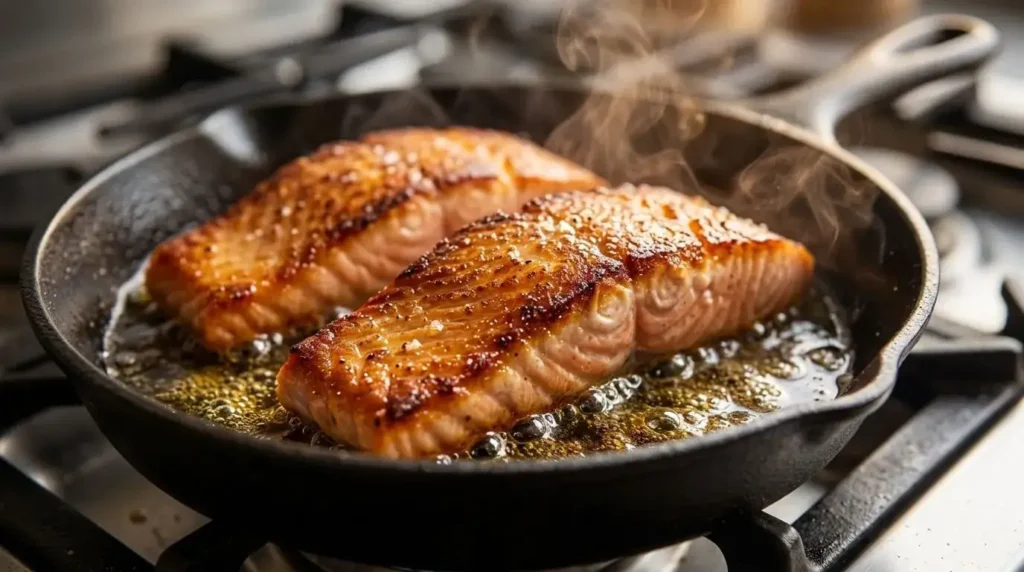
Pan-searing is ideal if you crave a golden-brown exterior and crispy salmon skin.
- Heat the Pan: Heat 1 tablespoon of olive oil in a skillet (cast-iron or heavy stainless steel) over medium-high heat until shimmering.
- Sear First Side: Carefully place the seasoned salmon fillets flesh-side down (or skin-side down if you want extra crispy skin first). Press down gently for 5 seconds to ensure full contact. Sear undisturbed for 3 to 4 minutes until a deep golden crust forms.
- Flip & Finish: Flip the fillets carefully using a fish spatula and cook for an additional 2 to 3 minutes until cooked through to your desired doneness.
- Benefits: Yields maximum caramelization and texture contrast against the cool salsa.
6. Chef Pro-Tips for Perfect Salmon Every Time
- Dry the Surface Thoroughly: Always pat your salmon fillets completely dry with paper towels before applying oil or spices. Moisture on the surface creates steam, which prevents crust formation during searing or roasting.
- Serve Salsa at Room Temperature: Avoid spooning ice-cold salsa straight from the refrigerator onto hot salmon. Let the diced salsa assemble at room temperature for 15 minutes while you prepare the fish. This allows the tomatoes and cucumbers to marinate while preventing the hot fish from cooling down too quickly on the plate.
- Check Internal Doneness Correctly: Overcooked salmon becomes dry and chalky. Use an instant-read meat thermometer inserted into the thickest part of the fillet; pull the salmon off the heat at 135°F to 140°F (57°C to 60°C), as carryover cooking will bring it to the FDA-recommended 145°F (63°C). Alternatively, gently press the center with a fork; it should flake naturally along the muscle lines.
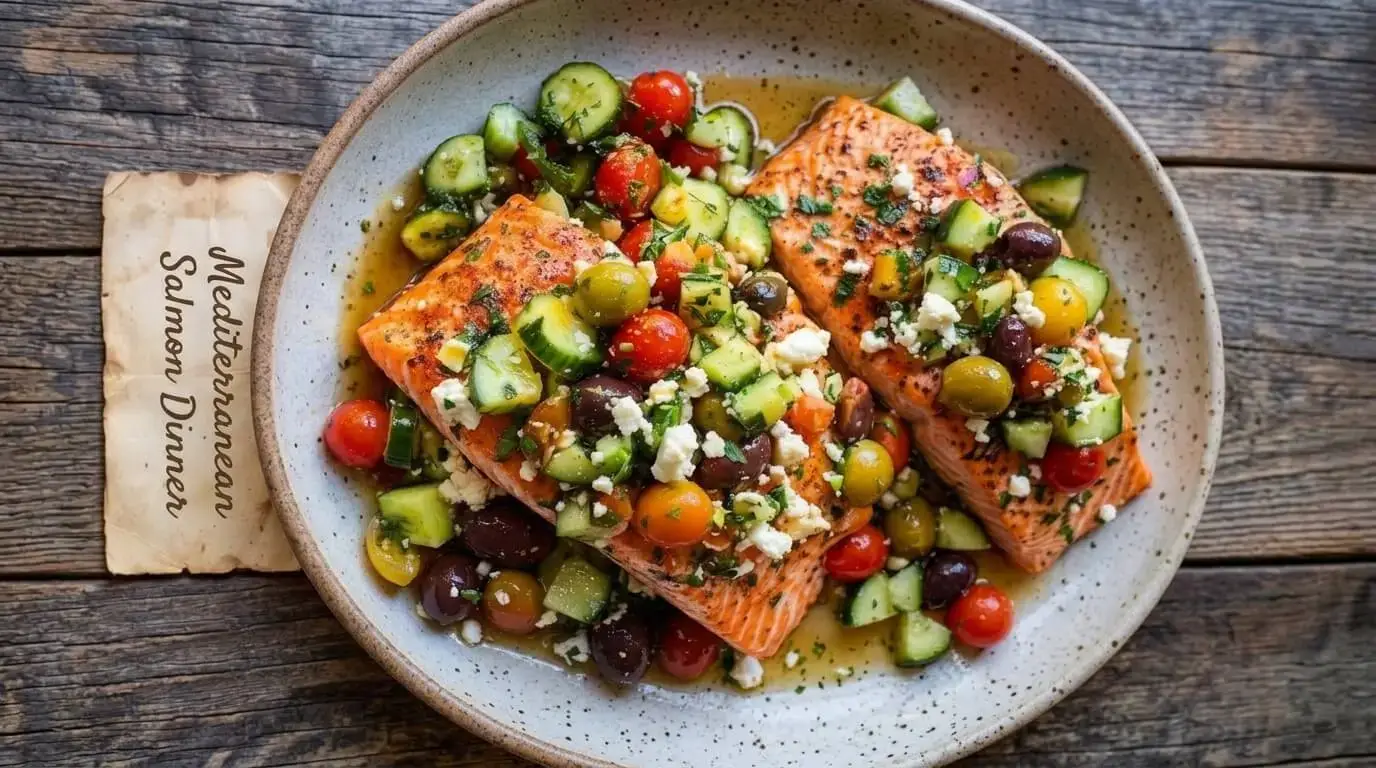
Easy Mediterranean Salmon Dinner
Ingredients
Method
- In a medium mixing bowl, combine the diced cucumber, halved red and yellow cherry tomatoes, sliced olives, minced red onion, and chopped fresh herbs. Drizzle with 2 tablespoons of extra virgin olive oil and 1 tablespoon of fresh lemon juice. Season with a light pinch of salt and pepper. Toss gently to combine. Fold in the crumbled feta cheese last so it keeps its shape, then set the bowl aside at room temperature so the flavors meld.
- Use a paper towel to thoroughly pat the salmon fillets completely dry on all sides. Brush both sides of the fillets lightly with 1 tablespoon of olive oil. Evenly sprinkle the flesh side with dried oregano, garlic powder, paprika, salt, and black pepper.
- – Option A (Oven-Baked): Preheat oven to 400°F (200°C) and line a baking sheet with parchment paper. Place salmon skin-side down and bake for 12 to 15 minutes until opaque and easily flaked with a fork.
- – Option B (Pan-Seared): Heat 1 tablespoon of olive oil in a skillet over medium-high heat. Place salmon in the pan (seasoned flesh-side down first). Sear for 3 to 4 minutes until a golden crust forms, flip, and cook 2 to 3 minutes more until cooked through.
- Transfer the cooked salmon fillets to wide serving dishes. Generously spoon the fresh cucumber-tomato-olive-feta salsa directly over and around the hot fillets. Drizzle any remaining lemon-olive oil dressing from the bowl over the fish. Serve warm with extra fresh lemon wedges.
Notes
– Internal Temperature: Salmon is perfectly done when it reaches 135°F–140°F internally on an instant-read thermometer before resting.
– Storage: Store leftover cooked salmon and fresh salsa in separate airtight containers in the fridge for up to 3 days.
7. What to Serve with Mediterranean Salmon
Turn this main dish into a complete feast by pairing it with classic Mediterranean sides:
Grains
- Greek Lemon Rice: Fluffy long-grain rice cooked with chicken or vegetable broth, fresh lemon zest, and dill.
- Cooked Quinoa or Garlic Farro: Hearty grains that absorb the extra lemon-olive oil dressing from the plate.
- Warm Couscous: Quick-steamed couscous tossed with toasted pine nuts.
Breads & Dips
- Warm Pita Bread: Soft, charred pita triangles perfect for scooping up loose salsa and juices.
- Dips & Spreads: Serve alongside homemade tzatziki or a spoonful of smooth, warm olive-topped hummus.
Vegetable Sides
- Roasted Veggies: Pair with roasted asparagus, grilled zucchini spears, or Roasted Mediterranean Potatoes with Feta and Tomatoes for a hearty comfort food side.
8. Storage, Meal Prep & Reheating Guidelines
- Storage Tips: Store the cooked salmon and fresh Greek salsa in separate airtight glass containers in the refrigerator for up to 3 days. Keeping the salsa separate preserves the crisp texture of the cucumbers and tomatoes and prevents the fish from becoming soggy.
- Reheating Advice: To reheat cooked salmon without drying it out or creating strong fish odors, avoid using high microwave power. Instead, place the salmon on a parchment-lined pan in a warm oven at 275°F (135°C) for 8 to 10 minutes until warmed through. Alternatively, warm it gently in a covered skillet over low heat with a teaspoon of water or olive oil. Once warm, top with fresh salsa and serve.
9. Frequently Asked Questions
Can I make this Mediterranean salmon recipe ahead of time?
Yes! You can assemble the cucumber-tomato-olive salsa up to 24 hours in advance (add the feta cheese and lemon juice dressing right before serving to keep the vegetables crisp). The dry seasoning rub can also be applied to the raw salmon up to 4 hours before cooking.
What herbs pair best with Mediterranean salmon?
Fresh flat-leaf parsley and dill are classic pairings that highlight the clean flavors of the fish. Fresh oregano, mint, or chopped basil also work exceptionally well in the fresh salsa.
Should I bake or pan-sear salmon for the best texture?
Pan-searing in a hot skillet delivers the crispest exterior skin and caramelized spice crust. Baking in the oven offers a softer, ultra-tender texture with hands-off convenience. Both methods yield juicy fish when not overcooked.
Can I use frozen salmon fillets for this recipe?
Absolutly. Ensure the frozen salmon fillets are fully thawed in the refrigerator overnight before cooking. Pat them thoroughly dry with paper towels to remove excess surface moisture before seasoning.