
If you are searching for a restaurant-quality seafood dinner that comes together effortlessly in under 30 minutes, these Pan-Seared Garlic Butter Salmon Fillets are the ultimate solution. Featuring a beautifully caramelized golden crust, tender flaky center, and a rich lemon garlic butter sauce pooled beneath every bite, this recipe delivers maximum flavor with minimal effort.
By applying a few classic Mediterranean cooking principles—such as swapping white wine for a savory vegetable broth reduction and using extra virgin olive oil as the primary searing fat—we elevate this simple skillet salmon recipe into a heart-healthy, vibrant meal you can feel great about serving any day of the week.
Why You’ll Love These Pan-Seared Garlic Butter Salmon Fillets
- Crispy Golden Crust: Searing in a preheated skillet locks in moisture while creating a irresistible, restaurant-style crisp exterior.
- Rich Garlic Butter Lemon Sauce: A bright reduction of fresh lemon juice, garlic, and vegetable broth finished with just enough butter for a glossy, emulsified glaze.
- Mediterranean-Friendly Ingredients: Emphasizes heart-healthy fats, vibrant citrus, and fresh herbs over heavy sauces or alcohol.
- Quick and Easy: Goes from raw ingredients to your dinner table in just about 20 to 25 minutes.
- Perfect for Weeknights & Entertaining: Fast enough for a busy Tuesday night, yet elegant enough to impress weekend dinner guests. If you enjoy simple skillet seafood, you’ll also love our foundation guide on basic Pan Seared Salmon Fillets.
What Makes This Recipe Mediterranean Diet Friendly?
Traditional garlic butter salmon recipes often rely heavily on multiple sticks of butter and white wine reductions. To align seamlessly with Mediterranean diet principles without losing any savory depth or visual richness, we made a few smart culinary adjustments:
- Extra Virgin Olive Oil as Primary Fat: Searing the salmon fillets in heart-healthy Extra Virgin Olive Oil (EVOO) creates a perfect high-heat sear while introducing beneficial monounsaturated fats.
- Omega-3 Rich Protein: Salmon is naturally packed with healthy omega-3 fatty acids, making it a cornerstone protein of the Mediterranean diet.
- Fresh Garlic, Parsley, and Lemon: Flavor is built layer by layer using real, whole ingredients—garlic cloves, freshly squeezed lemon juice, lemon zest, and flat-leaf parsley.
- Balanced Butter Ratio: We reduced the butter to just 2 tablespoons, emulsifying it into the sauce at the very end to give you that thick, glossy finish with far fewer saturated fats.
- No Wine Required: A simple combination of low-sodium vegetable broth and fresh lemon juice provides the necessary acidity and depth of flavor without using white wine.
Ingredients You’ll Need
- 6 Small Salmon Fillets: Skin-on or skinless, cut into uniform portions for even cooking.
- 3 tbsp Extra Virgin Olive Oil: Used for searing the salmon at high heat.
- 2 tbsp Unsalted Butter: Divided into two steps to start the aromatics and finish the sauce.
- 6 Garlic Cloves: Finely minced to infuse the pan sauce with rich garlic flavor.
- ½ Cup Low-Sodium Vegetable Broth: Creates a flavorful base for the pan reduction (seafood stock works great too).
- 1 Lemon (Juice and Zest): Adds bright acidity to balance the buttery richness.
- 1 Cup Fresh Flat-Leaf Parsley: Coarsely chopped and stirred in right before serving for fresh herb flavor and vibrant color.
- Seasoning Blend: Sea salt, cracked black pepper, ½ teaspoon onion powder, and ¼ teaspoon dried oregano.
Ingredient Tip: If you only have salted butter on hand, reduce the added sea salt on the salmon fillets slightly to maintain perfect seasoning balance.
How to Choose the Best Salmon
Selecting the right fish is the first step toward achieving a perfect skillet salmon recipe:
- Wild vs. Farm-Raised: Wild-caught salmon (such as Sockeye or King) offers a deeper red color, firmer texture, and higher omega-3 content. Farm-raised salmon (like Atlantic) tends to be richer in fats and slightly more forgiving against overcooking.
- Fresh vs. Frozen: Fresh fish is wonderful, but high-quality flash-frozen salmon fillets are often fresher than what’s sitting in the display case. Just ensure frozen salmon is completely thawed in the refrigerator overnight before cooking.
- Skin-On vs. Skinless: Skin-on fillets hold together better during searing and help protect the flesh from drying out. You can easily slip the skin off after cooking if preferred.
- Ideal Fillet Thickness: Look for center-cut fillets that are roughly 1 to 1.5 inches thick so they develop a golden crust without overcooking in the center.
Kitchen Equipment
You don’t need fancy tools to make this crispy pan-seared salmon, but having these essentials helps guarantee success:
- Large Skillet or Cast-Iron Pan: A heavy 12-inch skillet ensures proper heat distribution and prevents overcrowding.
- Fish Spatula: Thin, flexible metal spatulas slide effortlessly under delicate salmon crusts without tearing the fillets.
- Tongs: Useful for holding fillets vertically to sear the edges if desired.
- Instant-Read Thermometer: Takes all the guesswork out of checking for ideal internal doneness.
- Citrus Zester: Quickly strips the aromatic outer peel of the lemon without grating the bitter white pith.
Step-by-Step Instructions
[Prep Salmon] ➔ [Hot Sear] ➔ [Sauté Garlic] ➔ [Reduce Sauce] ➔ [Finish & Baste]
Prep the Salmon
- Pat Completely Dry: Use paper towels to thoroughly dry all sides of the salmon fillets. Moisture creates steam, which prevents a golden crust from forming.
- Season Generously: Rub the salmon all over with sea salt, cracked black pepper, onion powder, and dried oregano.
Create a Golden Sear
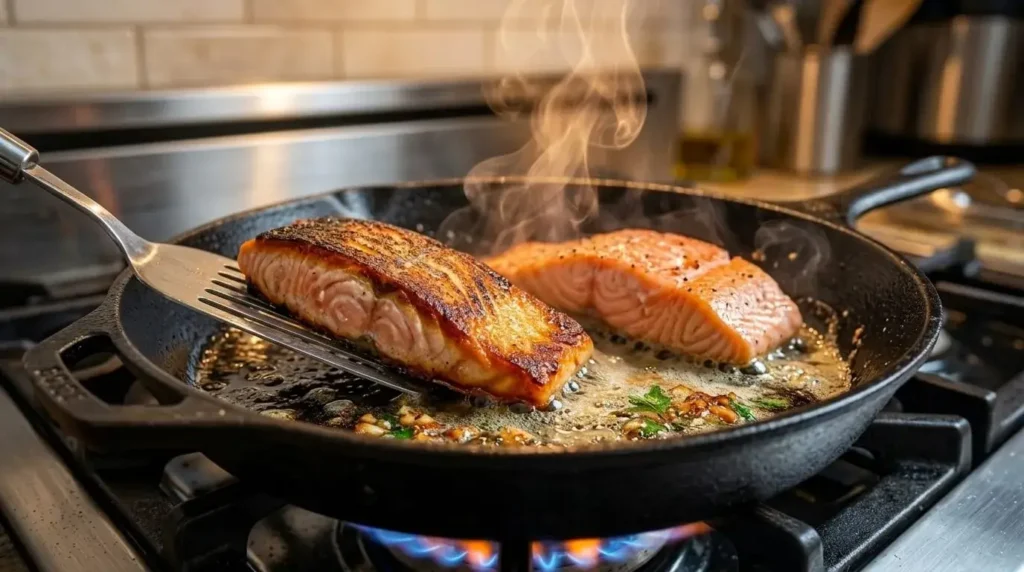
- Preheat the Pan: Heat 3 tablespoons of extra virgin olive oil and 1 tablespoon of butter in a large skillet over medium-high heat until hot and shimmering.
- Sear Undisturbed: Carefully lay the salmon fillets in the pan. Sear for 4 to 5 minutes without moving them, allowing a deep caramelized crust to form.
- Flip Gently: Flip the fillets and cook for an additional 2 to 3 minutes. Transfer the salmon to a warm plate (it will finish cooking in the hot garlic butter sauce later).
Build the Garlic Lemon Sauce
- Sauté Aromatics: Lower the skillet heat to medium. Add the minced garlic and cook for roughly 1 minute until fragrant and light golden, taking care not to burn it.
- Deglaze and Reduce: Pour in ½ cup low-sodium vegetable broth, lemon juice, and lemon zest. Scrape up the flavor-packed browned bits stuck to the bottom of the pan. Simmer for 3 to 4 minutes until reduced by half.
Finish with Butter and Herbs
- Emulsify Sauce: Turn the heat to low. Whisk in the remaining 1 tablespoon of cold butter along with half of the fresh parsley until the sauce thickens into a rich, glossy glaze.
Baste and Serve
- Combine & Baste: Nestles the salmon fillets back into the skillet. Spoon the warm lemon garlic sauce over each fillet for 1 to 2 minutes.
- Garnish & Serve: Garnish heavily with the remaining chopped parsley and serve immediately while piping hot.
Expert Tips for Perfect Pan-Seared Salmon
- Dry the Fish Thoroughly: Never skip patting the salmon with paper towels. Dry surface = crispier sear.
- Preheat the Pan Well: Put the salmon into a hot pan. If the oil isn’t hot enough, the fish will absorb oil and stick instead of searing.
- Avoid Overcrowding: Leave space between each fillet so steam can escape. Cook in batches if your skillet is under 12 inches.
- Don’t Move the Salmon Too Soon: The salmon will naturally release from the skillet once a proper golden crust forms. If it resists, give it another 30 seconds.
- Add Garlic After Searing: Garlic burns quickly at high searing temperatures. Sauté it after removing the salmon to preserve its sweet, aromatic taste.
- Baste with Sauce: Spooning sauce over the top rehydrates the surface and coats every crevice with garlic lemon goodness.
- Rest Briefly Before Serving: Allow the fish to rest for 2–3 minutes so the natural juices redistribute evenly throughout the fillets.
Common Mistakes to Avoid
- Cooking Wet Salmon: Wet fillets stick to the pan and turn soggy instead of crisp.
- Searing in a Cold Pan: Cold oil leads to greasy, unevenly cooked fish.
- Overcooking the Fillets: Salmon continues cooking slightly after being removed from the pan; pull it off heat just before it reaches your target doneness.
- Burning the Garlic: Burnt garlic creates a harsh, bitter flavor that ruins the sauce. Keep the heat on medium and watch it closely.
- Over-Reducing the Sauce: If the sauce cooks down too far, it can split. Keep a splash of extra broth nearby to adjust consistency if needed.
- Using Too Much Butter: Excessive butter overpowers the clean flavor of the salmon and strays from healthy Mediterranean guidelines.
Variations
- Spicy Garlic Butter Salmon: Add ¼ teaspoon of crushed red pepper flakes to the garlic for a subtle spicy kick.
- Herb-Forward Version with Dill: Swap half of the flat-leaf parsley for fresh chopped dill and chives for an aromatic herbal touch.
- Mediterranean Olive & Caper Version: Stir 2 tablespoons of drained capers and sliced Kalamata olives into the reduction for a tangy, briny variation.
- Dairy-Light Version: Omit the butter entirely and finish the reduction with an extra tablespoon of cold extra virgin olive oil whisked briskly off the heat.
- Sheet-Pan Adaptation: If cooking for a large group, bake seasoned salmon on a sheet pan at 400°F (200°C) for 12 minutes, then spoon the prepared stove-top garlic lemon butter sauce over the top before serving.
What to Serve with Garlic Butter Salmon
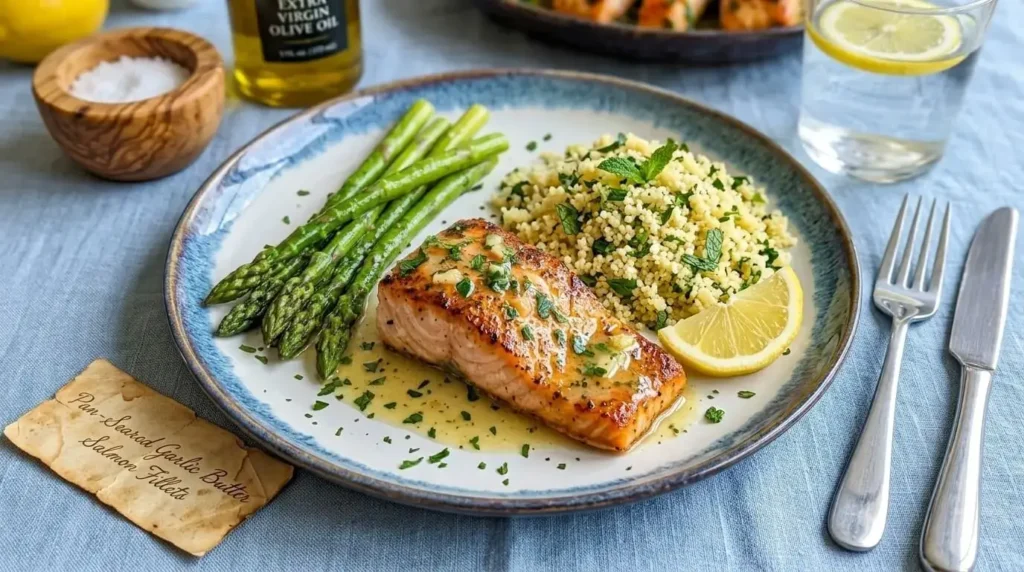
This buttery salmon recipe pairs beautifully with a wide array of Mediterranean side dishes:
- Vegetables: Serve alongside vibrant, crisp-tender sides like our Garlic Butter Sautéed Asparagus and Mushrooms Recipe or steamed broccoli and roasted baby carrots.
- Whole Grains: Fluffy grains soak up the extra garlic lemon butter reduction perfectly. Pair with Zesty Lemon Parmesan Couscous Recipe, brown rice, or warm Mediterranean quinoa.
- Fresh Salads: Balance the rich savory fish with a crisp Greek cucumber salad dressed in lemon and extra virgin olive oil.
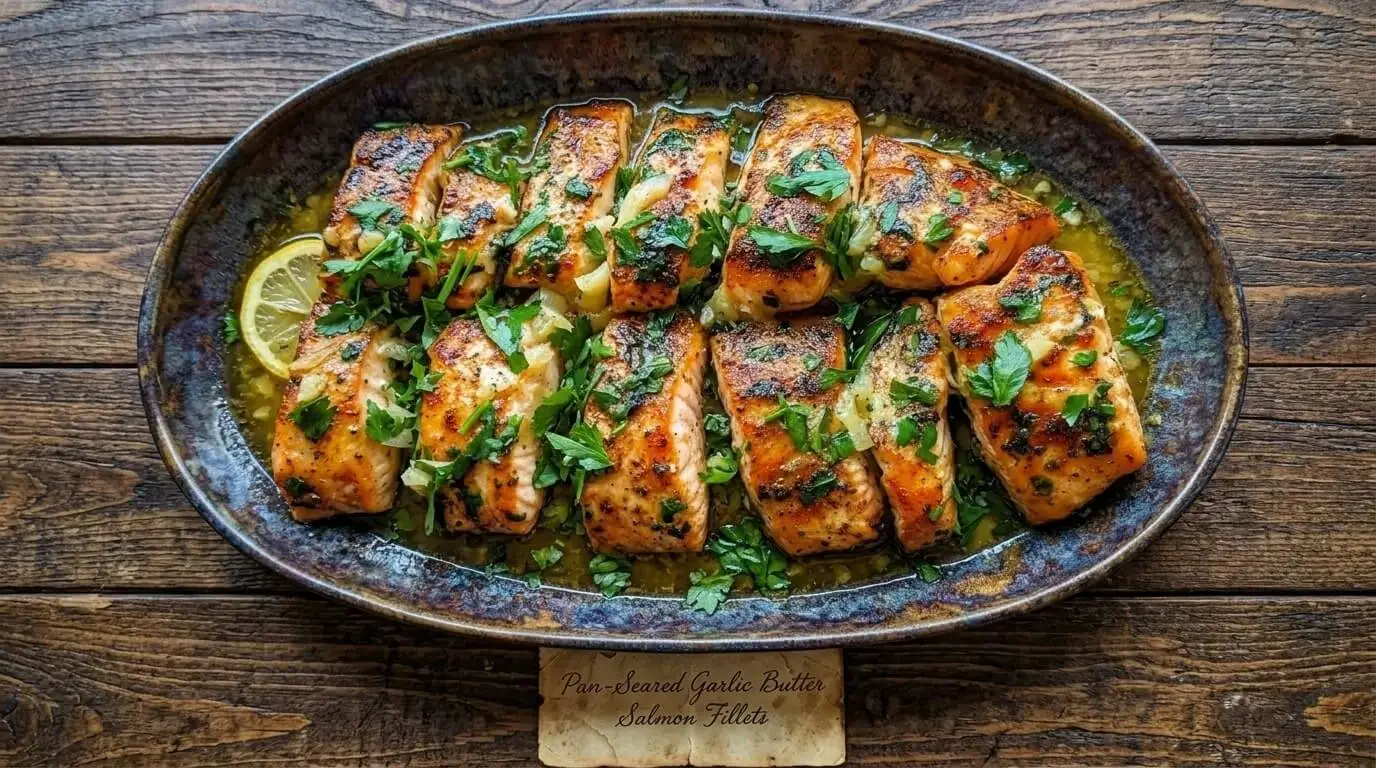
Pan-Seared Garlic Butter Salmon Fillets
Ingredients
Method
- Pat the salmon fillets completely dry on all sides using paper towels. Season evenly with sea salt, black pepper, onion powder, and dried oregano.
- Heat 3 tablespoons of Extra Virgin Olive Oil and 1 tablespoon of butter in a large 12-inch skillet over medium-high heat until hot.
- Add salmon fillets to the skillet flesh-side (or skin-side) down and sear undisturbed for 4 to 5 minutes until a deep golden-brown crust forms.
- Flip fillets and cook for another 2 to 3 minutes. Remove salmon and set aside on a plate.
- Reduce heat to medium. Add 1 tablespoon of butter and minced garlic to the skillet. Cook for 1 minute until fragrant.
- Pour in vegetable broth, lemon juice, and lemon zest, scraping up any browned bits from the pan. Simmer for 3 minutes until reduced by half.
- Turn heat to low. Stir in half of the chopped parsley until sauce becomes glossy.
- Nestles salmon fillets back into the skillet. Spoon sauce over the top for 1 to 2 minutes until hot.
- Garnish with remaining fresh parsley and serve immediately.
Notes
– Wine substitution: Vegetable broth combined with fresh lemon juice creates a rich reduction without using alcohol.
– Storage: Keep leftovers refrigerated in an airtight container for up to 3 days. Reheat gently in a skillet on low.
Storage and Reheating
- Refrigeration: Store leftover salmon fillets in an airtight container in the refrigerator for up to 3 days. Store extra pan sauce separately if possible.
- Freezing: Cooked salmon can be frozen in a sealed freezer-safe bag for up to 1 month. Thaw overnight in the fridge before reheating.
- Reheating on the Stovetop (Recommended): Heat a skillet over low heat with a splash of broth or water. Cover and heat the salmon gently for 3 to 5 minutes until warm. This prevents the fish from drying out.
- Oven Reheating: Place fillets in a baking dish, add 1 tablespoon of water or broth, cover loosely with foil, and warm at 300°F (150°C) for 8 to 10 minutes.
- Avoiding Dry Salmon: Avoid microwaving salmon, as it breaks down the delicate fish oils and creates a dry texture and strong odor.
Frequently Asked Questions
How do you get crispy pan-seared salmon?
To get crispy pan-seared salmon, thoroughly pat the salmon fillets completely dry with paper towels before seasoning. Heat a combination of extra virgin olive oil and butter in a skillet over medium-high heat until hot before adding the fish. Leave the salmon undisturbed for 4 to 5 minutes so a deep caramelized crust can form.
Should salmon be cooked skin-side down first?
Yes, if your salmon has skin, always place it skin-side down in the hot skillet first. The skin acts as a protective heat barrier, allowing the fat underneath to render out and crisp up nicely while keeping the delicate flesh inside moist and tender.
Why is my pan-seared salmon dry?
Pan-seared salmon turns dry primarily from overcooking or cooking at too low a temperature for too long. Salmon should be removed from the skillet when the internal temperature reaches 125°F to 130°F (52°C to 54°C) for medium doneness, as residual heat will continue cooking it while resting.
When should butter be added?
Butter should be added after the initial high-heat searing phase or combined with oil to prevent it from burning. In this recipe, a small amount is used during searing, while the remainder is whisked into the reduced broth and lemon juice at low heat to form a glossy sauce.
Can you use frozen salmon?
Yes, you can use frozen salmon fillets, provided they are completely thawed before cooking. Place frozen fillets in the refrigerator overnight or submerge them in cold water in a sealed bag for 20 minutes. Always dry thawed fish thoroughly before searing.
How long should salmon cook in a skillet?
Salmon usually takes 6 to 8 minutes total in a hot skillet. Sear undisturbed for 4 to 5 minutes on the first side to build a golden crust, then flip and cook for an additional 2 to 3 minutes on the second side depending on fillet thickness.
What herbs go well with salmon?
Fresh flat-leaf parsley, dill, thyme, chives, oregano, and basil pair exceptionally well with salmon. In this Mediterranean garlic butter recipe, fresh flat-leaf parsley and a touch of dried oregano provide a clean, aromatic balance to the rich lemon sauce.
Do you flip salmon once or multiple times?
You should flip salmon only once during searing. Flipping multiple times disrupts crust formation, causes the fish to lose heat, and increases the likelihood of the delicate fillets flaking apart in the skillet.
What temperature should salmon reach?
The USDA recommends cooking salmon to an internal temperature of 145°F (63°C). However, many chefs prefer pulling salmon off the heat at 125°F to 130°F (52°C to 54°C) for a moist, medium finish after resting.
Is pan-seared salmon healthy?
Yes, pan-seared salmon is very healthy. Salmon is naturally loaded with high-quality protein and essential omega-3 fatty acids. By searing in extra virgin olive oil and using a lightened lemon garlic broth sauce, this dish aligns perfectly with heart-healthy Mediterranean diet principles.
Final Thoughts
These Pan-Seared Garlic Butter Salmon Fillets demonstrate that healthy eating doesn’t require sacrificing rich, indulgent flavor. By combining proper searing techniques with heart-healthy extra virgin olive oil, fresh garlic, zesty citrus, and vibrant parsley, you can recreate restaurant-quality skillet salmon right in your own kitchen. Give this recipe a try tonight, serve it alongside your favorite whole grains or roasted Mediterranean vegetables, and enjoy a quick, nourishing meal the whole family will love!