
Imagine slicing into a golden-seared steak roulade to reveal tender spirals of beef packed with deeply caramelized cremini mushrooms, vibrant wilted spinach, fresh herbs, and creamy melted cheese, all draped in a glossy garlic-rosemary balsamic glaze. This Mushroom and Cheese Stuffed Beef Steak Recipe transforms an impressive steakhouse centerpiece into an approachable, heart-healthy Mediterranean feast you can pull off on a weeknight or serve to a crowd on Sunday afternoon.
Traditional stuffed steak recipes often rely heavily on sticks of butter, heavy cream, or rich, high-fat cheeses that overpower the meat and weigh down the meal. By leaning into core Mediterranean pantry staples—fruity extra virgin olive oil, antioxidant-rich mushrooms, fresh aromatic herbs, smoked paprika, and tangy Mediterranean cheeses—you get extraordinary depth of flavor without a drop of butter or cream. Best of all, this stunning cast iron stuffed steak requires just 20 minutes of hands-on prep and 30 minutes of cooking in a single oven-safe skillet, delivering restaurant-quality results with minimal cleanup.
Why You’ll Love This Mediterranean Stuffed Beef Steak
- Heart-Healthy Indulgence: Crafted with extra virgin olive oil, fresh greens, and lean grass-fed flank steak instead of butter and heavy cream, giving you bold, savory richness that aligns effortlessly with Mediterranean eating.
- Zero-Leakage Cheese Blend: Pairing smooth-melting aged provolone with tangy sheep’s milk feta or goat cheese creates a velvety, structured center that stays tucked inside the beef spirals rather than oozing out onto the skillet.
- One-Pan Elegance: You sear the beef on the stovetop, finish roasting it in the oven, and build the glossy garlic-rosemary pan glaze using all the flavorful browned bits in the exact same cast-iron skillet.
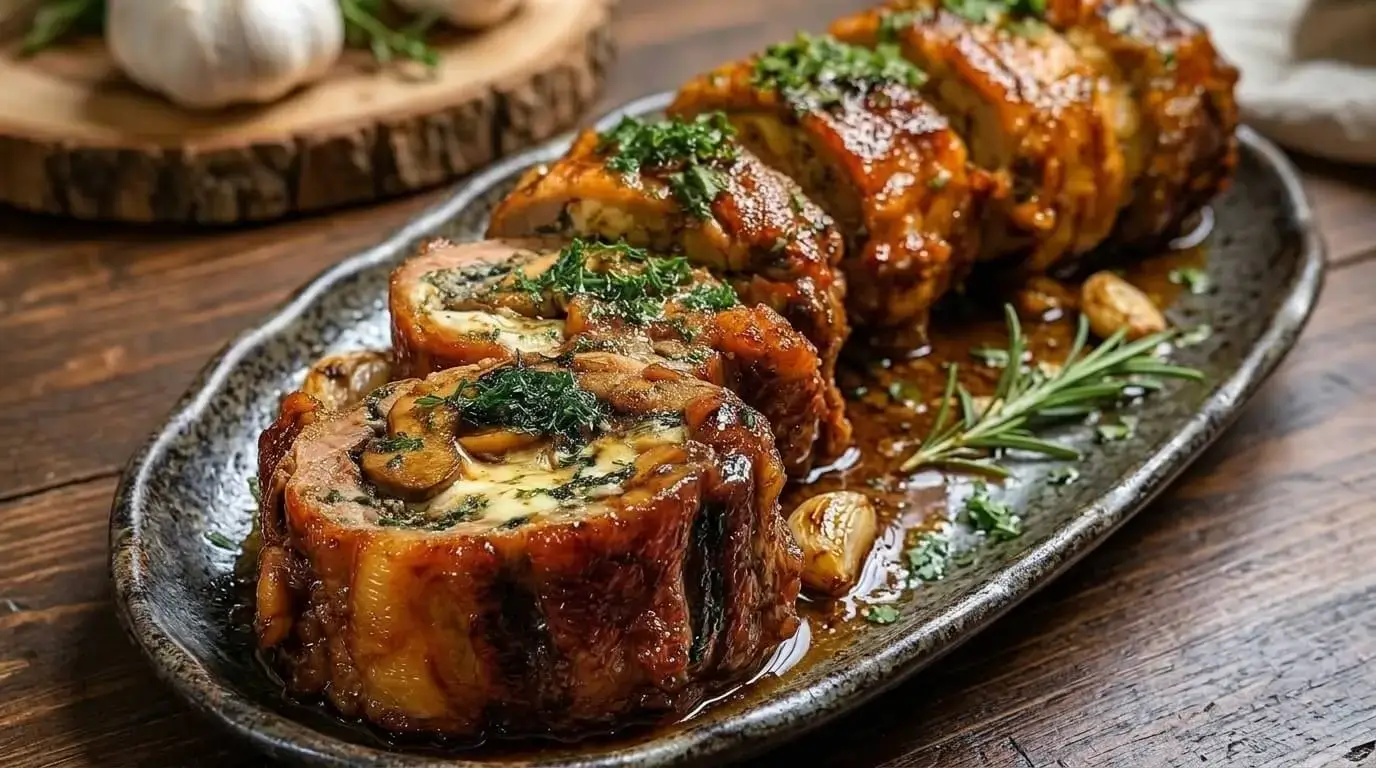
- Impressive Presentation: Slicing the rested log reveals gorgeous, restaurant-worthy stuffed beef steak pinwheels garnished with vibrant green parsley, roasted whole garlic cloves, and fragrant rosemary sprigs.
Ingredients & Mediterranean Swaps You’ll Need
Every component in this Mediterranean stuffed flank steak serves a distinct culinary purpose—building a mahogany-colored crust on the outside, an earthy and creamy interior, and a bright, savory pan sauce to tie it all together.
- The Steak: You will need 1.5 to 2 pounds of beef flank steak, trimmed of excess silver skin. Flank steak is a long, flat, lean cut with distinct muscle fibers, making it the premier choice for butterflying into a uniform sheet that rolls cleanly without tearing. If flank steak isn’t available, a thick-cut skirt steak or a butterflied sirloin tip roast works well as a substitute.
- The Aromatic Rub: A simple blend of extra virgin olive oil, smoked paprika, kosher salt, freshly ground black pepper, and garlic powder seasons the beef deeply. The smoked paprika is especially important here—it imparts a subtle warmth and helps create that rich, caramelized reddish-brown crust seen in the finished pinwheels.
- The Mushroom & Herb Filling: Thick-sliced cremini (baby bella) mushrooms bring meaty umami that complements the beef, while fresh minced garlic, roughly chopped baby spinach, flat-leaf parsley, and fresh thyme leaves add bright color and herbal freshness.
- The Mediterranean Cheese Duo: Instead of relying on high-moisture cheeses that turn watery in the oven, this recipe combines shredded aged provolone (for classic, stretchy melt) with crumbled sheep’s milk feta or tangy goat cheese. The feta or goat cheese holds its creamy structure under heat and adds a signature Mediterranean tang that cuts through the richness of the beef.
- The Garlic-Rosemary Pan Glaze: Extra virgin olive oil, whole smashed garlic cloves, fresh rosemary sprigs, low-sodium beef broth, and aged balsamic vinegar (or balsamic glaze) reduce into a glossy, deeply savory sauce—achieving rich complexity without any wine or butter.
How to Butterfly and Roll a Beef Steak (Step-by-Step Guide)
Mastering how to butterfly flank steak and roll it tightly is much easier than it looks. Follow these four steps closely to ensure even cooking, maximum flavor, and clean, cohesive slices.
Step 1: Dry-Sauté the Mushrooms for Maximum Umami
Mushrooms are roughly 90% water, and stuffing raw mushrooms inside a steak will release steam and moisture as it roasts, causing the filling to turn soggy and pushing the cheese out of the ends. Heat 1 tablespoon of extra virgin olive oil in a large oven-safe cast-iron skillet over medium-high heat. Add the ¼-inch thick sliced cremini mushrooms in an even layer and cook for 5 to 6 minutes, stirring occasionally, until all liquid has evaporated and the edges are deeply browned. Stir in the minced garlic, fresh thyme, and chopped baby spinach, cooking for just 1 to 2 minutes until the greens wilt completely. Season lightly with salt and pepper, then transfer the mixture to a bowl and let it cool for 5 minutes. Cooling the filling briefly ensures it won’t prematurely melt your cheese while you roll the steak.
Step 2: Butterfly and Pound the Steak (With vs. Against the Grain)
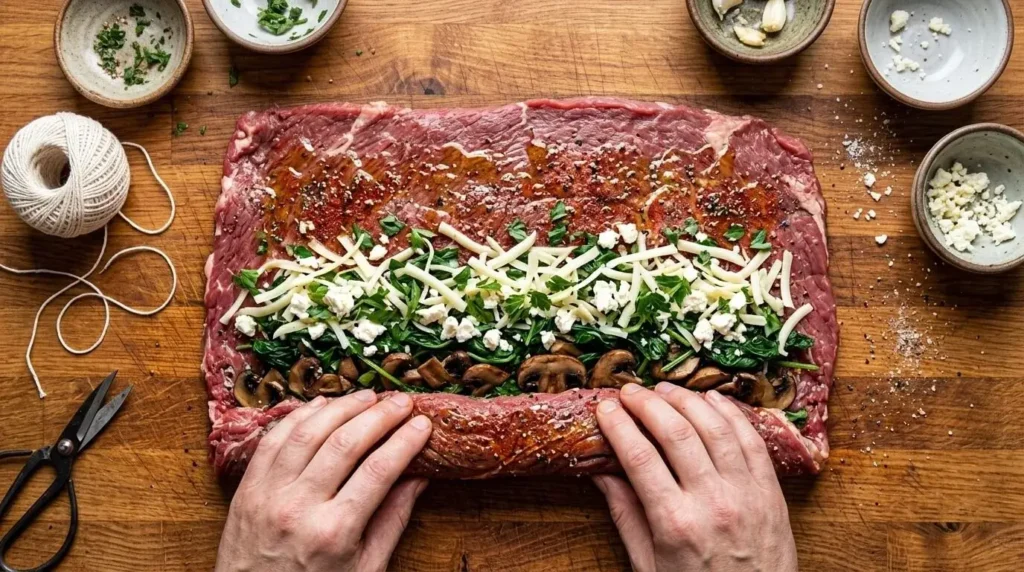
Preheat your oven to 400°F (200°C). Place the flank steak flat on a large cutting board and inspect the direction of the long, parallel muscle fibers (the grain). Using a sharp chef’s knife held parallel to the cutting board, slice horizontally through the center thickness of the steak—stopping about ½ inch shy of the opposite long edge—so you can open it flat like a hardcover book. Cover the opened steak with a sheet of plastic wrap and gently pound it with the flat side of a meat mallet until it reaches an even ½-inch thickness from edge to edge.
Before filling, rotate the flattened steak so the grain runs horizontally from left to right in front of you. You will roll the steak parallel with the grain (from the bottom long edge upward). Why does this matter? Because when you slice the finished roulade into 1-inch pinwheels later, your knife will cut directly against the grain, shortening those muscle fibers and guaranteeing melt-in-your-mouth tenderness in every bite.
Step 3: Layer, Roll, and Tie with Butcher’s Twine
Rub both sides of the butterflied steak with 1 ½ tablespoons of extra virgin olive oil, kosher salt, black pepper, smoked paprika, and garlic powder. Spread the cooled mushroom and spinach mixture evenly across the inside surface, making sure to leave a clean ¾-inch bare border around all four edges. Scatter the shredded aged provolone, crumbled sheep’s milk feta, and finely chopped parsley over the mushrooms. Starting from the bottom long edge closest to you, roll the steak up tightly into a compact log, gently tucking in any stray mushroom slices as you go. Cut five or six lengths of butcher’s twine and tie the log securely at 1.5-inch intervals, trimming the excess string.
Step 4: Sear, Roast, and Simmer the Garlic-Rosemary Glaze
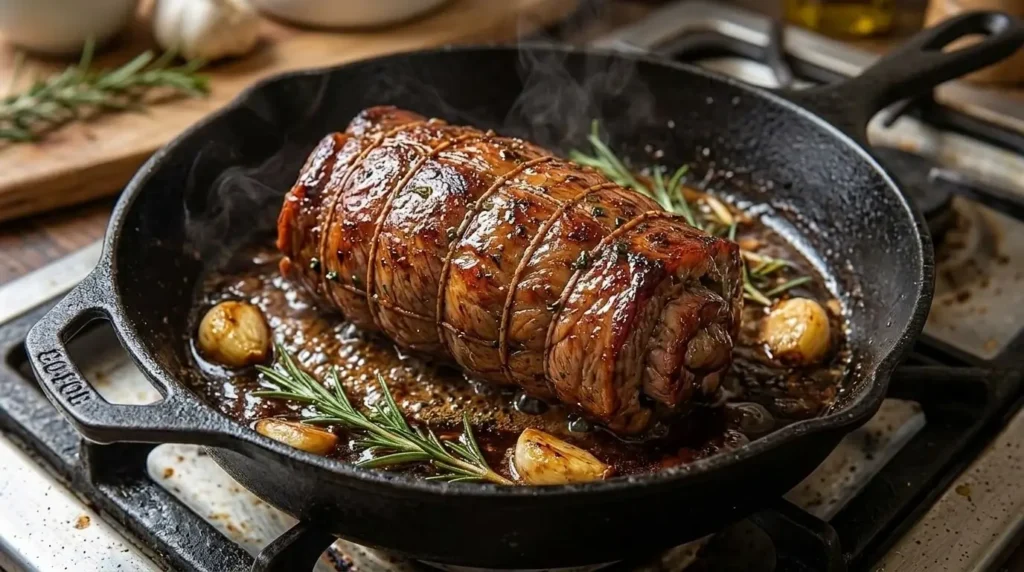
Return your cast-iron skillet to medium-high heat with 1 tablespoon of extra virgin olive oil. Once shimmering, place the stuffed steak log seam-side down in the pan. Sear undisturbed for 2 to 3 minutes until a deep, golden-brown crust forms and seals the seam shut, then roll and sear the remaining sides for 2 to 3 minutes each. Turn off the stovetop burner and tuck the 4 whole smashed garlic cloves and 2 fresh rosemary sprigs around the steak in the skillet. Transfer the entire pan into the preheated 400°F oven and roast for 16 to 20 minutes, until an instant-read thermometer inserted into the thickest layer of beef (avoiding the center pocket of cheese) registers 130°F–135°F for medium-rare, or 140°F for medium.
Transfer the steak to a cutting board, tent loosely with aluminum foil, and let it rest for 10 minutes. Meanwhile, set the skillet back over medium heat on the stovetop. Pour in the low-sodium beef broth and aged balsamic vinegar, using a wooden spoon to scrape up all the caramelized browned bits from the bottom of the pan. Simmer for 3 to 4 minutes until the liquid reduces into a glossy, dark glaze. Snip the twine, slice into thick medallions, spoon the warm glaze and roasted garlic cloves over the top, and finish with fresh chopped parsley.
Pro Tips to Keep Cheese From Leaking Out of Stuffed Steak
- Leave a Generous Perimeter Border: Always leave at least a ¾-inch bare margin along the edges of your butterflied steak. As the beef rolls up and contracts slightly in the oven, the filling naturally spreads outward toward the ends; a clean border gives it room to expand without spilling into the pan.
- Choose Low-Moisture Mediterranean Cheeses: Fresh mozzarella in water releases excess whey as it heats, which leads to runny leaks. Aged provolone melts smoothly with minimal moisture, while sheep’s milk feta or goat cheese softens into creamy pockets without liquifying.
- Sear Seam-Side Down First: Placing the rolled roulade directly on its seam in a hot cast-iron skillet immediately sears the overlapping meat fibers together, effectively “welding” the roll closed before it ever enters the oven.
- Respect the 10-Minute Rest: Slicing a stuffed steak fresh out of the oven causes molten cheese and meat juices to flood onto the cutting board. Letting the steak rest for a full 10 minutes allows the muscle fibers to reabsorb their juices and lets the cheese set slightly so every pinwheel holds its spiral shape.
What to Serve with Stuffed Beef Steak Pinwheels
Because these mushroom and feta stuffed steak pinwheels pack rich, savory flavors and a glossy balsamic reduction, they pair best with bright, crisp, or herb-forward Mediterranean sides that balance the plate:
- Crispy Herb Potatoes: Serve alongside golden Roasted Mediterranean Potatoes with Feta and Tomatoes to soak up every last drop of the garlic-rosemary pan glaze.
- Crisp Greek Salad: Contrast the warm, hearty beef with a refreshing bowl of Greek Chopped Feta Salad tossed in a bright lemon-oregano vinaigrette.
- Roasted Green Vegetables: Round out the meal with tender-crisp Roasted Asparagus and Carrots or lemon-garlic broccolini.
- Light Grain or Low-Carb Base: Plate the medallions over fluffy lemon-herb quinoa or warm Mediterranean cauliflower rice for a lighter weeknight dinner.
Storage, Make-Ahead, and Reheating Tips
- Make-Ahead Instructions: You can fully prepare, stuff, roll, and tie the steak up to 24 hours in advance. Wrap the raw tied log tightly in plastic wrap and refrigerate. Let it sit at room temperature for 20 minutes while you preheat the oven and skillet, then sear and roast as directed.
- Storing Leftovers: Store leftover sliced medallions and any extra pan glaze in an airtight glass container in the refrigerator for up to 3 days.
- Reheating Without Overcooking: Avoid the microwave, which can turn flank steak chewy. Instead, place the slices in a skillet over low heat with 1 to 2 tablespoons of beef broth or water, cover with a lid, and warm gently for 3 to 4 minutes just until heated through and the cheese softens.
Mushroom and Cheese Stuffed Beef Steak Recipe
Ingredients
Method
- Heat 1 tablespoon extra virgin olive oil in a large oven-safe cast-iron skillet over medium-high heat. Add the sliced cremini mushrooms and cook for 5 to 6 minutes, stirring occasionally, until deeply browned and all liquid has evaporated.
- Stir in the minced garlic, fresh thyme, and chopped spinach. Cook for 1 to 2 minutes until the spinach wilts completely. Season with a pinch of salt and pepper, then transfer to a bowl and let cool for 5 minutes.
- Preheat your oven to 400°F (200°C). Place the flank steak on a cutting board and slice horizontally through the center—stopping ½ inch from the opposite edge—so it opens flat like a book. Cover with plastic wrap and gently pound with a meat mallet to an even ½-inch thickness.
- Rub both sides of the steak with 1 ½ tablespoons extra virgin olive oil, kosher salt, black pepper, smoked paprika, and garlic powder. Lay the steak flat so the grain runs horizontally (left to right). Spread the cooled mushroom mixture evenly across the inside, leaving a ¾-inch border around the edges. Top evenly with the shredded provolone, crumbled feta, and 1 tablespoon chopped parsley.
- Starting from the bottom long edge, roll the steak up tightly into a snug log (rolling parallel with the grain). Tie securely with butcher’s twine at 1.5-inch intervals.
- Heat the same oven-safe skillet over medium-high heat with 1 tablespoon extra virgin olive oil. Place the stuffed steak seam-side down and sear for 2 to 3 minutes per side until a deep, golden-brown crust forms all over.
- Turn off the stovetop heat. Tuck the 4 smashed whole garlic cloves and 2 fresh rosemary sprigs around the steak in the skillet. Transfer the skillet to the oven and roast for 16 to 20 minutes, until a meat thermometer inserted into the thickest part of the beef reads 130°F–135°F (54°C–57°C) for medium-rare (or 140°F for medium).
- Transfer the steak to a cutting board, tent loosely with foil, and rest for 10 minutes. Meanwhile, place the skillet back on the stovetop over medium heat. Pour in the beef broth and balsamic vinegar, scraping up the browned bits from the bottom. Simmer for 3 to 4 minutes until glossy and slightly thickened.
- Snip and remove the butcher’s twine. Slice the stuffed steak against the grain into 1-inch medallions. Arrange on a serving platter with the roasted garlic cloves and rosemary sprigs, spoon the warm garlic-rosemary glaze over the top, and garnish generously with fresh chopped parsley.
Notes
- Make-Ahead: Assemble, roll, and tie the raw stuffed steak up to 24 hours ahead. Wrap tightly in plastic wrap and refrigerate; let stand at room temperature for 20 minutes before searing.
- No Twine Option: Use water-soaked wooden toothpicks inserted at 1.5-inch intervals along the seam to secure the roll, removing all toothpicks prior to slicing.
- Cheese Swap: Tangy goat cheese (chèvre) can be substituted 1:1 for sheep’s milk feta for a slightly softer, creamier center.
Frequently Asked Questions (FAQ)
What is the best cut of beef for stuffed steak?
Flank steak is the best cut of beef for stuffed steak pinwheels. It has a wide, flat, uniform shape that easily butterflies open into a large rectangle, holds its structure when rolled tightly, and develops a flavorful crust when seared in cast iron. Skirt steak or a butterflied top sirloin roast are great alternatives.
Do you cook mushrooms before stuffing steak?
Yes, you should always dry-sauté mushrooms before stuffing them into steak. Raw mushrooms release a large amount of water as they cook; sautéing them first evaporates excess moisture, concentrates their earthy umami flavor, and prevents your steak filling from turning watery or leaking cheese.
What internal temperature should stuffed flank steak be cooked to?
For tender, juicy medium-rare stuffed flank steak, roast until an instant-read meat thermometer inserted into the thickest part of the beef reaches 130°F–135°F (54°C–57°C) before resting. For medium, pull the skillet at 140°F (60°C). The temperature will rise about 5 degrees during the 10-minute rest.
Can I make this stuffed steak recipe without kitchen twine?
Yes. If you do not have butcher’s twine on hand, secure the rolled steak using sturdy wooden toothpicks or short metal skewers inserted through the seam at 1.5-inch intervals. Be sure to soak wooden toothpicks in water for 15 minutes beforehand so they don’t scorch in the oven, and count them as you remove them before slicing.