
Imagine slicing into a golden, paprika-spiced chicken breast that yields effortlessly under your fork, revealing tender, juicy meat bathed in a bright, glossy garlic-lemon olive oil pan sauce. Now add a forkful of creamy, briny sheep’s-milk feta, a pop of fresh flat-leaf parsley, and the warm, earthy crunch of dry-toasted walnuts. That interplay of bright acidity, savory richness, and crisp texture makes Mediterranean Lemon Feta Chicken with Walnuts an unforgettable weeknight centerpiece.
If you have ever ordered stuffed Greek chicken at a restaurant, you know how incredible those flavors are together—and how tedious it is to replicate at home. Slicing pockets into raw poultry, stuffing them without tearing, and securing everything with toothpicks or kitchen twine turns a simple dinner into a 45-minute project. This one-pan method skips all of that fuss. By pan-searing seasoned chicken breasts in a single cast-iron skillet, building a silky extra-virgin olive oil emulsion right in the pan, and crowning the chicken with generous mounds of feta, toasted walnuts, and herbs, you get restaurant-caliber results in just 25 minutes.
Why You’ll Love This Mediterranean Lemon Feta Chicken
- Ready in 25 minutes in one pan: Everything—from dry-toasting the walnuts to searing the chicken and simmering the lemon pan sauce—happens in a single cast-iron or heavy-bottomed skillet, leaving you with almost zero cleanup.
- 100% Mediterranean diet friendly: Instead of heavy cream or butter, this recipe relies entirely on heart-healthy extra-virgin olive oil, lean protein, fresh herbs, citrus, and omega-3-rich walnuts.
- Incredible texture contrast: Every bite layers tender pan-seared chicken with soft, creamy-edged feta, crisp toasted walnuts, and vibrant chopped parsley.
- Naturally low-carb & gluten-free: Packing roughly 42 grams of protein per serving without any flour or breading, this healthy Mediterranean chicken dinner pairs effortlessly with whole grains, roasted vegetables, or crisp salads.
Ingredients You’ll Need (& Smart Mediterranean Swaps)
To match the exact golden-seared crust and glossy herb-flecked pan sauce shown in the skillet, each ingredient plays a specific culinary role. Note that we swap the butter from traditional pan sauces for extra-virgin olive oil so the dish stays strictly aligned with Mediterranean diet principles without changing its rich, glossy appearance.
Chicken Breasts & Warm Mediterranean Spice Rub
Boneless, skinless chicken breasts (about 6 to 8 ounces each) are lean, quick-cooking, and act as the ideal canvas for bold Mediterranean aromatics. Because grocery store chicken breasts are often thick on one end and thin on the other, gently pounding the thickest section to an even ¾-inch thickness is non-negotiable. Uniform thickness ensures the center hits a safe 165°F at the exact moment the exterior develops a deep crust, preventing dry, stringy edges.
For the spice rub, sweet paprika brings that signature warm amber-red hue without scorching in a hot skillet, while garlic powder, dried oregano, kosher salt, and black pepper build an earthy, savory crust. Smart swap: Prefer dark meat? Use boneless, skinless chicken thighs; they are naturally forgiving and stay extra succulent, requiring about 6 to 7 minutes per side.
Extra-Virgin Olive Oil (Instead of Butter)
Using good-quality extra-virgin olive oil (EVOO) for both searing the chicken and finishing the pan sauce keeps the recipe authentically Mediterranean while delivering serious flavor. When whisked or swirled into warm chicken broth and fresh lemon juice off the heat, EVOO forms a velvety, glossy emulsion that clings to the chicken and pools around the base of the skillet—giving you the exact sheen and mouthfeel of a classic butter pan sauce using heart-healthy monounsaturated fats.
Block Feta vs. Pre-Crumbled Feta
Skip the plastic tubs of pre-crumbled feta and buy a block of authentic sheep’s-milk (or sheep-and-goat milk) feta packed in brine. Pre-crumbled varieties are tossed with cellulose and anti-caking starches that keep the curds dry, chalky, and resistant to softening. When you crumble brined block feta by hand over hot chicken, the residual heat gently warms the curds into creamy, tangy pockets that hold their distinct white shape while melting just slightly at the edges.
California Walnuts & Fresh Flat-Leaf Parsley
Raw walnuts can taste slightly tannic or soft straight out of the bag, but a quick dry-toast transforms them into crisp, aromatic nuggets with deep nutty sweetness. Walnuts are also the only tree nut packed with significant plant-based omega-3 fatty acids (ALA), reinforcing the heart-healthy profile of this Greek lemon feta chicken. Finally, finely chopped fresh flat-leaf parsley adds a clean, peppery brightness that cuts through the richness of the olive oil and cheese while providing vibrant green color contrast.
How to Make Mediterranean Lemon Feta Chicken with Walnuts
Step 1: Toast the Walnuts First
Before adding a drop of oil to your cast-iron skillet, place the chopped walnuts directly into the dry pan over medium heat. Toast them for 2 to 3 minutes, shaking the pan or stirring frequently with a wooden spoon until they smell rich and nutty and turn a shade darker golden brown. Immediately transfer the toasted walnuts to a small bowl. Toasting them first utilizes your skillet while it is clean and ensures the walnuts stay crunchy until serving rather than turning soggy in the sauce.
Step 2: Season and Sear the Chicken
Pat your pounded chicken breasts completely dry with paper towels, then rub both sides evenly with the sweet paprika, garlic powder, dried oregano, salt, and black pepper. Add 2 tablespoons of extra-virgin olive oil to the empty skillet and heat over medium-high until shimmering. Lay the chicken breasts in the pan, leaving a little breathing room between each piece so they sear rather than steam. Cook undisturbed for 5 to 6 minutes until a golden-brown crust forms, flip, and cook another 5 to 6 minutes until an instant-read thermometer registers 165°F in the thickest part. Transfer the chicken to a clean plate.
Step 3: Deglaze and Build the Lemon-Garlic Pan Sauce
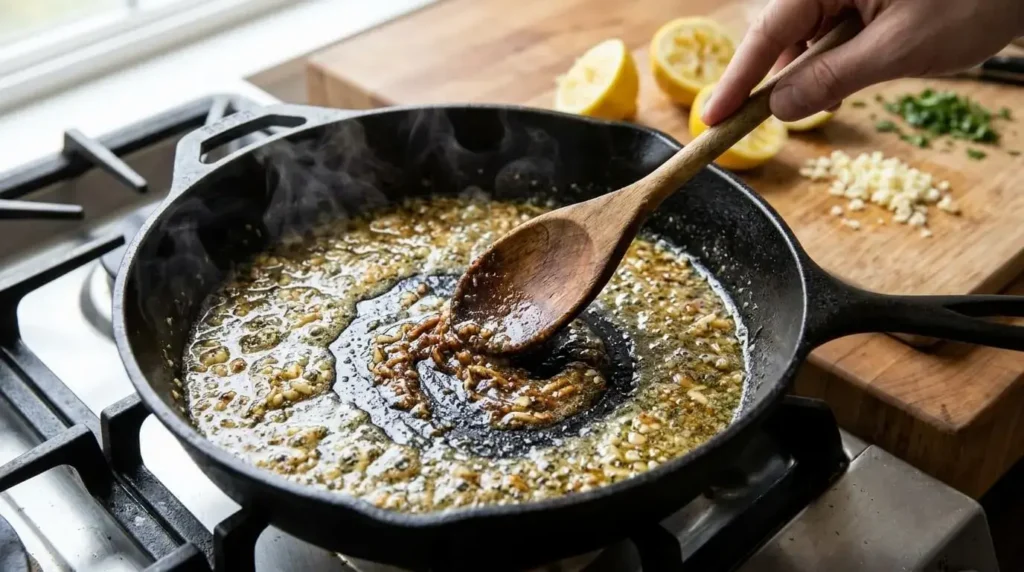
Reduce the burner heat to medium and add the remaining 1 tablespoon of extra-virgin olive oil along with the fresh minced garlic. Sauté for just 30 seconds, stirring constantly so the garlic blooms and turns fragrant without browning or turning bitter. Pour in the low-sodium chicken broth, freshly squeezed lemon juice, and honey. Use a flat-edged wooden spoon to scrape up all the deeply flavored browned bits (fond) stuck to the bottom of the skillet. Let the liquid bubble gently for 2 to 3 minutes until it reduces slightly into a glossy, aromatic glaze.
Step 4: Top with Feta, Walnuts, and Parsley
Turn off the heat and nestle the seared chicken breasts back into the skillet, spooning the warm lemon-garlic pan sauce generously over each piece. Pile high mounds of hand-crumbled block feta down the center of each chicken breast, followed by the crisp toasted walnuts and finely chopped fresh parsley. Let a few stray walnuts and herb flecks fall into the surrounding pan sauce, then bring the skillet straight to the table.
Pro Tips for Juicy Chicken & Crunchy Walnuts
- Dry the poultry thoroughly: Surface moisture is the enemy of a good sear. If chicken breasts are wet when they hit the hot oil, the pan temperature drops and the meat steams instead of developing that gorgeous paprika-spiced crust.
- Do not skip the 3-to-5-minute rest off the heat: Once you return the chicken to the pan and add the feta, turn off the burner completely. Letting the skillet sit for 3 to 5 minutes allows the chicken’s juices to redistribute while the residual warmth softens the feta curds without melting them into the sauce.
- Keep the walnuts crisp until the last second: Adding the toasted walnuts right before serving preserves their signature crunch. Even the few pieces that tumble into the glossy lemon-olive oil glaze will stay crisp through dinner if they aren’t simmered in the liquid.
Delicious Variations to Try
- Greek Olive & Tomato Twist: Toss ¼ cup of halved pitted Kalamata olives and ½ cup of halved cherry tomatoes into the skillet during the final 2 minutes of simmering the pan sauce for extra briny, sun-ripened Mediterranean sweetness.
- Walnut-Crusted Sheet-Pan Version: Looking for a walnut crusted lemon chicken texture? Press finely chopped toasted walnuts and crumbled feta gently onto the top of the seared chicken breasts, then slide the cast-iron skillet under your oven’s broiler for 90 seconds to 2 minutes until the nuts are deeply golden and the feta blisters lightly.
- Creamy Lemon-Feta Sauce: For a richer, velvety finish that remains 100% Mediterranean diet compliant, whisk 2 tablespoons of plain whole-milk Greek yogurt into the pan sauce off the heat right before returning the chicken to the pan.
What to Serve With Mediterranean Lemon Feta Chicken
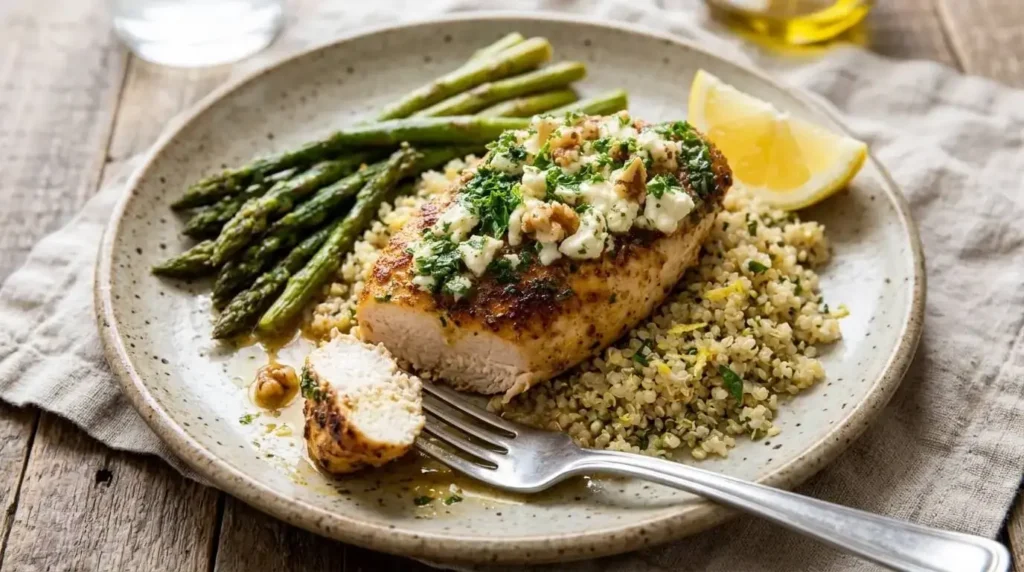
Because this dish produces an irresistible garlic-lemon olive oil pan sauce, pairing it with sides that can soak up every last drop is the best way to round out your meal:
- Whole Grains: Spoon the chicken and extra pan sauce over warm lemon-herb quinoa, fluffy brown basmati rice, or whole-wheat orzo. If you want an effortless side packed with classic Greek flavors, serve it alongside this crisp Greek Chopped Feta Salad for a vibrant, refreshing contrast.
- Roasted & Sautéed Vegetables: Simple, tender-crisp vegetables balance the rich feta and toasted nuts beautifully. Try serving these breasts next to Roasted Asparagus and Carrots, blistered zucchini and bell peppers, or a quick skillet of garlic-wilted baby spinach.
- Potatoes & Warm Bread: For a heartier family dinner, pair the chicken with Roasted Mediterranean Potatoes with Feta and Tomatoes or warm whole-wheat pita wedges to mop up the skillet juices.
Storage, Meal Prep & Reheating Instructions
- Fridge: Transfer cooled chicken breasts and pan sauce to an airtight glass container and refrigerate for up to 4 days. If you are making this ahead for weekday lunches, store the toasted walnuts in a separate small baggie at room temperature and sprinkle them on right after reheating so they stay crunchy.
- Freezer: You can freeze the cooked chicken breasts submerged in the lemon-garlic pan sauce in a freezer-safe container for up to 2 months. Leave off the feta, walnuts, and fresh parsley before freezing, and add them fresh once the dish is thawed and warmed through.
- Reheating: To prevent the lean chicken breasts from drying out, place them in a covered skillet over medium-low heat with 1 to 2 tablespoons of water or chicken broth for 4 to 5 minutes until gently warmed through. Avoid microwaving on high power, which can make chicken rubbery.
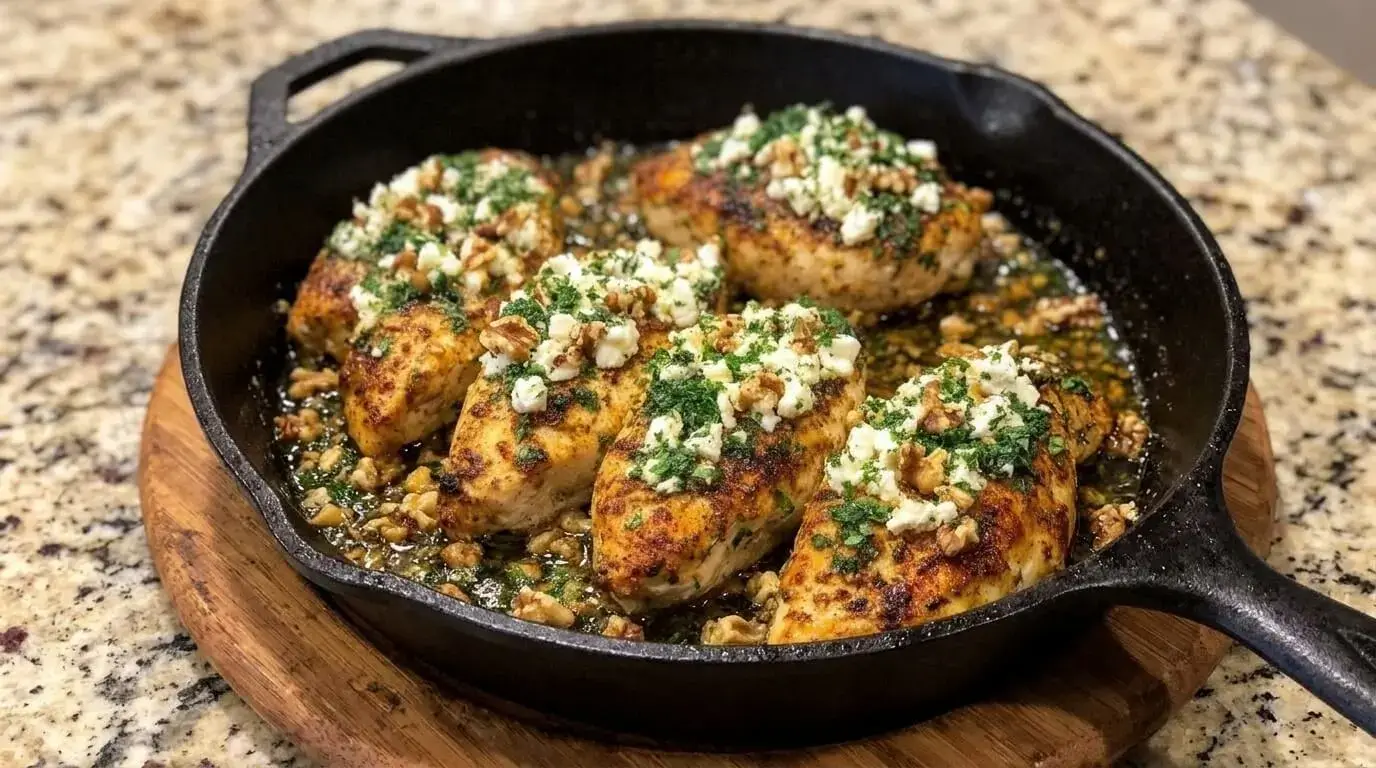
Mediterranean Lemon Feta Chicken with Walnuts
Ingredients
Method
- Place the chopped walnuts in a dry cast-iron skillet over medium heat. Toast for 2 to 3 minutes, stirring frequently until fragrant and lightly golden. Transfer immediately to a small bowl and set aside.
- Pat the chicken breasts completely dry with paper towels and gently pound the thickest parts to an even 3/4-inch thickness. In a small bowl, mix the sweet paprika, garlic powder, dried oregano, kosher salt, and black pepper. Rub the spice blend evenly over both sides of the chicken.
- Heat 2 tablespoons of extra-virgin olive oil in the same cast-iron skillet over medium-high heat until shimmering. Add the chicken breasts without overcrowding and sear for 5 to 6 minutes per side until a golden-brown crust forms and an instant-read thermometer registers 165°F (74°C) in the thickest part. Transfer the chicken to a clean plate.
- Reduce the heat to medium and add the remaining 1 tablespoon of extra-virgin olive oil and the minced garlic. Sauté for 30 seconds until fragrant without browning. Pour in the low-sodium chicken broth, fresh lemon juice, and honey, scraping up the flavorful browned bits (fond) from the bottom of the skillet. Simmer gently for 2 to 3 minutes until slightly reduced into a glossy glaze.
- Turn off the heat, return the chicken breasts to the skillet, and spoon the warm pan sauce generously over top. Pile the hand-crumbled feta cheese, toasted walnuts, and fresh chopped parsley down the center of each chicken breast. Let rest in the warm skillet for 3 to 5 minutes before serving.
Notes
- Mediterranean Diet Adaptation: Extra-virgin olive oil replaces butter in the pan sauce to keep this recipe 100% aligned with traditional Mediterranean diet guidelines while delivering the exact same glossy emulsion.
- Block Feta Tip: Always buy block feta in brine and crumble it yourself so the cheese softens into creamy pockets without the chalky starches found in pre-crumbled tubs.
- Chicken Thigh Swap: You can substitute 1.5 to 2 pounds of boneless, skinless chicken thighs; sear for 6 to 7 minutes per side until the internal temperature reaches 175°F.
Frequently Asked Questions
Does feta cheese melt when baked or warmed on chicken?
Authentic sheep’s-milk feta has a high protein-to-moisture ratio and a low-acid structure, so it does not melt into an ooey-gooey puddle like mozzarella. Instead, when warmed on hot chicken, hand-crumbled block feta softens into rich, creamy, velvety pockets while holding its shape and tangy flavor.
Should you toast walnuts before adding them to chicken?
Yes, dry-toasting walnuts in a skillet for 2 to 3 minutes before adding them to chicken is highly recommended. Toasting removes raw bitterness, releases natural aromatic oils, and creates a crisp, crunchy texture that holds up against warm pan sauces and juicy chicken breasts.
Can I use chicken thighs instead of chicken breasts for lemon feta chicken?
Absolutely. Boneless, skinless chicken thighs are an excellent swap for lemon feta chicken because their slightly higher fat content keeps them extra juicy and forgiving over medium-high heat. Sear seasoned thighs for 6 to 7 minutes per side until they reach an internal temperature of 175°F.
How do you keep chicken breasts from drying out in a skillet?
To keep chicken breasts juicy in a skillet, pat them completely dry, pound the thickest parts to an even ¾-inch thickness so they cook evenly, and avoid overcrowding the pan. Sear over medium-high heat just until the internal temperature reaches 165°F, then rest off the heat.
What goes well with Mediterranean lemon feta chicken?
Mediterranean lemon feta chicken pairs wonderfully with sides that absorb its bright garlic-lemon olive oil sauce, such as quinoa, brown basmati rice, whole-wheat orzo, or warm pita bread. For low-carb meals, serve it alongside roasted asparagus, sautéed spinach, or a classic cucumber-tomato Greek salad.