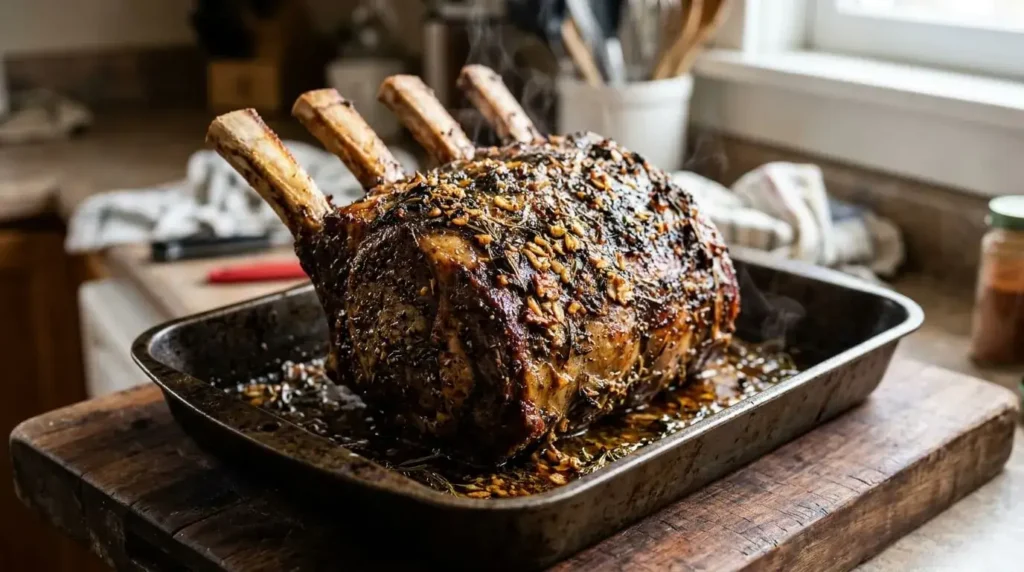
When you want a centerpiece that immediately commands attention at the dinner table, nothing rivals a Herb Crusted Prime Rib Roast. Whether you are hosting Christmas dinner, planning a festive Thanksgiving spread, or celebrating a milestone family gathering, a standing rib roast brings an unmistakable sense of occasion to the meal. What makes this particular version stand out is its Mediterranean-inspired seasoning paste. By blending extra-virgin olive oil, fresh garlic, chopped rosemary, fresh thyme, coarse salt, black pepper, and smoked paprika, you create an aromatic rub that adheres generously to the beef. Cooking the roast begins with a high-temperature sear at 450°F (230°C) to lock in a deeply browned, textured, dark herb-seasoned exterior, followed by gentle roasting at 325°F (165°C) so the interior cooks slowly and evenly. The result is a striking contrast: a thick, savory, rustic crust hugging tender, juicy beef that slices effortlessly off the bone.
Why You’ll Love This Herb Crusted Prime Rib Roast
- A rich, aromatic garlic and herb crust: Freshly minced garlic combined with woody rosemary, earthy thyme, and warm smoked paprika creates a bold, fragrant coating that perfumes your entire kitchen as it roasts.
- An impressive presentation with exposed rib bones: Roasting a bone-in standing rib roast gives you dramatic, tall exposed rib bones and a deeply browned, textured crust that looks worthy of a holiday feast.
- Simple, accessible ingredients: You do not need complicated marinades, specialty stocks, or hard-to-find spices—just eight straightforward pantry and produce staples that let the natural flavor of the beef shine.
- A straightforward oven-roasting method: After a quick 20-minute initial sear, the oven does almost all the work at a steady temperature, freeing you up to focus on side dishes and guests.
- Built for feeding a crowd: At 8 to 10 pounds, this roast comfortably serves a large family or holiday dinner party with generous portions and plenty of potential for next-day leftovers.
- Subtle Mediterranean-inspired warmth: Using olive oil as the base for fresh rosemary, thyme, and garlic brings bright, familiar Mediterranean character to a classic American holiday roast.
Ingredients You’ll Need
Using fresh herbs and quality spices makes all the difference when seasoning a large cut of beef. Fresh rosemary and thyme are strongly recommended here because their natural essential oils release into the olive oil during roasting, building a deeper, more fragrant crust than dried herbs can achieve.
- 1 standing rib roast, 4 to 5 bones, approximately 8 to 10 lb: The centerpiece of the dish. A bone-in standing rib roast is cut from the beef rib primal section and is left attached to the rib bones, which act as a natural roasting rack and add richness during cooking. By contrast, a boneless prime rib (ribeye roast) has the bones removed; it is slightly easier to carve, though it lacks the dramatic table presentation and natural heat insulation that the bones provide.
- 3 tablespoons olive oil: Acts as the liquid binder that helps the herbs, garlic, and spices adhere evenly across the surface of the roast while promoting deep browning in the oven.
- 4 cloves garlic, minced: Infuses the herb paste with pungent, savory depth and a rich roasted aroma.
- 2 tablespoons fresh rosemary, chopped: Delivers a distinctive, earthy, pine-like herbal note that pairs naturally with rich beef fat.
- 2 tablespoons fresh thyme, chopped: Adds a delicate, slightly floral herbal layer that balances the boldness of the rosemary and garlic.
- 1 tablespoon coarse salt: Essential for seasoning a thick cut of meat, drawing out surface moisture early so the exterior browns properly while enhancing the beef’s natural flavor.
- 1 tablespoon black pepper: Contributes gentle warmth and sharp, aromatic bite to the crust.
- 1 tablespoon smoked paprika: Brings a subtle, smoky undertone and rich reddish-brown color that deepens the visual appeal of the finished crust.
How to Make Herb Crusted Prime Rib Roast
Step 1 – Bring the Roast to Room Temperature
Take your standing rib roast out of the refrigerator and let it sit on the counter for approximately 1 hour before it goes into the oven. Taking the chill off the meat helps the heat penetrate toward the center more evenly, reducing the risk of an overcooked outer ring and an undercooked core. Keep food safety in mind during this step: never leave raw beef sitting out at room temperature for more than 2 hours total.
Step 2 – Preheat the Oven
While the roast rests on the counter, position an oven rack in the lower-middle third of your oven so the tall roast fits comfortably without getting too close to the upper heating element. Preheat the oven to 450°F (230°C). Starting with a hot oven is essential for triggering rapid browning on the exterior, setting the foundation for your crust right away.
Step 3 – Prepare the Garlic Herb Mixture
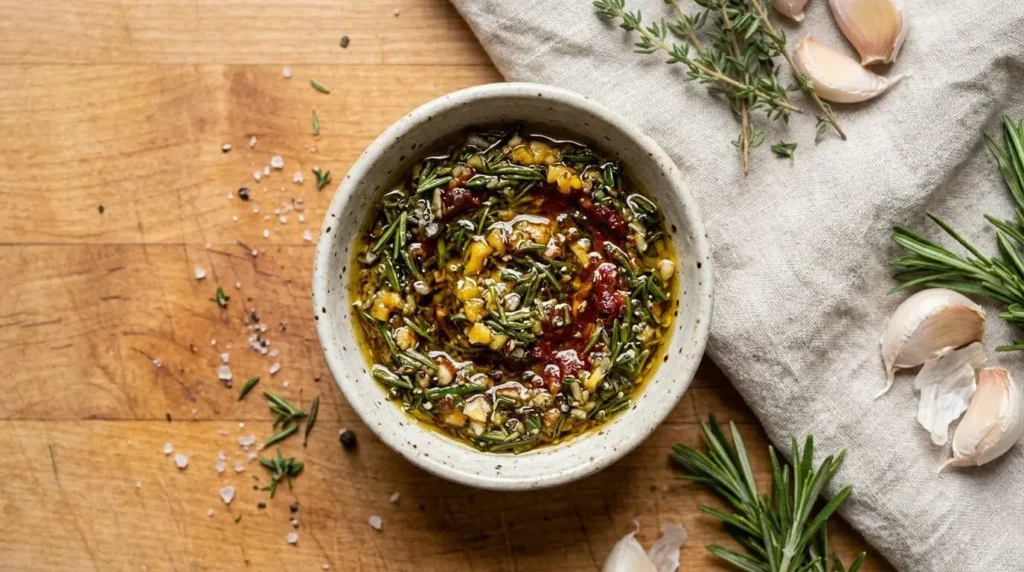
In a medium mixing bowl, combine the 3 tablespoons of olive oil, 4 cloves of minced garlic, 2 tablespoons of chopped fresh rosemary, 2 tablespoons of chopped fresh thyme, 1 tablespoon of coarse salt, 1 tablespoon of black pepper, and 1 tablespoon of smoked paprika. Stir thoroughly until the ingredients form a thick, cohesive, deeply fragrant herb paste.
Step 4 – Season the Prime Rib
Pat the exterior of the beef dry with paper towels so the seasoning clings well. Spoon the garlic herb mixture over the roast and use your hands to rub it evenly across every surface, pressing gently so the herbs adhere to the top, ends, and sides. Distributing the paste uniformly ensures that every slice gets an equal balance of savory seasoning and crust.
Step 5 – Sear the Roast
Set a roasting rack inside a sturdy roasting pan and place the seasoned prime rib bone-side down on the rack. The curved rib bones naturally elevate the meat and keep it steady. Transfer the pan to the preheated 450°F (230°C) oven and roast uncovered for 20 minutes. This initial high-temperature blast sears the outside, caramelizing the garlic, smoked paprika, and herbs into a dark, flavorful crust.
Step 6 – Reduce the Oven Temperature and Continue Roasting
Without opening the oven door longer than necessary, lower the oven temperature to 325°F (165°C). Continue roasting until the internal temperature reaches approximately 125°F (52°C) for medium-rare before resting. As a general planning estimate, allow roughly 15 minutes per pound—which works out to about 2 to 2.5 hours for an 8 to 10-pound roast—though you should never rely on the clock alone. Oven calibration, the exact thickness of your roast, and its starting temperature all affect how fast it cooks. Use a reliable meat thermometer inserted into the thickest central portion of the beef, making sure the probe tip is not touching a rib bone or resting inside a large pocket of fat.
Step 7 – Rest the Prime Rib
Once your thermometer hits your target pull temperature, remove the roasting pan from the oven and transfer the roast to a cutting board (or leave it on the rack) to rest uncovered for 20 to 30 minutes before carving. During this rest, carryover cooking will continue to raise the internal temperature by roughly 5°F to 10°F, while the muscle fibers relax and reabsorb their juices. If you slice into the beef too early, those juices will spill onto the cutting board instead of staying inside the meat.
Step 8 – Slice and Serve
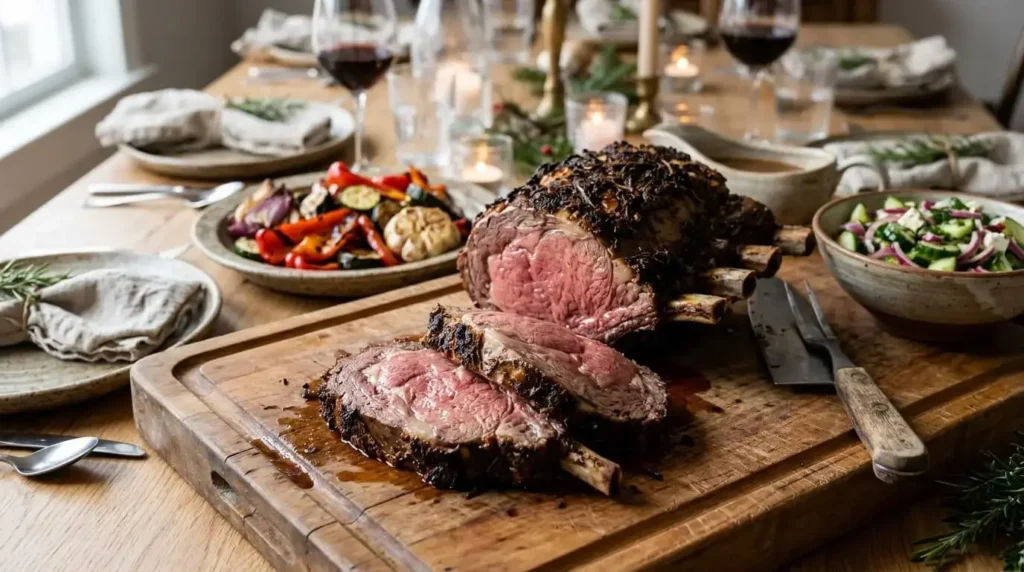
When the resting period is complete, steady the roast with a carving fork and use a long, sharp slicing knife to cut along the inside curve of the rib bones if you want to remove the rack first, or slice directly between the bones to serve individual bone-in portions. Each slice will showcase a thick, deeply browned, rustic herb crust framing tender, rosy, juicy beef.
Tips for the Best Prime Rib Roast
- Choose a well-marbled standing rib roast: Look for a bone-in roast with fine flecks of white intramuscular fat (marbling) distributed throughout the red meat, as this melts during roasting to keep the beef tender and flavorful.
- Stick with fresh rosemary and thyme: Fresh herbs hold up better to high heat and release vibrant oils into the olive oil rub, giving you an authentic garlic rosemary prime rib aroma.
- Coat every exposed surface: Press the herb mixture onto the flat cut ends as well as the fat cap so every single slice has a savory edge.
- Use a roasting rack: Elevating the roast on a rack inside your roasting pan allows hot air to circulate underneath and prevents the bottom from steaming in pan drippings.
- Treat cooking times as estimates: A 4-bone roast and a 5-bone roast of similar weight can cook at different rates depending on how thick they are; let temperature guide you rather than minutes.
- Invest in a dependable thermometer: Either a digital instant-read thermometer or a leave-in probe thermometer takes all the guesswork out of roasting an expensive cut of meat.
- Never skip the 20-to-30-minute rest: Resting is what keeps your oven roasted prime rib succulent and ensures clean, neat slices.
- Carve with a long, non-serrated knife: A long carving knife allows you to make smooth, single-stroke cuts without tearing the delicate herb crust.
Prime Rib Cooking Time and Internal Temperature
When planning your holiday timeline, use 15 minutes per pound at 325°F (165°C) (after the initial 20-minute sear at 450°F) purely as a rough scheduling estimate. Because every oven runs slightly differently and roasts vary in diameter, an exact finished temperature cannot be guaranteed from a time-per-pound formula alone. Always rely on an accurate meat thermometer inserted into the geometric center of the roast.
Use the following culinary doneness temperatures as a guide for when to pull the roast from the oven (keeping in mind that carryover heat will raise the final temperature during the 20-to-30-minute rest):
- Rare: Pull at approximately 120–125°F (49–52°C) before resting (rises to about 125–130°F after resting)
- Medium-Rare: Pull at approximately 125–130°F (52–54°C) before resting (rises to about 130–135°F after resting)
- Medium: Pull at approximately 135–140°F (57–60°C) before resting (rises to about 140–145°F after resting)
Food Safety Note: The temperatures listed above reflect traditional culinary preferences for prime rib doneness rather than official food-safety guarantees. According to USDA food-safety guidelines, whole cuts of beef should reach a minimum internal temperature of 145°F (63°C) followed by a 3-minute rest to ensure harmful bacteria are destroyed.
What to Serve with Herb Crusted Prime Rib
Because a standing rib roast is rich, savory, and deeply satisfying, the best accompaniments balance that richness with bright acidity, crisp textures, or earthy roasted vegetables. While these side dishes are not part of the main recipe, they pair effortlessly with the Mediterranean herb notes in the crust:
- Oven-Roasted Mediterranean Vegetables: A colorful medley of tender, caramelized vegetables adds natural sweetness and freshness to the plate—try our oven roasted Mediterranean vegetables alongside your roast.
- Greek Lemon Potatoes or Rosemary Roasted Potatoes: Crispy-edged potatoes infused with bright citrus, garlic, or extra rosemary soak up the flavorful pan juices on the plate.
- Slow Cooker Onion Butter Potatoes: If your oven space is completely occupied by the prime rib, making slow cooker onion butter potatoes frees up oven racks while delivering comforting, tender potatoes.
- Fresh Green Salad: A crisp salad dressed in a sharp lemon-herb vinaigrette cuts right through the richness of the marbled beef; a bright bowl like our Mediterranean cucumber yogurt feta salad also brings cool, refreshing contrast.
- Roasted Carrots or Garlic Green Beans: Simple, vibrant green and orange vegetables add color to a holiday platter and cook quickly while the roast rests.
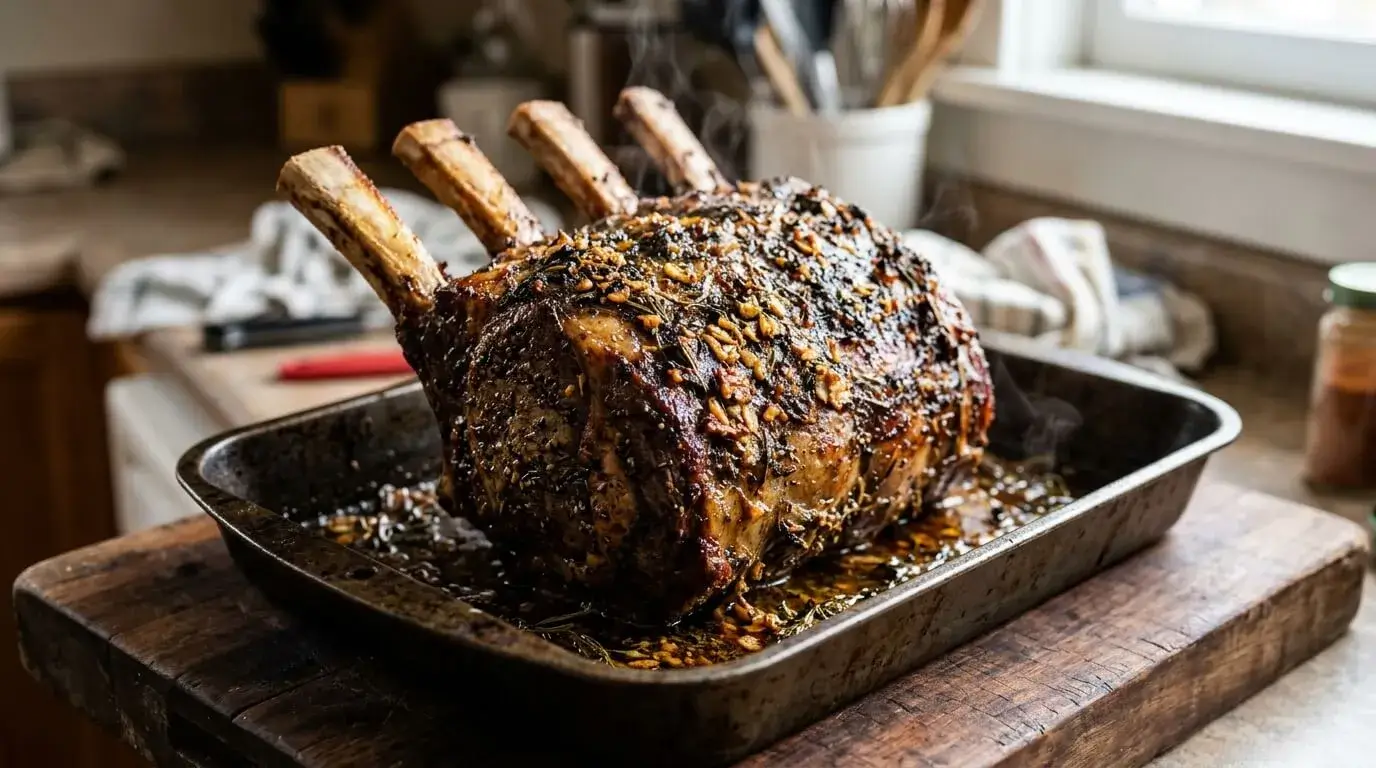
Herb Crusted Prime Rib Roast
Ingredients
Method
- Let roast sit at room temperature for 1 hour. Preheat oven to 450°F (230°C).
- In a bowl mix olive oil, garlic, rosemary, thyme, salt, pepper, and paprika.
- Rub mixture all over the beef.
- Place roast bone-side down on a rack in a roasting pan.
- Roast at 450°F for 20 minutes to sear.
- Reduce oven to 325°F (165°C) and cook until internal temperature reaches 125°F for medium rare, about 15 minutes per pound.
- Remove from oven and rest for 20 to 30 minutes before slicing.
- Slice between bones and serve.
Notes
- Cooking Time Guidance: The 15-minutes-per-pound timing at 325°F (165°C) is an initial planning estimate only. Actual roasting time depends on the thickness of your roast, oven accuracy, and starting temperature. Always rely on a digital meat thermometer inserted into the thickest central portion of the meat (away from bone and large fat pockets).
- Food Safety Note: Pulling the roast at 125°F reflects traditional medium-rare culinary doneness before resting. Official USDA food-safety guidelines recommend cooking whole beef roasts to an internal temperature of 145°F followed by a 3-minute rest.
- Fresh Herbs: Fresh chopped rosemary and thyme are strongly recommended over dried herbs for the best aroma and crust texture.
How to Store and Reheat Leftover Prime Rib
If you are lucky enough to have leftovers, proper cooling and gentle reheating will keep the beef tender rather than tough or dry:
- Cool and refrigerate promptly: Allow the carved beef to cool slightly at room temperature, then transfer slices or larger intact portions into an airtight container within 2 hours of cooking.
- Refrigerator storage: Store leftover prime rib in the refrigerator and enjoy it within 3 to 4 days.
- Freezing for later: Wrap individual slices tightly in plastic wrap, place them inside a heavy-duty freezer bag with excess air pressed out, and freeze for up to 2 to 3 months. Thaw overnight in the refrigerator before reheating.
- Reheat gently: To avoid overcooking the interior, place slices in a baking dish with a splash of beef broth, cover tightly with foil, and warm in a low oven at 250°F (120°C) for 10 to 15 minutes just until heated through. Avoid high microwave power, which quickly turns medium-rare beef gray and chewy.
- Creative next-day meals: Thinly slice cold or gently warmed leftovers for hearty steak sandwiches with horseradish sauce, pile strips over crisp green salads, tuck them into warm pita wraps, or fold diced pieces into breakfast hash.
Frequently Asked Questions
What is the difference between prime rib and standing rib roast?
They come from the exact same cut of beef—the primal rib section—and the terms are often used interchangeably. “Standing rib roast” specifically describes a bone-in roast that can “stand” upright on its curved rib bones while roasting, whereas “prime rib” refers generally to the rib roast cut itself (whether bone-in or boneless).
How long does it take to cook an 8–10 lb prime rib roast?
After searing at 450°F (230°C) for 20 minutes, an 8 to 10-pound roast typically takes around 2 to 2.5 hours at 325°F (165°C) using the 15-minute-per-pound planning guideline. However, always use a meat thermometer to check the center of the roast rather than relying solely on time.
What is the best oven temperature for prime rib?
A two-stage temperature approach works wonderfully: start at 450°F (230°C) for 20 minutes to build a deeply browned herb crust, then lower the oven to 325°F (165°C) to roast the interior gently and evenly.
Should prime rib be cooked covered or uncovered?
Prime rib should always be roasted uncovered. Covering the pan traps steam, which softens the seasoning rub and prevents the olive oil, garlic, and herbs from developing a crisp, dark, flavorful crust.
What herbs go best with prime rib?
Sturdy, aromatic Mediterranean herbs like fresh rosemary and fresh thyme are ideal because they withstand high roasting temperatures without burning and complement the rich flavor of beef, especially when paired with minced garlic and smoked paprika.
How do you get a good herb crust on prime rib?
Pat the surface of the meat dry first, mix your chopped fresh herbs and spices with olive oil so they form a thick paste, coat the entire exterior evenly, and start the roast uncovered in a hot 450°F (230°C) oven for the first 20 minutes.
Should prime rib rest before slicing?
Yes. Letting the roast rest for 20 to 30 minutes before carving allows carryover heat to finish bringing the center up to temperature and gives the juices time to settle back into the meat fibers so they stay inside every slice.
How many people does an 8–10 lb prime rib roast serve?
A good rule of thumb for a bone-in standing rib roast is about 2 people per rib bone (or roughly ¾ to 1 pound of bone-in weight per guest). A 4 to 5-bone roast weighing 8 to 10 pounds comfortably serves 8 to 10 people.
Can I prepare the herb mixture ahead of time?
Yes, you can mix the olive oil, minced garlic, chopped rosemary, chopped thyme, coarse salt, black pepper, and smoked paprika up to 24 hours in advance. Store it covered in the refrigerator, and let it sit at room temperature for 15 to 20 minutes before rubbing it onto the beef so the olive oil loosens back up.
Final Thoughts
Bringing a Herb Crusted Prime Rib Roast to the table is one of the most rewarding ways to celebrate a holiday meal or special family gathering. With nothing more than a quality bone-in roast and a bold blend of olive oil, fresh garlic, rosemary, thyme, coarse salt, black pepper, and smoked paprika, you get an aromatic, deeply browned crust and tender, juicy beef every time. Save this recipe for your next celebratory dinner, and if you make it for your table, leave a comment below to share how it turned out!