Complete Science-Backed
Mediterranean Diet Guide
to Eating for Life
The Mediterranean Diet isn’t just a way of eating; it’s a lifestyle rooted in balance, flavor and longevity. This diet has become the world’s most researched and recommended approach to healthy living, and is inspired by the traditional food patterns of Greece, Italy, Turkey, Southern France, Middle east, parts of North Africa and other coastal regions.
In this guide, you’ll learn what the Mediterranean diet truly is, why it works, and how to start enjoying its benefits, provided with sample meal plans, food lists and real-world tips from the heart of the Mediterranean.
What Is the Mediterranean Diet?
The Mediterranean Diet is a traditional eating pattern inspired by the long-term food habits of people in countries like Greece, Italy and Crete in the early 1960s. It emphasizes Extra Virgin Olive Oil (EVOO) as the primary source of fat, high consumption of vegetables, fruits, legumes, whole grains, nuts and seeds. It emphasizes moderate intake of fish and poultry with limited consumption of red meat and processed foods. It is not defined by restriction, but by abundance, flavor and a connection to culture and movement.
Discover the world’s most-studied eating pattern that promotes heart health, longevity, and joyful living—backed by 60+ years of research and enjoyed by millions worldwide.
Foundations of the Mediterranean Lifestyle
Before diving into the foods, it’s crucial to understand that the Mediterranean Diet is not a strict regimen with complicated counting or any rigid restrictions. Instead, it is a holistic healthy lifestyle focused on enjoying fresh, minimally processed foods, preparing meals at home and engaging in social dining and daily physical activity. It encourages balance and savoring your food, making it an incredibly sustainable pattern for life.
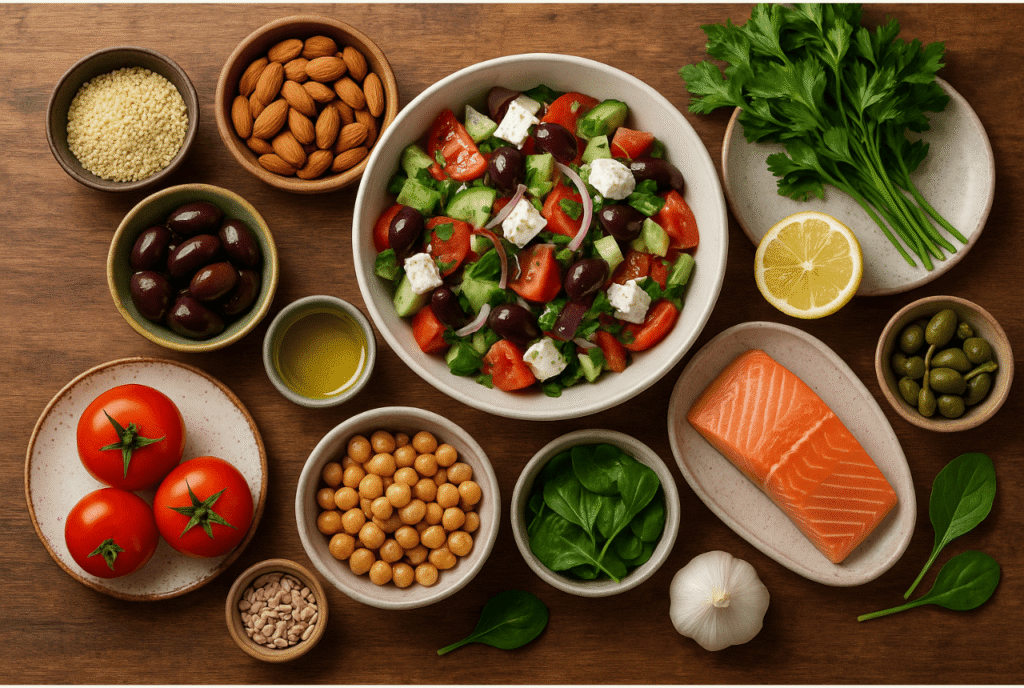
Mediterranean Diet Origins: From Crete To Your Kitchen
The modern Mediterranean Diet concept was largely popularized by American nutritionist Ancel Keys and his wife Margaret. They began studying the health and dietary patterns of seven countries in the 1950s as part of the seven countries study and observed that populations in Mediterranean regions exhibited remarkably low rates of coronary heart disease, despite a diet that was relatively high in fat (around 40% of total calories). These regions particularly include island of Crete and parts of Southern Italy.
The “secret” behind their health was the type of fat, which primarily includes monounsaturated fats from Extra Virgin Olive Oil and Omega-3s from fish, not saturated fats from processed foods.
This study cemented the diet’s reputation as a powerful tool for heart health, moving it from a cultural tradition to a global standard for health and wellness.
Regional Variations Of Mediterranean Diet
The Mediterranean diet isn’t just dedicated to a specific culture or region; it beautifully varies across regions, each adding its own cultural flair and local ingredients. And every Mediterranean country brings a unique flavor to this heart-healthy way of eating from grilled meats of Greek to Italian pesto and Moroccan tagines.
| Region / Country | Signature Dish | Key Twist |
|---|---|---|
| Greek | Souvlaki | Yogurt marinades, oregano, olive oil |
| Italian | Pesto | Fresh basil, pine nuts, extra-virgin olive oil |
| Iberian (Spain & Portugal) | Gazpacho | Tomatoes, olive oil, and sherry vinegar |
| North African (Morocco, Tunisia) | Tagine | Spices like cumin and ras el hanout |
| Turkish | Imam Bayildi | Stuffed eggplant with olive oil and herbs |
| Egyptian | Koshari | Lentils, rice, and chickpeas with tomato-garlic sauce |
| Middle Eastern (Lebanon, Palestine, Syria) | Tabbouleh | Parsley, bulgur, and lemon-rich freshness |
| Cypriot & Maltese | Halloumi Grill | Brined cheese, olive oil, and fresh herbs |
| French (Provence) | Ratatouille | Olive oil and slow-cooked vegetables |
🌿 Core Principles of Mediterranean Diet: 10 Rules to Live By
The Mediterranean Diet isn’t about strict rules — it’s a lifestyle rooted in balance, flavor, and joyful eating. Here are the ten timeless principles that define it:
Replace butter and refined oils with extra virgin olive oil (EVOO). It’s rich in heart-healthy monounsaturated fats and antioxidants — ideal for cooking, dressing, and drizzling.
Base your plate around vegetables, fruits, legumes, nuts, and whole grains. Aim for a colorful mix that fills 80–90% of your daily diet.
Opt for whole grains like farro, bulgur, barley, quinoa, and whole wheat instead of white bread, pasta, or rice. They keep you full and support steady energy.
Beans, lentils, and chickpeas are essential sources of plant-based protein and fiber. Add them to soups, salads, stews, or enjoy as spreads like hummus.
Prioritize fatty fish rich in omega-3s — salmon, sardines, mackerel, or tuna. Grill, bake, or poach for the healthiest preparation.
A small handful of almonds, walnuts, pistachios, or sunflower seeds makes a nutrient-dense, satisfying snack.
Flavor food naturally with oregano, basil, rosemary, garlic, cumin, or mint. They add depth while supporting anti-inflammatory benefits.
Enjoy red meat sparingly (no more than 2–3 times per month). Focus instead on fish, poultry, or plant proteins, and minimize processed foods.
Drink plenty of water throughout the day. If desired, enjoy a small glass of red wine with meals — always mindfully and in moderation.
Savor meals with family and friends, and stay active through natural movement — walking, gardening, dancing, or any joyful daily activity.
The Mediterranean Diet Pyramid
Understanding the Mediterranean Pyramid Structure
The Mediterranean Food Pyramid serves as a simple visual guide, showing which foods should be consumed daily (the base), weekly (the middle tiers), and occasionally (the apex). Unlike traditional pyramids, the base also includes crucial lifestyle elements like physical activity and social interaction, reinforcing the diet’s holistic nature.
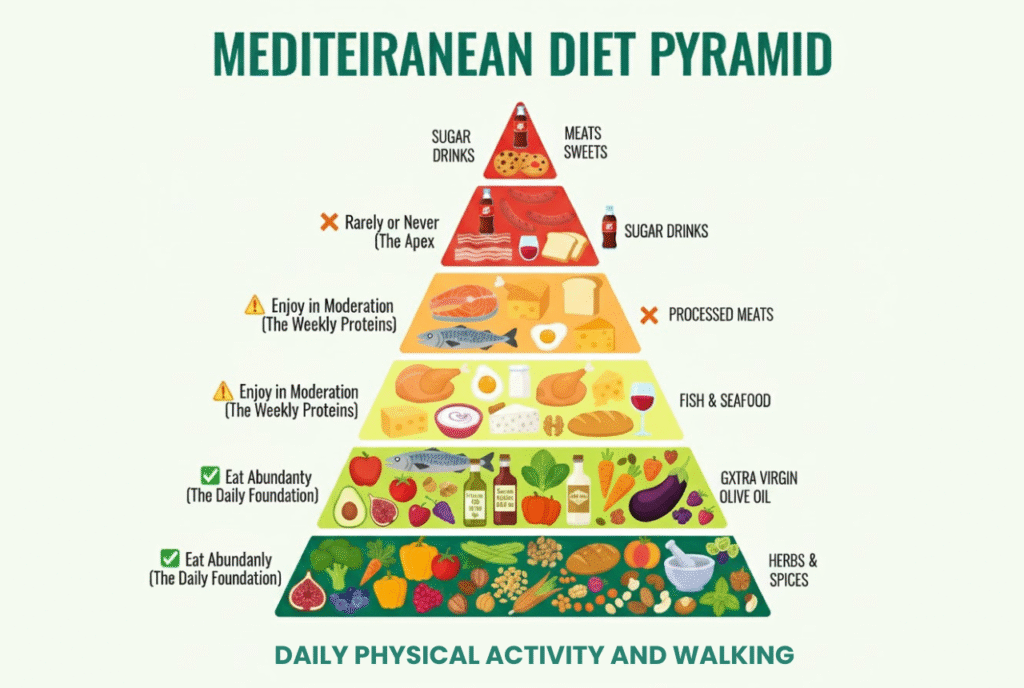
This visual represents the ideal frequency: the widest section at the bottom represents the foods you should eat most often, while the narrowest section at the top represents foods you should only enjoy occasionally.
Foods to Eat vs. Limit (A Comprehensive Breakdown)
The Mediterranean Food Pyramid serves as a simple visual guide, showing which foods should be consumed daily (the base), weekly (the middle tiers), and occasionally (the apex). Unlike traditional pyramids, the base also includes crucial lifestyle elements like physical activity and social interaction, reinforcing the diet’s holistic nature.
Foods to Eat vs. Limit (A Comprehensive Breakdown)
The Mediterranean Food Pyramid serves as a simple visual guide, showing which foods should be consumed daily (the base), weekly (the middle tiers), and occasionally (the apex). Unlike traditional pyramids, the base also includes crucial lifestyle elements like physical activity and social interaction, reinforcing the diet’s holistic nature.
Enjoy in Moderation (The Weekly Proteins)
- Fish and Seafood: Salmon, tuna, sardines, mackerel, shrimp, mussels. Aim for 2-3 servings per week, prioritizing oily fish for Omega-3s.
- Poultry: Chicken and turkey breast. Eat in moderate portions, typically grilled, baked or stewed.
- Eggs: Used for breakfast or simple meals, consumed in moderation (around 3-5 per week).
- Dairy: Yogurt (especially Greek) and cheese (feta, ricotta, fresh mozzarella). Choose unsweetened dairy and use cheese as a garnish rather than a main component.
- Red Wine: Up to one 5-ounce glass per day for women and up to two for men, with a meal. (Optional, not recommended)
Rarely or Never (The Apex)
- Processed Meats: Bacon, sausage, hot dogs, cold cuts.
- Refined Grains: White bread, white pasta, pastries, cookies made with refined flour.
- Sugary Drinks: Soda, high-sugar juices, and sweetened teas.
- Trans Fats and Highly Processed Oils: Found in fast food and commercially baked goods.
Health and Authority (Evidence & Research)
The Mediterranean Diet is backed by decades of clinical research — more than any other diet on Earth.
Evidence-Based Health Benefits
The Mediterranean Diet’s reputation isn’t based on anecdotal evidence—it’s backed by decades of rigorous scientific research, establishing it as a gold standard for disease prevention and a longer, higher quality of life.
Heart Health and Lower Cholesterol
This diet is synonymous with cardiovascular wellness. The emphasis on EVOO (monounsaturated fat), nuts, and oily fish dramatically improves the ratio of “good” HDL cholesterol to “bad” LDL cholesterol, and its anti-inflammatory nature helps keep arteries clear and pliable.
Weight Management and Metabolism
The diet promotes sustainable weight management not through calorie restriction, but by promoting satiety. Foods like legumes, whole grains, and vegetables are high in fiber, which keeps you full longer and helps regulate blood sugar, preventing the energy crashes that lead to overeating.
Brain Health and Cognitive Function
A diet rich in antioxidants (from produce) and healthy fats (Omega-3s) helps protect brain cells from oxidative stress. Studies show that adherence to the Mediterranean pattern is associated with a slower rate of cognitive decline and a reduced risk of age-related memory issues.
Scientific Studies & Research (By the Numbers)
The true authority of this eating pattern is demonstrated by its performance in major clinical trials.
| Health Benefit | Key Study | Risk Reduction |
|---|---|---|
| Heart Disease | PREDIMED Study (2013) | 30% lower risk of major cardiovascular events. |
| Stroke | Lyon Heart Study | 70% reduction in recurrence and mortality after a first heart attack. |
| Type 2 Diabetes | Diabetologia (2014) | 52% lower incidence in high-risk individuals. |
| Alzheimer's Disease | MIND Diet Study | 53% reduced risk of developing Alzheimer's (for high adherence). |
| All-Cause Mortality | Harvard Nurses Study | 25% lower death risk overall. |
| Cancer | European Studies (Meta-analysis) | 10-15% reduction across various cancer types. |
“The Mediterranean Diet is consistently associated with superior health outcomes, particularly in reducing the risk of cardiovascular disease. The evidence is overwhelming: this pattern of eating works not as a temporary fix, but as a long-term preventative measure.” – Excerpted analysis from a leading nutritional journal.
Getting Started: The Action Plan
The Mediterranean Diet is backed by decades of clinical research — more than any other diet on Earth.
Your Guide to Starting the Mediterranean Lifestyle
Transitioning to a new lifestyle can feel daunting, but the Mediterranean Diet is designed for gradual, enjoyable adoption.
7 Practical Tips (Actionable Swaps)
Here are seven simple, actionable changes you can make this week to kickstart your journey:
- Swap Butter for EVOO: Make the fundamental change today. Use Extra Virgin Olive Oil as your main cooking oil, replacing butter, margarine, and refined vegetable oils.
- Add a Daily Salad: Commit to having at least one large, vegetable-rich salad with dinner (dressed simply with EVOO and lemon juice).
- Embrace Legumes: Incorporate a portion of beans, chickpeas, or lentils into your diet every day, whether in a soup, salad, or simple side dish.
- Ditch Sugary Drinks: Replace soda, sweetened juices, and packaged iced teas with plain water, sparkling water, or unsweetened herbal tea.
- Plan Two Fish Meals: Consciously schedule and cook two fish or seafood meals per week to ensure you get adequate Omega-3s.
- Batch-Cook Your Grains: Prepare large batches of whole grains like quinoa or farro on Sunday to easily add to meals throughout the week.
- Flavor Naturally: Buy a fresh basil or rosemary plant and commit to using fresh herbs instead of reaching for the salt shaker.
| Day | Breakfast | Lunch | Dinner |
|---|---|---|---|
| Monday | Greek yogurt with honey, walnuts, and berries. | Large lentil soup with whole-wheat bread for dipping in EVOO. | Baked salmon with roasted zucchini and bell peppers. |
| Tuesday | Oatmeal made with milk/water, topped with sliced almonds and cinnamon. | Leftover salmon and veggies, served cold over a bed of mixed greens. | Chicken breast with quinoa and a side of steamed spinach. |
| Wednesday | Scrambled eggs with spinach and tomatoes, lightly seasoned. | Whole-wheat pita stuffed with hummus, cucumber, and feta. | Whole-wheat pasta with a simple tomato sauce, basil, and chickpeas. |
| Thursday | Whole-wheat toast with mashed avocado and a sprinkle of black pepper. | Tuna salad (mixed with EVOO and lemon, not mayo) and a side salad. | Meatless: Large Greek salad with white beans and EVOO dressing. |
| Friday | Breakfast smoothie with milk, spinach, banana, and chia seeds. | Simple side of olives, cheese, cucumber, and whole-wheat crackers. | Grilled shrimp skewers with lemon, served with brown rice. |
| Saturday | Traditional Pancakes (made with whole-wheat flour and olive oil) with fruit. | Homemade pizza on whole-wheat crust, topped with vegetables. | Lamb stew (small portion) with barley and root vegetables. |
| Sunday | Omelet with onions, peppers, and a small amount of goat cheese. | Leftover stew, reheated. | Hearty roasted vegetable plate with grilled halloumi cheese. |
Lifestyle Beyond Food
The Mediterranean lifestyle is about more than just food choices; it’s about making time for life’s simple pleasures:
- Social & Communal Eating: Slow down and savor your meals. Turn off the screens and share food with family, friends, or neighbors. This encourages mindful eating and helps regulate portion sizes.
- Physical Activity: Integrate movement into your daily routine. This doesn’t mean hitting the gym hard; it means walking after dinner, gardening, taking the stairs, or biking. The goal is daily, enjoyable movement.
- Mindfulness and Rest: Reduce stress by taking time to enjoy the process of preparing food and resting adequately.
Common Questions and Final Call
Addressing common misconceptions helps users adopt the lifestyle with confidence.
Q: Is pasta allowed on the Mediterranean Diet?
Q: Is pasta allowed on the Mediterranean Diet?
Yes, absolutely! Pasta is a staple, but the focus is on whole-wheat (unrefined) pasta consumed in moderate portions (not massive bowls) and typically paired with vegetable or legume-based sauces, not heavy, creamy sauces.
Q: Can the Mediterranean Diet be vegetarian or vegan?
Q: Can the Mediterranean Diet be vegetarian or vegan?
A: Yes, it is naturally plant-forward, making it ideal for vegetarian and even vegan adaptations. Simply focus on the abundant daily foods (legumes, nuts, whole grains) and avoid the moderate/occasional animal products.
Q: What about wine? Do I have to drink red wine?
Q: What about wine? Do I have to drink red wine?
No, the moderate consumption of red wine is optional. If you do not currently drink alcohol, there is no health reason to start. The benefits are primarily derived from the food and lifestyle principles.
Q: How is the Mediterranean Diet different from the DASH or Keto diets?
Q: How is the Mediterranean Diet different from the DASH or Keto diets?
A: The Mediterranean Diet shares goals with DASH (lowering blood pressure) but is more flexible and culturally rich. It is the direct opposite of the Keto diet; Keto heavily restricts carbohydrates, whereas the Mediterranean Diet embraces healthy, high-fiber carbs (whole grains and legumes) as a daily foundation.
Q: Is it expensive to follow the Mediterranean Diet?
Q: Is it expensive to follow the Mediterranean Diet?
A: No, in fact, it can be very budget-friendly. The most expensive foods (red meat and refined sweets) are limited, while the foundation foods (beans, lentils, seasonal vegetables, whole grains) are typically the least expensive pantry staples.