Introduction To Paella Recipe: A Taste of Valencia in Your Kitchen
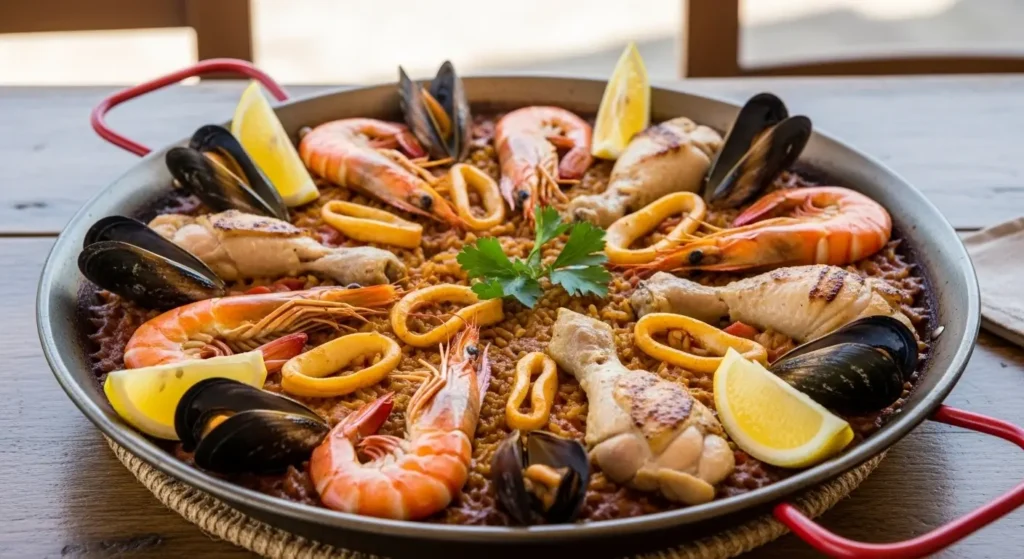
Paella recipe is more than just a Spanish rice dish; it is a culinary celebration, deeply rooted in the traditions of Valencia. This iconic seafood platter brings people together, defined by its vibrant golden color from the precious saffron, the perfect texture of specialized bomba rice and most importantly, the coveted crispy crust known as socarrat.
While purists may argue over the exact ingredients, traditional Valencian paella features chicken, rabbit and green beans, but our recipe provides an authentic, yet approachable path to making a truly spectacular mixed paella (with both seafood and chicken). We strip away the unnecessary complexity and focus on the core techniques and authentic ingredients that deliver an intensely flavorful, satisfying result that is perfect for gatherings of any size.
Why This Is the Best Paella Recipe?
This is the best and easiest paella recipe you’ve been searching for. We’ve combined Spanish techniques with straightforward instructions, ensuring success even for beginners, such as those learning to make paella. Unlike many online recipes, our guide will walk you through mastering the essential elements, including the flavorful sofrito, the critical broth-to-rice ratio and the final flourish of the crispy socarrat. This guide guarantees an authentic Spanish paella experience without the fuss, whether you opt for a simple chicken paella recipe or an elaborate seafood paella recipe.
If you’re a regular Mediterranean diet follower, you can explore our Mediterranean Diet Recipes by dish type, cuisine, diet and meal type.
Pealla Recipe Ingredients and Substitutions
Essential Ingredients for Classic Paella
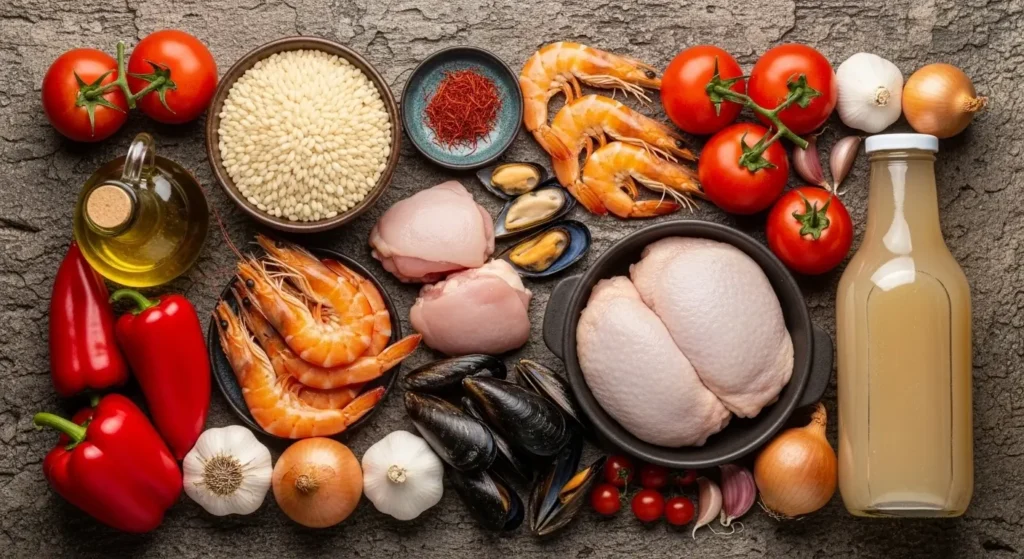
Focusing on high-quality Spanish ingredients is paramount to achieve the best flavor and texture:
- Bomba or Calasparra Rice: These are the best rice varieties for paella. These short-grain varieties absorb three times their volume in liquid without bursting, which is crucial for a creamy yet firm result.
- Saffron Threads: The secret ingredient “Saffron” provides the distinct flavor and signature golden hue. One common question: Can I make paella without saffron? Yes, but the taste and color won’t be authentic. Make sure that you use only genuine threads.
- Smoked Paprika (Pimentón): For the depth, use Spanish Pimentón de la Vera (sweet or bittersweet).
- High-Quality Broth: Use a homemade or good-quality commercial chicken or fish broth. Because this is where most of the flavor comes from.
- Protein: For a mixed paella, use bone-in, skin-on chicken thighs (for flavor) and a mix of fresh seafood (prawns, mussels and squid).
- Sofrito Base: Onions, garlic, ripe tomatoes and red bell peppers, all of which should be finely diced.
- Olive Oil: Spanish extra virgin olive oil.
Substitutions for Paella Recipe
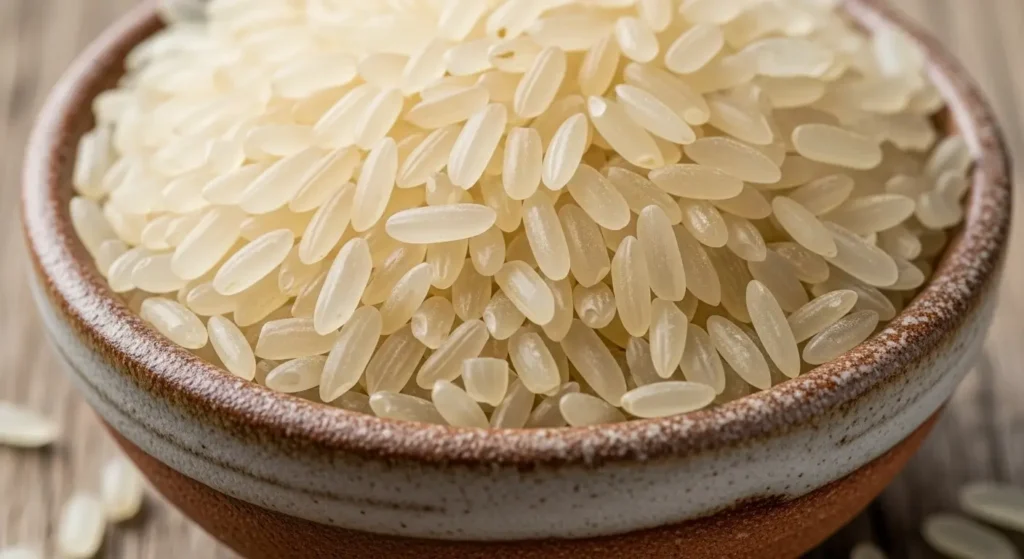
- Rice Alternative: While bomba is the best option, the next-best option is Calasparra. And if it’s unavailable, you can substitute with Arborio or Carnaroli (risotto rice). However, you must adjust the liquid slightly and never stir. Additionally, avoid long-grain rice like Basmati.
- Saffron Alternative: If absolutely necessary, a tiny pinch of turmeric can replicate the color, but it will not provide the same flavor profile. We recommend splurging on quality saffron for authenticity.
- Broth Alternatives: Use high-quality store-bought stock or water mixed with a good bouillon cube in a pinch.
- Chorizo (Optional): While many non-Spanish recipes include it, traditional paella does not. But if you love the smoky flavor, add a small amount of thinly sliced choriza, during the sofrito stage.
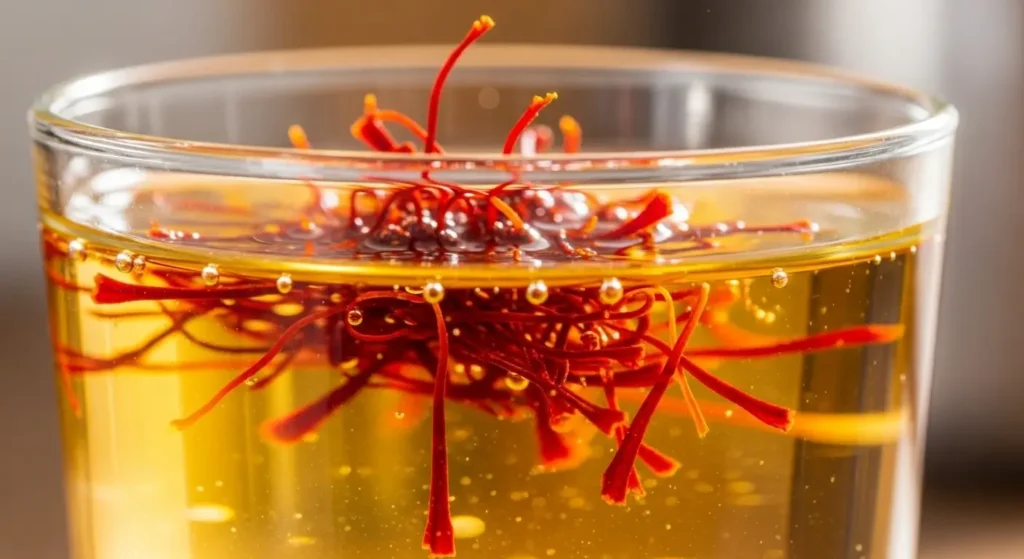
For the best saffron, look for brands like La Mancha (from Spain). For bomba rice, look for Santo Tomas or Arroz de Valencia labels. Because quality ingredients significantly elevate the result.
Equipment You’ll Need for Paella Recipe
The best results are achieved when cooking on a wide and shallow surface that maximizes evaporation and contact with the heat source.
- Paella Pan (Paellera): This is the ideal pan for paella. Because its wide, shallow design ensures thin layers of rice, maximum broth evaporation and even heat distribution, which is critical for developing the socarrat.
- What if I don’t have a paella pan? You can go for alternatives. You can use a large, shallow, heavy-bottomed skillet or a cast-iron pan (like a wide casserole dish). Just ensure the rice layer remains thin (no more than 1 inch deep).
- Size Recommendation: A 15-inch pan is perfect for a recipe serving 4-6 people.
How to Make Paella: Step-by-Step Guide
Follow these clear steps on how to make a paella recipe step by step to master this classic dish.
1. Prep all Paella ingredients
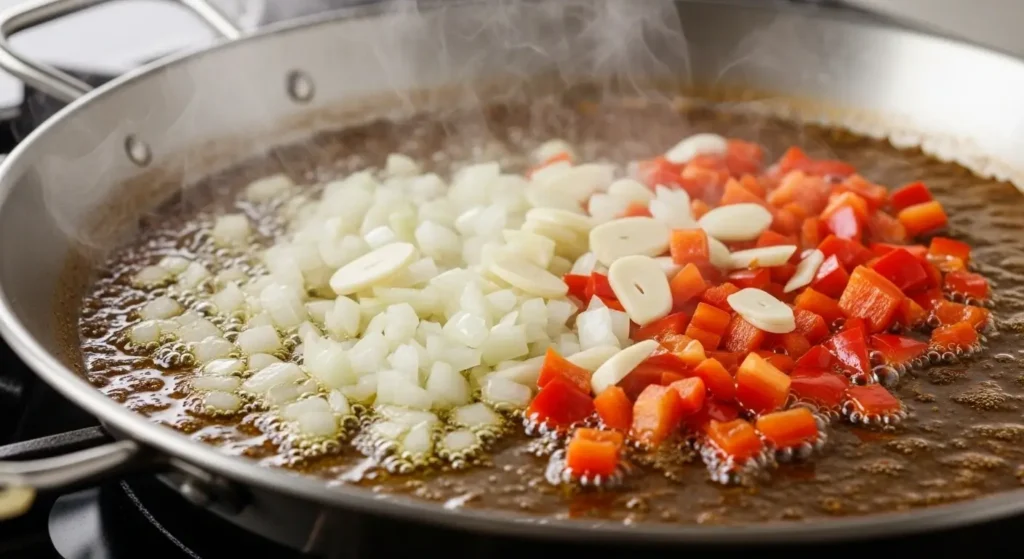
- Cut the chicken into 1.5-inch pieces: prepare the shrimp, clean mussels and squid.
- Now, toast a handful of saffron threads lightly in a dry pan for 30 seconds, then steep them in 1 cup of warm broth for 15 minutes.
- Finally, chop all sofrito vegetables finely.
2. Build the flavor base (sofrito)
- Heat olive oil in your paella pan over medium-high heat.
- Sear the chicken pieces until golden brown. Then remove and set aside.
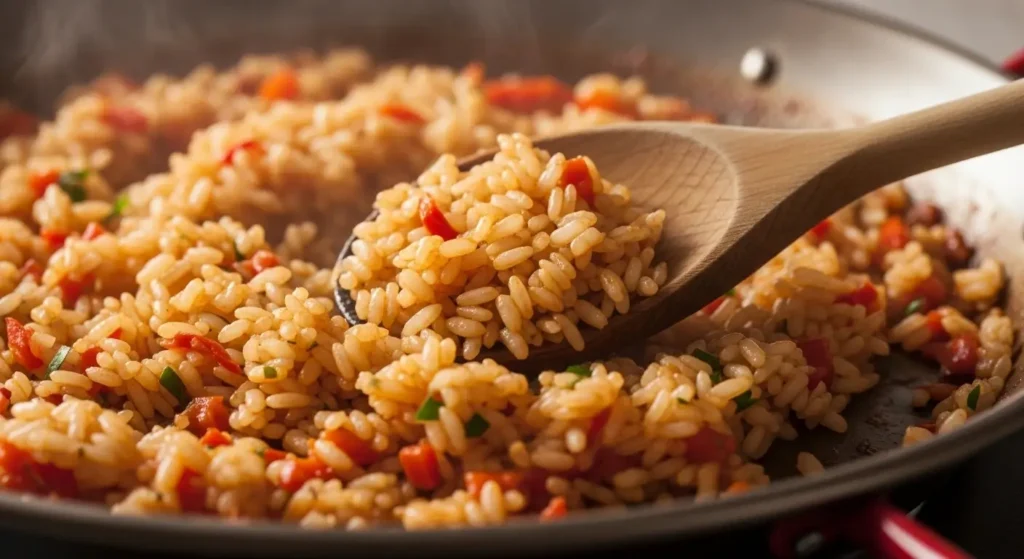
- Reduce the heat to medium. Then add the onions and peppers, sautéing until soft (about 8 minutes).
- Add garlic and smoked paprika. And cook them for 1 minute until fragrant.
- Add the chopped tomatoes and cook until the mixture thickens and the liquid evaporates. This is your rich and dense sofrito ready.
3. Toast the rice
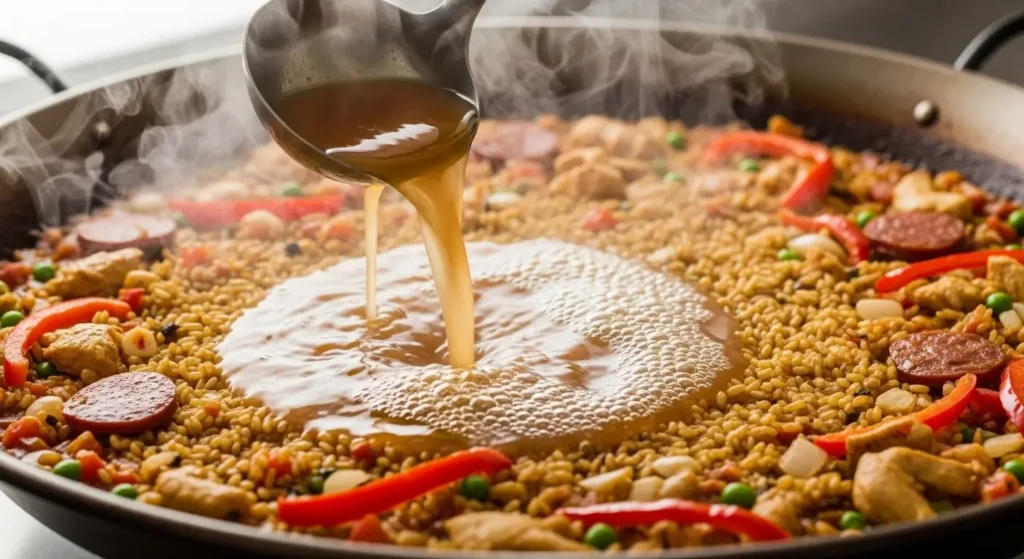
- Add the bomba rice to the pan and stir it into the sofrito mixture for 2-3 minutes until the grains are coated and slightly translucent on the edges (this prevents mushiness).
4. Add broth and simmer
- Pour in the warm broth (including the saffron infusion). Make sure that you do not stir after this point!
- Settle the seared chicken back into the rice.
- Bring to a strong boil, then reduce the heat to a steady simmer. Now, cook for about 15 minutes.
Tip: Solving Mushy Rice: Too much liquid or stirring are the culprits. So, use the exact ratio and never stir.
5. Add seafood/chicken
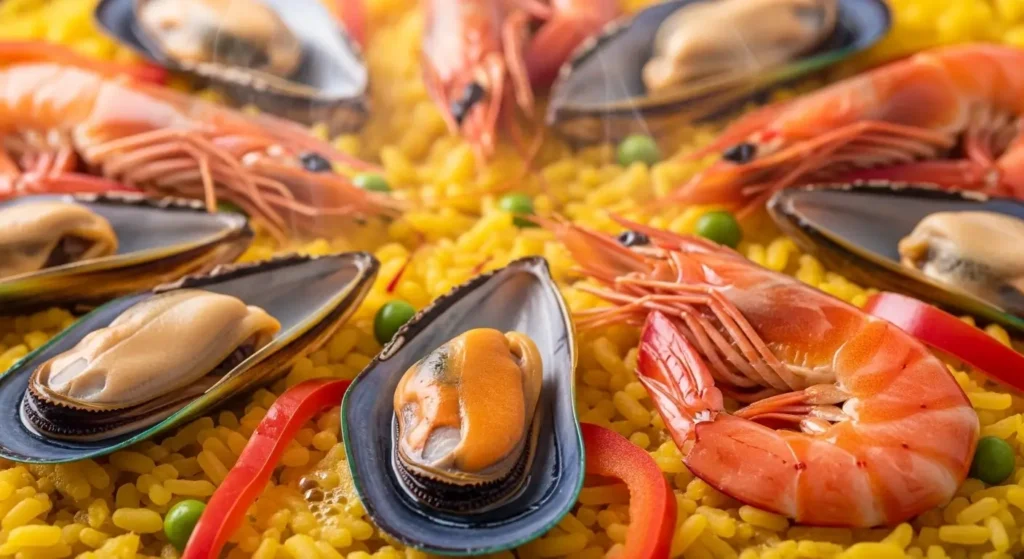
- Gently arrange the seafood (prawns, mussels and squid) on top of the rice once the rice has absorbed most of the liquid (after about 15-18 minutes).
- Cover the pan with aluminum foil for 5-7 minutes to steam the seafood and finish the rice.
- Tip: Avoid Overcooked Seafood: Remove the paella from direct heat while covered, using residual heat to finish the cooking.
6. Create the socarrat (crispy bottom)
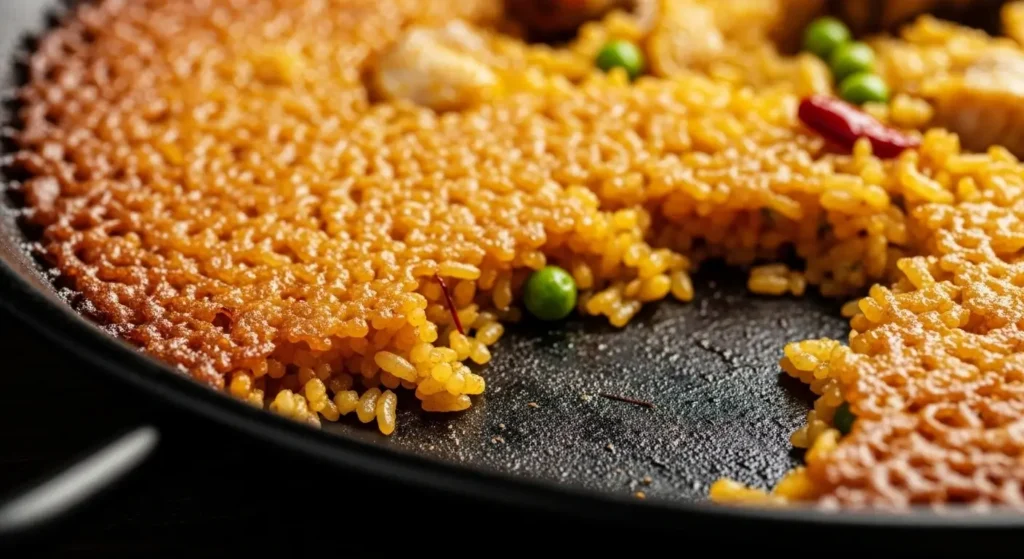
- Remove the foil and increase the heat slightly for 2-3 minutes at the very end to caramelize the rice crust at the bottom. You should hear a light sizzling sound and smell a toasted aroma (not a burnt one!).
- Watch closely!
7. Rest and serve
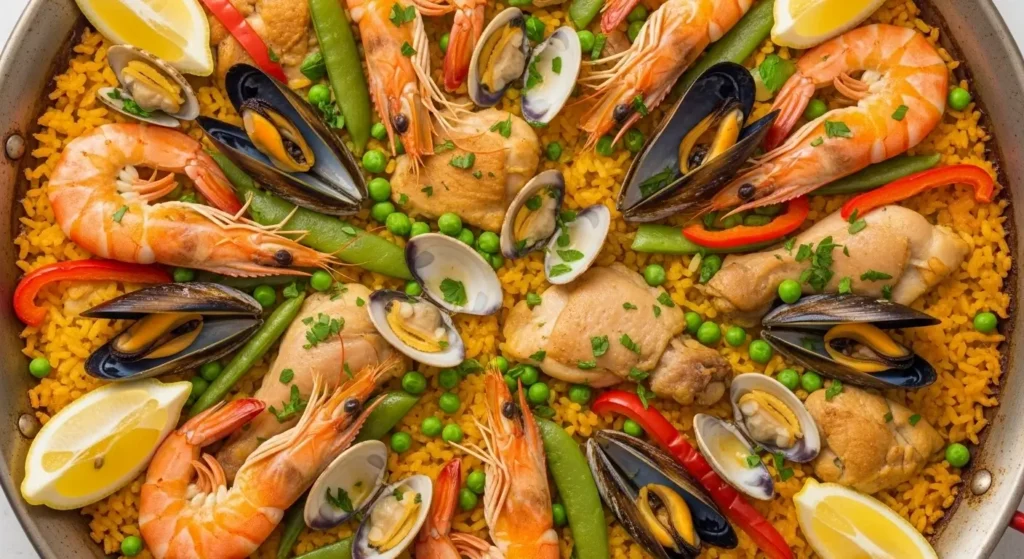
- Remove from heat immediately and cover the pan again with foil or a clean towel and let it rest for 5-10 minutes. This will allow the remaining steam to finish the rice perfectly.
- Garnish with fresh lemon wedges and parsley.
- Now, serve it directly from the pan. Enjoy!
If you loved this recipe I am pretty sure that you’ll like our Hummus recipe and Tabouli recipe.
Paella Recipe Variations
Seafood Paella Recipe
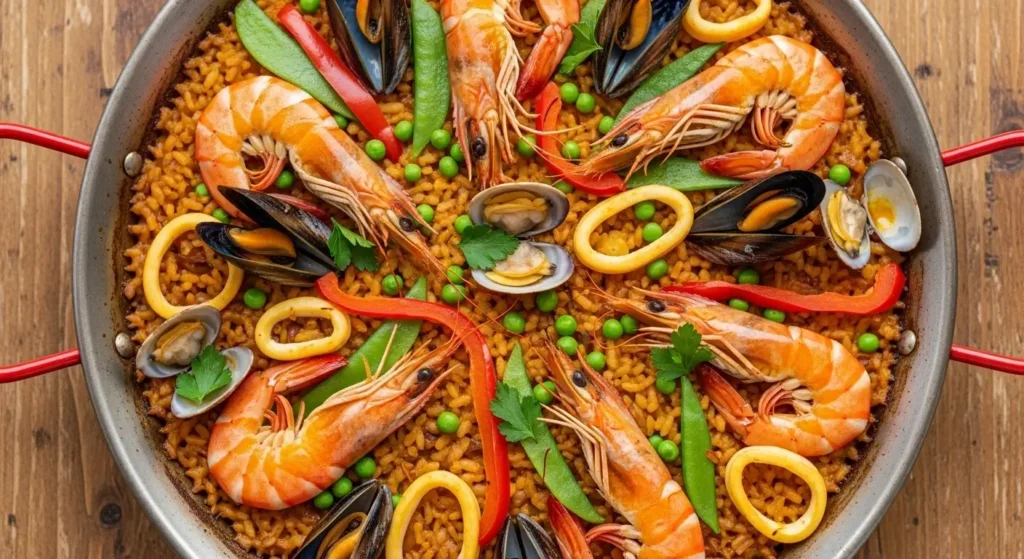
Omit the chicken and use exclusively fish or seafood broth. Add the seafood mix (prawns, mussels, clams and squid) and maybe 1/2 cup extra broth.
Chicken Paella Recipe
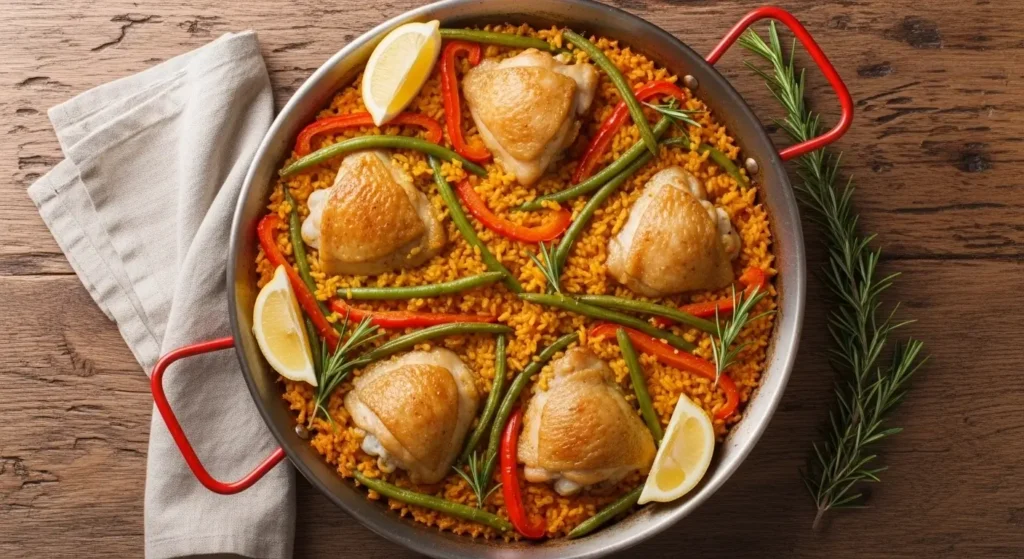
Omit the seafood and use chicken broth. You can add vegetables like artichoke hearts or green beans (in a Valencian style).
Mixed Paella
The mixed paella recipe above is a combination of chicken and seafood.
Vegetarian Paella
Use vegetable broth and add vegetables early to build the sofrito flavor. Focus on seasonal vegetables like artichokes, fava beans, green beans, peas, asparagus and mushrooms.
Gluten-free Paella
Paella is naturally gluten-free! Ensure your broth and smoked paprika are certified gluten-free (some cheaper brands may contain additives).
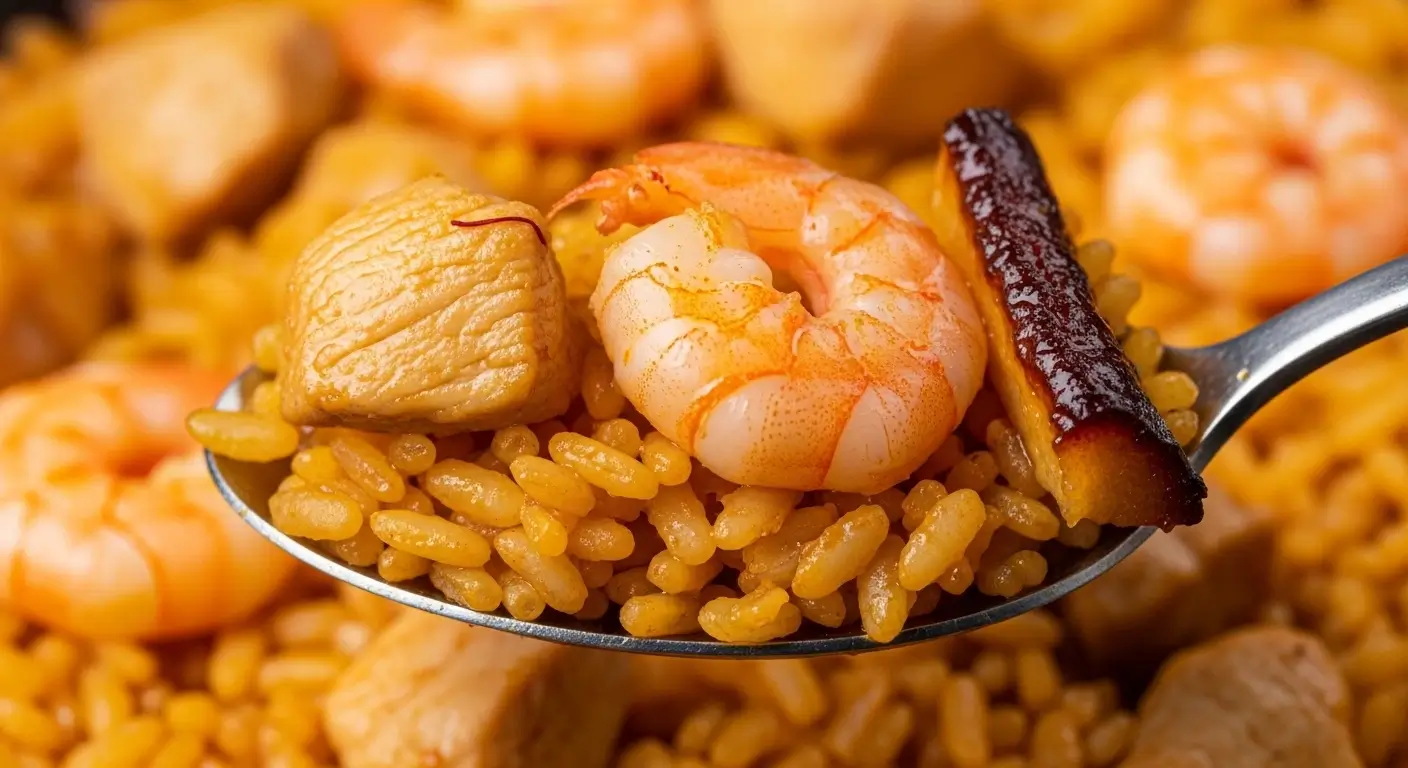
Paella Recipe (Easy & Authentic Spanish Version with Seafood + Chicken Options)
Ingredients
Equipment
Method
- 1. Prep Broth & Saffron: Gently toast saffron threads. Then steep them in 1 cup of warm broth. Finally, keep the remaining broth warm. Prep all proteins and vegetables.
- 2. Sear Chicken & Build Sofrito: Heat olive oil and sear chicken until golden; then remove it. In the same pan, sauté onions and peppers, then add garlic, paprika and tomatoes. Cook all these until thickened (sofrito).
- 3. Toast Rice: Add the Bomba rice to the sofrito and stir for 2-3 minutes to coat.
- 4. Simmer & Cook: Pour in the saffron broth and remaining warm broth. Now, return the chicken to the pan. Bring it to a boil, then reduce to a steady simmer. Finally, cook UNSTIRRED for 15 minutes.
- 5. Add Seafood & Steam: Once most liquid is absorbed, arrange seafood on the top. Then cover the pan tightly with foil and cook for 5-7 minutes. At last, remove from heat.
- 6. Form Socarrat (Optional): Remove the foil and briefly increase heat for 2-3 minutes until you hear a sizzle (the socarrat forming).
- 7. Rest & Serve: Cover with a towel and rest 5-10 minutes before serving directly from the pan, garnished with lemon and parsley.
Notes
Expert Tips for Perfect Paella
The Socarrat Technique
Start with high heat for the sofrito and rice to build a flavorful base. Then increase the heat for the last 2 minutes of cooking after the seafood is arranged, right before resting. Listen for the sizzle; that’s your socarrat forming.
Why Not to Stir
Never stir once the broth is added, because stirring releases the rice starch, turning the paella into a risotto. And we want separated, perfectly cooked grains.
Saffron Infusion Method
Always steep the saffron in warm liquid first. This ensures maximum dispersal of color and flavor throughout the dish.
Pan Size vs Rice Thickness
Use a larger pan if necessary to make sure that the rice layer is thin. If the layer is too thick (more than an inch), the rice on top will be undercooked while the bottom burns.
Common Paella Mistakes
Avoiding these pitfalls is the secret to a good paella:
- Overstirring: Causes mushy and starchy rice. So, don’t stir after adding the broth.
- Too Much Liquid: Leads to boiled, rather than perfectly steamed rice. Make sure to use the recommended ratio carefully.
- Wrong Rice: Using long-grain rice or arborio will not give you the right texture. Then: “What is the best rice for paella?” It’s Bomba or Calasparra.
- Overcrowding the Pan: The rice layer must be thin for even cooking and socarrat formation.
- Weak Socarrat: Not listening for the final sizzle or removing it from the heat too soon.
What to Serve with Paella
Paella is often served as the main course, but a few simple sides enhance the Spanish experience:
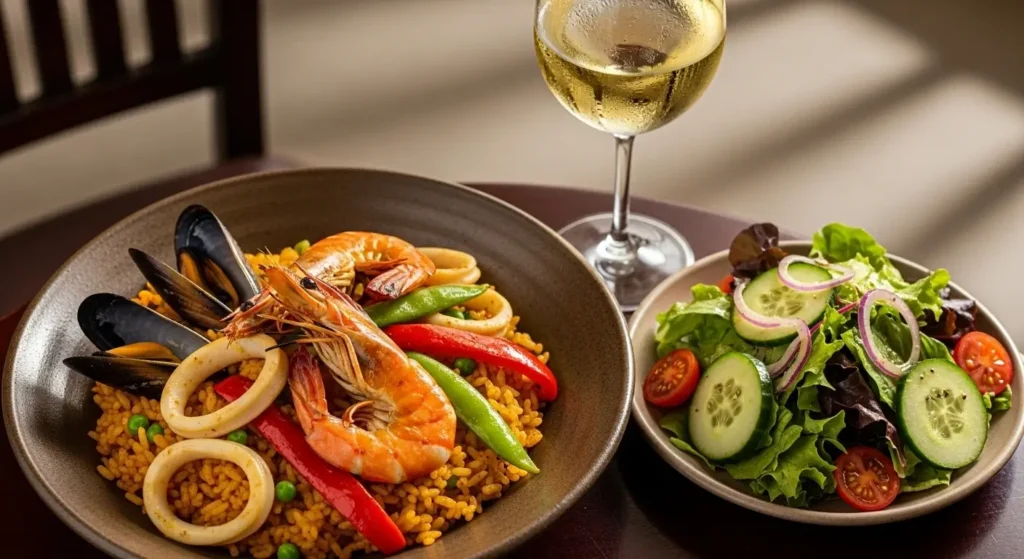
- Spanish Salad: A light and refreshing salad of simple greens, tomatoes and olives, dressed with olive oil and vinegar.
- Grilled Vegetables: Lightly charred asparagus or bell peppers.
- Alioli (Aioli): A classic garlic mayonnaise for dipping seafood and chicken.
Storage and Reheating
- Fridge: Store leftovers in an airtight container for up to 3 days.
- Freezer: Paella can be frozen, although the seafood and the rice texture may suffer slightly. Store in a freezer-safe container for up to 3 months.
- Reheating: reheat in a skillet over low heat to prevent drying out, adding a splash of broth or water and covering the pan until heated through.
FAQs
Here are the answers to the most common questions about paella:
Q: What is the secret ingredient in paella?
A: The essential secret ingredient is saffron. Because it provides the dish’s signature golden color, subtle earthy flavor and complex aroma that defines an authentic Spanish paella.
Q: What is the secret to a good paella?
A: The secret to a good paella is mastering two elements: a rich sofrito base to build flavor and achieving the socarrat, the crispy and caramelized rice crust at the bottom of the pan.
Q: What is the best rice for paella?
A: The best rice is short-grain Spanish bomba rice (or Calasparra). It absorbs flavor exceptionally well while remaining firm and separated, resisting mushiness.
Q: Can I make paella without saffron?
A: Yes, you can omit saffron, but your paella will lack the authentic, deep flavor and characteristic golden color. A tiny bit of turmeric can provide the color, but not the aroma.
Q: What if I don’t have a paella pan?
A: You can use the widest and shallowest heavy-bottomed skillet or cast-iron pan you own. The key is ensuring the rice is spread in a thin layer (no more than 1 inch thick).
Q: How long to cook paella?
A: Paella cooks for approximately 25-30 minutes in total: 15-18 minutes of simmering, 5-7 minutes covered with seafood and 5-10 minutes resting.
Q: Can paella be vegetarian?
A: Absolutely, simply replace the chicken and seafood with a medley of seasonal vegetables like artichoke hearts, green beans, peas and mushrooms and use a high-quality vegetable broth.