Walk into any Mediterranean village, whether it’s an olive-lined village in Crete, a seaside town in Lebanon, or a sun-soaked plaza in southern Italy. You’ll notice something immediately: meals are not rushed, food isn’t feared and eating is woven into the rhythm of daily life.
Mediterranean families eat in a way that nourishes body, mind and community. And these Mediterranean eating habits are a major reason why the region consistently ranks among the world’s longest-living populations.
If you’re exploring the Mediterranean diet for beginners, understanding its cultural roots will completely transform how you eat at home. Below are the seven powerful cultural habits that shape how Mediterranean families eat, each illustrated with everyday scenes, simple science insights and also the practical tips you can adopt starting tonight.
1. They Treat Meals as a Daily Ritual, Not a Task
In many Mediterranean households, lunch or dinner isn’t squeezed between obligations; it’s the anchor of the day.
Picture a typical afternoon in a Greek village:
Grandparents set the table under a shaded veranda and children bring out fresh bread wrapped in a towel to keep it warm. And a pot of lentils simmering with garlic, onions and tomatoes fills the house with the smell of comfort. No one is scrolling on their phone. No one is eating in the car. Everyone pauses, gathers and breathes.
This is a cultural rule: Meals are important enough to deserve your full presence.
Meals Longevity insight:
Studies show that slowing down and reducing mealtime stress improves digestion, satiety cues and metabolic health – key for long-term wellbeing and weight maintenance. This is why you often hear “Mediterranean lifestyle longevity”, it’s not just what they eat, but how.
Try Meals at home:
- Make one meal a day “no phone, no laptop” time.
- Eat at a table, not standing, not rushing.
- Add a simple ritual: lighting a candle, setting real plates or pouring water into glasses. Small shifts create a big mindset change.
2. They Build Every Meal Around Plants First
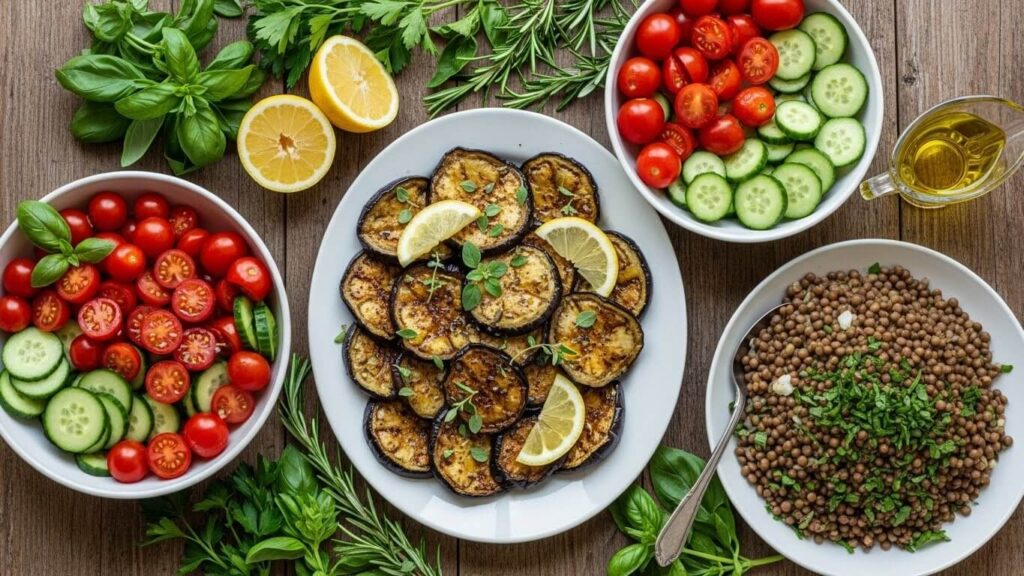
Mediterranean families don’t think about vegetables as a “side.” They’re often the star. A Lebanese dinner table might feature:
- a platter of roasted eggplant drizzled with olive oil
- a fresh tomato-cucumber salad
- lentil soup scented with cumin
- sautéed greens with lemon
- bread and olives were brought out almost ceremonially
Protein is present, but the Mediterranean eating habit prioritizes plants. Because it’s automatic, intuitive and cultural.
Plant First Meal Longevity insight:
Plant-forward meals mean more fiber, antioxidants and anti-inflammatory compounds. Also, a dietary pattern is deeply associated with a lower risk of chronic disease.
Try Plant First Meal at home:
Ask yourself before cooking: “What vegetables will shape this meal?”
Not: “What should I put on the side?”
If you want inspiration for plant-forward dishes, you’ll love the recipes in my Mediterranean digital cookbooks.
3. They Use Olive Oil the Way Others Use Butter
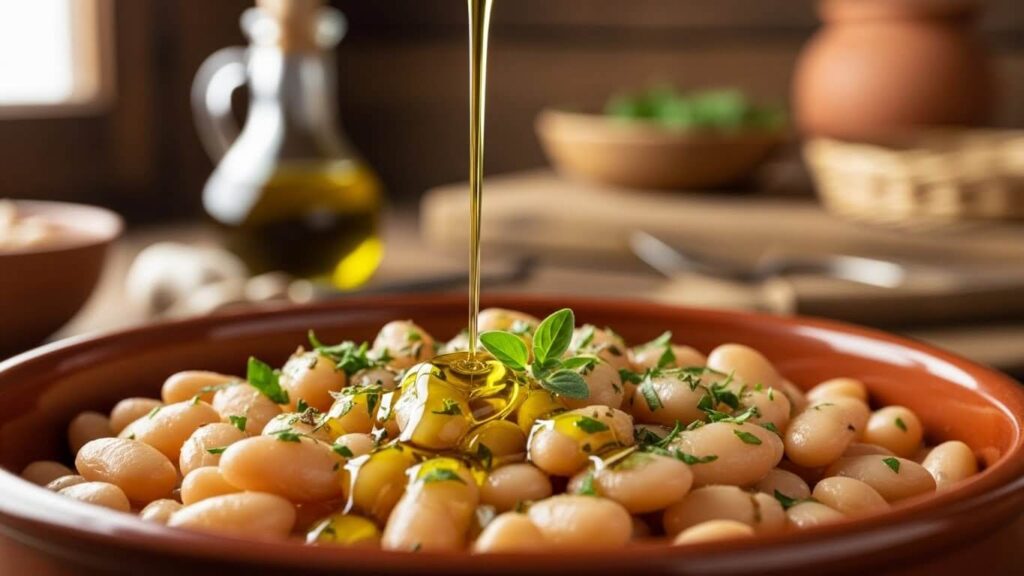
There’s always a bottle of olive oil sitting on a Mediterranean kitchen counter, which is reachable, visible and trusted.
- In Italy, grandmothers drizzle it over everything from tomato sandwiches to warm cannellini beans.
- In Spain, families pass around a small dish of olive oil to dip bread in at dinner.
- In Greece, it’s added at the end of cooking to give dishes a final aromatic sheen.
Olive Oil Longevity insight:
Olive oil is rich in polyphenols, which support heart health, reduce inflammation and help protect against oxidative stress. Populations relying on olive oil as their main fat consistently show higher markers of longevity.
Try Olive Oil at home:
- Replace butter in sautéing with extra-virgin olive oil.
- Finish soups, vegetables or grains with a tablespoon before serving.
- Keep a small bottle on your table to encourage habitual use.
And yes, this is why so many Mediterranean recipes are naturally “heart-healthy” without ever using that phrase.
4. They Eat Seasonally and Locally, Out of Habit
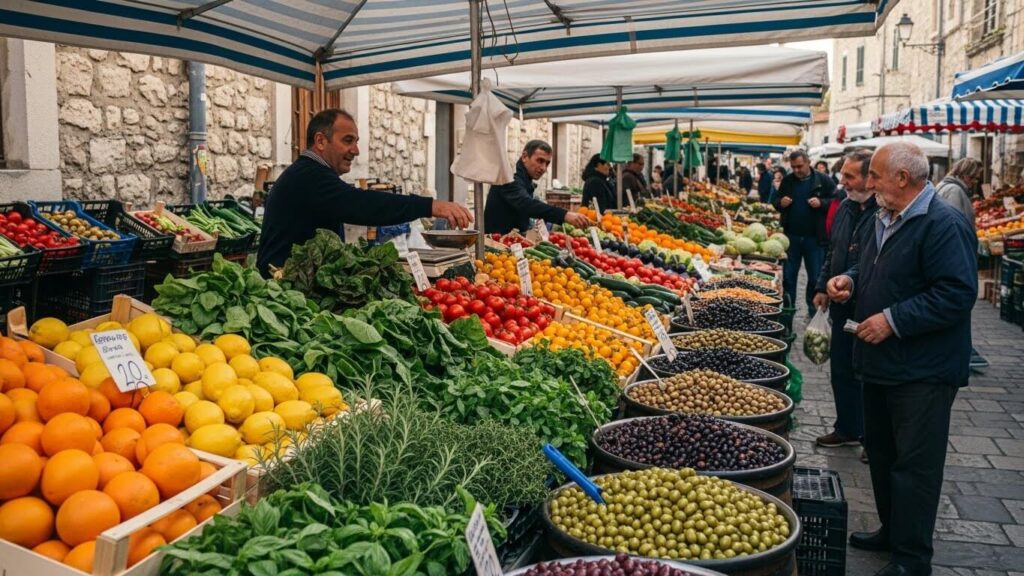
Mediterranean families don’t wake up saying, “Let’s eat seasonally today!” They simply shop from what’s grown around them.
- In Spain, that means tomatoes bursting with flavor in summer and hearty beans and greens in winter.
- In Turkey, families might gather wild herbs in spring or roast trays of squash in fall.
- In Crete, citrus is everywhere in winter, so salads are topped with oranges, lemon vinaigrettes and preserved lemon paste.
Longevity insight of Eating Seasonally:
Seasonal produce is fresher, more nutrient-dense and culturally tied to the rhythm of the year. This results in promoting dietary variety, which is strongly linked to long-term health.
Try Eating Seasonally at home:
- Pick 2-3 fruits and vegetables each week only from what’s in season where you live.
- Make a game of finding one seasonal ingredient to build a dish around.
Seasonality naturally adds color, flavor and nutrients to your meals in the Mediterranean way.
5. They Share Meals – They Rarely Eat Alone
If you ask Mediterranean elders, “What’s the secret to longevity?” you might expect them to mention olive oil or fish.
But more often, they’ll smile and say: “We don’t eat alone.”
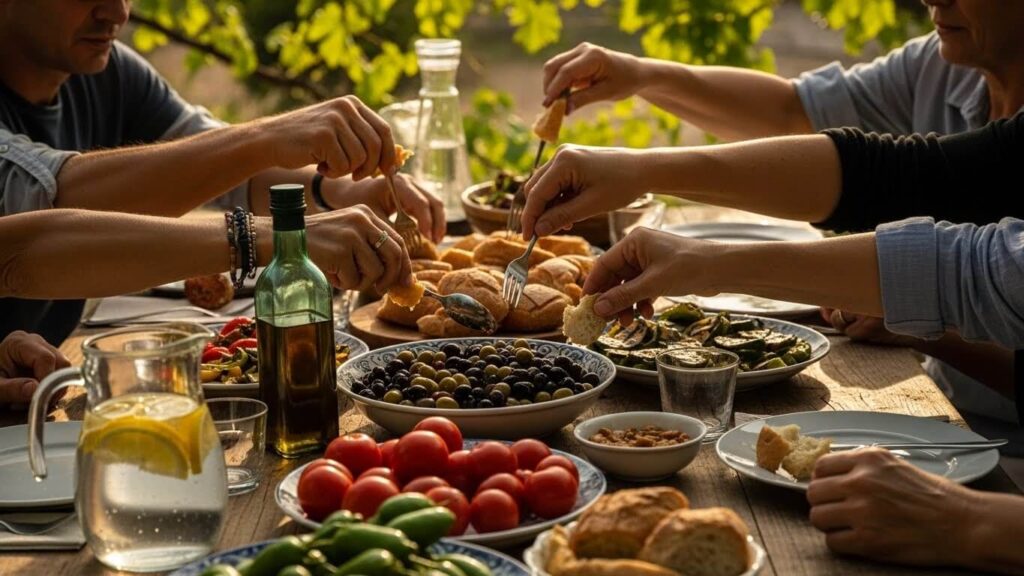
Imagine a Sunday lunch in southern Italy: four generations at the table, kids running between chairs, a giant salad bowl being passed around and someone always insisting you take more feta, more olives and more bread.
Longevity insight of Sharing Meals:
Community eating improves mood, lowers stress hormones and increases meal satisfaction – all components of Mediterranean lifestyle longevity. Additionally, social connection is literally part of the diet.
Try Sharing Meals at home:
- Share at least one meal a week with someone. It can be your family, a friend or a neighbor.
- If you live alone, prepare a meal and video call someone while eating.
- Or start a “Sunday Mediterranean table” ritual; nothing fancy, just good food and shared presence.
6. They Cook Simple Food – With Flavor, Not Complexity
Mediterranean cooking is humble. And meals often have 5-8 ingredients total, but they’re high-quality, fresh and seasoned well.
A typical family meal might be:
- lentils gently cooked with onion and olive oil
- a tomato-cucumber salad with lemon
- bread
- olives
- fruit for dessert
No elaborate sauces, no 30-step instructions. But the simplicity is the cultural foundation.
Longevity insight of Eating Simple Food:
Simple meals reduce decision fatigue, encourage consistency and rely heavily on whole foods; naturally supporting better long-term health.
Try Simple Food at home:
Before cooking, ask: “How can I simplify this to just essentials and flavor?”
A squeeze of lemon, fresh herbs and a good olive oil can transform basic ingredients into Mediterranean cooking magic.
(If you prefer fully guided step-by-step recipes, those are exactly the types of dishes featured in my cookbooks – simple, rustic, deeply flavorful.)
7. They End Meals Lightly and Without Guilt
Mediterranean families don’t finish dinner with heavy desserts on a weeknight. Instead, they enjoy something light and fresh.
Common endings include:
- fresh oranges sprinkled with cinnamon
- a handful of nuts
- seasonal fruit
- mint tea
- a small bite of something sweet shared among everyone
Food isn’t moralized or labeled “good” or “bad.” Eating is joyful, balanced and deeply rooted in tradition.
Light meals Longevity insight:
Ending meals lightly supports better digestion, more stable blood sugar and improved sleep. All of which contribute to longevity.
Try Light meals at home:
- Replace dessert with fresh fruit most nights.
- If you crave something sweet, enjoy a small portion mindfully instead of denying yourself.
- Make herbal tea a comforting end-of-the-day ritual.
This gentle, balanced approach makes the Mediterranean diet sustainable, not restrictive.
How to Bring These Habits Into Your Home (Starting Today)
You don’t need to live near the Mediterranean Sea to adopt Mediterranean eating habits and enjoy their benefits. Start with these small cultural shifts:
- Slow down one meal each day
- Use olive oil generously
- Build meals around vegetables
- Cook simply, with seasonal ingredients
- Eat with others whenever you can
- End meals with something fresh
- Treat food as a joy, not a burden
Bit by bit, these habits create lasting transformation. And when you combine them with easy Mediterranean recipes, you’re essentially adopting the same cultural traditions that promote Mediterranean lifestyle longevity.
Start With a Simple and Loved Mediterranean Recipe
If you want to take the next step and cook the way Mediterranean families genuinely eat, start with one of the most beloved, approachable recipes:
Try this fresh, vibrant Mediterranean Tabbouleh salad recipe next or Fattoush Recipe. These salads capture all seven habits in one beautiful bowl.
And when you’re ready to go deeper, my Mediterranean digital cookbooks are filled with simple, authentic, culturally rooted recipes that help you eat this way every single day, naturally, joyfully and deliciously.