
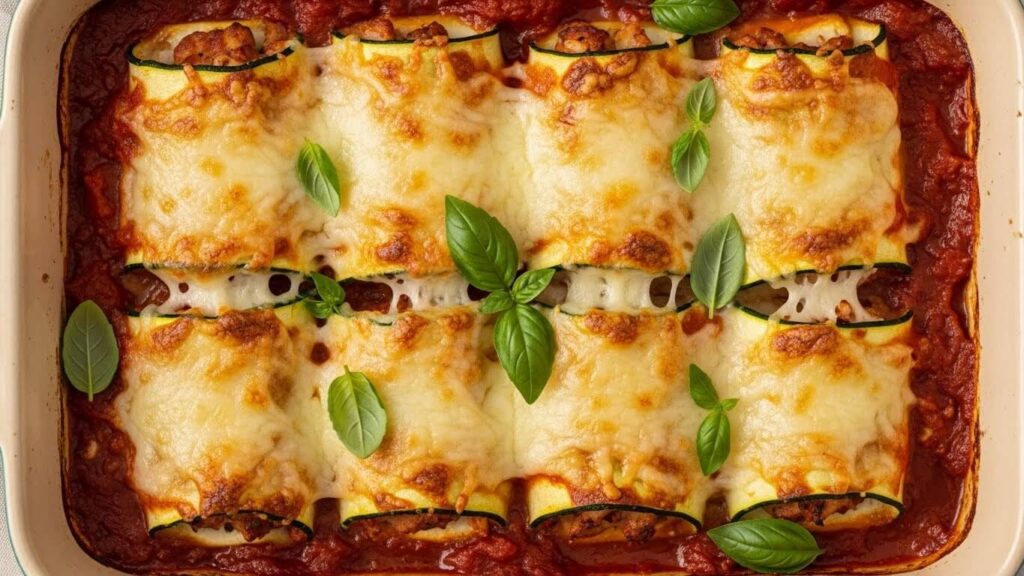
The classic and comforting lasagna, but without the heavy carbs, gluten or guilt. Our Zucchini Lasagna Roll Ups recipe transforms the Italian-American favorite into a bright, vegetable-forward dish that perfectly aligns with the principles of the Mediterranean diet.
This recipe is built to solve every core pain point: it is completely gluten-free, naturally low-carb, deeply satisfying and most importantly, we will show you the critical steps to ensure your rolls stay perfectly intact and the zucchini stays anything but watery. It’s a delightful and vegetarian dish that redefines healthy comfort food.
What Are Zucchini Lasagna Roll Ups?
Zucchini Lasagna Roll Ups are an inventive and vegetable-based alternative to traditional baked lasagna. Instead of using pasta sheets, thin strips of zucchini are sliced, softened and used as the “noodle” to cradle a creamy and herby filling.
In classic lasagna, the pasta is the main structural element and the primary source of carbohydrates. By replacing it with zucchini, you achieve a dish that is:
- Gluten-Free: Naturally eliminates wheat-based ingredients.
- Low-Carb/Keto-Friendly: Significantly lowers the total carbohydrate count.
- Vegetable-Forward: Increases the nutrient density and fiber of the meal.
The filling typically consists of ricotta cheese, herbs (like parsley and basil) and often Parmesan or mozzarella, all bound together and baked in a tomato-based sauce. They provide the familiar taste and warmth of lasagna in a neat and portion-controlled roll, which is excellent for meal prep and serving.
Zucchini Rollatini vs Lasagna Roll Ups: What’s the Difference?
This is one of the most common points of confusion for cooks. While often used interchangeably, understanding the distinction can help you choose the right recipe and even sound more informed!
| Feature | Lasagna Roll Ups | Zucchini Rollatini |
| “Noodle” Type | Zucchini or traditional lasagna pasta | Eggplant or thin crepes/pasta |
| Naming Origin | American/Food Blog Terminology | Italian (especially Southern Italian) |
| Typical Size/Shape | Generally thicker, often a full slice of zucchini or pasta | Thinner, more delicate, typically a shorter roll |
| Fillings | Creamy ricotta and/or spinach mixtures | Ricotta, sometimes meat (veal/beaf) or breadcrumbs |
| Rolling Technique | Often rolled from end-to-end (log shape) | Folded or rolled from side-to-side (shorter and fatter shape) |
When to Use Each Term
- Use “Lasagna Roll Ups” when the recipe is a direct and healthy adaptation of the American-Italian lasagna dish, focusing on the convenience and lower-carb aspect.
- Use “Rollatini” when referring to the authentic, delicate Italian preparation or when substituting the zucchini with other thinly sliced vegetables like eggplant (e.g Melanzane Rollatini).
For this recipe, we are making Zucchini Lasagna Roll Ups: a robust, satisfying and modern take on the dish that prioritizes health and flavor.
Why This Lasagna Roll Ups Recipe Fits the Mediterranean Diet
Most low-carb or keto versions of this dish load up on excessive high-fat cheese to compensate for the missing pasta, straying from the spirit of the Mediterranean diet. Our recipe is specifically engineered to align with the core pillars of this lifestyle:
1. Olive Oil Over Butter and Excess Fat
We use high-quality Extra Virgin Olive Oil (EVOO) generously for sautéing aromatics and drizzling over the final dish, a signature Mediterranean fat source rich in monounsaturated fatty acids. We avoid using butter entirely, which is less common in authentic Mediterranean cuisine. If you’re looking for the best EVOO, check out our guide on the Best Olive Oil for Mediterranean Cooking: A Complete Guide.
2. Herbs, Not Just Cheese for Flavor
The secret to the bright, robust flavor is our aggressive use of fresh herbs. Basil, oregano, thyme and a hint of lemon zest cut through the richness of the cheese. This allows us to reduce the cheese volume slightly without sacrificing flavor, keeping the focus on the vegetables and herbs, as is traditional in many Mediterranean recipes.
3. Balanced and Quality Cheese Philosophy
Instead of simply overloading on full-fat ricotta, we recommend a mix of part-skim ricotta and a touch of crumbled feta. Feta, a staple of Greek and Mediterranean cuisine, introduces a sharp, briny and distinct flavor that offers high impact in a smaller quantity. This delivers the necessary creaminess and structure with a more nuanced flavor profile.
4. Vegetable-Forward Focus
The star of this dish is the zucchini itself, not the filling or the sauce. This aligns perfectly with the foundation of the Mediterranean Diet, which advocates for a large volume of seasonal vegetables at every meal.
Ingredients You’ll Need for Zucchini Lasagna Roll Ups Recipe
The beauty of this recipe lies in its simplicity and the quality of the ingredients.
| Category | Ingredient | Mediterranean Swap/Note |
| Vegetables | 3-4 Large Zucchinis | Choose straight and medium zucchinis for easy slicing. |
| 1 Onion, chopped | Use red or yellow. | |
| 3-4 cloves of garlic, minced | Essential for flavor base. | |
| Dairy | 15 oz Part-Skim Ricotta | Lighter than whole-milk ricotta. |
| 1/2 cup Feta Cheese, crumbled | Adds a signature Mediterranean tang. | |
| 1/4 cup Parmesan Cheese, grated | Use a small amount for umami. | |
| Sauce | 24 oz Low-Sugar Marinara Sauce | Check labels for added sugar; you want crushed tomatoes + herbs. |
| Fats | Extra Virgin Olive Oil (EVOO) | Used for sautéing and finishing. |
| Flavor | Fresh Basil, Parsley, Dried Oregano | Heavy on the herbs! See The 12 Essential Herbs and Spices for Authentic Greek Cooking. |
| Salt and Freshly Ground Black Pepper | Used generously to draw water from zucchini. | |
| Optional: Lemon Zest | A pinch brightens the final dish. |
How to Make Zucchini Lasagna Roll Ups (Step-by-Step Recipe)
Follow these steps precisely to ensure firm, flavorful rolls that don’t fall apart.
Step 1: Prepare the Zucchini and Draw Out Moisture (CRITICAL)
- Slice: Trim the ends of the zucchini. Then, using a mandoline or a very sharp vegetable peeler, slice the zucchini lengthwise into strips approximately 1/8-inch thick. Aim for 12-16 strips.
- Salt: Lay the strips flat on paper towels or a clean kitchen towel. After that, sprinkle them generously with salt. Lastly, let them sit for 20-30 minutes.
- Pat Dry: You will see beads of moisture on the zucchini. Now, use a fresh and clean towel or paper towels to thoroughly blot and pat dry the zucchini strips. This step is non-negotiable for preventing a watery final dish.
- Optional Softening: For extra pliability (useful if your strips are thicker), lightly grill them on a hot pan for 30 seconds per side or bake them at 350°F (175°C) for 5 minutes.
Step 2: Make the Filling
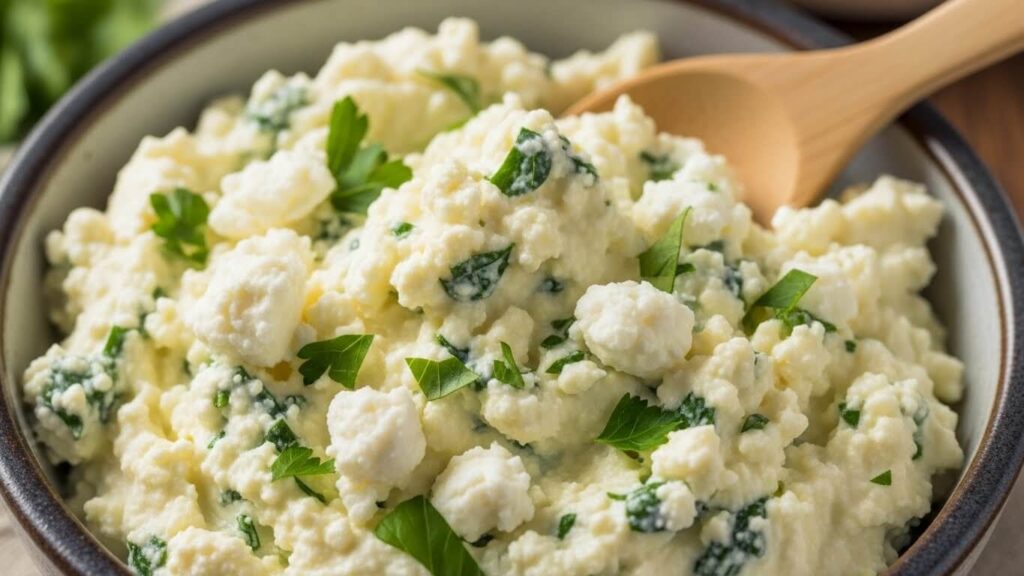
- In a medium bowl, combine the ricotta, crumbled feta, Parmesan, minced garlic (optional, can save for sauce), chopped fresh basil, parsley, oregano and a pinch of salt and pepper.
- Mix gently until all ingredients are just combined. Remember: Do not overmix or the filling can become runny.
Step 3: Assemble the Roll Ups
- Preheat your oven to 375°F (190°C).
- Lightly grease a 9×13-inch baking dish and pour a thin layer of your marinara sauce on the bottom. This prevents sticking.
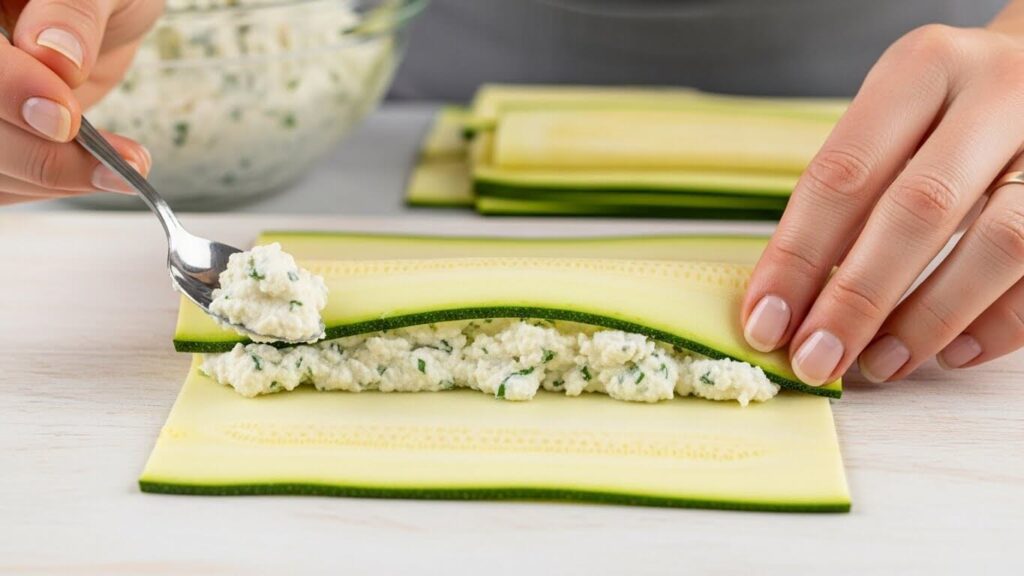
- Lay one zucchini strip on your work surface.
- Spoon about 1.5 to 2 tablespoons of the filling onto one end of the strip.
- Starting from the filled end, roll the strip tightly toward the other end.
- Place the roll-up, seam-side down, in the prepared baking dish.
- Repeat until all strips and/or filling are used, arranging the rolls snuggly together in the dish.
Step 4: Bake and Finish
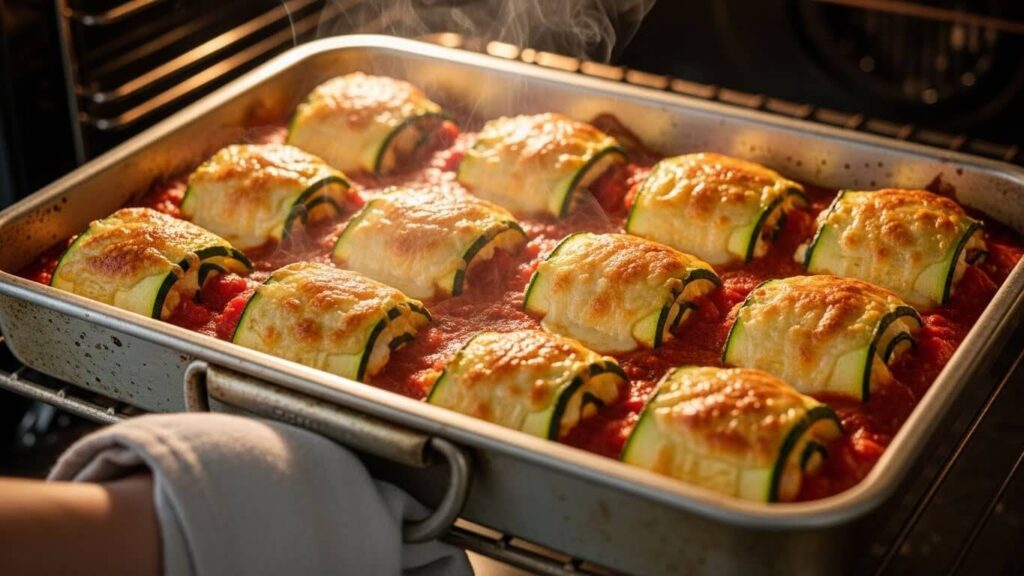
- Spoon the remaining marinara sauce evenly over the tops of the rolls.
- Sprinkle with a small amount of extra Parmesan or mozzarella (optional).
- Bake for 25-30 minutes, or until the sauce is bubbling, the cheese is melted and the zucchini is tender but still holds its shape.
- Let the dish rest for 5-10 minutes before serving. Then garnish with fresh basil and a drizzle of EVOO.
How to Prevent Watery Zucchini?
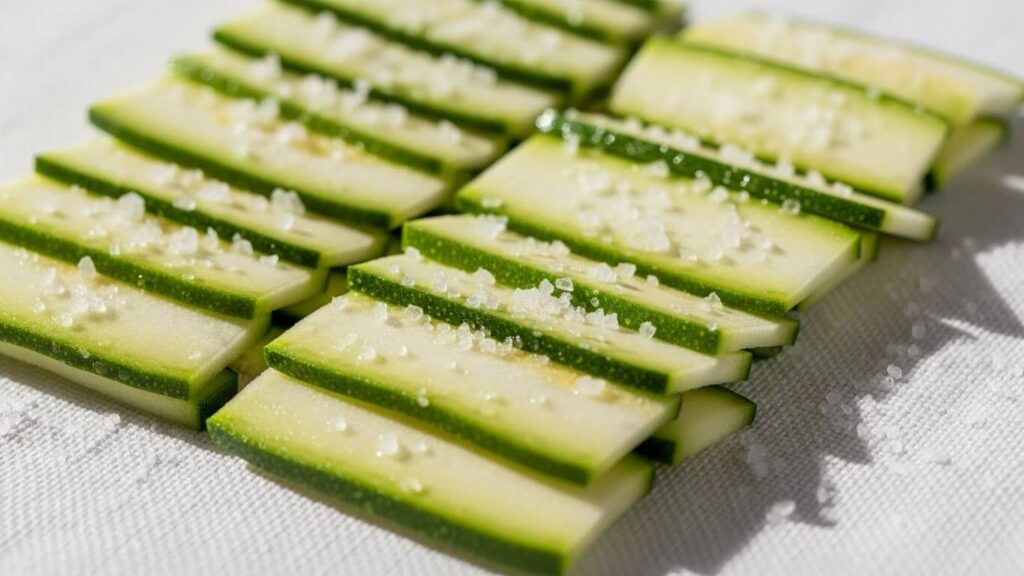
The primary reason this dish fails is excess moisture. And if you skip any of the moisture-removal steps, the zucchini will release water while baking, turning your sauce into a watery mess and causing the rolls to become soggy.
| Problem | Fix (The “Salt and Sweat” Technique) |
| Zucchini is Watery | Salting: This is the key process of osmosis. In this, salt draws the water out of the vegetable’s cells. Then use coarse salt and let it sit for at least 20 minutes. |
| Rolls are Soggy | Patting Dry: After salting, you must use paper or kitchen towels to physically press and pat away the released moisture. Note: Do not rinse off the salt. |
| Sauce is Too Thin | Sauce Control: Use a good-quality and thick marinara sauce. Also, do not use too much sauce! A thin layer on the bottom and a light covering on top is enough. |
| Leftovers are Mushy | Optional Pre-Bake/Grill: Before rolling, lightly grill or quickly pre-bake your strips to firm them up slightly. This makes them more resilient to moisture. |
Zucchini Lasagna Roll Ups Recipe Variations & Customizations
This Mediterranean base is incredibly versatile for various diets and preferences.
- Vegetarian (Default): This recipe is already vegetarian.
- Keto/Low-Carb: This recipe is naturally low-carb. And to make it more strictly keto, ensure your marinara sauce has zero added sugar and increase the fat content slightly by using a full-fat feta/ricotta blend.
- Vegan: This is a huge opportunity to serve a broader audience! Substitute the dairy filling with a mix of:
- Cashew cheese (soaked cashews, nutritional yeast and lemon juice).
- Tofu ricotta (pressed firm tofu, nutritional yeast and garlic powder).
- For the Feta: Use a store-bought vegan feta alternative (often coconut or soy-based).
- Add Meat: If you wish to add lean protein, mix 1/2 cup of pre-cooked, well-drained, ground chicken or turkey breast into the cheese filling. Keep the proportion small to maintain the vegetable focus.
Zucchini Lasagna Roll Ups Nutrition & Calories (Per Roll Precision)
Understanding your macros is easier when the dish is already portioned. While exact nutrition varies based on the size of your zucchini and the amount of sauce/filling you use, here is an approximation based on the recommended proportions, assuming 12 large rolls:
| Nutrient | Per Roll (Approx.) | Mediterranean Diet Note |
| Calories | ~120-140 kcal | Excellent calorie density for a main dish. |
| Net Carbs | ~5-7g | Highly aligned with a low-carb diet. |
| Protein | ~10-12g | Strong protein from ricotta and feta. |
| Total Fat | ~6-8g | Healthy fats from cheese and EVOO. |
| Fiber | ~2-3g | Naturally high in fiber from zucchini. |
This recipe is a powerful way to reduce refined carbohydrates while maintaining protein and enjoying healthy fats, which is why it’s a staple in our collection of Mediterranean diet recipes.
Zucchini Lasagna Roll Ups Storage, Freezing & Reheating

Proper storage can prevent soggy and undesirable leftovers.
- Freezing Before Baking: Assemble the rolls in a freezer-safe aluminum pan and do not bake. Cover tightly with plastic wrap and then foil and freeze for up to 3 months. When ready to bake, thaw overnight in the fridge and bake as directed.
- Freezing After Baking: Allow the dish to cool completely. You can freeze in individual or family-sized portions, well-sealed. The texture of the zucchini will be softer after thawing and reheating.
- Reheating Without Sogginess: To avoid the microwave, preheat your oven to 300°F (150°C). Then cover the dish loosely with foil and bake until heated through (15-20 minutes). This gentle heating retains structure and prevents the zucchini from releasing more water.
Common Mistakes to Avoid in Zucchini Lasagna Roll Ups Recipe
Based on feedback from thousands of cooks, these are the most common pitfalls when making zucchini roll-ups:
- Skipping the Salt and Sweat Step: This is the absolute #1 mistake. See the section above.
- Using Too Much Filling: Overstuffing the rolls makes them difficult to roll, causes them to burst during baking and results in a messier final product. You should use just enough filling for a thin layer.
- Slicing the Zucchini Too Thick: If your strips are thicker than 1/8-inch, they will be brittle and break when you roll them. We’ll suggest to use a mandoline for the best results.
- Baking for Too Long: Over-baking will cause the zucchini to completely break down and release all remaining water, turning the dish into a watery casserole. Bake it until just tender.
FAQs
What is zucchini lasagna?
Zucchini lasagna is a gluten-free and low-carb variation of traditional lasagna where thinly sliced strips of zucchini are used to replace the pasta sheets. The zucchini acts as the “noodle” to hold a creamy cheese and sauce filling, offering a lighter and vegetable-forward meal.
What is zucchini rollatini?
Zucchini rollatini is the Italian-American term often used to describe small and rolled-up dishes. While similar to zucchini lasagna roll-ups, the term “rollatini” typically implies a focus on a shorter and more delicate presentation and the strips may be slightly thicker or pre-cooked. Functionally, they are essentially the same dish.
Does zucchini lasagna get watery?
Yes, zucchini lasagna or roll-ups can become very watery if the zucchini is not properly prepared. And to prevent this, you must salt the zucchini strips for 20-30 minutes and then thoroughly pat them dry with a towel before assembling. This essential step draws out excess moisture through osmosis.
How do you keep rolls from falling apart?
To keep the rolls from falling apart, ensure you:
- Slice the strips thin (1/8 inch)
- Do not overfill them
- Place the rolls seam-side down in the baking dish and arrange them snugly against each other.
The adjacent rolls and the thick tomato sauce will help hold the structure during baking.
Can you freeze zucchini rollatini?
Yes, you can freeze zucchini rollatini or lasagna roll-ups. Moreover, it is best to freeze them before baking. Assemble the roll-ups in a freezer-safe dish, cover them well and bake them after thawing in the refrigerator overnight. This preserves the best texture.