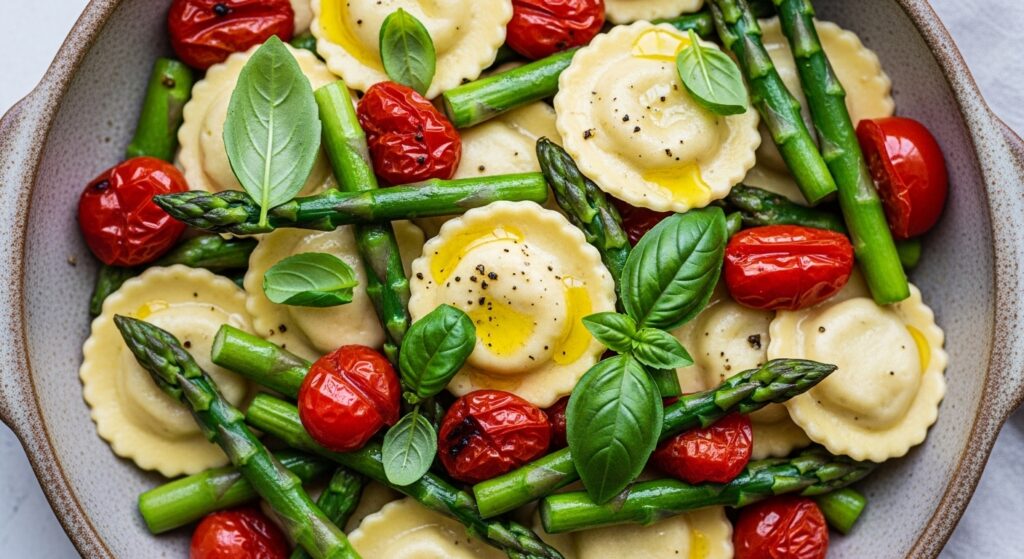
If you’re looking for a light yet satisfying asparagus ravioli recipe, this Mediterranean-inspired version with tomatoes, garlic, and fresh herbs delivers vibrant flavor without the weight of heavy cream sauces. In the world of busy weeknights, finding a 30-minute dinner that feels like a gourmet escape to the coast of Italy is a rare win. This dish celebrates the simplicity of the Mediterranean diet, focusing on high-quality seasonal vegetables and aromatic fresh herbs to create a meal that is as nutritious as it is delicious.
The beauty of this recipe lies in its balance. By pairing tender, pillowy ravioli with the snap of fresh asparagus and the burst of blistered tomatoes, you achieve a texture profile that keeps every bite interesting. Whether you are a seasoned home cook or a beginner looking for a healthy ravioli recipe, this guide will show you how to let simple ingredients shine. Let’s dive into how you can bring these garden-fresh flavors to your table tonight.
Why This Mediterranean Ravioli Recipe Is So Popular
The enduring appeal of the Mediterranean ravioli recipe comes down to its alignment with timeless wellness principles. Unlike traditional Alfredo or heavy meat sauces, this dish relies on “liquid gold”—extra virgin olive oil—to carry flavor.
- Heart-Healthy Fats: By using olive oil as the base, you incorporate monounsaturated fats that are staples of the Mediterranean lifestyle.
- Fiber-Rich Vegetables: Asparagus and tomatoes aren’t just garnishes; they provide a significant volume of fiber, helping you feel full longer.
- Light Yet Satisfying: Using vegetables to bulk up the plate allows for a satisfying pasta portion while keeping the overall calorie count manageable.
- Speed: Because it uses refrigerated or fresh ravioli, the cook time is minimal, making it a favorite for those who want “slow food” flavors on a “fast food” schedule.
Ingredients for This Tomato Asparagus Pasta Recipe
To master this tomato asparagus pasta recipe, the quality of your ingredients is paramount. Since there are no heavy spices to hide behind, each element must be fresh.
Fresh Ingredients
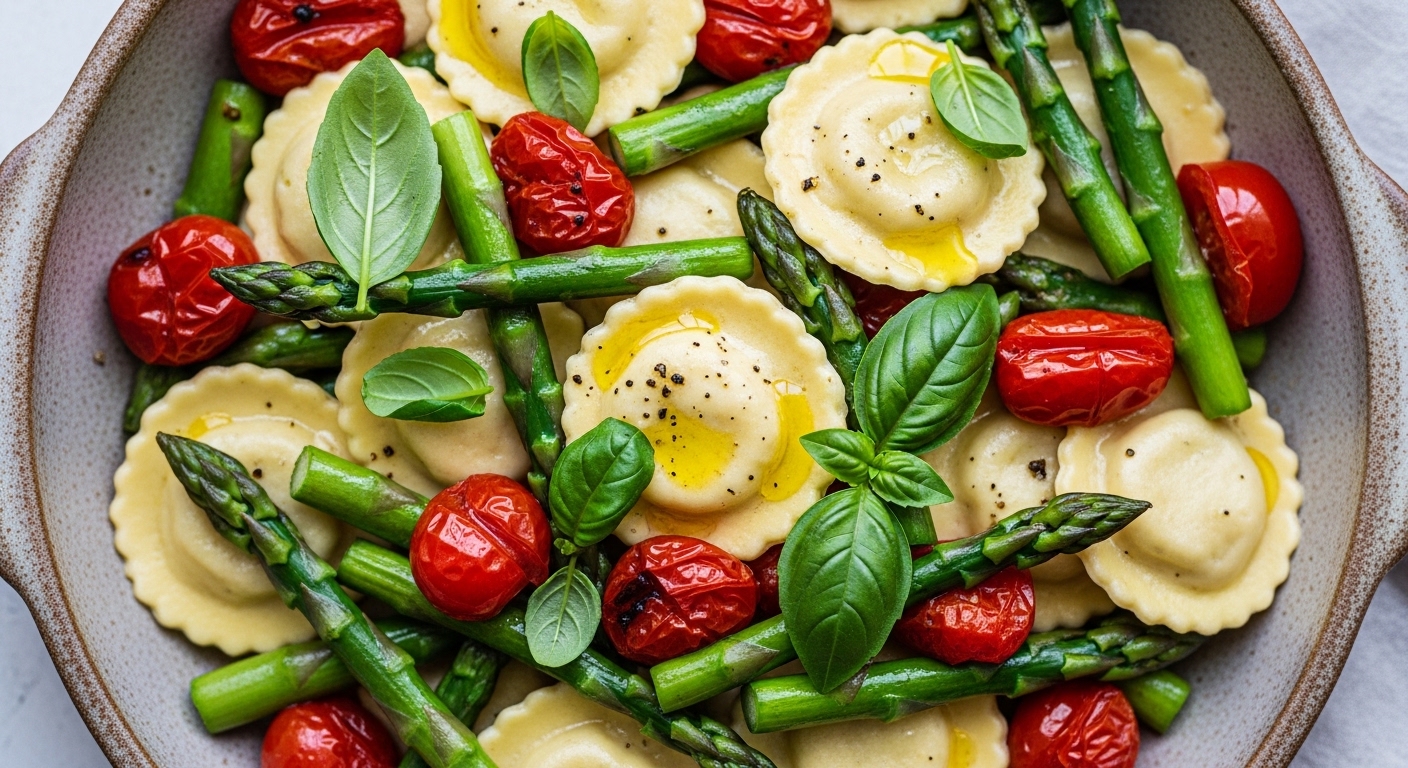
- Ravioli: 1 package (9–12 oz) of fresh or refrigerated cheese or spinach ravioli.
- Asparagus: 1 bunch of thin spears, woody ends trimmed, cut into 2-inch pieces.
- Tomatoes: 1 cup of cherry or grape tomatoes, halved.
- Garlic: 4 cloves, thinly sliced (slicing provides a mellower flavor than mincing).
- Fresh Herbs: A handful of fresh basil, parsley, and a pinch of oregano.
- Olive Oil: 1/4 cup of high-quality Extra Virgin Olive Oil.
Ingredients
Method
- Boil a large pot of salted water. Cook ravioli for 3-4 minutes (or per package instructions). Reserve 1/4 cup pasta water and drain.
- In a large skillet, heat olive oil over medium. Add garlic and sauté for 1 minute.
- Add asparagus to the skillet. Season with salt and pepper. Sauté for 4 minutes.
- Add tomatoes. Cook for 2-3 minutes until they begin to soften.
- Add the ravioli and reserved pasta water to the skillet. Toss gently to coat.
- Remove from heat. Fold in fresh herbs and top with parmesan if desired.
Notes
- Don’t Overcook Ravioli: Fresh ravioli cooks in minutes. Pull them out of the water the second they float to the surface to prevent them from bursting in the sauté pan.
- The “Pasta Water” Secret: Always save 1/4 cup of starchy pasta water. Adding a splash to the skillet at the end emulsifies the olive oil and garlic into a glossy sauce that sticks to the pasta.
- Asparagus Prep: Snap the woody bottom ends off the asparagus by hand; they will naturally break where the tender part begins. Cut on a diagonal for a more professional “bistro” look.
- Garlic Warning: Sliced garlic burns faster than minced. Keep your heat at medium-low when infusing the oil to ensure a sweet, mellow flavor rather than a bitter, acrid one.
- Herb Timing: Only add fresh basil and parsley after you turn off the heat. Residual heat is enough to wilt them without destroying their vibrant color and aroma.
- Swap for Seasonality: If asparagus is out of season, sub in frozen peas or baby spinach. Add them at the very end as they require significantly less cook time.
Optional Add-Ins
- Lemon Zest: For a bright, citrusy lift.
- Crushed Red Pepper: To add a subtle Mediterranean heat.
- Cheese: Shaved Parmesan or crumbled Feta for a salty finish.
Internal Link Opportunity: If you love the combination of garden-fresh produce and noodles, check out our guide to Easy Mediterranean Pasta Recipes for more weeknight inspiration.
How to Make Asparagus Ravioli with Tomatoes and Garlic (Step-by-Step)
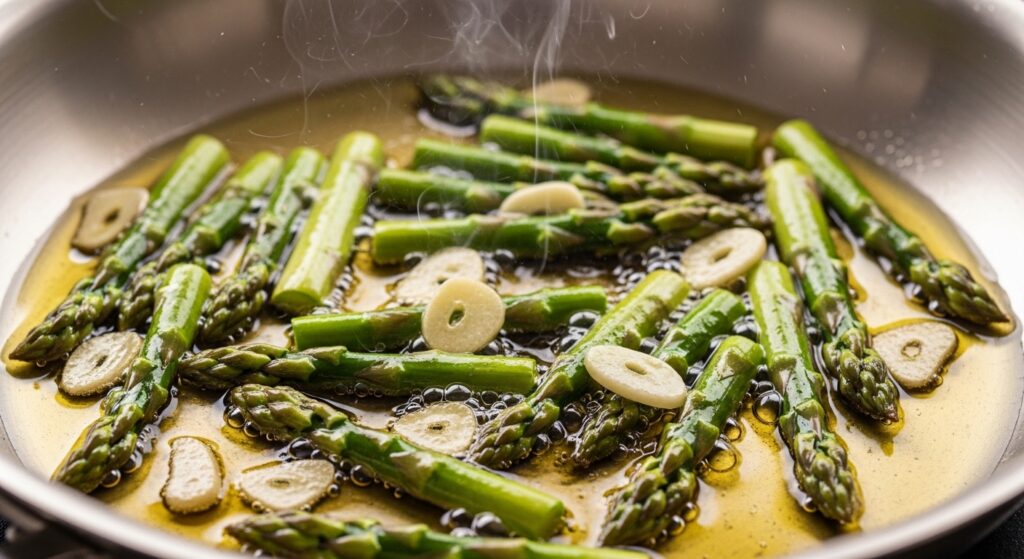
Perfecting ravioli with tomatoes and garlic requires a bit of finesse regarding timing. You want the vegetables to be cooked through but still vibrant and “al dente.”
- Boil the Pasta: Bring a large pot of salted water to a boil. Add the ravioli and cook according to package instructions—usually 3–5 minutes. Pro Tip: Drain them 30 seconds early; they will finish cooking in the pan.
- Infuse the Oil: While the pasta cooks, heat olive oil in a large skillet over medium heat. Add the sliced garlic. Sauté for 1–2 minutes until fragrant but not browned.
- Sauté the Asparagus: Add the asparagus to the skillet. Sauté for 3–4 minutes. You want them to turn bright green and become slightly tender.
- Blister the Tomatoes: Fold in the halved tomatoes. Cook for another 2 minutes until the skins begin to wrinkle and release their juices, creating a natural “sauce.”
- The Marriage: Gently toss the cooked ravioli into the skillet. Use a slotted spoon to move them directly from the water to the pan—a little residual pasta water helps the oil emulsify.
- The Finish: Turn off the heat. Toss in your fresh herbs, a splash more olive oil, and a crack of black pepper.
Cooking Tips for Success
- Don’t Crowd the Pan: Use your largest skillet so the tomatoes can blister rather than steam.
- Save the Water: Always keep a half-cup of pasta water on the side. If the dish looks dry, a tablespoon of water will make it glossy and perfect.
Fresh Herb Ravioli Sauce (Light & Simple)
Many people assume pasta requires a jarred sauce, but a fresh herb ravioli sauce made from oil and aromatics is far superior for Mediterranean cooking. This “sauce” is essentially an infusion. The olive oil picks up the pungency of the garlic and the earthy sweetness of the herbs, coating the ravioli in a thin, flavorful veil.
Using fresh herbs like basil and oregano at the very end ensures their volatile oils don’t evaporate, providing a floral aroma that cuts through the richness of the cheese-filled pasta. If you want a more acidic profile, a squeeze of fresh lemon juice into the oil creates a “citronette” style sauce that pairs beautifully with the asparagus.
Is This a Healthy Ravioli Recipe?
Yes! A healthy ravioli recipe is defined by its nutrient density. By shifting the ratio of the meal to favor vegetables, you lower the glycemic load of the pasta.
- Macro Balance: You get complex carbs from the pasta, healthy fats from the oil, and micronutrients (Vitamins K and C) from the asparagus and tomatoes.
- Portion Control: A standard serving of ravioli is often 5–7 pieces. By adding two cups of vegetables, that portion feels like a massive, overflowing plate.
- Upgrade Tip: For even more fiber, look for whole-wheat ravioli or those stuffed with mushroom or kale.
Tips for Making a Light Pasta with Vegetables
Creating a light pasta with vegetables is an art of restraint. Here is how to keep it fresh:
- High-Quality Oil: Since oil is the primary sauce, use the best cold-pressed EVOO you can afford.
- Timing the Herbs: Never sauté fresh basil; it turns bitter. Always fold it in at the very end.
- Texture is King: Overcooked asparagus is mushy. Aim for “crisp-tender”—it should have a slight snap when bitten.
Internal Link Opportunity: Looking for a protein boost? Pair this with our Lemon Oregano Grilled Chicken to complete your Mediterranean feast.
Variations and Substitutions
- Green Swaps: If asparagus isn’t in season, use baby spinach or thinly sliced zucchini ribbons.
- Creamy Topping: Instead of stirring in cheese, place a ball of cold Burrata in the center of the serving bowl.
- Vegan Option: Use a vegan-certified ravioli (often filled with cashew cream or pumpkin) and omit the parmesan.
What to Serve with Mediterranean Ravioli
To keep the meal cohesive, serve this alongside:
- A simple Arugula Salad with a lemon vinaigrette.
- Mediterranean Chickpea Salad for added plant-based protein.
- A slice of Whole Grain Sourdough to mop up the garlic-infused oil.
Internal Link Opportunity: For a great side dish, see our 10-Minute Mediterranean Side Salads post.
Storage and Meal Prep Tips
This dish stays fresh in the refrigerator for up to 3 days. When reheating, avoid the microwave if possible, as it can make the ravioli rubbery. Instead, add a teaspoon of water to a skillet and toss the leftovers over low heat until warmed through. This refreshes the “sauce” and keeps the asparagus green.
Frequently Asked Questions
Can I use frozen ravioli for this asparagus ravioli recipe? Absolutely. Just boil them directly from frozen. They may take 1–2 minutes longer than refrigerated pasta.
How do I keep ravioli from breaking? Don’t use a vigorous rolling boil; a gentle simmer is better. Also, use a slotted spoon to remove them rather than dumping them into a colander.
Is tomato asparagus pasta recipe good for meal prep? Yes, but keep the asparagus slightly undercooked during the initial prep so it doesn’t get mushy when you reheat it later in the week.
Can I make this healthy ravioli recipe dairy-free? Yes, simply swap the cheese ravioli for a dairy-free version or a vegetable-stuffed pasta like mushroom or roasted pepper.
Conclusion
This asparagus ravioli recipe proves that Mediterranean cooking is about simplicity, freshness, and balance. By choosing vibrant seasonal vegetables and high-quality fats, you can transform a simple package of pasta into a nutritious, restaurant-quality meal in under 30 minutes.
Ready to explore more? Browse our collection of Mediterranean pasta recipes to find your next favorite dinner.