
Introduction
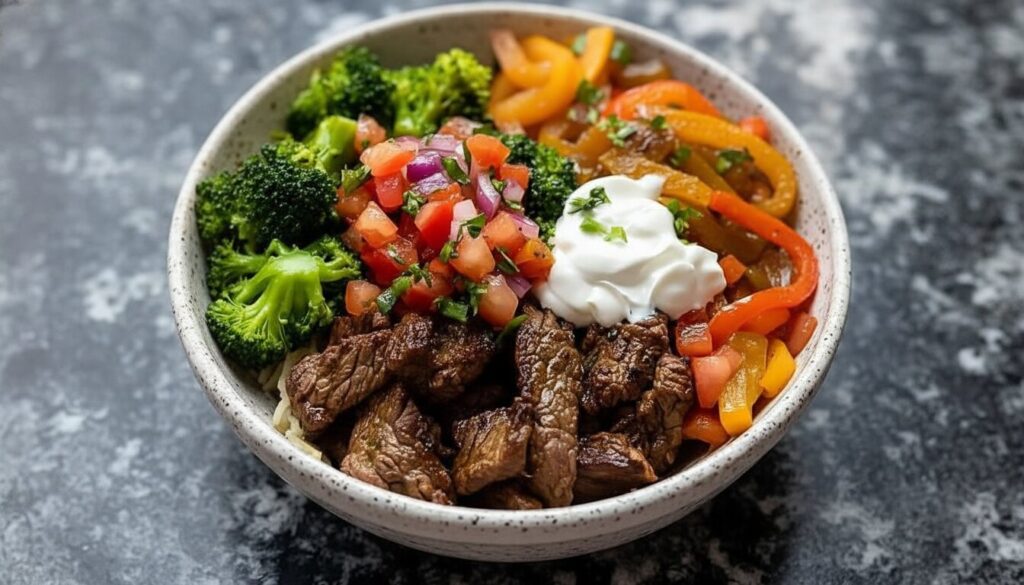
Craving that bold, sizzling fajita flavor but want to keep your meals aligned with a heart-healthy lifestyle? Welcome to the best of both worlds. This Mediterranean beef fajita bowl recipe is a vibrant fusion that marries the smoky, charred goodness of classic fajitas with the fresh, zesty profiles of Greek cuisine.
Traditional fajitas often rely on heavy flour tortillas and greasy sides, but this version reimagines the concept as a balanced, high-protein healthy beef fajita bowl. By swapping out processed wrappers for a base of nutrient-dense grains and adding a dollop of creamy tzatziki, we’ve created a meal that is as nourishing as it is delicious. Whether you are looking for a quick weeknight dinner or a reliable mediterranean beef bowl recipe for your Sunday meal prep, this dish hits every mark. It’s colorful, savory, and packed with the “good fats” that make the Mediterranean diet the gold standard of nutrition.
Why You’ll Love This Mediterranean Beef Bowl
If you’re looking for a mediterranean diet beef recipe that doesn’t feel like “diet food,” this is it. Here is why this recipe deserves a spot in your weekly rotation:
- High-Protein & Balanced: Features lean cuts of beef paired with fiber-rich vegetables and complex carbs.
- Mediterranean Diet Approved: Uses heart-healthy fats and fresh, whole-food ingredients.
- Highly Customizable: Easily swap the protein for a mediterranean steak bowl or change the base to suit low-carb needs.
- Meal-Prep Friendly: The flavors actually improve after a day in the fridge, making it perfect for office lunches.
- Ready in 30 Minutes: No long marinating times or complex techniques required.
What Makes This a Mediterranean Fajita Bowl?
You might be wondering: How does a Mexican staple become a greek beef bowl recipe? The secret lies in the ingredient swaps and the flavor profile.
Instead of using seed oils or lard, we sear our ingredients in extra virgin olive oil. We replace the standard cumin-chili powder heavy rub with a blend of dried oregano, garlic, and lemon zest. Furthermore, this mediterranean fajita bowl leans heavily on fresh produce—think crisp cucumbers and juicy cherry tomatoes—alongside the sautéed peppers. The finishing touch is a yogurt-based sauce, providing a probiotic boost that heavy sour cream simply can’t offer.
Ingredients for the Perfect Greek Beef Bowl
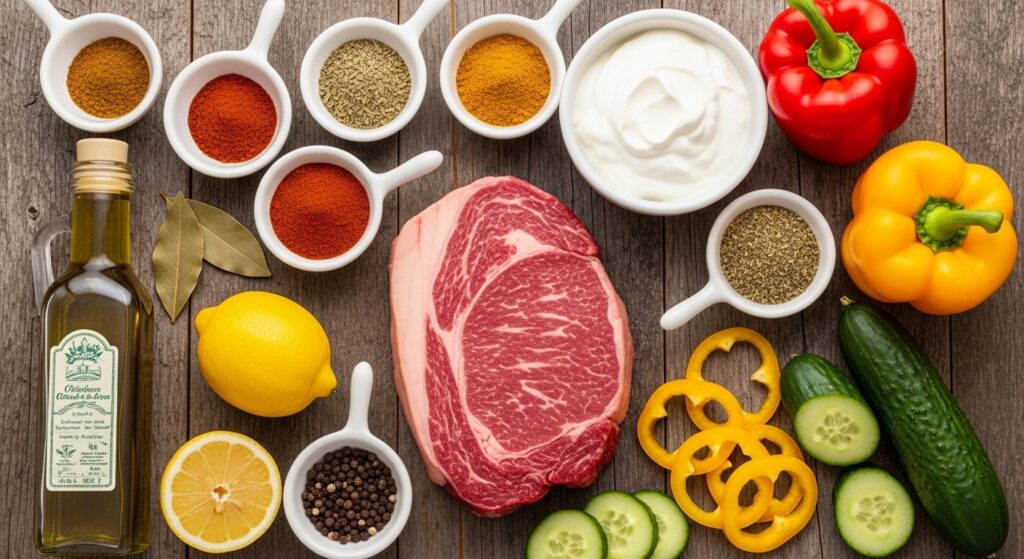
To ensure the best results, quality is key. Here is what you will need for this beef and rice mediterranean bowl.
For the Marinated Beef
- 1 lb Flank Steak or Sirloin: Thinly sliced against the grain.
- 2 tbsp Extra Virgin Olive Oil: The foundation of any mediterranean diet beef recipe.
- Seasonings: Dried oregano, smoked paprika, garlic powder, onion powder, and a pinch of cinnamon for that authentic Mediterranean warmth.
- Fresh Lemon Juice: To tenderize the meat.
For the Fajita Vegetables
- Bell Peppers: Red, yellow, and green for a boost of Vitamin C.
- Red Onion: Sliced into thin wedges.
- Fresh Parsley: Chopped for a bright finish.
For the Bowl Base (Rice or Alternatives)
- Cooked Basmati or Brown Rice: Fluffed with a bit of lemon juice.
- Optional: Quinoa or cauliflower rice for a grain-free version.
For the Mediterranean Sauce (Tzatziki Option)
- Greek Yogurt: The base for our high-protein sauce.
- Grated Cucumber: Squeezed dry.
- Fresh Dill and Garlic: For that signature punchy flavor.
How to Make Mediterranean Beef Fajita Bowls (Step-by-Step)
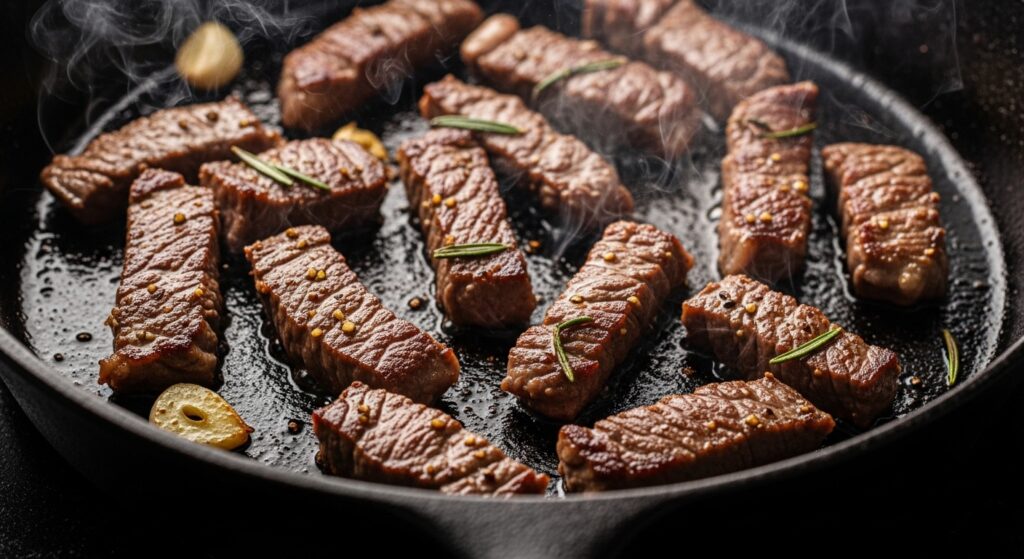
Follow these steps to create a healthy beef fajita bowl that rivals any restaurant.
- Marinate the Beef: In a medium bowl, whisk olive oil, lemon juice, and spices. Add your sliced beef and toss to coat. Let it sit for at least 15 minutes (or up to 4 hours in the fridge).
- Cook the Fajita Vegetables: Heat 1 tablespoon of olive oil in a large cast-iron skillet over medium-high heat. Add the peppers and onions, cooking until tender-crisp with a slight char (about 5-7 minutes). Remove and set aside.
- Sear the Beef: In the same skillet, add the beef in a single layer. Sear for 2-3 minutes per side until browned and caramelized. Do not overcrowd the pan!
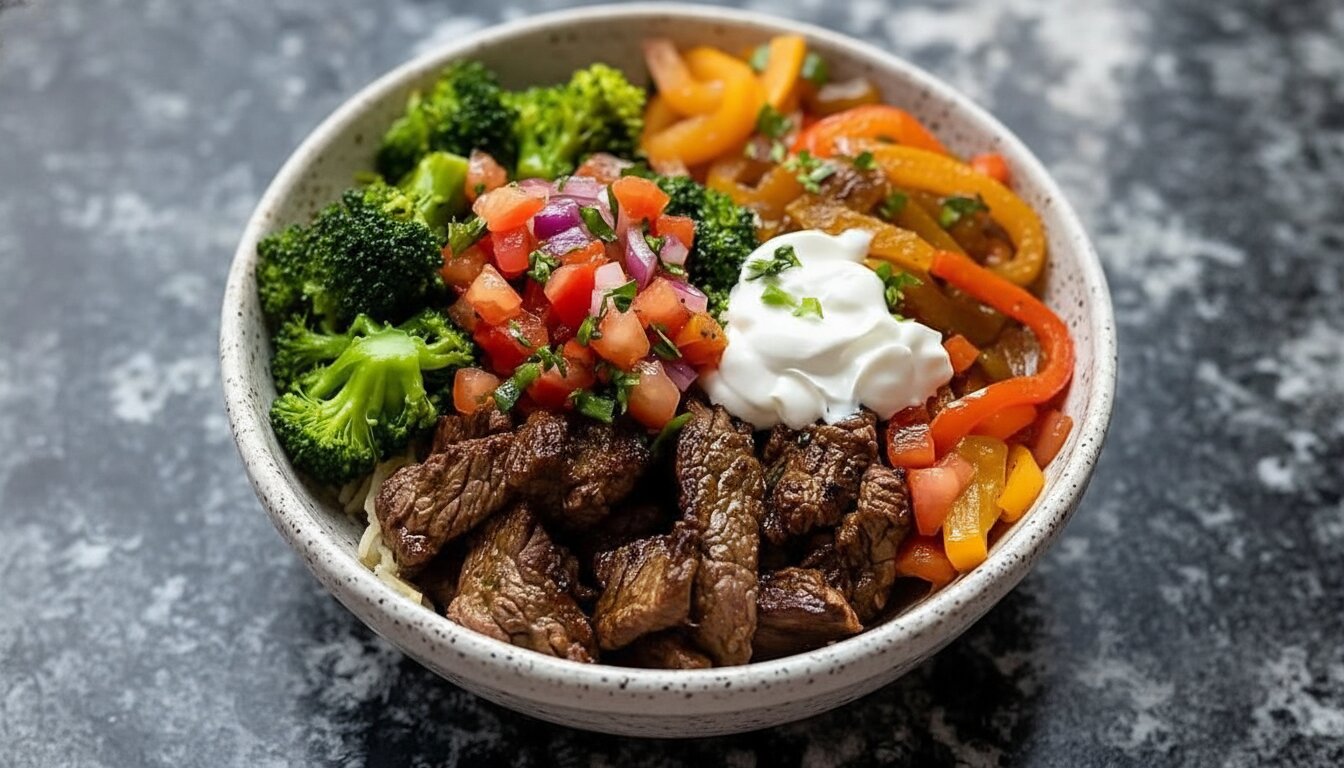
- Assemble the Bowl: Start with a generous scoop of your base (rice or greens). Top with a portion of the seared beef and the sautéed vegetables.
- Add Sauce and Toppings: Add fresh components like halved cherry tomatoes, kalamata olives, and a massive dollop of tzatziki.
Ingredients
Method
- Prep & Marinate the Beef
- In a medium mixing bowl, whisk together the extra virgin olive oil, lemon juice, oregano, smoked paprika, and garlic powder. Add the thinly sliced flank steak and toss until every piece is well-coated. Let it sit at room temperature for at least 15 minutes to soak up the flavors.
- Sauté the Fajita Vegetables
- Heat 1 tablespoon of olive oil in a large cast-iron skillet over medium-high heat. Add the sliced bell peppers and red onions. Cook for 5–7 minutes, stirring occasionally, until the vegetables are tender-crisp and have developed those signature charred “fajita” edges. Remove the vegetables from the skillet and set them aside on a plate.
- Sear the Beef
- Wipe out the skillet if necessary and return it to high heat. Add the marinated beef in a single layer (work in batches if your pan is small). Sear for 2–3 minutes per side without moving them too much; this creates a deep, savory crust. Once browned and caramelized, remove from heat.
- Assemble the Mediterranean Bowls
- Grab four deep serving bowls and start with a base of 1/2 cup cooked rice in each. Divide the seared beef and the sautéed vegetables equally among the bowls, placing them side-by-side over the rice.
- Garnish & Serve
- Finish each bowl by adding the fresh components: a handful of halved cherry tomatoes, a few slices of cucumber, and a generous dollop of tzatziki sauce.
Notes
- Slice Against the Grain: Always cut the steak across the muscle fibers. This ensures the beef is melt-in-your-mouth tender rather than chewy.
- Don’t Overcrowd the Pan: Cook the beef in two batches if necessary. If the pan is too full, the meat will steam in its own juices instead of getting that beautiful brown sear.
- High Heat is Key: Ensure your skillet is smoking hot before adding the beef. A cast-iron skillet works best for achieving authentic “fajita” char.
- Grain-Free Option: Swap the rice for cauliflower rice or a bed of baby spinach to reduce the carb count further.
- Make-Ahead Tip: You can marinate the beef up to 24 hours in advance for deeper flavor. Store it in a sealed Ziploc bag in the fridge.
- Storage: Keep the fresh toppings (cucumber/tomato) separate from the beef and rice when storing to prevent them from getting soggy when reheating.
Is This Mediterranean Diet Friendly?
Absolutely. This recipe is a textbook example of how to incorporate red meat into a Mediterranean lifestyle. The Mediterranean diet emphasizes:
- Healthy Fats: Primarily from olive oil and nuts.
- Lean Protein: Using high-quality, lean cuts of beef in moderation.
- Whole Grains: Such as brown rice or quinoa.
- Anti-inflammatory Ingredients: Garlic, lemon, and fresh herbs are the stars here.
Because this mediterranean diet beef recipe is loaded with vegetables and uses yogurt instead of heavy creams, it supports heart health while keeping you satiated.
Variations & Customizations
- Mediterranean Steak Bowl Version: Use a high-quality Ribeye or New York Strip, grill it whole, and slice it thick for a more indulgent feel.
- Low-Carb Cauliflower Rice Option: Swap the grain base for sautéed cauliflower rice seasoned with lemon and parsley.
- Quinoa Greek Bowl Version: Use quinoa for an extra protein and fiber boost.
- Spicy Harissa Upgrade: If you miss the heat of traditional fajitas, stir a teaspoon of harissa paste into your yogurt sauce.
Meal Prep & Storage Tips
This is an elite meal prep option. The cooked beef and vegetables will last in an airtight container for up to 4 days in the refrigerator.
- Storage Tip: Store the “cold” ingredients (sauce, fresh tomatoes, cucumbers) in small separate containers so you can reheat the beef and rice without wilting the veggies.
- Reheating: Microwave on medium power for 90 seconds, or quickly toss in a hot skillet for 2 minutes to revive the texture.
What to Serve with a Mediterranean Beef Bowl
To turn this into a full Mediterranean feast, consider adding these sides from our blog:
- [Greek Lemon Oregano Potatoes]: The perfect starchy side to complement the beef.
- [Homemade Creamy Tzatziki Sauce]: If you want to make your sauce from scratch.
- [Roasted Mediterranean Vegetable Medley]: For those who want even more fiber.
- [Classic Greek Salad with Feta]: A crisp, refreshing side to cut through the richness of the beef.
Frequently Asked Questions
Q1: Is a beef fajita bowl healthy? Yes! By focusing on lean protein, heart-healthy olive oil, and a massive serving of vegetables, this bowl provides a balanced ratio of macronutrients without the excess sodium and saturated fats found in fast-food versions.
Q2: Can I use steak instead of sliced beef? Definitely. A mediterranean steak bowl using sliced sirloin or flank steak is the traditional choice for this recipe. Just ensure you slice against the grain for maximum tenderness.
Q3: What rice works best in a Mediterranean bowl? Basmati rice is excellent for its fluffy texture, but for the most authentic Mediterranean experience, try a wild rice blend or lemon-infused brown rice.
Q4: Can this recipe be made dairy-free? Yes. Simply omit the tzatziki or use a dairy-free almond or coconut-based yogurt to make the sauce. A squeeze of extra lemon and a drizzle of tahini also work beautifully.
Nutrition Breakdown (Per Serving)
- Calories: 480 kcal
- Protein: 34g
- Carbs: 38g
- Healthy Fats: 18g
- Fiber: 6g
Final Thoughts
This Mediterranean Beef Fajita Bowl recipe proves that healthy eating never has to be boring. It’s a flavor-packed, easy-to-make meal that satisfies your cravings for comfort food while keeping your health goals on track. It’s a win for busy families and meal preppers alike!
Would you like me to generate a printable shopping list for this recipe?