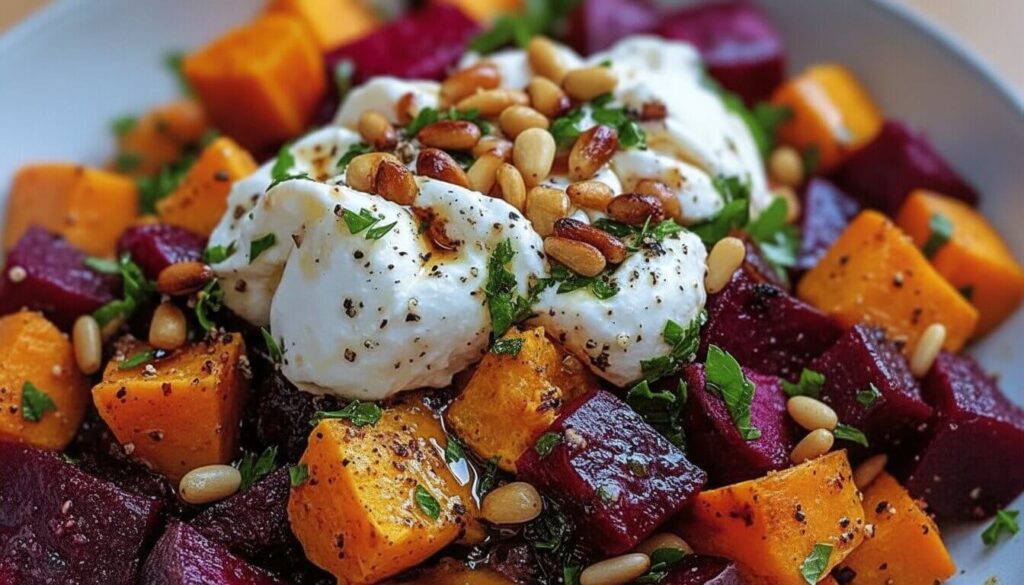
This roasted beet and butternut squash salad recipe is the ultimate celebration of Mediterranean autumn and winter flavors. Combining the deep, earthy tones of roasted root vegetables with the luxurious creaminess of Italian burrata, it’s a dish that feels like a high-end restaurant appetizer but remains rooted in the simplicity of home cooking.
In the Mediterranean tradition, we focus on high-quality, whole ingredients that let nature do the heavy lifting. This salad is built on a foundation of extra virgin olive oil, fragrant fresh herbs, and the natural caramelization that only a hot oven can provide. Whether you are looking for a centerpiece for your holiday table or a sophisticated way to elevate a Tuesday night, this dish embodies the balance of the Mediterranean Diet—plant-forward, rich in healthy fats, and undeniably delicious.
What Makes This Salad Mediterranean-Diet Friendly?
The Mediterranean Diet is less about restrictive rules and more about the quality of the food on your plate. This roasted beet and butternut squash salad is a textbook example of these principles in action.
- Healthy Fats over Butter: Instead of heavy cream-based dressings or roasting in butter, we use heart-healthy extra virgin olive oil. It’s the primary fat source, providing a peppery finish that complements the sweetness of the squash.
- Vegetables as the Star: In many Western diets, vegetables are an afterthought. Here, they are the main event. By using various Easy Mediterranean Recipes, we turn simple produce into a filling, nutrient-dense meal.
- Smart Cheese Usage: Rather than smothering the dish in shredded cheese, we use a single ball of high-quality burrata. This provides a rich, creamy element without overwhelming the nutritional profile of the vegetables.
- Natural Crunch: Instead of croutons made from refined flour, we use toasted pine nuts. These provide essential minerals and healthy fats while adding that necessary texture contrast.
Key Mediterranean Swaps:
- Olive Oil over Butter or Margarine
- Vegetables over Refined Carbohydrates
- Simple Vinaigrettes over Heavy Creamy Dressings
- Nuts and Seeds for texture instead of fried toppings
Ingredient Breakdown & Mediterranean Substitutions
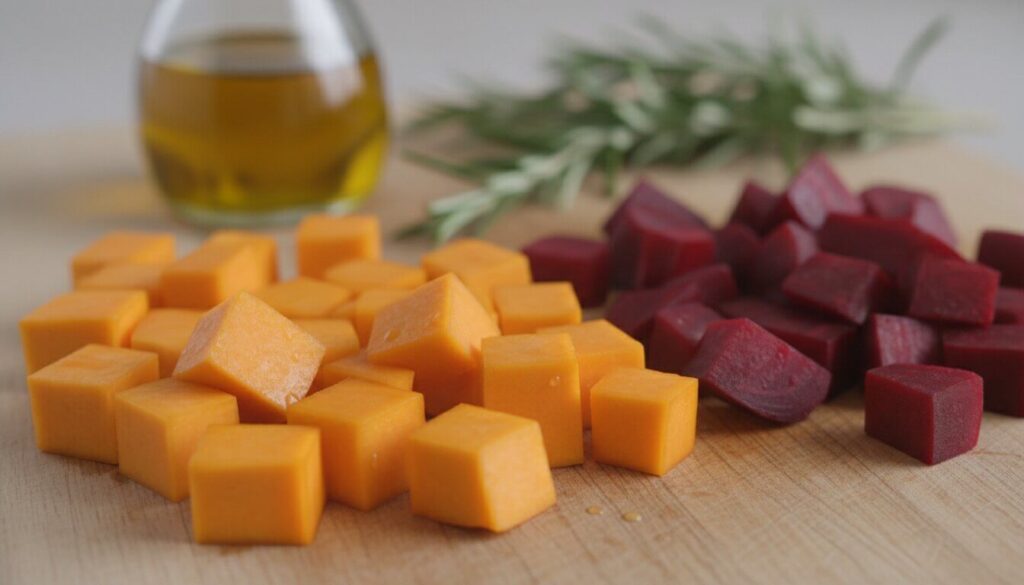
To master this roasted beet and butternut squash salad recipe, it helps to understand why these specific ingredients work together and how you can pivot based on what’s in your pantry.
3.1 Beets
Beets are a staple in Mediterranean cooking, often served simply with garlic and vinegar. They bring a robust “groundedness” to the salad. You can use classic red beets for a deep, dramatic look, or golden beets if you prefer a milder, sweeter flavor that won’t “bleed” as much onto the other ingredients.
3.2 Butternut Squash
Butternut squash provides the “caramel” element. When roasted at high heat, the natural sugars concentrate, creating a soft, candy-like interior and a slightly crisp exterior. It’s the perfect seasonal partner for the more dense beet.
3.3 Burrata Cheese
Burrata is essentially a mozzarella shell filled with soft, stringy curd and fresh cream. It is the height of indulgence.
- Substitutions: If you can’t find burrata, fresh mozzarella pearls are a great choice. For a saltier, more Tangy Mediterranean profile, try whipped feta (similar to our whipped feta dip).
3.4 Pine Nuts & Herbs
Nuts provide the “luxury” crunch in Mediterranean salads. Pine nuts offer a buttery flavor, but you can easily swap them for toasted walnuts or slivered almonds. Fresh flat-leaf parsley is my go-to for brightness, though mint or basil adds a refreshing summer-to-fall bridge.
3.5 Dressing Ingredients
A true Mediterranean dressing is simple: high-quality olive oil and an acid. We use balsamic vinegar for its syrupy depth. If you want a touch more sweetness, a teaspoon of local honey can be whisked in to balance the acidity.
Step-by-Step Cooking Instructions
Achieving the perfect roasted beet and butternut squash salad recipe requires a little bit of timing and technique to ensure the textures are just right.
4.1 How to Roast Beets and Butternut Squash Perfectly
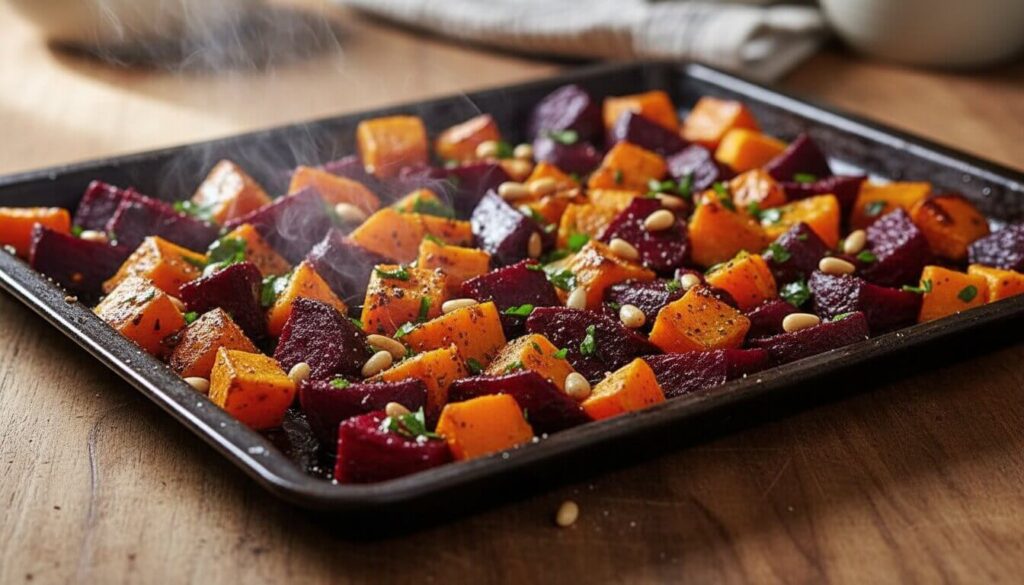
The secret to a great roasted salad is even cooking.
- Prep: Peel and cube your squash and beets into uniform 1-inch pieces.
- Separate: To prevent the beets from turning the orange squash completely purple, roast them on separate halves of the baking sheet or on two different pans.
- The Roast: Toss with olive oil, salt, and pepper. Roast at 400°F (200°C) for 30–35 minutes. You are looking for “fork-tender” centers and “caramelized” (browned) edges.
4.2 Toasting the Pine Nuts
Never walk away from pine nuts on the stove! Place them in a dry skillet over medium heat. Shake the pan constantly. As soon as you smell a nutty aroma and see a golden-brown tint (usually 2–4 minutes), remove them from the heat immediately.
4.3 Making the Mediterranean-Style Vinaigrette
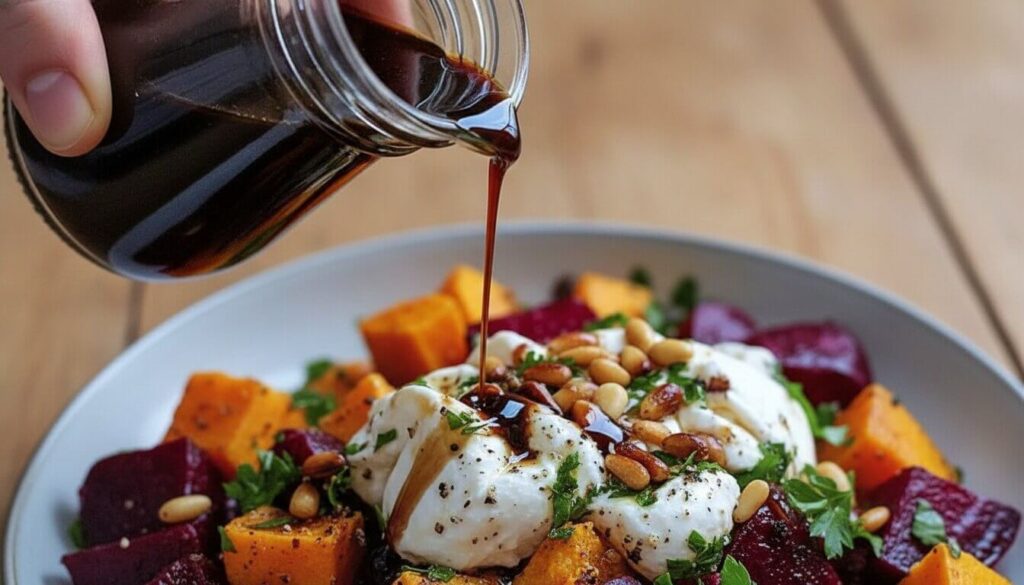
In a small jar, combine 3 parts olive oil to 1 part balsamic vinegar. Add a pinch of sea salt and a crack of black pepper. Shake vigorously until the oil and vinegar emulsify into a thick, cohesive liquid. For a flavor twist, add a pinch of smoked paprika or cumin.
4.4 Assembling the Salad
Start with a base of your roasted vegetables while they are still slightly warm. Place the burrata ball in the center. Using a knife or your fingers, gently tear the cheese open so the creamy center spills out over the vegetables. Drizzle the dressing over the top and garnish with the toasted nuts and herbs.
Flavor Profile & Texture Experience
This salad is a masterclass in sensory balance. You get the earthy soul of the beets meeting the sweet caramelization of the squash. Then comes the creamy explosion of the burrata, which acts as a cooling agent against the warm vegetables. Finally, the crunchy pine nuts provide the finishing touch.
It feels like “restaurant-quality” because of the temperature contrast—the warmth of the roasted roots against the room-temperature cheese creates a comforting yet sophisticated mouthfeel that is far more satisfying than a cold bowl of greens.
Variations & Customizations
6.1 Vegan Mediterranean Version
To make this 100% plant-based, skip the burrata. Instead, add a cup of rinsed chickpeas or white beans for protein. Replace the balsamic vinaigrette with a creamy tahini-lemon dressing to maintain that rich texture.
6.2 Protein Add-Ons
While this is a hearty vegetarian meal, you can easily add:
- Grilled Chicken: Seasoned with lemon and oregano.
- Lentils: Follow our Brown Butter Lentil and Sweet Potato Salad Recipe for inspiration on incorporating legumes.
- Grilled Shrimp: A classic Mediterranean protein that pairs beautifully with roasted vegetables.
6.3 Seasonal Variations
If it’s early autumn, serve the roasted vegetables over a bed of fresh arugula for a peppery bite. In the winter, you can swap the squash for sweet potatoes or add citrus zest to the dressing to brighten the “heavy” winter flavors.
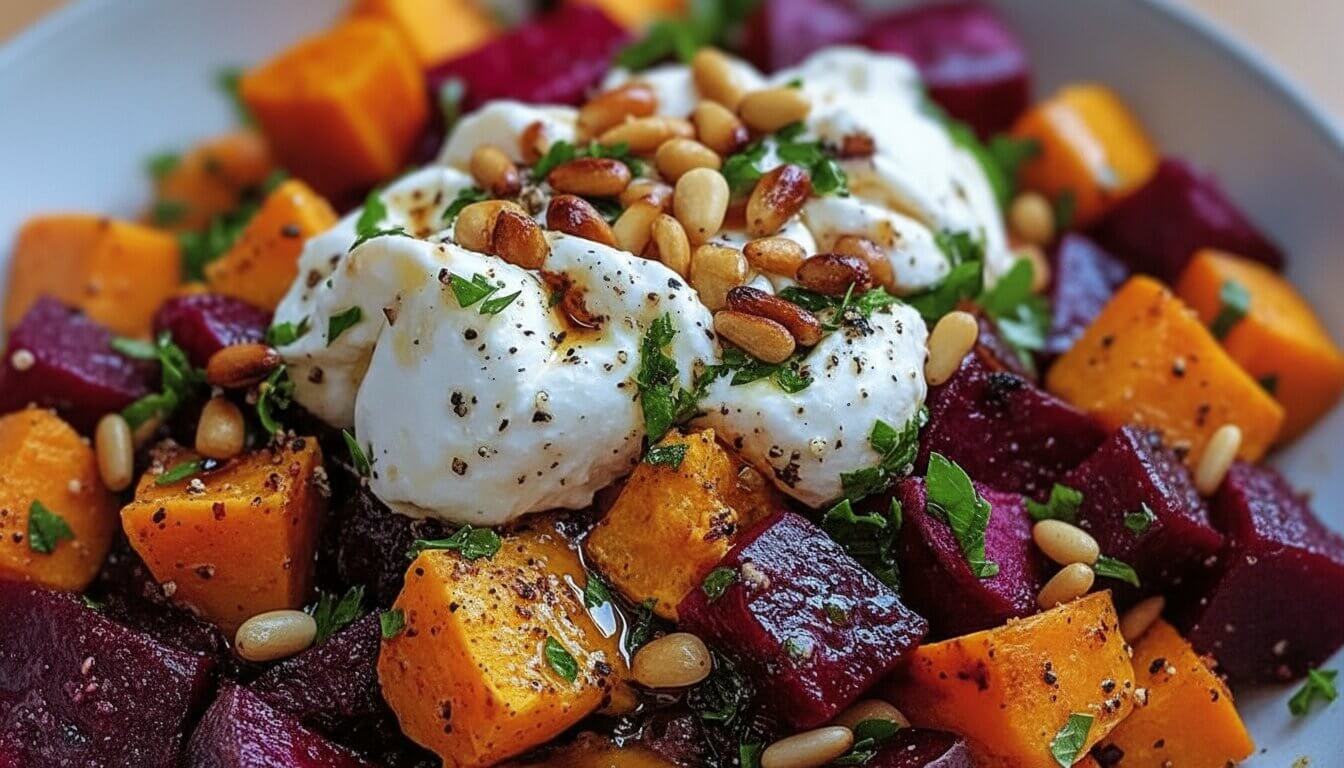
Roasted Beet and Butternut Squash Salad
Ingredients
Method
- Preheat oven to 400°F (200°C).
- Toss cubed beets and squash with olive oil, salt, and pepper. Arrange on a baking sheet (keep beets on one side to avoid bleeding).
- Roast for 30–35 minutes until tender and caramelized.
- While roasting, toast pine nuts in a dry skillet over medium heat for 3 mins.
- Whisk dressing ingredients in a small bowl.
- Arrange warm vegetables on a platter. Place burrata in the center and tear open.
- Drizzle with dressing and garnish with pine nuts and parsley.
Notes
- Roast beets on a separate side of the pan to avoid bleeding color onto the squash.
- Ensure pine nuts are toasted in a dry skillet for the best aroma.
- Tear the burrata just before serving to maintain the best visual and texture impact.
Serving Suggestions & Pairings
This roasted beet and butternut squash salad is incredibly versatile.
- As a Starter: It’s a show-stopper for a Mediterranean-themed dinner party, perhaps followed by a Lemon Garlic Baked Cod.
- As a Light Lunch: Serve it with a thick slice of Rustic Peasant Bread to soak up the dressing and creamy cheese.
- Holiday Side: It pairs perfectly with roasted meats or a Mediterranean Chicken Stir Fry.
Make-Ahead, Storage & Meal Prep Tips
- Prep Ahead: You can roast the beets and squash up to 3 days in advance. Store them in an airtight container in the fridge.
- The Cheese Rule: Do not add the burrata until the moment you are ready to serve. Once the cheese is torn, it’s best eaten immediately.
- Reheating: If you have leftovers, reheat the vegetables in a 350°F oven for 10 minutes to restore the texture before adding fresh cheese.
Frequently Asked Questions
Can I make roasted beet and butternut squash salad ahead of time?
Yes! You can roast the vegetables and make the dressing in advance. Just assemble and add the burrata right before serving to keep the cheese fresh and the nuts crunchy.
What dressing goes best with roasted beet and squash salad?
A balsamic vinaigrette is best because the acidity cuts through the sweetness of the squash and the richness of the cheese.
Is burrata healthy on the Mediterranean diet?
Yes, when used in moderation. The Mediterranean Diet emphasizes whole foods; high-quality cheese like burrata provides protein and calcium as a flavorful accent.
Can I serve this salad cold?
Absolutely. While the contrast of warm vegetables is lovely, it is equally delicious as a chilled Mediterranean Chickpea Salad-style dish.
What can I substitute for pine nuts?
Walnuts are the best alternative, as they also have an earthy flavor that complements beets.
Final Thoughts
This roasted beet and butternut squash salad recipe is more than just a side dish; it’s a reflection of the Mediterranean lifestyle—taking the best of the season and treating it with respect. It’s simple, elegant, and nutrient-dense. I encourage you to experiment with different herbs or perhaps try golden beets for a different visual.
For more inspiration on healthy, vibrant eating, explore our other Easy Mediterranean Recipes and let us know how your salad turned out in the comments below!