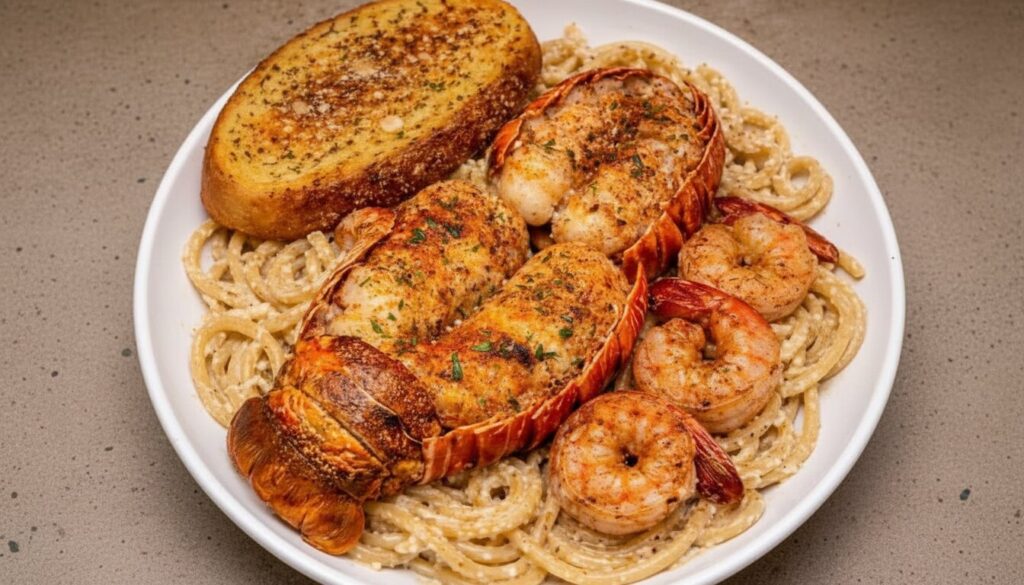
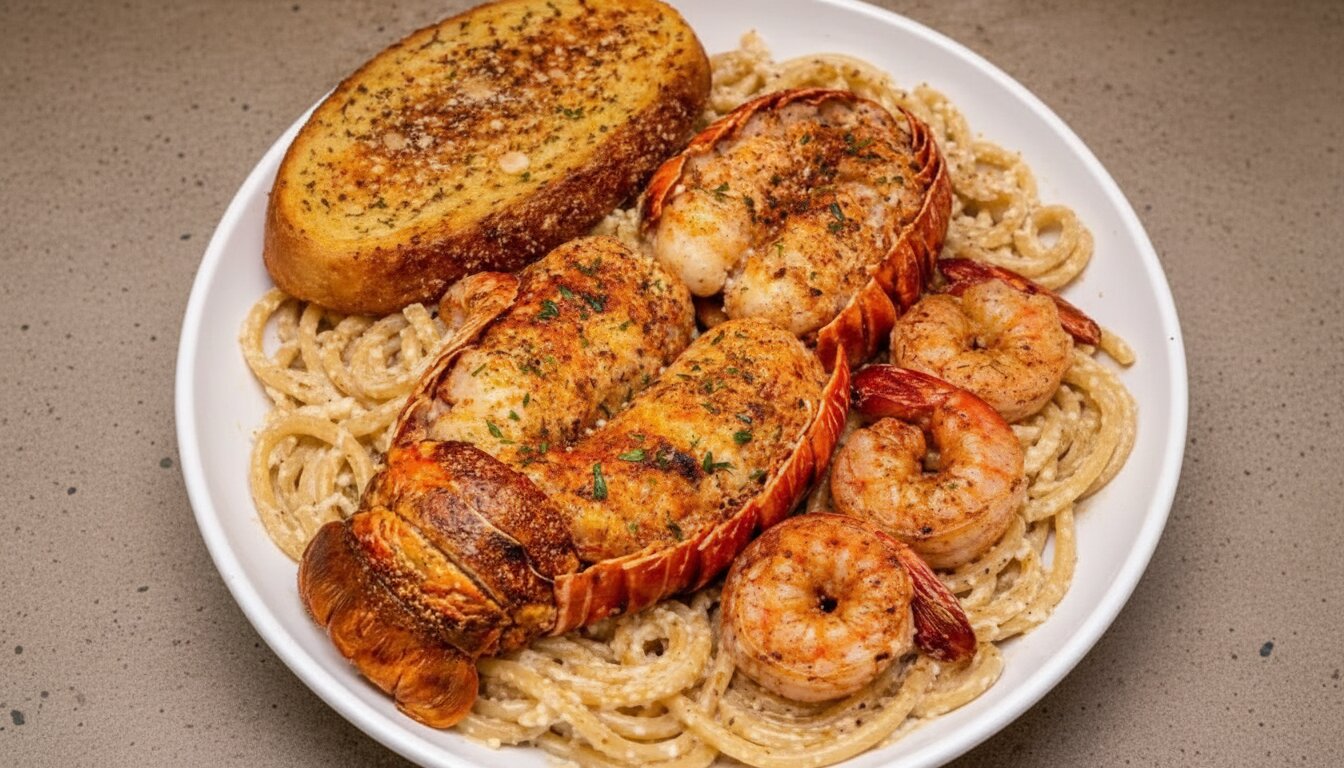
There is something inherently magical about the clinking of forks against a plate of creamy shrimp and lobster pasta. It’s the kind of dish that feels like a celebrated seaside escape in Italy or Greece, right from your own kitchen. Whether you are planning a romantic date night or simply want to elevate your weekend meal, this Creamy Garlic Parmesan Lobster & Shrimp Pasta recipe delivers restaurant-quality indulgence with a sophisticated Mediterranean twist.
While many seafood pastas can feel heavy, our version balances the richness of a garlic parmesan seafood pasta with the bright, acidic notes of lemon zest and high-quality olive oil. It is the ultimate comfort food—protein-packed, decadent, and surprisingly simple to master.
Why You’ll Love This Creamy Seafood Pasta
If you’ve been searching for the perfect parmesan cream seafood pasta, this recipe hits the sweet spot between gourmet flair and home-cooked ease. Here is why it’s about to become a staple in your rotation:
- Mediterranean Balance: We swap some of the heavy butter for heart-healthy olive oil and fresh herbs to keep the flavors vibrant.
- Gourmet in Under 30 Minutes: Despite the “luxury” ingredients, this is a quick dinner that doesn’t require hours over the stove.
- Protein-Rich: Featuring both succulent lobster and snap-fresh shrimp, it’s a filling meal that satisfies the most serious seafood lovers.
- The Ultimate Crowd-Pleaser: It’s fancy enough for a holiday but easy enough for a Tuesday.
Ingredients for Creamy Garlic Parmesan Lobster & Shrimp Pasta
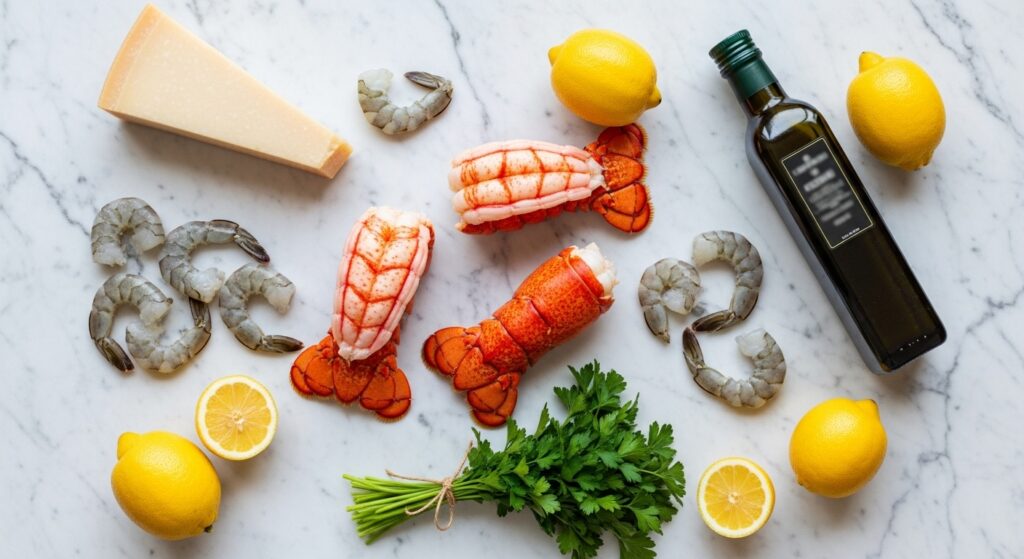
To achieve that authentic Mediterranean seafood pasta recipe flavor profile, quality is key. Here is what you will need to gather:
Seafood
- Lobster Meat: Use 2-3 cold-water lobster tails (chopped) or high-quality claw meat.
- Large Shrimp: Peeled and deveined. Look for 16/20 count for the best texture.
Mediterranean Flavor Base
- Garlic: At least 4 cloves, thinly sliced or minced.
- Extra Virgin Olive Oil: The backbone of any Mediterranean dish.
- Parmesan Cheese: Freshly grated (avoid the canned stuff!) to create a silky sauce.
- Fresh Herbs: Flat-leaf parsley and a hint of basil.
- Lemon Zest: Essential for cutting through the cream.
Pasta & Sauce Ingredients
- Pasta of Choice: Long strands work best (see our recommendations below).
- Heavy Cream: Provides the signature velvety finish.
- Unsalted Butter: Just enough to sauté the aromatics.
- Seasonings: Sea salt, cracked black pepper, and a pinch of red pepper flakes for heat.
How to Make Garlic Parmesan Seafood Pasta
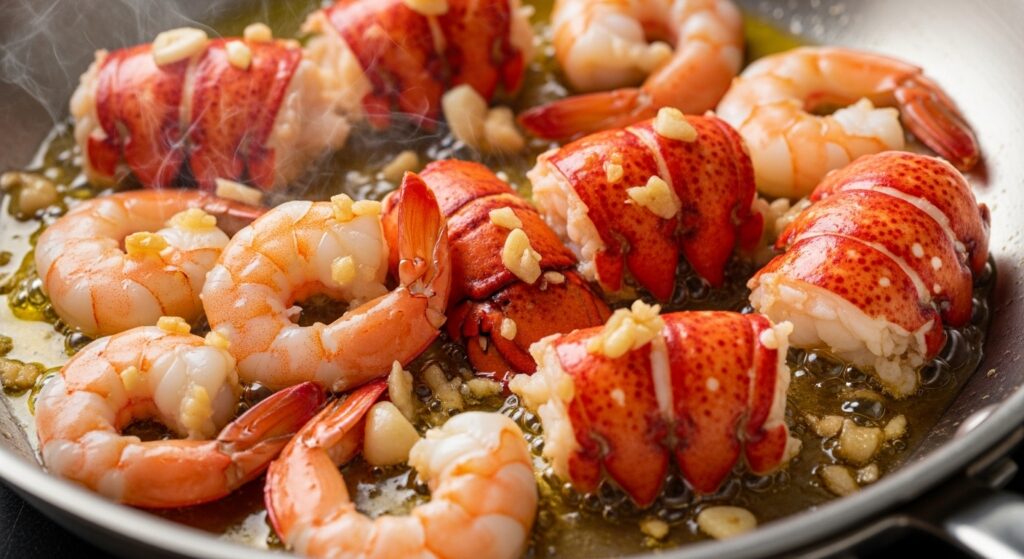
Follow these steps to ensure your seafood remains tender and your sauce stays emulsified.
Step 1: Cook the Pasta
Bring a large pot of salted water to a boil. Cook your pasta until it is al dente. Pro Tip: Save at least one cup of the starchy pasta water before draining; this is the “liquid gold” that helps bind your sauce later.
Step 2: Sauté Garlic & Shrimp
In a large skillet, heat the olive oil and a knob of butter over medium heat. Add the shrimp and garlic. Cook the shrimp for about 2 minutes per side until they turn pink and opaque. Remove the shrimp from the pan to avoid overcooking.
Step 3: Add Lobster Meat
Add the lobster meat to the same pan. Sauté briefly for 2-3 minutes. Since lobster toughens quickly, remove it as soon as it’s cooked through and set it aside with the shrimp.
Step 4: Prepare Creamy Parmesan Sauce
Lower the heat and pour in the heavy cream. Let it simmer gently (do not boil rapidly). Slowly whisk in the freshly grated Parmesan cheese until melted and smooth. Season with salt, pepper, and red pepper flakes.
Step 5: Combine Pasta & Seafood
Toss the cooked pasta into the sauce. If it looks too thick, add a splash of your reserved pasta water. Fold the shrimp and lobster back into the pan, ensuring every piece of seafood is coated in the garlic parmesan seafood pasta sauce.
Step 6: Finish Mediterranean Style
Remove from heat and stir in the lemon zest and fresh parsley. A final drizzle of extra virgin olive oil adds a professional sheen and a boost of antioxidants.
Ingredients
Method
- Boil the Pasta
- Bring a large pot of heavily salted water to a boil. Add your pasta and cook until al dente (usually 1–2 minutes less than the package directions).
- Critical Step: Before draining, scoop out 1 cup of starchy pasta water and set it aside. Drain the pasta and set aside.
- Sear the Seafood
- In a large skillet or deep pan, heat the olive oil and butter over medium-high heat. Add the shrimp and lobster chunks in a single layer. Sauté for 2–3 minutes until the shrimp are pink and the lobster is opaque. Remove the seafood with a slotted spoon and set aside on a plate to prevent overcooking.
- Build the Garlic Base
- Lower the heat to medium. In the same pan (don’t wash out those seafood juices!), add the minced garlic and red pepper flakes. Sauté for 1 minute until fragrant but not browned.
- Simmer the Sauce
- Pour in the heavy cream and bring to a very gentle simmer. Slowly whisk in the Parmesan cheese, a handful at a time, until the sauce is smooth and slightly thickened. Season with salt and black pepper.
- The Great Merge
- Add the cooked pasta and the cooked seafood back into the skillet. Toss everything together using tongs. If the sauce is too thick, add your reserved pasta water 2 tablespoons at a time until it reaches a silky, velvety consistency.
- The Mediterranean Finish
- Remove from heat. Fold in the lemon zest, a squeeze of lemon juice, and the fresh parsley. Toss one last time and serve immediately.
Notes
- The “Gold” Rule: Always reserve 1 cup of pasta water before draining. This starchy liquid is the only way to emulsify the sauce into a silky coating rather than a greasy puddle.
- Seafood Prep: Pat your shrimp and lobster completely dry with paper towels before sautéing. Excess moisture creates steam, which prevents that flavorful golden sear.
- Grate Your Own: Avoid “shaker” or pre-shredded Parmesan. They contain anti-caking agents (cellulose) that prevent the cheese from melting smoothly into the cream.
- Temperature Control: Keep the heat on low-medium once you add the dairy. Boiling heavy cream too aggressively can cause the fat to separate and the sauce to “break.”
- The Acid Balance: If the dish feels too “heavy” or rich after the first bite, stir in an extra teaspoon of lemon juice. The acidity cuts right through the butter and cream.
Mediterranean Cooking Tips for Perfect Seafood Pasta
Achieving the perfect creamy shrimp and lobster pasta requires a delicate touch. Here are my top tips for ensuring topical authority in your kitchen:
- Don’t Overcook the Seafood: Seafood continues to cook even after you take it off the heat. Aim for “just done” before removing it from the skillet.
- The Acid Factor: The secret to Mediterranean cooking is balance. If the sauce feels too heavy, add a squeeze of fresh lemon juice at the very end.
- Tempering the Cream: Bring your cream to room temperature before adding it to the hot pan to prevent curdling.
- Fresh vs. Dried Herbs: While dried herbs work in a pinch, fresh parsley is non-negotiable for that authentic Mediterranean brightness.
Best Pasta Types for Creamy Seafood Sauces
The shape of your pasta dictates how much sauce you get in every bite. For a creamy garlic parmesan lobster & shrimp pasta, you want shapes that provide plenty of surface area:
- Linguine: The classic choice for seafood; it’s sturdy enough to hold the weight of the lobster.
- Fettuccine: Its wide surface area is perfect for catching thick, creamy sauces.
- Tagliatelle: A slightly thinner, egg-based pasta that feels incredibly luxurious.
- Spaghetti: A reliable fallback that everyone loves.
Internal Link Opportunity: Check out our guide onHow to Choose the Right Pasta Shape for Mediterranean Saucesto elevate your next meal.
Healthy Mediterranean Variations
Want to enjoy this Mediterranean seafood pasta recipe while keeping it a bit lighter? Try these modifications:
- Light Cream Option: Substitute half of the heavy cream with full-fat Greek yogurt or evaporated milk.
- Dairy-Reduced: Use more pasta water and a touch of nutritional yeast alongside a smaller portion of Parmesan.
- Whole Wheat Pasta: Increases fiber content and adds a nutty flavor that pairs well with garlic.
- Extra Vegetable Version: Stir in some baby spinach or sautéed zucchini ribbons during Step 5.
What to Serve With Lobster Shrimp Pasta
To round out your meal, look for sides that offer a crisp contrast to the creamy pasta.
- Mediterranean Salad: A simple Classic Greek Salad with cucumbers and olives.
- Roasted Vegetables: Try Oven-Roasted Asparagus with Lemon.
- Garlic Roasted Tomatoes: Bursting cherry tomatoes add a lovely acidity.
- Lemon Greens: Sautéed kale or swiss chard with a heavy squeeze of lemon.
Storage & Reheating Tips
Seafood pasta is best enjoyed fresh, but if you have leftovers:
- Refrigerator: Store in an airtight container for up to 2 days.
- Freezing: We do not recommend freezing creamy seafood sauces, as the texture of the cream can break and the seafood can become rubbery.
- Reheating: Reheat gently on the stovetop over low heat. Add a splash of milk or water to loosen the sauce and stir constantly.
Frequently Asked Questions
Can I use frozen lobster for pasta? Yes! Just ensure it is fully thawed and patted dry before sautéing to prevent excess water from thinning your sauce.
What pasta works best with seafood? Linguine or Fettuccine are the gold standards for creamy shrimp and lobster pasta.
Can I make creamy seafood pasta lighter? Absolutely. Use a 50/50 mix of chicken broth and cream, and increase the amount of lemon juice and fresh herbs.
Is lobster shrimp pasta Mediterranean diet friendly? While the traditional version is indulgent, using whole-grain pasta and swapping some cream for olive oil aligns it better with Mediterranean diet principles.
Can I substitute shrimp only? Yes, if lobster isn’t available, you can double the shrimp for a delicious creamy garlic parmesan shrimp pasta.