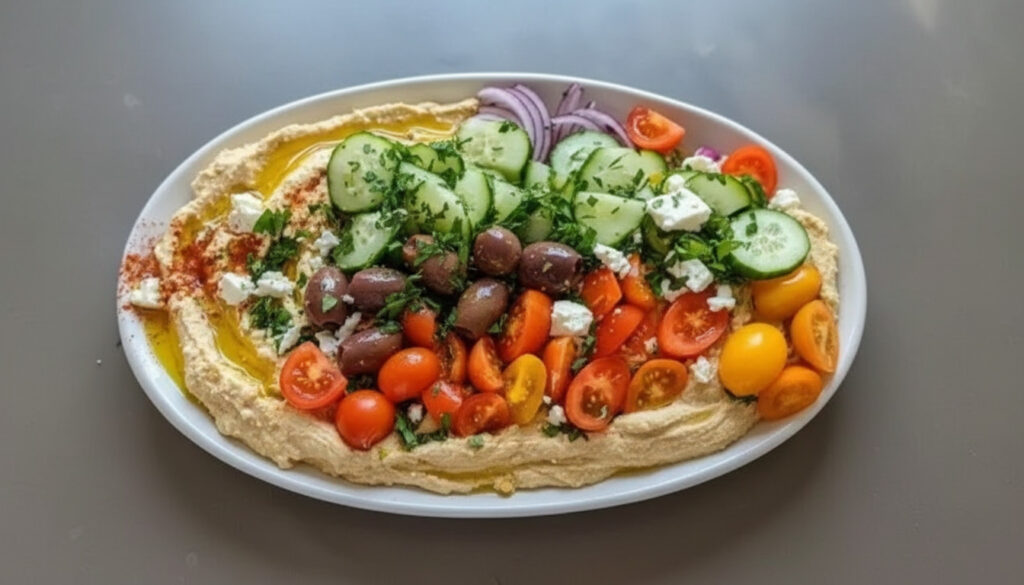
If you are looking for the ultimate crowd-pleasing appetizer that requires absolutely zero cooking, look no further than a Greek-style loaded hummus platter recipe. Vibrant, fresh, and bursting with authentic Mediterranean flavors, this dish takes a humble tub of hummus and transforms it into a show-stopping centerpiece.
Whether you are hosting a summer backyard gathering, need a quick weeknight dinner, or want a healthy meal-prep solution, this Mediterranean hummus platter checks all the boxes. Let’s dive into how you can assemble this beautiful, nutrient-dense board in just a few minutes!
What Is a Loaded Hummus Platter?
A loaded hummus platter is exactly what it sounds like: a generous base of creamy hummus piled high with a colorful mountain of fresh vegetables, briny olives, salty cheeses, and crunchy nuts. It is the ultimate expression of Mediterranean grazing culture, where food is shared, interactive, and celebration-worthy.
While a classic hummus bowl is great, “loading” it turns a simple dip into a complete, satisfying meal. The beauty of this recipe lies in its customization. You can keep it strictly vegetarian, or customize it to your heart’s content. It is a fantastic way to clean out your produce drawer while creating something that looks like it came straight from a gourmet deli.
Why You’ll Love This Greek Hummus Platter
There is a reason this healthy hummus platter is on heavy rotation in our kitchen. Here is why you will fall in love with it:
- Healthy and Mediterranean Diet-Friendly: Packed with plant-based protein, healthy fats, and fiber, it aligns perfectly with heart-healthy eating habits.
- Perfect for Gatherings and Meal Prep: It scales up easily for parties, but can also be portioned into glass containers for healthy weekday lunches.
- Easy, No-Cook Option: No stovetops, no ovens, and no sweat. It’s the perfect no-cook summer dinner.
- Endlessly Customizable Toppings: You can adapt the toppings to match what is in season or cater to dietary preferences (like making it dairy-free or vegan).
Ingredients for a Greek-Style Loaded Hummus Platter
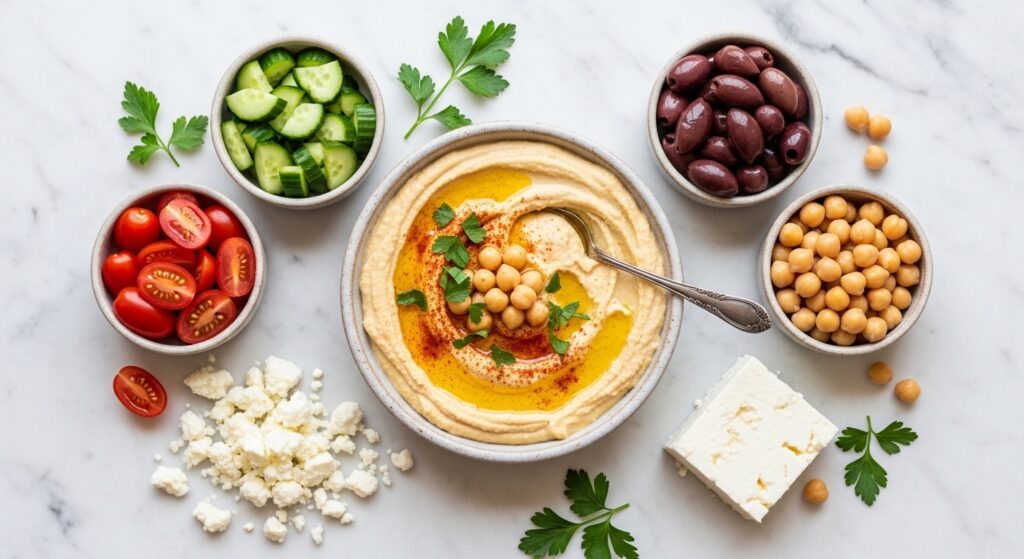
To create the ultimate texture and flavor contrast, we divide our ingredients into four distinct categories.
Base
- Creamy Hummus: You can use your favorite store-bought brand or make a batch of homemade hummus. Classic or roasted garlic flavors work best as a neutral canvas.
Fresh Toppings
- English Cucumbers: Diced small for a refreshing crunch.
- Cherry Tomatoes: Halved or quartered. They offer a juicy, sweet acidity.
- Red Onions: Finely diced or pickled for a sharp bite.
- Kalamata Olives: Pitted and halved for that quintessential Greek brininess.
Protein Additions
- Chickpeas: Whole canned chickpeas (rinsed and drained) add great texture and extra plant protein.
- Feta Cheese: High-quality sheep’s milk feta, crumbled block-style.
Garnishes & Flavor Boosters
- Extra Virgin Olive Oil: A heavy drizzle of cold-pressed Greek olive oil is non-negotiable!
- Spices: A dusting of paprika or sumac adds color and a citrusy, earthy punch.
- Fresh Herbs: Flat-leaf Italian parsley and a bit of fresh dill.
- Lemon Wedges: For serving, allowing guests to squeeze fresh juice over their portion.
How to Make a Loaded Hummus Platter (Step-by-Step)
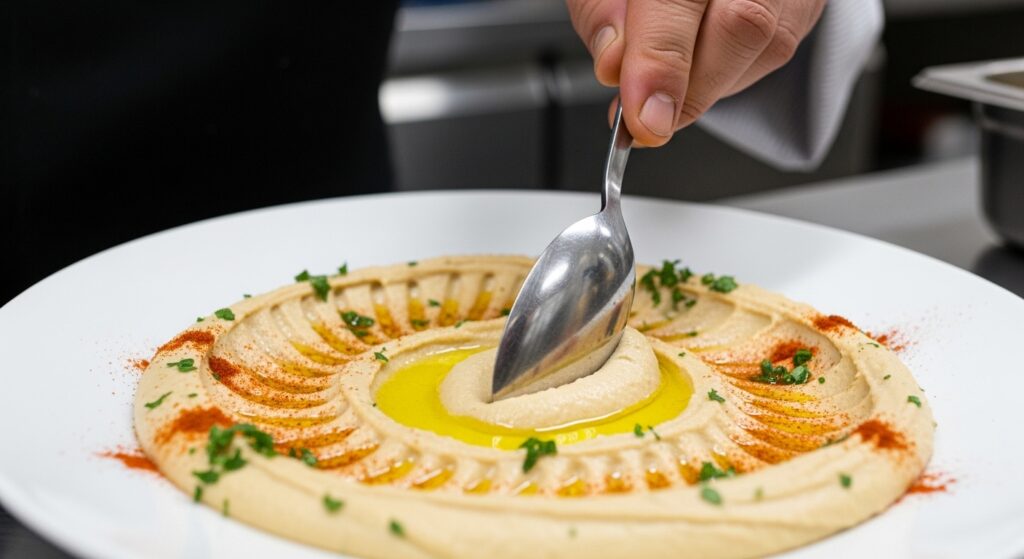
If you are wondering how to make a hummus platter that looks as good as it tastes, follow these simple visual steps. This layering technique ensures every bite has the perfect ratio of dip to topping.
Step 1 – Spread the Hummus
Take a wide, shallow bowl or a large wooden board. Spoon your hummus into the center. Using the back of a large metal spoon, use a circular motion to create deep “swooshes” and ridges in the hummus. These swooshes act as little rivers to catch the olive oil and trap the toppings.
Step 2 – Add Toppings Strategically
Don’t just dump everything in the middle! Start layering your chopped cucumbers, cherry tomatoes, and red onions. Try to separate contrasting colors (like putting green cucumbers next to red tomatoes) to make the platter visually pop.
Step 3 – Add Cheese & Protein
Scatter your halved Kalamata olives and whole chickpeas across the top. Crumble your feta cheese generously over the entire surface.
Step 4 – Drizzle & Garnish
Now for the flavor enhancers. Generously drizzle your high-quality extra virgin olive oil into the hummus swooshes. Dust the platter with your paprika or sumac, and scatter the chopped fresh parsley and dill over the top.
Step 5 – Serve with Dippers
Tuck warm pita bread wedges, pita chips, and crisp vegetable sticks (like bell peppers or celery) around the edges of the board, or serve them in a separate basket on the side.
Best Toppings for a Hummus Platter (Ideas & Variations)
While the Greek-style is our favorite, you can use these hummus platter ideas to mix it up depending on what you have in your pantry:
- Roasted Vegetables: Leftover roasted eggplant, red peppers, or zucchini.
- Warm Proteins: Top it with grilled chicken skewers, sliced gyro meat, or spiced minced lamb.
- Crispy Elements: Air-fried falafel balls or toasted pine nuts.
- Creamy Additions: Slices of avocado or a dollop of Greek tzatziki sauce.
Internal Link Opportunity 2:
- Anchor Text: “Greek tzatziki sauce”
- Target Page: Linking to the blog’s Authentic 5-Minute Tzatziki Sauce Recipe.
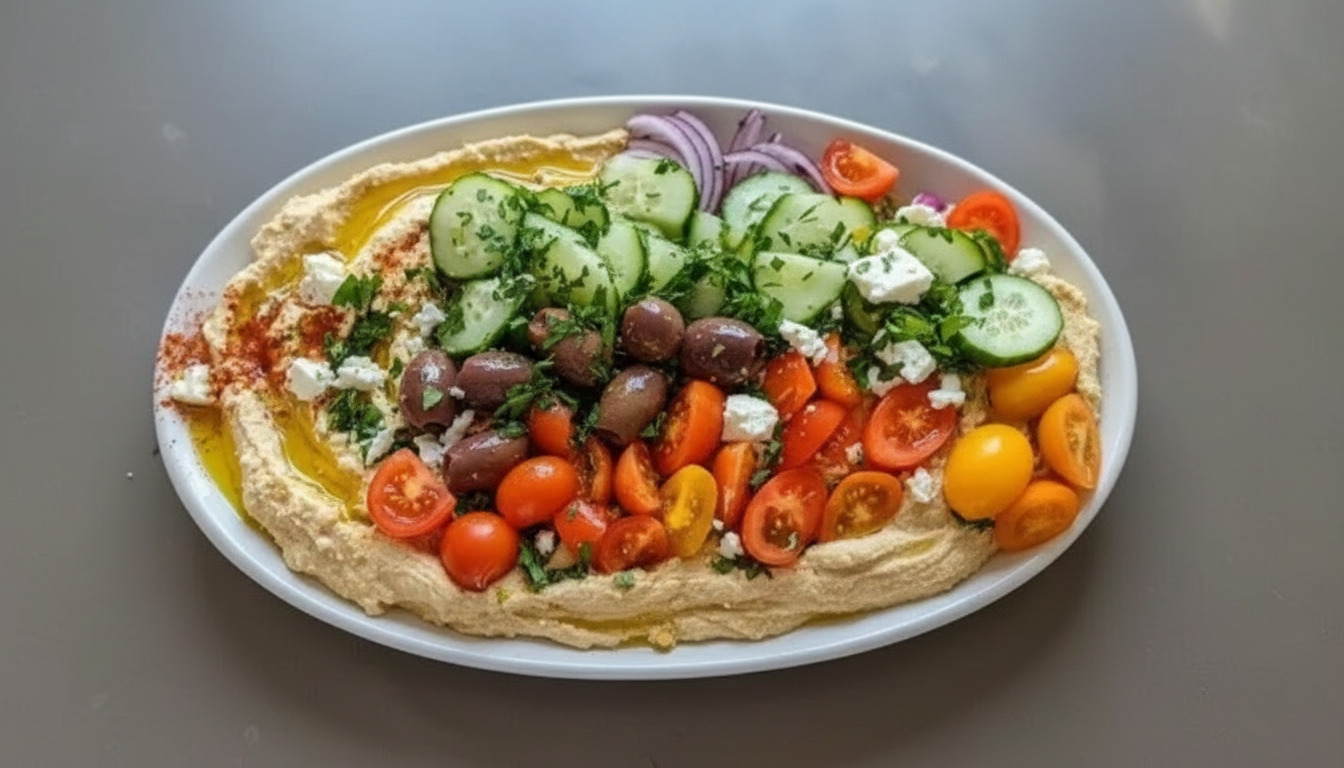
Ingredients
Method
- Spread the Hummus: Spoon the hummus onto a large, shallow platter or wooden board. Using the back of a large metal spoon, make deep circular swooshes and ridges in the hummus.
- Layer the Fresh Veggies: Evenly scatter the diced cucumbers, halved cherry tomatoes, and red onions across the top of the hummus.
- Add the Briny & Protein Elements: Distribute the halved Kalamata olives, rinsed chickpeas, and crumbled feta cheese over the vegetables.
- Garnish and Season: Drizzle the extra virgin olive oil over the platter, letting it settle into the hummus ridges. Dust with sumac (or paprika) and scatter the fresh parsley and dill over the top.
Notes
- Platter Choice: Use a flat, wide board or shallow platter. Deep bowls hide the toppings at the bottom.
- Make-Ahead Prep: Chop vegetables up to 2 days in advance and store in separate airtight containers.
- Assembly Timing: Assemble no more than 30 minutes before serving. Salt from the feta and olives will draw water out of the tomatoes and cucumbers, making the hummus runny if left sitting too long.
- Serving Temperature: Take the hummus out of the fridge 15 minutes before plating. It spreads better and tastes more flavorful at room temperature.
- Vegan Modification: Omit the dairy feta or use a plant-based block feta alternative.
How to Build a Perfect Hummus Board (Presentation Tips)
The rise of the “charcuterie board” has extended to dips! Creating a beautiful hummus board recipe is all about composition and contrast.
- Use a Wide Serving Platter: Don’t use a deep bowl, or the toppings will sink to the bottom. A flat wooden board or a shallow ceramic platter works best.
- Group Toppings Visually: Instead of mixing all the toppings like a salad, consider grouping them in small piles or sections over the hummus for a modern, chef-like presentation.
- Use Contrasting Colors: Red tomatoes against green parsley and white feta look incredibly appetizing.
- Keep Dips Centered: If you are using multiple dips (like hummus and baba ganoush), put them in the center first and build outward.
Is a Hummus Platter Healthy?
Absolutely! A healthy hummus platter is a cornerstone of the Mediterranean diet, which is consistently ranked as one of the healthiest eating patterns in the world.
- Heart-Healthy Fats: Extra virgin olive oil is rich in monounsaturated fats and antioxidants.
- Plant-Based Protein & Fiber: Chickpeas are complex carbohydrates that keep your digestion running smoothly and keep you full for hours.
- Vitamins and Minerals: Cucumbers, tomatoes, and parsley provide a massive dose of Vitamin C, Vitamin K, and hydration.
What to Serve with a Hummus Platter
To turn this into a full feast, you can pair it with various dippers and side dishes:
- Warm Pita Bread or Flatbreads: Wrap them in foil and warm them in the oven for a few minutes before serving.
- Fresh Veggie Sticks: Bell pepper strips, carrot sticks, radish slices, and celery are crunchy, low-carb dippers.
- Crunchy Crackers: Seeded crackers or pretzels add a nice texture.
Internal Link Opportunity 3:
- Anchor Text: “Warm Pita Bread or Flatbreads”
- Target Page: Linking to the blog’s Easy Homemade Greek Pita Bread Recipe.
Storage Tips
If you are making this for meal prep or have leftovers, here is how to handle storage:
- Can you store it assembled? It is best not to store a fully loaded platter for more than 24 hours. The salt in the feta and olives will draw moisture out of the cucumbers and tomatoes, making the hummus watery.
- Store Toppings Separately: If prepping ahead, chop your vegetables and store them in separate airtight containers. Spoon your hummus into a bowl, cover it, and assemble right before serving.
- How long does it last? Unassembled ingredients will last 3 to 4 days in the refrigerator.
Frequently Asked Questions (FAQ)
What is the best hummus for a platter?
Smooth, traditional hummus is the best base because it doesn’t clash with the vibrant toppings. If you want a twist, roasted garlic hummus or roasted red pepper hummus are fantastic options.
Can I make a hummus platter ahead of time?
You can chop all the vegetables and prepare your garnishes up to a day in advance. However, do not assemble the platter until about 30 minutes before serving so the vegetables remain crisp and the hummus stays thick.
What goes on a Mediterranean hummus platter?
The best Mediterranean toppings include English cucumbers, cherry tomatoes, Kalamata olives, feta cheese, chickpeas, red onion, olive oil, and fresh herbs like parsley or dill.
How do you make hummus look fancy?
Use the back of a spoon to create deep, circular swooshes in the hummus. Pour olive oil into the wells, sprinkle vibrant spices like sumac or paprika, and use colorful vegetables to make the platter pop.