
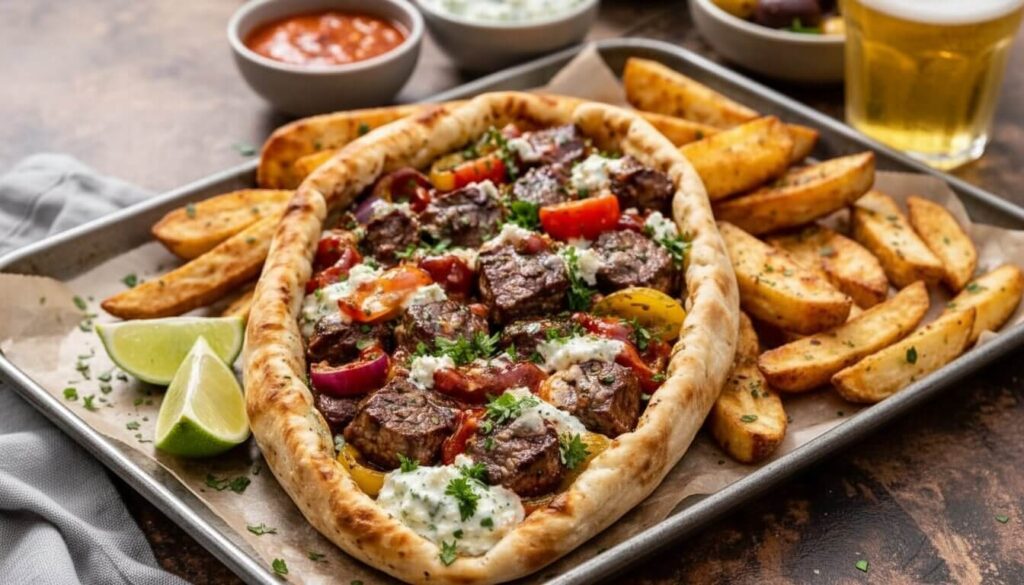
If you have ever wandered through the vibrant streets of Istanbul, the aroma of freshly baked dough and spiced meats is unmistakable. Often referred to as “Turkish pizza,” Turkish pide is a beloved staple of Mediterranean street food. Today, we are taking this classic and giving it a luxurious, gourmet upgrade.
In this Turkish Pide with Braised Short Ribs Recipe, we swap the traditional ground meat for melt-in-your-mouth, slow-cooked beef short ribs. Imagine a boat-shaped Turkish flatbread recipe featuring a crispy yet soft crust, a smoky base of roasted peppers and eggplant, and the rich, savory depth of braised beef. Topped with tangy feta and cool tzatziki, this dish is a masterclass in flavor balance. Whether you are a seasoned fan of Mediterranean cuisine or looking for a show-stopping weekend project, this beef pide will redefine your expectations of homemade flatbread.
What Is Turkish Pide?
To understand why this dish is so iconic, we first have to look at its roots. Turkish pide (pronounced pee-deh) is a traditional Turkish flatbread recipe that dates back centuries. Unlike its round Italian cousin, the pizza, pide is famously shaped like a long boat with its edges folded inward to hold a generous amount of filling.
Traditionally, you’ll find versions like Kıymalı Pide (topped with minced meat and vegetables) or Peynirli Pide (filled with gooey cheese). The dough is typically baked at very high temperatures, resulting in a crust that is slightly charred on the outside but wonderfully pillowy on the inside. While it shares some DNA with pizza, the absence of a heavy tomato sauce and the unique boat shape make it a distinct pillar of Mediterranean baking.
Why You’ll Love This Braised Short Rib Pide
This isn’t your average weeknight dinner; it is an elevated culinary experience. Here is why this specific Turkish Pide with Braised Short Ribs Recipe deserves a spot in your rotation:
- The Meat: Using short ribs provides a level of richness and tenderness that ground beef simply cannot match. After 2.5 hours of slow-cooking, the beef becomes “fork-tender” and carries deep, caramelized notes.
- The Texture: You get the perfect “crunch” from the high-heat bake, paired with the creamy dollops of cold yogurt and the soft, shredded beef.
- The Gourmet Feel: It looks like something served at a high-end Mediterranean bistro but is surprisingly achievable at home. It’s the perfect centerpiece for dinner parties.
Ingredients Breakdown (With Substitutions)
Creating a homemade Turkish pide with beef requires quality ingredients. Here is what you will need:
The Dough
The base of any great Turkish flatbread recipe is a simple, yeasted dough.
- Flour: All-purpose or bread flour works best.
- Yeast & Water: To get that perfect rise.
- Salt: Essential for flavoring the crust.
- Pro Tip: If you are short on time, a high-quality store-bought pizza dough is a great substitute.
The Short Ribs
This is the star of our gourmet Turkish pide.
- Beef Short Ribs: Look for bone-in for maximum flavor during the braise.
- Substitutions: If short ribs aren’t available, a well-marbled chuck roast or even leftover shredded beef pot roast works beautifully.
The Sauce & Toppings
- Ajvar Sauce: This is a Mediterranean treasure made from roasted red peppers and eggplant. It provides a smoky, sweet base. If you can’t find it, use a roasted red pepper spread or a thick Pesto Chicken Flatbread style base without the basil.
- Vegetables: Red onions and cherry tomatoes add acidity and crunch.
- Dairy: Crumbled feta for saltiness and a dollop of tzatziki or Greek yogurt for a cooling finish.
How to Make Turkish Pide with Braised Short Ribs (Step-by-Step)
Step 1: Braise the Short Ribs
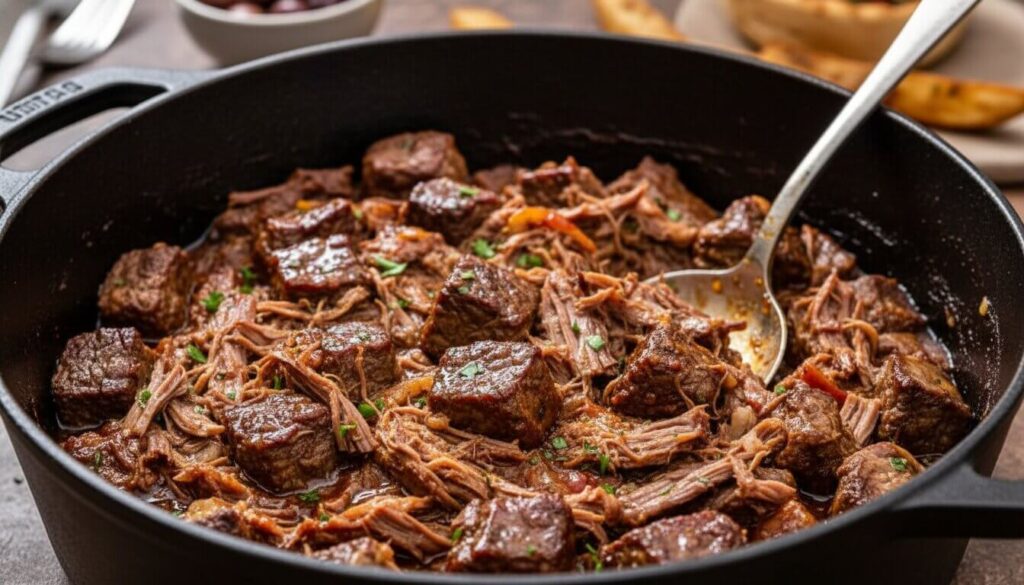
First, season your ribs with salt, pepper, and a touch of harissa for a Mediterranean kick. Sear them in a heavy pot until deeply browned—this creates the “flavor layer.” Pour in beef stock (no wine needed!) and braise at 325°F (160°C) for 2.5 hours. Once tender, shred the meat but keep some chunks for texture.
Step 2: Prepare the Dough
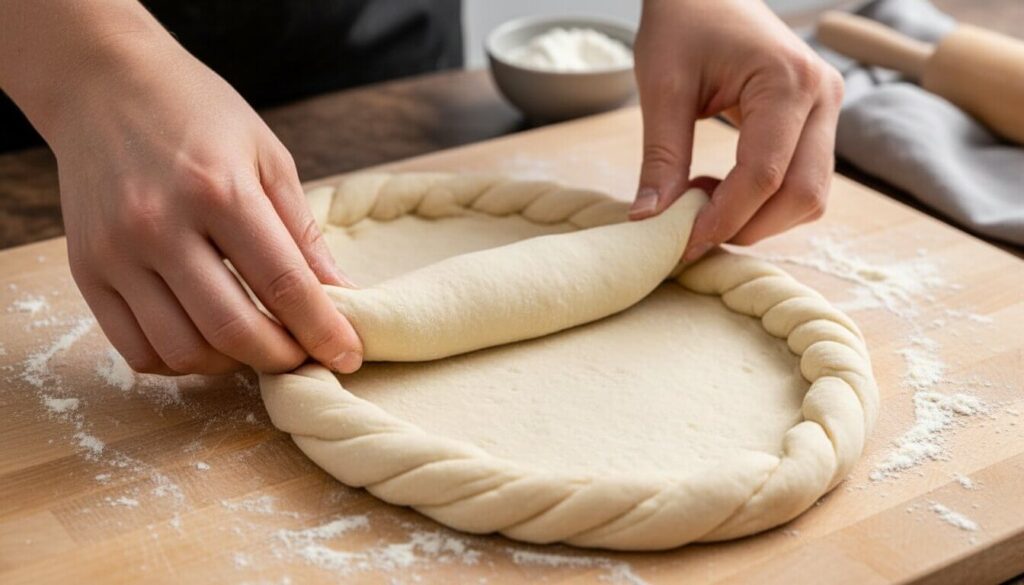
While the meat braises, mix your flour, yeast, and water. Knead until smooth and let it rise in a warm spot until doubled in size.
Step 3: Shape the Pide
Divide the dough into oval portions. Roll them out thin. To achieve the signature boat shape, fold the long edges inward by about an inch and pinch the ends tightly to form points.
Step 4: Assemble
Spread a thick layer of Ajvar sauce in the center. Pile on the shredded short ribs, then scatter the red onions and halved cherry tomatoes on top.
Step 5: Bake
Slide your pide into a preheated oven at 425°F (220°C). Bake for 12-15 minutes until the edges are golden brown and slightly charred.
Step 6: Finish
The magic happens after the oven. Add cold dollops of tzatziki, sprinkle with fresh parsley, and a final drizzle of extra virgin olive oil.
Pro Tips for Perfect Pide
- Don’t Overfill: It is tempting to pile on the ribs, but too much filling can lead to a soggy bottom.
- High Heat is Key: Ensure your oven is fully preheated. If you have a pizza stone, use it!
- The Preheated Tray: If you don’t have a stone, let your baking sheet heat up in the oven before sliding the pide onto it for a crispier base.
- Balance: Always pair the heavy beef with fresh elements like lemon wedges or a Mediterranean Chickpea Salad.
Mediterranean Diet Notes
While this is a rich meal, it fits perfectly into a balanced Mediterranean lifestyle.
- Healthy Fats: We use heart-healthy olive oil and lean into the vegetable-heavy Ajvar sauce.
- Protein-Rich: The beef and yogurt provide high-quality protein.
- Make it Lighter: Trim the excess fat from the short ribs before shredding and use a non-fat Greek yogurt for the tzatziki.
Variations You Can Try
- The Traditionalist: Use seasoned ground beef and peppers for a classic Kıymalı style.
- The Poultry Twist: Try shredded chicken—check out our Mediterranean Chicken Stir Fry for seasoning inspiration.
- Vegetarian: Skip the meat and use roasted zucchini, eggplant, and double the feta.
What to Serve with Turkish Pide
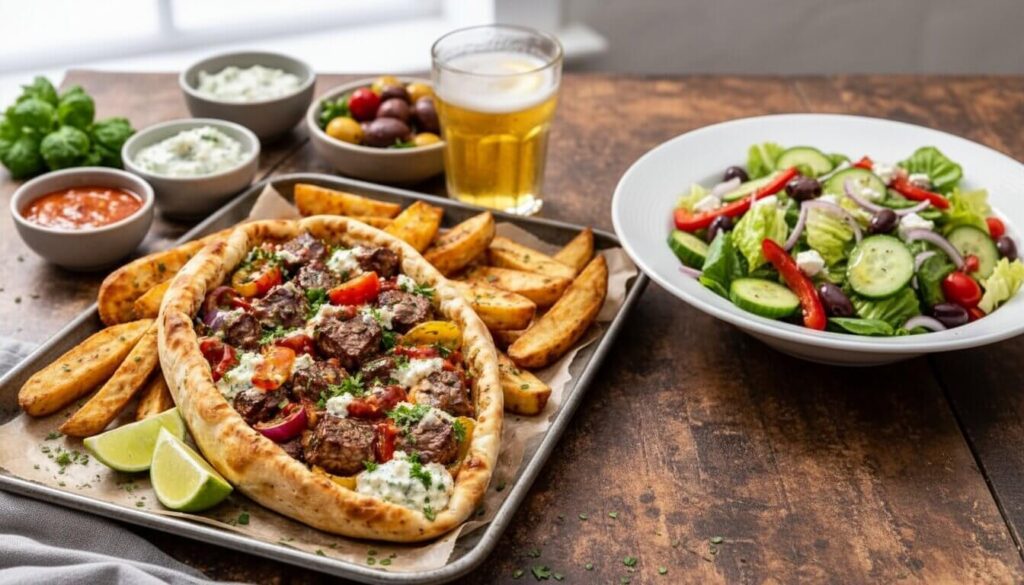
Pide is best enjoyed with bright, acidic sides to cut through the richness of the beef.
- Salad: A Traditional Greek Salad is the perfect companion.
- Dips: Extra tzatziki or hummus.
- Pickles: Turkish pickled peppers or red cabbage.
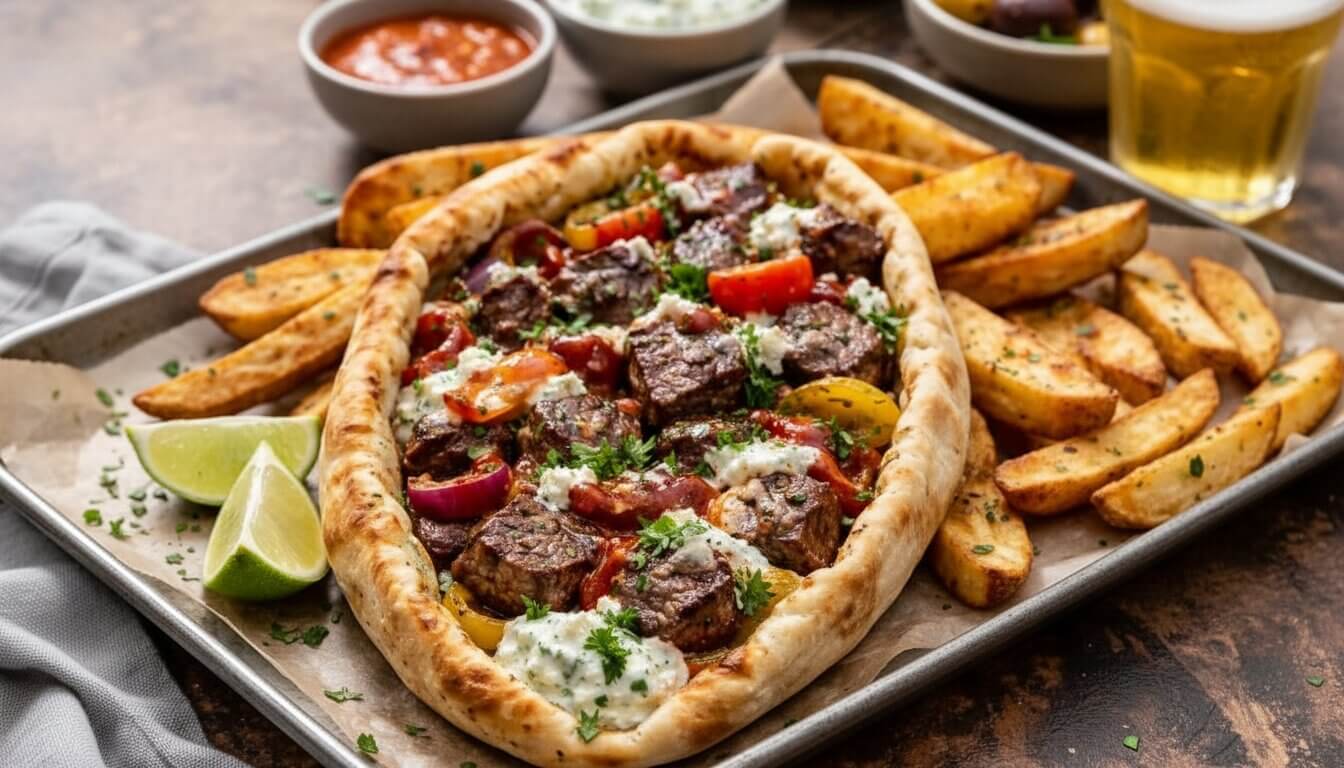
Turkish Pide with Braised Short Ribs
Ingredients
Method
- Season short ribs with salt, pepper, and harissa. Sear in a pot until browned.
- Add beef stock, cover, and braise at 325°F for 2.5 hours. Shred the meat once cool.
- Preheat oven to 425°F (220°C).
- Roll dough into long ovals. Spread Ajvar in the center.
- Top with shredded beef, onions, and tomatoes.
- Fold edges to create a boat shape and pinch ends.
- Bake for 12-15 minutes until golden.
- Garnish with feta, parsley, and dollops of tzatziki.
Notes
- Make-Ahead Tip: You can braise the short ribs up to two days in advance. Store them in their liquid in the fridge to keep them moist, then shred just before assembling the pide.
- Dough Hack: If you aren’t making dough from scratch, look for “00” flour pizza dough at your local deli for the most authentic texture.
- Serving: Always serve with fresh lemon wedges on the side; the acidity cuts through the richness of the short ribs perfectly.
FAQs
What is Turkish pide?
It is a boat-shaped savory flatbread from Turkey, traditionally topped with meats, cheese, and vegetables.
What is the difference between pide and pizza?
Pide is boat-shaped, usually lacks a heavy tomato sauce base, and uses Mediterranean spices and cheeses like feta rather than mozzarella.
Can I make pide dough ahead of time?
Yes! You can let the dough rise in the fridge overnight for a deeper flavor.
What meat is best for pide?
While ground beef is traditional, braised short ribs or chuck roast offer a gourmet, tender alternative.
Can I use store-bought dough?
Absolutely. Pizza dough works perfectly as a time-saving hack for this Turkish pide recipe.
Final Thoughts
This Turkish Pide with Braised Short Ribs Recipe is more than just a meal; it’s a celebration of Mediterranean flavors and textures. The combination of the slow-cooked beef with the crunch of the flatbread and the freshness of the yogurt creates a “Turkish pizza” experience unlike any other. Don’t be afraid to get your hands floury—the result is well worth the effort.
Enjoy this dish as part of a vibrant meal, and be sure to share your results with us!