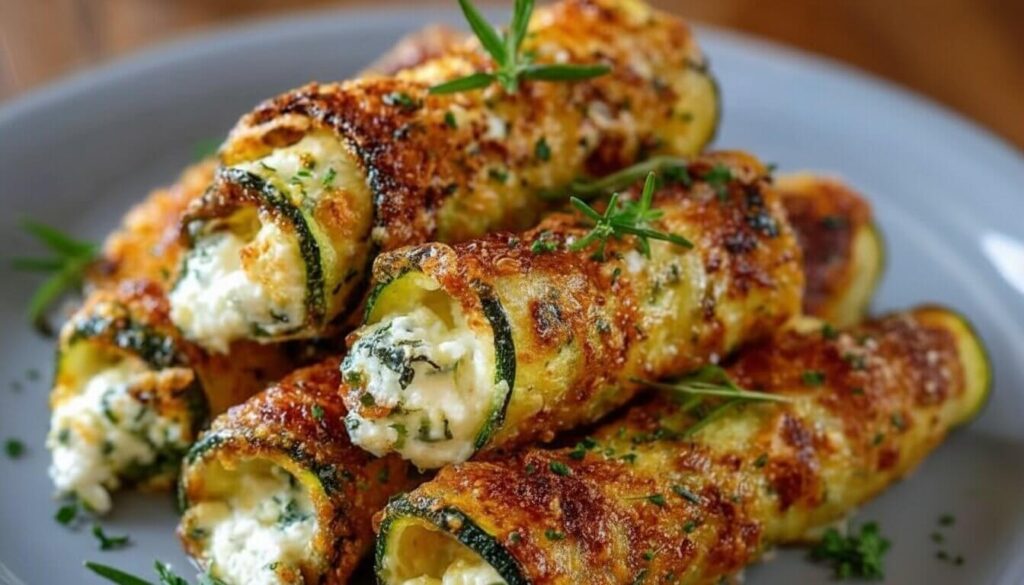
Imagine biting into a golden crispy exterior that shatters slightly before revealing a creamy ricotta filling infused with the warmth of roasted garlic. As the steam rises, the fresh herbs aroma of basil and parsley hits you, immediately transporting your senses to a seaside terrace in Italy or Greece.
These Crispy Ricotta Zucchini Rolls are the ultimate Mediterranean-style appetizer. They strike that elusive balance: indulgent enough to feel like a treat, yet light enough to be low-carb friendly. Inspired by the vibrant produce of the Mediterranean diet, this recipe reinvents the classic “zucchini roll up” into something far more sophisticated.
One of the biggest pain points with vegetable-based appetizers is texture. Let’s face it: most zucchini rolls turn watery and limp by the time they hit the plate. Not these. By using a specific moisture-control technique, we ensure these stay perfectly crispy from the first bite to the last.
Why These Crispy Ricotta Zucchini Rolls Actually Work
Creating a crispy zucchini roll isn’t just about the oven temperature; it’s about understanding the science of the vegetable. Zucchini is roughly 95% water. If you don’t manage that moisture, you end up with a soggy mess.
- Moisture Control Technique: This is our secret weapon. By salting the zucchini ribbons early, we draw out the internal juices, allowing the breadcrumb coating to adhere and crisp up rather than steam.
- Double Texture: We achieve a beautiful contrast—a tender, succulent zucchini interior wrapped in a crunchy, golden shell.
- Balanced Mediterranean Ingredients: We use high-quality fats like olive oil and nutrient-dense herbs, making this a “guilt-free” snack.
- Baked, Not Fried: We achieve that deep-fried crunch through a high-heat roasting method (400°F), keeping the health profile intact without sacrificing flavor.
Whether you call them crispy zucchini rolls or ricotta zucchini roll ups, this method ensures they are a crowd-pleaser every single time.
Are These Zucchini Rolls Mediterranean Diet Friendly?
The Mediterranean diet isn’t a strict set of rules; it’s a celebration of whole foods. Zucchini is a staple vegetable across the region, from the kolokithokeftedes of Greece to the zucchine ripiene of Italy.
In this recipe, we use olive oil as our primary fat source and rely on fresh herbs rather than heavy salts for flavor. While cheese is included, the blend of ricotta and parmesan provides protein and calcium in moderate amounts.
“These crispy ricotta zucchini rolls fit perfectly into a Mediterranean-style eating pattern, offering a veggie-forward dish that satisfies cravings for comfort food.”
For a similar vegetable-forward experience, you might also enjoy our Garlic Roasted Vegetables.
Ingredients Breakdown (With Pro Tips)
Zucchini
Medium-sized zucchinis are best. They have fewer seeds and more structural integrity. Using a mandoline is essential for getting those thin ribbons that roll easily without snapping.
Ricotta + Mozzarella + Parmesan
We use a “Holy Trinity” of cheeses. Ricotta provides the creamy base, Mozzarella adds the “stretch” and structure, and Parmesan brings the salty, umami punch.
Herbs & Garlic
Never skip the fresh garlic. Minced fine, it mellows out in the oven to create a sweet, aromatic filling. Fresh basil or parsley provides that necessary pop of brightness.
Olive Oil
A light brushing of extra virgin olive oil helps the zucchini soften during the pre-cook phase and assists the panko in turning that perfect golden brown.
Coating (The Secret to the Crunch)
Panko breadcrumbs are the gold standard for crunch.
- Mediterranean Swap: For a grain-free, low-carb option, you can swap the panko for a 50/50 mix of almond flour and extra parmesan cheese.
How to Slice Zucchini Perfectly for Rolls
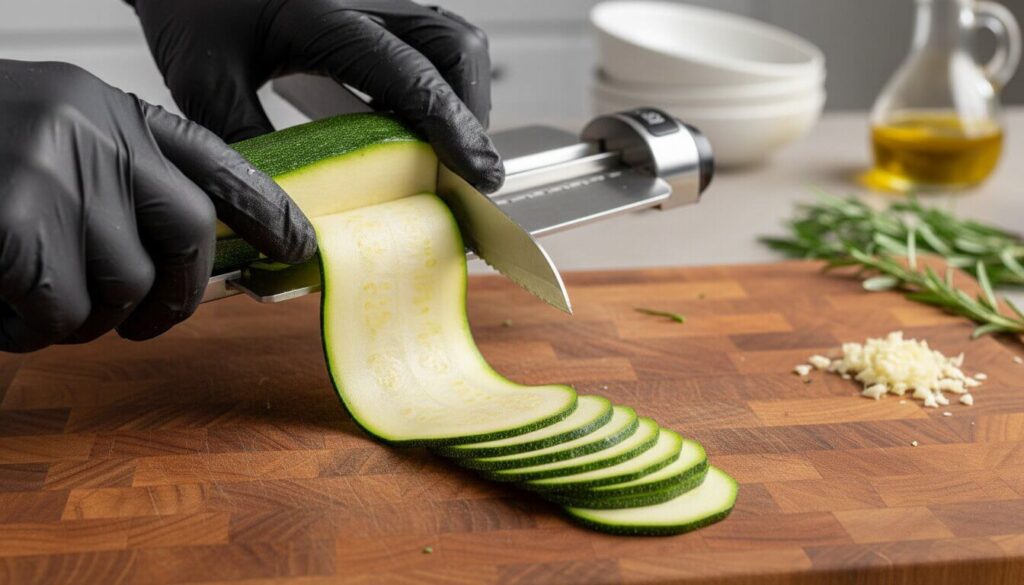
The foundation of a great zucchini roll up is the slice. If it’s too thick, it won’t roll. If it’s too thin, it will tear.
- Use a Mandoline: Set it to approximately 1/8th of an inch.
- Stability: Cut a small sliver off one side of the zucchini to create a flat “base” before you start slicing ribbons. This prevents the vegetable from rolling while you slice.
- The “Goldilocks” Zone: You want the slice to be translucent when held up to the light but still feel firm to the touch.
“Thin, even slices are the secret to perfect zucchini roll ups, ensuring they cook evenly and hold their shape during the rolling process.”
How to Make Crispy Ricotta Zucchini Rolls (Step-by-Step)
Step 1: Remove Moisture
This is the most important step for ranking high on the “deliciousness scale.” Salt the ribbons, wait 10 minutes, and pat them dry with a lint-free towel. This prevents “soggy bottom” syndrome.
Step 2: Soften Without Overcooking
Give the ribbons a quick 2-minute sear or a very light bake. You want them pliable, not mushy.
Step 3: Make the Filling
Fold the herbs and garlic into the ricotta. If you want a “bakery-style” firm filling, adding an egg helps set the cheese so it doesn’t run out of the rolls.
Step 4: Roll Them Properly
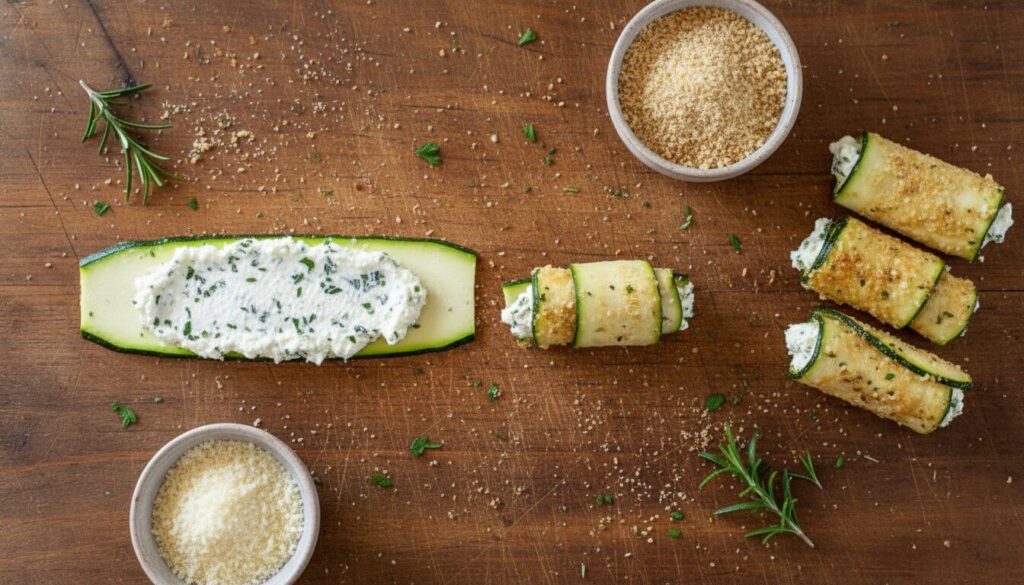
Don’t overstuff! One tablespoon is plenty. Roll them tightly, like a sleeping bag.
Step 5: Coat for Crispiness
Roll the assembled cylinder in your panko-parmesan mix. Press the coating in gently so it sticks to the olive oil.
Step 6: Bake to Golden Perfection
A 400°F (200°C) oven is the sweet spot. It’s hot enough to crisp the outside before the cheese gets too oily.
How to Keep Zucchini Rolls from Getting Soggy
This is the difference between soggy zucchini rolls and perfectly crispy ones:
- Salt before cooking: Draws out the water.
- Pat completely dry: Every drop of water is the enemy of “crispy.”
- Don’t overcrowd the pan: Air needs to circulate around each roll to brown the sides.
- Use high heat: 400°F is non-negotiable.
- Avoid excess filling moisture: Drain your ricotta if it looks watery before mixing.
If you love this crispy texture, you’ll definitely want to try our Crispy Parmesan Zucchini Fries.
Serving Suggestions & Variations
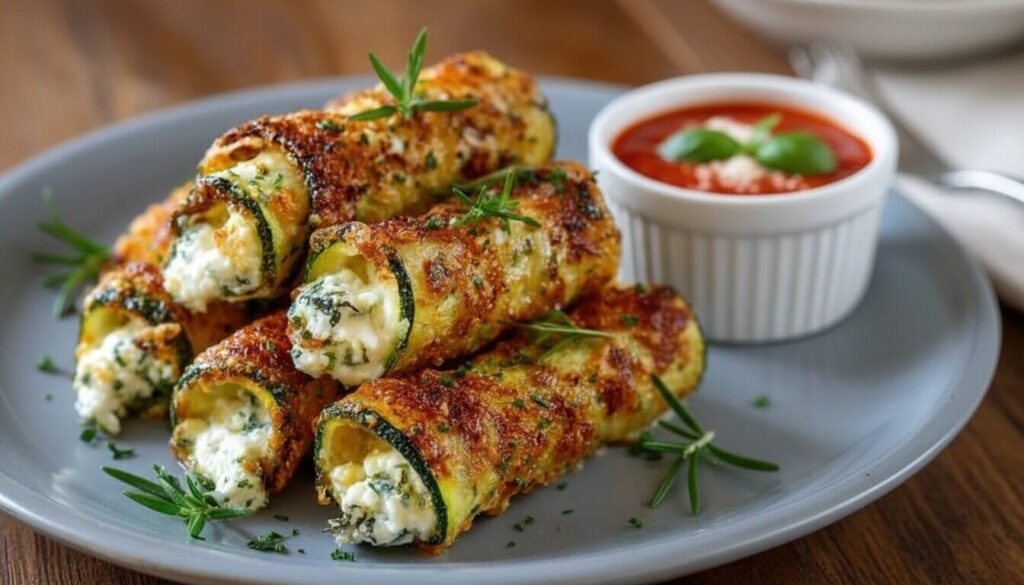
Serving Style
In the Mediterranean, these are often served as part of a mezze platter.
- With Marinara: A classic pairing that adds a hit of acidity.
- Tzatziki-Style: Serve with a side of cool yogurt, cucumber, and dill.
- Simple: A drizzle of balsamic glaze and a sprig of rosemary.
Variations
- Keto Version: Use the almond flour/parmesan coating mentioned earlier.
- Air Fryer: These are excellent in the air fryer! 375°F for 8–10 minutes.
- Spinach Ricotta: Mix in some sautéed, squeezed-dry spinach for extra nutrients.
For a heartier meal, serve these alongside our Mediterranean Chicken Stir Fry.
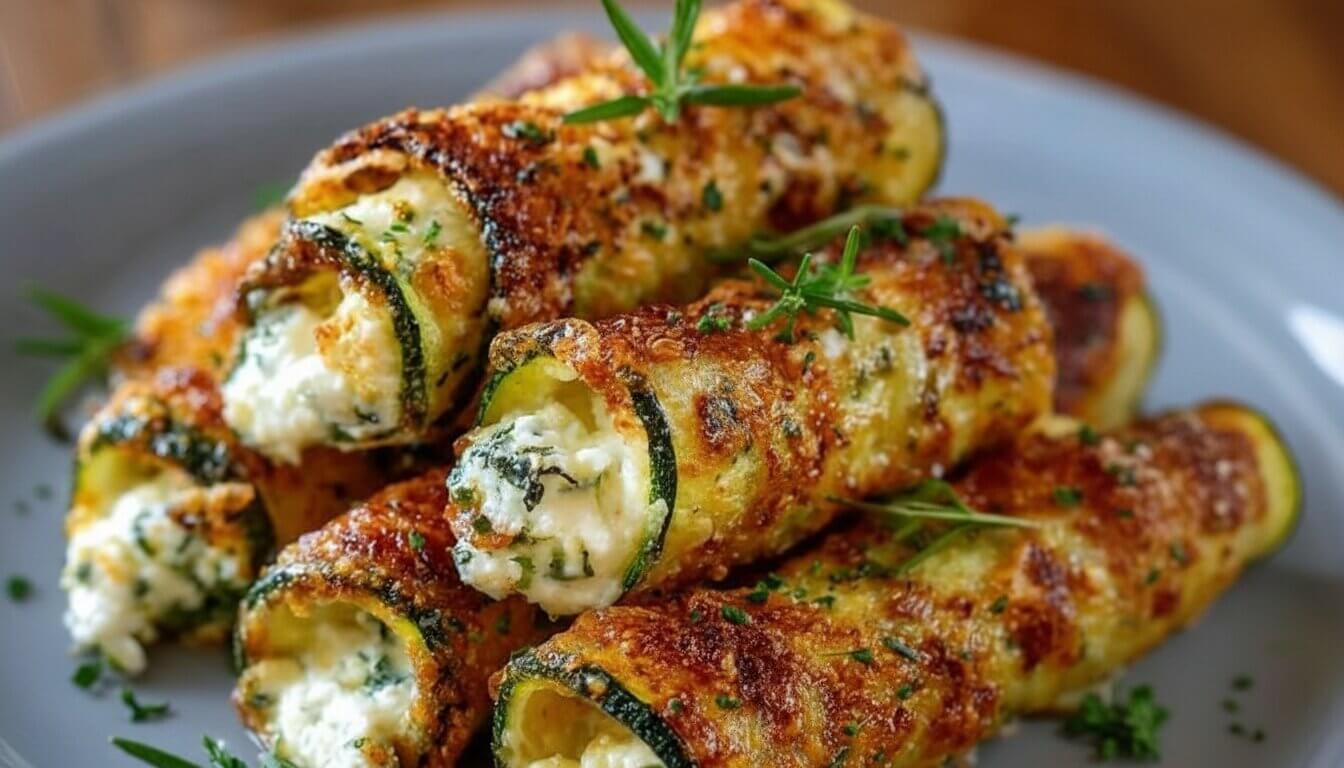
Crispy Ricotta Zucchini Rolls
Ingredients
Method
- Prep: Preheat oven to 400°F (200°C). Salt zucchini ribbons for 10 mins, then pat dry thoroughly.
- Soften: Brush ribbons with olive oil. Pan-sear for 1 min per side until pliable.
- Fill: Mix ricotta, mozzarella, parmesan (1/4 cup), garlic, herbs, and egg.
- Roll: Place 1 tbsp filling on one end of a ribbon and roll tightly.
- Coat: Mix panko and remaining parmesan. Roll each zucchini cylinder in the mixture.
- Bake: Place on parchment paper, seam-side down. Bake for 15–20 minutes until golden.
Notes
- Mandoline Safety: Always use a guard when slicing zucchini ribbons to ensure even thickness and finger safety.
- Make-Ahead Tip: You can prepare the cheese filling up to 48 hours in advance and keep it refrigerated.
- Pro Tip: For the best crunch, serve immediately out of the oven. If you must reheat, use an oven or air fryer at 350°F for 5 minutes to restore the crispiness—avoid the microwave at all costs!
FAQs
Can zucchini roll ups be made ahead?
You can prepare the filling and slice the zucchini a day in advance. However, for the best “crispy” results, bread and bake them just before serving.
Why are my zucchini rolls watery?
You likely skipped the salting and patting dry phase. Zucchini releases water as it heats; if that water has nowhere to go, it steams the breadcrumbs.
Do you need to peel zucchini?
No! The skin provides structural integrity and contains most of the vegetable’s nutrients. Plus, the green rim looks beautiful in the final dish.
Can I freeze zucchini rolls?
It is not recommended. Zucchini loses its structure once frozen and thawed, leading to a mushy texture.