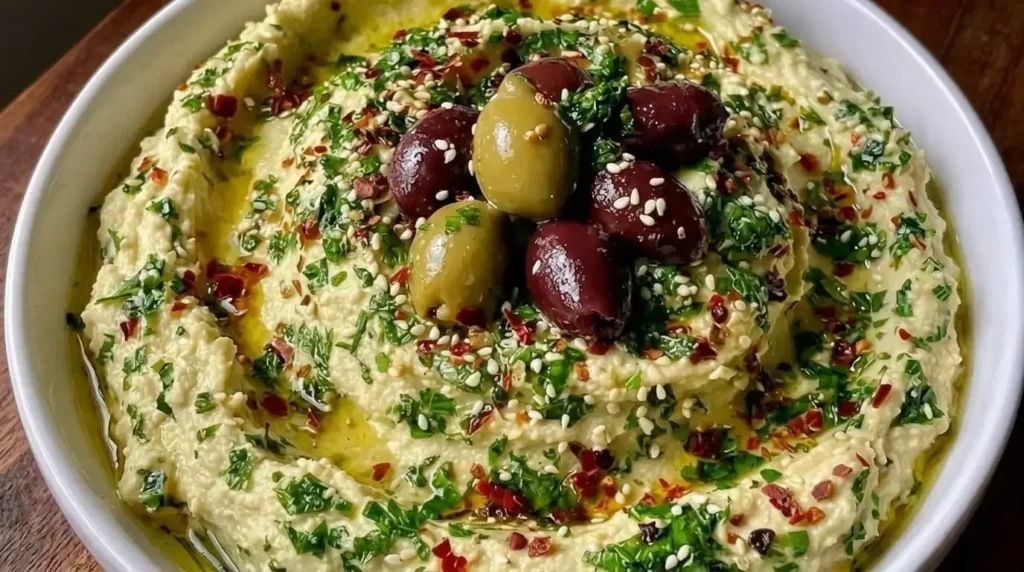
Imagine walking through a sun-drenched coastal village, where the air smells of salt water and ripening citrus. On a rustic wooden table sits a shallow ceramic bowl, cradling a swirl of ultra-creamy hummus. In the center, a golden pool of warm extra virgin olive oil glistens, acting as a velvet moat for a mound of briny, sun-ripened olives. Each scoop reveals a tapestry of textures: the crunch of toasted sesame seeds, the subtle heat of red chili flakes, and the burst of fresh, herbaceous parsley.
This warm olive-topped hummus is more than just a dip; it is an invitation to the Mediterranean mezze culture. In Mediterranean homes, food is the centerpiece of connection. A loaded hummus recipe like this one transforms simple, humble ingredients into a restaurant-quality centerpiece. Whether you are hosting an elaborate dinner or looking for an easy, healthy snack, this Mediterranean hummus appetizer brings the vibrant flavors of the Levant and the Aegean directly to your kitchen.
Why You’ll Love This Warm Olive-Topped Hummus
There is a reason hummus has become a global staple, but this specific version takes the experience to a new level. Here is why it will become your new favorite:
- Ultra-Smooth Texture: By following our professional blending tips, you’ll achieve a silkiness that rivals the best hummusiyas in Tel Aviv or Amman.
- A Balanced Flavor Profile: The nuttiness of the tahini perfectly counters the bright acidity of fresh lemon and the pungent kick of garlic.
- Dietary Powerhouse: It is naturally vegetarian and vegan-friendly, fitting perfectly within the principles of the Mediterranean diet.
- Quick and Versatile: Despite its gourmet appearance, you can whip this up in under 15 minutes, making it ideal for last-minute gatherings.
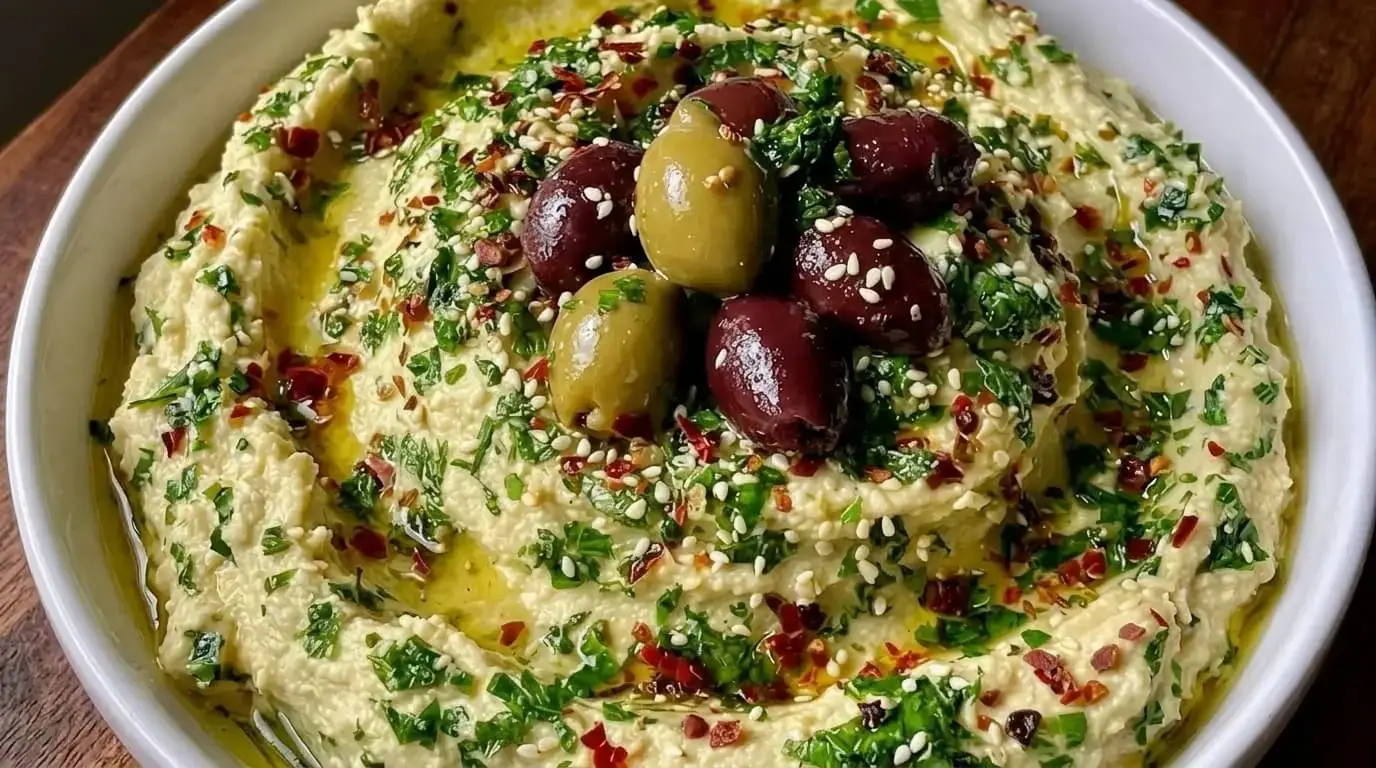
- Visual Appeal: As seen in the vibrant image, the contrast between the pale hummus, the dark purple Kalamatas, and the bright green parsley makes it a visual feast.
What Makes This Hummus Mediterranean Diet Friendly?
The Mediterranean diet isn’t about restriction; it’s about celebrating whole, minimally processed foods. This warm olive-topped hummus is a textbook example of this lifestyle.
- Plant-Forward Protein: Chickpeas (garbanzo beans) are the star here, providing a significant amount of plant-based protein and gut-healthy fiber.
- Healthy Fats: Instead of saturated fats, we use extra virgin olive oil as the primary fat source. Rich in monounsaturated fats, it’s known for heart-health benefits.
- Mineral-Rich Tahini: This sesame paste isn’t just for flavor; it’s a great source of calcium and healthy fats.
- Antioxidant Boost: Fresh garlic and parsley aren’t just garnishes; they provide powerful antioxidants and anti-inflammatory properties that are core to the diet’s success.
Ingredients for Loaded Mediterranean Hummus
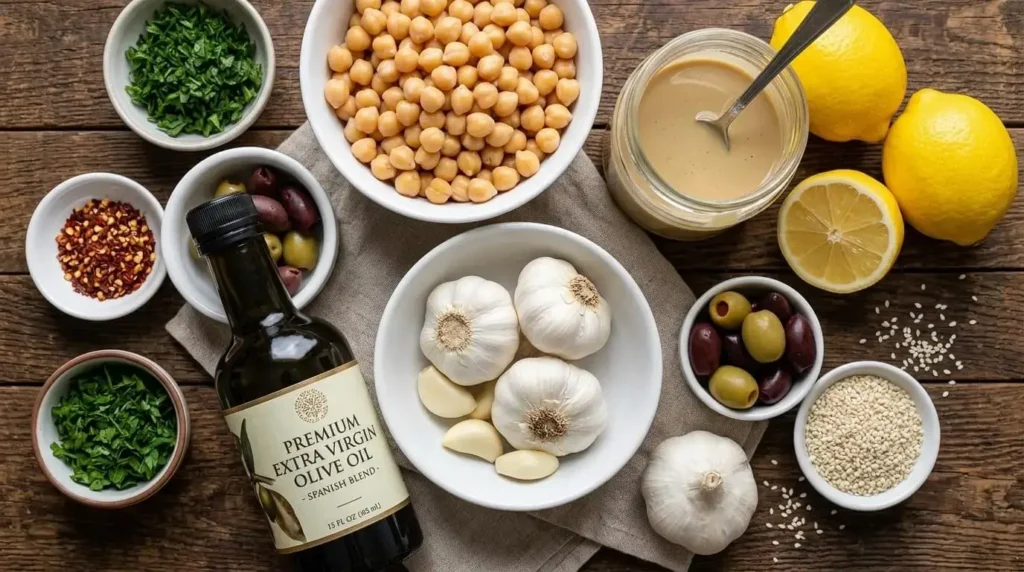
To achieve that authentic taste, quality matters. Let’s break down what goes into the bowl.
The Creamy Hummus Base
The base must be flawless to support the heavy toppings.
- Chickpeas: One 15 oz can is the perfect starting point. Using canned chickpeas makes this accessible, though we have a secret tip for making them taste like they were soaked for 24 hours.
- Tahini: This is the “secret sauce.” Use a high-quality, runny tahini for the best emulsification.
- Lemon Juice: Always use fresh lemons. The bottled stuff lacks the enzymatic “pop” needed to cut through the fat.
- Garlic & Cumin: Two cloves of garlic provide a sharp bite, while cumin adds an earthy, smoky undertone that defines traditional hummus.
- Ice Water: This is a professional trick for achieving an airy, whipped texture.
The Mediterranean Toppings
This is where the “loaded” part comes in.
- Olives: A mix of Kalamata and Manzanilla (green) olives provides a beautiful color contrast and a balance of salty and briny notes.
- Fresh Parsley: Finely chopped parsley adds a “grassy” freshness that cleanses the palate.
- Sesame Seeds & Chili Flakes: These provide the final textural contrast—crunch from the seeds and a gentle, warming glow from the flakes.
- Olive Oil Drizzle: Don’t be shy; the oil carries the flavor of the spices to every corner of the dish.
Best Olives for Warm Olive-Topped Hummus
Not all olives are created equal. For this warm olive-topped hummus, we recommend a thoughtful blend:
| Olive Variety | Flavor Profile | Why Use It? |
| Kalamata | Rich, fruity, and slightly smoky. | Its dark purple hue adds dramatic visual contrast. |
| Manzanilla | Briny, nutty, and firm. | The classic “Spanish” green olive that balances the richness. |
| Castelvetrano | Buttery, mild, and vibrant green. | Great if you prefer a less “salty” hit and more creaminess. |
We suggest a combination of Kalamata and green olives. The Kalamata provides a deep, savory punch, while the green olives offer a crisp, briny finish that lightens the dish.
How to Make Warm Olive-Topped Hummus
Follow these three simple steps to create a masterpiece.
Step 1 – Blend the Hummus
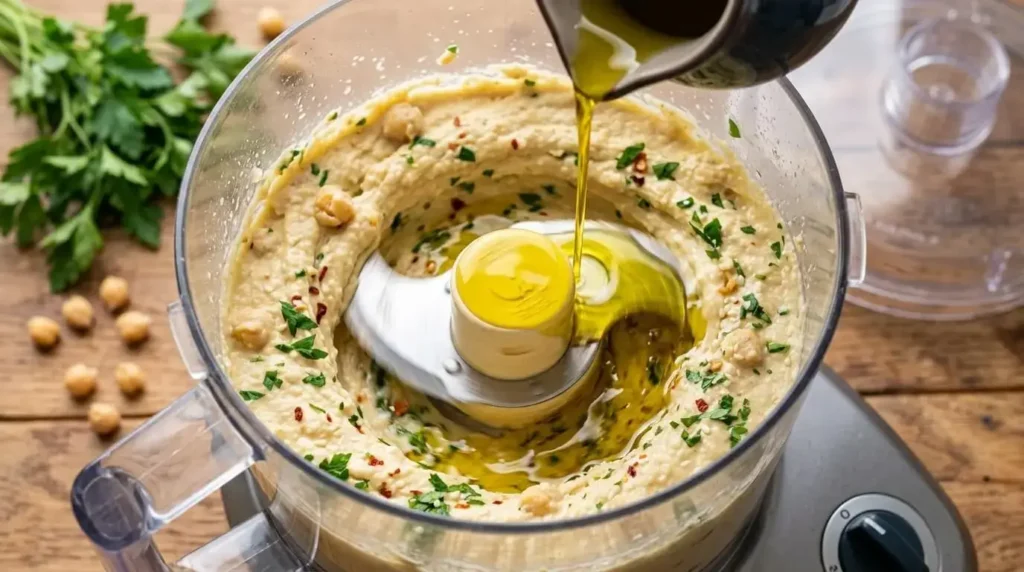
Start by adding your drained chickpeas, tahini, lemon juice, garlic, cumin, and a pinch of salt into your food processor. Blend for at least 2–3 minutes. This might seem like a long time, but it’s the secret to breaking down the chickpea skins. As the processor runs, slowly drizzle in the olive oil and then a tablespoon of ice water. Watch as the mixture turns from a grainy paste into a light, fluffy cloud.
Step 2 – Create the Signature Swirl
Presentation is 50% of the experience in Mediterranean cuisine. Pour the hummus into a shallow bowl. Using the back of a large spoon, start from the center and move outward in a circular motion, pushing the hummus toward the edges to create a “well.” This well is essential for holding the “warm” olive oil and preventing it from running off the sides.
Step 3 – Add the Loaded Mediterranean Toppings
Now, the fun part. Pour a generous amount of olive oil into the center well. Sprinkle your finely chopped parsley in a ring around the edge. Pile your mixed olives right in the center. Finally, sprinkle the sesame seeds and chili flakes over the entire surface. The result should look exactly like the vibrant, textured dish in our featured image.
Chef’s Tips for Ultra-Creamy Hummus
If you want to move from “good” to “legendary,” keep these tips in mind:
The Baking Soda Hack: If you have an extra 10 minutes, boil your canned chickpeas in water with 1/2 teaspoon of baking soda. This raises the pH of the water, softening the chickpea skins so they practically disappear when blended.
- Peeling (Optional): If you are a perfectionist, you can pinch the skins off the chickpeas. It’s tedious but results in the smoothest texture possible.
- Temperature Matters: Serve your hummus at room temperature. Cold hummus from the fridge loses its nuances and the olive oil can solidify, masking the flavors.
- Quality Oil: Since olive oil is a main ingredient, use a “finishing” oil—one that is cold-pressed and has a peppery finish.
What to Serve with Warm Olive-Topped Hummus
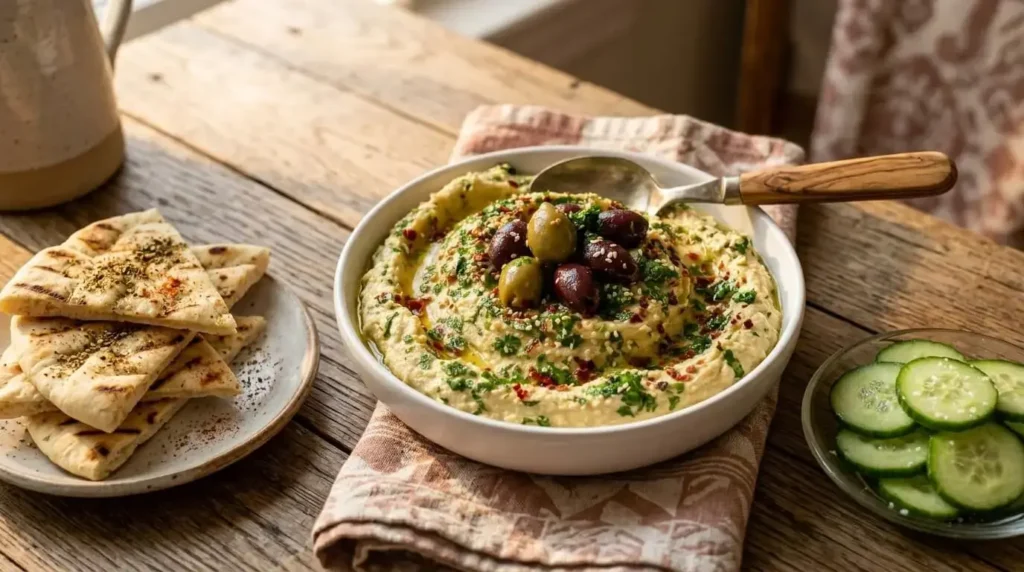
This dish is a social one, meant to be shared. To make it a complete Mediterranean hummus appetizer, pair it with:
- Warm Pita Bread: Soft, pillowy pita is the classic vessel.
- Crisp Vegetables: Cucumber slices, radishes, and bell pepper strips add a refreshing crunch.
- Falafel: Dip warm falafel balls into the hummus for a protein-heavy meal.
- Grilled Veggies: Charred zucchini or eggplant spears are incredible when dragged through the olive-topped center.
If you are looking for more traditional pairings, consider serving this alongside our authentic tabbouleh recipe for a fresh herb contrast.
Mediterranean Mezze Board Ideas
Building a mezze platter around this hummus is an art form. To create a balanced board, include:
- The Creamy: Our warm olive-topped hummus.
- The Salty: Cubes of feta cheese or halloumi.
- The Tangy: Stuffed grape leaves (dolmas) or pickled red onions.
- The Fresh: A simple baladi salad of tomatoes and cucumbers.
- The Crunchy: Roasted nuts or crispy chickpeas.
For a comprehensive guide on building the ultimate spread, check out our Mezze Platter Recipe.
Warm Olive-Topped Hummus
Ingredients
Method
- Prepare the Chickpeas: (Optional but recommended) Boil the canned chickpeas in water with a pinch of baking soda for 10 minutes. Drain and rinse with cool water.
- Blend the Base: In a food processor, combine chickpeas, tahini, lemon juice, garlic, cumin, and salt. Process for 2 minutes until a thick paste forms.
- Emulsify: With the motor running, slowly drizzle in the olive oil. Then, add the ice-cold water one tablespoon at a time until the hummus is light, airy, and ultra-smooth.
- Plate: Spread the hummus into a shallow bowl. Use a spoon to create a deep circular well in the center.
- Garnish: Fill the well with olive oil. Sprinkle parsley around the edges, then place the olives in the center.
- Finish: Dust with sesame seeds and chili flakes. Serve at room temperature.
Notes
- The Silkiness Secret: For the smoothest possible texture, simmer canned chickpeas in water with ½ teaspoon of baking soda for 10 minutes before blending. This softens the skins and creates a much airier dip.
- Temperature Tip: Serving at room temperature or slightly warm prevents the olive oil from solidifying and allows the subtle flavors of the tahini and cumin to shine.
- Pita Pairing: If serving with pita, lightly brush the bread with olive oil and a pinch of za’atar before warming it in the oven for an authentic touch.
Variations and Add-Ins
Once you master this loaded hummus recipe, you can experiment with these Mediterranean variations:
- Roasted Garlic: Swap fresh garlic for roasted cloves for a sweeter, mellower flavor.
- Spicy Harissa: Stir in a tablespoon of harissa paste for a North African kick.
- Feta-Loaded: Crumble Bulgarian or Greek feta over the top for extra tang.
- Pine Nut Topping: Briefly toast pine nuts in olive oil and pour them over the olives for a luxurious crunch.
Is Warm Hummus Better Than Cold?
In many parts of the Mediterranean, hummus is served “Musabbaha” style—warm or at least at room temperature. Cold temperature mutes the aromatic oils in the tahini and the garlic. When hummus is slightly warm, the texture is more fluid and airy, and the flavors of the toppings—especially the olives and olive oil—are much more pronounced. It feels like a substantial meal rather than just a refrigerated dip.
How to Store Leftover Hummus
If you have leftovers (though you likely won’t!), store the hummus in an airtight container in the refrigerator for up to 5 days.
Pro-Tip: The hummus will thicken significantly in the fridge. When you’re ready to eat it again, let it sit on the counter for 20 minutes and stir in a tiny splash of warm water or olive oil to restore that creamy consistency before serving.
Frequently Asked Questions
Can hummus be served warm?
Absolutely. In fact, many traditional Mediterranean restaurants serve hummus warm or at room temperature to highlight the creaminess of the tahini and the aroma of the olive oil.
What toppings go best with hummus?
The beauty of a loaded hummus recipe is its versatility. Beyond olives, you can use pine nuts, roasted red peppers, sun-dried tomatoes, or even spiced ground lamb.
Are olives healthy in the Mediterranean diet?
Yes! Olives are a cornerstone of the diet, providing heart-healthy monounsaturated fats and powerful phytonutrients.
How do restaurants make hummus so smooth?
Restaurants use high-powered blenders, plenty of tahini, and often peel the skins off the chickpeas. The addition of ice water during blending also creates an emulsion that results in a whiter, fluffier dip.
What do you eat with Mediterranean hummus?
Pita bread is standard, but for a lower-carb option, cucumber slices or romaine lettuce hearts work beautifully.
Can I make hummus ahead of time?
Yes. You can make the base 24 hours in advance. However, we recommend adding the fresh toppings—the parsley, olives, and oil—just before serving to keep the colors vibrant.
What olive oil is best for hummus?
Look for “Extra Virgin Olive Oil” (EVOO). For the best flavor, choose one labeled “First Cold Pressed.”
Final Thoughts
At its heart, this warm olive-topped hummus represents the essence of Mediterranean living: simplicity, quality, and the joy of sharing. It proves that you don’t need expensive ingredients to create a dish that feels like a luxury. By focusing on the balance of creamy, briny, and fresh flavors, you create a healthy Mediterranean snack that nourishes both the body and the soul.
So, grab your pita, invite some friends over, and enjoy the art of the mezze. For those looking to dive deeper into this lifestyle, explore our full guide to the mediterranean diet for more inspiration.