Bringing the vibrant, sun-drenched flavors of the coastal Mediterranean straight to your dining table doesn’t require hours of complicated kitchen prep. If you are looking for a dish that perfectly balances bright citrus notes, savory depth, and wholesome simplicity, this Mediterranean Couscous Salad recipe is the ultimate answer. Packed with creamy feta cheese, briny Kalamata olives, deeply flavorful sun-dried tomatoes, and a handful of aromatic fresh herbs, this dish captures the true essence of healthy coastal eating in every single bite.
Whether you need a reliable healthy meal prep salad for your busy work week, a refreshing light lunch recipe, or an easy summer salad to bring to your next backyard barbecue, this dish delivers on every front. The base of delicate, fluffy grains acts like a sponge, soaking up a zesty, homemade lemon dressing that ties the entire bowl together. Best of all, it comes together in under twenty minutes, requiring minimal stove time while offering maximum nutritional value. Let’s dive into why this gorgeous, vegetable-forward dish deserves a permanent spot in your weekly recipe rotation.
Why You’ll Love This Mediterranean Couscous Salad
- Quick and Easy Recipe: From start to finish, this entire salad takes less than twenty minutes to prepare. Because traditional couscous cooks in a mere five minutes, it is one of the fastest grains you can work with for busy weeknight cooking.
- Mediterranean Diet Friendly: Emphasizing heart-healthy fats like cold-pressed extra virgin olive oil, nutrient-dense fresh herbs, and minimally processed ingredients, this plant-forward recipe aligns beautifully with clean, Mediterranean diet lifestyle principles.
- Great for Meal Prep: Unlike traditional leafy green salads that wilt and turn soggy within a few hours of dressing, this robust grain salad actually improves in flavor as it sits. It is an excellent make-ahead option for healthy weekday lunches.
- Fresh and Flavorful: The contrast between the salty, creamy feta cheese cubes, the sweet chew of sun-dried tomatoes, and the bright pop of fresh mint and parsley creates a multi-layered sensory experience.
- Perfect Served Cold or Room Temperature: Its structural integrity makes it incredibly versatile. It travels beautifully without losing its appealing texture, making it an ideal choice for outdoor picnics, festive summer BBQs, potlucks, and casual family side dishes.
What Is Mediterranean Couscous Salad?
A traditional Mediterranean couscous salad is a light, nutrient-dense grain dish that utilizes tiny, steamed semolina pearls as a canvas for regional ingredients like olive oil, fresh herbs, briny olives, and traditional cheeses. It embodies the essence of Mediterranean basin cooking: simple preparation, high-quality ingredients, and a perfect balance of savory, sweet, and acidic flavor notes.
While many people mistake couscous for a whole grain, it is technically a traditional North African pasta made from rubbed semolina wheat and water. Traditional couscous consists of incredibly small, fine grains that cook almost instantly when steeped in boiling water. This differs significantly from Israeli or pearl couscous, which features much larger, toasted spheres that require a longer simmering process and offer a chewier, pasta-like texture.
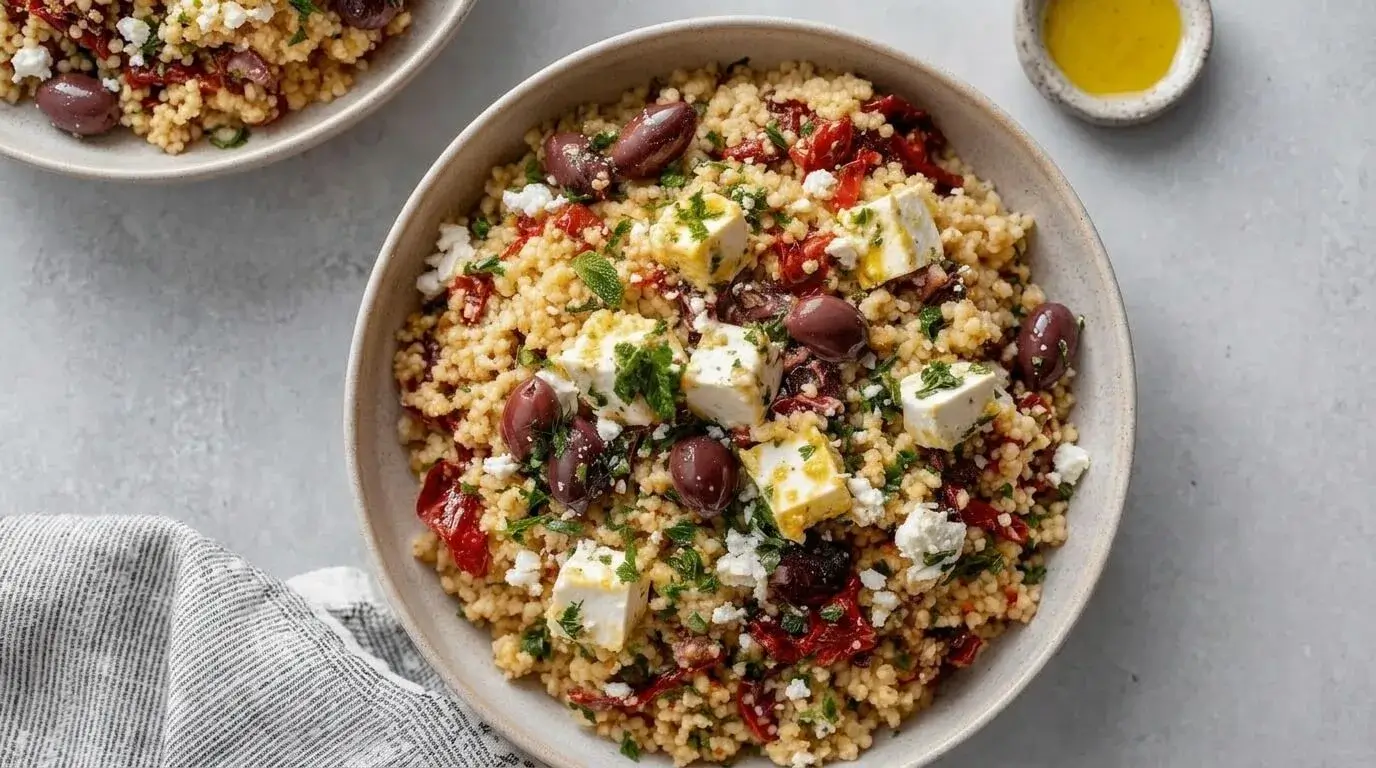
As captured in our featured recipe photo, this specific dish utilizes traditional small couscous to create a light, delicate base. This smaller grain size provides a much higher surface-area-to-volume ratio, allowing our signature lemon herb couscous salad dressing to coat every single grain evenly. This ensures that you get a perfectly balanced burst of acidity, herb-forward freshness, and rich olive oil in every spoonful, making it a stellar example of an authentic, healthy Mediterranean recipe.
Ingredients You’ll Need
Couscous
The foundation of this recipe relies on one cup of dry traditional semolina couscous. Its incredibly fine, light texture allows it to fluff up beautifully without becoming dense or heavy. If you want to increase the fiber content of this healthy Mediterranean diet recipe, you can easily substitute whole wheat couscous without altering the cooking time or liquid ratios.
Feta Cheese
To maintain complete visual and flavorful authenticity with our reference image, we use half a cup of high-quality feta cheese cut into distinct, substantial cubes, along with a few rustic crumbles. The creamy, rich, and distinctly salty profile of feta cuts through the acidity of the citrus dressing, providing a luxurious mouthfeel against the fine grains.
Kalamata Olives
Pitted Kalamata olives bring a deep purple hue, a glossy visual appeal, and a characteristic fruity, briny complexity to the bowl. These olives are essential for balancing the natural sweetness of the tomatoes and adding an authentic Mediterranean pop of flavor.
Sun-Dried Tomatoes
Chopped sun-dried tomatoes introduce a concentrated, sweet-and-savory umami punch that grounds the lighter elements of the salad. Their rich, deep red color adds beautiful visual contrast against the pale couscous and vibrant green herbs.
Fresh Herbs
A vibrant blend of a quarter-cup of finely chopped fresh flat-leaf parsley and garden-fresh mint is non-negotiable. These fresh herbs elevate the salad from a standard grain dish into an incredibly aromatic, authentic Mediterranean salad recipe.
Lemon Garlic Dressing
The entire dish is bound together by a simple, vibrant dressing consisting of premium extra virgin olive oil, freshly squeezed lemon juice, and one finely minced garlic clove, seasoned to taste with sea salt and cracked black pepper. This clean, homemade olive oil dressing acts as the flavor catalyst for the entire salad.
How to Make Mediterranean Couscous Salad
Step 1 — Cook the Couscous
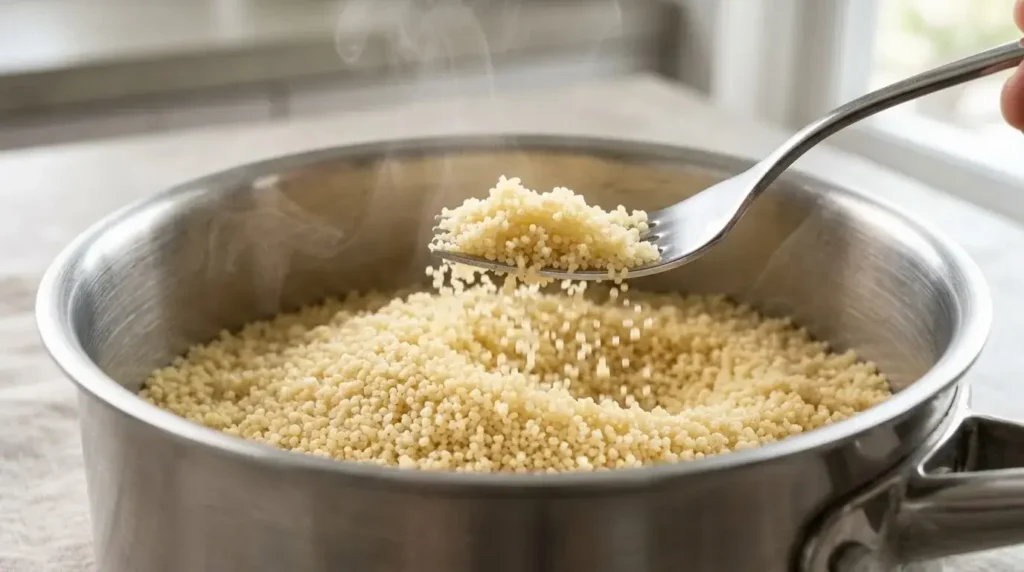
Bring one cup of water (or low-sodium vegetable broth for extra flavor) to a rolling boil in a medium saucepan. Stir in a small pinch of salt. Remove the pan completely from the heat source, pour in the dry couscous, stir quickly, and cover immediately with a tight-fitting lid. Let it steam undisturbed for exactly 5 minutes. Remove the lid and use a fork to gently fluff the grains, breaking up any small clumps. Pour the fluffed grains onto a large baking sheet or wide plate to let them cool completely to room temperature before assembling.
Step 2 — Prepare the Ingredients
While your grain base cools, prepare your mix-ins. Slice your pitted Kalamata olives in half if desired, or leave them whole as shown in the visual reference. Carefully slice your high-quality block of feta cheese into uniform cubes. Finely chop your washed and dried flat-leaf parsley and mint leaves, discarding any tough woody stems. If your sun-dried tomatoes are packed in oil, drain them well and chop them into bite-sized strips.
Step 3 — Make the Lemon Dressing
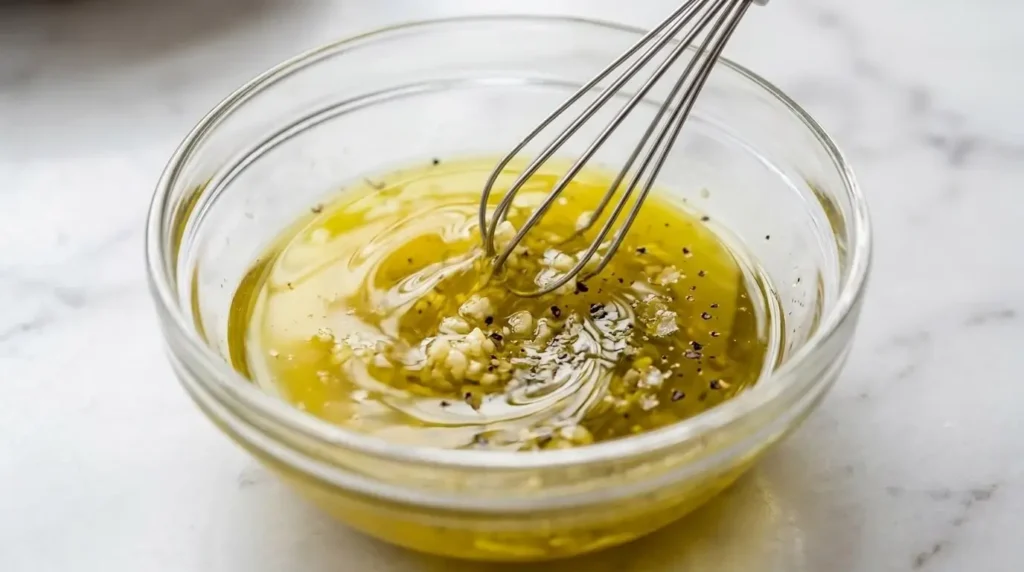
In a small glass bowl or mason jar, combine three tablespoons of premium extra virgin olive oil with one tablespoon of fresh lemon juice. Add one finely minced or grated clove of garlic, along with a pinch of sea salt and freshly cracked black pepper. Whisk vigorously with a small fork or shake the sealed jar until the dressing emulsifies into a bright, cohesive, beautiful yellow mixture.
Step 4 — Toss Everything Together
Transfer your completely cooled couscous into a large, wide serving bowl. Add the chopped sun-dried tomatoes, the Kalamata olives, and the generous handful of chopped fresh herbs. Pour the whisked lemon garlic dressing evenly over the ingredients. Using a large spoon or a pair of salad tongs, toss the mixture thoroughly so every single grain of couscous is lightly glistening with the dressing. Once fully mixed, gently fold in your feta cheese cubes, taking care not to overmix so they retain their clean shape.
Step 5 — Chill and Serve
While you can absolutely enjoy this easy Mediterranean couscous salad immediately at room temperature, it benefits tremendously from a brief rest. Cover the bowl tightly and place it in the refrigerator for at least 30 minutes before serving. This short chilling period allows the fine grains to fully absorb the garlic, lemon, and herb oils, resulting in a significantly deeper and more cohesive flavor profile.
Tips for the Best Couscous Salad
- Cool the Couscous Completely: Never add your fresh herbs or cheese to hot or warm grains. Warm semolina will wilt the delicate mint and parsley, turn them a dull brown color, and cause your beautiful cubes of feta cheese to melt and turn greasy.
- Use High-Quality Extra Virgin Olive Oil: Because this dressing is simple and uncooked, the quality of your oil shines through. Opt for a cold-pressed, fruity extra virgin olive oil to ground the zesty lemon notes.
- Don’t Overdress the Salad: Start with the specified dressing ratios. Couscous should be light, fluffy, and separate easily; it should never look soggy, swimming in excess liquid, or clumped heavily together at the bottom of the bowl.
- Fresh Herbs Make a Massive Difference: Dried herbs cannot replicate the refreshing, aromatic lift that fresh mint and flat-leaf parsley bring to this summer couscous salad. Always use fresh greens for the best results.
- Add the Feta Last: Feta cheese can be delicate. To mirror the pristine presentation of the recipe photo, fold the cheese cubes in very gently at the absolute end of assembly, keeping a few aside to scatter across the top as a final garnish.
- Let the Salad Rest: Giving the assembled dish 30 minutes to marinate at room temperature or in the fridge completely transforms the flavor, transforming it into a beautifully integrated, restaurant-quality side dish.
Mediterranean Couscous Salad Variations
Add Chickpeas
To instantly elevate this side dish into a protein-packed, standalone vegetarian meal, gently fold in one cup of rinsed and drained canned chickpeas (garbanzo beans). This adds a wonderful, nutty texture and a boost of plant-based protein and dietary fiber that aligns seamlessly with the Mediterranean diet lifestyle. If you enjoy chickpea-forward dishes, you might also love our refreshing Tzatziki Chickpea Salad.
Add Cucumber
For an ultra-refreshing crunch that screams summer, dice up half of an English cucumber or a Persian cucumber and toss it into the bowl along with the herbs. The high water content and crisp texture of fresh cucumber provide an excellent refreshing contrast to the rich, chewiness of the sun-dried tomatoes.
Add Roasted Red Peppers
If you prefer a sweeter, smoky flavor profile, chop up a handful of jarred roasted red bell peppers and add them to the mix. They blend beautifully with the Kalamata olives and add a gorgeous, bright red hue that enhances the visual presentation.
Make It Vegan
This dish is incredibly easy to adapt for a plant-based or dairy-free lifestyle. Simply swap out the dairy-based feta cheese for your favorite brand of store-bought almond- or coconut-oil-based vegan feta block, or omit the cheese entirely and add a sprinkle of toasted pine nuts for that desired rich, buttery mouthfeel.
Use Pearl Couscous
If you happen to have a box of Israeli pearl couscous in your pantry instead of traditional fine semolina, you can absolutely use it. Simply boil it according to its package instructions (usually simmering for about 8 to 10 minutes), drain it, cool it completely, and proceed with the identical dressing and mix-in ratios for a fun, extra-chewy twist.
Is Couscous Part of the Mediterranean Diet?
Yes, couscous is an authentic staple of the Mediterranean diet, particularly across North African and Levantine culinary traditions. When enjoyed in moderation alongside abundant fresh vegetables, lean proteins, and healthy monounsaturated fats like olive oil, it provides an excellent energy-dense, plant-forward foundation for balanced, nutrient-rich meals.
What to Serve with Mediterranean Couscous Salad
This incredibly versatile side dish pairs effortlessly with a wide array of Mediterranean proteins and classic spreads. If you are serving a full coastal spread, it acts as a wonderful, light accompaniment to grilled chicken breast, seared salmon fillets, skewered lamb kebabs, or crispy homemade falafel.
It also complements traditional mezze spreads elegantly. Serve a generous scoop of this grain salad alongside creamy homemade hummus, smoky baba ganoush, or a dollop of cool, garlicky yogurt sauce. For an elegant and complete seafood-focused dinner, try pairing this bright, citrusy salad alongside our flavorful Spinach and Feta Stuffed Salmon Recipe or our satisfyingly crisp Crispy Lemon Herb Air Fryer Cod.
Mediterranean Couscous Salad Recipe
Ingredients
Method
- Cook the Couscous: Bring 1 cup of water or vegetable broth to a rolling boil in a medium saucepan with a pinch of salt. Stir in the dry couscous, cover immediately with a tight lid, and remove from heat. Let steam for 5 minutes. Fluff gently with a fork and spread onto a plate to cool completely to room temperature.
- Prep the Mix-ins: While the couscous cools, chop your sun-dried tomatoes, cube your premium feta cheese, and finely chop the fresh parsley and mint leaves.
- Whisk the Dressing: In a small bowl, combine the extra virgin olive oil, fresh lemon juice, minced garlic, a pinch of salt, and freshly cracked black pepper. Whisk vigorously until well emulsified.
- Toss and Assemble: Transfer the completely cooled couscous into a large serving bowl. Add the whole Kalamata olives, chopped sun-dried tomatoes, and fresh chopped herbs. Pour the lemon dressing over the top and toss thoroughly until the grains are evenly coated.
- Garnish and Chill: Gently fold in the large feta cheese cubes, keeping a few to scatter on top to preserve the pristine presentation. Cover and refrigerate for at least 30 minutes before serving to let the flavors develop beautifully.
Notes
- Make it Vegan: Substitute the dairy cheese for your favorite plant-based feta alternative or omit it entirely and add a tablespoon of toasted pine nuts.
- Boost the Protein: Gently fold in one cup of rinsed and drained canned chickpeas to turn this side dish into a filling, standalone vegetarian meal.
- Keep it Fresh: Always let the fluffed couscous cool completely to room temperature before adding the fresh herbs and cheese to prevent the greens from wilting and the feta cubes from melting.
- Storage Tip: Store leftovers in an airtight glass container in the refrigerator for up to 4–5 days. If the grains seem a bit dry on day three, simply revive them with a tiny drizzle of extra virgin olive oil and a quick squeeze of fresh lemon juice.
Meal Prep and Storage Tips
How long does couscous salad last in the fridge?
When stored properly in an airtight glass container, this assembled salad will remain completely fresh, safe, and delicious in the refrigerator for up to 4 to 5 days. This long shelf life makes it an outstanding candidate for your weekly Sunday meal prep routine.
Because this salad does not contain fragile leafy salad greens, it will not become soggy or sad as it rests in the fridge. In fact, many home cooks find that the flavors hit their absolute peak on days two and three, as the fine semolina grain has had ample time to deeply absorb the garlic-infused olive oil and bright lemon juices.
If you plan to store it for the full five days, you may find that the grains absorb a significant amount of the moisture. Before serving your leftovers, simply drizzle a quick teaspoon of fresh extra virgin olive oil and a tiny squeeze of fresh lemon juice over your portion, giving it a quick toss with a fork to completely revive its signature glossy shine and zesty bite. Always serve it cold or slightly rested at room temperature for the best experience.
Common Mistakes to Avoid
- Using Hot Couscous During Assembly: Combining your fresh herbs and premium feta cheese with warm grains is a recipe for a muddy presentation. Take the extra ten minutes to spread the grains out on a flat sheet pan so they cool down completely.
- Adding Too Much Heavy Dressing: Couscous is highly absorbent. Drowning it in heavy dressing will quickly turn your light, airy salad into a dense, clumpy paste. Stick to our clean 3:1 oil-to-lemon ratio for an airy finish.
- Skipping the Fresh Seasoning: Because the base grains are neutral, failing to season your dressing properly with salt and pepper can make the dish taste flat. Don’t skip the salt; it is crucial for amplifying the fresh mint and parsley.
- Overmixing the Feta Cheese Cubes: If you aggressively stir your salad after adding the cheese, the soft feta cubes will break down, turning your salad cloudy and masking the beautiful definition seen in our photo. Fold them in with a gentle hand at the very end.
- Not Chilling Long Enough Before Serving: Serving this salad immediately after mixing means missing out on its full potential. Give it at least thirty minutes in the refrigerator to allow the bright lemon, sharp garlic, and aromatic herbs to marry seamlessly.
Frequently Asked Questions
Can Mediterranean couscous salad be made ahead?
Absolutely! This salad is an exceptional make-ahead dish. Preparing it 12 to 24 hours in advance gives the ingredients time to marinate together, making it taste even more vibrant and delicious when you are ready to serve it at your gathering or lunch.
Can couscous salad be served cold?
Yes, this salad is specifically designed to be served chilled straight from the refrigerator or enjoyed at comfortable room temperature. This temperature flexibility makes it a stress-free choice for packing into school lunches, taking on outdoor picnics, or serving at hot summer cookouts.
What protein goes well with couscous salad?
It pairs beautifully with virtually any lean protein. Grilled chicken skewers, garlic butter shrimp, baked cod, or pan-seared salmon are excellent seafood and poultry options. For a plant-based protein boost, simply toss in a handful of canned chickpeas or edamame.
Is pearl couscous the same as regular couscous?
No, they are quite different in size and texture. Regular couscous consists of tiny, sand-like semolina granules that cook instantly by steaming. Pearl (or Israeli) couscous features much larger, pea-sized wheat spheres that are toasted and must be simmered, resulting in a chewier, pasta-like texture.
Can I make this gluten free?
Yes. To transform this into an entirely gluten-free recipe, simply replace the wheat-based semolina couscous with an equal amount of certified gluten-free alternative grains, such as cooked quinoa, millet, or brown rice, while keeping the rest of the ingredients exactly the same.
What herbs taste best in couscous salad?
The combination of fresh flat-leaf Italian parsley and garden mint offers the most authentic, bright, and refreshing Mediterranean flavor profile. However, if you want to experiment, fresh dill, chopped chives, or fresh basil also make wonderful additions.
Final Thoughts
Embracing a wholesome, Mediterranean lifestyle doesn’t require complex techniques or hard-to-find ingredients. This simple recipe proves that with just a few premium pantry staples—like rich extra virgin olive oil, briny olives, sun-dried tomatoes, and a block of feta—you can create a magnificent, nutrient-dense meal that satisfies both your taste buds and your health goals. It is an incredibly adaptable canvas that welcomes your own creative culinary touch, making it a reliable favorite for seasoned cooks and beginners alike.
Did you enjoy putting this dish together, or did you add your own favorite seasonal vegetables to the bowl? We would love to hear how it turned out for you! Please leave a comment down below, give this recipe a rating, and share it with your friends and family. Happy cooking!