Introduction
If you are looking for a vibrant, sun-drenched dish that brings the coast of the Mediterranean straight to your table, this Mediterranean Pearl Couscous Salad is the ultimate recipe to make next. Combining bright, bold, and fresh Mediterranean flavors with a wonderfully chewy pearl couscous texture, this dish is as satisfying as it is nourishing. Every bite features a colorful medley of crisp vegetables, protein-rich chickpeas, and creamy feta cheese, all tossed together in a zesty, bright lemon vinaigrette. Whether you need an easy meal prep option for a busy work week or an elegant side dish suitable for summer lunches, outdoor picnics, backyard potlucks, and healthy dinners, this salad checks every single box.
Why You’ll Love This Mediterranean Pearl Couscous Salad
- Ready in about 30 minutes: No need to spend hours in the kitchen; this satisfying meal comes together quickly and effortlessly.
- Mediterranean diet friendly: Packed with whole foods, lean plant-based proteins, and healthy fats that support a balanced lifestyle.
- Great source of fiber and plant-based protein: Thanks to the hearty addition of plump chickpeas and nutrient-rich veggies.
- Easy to customize: Swap in your favorite seasonal vegetables or adjust the herbs to suit what you have on hand in your pantry.
- Delicious served cold: The flavors deepen over time, making it exceptionally refreshing straight out of the refrigerator.
- Ideal for meal prep: Stays firm, fresh, and delicious for days without getting soggy or losing its characteristic bite.
- Balanced combination of flavors and textures: A harmonious blend of chewy pasta, crunchy cucumbers, juicy tomatoes, and tangy cheese.
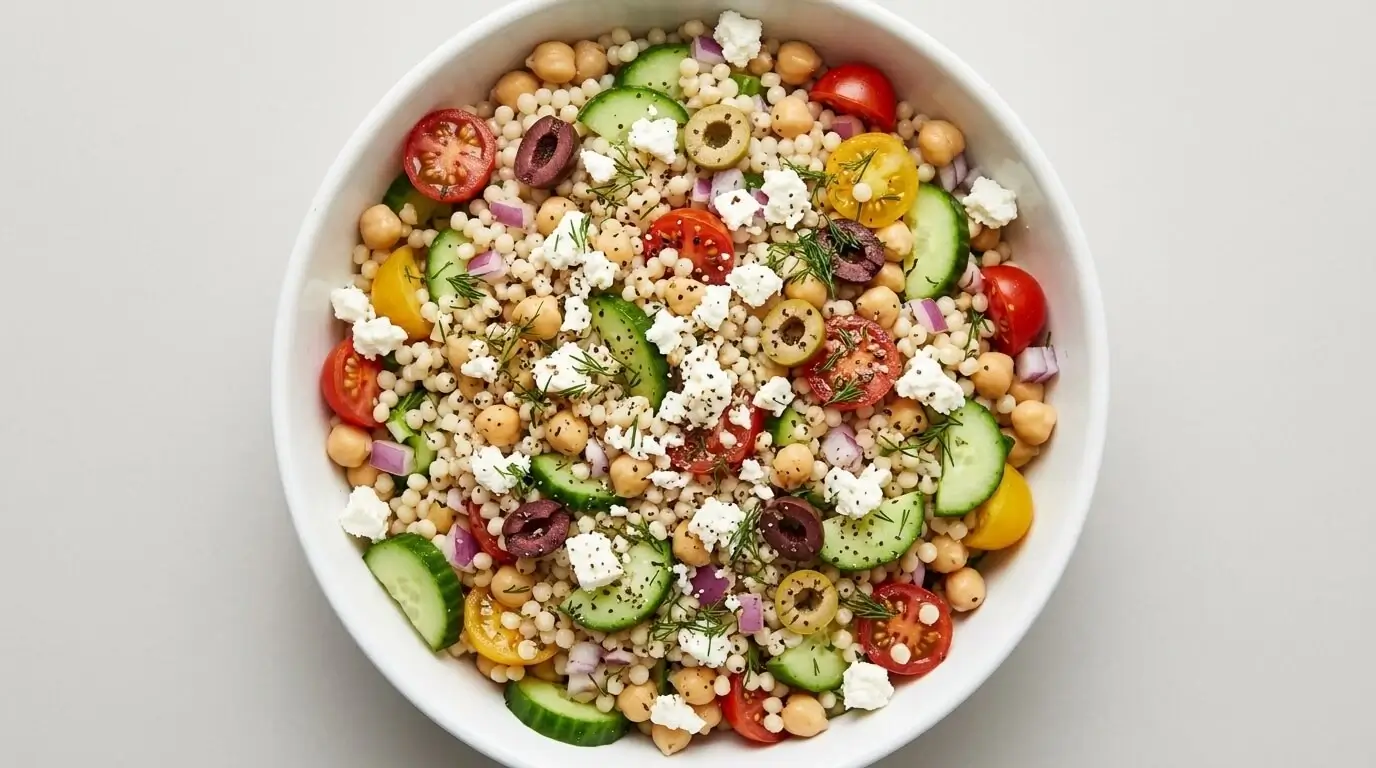
- Beautiful presentation for gatherings: A stunning visual centerpiece with its pops of red, yellow, green, and stark white feta that will wow your guests.
What Is Pearl Couscous?
Featured Snippet Answer: Pearl couscous, also known as Israeli couscous, consists of small, toasted pasta-like pearls made from semolina or wheat flour. Larger than traditional, fine-grained North African couscous, it possesses a uniquely chewy and satisfying texture. This robust structure makes it excellent for salads because it stays firm and holds up beautifully when tossed with dressings.
Is Pearl Couscous the Same as Israeli Couscous?
Featured Snippet Answer: Yes, the terms “pearl couscous” and “Israeli couscous” are usually used interchangeably. Developed in Israel during the 1950s when rice was scarce, this toasted pasta format mimics the shape of rice or peas. Unlike regular couscous, which is steamed and flaky, Israeli couscous is toasted, giving it a savory depth and a round, uniform shape that works beautifully in hearty Mediterranean salads.
Why This Salad Fits the Mediterranean Diet
Extra Virgin Olive Oil
Extra virgin olive oil is the literal backbone of Mediterranean cuisine. In this recipe, it serves as the base for our bright lemon vinaigrette. Rich in monounsaturated heart-healthy fats and powerful antioxidants, it adds a rich, velvety mouthfeel that carries the herbal notes of garlic and oregano throughout the salad.
Legumes
Legumes are an essential daily component of traditional Mediterranean eating patterns. The addition of canned or scratch-cooked chickpeas provides a brilliant foundation of plant-based protein and dietary fiber, transforming a light pasta salad into a highly satiating, complete meal.
Fresh Vegetables
This salad is a celebration of seasonal, nutrient-dense fresh vegetables. By packing the bowl with hydration-heavy English cucumbers, antioxidant-rich cherry tomatoes, and pungent red onions, you gain an abundance of essential vitamins and minerals alongside a wonderful crunch.
Herbs and Flavor
Rather than relying on heavy, cream-based sauces or processed sugars, this dish leverages the natural flavor-enhancing powers of fresh dill, bright lemon juice, raw garlic, and dried oregano. This clean approach delivers maximum taste with zero hidden additives.
Moderate Cheese
The Mediterranean diet does not shy away from dairy; instead, it uses high-quality cheeses in moderation to maximize sensory satisfaction. A careful crumble of authentic feta cheese introduces a tangy, briny contrast that elevates the surrounding fresh ingredients without overwhelming the dish.
Ingredients You’ll Need
Pearl Couscous
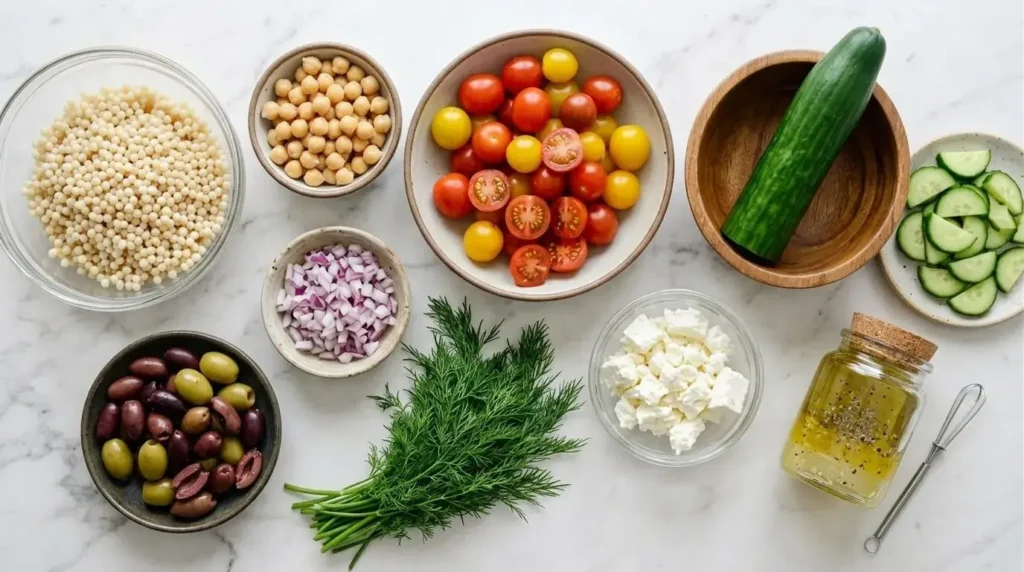
The star of the show. Look for high-quality brands that label the product as Israeli or pearl couscous. Its distinct toasted flavor profile and pillowy, pasta-like texture form the ideal canvas for our homemade vinaigrette. To get the best results, cook it just until al dente.
Chickpeas
Also known as garbanzo beans, these add an excellent element of fiber and plant protein. You can easily use canned chickpeas for ultimate convenience—just ensure you drain and rinse them thoroughly to remove excess sodium and starch. Alternatively, cooked-from-scratch chickpeas work beautifully if you have the time.
Cherry Tomatoes
Using a vibrant mix of both red and yellow cherry tomatoes brings beautiful color and a sweet, juicy contrast to the savory elements of the dish. Halving them ensures they are bite-sized while allowing their natural juices to mingle into the dressing.
English Cucumber
English cucumbers are preferred because they have a thin skin and very few seeds, meaning they won’t release excessive water into your salad bowl. They contribute an exceptionally crisp texture and clean hydration to every bite.
Red Onion
Finely chopped red onion lends a sharp, pungent flavor balance that cuts through the rich olive oil and creamy cheese. If you find raw red onion too intense, soaking the chopped pieces in cold water for ten minutes before mixing will quickly reduce its harsh bite.
Kalamata and Green Olives
To match the stunning visual presentation of a authentic Mediterranean dish, use a combination of pitted, sliced Kalamata olives and sliced green olives. This duo provides a beautiful briny, salty contrast that pairs flawlessly with the sweetness of the tomatoes.
Feta Cheese
Opt for a block of traditional Greek feta cheese packed in brine rather than pre-crumbled varieties. Crumbly, tangy, and beautifully creamy, it adds a luxurious texture and deep flavor profile that anchors the entire salad.
Fresh Dill
Fresh dill is our secret weapon. Its bright, feathery leaves give the salad its signature herby aroma. It pairs exceptionally well with fresh lemon juice and cucumber, adding a layer of clean sophistication that dried herbs simply cannot mimic.
Ingredients for the Lemon Vinaigrette
- Olive Oil: Provides a rich, smooth base that emulsifies with the citrus juice.
- Fresh Lemon Juice: Delivers a sharp, clean acidity that awakens all the component flavors.
- Lemon Zest: Contains essential oils that amplify the bright citrus aroma.
- Garlic: Mined fresh to infuse a sharp, savory depth into the dressing.
- Oregano: A classic dried herb that introduces an earthy, traditional Mediterranean undertone.
- Salt and Pepper: Crucial components used to season the vinaigrette, drawing out the natural flavors of the produce and pasta.
How to Make Mediterranean Pearl Couscous Salad
Step 1: Cook the Pearl Couscous
Bring 1 and 3/4 cups of water (or a low-sodium vegetable broth) to a rolling boil in a small saucepan with a pinch of salt. Stir in 1.5 cups of the pearl couscous. Lower the heat to a gentle simmer, cover the pot tightly with a lid, and let it cook for 8 to 10 minutes. You will know it is done when the liquid is completely absorbed and the pearls are tender yet still offer a distinct, chewy texture.
Step 2: Cool the Couscous
Once cooked, immediately remove the pan from the heat. To prevent the residual heat from overcooking the grains and making them mushy, transfer the couscous to a fine-mesh strainer and rinse briefly under cold running water. Shake off the excess moisture and let it cool completely to room temperature before assembling the salad.
Step 3: Prepare the Vegetables
While the couscous cools, focus on your cutting techniques to ensure uniform sizing. Slice your red and yellow cherry tomatoes in half, dice your English cucumber into clean half-moons, finely mince the red onion, and cleanly slice your pitted Kalamata and green olives. Keeping the sizes uniform ensures you get a little bit of everything in each forkful.
Step 4: Make the Lemon Vinaigrette
In a small bowl, measuring cup, or glass jar, combine your extra-virgin olive oil, freshly squeezed lemon juice, fine lemon zest, minced raw garlic, and dried oregano. Whisk vigorously or secure the jar lid and shake well until proper emulsification is achieved and the mixture looks uniform. Taste and season with a pinch of salt and freshly cracked black pepper.
Step 5: Assemble the Salad
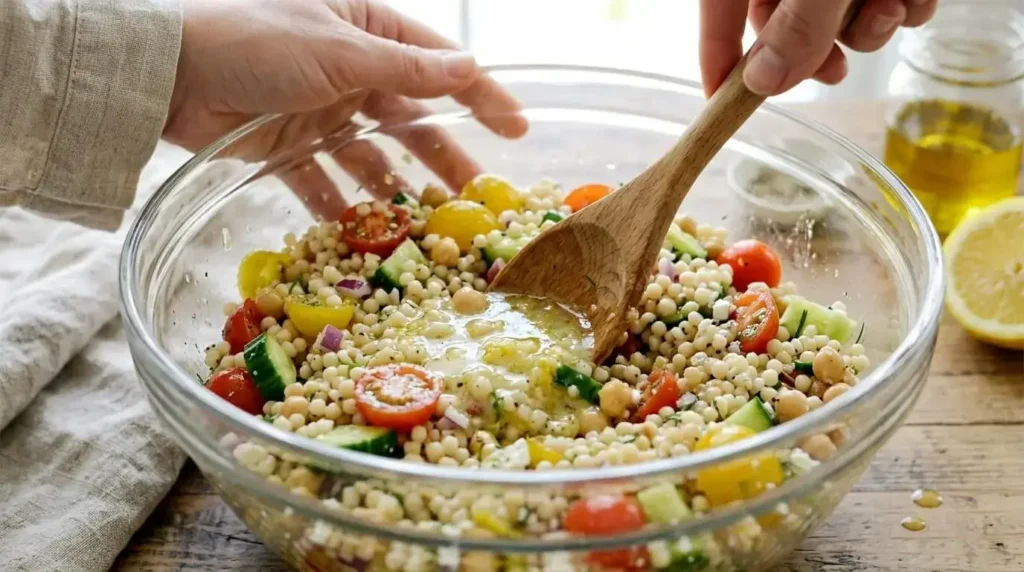
In a large, wide mixing bowl, combine the completely cooled pearl couscous, rinsed chickpeas, cherry tomatoes, cucumber slices, red onion, and sliced olives. Pour the fresh lemon vinaigrette evenly over the top. Using a large spoon or silicone spatula, perform a gentle mixing motion to thoroughly coat all the ingredients without crushing the delicate vegetables. Gently fold in the crumbled feta cheese and chopped fresh dill last to preserve their distinct structures.
Step 6: Chill and Serve
While you can certainly eat this salad right away, letting it rest in the refrigerator for at least 30 minutes improves the flavor profile drastically. Chilling allows the porous pearl couscous to soak up the garlic-herb vinaigrette, resulting in a cohesive, ultra-flavorful dish when served.
Expert Tips for the Best Mediterranean Pearl Couscous Salad
- Cook couscous al dente: Treat pearl couscous like high-quality Italian pasta; it should maintain a slight bite so it does not turn into a mushy paste when tossed.
- Cool completely before mixing: Mixing warm couscous with fresh, raw veggies will wilt the herbs and cause the crisp cucumbers to lose their satisfying crunch.
- Use fresh lemon juice: Steer clear of bottled lemon juice; the vibrant pop of real, freshly squeezed lemons makes a world of difference.
- Add feta at the end: To keep the salad looking clean and vibrant, fold the feta in gently at the very last second so it doesn’t cloud the dressing.
- Taste and adjust seasoning: Always do a quick taste test right before serving; a final crack of black pepper or a splash of lemon juice can easily elevate the final dish.
- Use quality olive oil: Since the dressing is simple, using a high-quality, cold-pressed extra virgin olive oil will yield a vastly superior flavor.
- Let the salad rest before serving: Even a brief 15-to-20-minute rest on the counter allows the aromatics to bind elegantly with the pasta.
Common Mistakes to Avoid
Overcooking the Couscous
- The Issue: Leaving the couscous on the stove for too long transforms the distinct pearls into a sticky, unified mass.
- The Solution: Set a strict timer for 8 minutes and check it frequently; remove it immediately once the water disappears.
Skipping the Cooling Step
- The Issue: Throwing hot grains directly into a bowl of chopped vegetables cooks them slightly, ruining the fresh texture.
- The Solution: Spread the rinsed couscous across a flat baking sheet to let the steam escape rapidly if you are short on time.
Using Too Much Dressing
- The Issue: Drowning the ingredients in vinaigrette pools at the bottom of the bowl and masks the clean flavor of the vegetables.
- The Solution: Pour three-quarters of the vinaigrette over the salad initially, tossing to coat, and add the remainder only if it feels dry.
Underseasoning
- The Issue: Grains and legumes require ample seasoning to taste their best; otherwise, the dish can taste bland.
- The Solution: Season both the couscous cooking water and the vinaigrette, and don’t be afraid of freshly cracked black pepper.
Adding Herbs Too Early
- The Issue: Mixing fresh dill into a warm or overly acidic base hours ahead of time can cause the delicate green leaves to turn brown and bruise.
- The Solution: Stir the majority of the fresh dill in just before serving, saving a few bright green sprigs exclusively for a gorgeous final garnish.
Delicious Variations
Mediterranean Chicken Couscous Salad
If you want to transition this side dish into an incredibly robust, meat-centered lunch, simply fold in diced or shredded leftover grilled chicken breast. The smoky notes of charred chicken pair beautifully with the lemon-garlic profile. For a fantastic pairing blueprint, check out our Garlic Herb Roasted Chicken and Vegetables to master your protein prep.
Tuna Mediterranean Couscous Salad
For a seafood-forward twist reminiscent of coastal southern Europe, flake a premium can of oil-packed tuna directly into the bowl. The richness of the fish contrasts beautifully with the acidic lemon vinaigrette. For more inspiration on building seafood-based meals, check out our popular Mediterranean Tuna salad recipe.
Vegan Pearl Couscous Salad
Making this recipe entirely plant-based is simple. Simply omit the traditional feta cheese entirely or replace the feta with a dairy-free, plant-based alternative available at your local grocery store. The chickpeas will still provide plenty of structural substance and protein.
Extra Protein Version
If you want to hit higher macronutrient goals without adding meat, double down on your legumes. Add a combination of the pre-existing chickpeas along with creamy white cannellini beans. To expand on this legume-forward approach, take a look at our creamy tzatziki chickpea salad for a wonderfully rich variation.
Summer Garden Version
Celebrate peak harvest season by tossing in a rainbow of additional backyard produce. Diced red, yellow, or orange bell peppers add an extra crunch, while thin ribbons of fresh basil and raw, thinly shaved zucchini lend an ultra-fresh garden aroma.
What to Serve with Mediterranean Pearl Couscous Salad
This versatile salad acts as an incredible sidekick to a multitude of main courses. It pairs wonderfully alongside:
- Grilled Chicken: Marinated in lemon, garlic, and herbs.
- Mediterranean Salmon: The acidity of the salad cuts through the rich, healthy fats of the fish beautifully.
- Shrimp Skewers: Lightly charred over an open flame with a touch of paprika.
- Falafel: Crispy, herb-packed chickpea patties for a fully vegetarian feast.
- Hummus and Pita: Perfect for creating a casual, tapas-style mezze platter.
- Grilled Vegetables: Smoky eggplant, charred zucchini rounds, and sweet onions.
Is Pearl Couscous Healthy?
Featured Snippet Answer: Yes, pearl couscous can absolutely be a component of a healthy, well-rounded diet. It provides essential complex carbohydrates that deliver sustained energy throughout the day, alongside a moderate amount of dietary fiber and plant protein. When combined with nutrient-dense fresh vegetables, heart-healthy olive oil, and clean proteins like chickpeas, it creates a perfectly balanced, satisfying meal.
Mediterranean Pearl Couscous Salad
Ingredients
Method
- Bring 1 and 3/4 cups of water to a boil in a small pot with a pinch of salt. Stir in the pearl couscous. Lower the heat to low, cover the pot with a lid, and let it simmer for 8 to 10 minutes until the liquid is fully absorbed and the couscous is tender but chewy.
- Remove from heat and rinse the couscous under cold running water in a fine-mesh strainer to stop the cooking process. Shake off excess water and let it cool completely.
- In a small bowl or mason jar, whisk together the extra-virgin olive oil, fresh lemon juice, lemon zest, minced garlic, and dried oregano. Season with a pinch of salt and black pepper to taste.
- In a large mixing bowl, combine the cooled pearl couscous, drained chickpeas, halved cherry tomatoes, cucumber half-moons, chopped red onion, and sliced Kalamata and green olives.
- Drizzle the lemon vinaigrette over the top and fold gently with a spatula to coat all ingredients evenly.
- Gently fold in the crumbled feta cheese and chopped fresh dill. Top with an extra crack of black pepper and a few sprigs of fresh dill for presentation. Chill in the refrigerator for 30 minutes before serving for maximum flavor.
Notes
– If prepping this dish days in advance, store the feta and fresh dill separately, adding them just before serving to keep the textures pristine.
– Leftovers can be kept in an airtight container in the refrigerator for up to 3-4 days. Toss with a tiny splash of olive oil to refresh if it dries out.
Can You Make This Salad Ahead of Time?
This salad is actually an exceptional candidate for advanced meal prep. When built ahead of time, the overall flavor development improves dramatically as the pasta has time to absorb the lemon vinaigrette. If you plan to make it more than 24 hours in advance, consider storing the dressing separately in a small container and tossing it together on the day you plan to serve. For the absolute best results, hold off on folding in the delicate crumbled feta and fresh dill until right before serving to maintain their pristine textures.
Storage Tips
Refrigerator Storage
Store any leftovers in an airtight container placed directly in the refrigerator. It will keep beautifully for 3–4 days, making it highly dependable for weekly meal prep tracking.
Lunch Prep Containers
If dividing the salad into individual lunch prep containers for the work week, ensure they seal tightly. Keep a small wedge of fresh lemon inside the container to squeeze over the salad right before consumption to instantly re-awaken the aromatic profiles.
Maintaining Fresh Texture
Because English cucumbers and cherry tomatoes have minimal structural water loss, the salad stays crisp. Avoid using soft, overripe tomatoes, which break down rapidly in storage.
Refreshing Leftovers
If the couscous absorbs the majority of the moisture after a few days in the fridge, don’t worry. Simply drizzle a tiny teaspoon of extra virgin olive oil and a quick splash of fresh lemon juice over the top, give it a quick stir, and it will taste as fresh as the day you made it.
Frequently Asked Questions
What is pearl couscous?
Pearl couscous is a tiny, toasted pasta made from semolina flour. Also referred to historically as Israeli couscous, it features round, uniform pearls that provide a uniquely soft yet distinctly chewy mouthfeel when cooked, setting it completely apart from fine-grained traditional couscous.
Is pearl couscous the same as Israeli couscous?
Yes, they are completely identical. The term “pearl” describes its physical appearance, while “Israeli” recognizes its geographic origin, where it was created in the mid-20th century as a wheat-based substitute for rice during economic rationing periods.
Can pearl couscous be eaten cold?
Absolutely! In fact, pearl couscous tastes incredible when chilled. Rinsing it with cold water immediately after boiling prevents it from clumping, making it an exceptional base for cold summer pasta salads.
Is couscous healthy?
Couscous provides standard complex carbohydrates, selenium, and plant-based protein. To maximize its health benefits, pair it with plenty of fresh, fiber-packed vegetables, legumes, and healthy monounsaturated fats as demonstrated in this Mediterranean-style recipe.
Can I make couscous salad ahead of time?
Yes, this salad thrives when prepped ahead of time. Spending a few hours resting in the refrigerator allows the garlic, oregano, and lemon vinaigrette to penetrate deep into the grains, amplifying the overall flavor experience.
How long does couscous salad last in the refrigerator?
When sealed correctly inside an airtight container, it will remain perfectly fresh and delicious for 3 to 4 days. It is an outstanding choice for healthy weekly lunches or grab-and-go snacks.
Can I use regular couscous instead?
You can, but it will fundamentally alter the texture of the dish. Regular Moroccan couscous is incredibly fine and light, which absorbs liquids differently. If you swap it out, reduce the dressing quantity slightly so the salad doesn’t turn soggy.
Is pearl couscous gluten-free?
No. Because pearl couscous is manufactured directly from semolina wheat flour, it naturally contains gluten. If you require a strict gluten-free alternative, you can substitute it with grain-based options like quinoa or short-grain brown rice.
What protein goes best with Mediterranean couscous salad?
While the salad already contains plant protein from chickpeas, it pairs effortlessly with grilled chicken skewers, baked cod, seared shrimp, or Mediterranean-style flaked tuna packed in high-quality olive oil.
Can I freeze couscous salad?
Freezing is not recommended for this particular salad. While plain cooked couscous freezes relatively well, the fresh cucumbers, raw tomatoes, and delicate feta cheese will turn incredibly mushy and unappealing upon thawing.
Final Thoughts
This Mediterranean Pearl Couscous Salad perfectly encapsulates the very best elements of healthy Mediterranean eating. It highlights fresh Mediterranean flavors, easy preparation techniques, and unparalleled meal-prep convenience. Built entirely from wholesome, healthy ingredients, its immense versatility allows it to transition smoothly from a quick weekday desk lunch to an impressive side dish at your next neighborhood gathering.
Give this recipe a try this week to brighten up your meal rotation! If you love it, don’t forget to share your favorite custom variations with us in the comments below. Happy cooking!