If you are looking to bring the sun-drenched flavors of the Greek islands straight to your kitchen table, this Mediterranean Barley Toast is the ultimate dish to try. Heavily inspired by the beloved Cretan Dakos, this rustic recipe is a masterclass in how simple, high-quality ingredients can create something truly extraordinary. Every single bite offers a magnificent contrast of textures and temperatures, making it a favorite for food lovers worldwide.
Imagine biting into an incredibly crunchy barley rusk that has been kissed with water and premium olive oil, topped with a mountain of sweet, juicy chopped tomatoes. On top sits a generous layer of creamy, tangy crumbled feta cheese, followed by briny Kalamata olives, sharp little capers, earthy dried oregano, and a rich drizzle of extra virgin olive oil.
It is naturally Mediterranean diet friendly, relying completely on whole grains, healthy fats, and fresh garden produce. The best part? This versatile dish works beautifully at any time of day. Enjoy it as a vibrant breakfast to kickstart your morning, a quick and satisfying lunch, a crowd-pleasing party appetizer, or a light, refreshing dinner on a warm evening.
What Is Mediterranean Barley Toast?
This vibrant dish traces its proud origins back to the rugged, beautiful island of Crete, Greece. Locally, it is known traditionally as Dakos (pronounced DAH-kos) or sometimes Koukouvagia, which whimsically translates to “owl”—a nod to its unique shape or perhaps the historical countryside tavernas where it was served.
At the absolute heart of this dish is paximadia, which are traditional Cretan barley rusks. Historically, bakers double-baked these loaves of bread so they would dry out completely, allowing them to be preserved for months without spoiling. This ancient method of preservation created a dense, deeply nutritious whole-grain bread base that requires just a little moisture to bring it back to life.
While it began as a humble peasant meal, this dish has exploded in popularity far outside of Greece. Modern food lovers adore it because it perfectly reflects core Mediterranean eating principles: minimal processing, high fiber, and a reliance on local, plant-forward ingredients. Our accessible version stays completely faithful to the original Greek visuals while ensuring you can easily recreate it wherever you live.
Why You’ll Love This Mediterranean Barley Toast
There are countless reasons this traditional dish deserves a permanent spot in your weekly meal rotation:
- Ready in under 15 minutes: No extensive meal prep or complex cooking skills are required here.
- Minimal cooking involved: You don’t even need to turn on your oven or stove, making it an eco-friendly win.
- Naturally diet-friendly: It perfectly aligns with clean eating habits and modern nutritional choices.
- Rich in whole grains: The traditional barley base provides a wonderful source of sustained energy and complex carbs.
- Packed with fresh ingredients: It celebrates raw, vibrant, antioxidant-rich garden produce.
- Highly customizable: Swap toppings or adjust cheese choices based on what is currently in your fridge.
- Ideal for hot weather: Light, cooling, and deeply hydrating thanks to the ripe tomatoes.
- Great for entertaining: It serves as a rustic, visually stunning centerpiece that always sparks conversation.
Ingredients You’ll Need
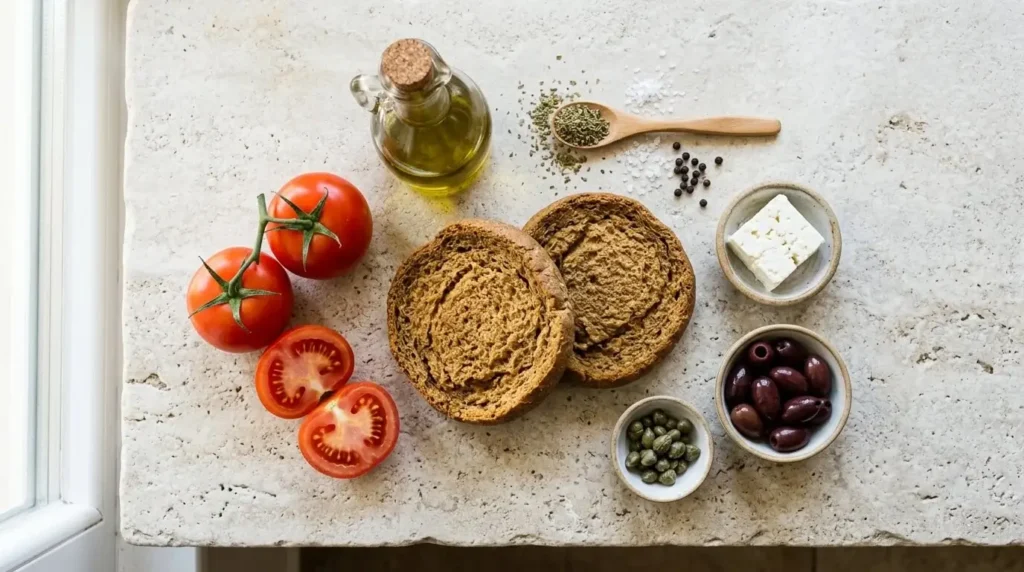
Gathering the right ingredients is the secret to unlocking the true soul of this dish.
For the Toast Base
- 2 large Cretan barley rusks (paximadia): These traditional rounds are incredibly hard, dense, and packed with rustic grain flavor.
- Substitution: If you cannot find authentic Greek barley rusks locally, you can use thick slices of artisan sourdough bread toasted or baked until they are completely hard and very crunchy.
Why barley rusks are traditional: Barley was one of the few grains that thrived in the dry, rocky soil of ancient Crete. Double-baking the dough allowed shepherds and sailors to carry nutritious bread with them for long periods without it molding.
Toppings
- Ripe tomatoes: Opt for vine-ripened or heirloom tomatoes to ensure maximum sweetness and plentiful juices.
- Feta cheese: Look for authentic blocks of Greek feta packed in brine for that perfect creamy, tangy kick.
- Kalamata olives: Rich, dark, and wonderfully briny.
- Capers: Small, pickled flower buds that bring a sharp pop of acidity.
- Extra virgin olive oil: Use your best quality cold-pressed olive oil; it acts as a primary component of the sauce.
- Dried oregano: Earthy and fragrant, this is the definitive herb of the Greek countryside.
- Sea salt & black pepper: Just a touch to enhance the raw flavors.
Optional Traditional Substitution: If you want an ultra-authentic Cretan experience, replace the feta with Cretan mizithra cheese, a fresh, mild, and slightly sweet goat and sheep milk cheese.
The Exact Recipe (Inspired by the Image)
This recipe reconstruction is directly inspired by the accompanying photograph, ensuring your homemade version matches the stunning visual presentation exactly.
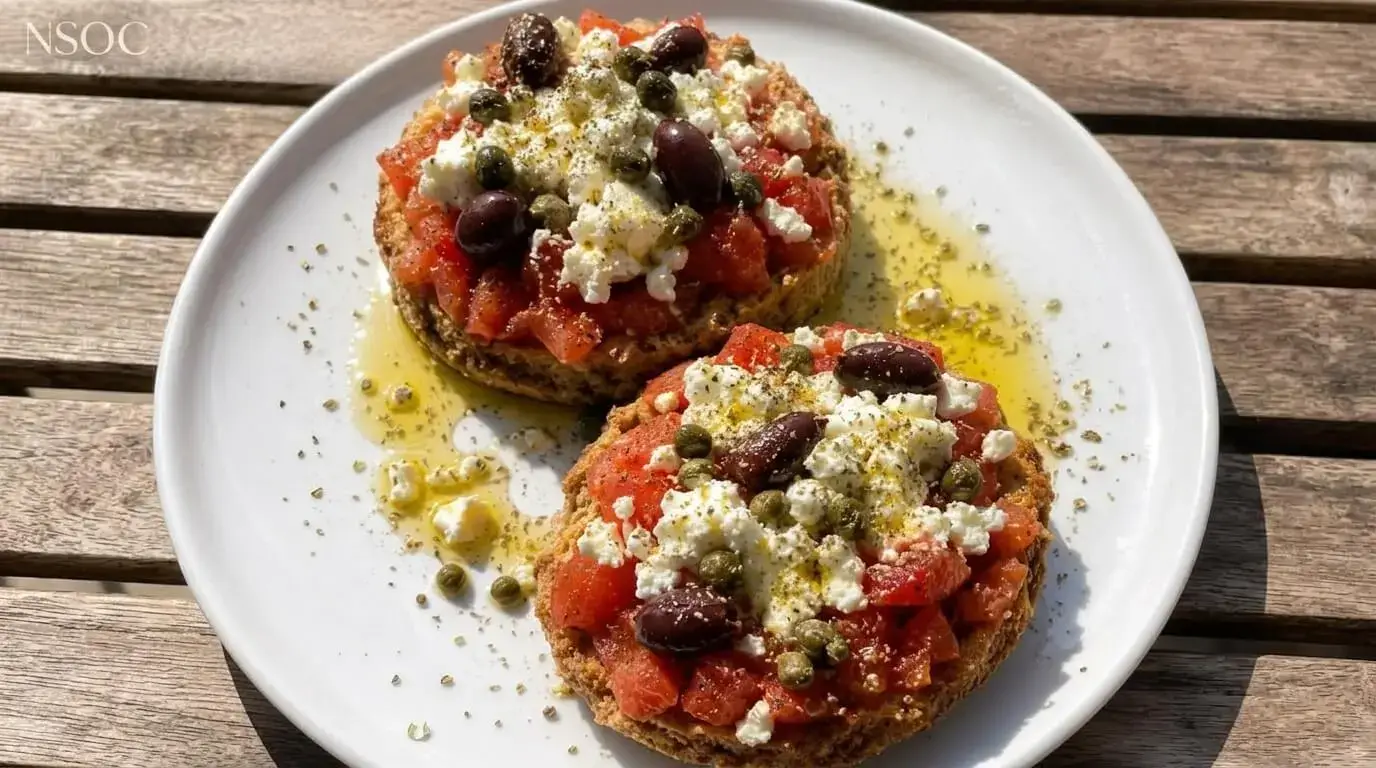
The image showcases two thick, beautifully round barley rusks serving as a sturdy foundation. Piled high on top is a incredibly generous layer of finely chopped, glistening red tomatoes. This is crowned with rough, rustic crumbles of stark white feta cheese.
Exactly 3 to 4 plump, dark Kalamata olives are placed carefully on each toast, interspersed with a scattering of tiny green capers. A glorious amount of gold extra virgin olive oil pools visibly onto the clean white plate below, punctuated by a very heavy oregano finish and a light dust of fresh cracked black pepper across the entire plate.
How to Make Mediterranean Barley Toast
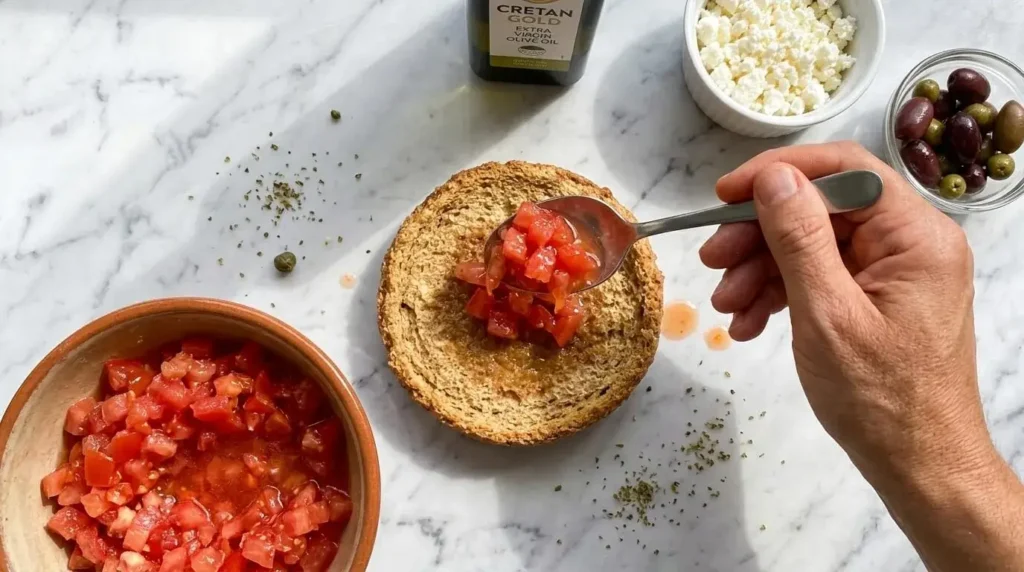
Follow these clear, step-by-step instructions to assemble your toast with the care of a true Mediterranean home cook.
Step 1: Prepare the Barley Rusks
Because authentic Cretan barley rusks are intensely hard, they require a quick rehydration step before assembly. Take each rusk and pass it under a gentle stream of cold running tap water for just one quick second. Do not soak the rusks, or they will turn into mush.
Place the damp rusks directly onto your serving plate. Immediately drizzle 1 tablespoon of extra virgin olive oil over the surface of each one. This quick step is crucial because it begins softening the exterior grain fibers just enough to make it chewable, while keeping the absolute center delightfully crunchy.
Step 2: Prepare the Tomatoes
Take your fresh, ripe tomatoes and finely dice them using a sharp serrated knife. As you chop, ensure that you keep all the natural juices on your cutting board—do not discard them! Transfer the chopped tomatoes along with every single drop of their juices into a small mixing bowl.
Stir in a light pinch of sea salt. Allowing the salted tomatoes to sit for a minute draws out even more liquid. These vibrant tomato juices are essential because they slowly soak into the hard barley crust, softening it naturally while imparting an incredibly deep, fresh flavor.
Step 3: Assemble the Toast
Now, it is time to build up the layers. Spoon the seasoned, diced tomatoes evenly over the tops of your two prepared rusks, making sure to cover the bread completely from edge to edge so every bite is balanced.
Next, add your cheese layer by taking your fresh feta and roughly crumbling a generous amount directly over the tomatoes. Avoid crumbling it too finely; you want rustic, distinct chunks. Scatter the finishing extras across the top by dropping your Kalamata olives and capers evenly over the cheese.
Step 4: Finish and Rest
To complete the dish, take your extra virgin olive oil and pour a generous final drizzle across the top of both toasts, letting it cascade down the sides and pool elegantly onto the plate. Sprinkle a heavy dusting of dried oregano and a fresh crack of aromatic black pepper over everything.
[Rusk Base] -> [Diced Tomatoes + Juices] -> [Crumbled Feta] -> [Olives & Capers] -> [EVOO + Oregano]
Let the assembled plate rest undisturbed for 3 to 5 minutes before serving. This brief resting period allows the hard bread to drink up the marriage of tomato juices and olive oil. The final texture should be delightfully tender around the edges yet still robustly crunchy right in the center.
Why This Recipe Fits the Mediterranean Diet
This traditional Greek dish is an absolute poster child for the Mediterranean diet lifestyle, checking nearly every single box of healthy eating principles without requiring any processed substitutes.
| Dietary Component | Ingredient in This Recipe | Health & Nutritional Benefit |
| Whole Grains | Barley Rusks (Paximadia) | Exceptional source of dietary fiber, complex carbohydrates, and B-vitamins for steady digestion. |
| Healthy Fats | Extra Virgin Olive Oil | Packed with monounsaturated fatty acids and powerful polyphenols that support heart health. |
| Vegetables | Fresh Tomatoes | High in water content for hydration, vitamin C, and lycopene, a potent antioxidant. |
| Moderate Dairy | Feta Cheese / Mizithra | Provides a healthy dose of calcium and protein while keeping portion sizes naturally sensible. |
| Plant-Forward | Capers, Olives, Oregano | Minimally processed ingredients packed with micro-nutrients, healthy fats, and immense natural flavor. |
By relying heavily on whole food components, this meal satisfies hunger naturally while providing the body with clean, unrefined fuel. It perfectly showcases how healthy eating doesn’t require sacrificing deep, savory satisfaction.
Tips for the Best Mediterranean Barley Toast
- Use very ripe tomatoes: Since there is no cooking to concentrate flavors, your tomatoes must be sweet, soft, and bursting with natural juice. Avoid cold, pale supermarket tomatoes.
- Don’t oversoak the rusks: A mere splash of water is all it takes. The tomato juice and olive oil should do 90% of the softening work while it rests.
- Choose good olive oil: Look for an authentic, cold-pressed extra virgin olive oil (ideally from Greece or Crete) to ensure a smooth, fruity, and peppery finish.
- Season at the very end: Adding the dried oregano and black pepper as a final flourish preserves their bright, aromatic volatile oils.
- Serve immediately after resting: Consume the dish within 10 to 15 minutes of assembly to enjoy the perfect interplay of crisp and tender textures.
- Use authentic Greek ingredients: Whenever possible, seek out authentic sheep’s milk feta in brine and imported capers to capture the true flavor profile.
Mediterranean Barley Toast
Ingredients
Method
- Pass each hard barley rusk under cold running tap water for exactly one quick second to slightly dampen the outer layer. Place them onto a flat serving plate.
- Drizzle 1 tablespoon of extra virgin olive oil evenly over each of the dampened rusks.
- Finely dice your ripe tomatoes on a cutting board, carefully retaining all of their juices. Move the tomatoes and juices to a bowl and toss with a light pinch of sea salt.
- Spoon the chopped tomatoes and all collected juices evenly over the tops of the two rusks, ensuring the bread surface is fully covered.
- Roughly crumble the fresh feta cheese with your hands and layer it generously directly on top of the tomatoes.
- Scatter the Kalamata olives and rinsed capers evenly across the crumbled cheese layer.
- Pour the remaining extra virgin olive oil in a slow drizzle over the entire assembled toast, allowing it to pool on the plate.
- Season heavily with the dried oregano and a final crack of fresh black pepper. Let the dish rest for 3 to 5 minutes before slicing and enjoying.
Notes
Variations and Substitutions
Traditional Cretan Version
If you can source it from an international market, substitute the crumbled feta for authentic Cretan mizithra cheese. It provides a softer, slightly less salty profile that pairs beautifully with sweet tomatoes.
Vegan Version
To make this entirely plant-based, simply swap out the dairy feta for your favorite high-quality, almond- or coconut-based plant feta alternative, or replace the cheese entirely with creamy avocado chunks.
Protein-Packed Version
Turn this light dish into a hearty, muscle-building meal by tossing a half-cup of rinsed chickpeas into your tomato mixture, or crown the finished toast with a warm, runny poached egg. You can also browse our Roasted Mediterranean Potatoes with Feta and Tomatoes for more inspiration on combining hearty ingredients with classic Mediterranean toppings.
Bread Alternative
If barley rusks are unavailable, slice up a high-quality loaf of artisanal sourdough bread. Bake the slices in a low oven until they are completely dried out and cracker-crisp to mimic the traditional texture.
Herb Variation
While dried oregano is the undisputed king of Dakos, you can experiment by adding a sprinkle of chopped fresh oregano or torn mint leaves for a bright, summery twist.
What to Serve With Mediterranean Barley Toast
This toast stands incredibly well on its own, but you can easily build an unforgettable spread around it. Pair it alongside a crisp, colorful Greek Chopped Feta Salad recipe to maximize your fresh garden vegetable intake. For chilly days or a multi-course dinner, a hot bowl of comforting, fiber-rich mediterranean white bean soup serves as an incredible companion.
- Fresh seasonal fruit: Slices of sweet watermelon or fresh figs provide a gorgeous sweet contrast to the salty capers and feta.
- Lentil soup: A bowl of warm, earthy brown lentil soup pairs beautifully with the rustic grains of the rusk.
- Marinated white beans: Creamy, garlic-infused cannellini beans add fantastic plant-based protein to your plate.
- Herbal tea or Greek coffee: Enjoy a cup of hot chamomile tea or a strong, frothy Greek espresso for a cozy daytime meal.
- Chilled sparkling juices: When entertaining friends on the patio, serve these toasts alongside a chilled glass of non-alcoholic sparkling white grape juice or a crisp elderflower mocktail.
Frequently Asked Questions
What is Dakos?
Dakos is a traditional Greek salad dish originating from the island of Crete. It features a hardened barley rusk base topped with soaked chopped tomatoes, crumbled feta or mizithra cheese, capers, olives, and herbs.
Are barley rusks healthy?
Yes, traditional barley rusks are highly nutritious. They are double-baked whole grains that are exceptionally rich in dietary fiber, low in fat, and free from artificial preservatives, making them excellent for digestive health.
Can I use regular bread instead of barley rusks?
Regular soft sandwich bread will turn soggy instantly under the tomato juices. If you cannot find barley rusks, you must use a thick slice of rustic sourdough bread and toast or bake it until it is completely hard and dry throughout.
Is Mediterranean Barley Toast eaten for breakfast?
Absolutely! In Greece, it is frequently enjoyed as a savory, energizing breakfast or mid-morning snack. It provides long-lasting fuel thanks to the complex carbohydrates in the barley.
Can I make Dakos ahead of time?
No, this is a dish that should be assembled and eaten relatively quickly. If it sits for more than 20 to 30 minutes, the barley rusk will lose all of its structural integrity and become overly soggy.
What cheese can replace feta?
The most traditional substitute is Cretan mizithra. If that is unavailable, you can use fresh ricotta salata, a mild goat cheese, or a tangy queso fresco to achieve a similar crumbled texture.
Is this recipe vegetarian?
Yes, this recipe is 100% vegetarian. It contains no meat products, relying instead on high-quality dairy and wholesome plant ingredients for its rich flavor profile.
How do you keep Dakos crunchy?
The secret is avoiding over-wetting the rusk during the initial water rinse, and serving the dish within 5 minutes of assembly. This ensures the center remains snappy while the exterior softens.
Final Thoughts
At its core, the beauty of Mediterranean Barley Toast lies in its absolute simplicity. It is an enduring testament to how timeless culinary traditions can turn basic ingredients like whole grains, tomatoes, and olive oil into an irresistible culinary masterpiece. The magnificent contrast of crunchy, juicy, creamy, and briny textures is guaranteed to keep you coming back for more.
We highly encourage you to seek out authentic Greek barley rusks at your local international grocer to experience this dish exactly as it has been enjoyed on the hillsides of Crete for generations.
Have you ever tried traditional Greek Dakos before? What is your favorite way to top your savory toast? We would absolutely love to hear your thoughts! Please leave a comment below, give this recipe a rating, or share your own creative twists with our community. Happy cooking!