
If you are looking to elevate your next dinner gathering with a dish that is as visually stunning as it is delicious, look no further than Roasted Hasselback Beets. Beets are often relegated to simple boiling or basic roasting, but the Hasselback technique transforms this humble root vegetable into a spectacular culinary centerpiece. By creating thin, accordion-like slices along the length of the vegetable, you create an elegant look that instantly elevates any table setting.
This specific mediterranean beet recipe leverages a brilliant combination of deep, rich red beets and vibrant, sweet golden beets. The visual contrast between the crimson and golden hues mimics the warm, sun-kissed colors of the Mediterranean coast. Tossed in a rich marinade of extra virgin olive oil, pungent garlic, and a shower of fresh herbs, these beets absorb flavor deep into every single slice. Best of all, despite its high-end restaurant appearance, this easy beet recipe is incredibly beginner-friendly. With just a few simple kitchen tools and minimal effort, you can create a show-stopping dish that beautifully honors the clean, wholesome traditions of the Mediterranean diet.
What Are Hasselback Beets?
Featured Snippet Target: > Hasselback beets are whole beets that have been sliced into thin, uniform layers along the top while leaving the base intact. This culinary technique allows heat, extra virgin olive oil, and aromatic herbs to penetrate deep inside, resulting in a vegetable side dish with crispy edges and tender centers.
Origin of the Hasselback Technique
The iconic Hasselback cutting style originated in Sweden during the 1950s at the Hasselbacken restaurant in Stockholm. Initially popularized using potatoes, this ingenious method involves slicing a vegetable nearly all the way through at narrow, regular intervals. The base remains completely connected, allowing the vegetable to fan out gracefully as it bakes.
Why It Works So Well With Beets
Applying this Swedish method to an oven roasted beets preparation changes the entire texture and flavor profile of the root vegetable. When you roast a whole beet, the heat cooks it uniformly, resulting in a dense, uniform bite. However, making hasselback beets dramatically increases the available surface area exposed to the high heat of your oven.
This extra surface area allows for maximum caramelization on the outer surfaces while the trapped moisture steam-cooks the interiors. The result is an irresistible textural contrast: beautifully caramelized edges and crispy edges on the outside, paired with incredibly juicy, tender centers. Furthermore, it allows your seasoned olive oil and minced garlic to seep into every single crevice, ensuring that every bite delivers an intense punch of flavor.
Why You’ll Love These Roasted Hasselback Beets
- Elegant Yet Easy: This recipe delivers a high visual reward for very little technical skill. If you can slice a vegetable, you can master this stunning roasted beet side dish.
- Naturally Mediterranean Diet Friendly: Built on a foundation of heart-healthy fats, fresh herbs, and whole foods, this dish perfectly aligns with Mediterranean living.
- Beautiful Color Contrast: Mixing red and golden varieties provides a vibrant, jewel-toned palette that brightens up any plate.
- Simple Ingredients: You don’t need a laundry list of specialty items. Just pure, clean ingredients like garlic, olive oil, and fresh dill.
- Perfect for Holidays and Dinner Parties: Its striking appearance makes it an ideal holiday side dish for Thanksgiving, Christmas, or intimate dinner parties where you want to impress your guests.
Ingredients You’ll Need
To create this flawless healthy beet recipe, sourcing high-quality ingredients is key. Here is what you will need to gather before heading to the kitchen:
- Red Beets: These provide the classic, deeply sweet, and distinctively earthy flavor that beet lovers crave. Look for firm, medium-sized bulbs without soft spots.
- Golden Beets: A wonderful companion to the red variety, golden beets offer a milder, more delicate sweetness and lack the heavy earthiness that some find overpowering in red beets.
- Olive Oil: Always use high-quality extra virgin olive oil. It serves as the rich Mediterranean flavor foundation of our marinade, helping the vegetables roast to perfection.
- Garlic: Finely minced fresh garlic cloves infuse the roasting oil with a pungent, savory depth that perfectly balances the natural sugars of the root vegetables.
- Dill and Parsley: This recipe relies heavily on a fresh herbal finish. Fresh dill brings a bright, feathery, anise-like note, while fresh parsley adds a clean, peppery brightness.
- Salt, Pepper, and Red Pepper Flakes: Standard sea salt and freshly cracked black pepper enhance the natural profile of the beets, while a tiny pinch of red pepper flakes adds a subtle, warming hint of spice without overpowering the dish.
How to Cut Hasselback Beets
To cut Hasselback beets, place a peeled, flat-bottomed beet between two wooden chopsticks or spoons. Using a sharp chef’s knife, cut straight down into the beet at narrow, 1/8-inch intervals. The chopsticks will stop your knife before it slices all the way through, keeping the base intact.
- Trim the Ends: Start by slicing off the top stem area and the bottom root end. This gives the beet a stable, flat base so it won’t roll around on your cutting board.
- Use Chopsticks or Wooden Spoons: Place the flat side of the beet down on your cutting board. Position a wooden chopstick or the handles of two wooden spoons snugly against both long sides of the beet.
- Slice Every ⅛ Inch: Using a sharp chef’s knife, begin making vertical slices across the beet, spaced roughly 1/8-inch apart.
- Avoid Cutting Through the Bottom: As you press your knife downward, the blade will hit the chopsticks before reaching the cutting board. This guard system stops your knife, keeping the bottom quarter-inch of the beet safely whole.
- Fan the Slices Slightly: Once sliced, use your fingers to very gently fan the layers apart, preparing them to absorb the garlic-infused oil.
How to Make Roasted Hasselback Beets
Roasted beets take approximately 55 to 60 minutes to cook thoroughly in a preheated oven at 400°F (200°C). They are first roasted covered with foil for 35 minutes to steam and tenderize, followed by 20 to 25 minutes uncovered to allow the edges to crisp and caramelize.
Step 1: Prepare the Oven
Preheat your oven to 400°F (200°C). Lightly grease a rimmed baking dish or a cast-iron skillet with a splash of extra virgin olive oil to prevent sticking.
Step 2: Peel and Trim the Beets
Cut the leafy tops and root tips off your red and golden beets. Use a sharp vegetable peeler to completely remove the tough outer skins.
Step 3: Create the Hasselback Cuts

Utilizing the chopstick method detailed above, carefully slice each beet at 1/8-inch intervals, ensuring you do not cut completely through the bottom base.
Step 4: Mix the Garlic Olive Oil
In a small mixing bowl, whisk together 3 tablespoons of extra virgin olive oil, 2 cloves of finely minced garlic, 1/2 teaspoon of salt, 1/4 teaspoon of black pepper, and a tiny pinch of red pepper flakes.
Step 5: Coat the Beets Thoroughly
Arrange the prepared beets in your greased baking dish, alternating colors for a beautiful presentation. Use a pastry brush to apply the garlic olive oil generously over each beet. Gently open the slices with your fingers so the oil seeps deep inside the cuts.
Step 6: Roast Covered
Cover the baking dish tightly with a sheet of aluminum foil. Bake in the preheated oven for 35 minutes. This step traps the escaping moisture, allowing the dense root vegetables to steam until they achieve tender centers.
Step 7: Roast Uncovered
Carefully remove the aluminum foil. Spoon some of the pooled garlic oil from the bottom of the dish back over the tops of the beets (basting). Return the uncovered dish to the oven for an additional 20 to 25 minutes, until the surfaces show gorgeous caramelized edges.
Step 8: Finish with Fresh Herbs
Remove the dish from the oven. Shower the hot, bubbling beets immediately with a generous handful of finely chopped fresh dill and fresh parsley before transferring them to a platter.
Expert Tips for Perfect Hasselback Beets
- Choose Similar-Sized Beets: Try to purchase red and golden beets that are uniform in size. This ensures they all finish roasting at the exact same time, preventing smaller ones from burning while larger ones remain hard.
- Don’t Skip the Covered Roast: Beets are incredibly dense. Roasting them uncovered the entire time will dry out the exterior layers before the center is cooked. Covering them first is essential for a succulent result.
- Baste Halfway Through Cooking: When you remove the foil, take a moment to spoon the flavored oil from the bottom of the pan back over the slices. This keeps them moist and enhances crispiness.
- Use Fresh Herbs at the End: Always apply your fresh herbs after the beets come out of the oven. Baking delicate herbs like dill and parsley at high temperatures will scorch them and ruin their bright flavor.
- Allow Time for Caramelization: Let those edges turn deep crimson and dark gold. The natural sugars in the beets need that direct heat to caramelize, giving you that rich, complex sweetness.
Flavor Variations
If you love this baked beets recipe, you can customize it using these delicious Mediterranean variations:
- Lemon and Dill Hasselback Beets: Squeeze fresh lemon juice over the beets right as they exit the oven to add a bright, citrusy pop that cuts through the earthy sweetness.
- Garlic Herb Beets: Expand your herb profile by mixing finely chopped rosemary or thyme into the olive oil mixture before roasting.
- Mediterranean Beet and Feta Version: For an incredibly savory twist, crumble high-quality Greek feta cheese over the roasted beets during the last 5 minutes of baking so it gets warm and slightly soft. If you enjoy this flavor profile, you will also love our rich Mediterranean Beet, Sweet Potato, and Feta Gratin.
- Balsamic Glazed Beets: Drizzle a thick, aged balsamic glaze over the finished dish just before serving for an extra layer of tangy sweetness.
- Za’atar Roasted Beets: Toss the beets with a tablespoon of aromatic za’atar seasoning (a blend of wild thyme, toasted sesame seeds, and sumac) for an authentic Middle Eastern flair.
What to Serve With Roasted Hasselback Beets
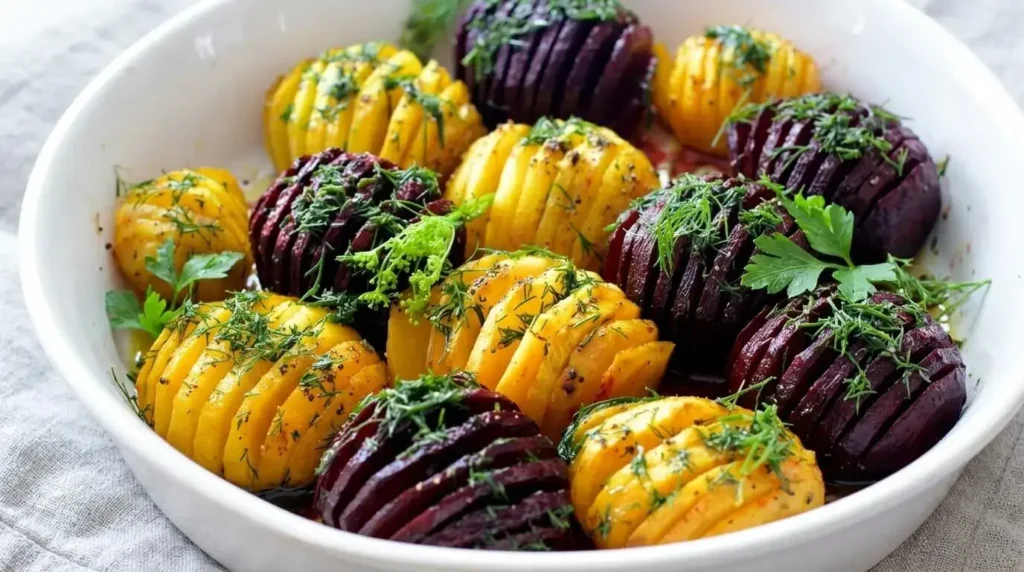
This versatile vegetarian side dish pairs beautifully with an array of Mediterranean mains and accompaniments:
- Grilled Mediterranean Chicken: The smoky flavor of grilled poultry perfectly balances the sweet sweetness of the roasted roots.
- Baked Salmon: Beets and salmon are a classic culinary match. The rich, healthy fats in fish complement the earthy tones of the beets. We highly recommend pairing this with our Mediterranean Baked Salmon with Spinach and Mozzarella for a spectacular dinner.
- Lamb Kebabs: The robust flavor of roasted lamb cuts beautifully through the sweet, caramelized notes of garlic-roasted root vegetables.
- Quinoa Pilaf: Keep your meal completely plant-based and naturally gluten free by serving these beets alongside a fluffy, herb-flecked grain bowl.
- Mediterranean Chickpea Salad: For a refreshing contrast of textures, serve your hot beets alongside a crisp, cold salad. Our classic Greek Chickpea Salad Recipe provides excellent protein and crunch to balance the meal.
- Greek Yogurt Sauce: A cold, creamy dollop of garlicky tzatziki or plain Greek yogurt swirled with lemon juice makes a phenomenal dipping base for these warm beets.
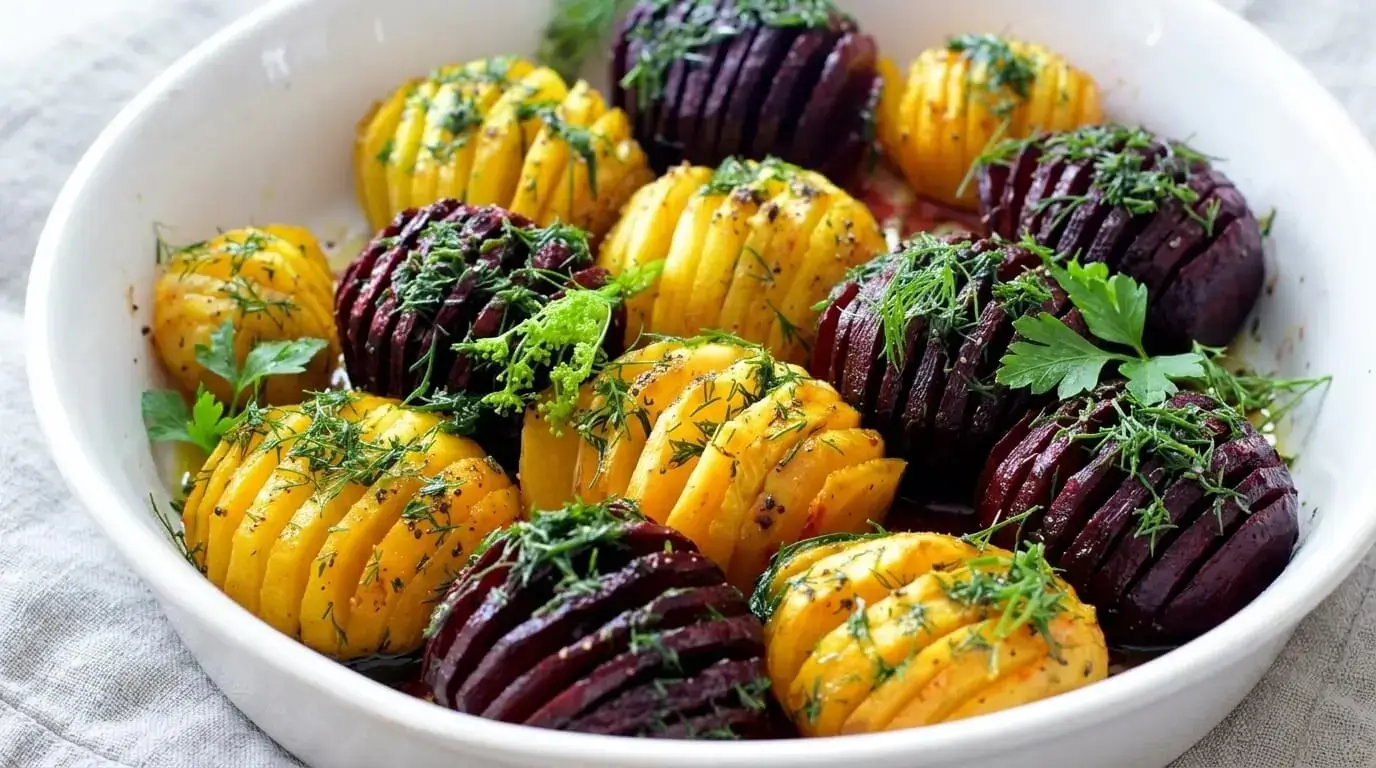
Roasted Hasselback Beets Recipe
Ingredients
Method
- Prep Oven & Beets: Preheat your oven to 400°F (200°C) and lightly grease a rimmed baking dish or skillet with a small splash of olive oil. Trim the top stem portions and bottom roots off the beets so they can sit completely flat on a surface. Peel the skins completely off using a vegetable peeler.
- Hasselback Slices: Place a prepared beet flat-side down on a cutting board between two wooden chopsticks or wooden spoon handles. Slice straight down into the beet at narrow, ⅛-inch intervals; the chopsticks will naturally halt your knife blade, keeping the bottom base beautifully intact. Repeat for all beets.
- Seasoning: In a small mixing bowl, whisk together the extra virgin olive oil, finely minced garlic, salt, black pepper, and optional pinch of red pepper flakes.
- Coat: Arrange your sliced red and golden beets in the prepared baking dish, alternating colors for contrast. Use a pastry brush to coat them generously with the garlic oil mixture, gently fanning the layers apart so the seasoned oil seeps deep into the gaps.
- Bake Covered: Cover the entire baking dish tightly with aluminum foil to lock in steam. Bake for 35 minutes until the insides begin to soften.
- Crisp Edges: Carefully remove the aluminum foil layer. Baste the tops of the beets with the warm oil gathered at the bottom of the dish. Return uncovered to the oven for another 20–25 minutes until the centers are completely fork-tender and the edges display slight crisping and caramelization.
- Finish: Remove from the oven and immediately shower the piping hot beets with the chopped fresh dill and parsley before serving warm.
Notes
- Beet Stains: Red beets easily stain hands and cutting boards. You can wear food-safe kitchen gloves while peeling and slicing to avoid pink fingers, and wash your cutting board immediately after preparation.
- Variations: Feel free to sprinkle some crumbled feta over the dish during the final 5 minutes of roasting for an authentic Greek touch.
Storage and Reheating
Featured Snippet Target:
Yes, you should always peel beets before roasting them for a Hasselback preparation. Peeling removes the tough, fibrous, and excessively earthy outer skin, allowing the marinade to penetrate the flesh easily and ensuring a smooth, pleasant texture in every bite.
Refrigerator Storage
Leftover roasted beets can be stored in an airtight container in the refrigerator for up to 4 to 5 days. Keep them stored separate from light-colored foods, as the red beet juice will bleed.
Make Ahead Instructions
Featured Snippet Target:
Roasted beets can absolutely be made ahead of time. You can fully roast them a day in advance, store them in the refrigerator, and reheat them right before serving. Alternatively, you can prep and slice the raw beets ahead of time to save cooking day preparation.
Reheating in the Oven
To preserve those wonderfully crispy edges, reheat your leftovers in a 350°F (175°C) oven for about 10 to 15 minutes, or until warmed through. Microwave heating is faster but will soften the exterior texture.
Can You Freeze Them?
While you can technically freeze roasted beets for up to 3 months, their texture will become somewhat softer upon thawing. For the best Hasselback presentation, we recommend enjoying them fresh or refrigerated.
Health Benefits of Beets
Integrating this colorful vegetables dish into your regular rotation offers incredible wellness advantages:
- Rich in Antioxidants: Red beets owe their deep color to betalains, powerful antioxidants known to combat oxidative stress and soothe inflammation within the body.
- Naturally High in Fiber: Supporting optimal digestion, the high fiber content in root crops helps maintain a healthy gut microbiome and promotes feelings of fullness.
- Supports Heart Health: Beets are packed with naturally occurring dietary nitrates, which the body converts into nitric oxide. This compound helps relax and dilate blood vessels, supporting healthy blood pressure.
- Excellent Source of Folate: This crucial B-vitamin plays a monumental role in cellular repair, DNA synthesis, and supporting a healthy metabolism.
- Mediterranean Diet Benefits: By combining nutrient-dense vegetables with extra virgin olive oil, you unlock fat-soluble vitamins while nourishing your cardiovascular system with clean, plant-powered fuel.
FAQ Section
What are Hasselback beets?
Hasselback beets are whole beets that have been sliced into thin, uniform accordion-like slits while leaving the bottom base intact. This increases the surface area for roasting, yielding crispy edges and beautifully tender centers.
Do you peel beets before roasting?
Yes, for this specific presentation, it is highly recommended to completely peel the beets first. Removing the skin ensures that the seasoned olive oil absorbs fully into the slices and provides a better mouthfeel.
How long does it take to roast beets?
When roasting at 400°F (200°C), it takes roughly 55 to 60 minutes total—35 minutes covered tightly with foil to steam, and 20 to 25 minutes uncovered to caramelize the edges.
Can roasted beets be made ahead of time?
Yes. You can slice and prepare them a day prior, or completely roast them ahead of time and gently reheat them in the oven just before your guests arrive.
Why are my roasted beets still hard?
If your beets are still tough, they likely didn’t steam long enough under the foil, or your beets were exceptionally large. You can return them to the oven, cover them with foil again, and bake for an extra 10 minutes.
What herbs pair best with roasted beets?
Fresh feathery dill and flat-leaf continental parsley are the premier choices for Mediterranean style beets, though fresh mint, thyme, and tarragon also pair beautifully.
Are roasted beets healthy?
Absolutely! They are low in calories, virtually fat-free, high in fiber, packed with essential vitamins like folate, and loaded with heart-healthy plant nitrates.
Can I use only red or only golden beets?
Yes, you can absolutely use just one variety. However, combining both red and golden varieties provides a stunning visual contrast and a lovely balance of deep earthy and mild sweet flavors.
Nutritional Information
Serving Size: 1/4 of recipe
| Nutrient | Amount Per Serving |
| Calories | 135 kcal |
| Total Fat | 10.5g |
| Sat. Fat | 1.5g |
| Sodium | 360mg |
| Total Carbs | 10g |
| Dietary Fiber | 2.8g |
| Sugars | 7g |
| Protein | 1.8g |