
If you are looking to bring the vibrant, sun-drenched flavors of the Mediterranean straight to your kitchen, this Kalamata Olive Tapenade is the perfect place to start. This classic, bold dish captures the quintessential essence of Mediterranean cuisine with its robust, savory, and briny profile. It is an incredibly popular staple across coastal Europe because it combines rich, complex notes with unparalleled simplicity. The best part? This elegant appetizer comes together in just a few minutes, making it an absolute lifesaver for effortless entertaining, quick weeknight spreads, or upgrading your everyday snacks. Whether you are assembling an impressive mezze platter, smearing it onto artisan sandwiches, or looking for a vibrant dip to delight your guests, this recipe delivers maximum culinary impact with minimal effort. Furthermore, it is naturally aligned with a healthy Mediterranean diet, focusing entirely on wholesome, plant-based ingredients and heart-healthy fats.
What Is Kalamata Olive Tapenade?
To truly appreciate this dish, it helps to understand what a tapenade is and where it comes from. Traditionally, a tapenade is a thick, savory condiment or spread made from finely chopped or crushed olives, capers, and olive oil. Originating in the southern French region of Provence, the name actually derives from the Provençal word for capers, tapenas. While classic French iterations often rely heavily on black olives and anchovies, Mediterranean adaptations across the Greek islands and coastal regions have evolved to celebrate the distinct characteristics of regional produce.
There is a common misconception regarding the difference between a standard olive spread recipe and a traditional tapenade. A generic olive spread can refer to any pureed mixture, often padded out with heavy cream bases, mayonnaise, or filler ingredients. A true Mediterranean tapenade, however, keeps the focus entirely on the briny olive itself, using capers and citrus to elevate the flavor and olive oil to emulsify the mixture into a thick, rustic paste.
By utilizing Kalamata olives as the star ingredient, this specific Greek olive tapenade achieves a significantly richer, fruitier, and more complex flavor profile than those made with standard black olives. Kalamatas are preserved in red wine vinegar and olive oil, giving them a distinctively tangy, smoky, and wine-like depth that shines beautifully when pulsed with fresh aromatics.
Why You’ll Love This Kalamata Olive Tapenade
There are countless reasons why this easy kalamata olive tapenade deserves a permanent spot in your recipe rotation. Here is why it is bound to become your new favorite go-to condiment:
- Ready in Minutes: No tedious chopping or multi-step cooking techniques required; your food processor does all the heavy lifting in less than five minutes.
- No Cooking Required: Perfect for warm days or busy afternoons when you want a gourmet-tier snack without turning on the stove or oven.
- Mediterranean Diet-Friendly: Packed with wholesome, nutrient-dense ingredients that perfectly align with a heart-healthy, lifestyle-focused eating plan.
- Naturally Dairy-Free and Vegan: This version relies entirely on plant-based ingredients, making it an inclusive choice for guests with diverse dietary restrictions.
- Rich Savory Flavor: The ultimate umami bomb, combining salty, briny, tangy, and herbaceous notes in every single bite.
- Excellent Make-Ahead Appetizer: The flavors actually deepen and improve as it sits in the refrigerator, making it perfect for stress-free meal prep or party planning.
- Versatile Serving Options: It transitions seamlessly from a simple cracker dip to a sophisticated sauce for proteins, a sandwich spread, or a salad booster.
Ingredients You’ll Need
Before diving into the quick preparation process, let us take a closer look at the simple, high-quality ingredients required to bring this homemade olive tapenade to life. Because this recipe requires zero cooking, the quality of each component directly impacts the final flavor, so opt for the freshest ingredients available.
Kalamata Olives
The undisputed star of the show. You will need one and a half cups of pitted Kalamata olives. Look for olives that are plump, glossy, and preserved in high-quality brine or olive oil. Their signature almond shape, deep purple hue, and rich, fruity, smoky flavor provide the essential base that sets this tapenade apart from any standard version.
Capers
These tiny, unripened flower buds bring an unmistakable briny complexity and sharp tang to the dish. Ensure they are thoroughly rinsed and drained before adding them to the mix. Capers provide a bright, salty punch that cuts through the rich oiliness of the olives, honoring the traditional roots of the classic French Provençal tapenade.
Garlic
Two peeled, minced garlic cloves add an incredible aromatic depth and a subtle spicy bite. Fresh garlic acts as a flavor catalyst, unifying the briny notes of the olives and capers while adding a pungent kick that grounds the overall flavor profile.
Extra Virgin Olive Oil
The golden thread that binds the tapenade together. Three tablespoons of premium extra virgin olive oil add a luxurious texture, silky mouthfeel, and essential Mediterranean authenticity. It lightly coats the chopped ingredients, transforming a dry mince into a coherent, spreadable masterpiece.
Lemon Juice
One tablespoon of freshly squeezed lemon juice introduces a vital layer of brightness and balance. The clean, crisp acidity of fresh citrus cuts through the heavy, savory fats of the olives and oil, waking up the entire palate and keeping the tapenade tasting incredibly fresh.
Fresh Parsley
A quarter cup of finely chopped fresh flat-leaf parsley infuses the dip with an elements of earthy freshness and vibrant green color. Adding a burst of color to contrast the deep purple olives, parsley ensures the dish tastes lively and clean.
Black Pepper
A final seasoning of freshly cracked black pepper adds a mild, warming heat. It rounds out the flavors without overpowering the delicate balance of herbs and brine.
How to Make Kalamata Olive Tapenade
Creating this Mediterranean olive tapenade is incredibly straightforward. By following these simple steps, you will achieve the perfect balance of texture and taste every time.
Step 1: Pulse the Olives, Capers, and Garlic
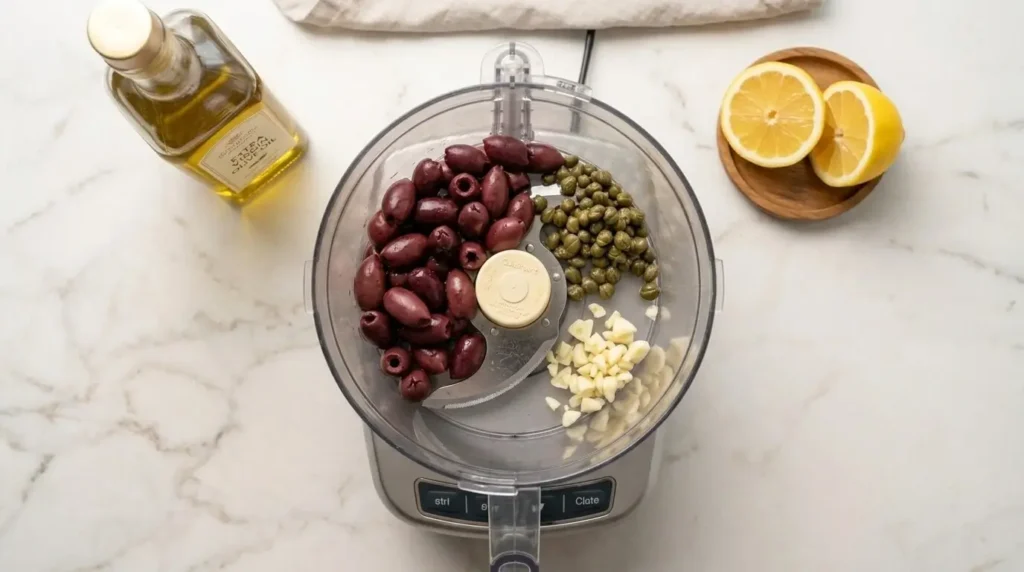
Begin by placing your pitted Kalamata olives, rinsed capers, and minced garlic cloves into the bowl of a food processor fitted with a standard S-blade. Secure the lid and pulse the mixture 5 to 7 times. The goal here is to break down the large olives into a uniform, coarsely chopped consistency. Keep a close eye on the contents to ensure the ingredients do not turn to mush at this stage.
Step 2: Add Olive Oil and Lemon Juice
Drizzle the extra virgin olive oil and fresh lemon juice uniformly over the pulsed olive mixture. Secure the lid once more and pulse an additional 2 to 3 times. This brief processing allows the liquid to lightly emulsify with the solid ingredients, transforming the mixture into a cohesive, chunky paste that clings together beautifully.
Step 3: Keep the Texture Rustic
It is crucial to emphasize avoiding overprocessing during these initial steps. A spectacular tapenade should never look like a smooth, homogenized commercial puree or baby food. Instead, it should maintain a beautifully rustic, coarse, and artisanal texture where individual flecks of purple olive, green capers, and translucent garlic are still visibly identifiable.
Step 4: Stir in Parsley and Pepper
Remove the blade from the food processor bowl and transfer the mixture to a mixing bowl. By hand, gently fold in the finely chopped fresh flat-leaf parsley and a generous pinch of freshly cracked black pepper using a spoon or spatula. Incorporating these ingredients by hand prevents the delicate parsley from bruising or liquefying, ensuring its bright green hue and clean flavor remain intact.
Step 5: Garnish and Serve
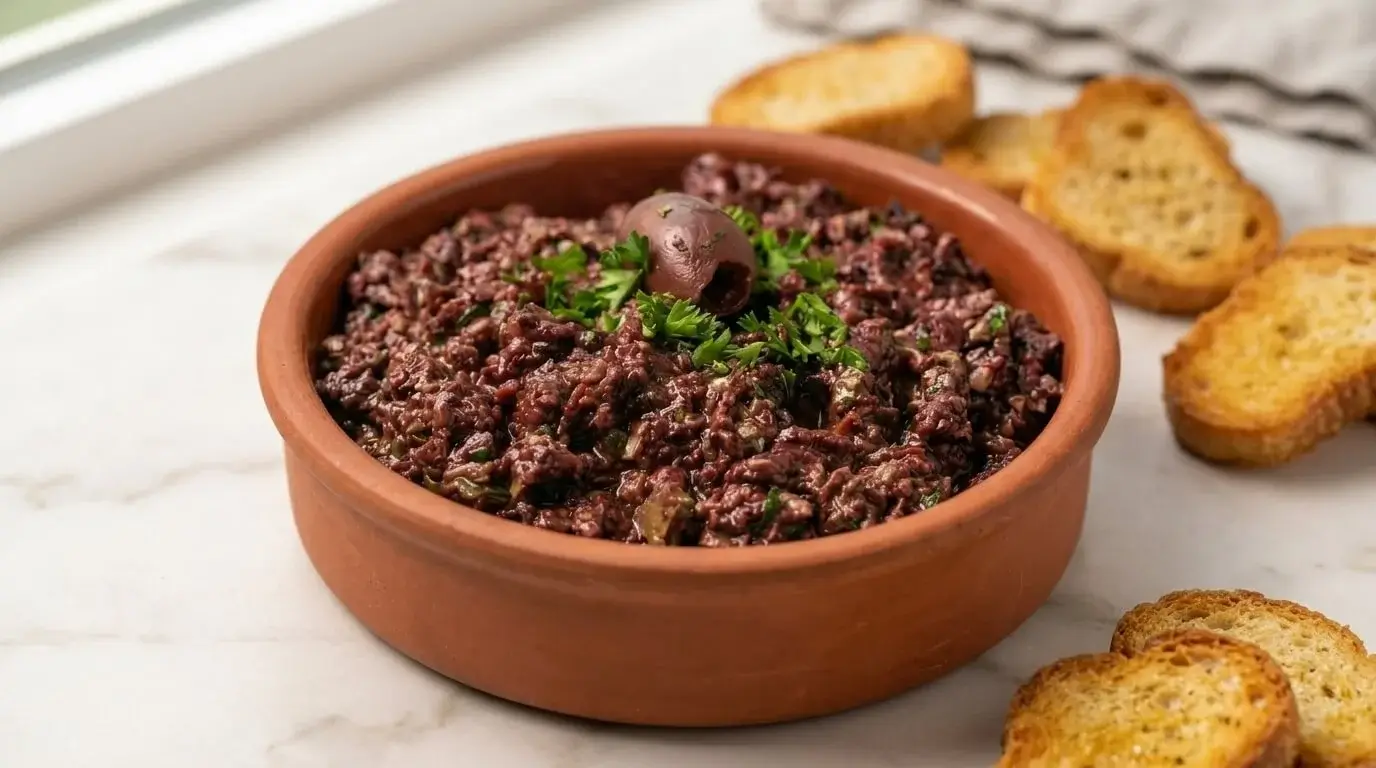
Transfer your completed tapenade into a shallow rustic clay bowl or ceramic serving dish. To mirror the gorgeous presentation seen in traditional Mediterranean tavernas, garnish the center with a single, glossy whole Kalamata olive and a delicate sprinkle of leftover chopped parsley. The finished product will showcase a stunning, deep purple tapenade with a chunky texture, ready to be enjoyed immediately or chilled for later.
Tips for the Best Kalamata Olive Tapenade
To elevate your olive tapenade recipe from good to absolutely unforgettable, keep these professional kitchen tips in mind:
- Use High-Quality Kalamata Olives: Avoid canned, pre-sliced olives which often lack character and taste overly metallic. Purchase whole, jarred, or olive-bar Kalamatas and pit them yourself if necessary for the freshest flavor.
- Avoid Overprocessing: Always use the “pulse” function on your food processor rather than turning it on continuously. Control over the blade is the secret to achieving that coveted rustic texture.
- Taste Before Adding Salt: Capers and Kalamata olives are inherently packed with salt from their curing processes. Never add extra salt to your tapenade without tasting the final mixture first, as it is usually perfectly savory on its own.
- Chill Briefly Before Serving: While you can absolutely eat this immediately, letting the tapenade rest covered in the refrigerator for 30 to 60 minutes allows the garlic, lemon, and olive oils to marry and intensify beautifully.
- Use Fresh Lemon Juice: Never substitute fresh lemon juice with bottled concentrate, which has an artificial, flat acidity that can dull the vibrant herbal notes of the parsley.
- Balance Acidity and Richness: If your tapenade feels a bit too heavy or oily, add an extra splash of lemon juice. If it feels too sharp, mellow it out with a small drizzle of extra virgin olive oil.
Variations and Substitutions
One of the finest aspects of knowing how to make olive tapenade is the ease with which you can modify the base recipe to suit your personal preferences or what you happen to have on hand.
Vegan Version
There is no need to make any alterations here! Unlike traditional French variations that rely on fish, this specific Mediterranean-style recipe is entirely plant-based, dairy-free, and vegan right out of the gate.
Anchovy Tapenade
If you want to lean into the traditional French Provençal style, try adding 1 to 2 oil-packed anchovy fillets to the food processor in Step 1. The anchovies will dissolve completely, adding a deep, savory, coastal umami layer without tasting explicitly “fishy.”
Spicy Olive Tapenade
For those who love a bit of fiery kick, add a half teaspoon of crushed red pepper flakes or a small pinch of cayenne pepper when stirring in the parsley and black pepper. The heat contrasts beautifully with the cooling citrus notes.
Herb Variation
While flat-leaf parsley is standard, you can introduce other fresh Mediterranean herbs to alter the aromatic profile. Try substituting half of the parsley with finely chopped fresh mint, wild oregano, or sweet basil leaves for an ultra-fragrant twist.
Roasted Red Pepper Tapenade
To add a touch of sweetness and smoky complexity, pulse in a quarter cup of drained, roasted red bell peppers alongside the olives. This creates a brilliant crimson variation that is exceptionally delicious.
What to Serve with Kalamata Olive Tapenade
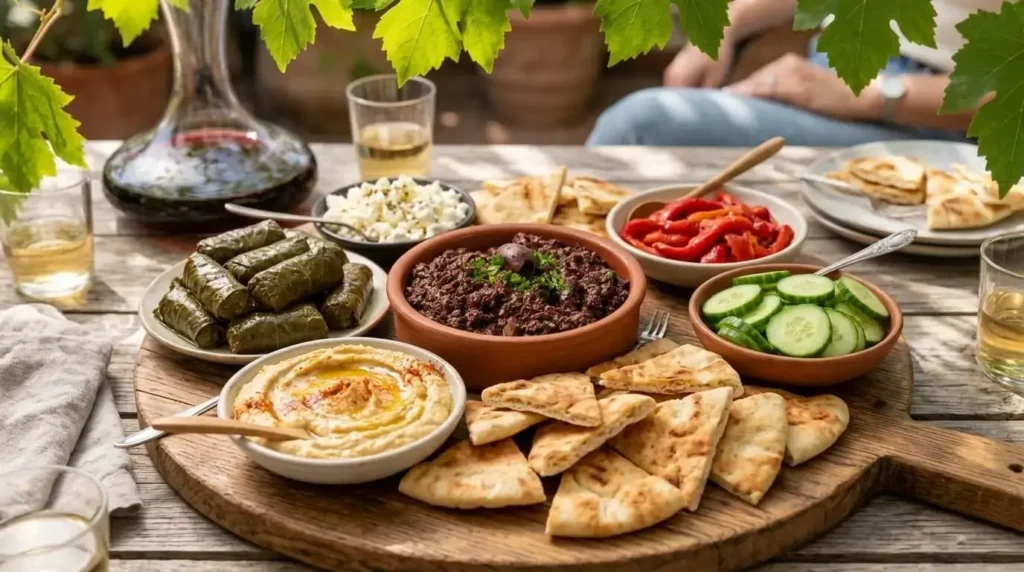
Knowing what to serve with olive tapenade opens up a world of culinary creativity, transforming this simple dip into a versatile component for countless meals.
Bread and Crackers
The most classic way to enjoy this dip is spread over crispy, toasted bread. It pairs magnificently with homemade crostini, warm pita triangles, or toasted baguette slices brushed with olive oil. If you want a comforting, homemade pairing, try serving it alongside a fresh slice of no-knead garlic bread to amplify the rich, aromatic garlic notes. It also pairs wonderfully with simple whole grain crackers for a quick afternoon snack.
Mediterranean Mezze Platter
Create an ultimate entertaining spread by centering your tapenade on a large platter surrounded by complementary elements. Pair it with a creamy, loaded mediterranean hummus bowl, fresh crunchy vegetables (like cucumber slices and bell pepper strips), stuffed grape leaves, marinated artichoke hearts, and roasted peppers.
Sandwiches and Wraps
Upgrade your daily lunch by using this tapenade as a gourmet olive spread recipe. Smear it onto a classic Italian panino, a turkey wrap, or a roasted vegetable sandwich. It acts as an exceptional condiment that keeps sandwiches moist while providing a massive burst of flavor.
Grilled Proteins
Don’t limit this recipe to just an appetizer! It makes an incredible, elegant relish for hot dishes. Spoon a generous dollop of tapenade over grilled chicken breasts, pan-seared white fish, or skewered grilled shrimp right before serving. The warmth of the protein releases the aromatics of the olive oil and garlic beautifully.
Grain Bowls and Salads
Incorporate a scoop of tapenade into your weekly meal prep grain bowls. It serves as a concentrated burst of flavor when tossed with quinoa, farro, cucumbers, feta, and chickpeas. If you love presenting varied textures to your guests, try contrasting this rich, purple spread on a table featuring a creamy Green Olive and Feta Cheese Dip to create a visually stunning and delicious olive tasting experience.
Is Kalamata Olive Tapenade Healthy?
Yes, this healthy Mediterranean dip is an excellent addition to a balanced, nutrient-dense diet. Because it is built entirely on whole, plant-based ingredients, it offers numerous health-promoting benefits.
The primary health advantage comes from the monounsaturated fats—specifically oleic acid—found abundantly in both the Kalamata olives and the extra virgin olive oil. These healthy fats are celebrated for supporting cardiovascular wellness and helping to maintain optimal cholesterol levels. Additionally, Kalamata olives are naturally loaded with powerful antioxidants, such as polyphenols, which help protect cells from oxidative stress and reduce inflammation throughout the body.
However, it is important to practice mindful portion awareness when enjoying tapenade, especially if you are managing your salt intake. Because both olives and capers are preserved in brine, this condiment carries a relatively high sodium content. A little goes a long way in terms of flavor, so you can easily satisfy your cravings and reap the nutritional benefits with just a tablespoon or two per serving.
Easy Kalamata Olive Tapenade
Ingredients
Method
- * Step 1: Place the pitted Kalamata olives, rinsed capers, and minced garlic cloves into the bowl of a food processor.
- * Step 2: Pulse the mixture 5 to 7 times until everything is uniformly and coarsely chopped, taking care not to let it turn into a smooth paste.
- * Step 3: Drizzle the extra virgin olive oil and fresh lemon juice evenly over the olive mixture inside the bowl.
- * Step 4: Pulse another 2 to 3 times just until the liquids emulsify slightly and the mixture forms a beautiful, rustic, chunky paste.
- * Step 5: Transfer the mixture into a serving bowl, then fold in the finely chopped fresh flat-leaf parsley and freshly cracked black pepper by hand using a spoon.
- * Step 6: Garnish the center with a whole Kalamata olive and a sprinkle of fresh parsley, then serve immediately with toasted crostini or store in the refrigerator.
Notes
* Do not add any extra salt until you have tasted the final product, as cured olives and capers already contribute plenty of saltiness.
How to Store Kalamata Olive Tapenade
Because this dip stores beautifully, it is a fantastic option for prepping ahead of time.
Refrigeration
Always store your tapenade in a clean, airtight container—a glass mason jar works exceptionally well for keeping it fresh. To help preserve its bright color and seal in freshness, smooth down the top surface of the tapenade with a spoon and pour a very thin layer of extra virgin olive oil over the top before sealing the lid.
Shelf Life
When kept properly sealed and chilled in the refrigerator, homemade tapenade will remain perfectly fresh, vibrant, and delicious for up to 1 to 2 weeks. Simply stir the protective top layer of olive oil back into the dip before serving it again.
Freezing
Can you freeze tapenade? Yes, absolutely! If you have a large bounty of olives, you can freeze it in an airtight, freezer-safe container for up to 3 months.
To thaw, simply transfer the container to the refrigerator 24 hours before you plan to use it. Once completely thawed, give it a vigorous stir to re-incorporate any separated oils, and let it sit on the counter for 15 minutes to take the chill off before serving.
Common Mistakes to Avoid
To guarantee your tapenade turns out picture-perfect every time, keep an eye out for these frequent kitchen slip-ups:
- Overprocessing into a Paste: Turning your food processor on continuous high speed will whip the ingredients into a smooth, unappealing mud. Keep it strictly to short pulses.
- Using Poor-Quality Olives: Avoid standard, bland black canned olives. The depth of a tapenade relies entirely on the quality of its ingredients, so choose rich, brine-cured Kalamatas.
- Adding Excess Olive Oil Too Fast: Pouring in too much oil can swamp the ingredients, causing the tapenade to become swimmingly greasy. Stick to the recipe measurements.
- Adding Too Much Lemon Juice: While acidity is vital, adding too much citrus can mask the beautiful, earthy, smoky qualities of the olives.
- Skipping Tasting Adjustments: Always taste your final batch with a cracker or piece of bread before serving to check if it requires more black pepper, a touch more lemon, or an extra herb adjustment.
Frequently Asked Questions
What is Kalamata olive tapenade?
Kalamata olive tapenade is a savory, robust Mediterranean condiment made by pulsing pitted Kalamata olives, capers, fresh garlic, extra virgin olive oil, lemon juice, and fresh flat-leaf parsley into a thick, rustic paste. It boasts a complex flavor profile that is simultaneously salty, tangy, smoky, and rich.
Is olive tapenade Greek or French?
Traditional olive tapenade originated in the Provence region of Southern France, where it historically contained black olives, capers, and anchovies. However, this specific version utilizes Greek Kalamata olives and omits the fish, representing a popular Eastern Mediterranean adaptation celebrating classic Greek ingredients.
Can I make olive tapenade without capers?
Yes, you can make it without capers if you dislike them or have an allergy. To replicate that missing punchy, briny acidity, replace the capers with an equal amount of chopped green olives, chopped green peppercorns, or a tiny splash of extra red wine vinegar to keep the flavors balanced.
Can olive tapenade be frozen?
Yes, olive tapenade freezes beautifully. Store it in a tightly sealed, airtight container or freezer bag for up to 3 months. Thaw it thoroughly in the refrigerator overnight, and stir well before serving to ensure the emulsified olive oil blends smoothly back into the solids.
How long does homemade olive tapenade last?
When stored correctly in an airtight glass jar or container in the refrigerator, homemade tapenade will last for 1 to 2 weeks. Pouring a very thin layer of extra virgin olive oil over the surface before sealing helps keep the air out, maximizing its freshness.
What do you eat with olive tapenade?
Tapenade is incredibly versatile. It is traditionally served alongside toasted crostini, baguette slices, or crackers as an appetizer. It also functions beautifully as a spread inside wraps and sandwiches, a star component of a mezze platter, or an elegant savory relish served over grilled chicken, fish, or shrimp.
Is olive tapenade healthy?
Yes, it is highly nutritious when consumed in moderation. It is filled with heart-healthy monounsaturated fats from olive oil and olives, along with cell-protecting antioxidants. Because it is naturally high in sodium due to the cured olives and capers, modest portion sizes are recommended.
Can I make it ahead of time?
Absolutely! Making tapenade ahead of time is highly recommended. Letting it rest in an airtight container in the refrigerator for a few hours or overnight gives the raw garlic, acidic lemon juice, and briny olives the perfect opportunity to combine, resulting in a more harmonious flavor profile.
Final Thoughts
This Kalamata Olive Tapenade effortlessly showcases how simple, high-quality ingredients can create a truly spectacular culinary experience. With its rich, smoky olive flavor and vibrant herbaceous notes, it packs an incredible punch while remaining beautifully accessible for cooks of any skill level. Its unmatched ease of preparation means you can whip up a gourmet-tier dip in a matter of minutes, making it a reliable weapon for last-minute entertaining, elegant holiday appetizers, or upgrading your everyday snacking routine. Fully compatible with a healthy Mediterranean lifestyle, it brings a festive, communal energy to any dinner table or mezze board. Give this foolproof recipe a try tonight, and enjoy a genuine taste of coastal Europe right from the comfort of your home!