When it comes to holiday entertaining or elevating your weekly dinner rotation, finding a side dish that balances visual elegance with effortless preparation can be a challenge. Enter this stunning Roasted Acorn Squash with Creamy Goat Cheese and Cranberry Drizzle. This Mediterranean-inspired side dish brings a vibrant burst of color, texture, and complex flavor to any table setting. Whether you are curating the perfect Thanksgiving table, hosting an intimate autumn gathering, or simply craving a nourishing weeknight meal, this easy roasted acorn squash recipe delivers a restaurant-quality experience with minimal kitchen stress.
The secret to this dish lies in its exquisite sweet and savory flavor combination. As the squash roasts in the oven, its natural sugars concentrate, creating a beautiful, caramelized squash base with deep golden edges. This rich sweetness is perfectly countered by a filling of tangy goat cheese that softens gently inside the warm cavity. To top it off, a ruby-red, tart cranberry topping and a rich balsamic reduction add layers of complexity that make every bite unforgettable. It is an elegant yet easy side dish that proves you do not need hours of hands-on prep work to create a culinary masterpiece.
Why You’ll Love This Recipe
Perfect Balance of Sweet and Savory
This recipe masterfully plays with contrasting flavors to delight your palate. The foundation consists of tender, maple roasted squash seasoned with warm aromatics. This inherent sweetness is cut by a core of creamy goat cheese, which provides a velvety, rich, and distinctly savory mouthfeel. The entire dish is brought to life by a bright cranberry topping and a sweet-tart balsamic glaze, ensuring that no single flavor note overpowers the others.
Naturally Mediterranean Diet Friendly
If you follow a Mediterranean lifestyle, this dish fits seamlessly into your meal planning. It is an explicitly vegetable-forward recipe that is naturally rich in dietary fiber. By utilizing heart-healthy extra virgin olive oil as the primary cooking fat and keeping the cheese portion moderate, it aligns beautifully with clean, wholesome eating patterns.
Beautiful for Holidays and Gatherings
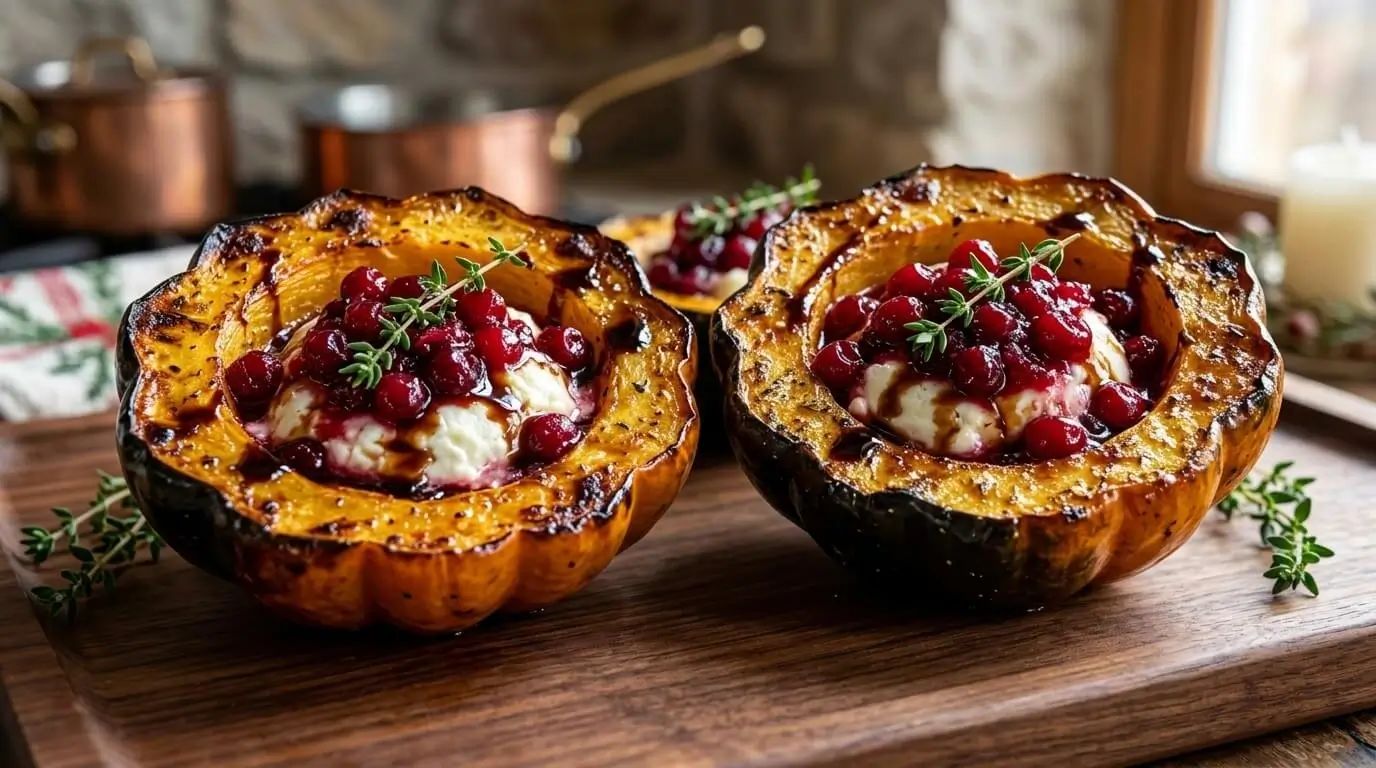
An aesthetic showstopper, this dish looks like it belongs on the cover of a culinary magazine. The deep greens and oranges of the roasted squash skin contrast spectacularly with the bright white goat cheese and the glistening, ruby-red tones of the whole cranberries. It makes a stunning addition to your menu for Thanksgiving, Christmas, or upscale fall dinner parties.
Surprisingly Easy to Make
Despite its sophisticated presentation, this dish requires only simple ingredients and very minimal active prep work. Once you cut and season the squash, the oven does the heavy lifting. The mostly hands-off roasting process frees up your time to focus on your main courses or enjoy the company of your guests.
What Is Acorn Squash?
Acorn squash is a highly popular winter squash variety easily recognized by its distinct acorn-like shape, longitudinal ridges, and dark green skin patchworked with orange and yellow highlights. Belonging to the same cucurbit family as pumpkins and butternut squash, it offers a distinct culinary experience characterized by a mildly sweet flavor and a deeply comforting, nutty taste.
   Acorn Squash Profile:
   ├── Flavor: Mildly sweet, nutty, earth-toned
   ├── Texture: Tender, buttery, and smooth when roasted
   ├── Skin: Fully edible and tenderized during cooking
   ├── Peak Season: Early autumn through late winter
Unlike some other winter squash varieties that require tedious peeling, one of the best aspects of featuring an acorn squash in a roasted acorn squash recipe is that its skin becomes wonderfully tender and entirely edible when roasted at high heat. Incorporating seasonal varieties into your culinary repertoire is an excellent way to diversify your nutrient intake with wholesome winter squash recipes.
Ingredient Breakdown
To achieve the exceptional flavors and textures captured in this dish, each ingredient plays a vital role. Here is what you will need to gather:
- Acorn Squash: Look for medium-sized squash (around 1 to 1.5 pounds each) that feel heavy for their size. Select ones with a smooth, dull skin free of soft spots. A mix of green and orange on the skin is ideal.
- Extra Virgin Olive Oil: A foundational Mediterranean Diet component. It conducts heat evenly during roasting, ensures a rich texture, and provides a subtle, fruity undertone.
- Maple Syrup: Pure maple syrup interacts beautifully with the natural starches of the squash, accelerating the caramelization process and lending a refined, woodsy sweetness.
- Goat Cheese: Soft goat cheese (chèvre) provides a creamy texture and a bright, tangy flavor profile. It melts slightly when spooned into the warm, freshly roasted squash cavity, creating a luscious center.
- Cranberry Sauce: For the best visual authenticity and texture, choose or make a whole berry cranberry compote rather than a smooth, jellied sauce. The intact, glistening cranberries offer an excellent pop of tartness.
- Balsamic Glaze: A thick, aged balsamic reduction creates a striking visual contrast against the white goat cheese and deepens the overall flavor profile with its concentrated acidity.
- Fresh Thyme: This essential aromatic garnish ties the entire dish together. Its earthy, slightly minty notes cut through the richness of the cheese and squash.
How to Make Roasted Acorn Squash with Creamy Goat Cheese and Cranberry Drizzle
Step 1: Prepare the Squash
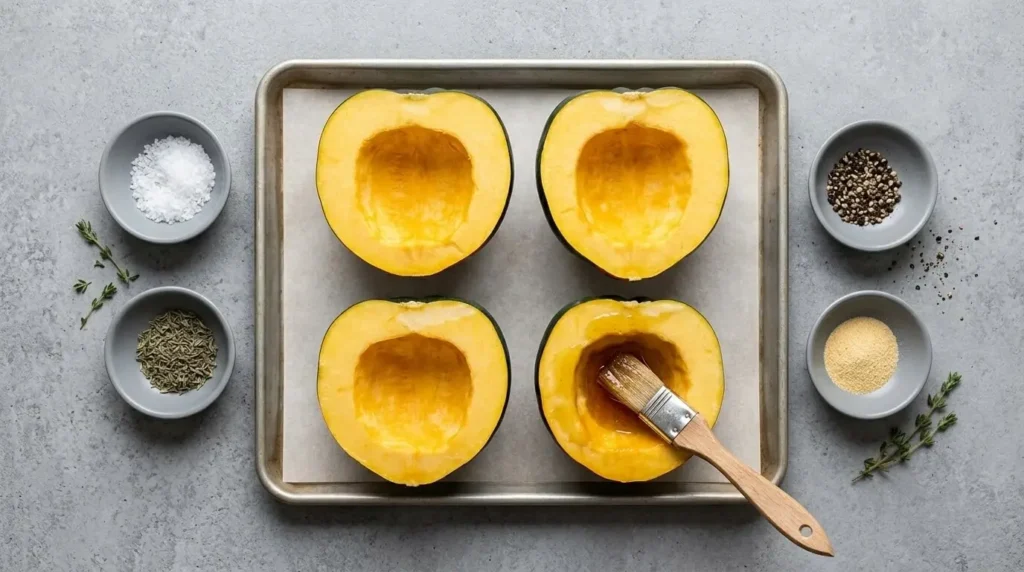
Preheat your oven to 400°F (205°C). Wash the exterior of your acorn squashes thoroughly since the skin will remain on the dish. Using a sharp chef’s knife, cut the squashes horizontally across the center rather than lengthwise; this creates a beautiful, flower-like scalloped edge. Use a spoon to scoop out the seeds and stringy pulp from the interior cavities.
Pro Tip: Do not throw away the squash seeds! You can save the seeds, rinse them clean, toss them with a touch of olive oil and sea salt, and roast them alongside the squash for a crunchy, high-fiber snack.
To ensure your squash halves sit perfectly stable on your serving platter or baking sheet, trim a very tiny, flat sliver off the bottom pointed end of each piece.
Step 2: Season the Squash
Line a large baking sheet with parchment paper. Arrange the squash halves cut-side up. Generously brush the exposed flesh and the inner cavities with extra virgin olive oil, followed by a light brushing of pure maple syrup. Evenly sprinkle garlic powder, dried thyme, sea salt, and freshly cracked black pepper across the surface.
Step 3: Roast Until Caramelized
Place the baking sheet into the preheated oven and roast at 400°F (205°C) for 35 to 40 minutes. You will know the squash is perfectly cooked when you observe deep golden edges, a soft and yieldingly tender center when pierced with a fork, and a beautifully caramelized surface featuring slight charring around the ridged margins.
Step 4: Add Creamy Goat Cheese
As soon as the squash comes out of the oven, transfer the hot halves to your serving board. Immediately spoon a generous portion of soft, crumbly goat cheese into the center of each warm cavity. The residual heat from the roasted squash will allow the cheese to soften naturally into a velvety, spreadable consistency without completely liquefying.
Step 5: Spoon Over Cranberry Drizzle
Carefully spoon a generous layer of the whole-berry cranberry compote directly over the center of the softening goat cheese. Allow some of the ruby-red cranberries and their vibrant juices to pool casually toward the edges of the squash cavity, creating an inviting, rustic look.
Step 6: Finish and Serve
To complete the dish, artfully drizzle a high-quality balsamic glaze across the top, allowing it to pool slightly around the cheese and cranberries. Garnish generously with fresh thyme sprigs and an extra pinch of coarse black pepper. Serve warm.
Expert Tips for Perfect Roasted Acorn Squash
- Don’t Under-Roast: Squash needs high heat and ample time to develop its buttery texture. Always perform a tenderness test with a fork; the flesh should feel incredibly soft all the way to the skin.
- Let the Goat Cheese Soften Naturally: Avoid putting the goat cheese into the squash while it is still inside the oven. Letting it soften naturally from the residual heat preserves its distinct tangy profile and prevents it from turning greasy.
- Use Whole Cranberry Sauce: Opt for a chunkier, whole-berry cranberry preparation. This matches the authentic visual appeal of artisanal cooking and provides a superior texture.
- Serve Warm: This dish is best enjoyed warm from the oven, where the contrast between the hot caramelized squash and the cool, melting cheese is most pronounced.
Mediterranean Diet Benefits
Integrating this mediterranean acorn squash recipe into your regular dietary routine offers numerous health advantages:
| Nutrient Component | Health Benefit |
| Rich in Fiber | Sourced directly from the dense flesh of the acorn squash and whole cranberries, supporting healthy digestion and prolonged satiety. |
| Packed with Antioxidants | Cranberries, winter squash, and fresh herbs contain high levels of beta-carotene, Vitamin C, and polyphenols that fight oxidative stress. |
| Healthy Fats | The utilization of extra virgin olive oil supplies monounsaturated fatty acids, which support cardiovascular health. |
| Balanced and Satisfying | Serves as a nutrient-dense, vegetable-focused side dish that delivers complex carbohydrates and essential micronutrients without heavy processed additives. |
Nutritional Information
Values listed are per individual serving (half an acorn squash with toppings).
- Calories: 245 kcal
- Total Fat: 11g
- Saturated Fat: 4.5g
- Cholesterol: 15mg
- Sodium: 280mg
- Total Carbohydrates: 34g
- Dietary Fiber: 5g
- Sugars: 16g
- Protein: 6g
- Vitamin A: 25% DV
- Vitamin C: 30% DV
- Calcium: 10% DV
Variations
If you want to customize this healthy roasted acorn squash dish based on your pantry availability or specific dietary needs, consider these excellent variations:
- Walnut and Goat Cheese Acorn Squash: Introduce a classic Mediterranean-inspired addition by sprinkling toasted chopped walnuts or pecans over the cranberry drizzle for an earthy, satisfying crunch.
- Pomegranate Version: If you prefer an ultra-fresh, popping texture, replace the cooked cranberries entirely with a generous handful of fresh pomegranate arils and a hint of fresh mint.
- Honey Balsamic Version: If you run out of maple syrup, high-quality wild thyme honey works beautifully as an alternative sweetener to assist with the oven caramelization.
- Vegan Version: To transform this into a fully plant-based, vegetarian squash side dish, simply swap out the dairy chèvre for your favorite artisanal, almond-based or cashew-based vegan goat cheese alternative.
What to Serve with Roasted Acorn Squash

This versatile holiday squash side dish coordinates beautifully with an array of menu profiles:
Mediterranean Main Dishes
Pair this caramelized squash with savory proteins to build a cohesive, regional meal. It tastes spectacular alongside a beautifully prepared Herb-Roasted Salmon Bowl, where the acidity of the cranberries cuts through the richness of the fish. It also serves as an exceptional companion to roasted poultry or a hearty Italian White Bean and Kale Bake for an earthy flavor profile.
Holiday Pairings
If you are assembling a classic celebration menu, place these festive squash wheels alongside traditional favorites like roast turkey, herb-crusted chicken, or vibrant roasted winter vegetable platters. Balance the meal by introducing a fresh, crisp appetizer such as an Apple Cranberry Carrot Salad to keep the palate refreshed.
Vegetarian Pairings
For a completely meat-free feast, serve the roasted squash alongside an aromatic quinoa pilaf, a chilled farro salad loaded with fresh herbs, or savory, slow-simmered chickpea dishes.
Roasted Acorn Squash with Goat Cheese and Cranberry
Ingredients
Method
- Preheat your oven to 400°F (205°C) and line a heavy baking sheet with parchment paper.
- Wash the acorn squashes thoroughly. Using a sharp knife, slice each squash in half horizontally to create beautiful scalloped rounds.
- Use a spoon to scrape out all the seeds and interior stringy pulp. Trim a very thin sliver off the rounded bottom points so the halves sit completely flat.
- Arrange the squash halves cut-side up on the baking sheet. Brush the flesh evenly with the extra virgin olive oil and pure maple syrup.
- Evenly season the squash with garlic powder, dried thyme, sea salt, and black pepper.
- Roast in the preheated oven for 35 to 40 minutes. Look for prominent caramelization and deep golden-brown, charred edges along the ridges. The centers must be tender when tested with a fork.
- Remove from the oven and immediately place the hot squash onto your serving dish.
- Spoon 1 ounce of soft goat cheese directly into the hot cavity of each squash half, allowing it to soften naturally from the heat.
- Top the cheese with a generous tablespoon of whole-berry cranberry sauce.
- Drizzle the balsamic glaze across the top, garnish with fresh thyme sprigs, and serve immediately while warm.
Notes
- Note on Cheese: Ensure your goat cheese is at room temperature before scooping to promote uniform softening.
- Make it Ahead: You can roast the squash ahead of time and store it in the fridge; simply reheat at 350°F for 10 minutes before topping and serving.
Storage and Reheating
Refrigeration
If you happen to have leftovers, store them in an airtight container within the refrigerator for up to 3–4 days. Keep in mind that the cranberry juices and balsamic glaze may bleed slightly into the goat cheese over time, but the flavors will remain excellent.
Reheating
To preserve the structural integrity of the squash, reheating in the oven is highly preferred. Place the leftovers on a baking sheet covered loosely with foil and heat at 350°F (175°C) for about 10–15 minutes until warmed through. Alternatively, you can microwave individual portions on medium power for 1–2 minutes.
Can You Freeze It?
Yes, you can freeze the roasted squash halves, though it is recommended to freeze them before adding the fresh goat cheese and cranberry toppings. The texture of the squash will soften slightly upon thawing. Freeze for up to 2 months, thaw overnight in the fridge, and reheat thoroughly before dressing.
Frequently Asked Questions
Do you peel acorn squash before roasting?
No, you do not need to peel acorn squash before roasting. The tough skin helps the squash hold its structural shape perfectly while cooking in the oven and keeps the fillings contained.
Can you eat acorn squash skin?
Yes! When acorn squash is roasted at a high temperature like 400°F, the skin softens significantly, becoming completely tender, edible, and rich in dietary fiber.
What does goat cheese taste like with squash?
Goat cheese tastes beautifully creamy, earthy, and tangy. This bright acidity creates a flawless culinary balance by cutting through the dense, sweet, and buttery profile of the maple-caramelized squash flesh.
Can I make roasted acorn squash ahead of time?
Yes, you can roast the seasoned squash halves up to 24 hours in advance. Keep them stored in the refrigerator, and when you are ready to serve, warm them in a 350°F oven for 10 minutes before adding the goat cheese, cranberry compote, and garnishes.
What can I substitute for goat cheese?
If you do not enjoy goat cheese, you can easily substitute it with creamy French feta, fresh whole-milk ricotta, or a dollop of well-seasoned whipped cottage cheese.
Can I use fresh cranberries?
Absolutely. If you have fresh cranberries, simply simmer them in a small saucepan with a splash of water and a touch of maple syrup or orange juice for 10 minutes until they burst and thicken into a quick compote.
Is acorn squash healthy?
Absolutely. Acorn squash is exceptionally healthy. It is naturally low in calories while remaining packed with complex carbohydrates, dietary fiber, immune-supporting Vitamin C, and crucial antioxidants.