Bringing the vibrant, sun-drenched flavors of the coast right to your dinner table doesn’t have to require hours of prep or a sink full of dirty dishes. This Mediterranean Lemon Herb Chicken with Artichokes and Olives is the ultimate testament to how simple, wholesome ingredients can come together to create a restaurant-quality meal. If you are searching for an easy chicken skillet that delivers a bright lemon flavor, juicy chicken, tender artichokes, and briny olives balanced with fresh herbs, look no further. This recipe checks every single box for a fast-paced weeknight dinner while remaining completely true to the principles of the Mediterranean diet.
As a cornerstone healthy Mediterranean chicken dinner, this dish relies on classic pantry staples and fresh components that simmer together in just one skillet. It is an uncomplicated, nourishing Mediterranean diet recipe that proves healthy eating never has to sacrifice deep, satisfying flavor. Perfect for busy families or anyone looking to streamline their meal prep routine, this vibrant one pan Mediterranean chicken dish goes from your countertop to your plate in about 35 minutes. Let’s dive into why this recipe deserves a permanent spot in your weekly dinner rotation and how you can master it on your very first try.
Why You’ll Love This Mediterranean Lemon Herb Chicken
When you are looking for a reliable Mediterranean chicken recipe, you want something that delivers high impact with minimal effort. Here is why this healthy chicken dinner will quickly become a favorite in your household:
- One Pan Meal: The entire dish is built, simmered, and served out of a single skillet, keeping your cooking process streamlined.
- Minimal Cleanup: Fewer pots and pans mean you spend less time cleaning up and more time enjoying your evening.
- Protein-Rich: Packed with lean, high-quality protein to keep you feeling full and fueled.
- Mediterranean Diet Friendly: Aligns perfectly with traditional, whole-food eating patterns focused on longevity and wellness.
- Naturally Gluten-Free & Low Carb: Excellent for anyone managing specific dietary preferences or metabolic health goals without feeling restricted.
- High in Healthy Fats: Features heart-healthy monounsaturated fats sourced directly from premium extra virgin olive oil and whole olives.
- Restaurant-Quality Flavor: The combination of golden searing, pan-deglazing, and a rich, citrus-infused lemon herb chicken sauce creates an incredibly upscale taste profile.
- Meal Prep & Family Friendly: Reheats beautifully for weekday lunches and features bright, approachable flavors that kids and adults alike will love.
What Makes This Recipe Mediterranean?
This is a section most competitors completely skip, but understanding the roots of your food makes cooking it even more rewarding. The core of the Mediterranean lifestyle centers around utilizing whole foods, fresh ingredients, and anti-inflammatory foods that protect the heart and joints.
This one pan chicken dish utilizes classic Mediterranean diet principles by avoiding heavily processed elements and focusing instead on unrefined, nutrient-dense ingredients. Lean chicken provides the foundational protein, while the use of extra virgin olive oil introduces essential healthy fats that help your body absorb fat-soluble vitamins. Garlic, lemon juice, and fresh herbs like oregano and thyme provide foundational layers of clean, complex flavor without relying on heavy cream or excessive sodium. Finally, the inclusion of tender artichokes and mixed olives infuses the pan with natural antioxidants, fiber, and traditional regional character, making this a true heart-healthy powerhouse.
Ingredients You’ll Need
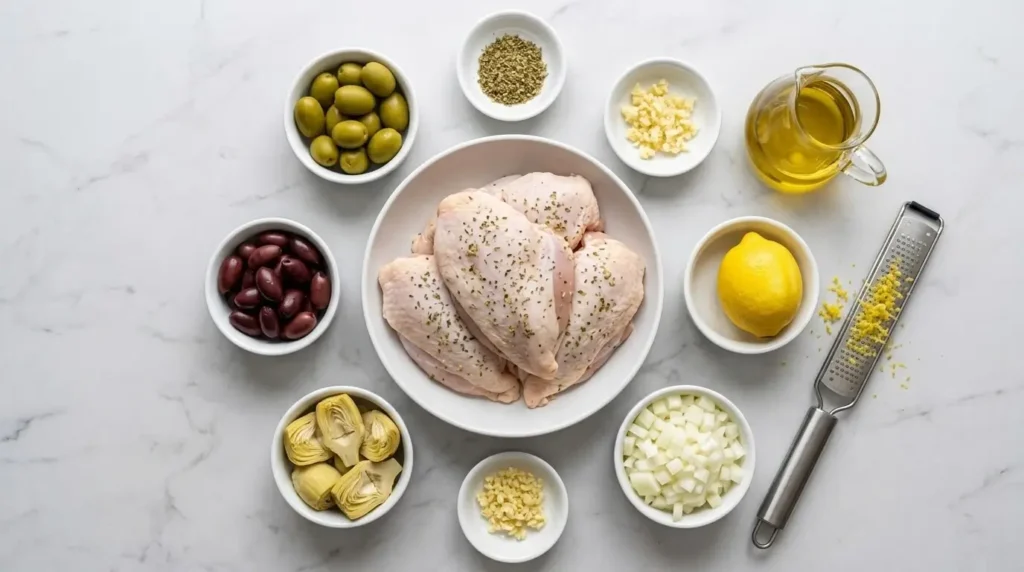
To get the absolute best results from this recipe, it helps to understand what each component contributes to the skillet, how to shop for it, and how to store any leftovers.
Chicken
- What it does: Serves as the lean, high-protein anchor of the dish, soaking up the citrus and herb pan sauce.
- Possible substitutes: Boneless pork is strictly avoided here; instead, use turkey cutlets, firm tofu blocks, or even thick white fish fillets (like cod).
- Buying tips: Look for air-cooled, organic, or pasture-raised chicken for the best texture and minimal water retention.
- Storage tips: Keep raw chicken in the coldest part of your fridge for up to 2 days, or freeze sealed for up to 9 months.
Extra Virgin Olive Oil
- What it does: Provides the healthy fat medium for searing the chicken and cooking the aromatics, while adding fruitiness.
- Possible substitutes: Avocado oil (for searing), though it lacks the traditional flavor profile.
- Buying tips: Choose cold-pressed, extra virgin olive oil packaged in a dark glass bottle to prevent oxidation.
- Storage tips: Store in a cool, dark pantry away from the heat of the stove.
Onion
- What it does: Forms the sweet, aromatic base of the pan sauce as it caramelizes.
- Possible substitutes: Shallots or leeks work beautifully for a milder, sweeter flavor.
- Buying tips: Pick onions that feel firm, heavy for their size, and free of soft spots or sprouts.
- Storage tips: Keep in a cool, dry, dark place outside of the refrigerator.
Garlic
- What it does: Adds a sharp, pungent kick that mellows into a rich, sweet depth during cooking.
- Possible substitutes: Shallots or a pinch of garlic powder in a pinch, though fresh is always superior.
- Buying tips: Select tight, plump heads of garlic with firm skins that don’t feel hollow when squeezed.
- Storage tips: Store whole heads in an open wire basket at room temperature to allow airflow.
Fresh Lemon & Lemon Zest
- What it does: The juice provides essential bright acidity to cut through the richness, while the fresh lemon zest delivers intense citrus aroma.
- Possible substitutes: Meyer lemons provide a sweeter, slightly floral alternative.
- Buying tips: Choose lemons with smooth, thin skins that yield slightly to a gentle squeeze—they hold more juice.
- Storage tips: Keep on the counter for a week, or submerge in water in a jar inside the fridge to keep them fresh for up to a month.
Oregano
- What it does: Imparts a robust, pungent, slightly earthy herb profile foundational to Greek cooking.
- Possible substitutes: Marjoram or dried Mexican oregano.
- Buying tips: Ensure your dried oregano is vibrant green-grey, not dusty brown.
- Storage tips: Store in an airtight spice jar away from light and direct heat.
Thyme
- What it does: Offers a subtle, woody, and slightly floral herb note that pairs perfectly with lemon.
- Possible substitutes: Rosemary or savory.
- Buying tips: Look for intact dried leaves without excess twiggy stems.
- Storage tips: Keep in a tightly sealed container in your dark spice cabinet.
Chicken Broth
- What it does: Acts as the deglazing liquid and forms the savory base of the simmering pan sauce.
- Possible substitutes: Vegetable broth or a splash of water mixed with a low-sodium bouillon paste.
- Buying tips: Select low-sodium or unsalted chicken broth so you can control the salt levels yourself.
- Storage tips: Once opened, transfer carton leftovers to a clean container and refrigerate for up to 4 days.
Artichoke Hearts
- What it does: Adds a tender, slightly sweet, and earthy vegetable texture that absorbs the pan juices perfectly.
- Possible substitutes: Hearts of palm or roasted zucchini slices.
- Buying tips: Buy canned marinated artichokes for extra herb flavor, or water-packed ones if you prefer to control the fat content.
- Storage tips: Transfer unused artichokes to a glass jar with their liquid and refrigerate for up to 5 days.
Green Olives & Kalamata Olives
- What it does: Green olives offer a buttery, crisp bite, while Kalamata olives provide a deep, fruity, and vinegary tang.
- Possible substitutes: Castelvetrano olives or Spanish manzanilla olives.
- Buying tips: Buy pitted olives to save prep time and protect your teeth while eating.
- Storage tips: Keep submerged in their original brine in the refrigerator after opening.
Parsley
- What it does: Adds a final pop of clean, peppery color and a burst of freshness just before serving.
- Possible substitutes: Fresh cilantro or chopped dill.
- Buying tips: Look for crisp, deep green flat-leaf Italian parsley bundles without yellowing leaves.
- Storage tips: Trim the stems and store upright in a glass of water covered loosely with a plastic bag in the fridge.
Salt & Pepper
- What it does: Essential minerals that amplify all the structural Mediterranean flavors of the skillet.
- Possible substitutes: Flaky sea salt for finishing; white pepper for a milder heat.
- Buying tips: Go for fine sea salt for cooking and whole black peppercorns inside a grinder.
- Storage tips: Keep dry in a sealed salt cellar or pantry cupboard.
Best Chicken to Use (H3)
For this specific skillet preparation, you can use either chicken breasts or chicken thighs. Boneless, skinless chicken breasts cook quickly and stay incredibly lean, making them a fantastic canvas for the lemon sauce. However, boneless chicken thighs offer a juicier, more forgiving texture that rarely dries out during a simmer. If you choose bone-in, skin-on cuts, keep in mind that your cooking times will increase by roughly 10–15 minutes to ensure the meat cooks completely through to the bone. Fresh chicken is ideal for getting a beautiful sear, but if you are using frozen chicken, ensure it is completely thawed and thoroughly patted dry before it touches the hot oil.
Choosing the Best Artichokes (H3)
When browsing the grocery aisles, you will typically find marinated, water-packed, frozen, or fresh artichokes. For maximum convenience and flavor depth, canned marinated artichoke hearts are highly recommended because they come pre-seasoned with Mediterranean oils and herbs. Water-packed artichokes are excellent if you want a cleaner, more neutral artichoke flavor. Frozen artichokes work well but must be thawed and drained first. Fresh artichokes taste phenomenal but require extensive trimming and steaming, making them less ideal for an express weeknight meal.
Which Olives Work Best? (H3)
A combination of Kalamata and Castelvetrano (or standard Spanish green olives) yields the best flavor balance. Kalamata olives deliver that classic Greek, wine-infused, dark, fruity tang, while bright green Castelvetrano olives bring a mild, buttery flavor and a firm texture. Mixed olives add beautiful visual contrast to your skillet. Avoid heavily processed canned black olives, as they lack the robust acidity and character needed to cut through the rich, savory chicken broth.
Kitchen Equipment
- Large Skillet / Oven-Safe Skillet: A heavy 12-inch cast-iron or stainless steel skillet distributes heat evenly for a flawless sear.
- Sharp Chef’s Knife: Crucial for cleanly dicing onions and slicing chicken breasts evenly.
- Sturdy Cutting Board: A dedicated plastic or wood board for handling poultry and vegetables safely.
- Citrus Zester: Essential for removing just the aromatic yellow layer of the lemon skin without the bitter white pith.
- Wooden Spoon: Perfect for scraping up caramelized bits during the deglazing step without scratching your pan.
- Instant-Read Meat Thermometer: The foolproof tool to ensure your chicken is safe without overcooking it.
How to Make Mediterranean Lemon Herb Chicken with Artichokes and Olives
Step 1: Season the Chicken
Before any seasoning touches your meat, use a clean paper towel to pat both sides of the chicken completely dry. Removing surface moisture prevents the chicken from steaming and ensures you achieve a gorgeous, caramelized golden crust. Season both sides generously with fine sea salt, cracked black pepper, and half of your dried oregano and thyme, pressing the herbs gently into the meat.
Step 2: Sear the Chicken
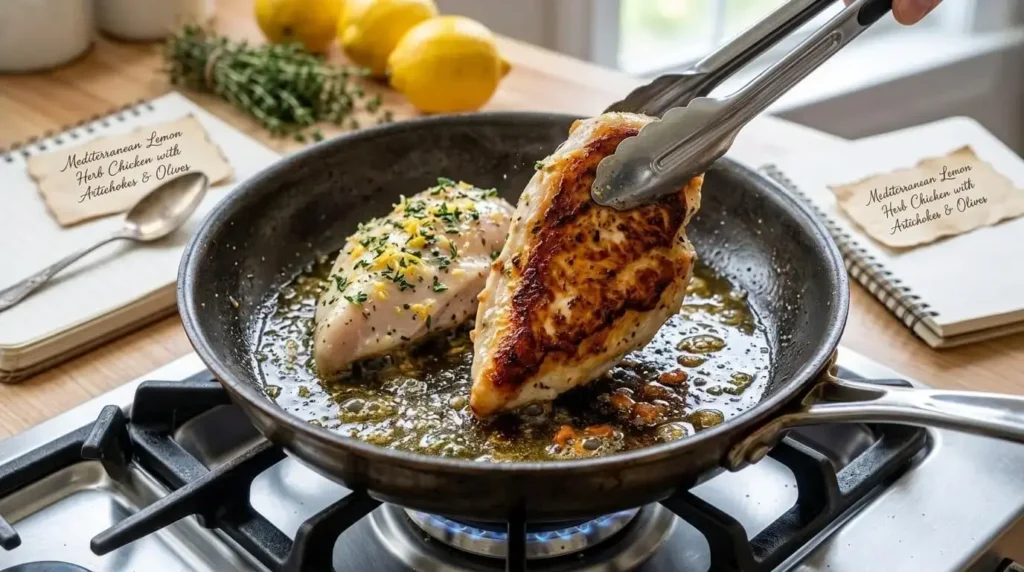
Heat your extra virgin olive oil in the large skillet over medium-high heat until it begins to shimmer. Lay the seasoned chicken down carefully, moving away from you to prevent oil splashes. Sear for 4 to 5 minutes without moving the pieces to build a rich color indicator; when it releases easily from the pan, flip and sear the other side. Avoid overcrowding the pan—work in batches if your skillet isn’t large enough. Transfer the par-cooked chicken to a clean plate.
Step 3: Cook Onions and Garlic
Turn the pan heat down to medium to prevent scorching. Add your diced yellow onion directly into the residual shimmering oil, sautéing for 3 to 4 minutes until they turn soft and translucent. Next, toss in your minced garlic. Garlic burns quickly due to its low water and high sugar content, so stir constantly for just 60 seconds until it smells highly fragrant, then move immediately to the next step.
Step 4: Deglaze the Pan
Pour your low-sodium chicken broth and fresh lemon juice straight into the hot skillet. The liquid will bubble vigorously; use your wooden spoon to actively scrape up all the caramelized, browned bits stuck to the bottom of the pan. These bits hold concentrated flavor and form the savory backbone of your entire sauce.
Step 5: Build the Mediterranean Sauce
Stir the remaining dried oregano, thyme, fresh lemon zest, and a tiny pinch of black pepper into the simmering liquid. Once combined, nestle the golden, seared chicken pieces back down into the pan, along with any collected juices from the plate. Scatter your halved artichoke hearts, green olives, and Kalamata olives uniformly all around the chicken.
Step 6: Simmer Gently
Bring the pan liquid to a gentle, steady simmer. Reduce the heat down to low, place a tight-fitting lid over the skillet, and let everything braise gently for 15 to 20 minutes. Insert your meat thermometer into the thickest part of the chicken; it is perfectly done and safe to eat when it registers an internal temperature of 165°F (74°C).
Step 7: Garnish and Serve
Remove the skillet completely from the heat source. Uncover and shower the entire dish with a fresh handful of finely chopped flat-leaf parsley and an extra pinch of fresh lemon zest for a vibrant, aromatic finish. Serve immediately directly from the skillet while piping hot.
Chef Tips for the Best Mediterranean Chicken
To elevate this dish from a standard weeknight meal to something truly memorable, keep these expert kitchen tips in mind:
- Never skip drying the meat: Wet chicken will never achieve that crisp, golden sear.
- Use fresh lemons: Bottled juice has a dull, metallic, preservative-heavy flavor that ruins the brightness.
- Don’t skip the zest: The true essence of lemon flavor lives in the oils of the skin, not just the juice.
- Sear first, ask questions later: Searing locks in moisture and creates fond (browned bits) for the sauce.
- Invest in high-quality olive oil: It serves as a flavor component, not just a cooking lubricant.
- Add a pop of capers: If you love extra briny flavor, stir in a tablespoon of drained capers with the olives.
- Add fresh herbs at the very end: Delicate fresh parsley loses its color and nutritional value if boiled.
- Use a digital meat thermometer: Pulling chicken at exactly 165°F guarantees juiciness every single time.
- Deglaze thoroughly: Don’t leave any flavor stuck to the bottom of your pan.
- Let the chicken rest: Give the chicken 3–5 minutes to rest before slicing so the interior juices redistribute.
- Use homemade or low-sodium broth: This allows you to control the salinity since olives are naturally salty.
- Drain your artichokes well: Excess packing water can dilute the consistency of your pan sauce.
- Vary your olive selection: Using a mix of dark and green olives adds incredible visual depth and flavor complexity.
- Avoid high heat during the simmer: A violent boil will toughen the muscle fibers of the poultry.
- Finish with flaky sea salt: A pinch of flaky salt right before serving adds an artisanal crunch.
Easy Variations
- Greek Version: Stir in a handful of crumbled feta cheese and chopped fresh dill right before serving.
- Italian Version: Swap the oregano for dried basil, use capers instead of Kalamata olives, and top with shaved Parmesan.
- Low Carb & Keto: Naturally fits this profile perfectly! Serve over a bed of buttery cauliflower rice.
- Dairy-Free & Whole30: Ensure your chicken broth is compliant and your artichokes aren’t packed with processed sugars.
- High Protein: Increase the chicken portion or stir in white cannellini beans along with the artichoke hearts.
- Spicy Version: Toss a half teaspoon of crushed red pepper flakes into the oil while sautéing your garlic.
- Chicken Thigh Version: Substitute chicken breasts with skinless, bone-in thighs and extend the covered simmer time to 25 minutes.
- Slow Cooker: Sear the chicken in a pan first, then transfer all ingredients to a slow cooker and cook on LOW for 4 hours.
- Instant Pot: Sear chicken using the Sauté function, add aromatics and liquids, then pressure cook on HIGH for 8 minutes with a quick release.
- Oven Baked: Sear the chicken, assemble everything in an oven-safe baking dish, and roast at 400°F (200°C) for 20–25 minutes.
What to Serve with Mediterranean Lemon Herb Chicken
To create a perfectly balanced meal, you can serve this protein-rich skillet alongside a variety of traditional grains and sides. For an authentic, vegetable-forward spread, pair this dish with a crisp Greek Chopped Feta Salad recipe to add a refreshing crunch to your plate.
If you want something hearty to soak up every drop of that exquisite lemon-herb pan sauce, consider serving the chicken over fluffy Mediterranean quinoa, brown rice, farro, or whole wheat couscous. For a comforting potato side, these Roasted Mediterranean Potatoes with Feta and Tomatoes make an incredible addition. Alternatively, you can keep the meal light and grain-free by pairing the skillet with cauliflower rice, a simple Mediterranean cucumber salad, steamed asparagus, or a side of crusty whole-grain bread.
Is This Recipe Mediterranean Diet Friendly?
Absolutely. This dish is a textbook example of how to eat well under the Mediterranean lifestyle guidelines. It relies heavily on heart-healthy monounsaturated fats from extra virgin olive oil and fresh olives, which support cardiovascular health.
It emphasizes lean, high-quality poultry over processed meats, while packing your plate with antioxidant-rich vegetables like artichokes, onions, and garlic. Fresh herbs and citrus juice provide high-impact seasoning, allowing you to maintain moderate sodium levels without sacrificing an ounce of flavor. It contains zero processed additives or refined sugars, making it a stellar choice for holistic body health.
Storage Instructions
- Fridge: Store any cooled leftover chicken and sauce in an airtight glass container for up to 3 to 4 days.
- Freezer: You can freeze this cooked recipe for up to 2 months. Keep in mind that artichokes can become slightly softer upon thawing.
- Meal Prep: Divide the chicken, artichokes, olives, and sauce evenly into glass meal prep containers alongside your grain of choice for an easy grab-and-go lunch.
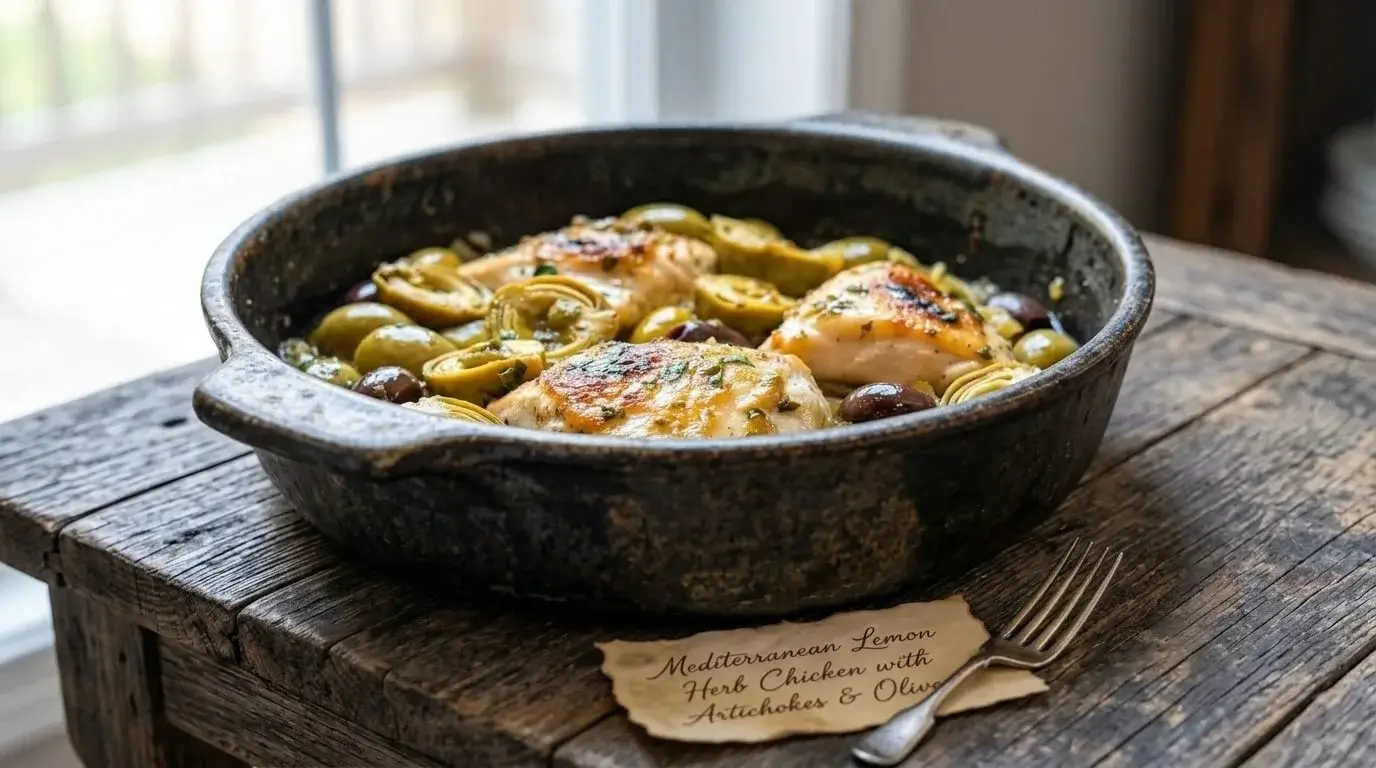
Mediterranean Lemon Herb Chicken with Artichokes and Olives
Ingredients
Method
- Pat the chicken pieces completely dry with a paper towel. Season both sides uniformly with the salt, black pepper, and half of the dried oregano and thyme.
- Heat the extra virgin olive oil in a large, heavy skillet over medium-high heat. Add the chicken and sear undisturbed for 4 to 5 minutes per side until a rich golden brown crust forms. Temporarily transfer the chicken to a clean plate.
- Lower the heat to medium. Add the diced yellow onion to the residual oil in the skillet and sauté for 3 to 4 minutes until soft and translucent. Toss in the minced garlic and cook for exactly 1 minute, stirring constantly so it does not burn.
- Pour the low-sodium chicken broth and fresh lemon juice into the pan. Use a wooden spoon to vigorously scrape up all the flavorful, caramelized browned bits stuck to the bottom of the skillet.
- Stir in the remaining dried oregano, thyme, fresh lemon zest, and a pinch of black pepper. Nestle the seared chicken pieces (and any plate juices) back into the skillet. Scatter the drained artichoke hearts and mixed olives all around the poultry.
- Bring the liquid to a light simmer, then drop the heat to low. Cover the skillet tightly with a lid and cook for 15 to 20 minutes, or until an instant-read thermometer inserted into the thickest piece reads 165°F (74°C).
- Remove the skillet from the heat source. Uncover and scatter the finely chopped fresh parsley and an extra dusting of lemon zest over the top. Serve hot directly from the pan.
Notes
* For a complete Mediterranean feast, consider trying our Garlic Herb Roasted Chicken and Vegetables (https://easymediterraneanrecipes.blog/recipes/garlic-herb-roasted-chicken-and-vegetables/) on your next meal rotation!
Reheating Instructions
- Stovetop: Place the chicken and sauce back into a skillet over medium-low heat. Add a splash of water or broth, cover with a lid, and heat for 5–7 minutes until warmed through. This method best avoids drying out the chicken.
- Microwave: Slice the chicken into bite-sized pieces, place in a microwave-safe dish with plenty of pan sauce, cover with a damp paper towel, and heat on medium power in 45-second intervals.
- Oven: Place leftovers in a small baking dish, cover tightly with aluminum foil, and warm at 350°F (175°C) for roughly 12–15 minutes.
Common Mistakes to Avoid
- Using bottled lemon juice: This results in a artificial, flat, acidic taste instead of vibrant freshness.
- Overcooking the chicken: Leaving the chicken in the simmering pan for too long turns lean white meat stringy and dry.
- Skipping the searing step: Tossing raw chicken directly into broth deprives the dish of incredible color and texture.
- Adding garlic too early: Putting garlic into a scorching hot pan at the start will burn it and turn the entire sauce bitter.
- Adding too much salt early on: Olives and artichokes carry natural brininess, so hold off on heavy salting until the very end.
- Using poor-quality olives: Cheap, canned salad olives lack the structure and punch of authentic Kalamatas or Castelvetranos.
- Skipping the lemon zest: You miss out on the most aromatic, fragrant citrus oils that elevate the sauce.
- Adding parsley too early: Cooking the parsley turns it brown and destroys its fresh, peppery bite.
Frequently Asked Questions
Can I use chicken thighs?
Yes! Chicken thighs work beautifully in this recipe. They contain more dark meat, making them naturally juicier and highly resistant to drying out during the simmering stage.
Can I use canned artichokes?
Yes, canned artichokes are ideal for this dish. Both marinated and water-packed varieties work perfectly; just ensure they are well-drained and halved before adding them to the skillet.
Can I freeze this?
You can freeze this dish in an airtight container for up to 2 months. Thaw it completely in the refrigerator overnight before reheating it on the stovetop.
Can I make it dairy-free?
This recipe is naturally 100% dairy-free! No butter or cream is used to build the rich, velvety pan sauce.
Can I make it ahead?
Yes, you can prepare this entire dish a day in advance. The flavors actually deepen and improve as the ingredients sit together in the refrigerator.
What olives are best?
A 50/50 mix of pitted Kalamata olives and bright green Castelvetrano olives provides the absolute best balance of fruity tang and buttery richness.
Can I bake instead?
Yes. After searing your chicken and cooking your aromatics on the stovetop, transfer everything into a baking dish and bake uncovered at 400°F (200°C) for 20 minutes.
Can I use fresh oregano?
Absolutely. If using fresh oregano instead of dried, triple the amount (use 3 tablespoons) since dried herbs are much more concentrated.
How long does it keep?
When kept in an airtight container in the refrigerator, this dish will stay completely fresh and delicious for up to 4 days.
Is it keto?
Yes, this recipe is extremely low in carbohydrates and high in healthy fats, making it an excellent choice for a ketogenic diet.
Is it gluten-free?
Yes, this dish contains no flour, thickeners, or gluten-containing ingredients, making it completely safe for gluten-sensitive individuals.
Is it Mediterranean diet friendly?
Yes, it features whole, unprocessed ingredients, healthy monounsaturated fats, and lean proteins, checking every box of the traditional Mediterranean diet.
Expert Tips for Success
To summarize the path to a flawless skillet: always prioritize fresh ingredients, especially when it comes to using premium quality olive oil and fresh lemon. Achieving a proper searing on your meat locks in moisture, while resting the chicken for a couple of minutes before slicing ensures it stays incredibly juicy. Garnish generously and serve immediately for the ultimate flavor experience.
Final Thoughts
This Mediterranean Lemon Herb Chicken with Artichokes and Olives is the quintessential example of how healthy eating can coexist beautifully with deep, comforting flavor. It is a vibrant, easy, and entirely satisfying one pan Mediterranean dinner that is perfect for busy weeknights when you want restaurant-quality meals at home without the fuss.
If you make this dish, please leave a star rating and a review below! Let us know in the comments what your favorite side dish is to serve alongside it—we love hearing from your kitchen!