If you’re learning the Mediterranean diet or cooking your first batch of fresh Lebanese tabbouleh, choosing the right bulgur wheat can make or break the recipe. In fact, Lebanese cooks often say, “The bulgur decides the texture; the herbs decide the soul.”
This guide walks you through everything you need to know, such as, bulgur types, grades, soaking methods and how to choose the best option for both traditional and modern variations.
This is your all-in-one resource, whether you’re following my Authentic Lebanese Tabbouleh recipe or simply exploring Mediterranean grains.
What Is Bulgur Wheat?
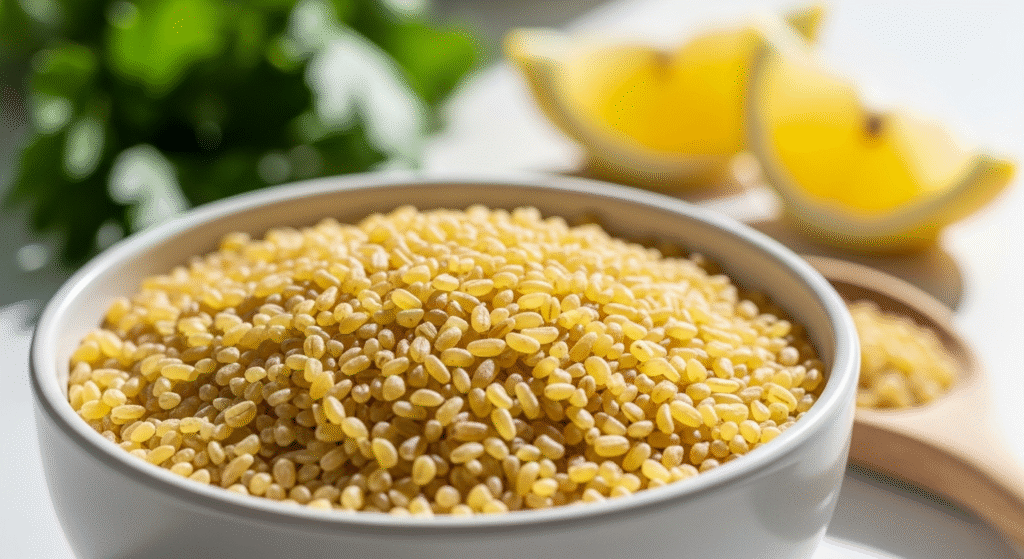
Bulgur wheat is a cracked whole wheat grain that has been pre-cooked (parboiled), dried and ground into different particle sizes. It’s a staple across Lebanon, Syria, Turkey, Armenia, Greece and other Mediterranean regions.
How Bulgur Is Made
- Whole durum wheat kernels are cleaned.
- They are parboiled until partially cooked.
- The grains are dried thoroughly.
- They are cracked into different sizes (called grades).
- Finally, they’re sifted and packaged.
This simple process preserves the natural nutrients because bulgur is minimally processed and incorporates the wheat kernel’s bran, germ and endosperm, making it high in fiber and a key Mediterranean diet ingredient.
Why Bulgur Matters in Lebanese Tabbouleh
In Lebanon, tabbouleh is an herb-forward salad, which is bright, lemony and parsley-heavy. Bulgur is not the main ingredient, but the wrong type can turn the salad mushy, heavy or grainy.
Traditional cooks use bulgur to:
- Lightly absorb lemon juice
- Add a delicate bite without competing with the herbs
- Bind the salad just enough for pleasant texture
How to Choose the Right Bulgur for Tabbouleh
Choosing bulgur for tabbouleh comes down to grade, quality, processing style and packaging. Below is your beginner-friendly, expert-backed breakdown.
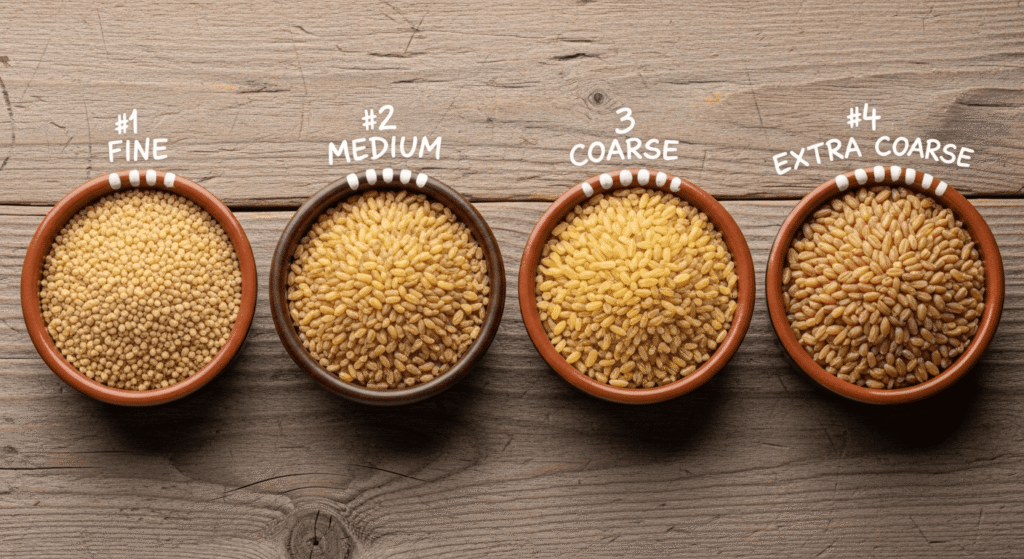
1. Understand Bulgur Grades (Fine → Extra-Coarse)
| Bulgur Grade | Particle Size | Best Uses | Tabbouleh Suitability |
| #1 Fine (Extra-Fine) | Sand-like | Tabbouleh, kibbeh and salads | Excellent (traditional choice) |
| #2 Medium | Slightly larger | Pilafs, stuffings and batters | Acceptable in modern/tabbouleh variations |
| #3 Coarse | Grainy | Pilafs, mujaddara or soups | Not recommended |
| #4 Extra-Coarse | Large, chewy | Hearty pilafs and stews | Never used |
Which bulgur grade is used for authentic Lebanese tabbouleh?
Fine bulgur (#1 grade) – always. Because it swells quickly, stays fluffy and mixes seamlessly into parsley.
How do modern Mediterranean and Western versions differ?
Some modern recipes use medium bulgur (#2) to achieve a fuller and grain-heavy salad similar to grain bowls. This variation is perfectly valid, but it is not in the traditional Lebanese style.
2. Key Quality Indicators When Buying Bulgur
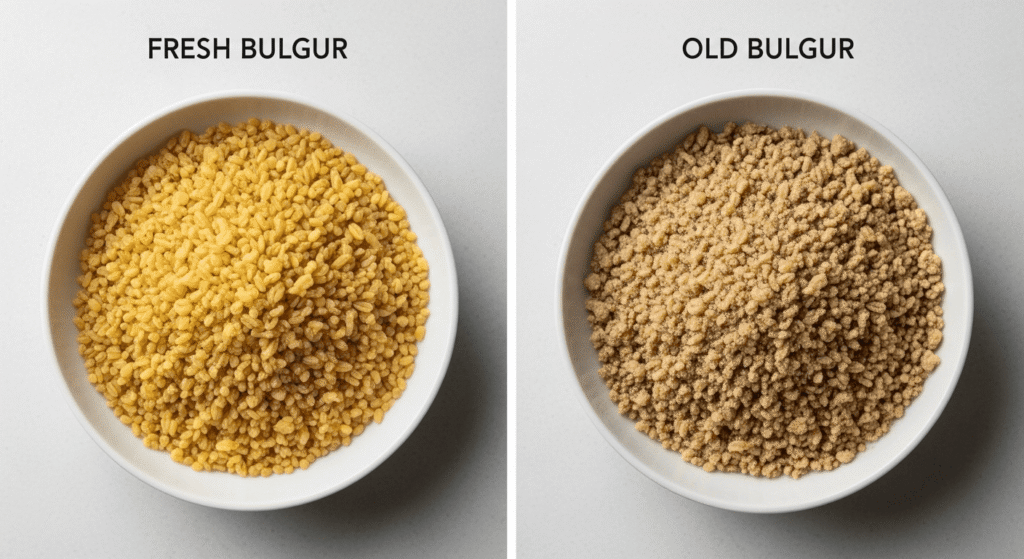
To choose the best bulgur for tabbouleh, look at these six quality cues:
1. Color of Bulgur
- Fine bulgur should be light golden or pale beige in color.
- Very dark or reddish tones may indicate over-processing or aged stock.
2. Particle Size Consistency
Authentic producers sift the bulgur well. Look for:
- Even uniform particles
- No powdery dust
- No random coarse bits mixed in
This ensures even soaking and prevents the formation of mushiness.
3. Bulgur Aroma
High-quality bulgur has:
- A clean and wheaty smell
- No bitterness
- No musty or sour notes (a sign of moisture exposure)
4. Dryness
Bulgur should feel:
- Bone-dry
- Free-flowing
- Never clumpy
Clumps often mean humidity exposure.
5. Processing Method
Look for:
- “Stone-ground” or “traditional method” (it’s a more authentic texture)
- “Parboiled” (standard and reliable quality)
Avoid:
- Overly polished or bleached grains
- Brands that remove too much bran and reducing fiber
6. Packaging Quality
Choose:
- Airtight, sealed bags
- Packaging that lists bulgur grade (#1, #2, #3, #4)
- Brands that indicate origin (Turkey, Lebanon, Jordan, Greece)
Avoid:
- Bulk bins with unclear turnover
- Torn bags or zip-seals with condensation
How to Choose Bulgur for Tabbouleh: Step-by-Step Guide
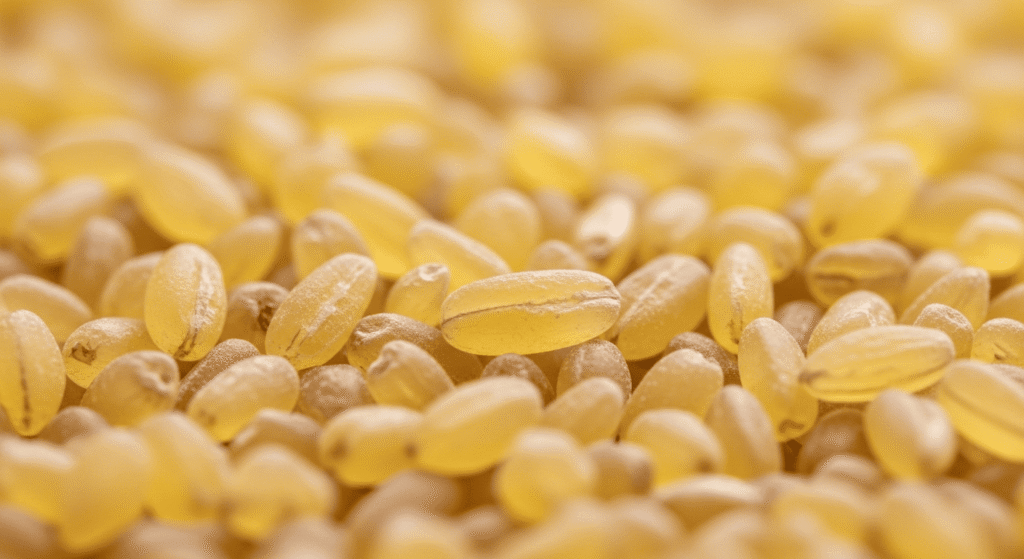
- 1. Identify the grade: choose #1 fine bulgur.
- 2. Check the color: look for light golden grains.
- 3. Smell the bulgur: it should be clean and wheaty, not musty.
- 4. Inspect particle consistency: avoid dusty or uneven mixes.
- 5. Choose brands with airtight and labeled packaging.
- 6. Prefer Mediterranean-origin bulgur for authenticity.
How to Prep Bulgur for Tabbouleh (With Soaking Ratios)
One of the top mistakes beginners make is over-soaking bulgur.
Remember: In Lebanese tabbouleh, bulgur is hydrated with lemon juice and tomato juice, not with water.
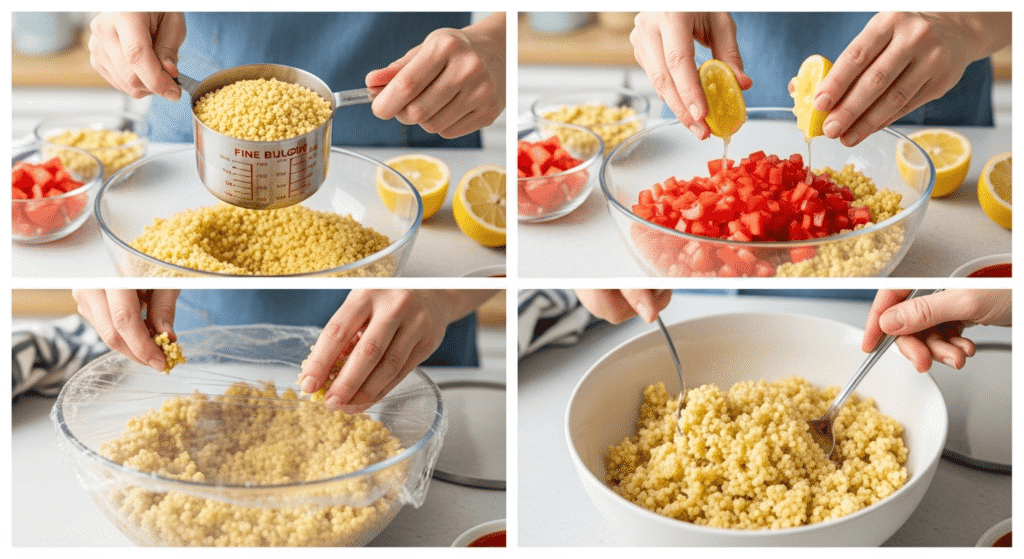
Traditional Lebanese Tabbouleh Method
- Use: Fine bulgur (#1)
- Ratio: 1:1 volume (bulgur : chopped tomatoes + lemon juice)
- Prep:
- No water soaking required
- Let bulgur sit in the salad for 10-15 minutes to hydrate naturally
This results in a fluffy, non-mushy texture.
Modern Tabbouleh Method (if using medium bulgur)
- Use: Medium bulgur (#2)
- Ratio: 1/2 cup water (120 ml) per 1/4 cup bulgur
- Soak time: 10-20 minutes
- Drain well and then mix into salad.
Common Mistakes While Preparing Burglar
The following are the common mistakes;
- Using coarse bulgur
- Soaking fine bulgur in water (it becomes mush)
- Not draining the medium bulgur enough
- Adding too much bulgur (overpowers herbs)
- Mixing before parsley dries properly (watery results)
Bulgur vs Couscous vs Cracked Wheat: What’s the Difference
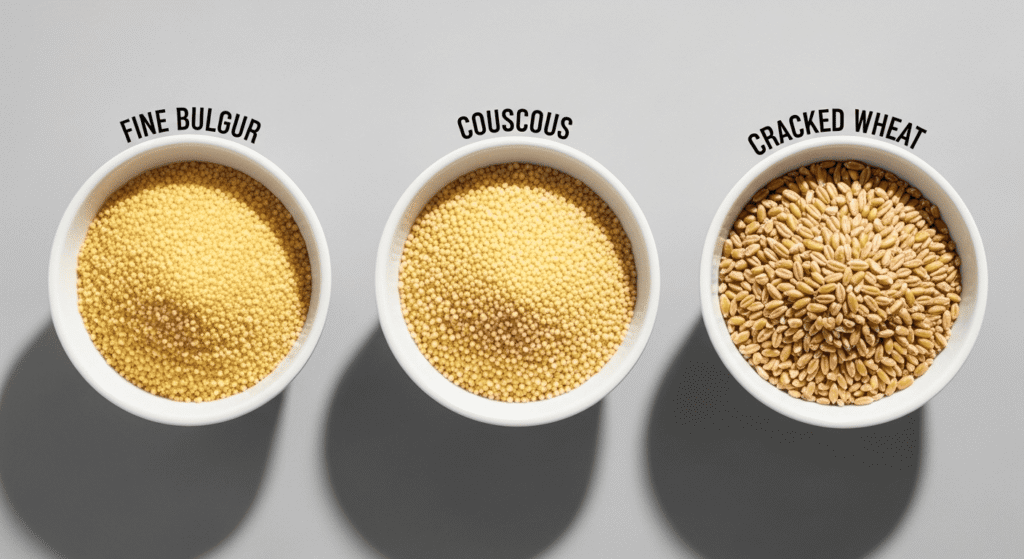
Here’s the difference between these 3 and how they’re used;
Bulgur
- Parboiled
- Ready with minimal soaking
- Nutrient-dense
- Used in tabbouleh
Couscous
- Made from semolina
- Pasta, not a whole grain
- Not used in tabbouleh (but used in salads)
Cracked Wheat
- Similar to bulgur but not parboiled
- Requires longer cooking
- Not suitable for tabbouleh
Where to Buy Good-Quality Bulgur?
You can find excellent bulgur at:
- Middle Eastern or Mediterranean markets
- Turkish shops
- International aisles at larger supermarkets
- Online retailers
- Ziyad (widely available and consistent)
- Bob’s Red Mill (clear labeling, reliable quality)
- Duru Bulgur (Turkish, excellent for fine-grade bulgur)
- Sahadi’s (NY-based Middle Eastern supplier)
Culinary institutes such as the Institute of Culinary Education (ICE) note that high-quality bulgur maintains a fresh aroma and even particle size are the key indicators when choosing for salads.
Bulgur Storage & Shelf Life
Shelf Life
- Unopened: Up to 18 months
- Opened: 12 months if stored properly
Storage Tips
- Keep in an airtight container
- Store away from heat and humidity
- For hot climates (like the Middle East and South Asia), refrigeration extends the freshness.
Now that you understand how to choose bulgur, you can follow my Authentic Lebanese Tabbouleh Recipe to make the perfect Tabouli.
FAQs
1. What is the best bulgur for tabbouleh?
The best bulgur for authentic Lebanese tabbouleh is #1 fine bulgur. Because it hydrates quickly and blends seamlessly with parsley and lemon juice.
2. Can I use medium bulgur in tabbouleh?
Yes, modern or Western versions sometimes use medium bulgur, but the texture becomes grain-forward and less traditional.
3. Do I need to cook bulgur for tabbouleh?
No, fine bulgur requires no cooking and only minimal hydration from tomato and lemon juice.
4. How much bulgur should I use in tabbouleh?
Tabbouleh is an herb salad, not a bulgur salad. So, use only a small amount, about 2-3 tablespoons per large bunch of parsley.
5. Why is my bulgur turning mushy?
Likely because you used coarse bulgur or soaked fine bulgur in too much water. Remember: fine bulgur needs little to no water soaking.
Final Thoughts
Choosing the right bulgur is essential if you want your tabbouleh to taste fresh, vibrant and authentically Mediterranean. From selecting fine-grade bulgur to knowing the signs of quality and proper soaking, this guide gives you the foundation to master the dish, whether you’re a Mediterranean beginner or a committed home cook.
If you’re on your Mediterranean diet journey and are serious about it, you can explore our Mediterranean diet recipes and follow us on this journey.