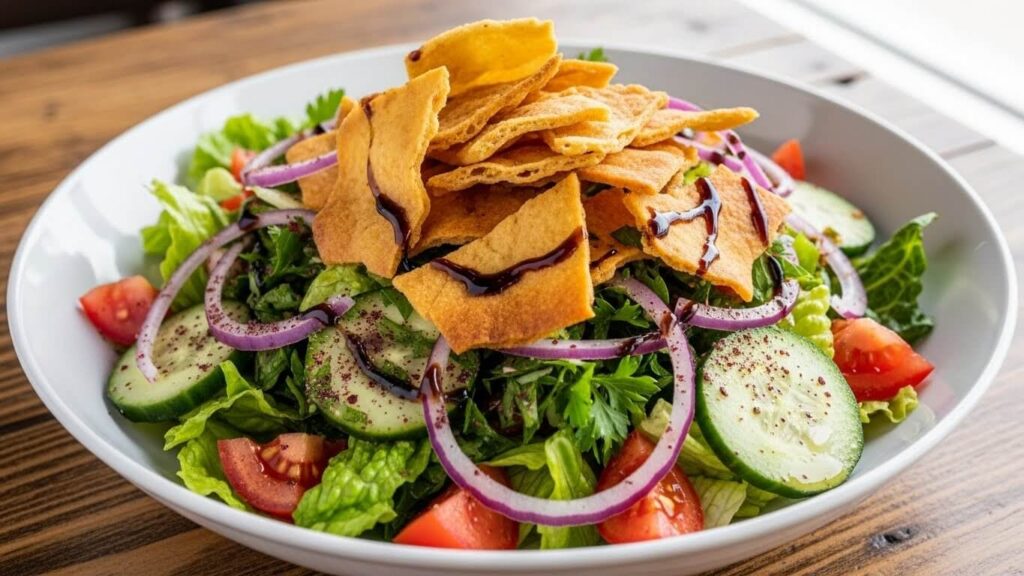
Welcome to the ultimate guide to making authentic Fattoush recipe, the queen of Levantine salads. This fresh herb salad is much more than just a mix of greens; it’s a vibrant, plant-forward salad that perfectly encapsulates the flavors of the Middle East, all while fitting beautifully into a Mediterranean diet lifestyle. Our recipe guarantees a perfectly balanced, crispy pita salad with a zesty Lebanese sumac dressing that will transport you straight to the sun-drenched shores of the Levant.
What Are the Levantine Origins Of Fattoush Salad and its Specialities?
Fattoush is a beloved Middle Eastern chopped salad that originated in the Levant region (Lebanon, Syria, Palestine and Jordan). Its name is derived from the Arabic word fatt, meaning “crumbs” referring to its signature component: pieces of stale or leftover pita bread.
What Makes Fattoush Recipe Special?
Unlike many simple salads, Fattoush elevates humble ingredients through contrast: the fresh herb salad provides bright, clean flavors; the vegetables offer juicy crunch; and the toasted pita bread salad delivers a satisfying and salty crispness. The secret to its signature taste lies in the sumac, a tangy and maroon spice that provides a signature sour-citrus note unlike any other. It’s a centuries-old way of preventing food waste and creating a healthy Mediterranean lunch.
Fattoush Salad Ingredients
To achieve the truly authentic flavor profile, focus on the freshest ingredients and high-quality staples.
What is Fattoush made of?
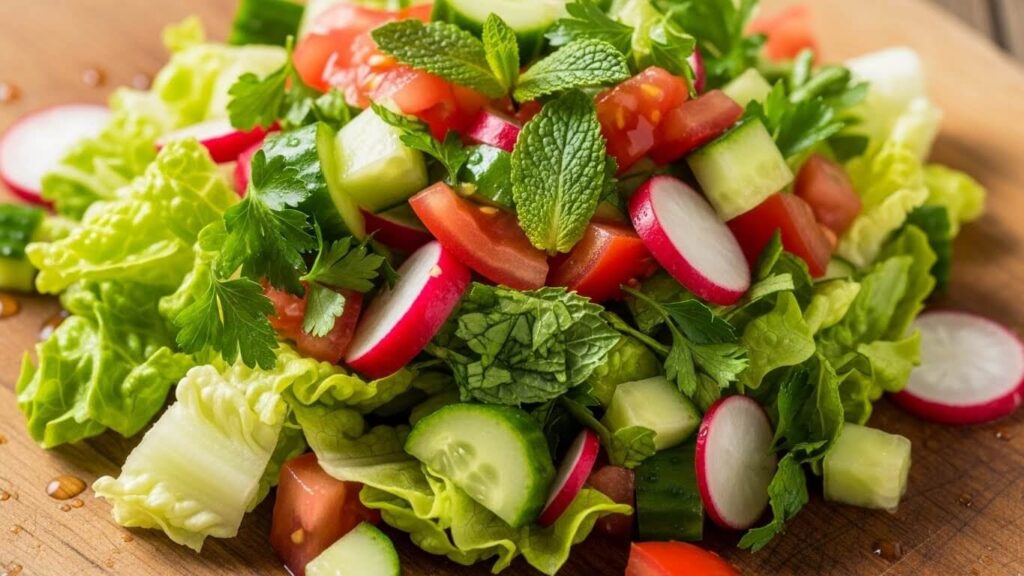
Fattoush is traditionally made of mixed greens and chopped vegetables (like tomato, cucumber, radish and bell pepper), an abundance of fresh herbs (parsley and mint) and toasted or fried pita bread pieces, all tossed in a zesty lemon dressing featuring pomegranate molasses and sumac.
| Category | Essential Ingredients | Notes |
| Vegetables | Romaine lettuce, tomato, cucumber, radish, green onion and bell pepper | Finely chop all vegetables to ensure all flavors meld together perfectly (a classic Middle Eastern chopped salad style). |
| Herbs | Fresh parsley and fresh mint | Crucial for the vibrant and fresh flavor. Use a generous amount. |
| The Crunch | 1-2 pieces of pita bread (stale is best) | Toasted, baked or air-fried until perfectly crisp. |
| The Spice | Sumac | A key ingredient. Do not skip! |
Best Fattoush Dressing Recipe (Lebanese Sumac Dressing)
The dressing is the heart of this recipe. And the great Lebanese sumac dressing is the perfect and most suitable one. It must be zesty, tangy and slightly sweet to balance the bitterness of the herbs and the crisp vegetables.
| Ingredient | Amount | Notes |
| Extra Virgin Olive Oil | 1/4 cup | Choose a high-quality and flavorful oil. |
| Fresh Lemon Juice | 1/4 cup | The main acid. Use fresh-squeezed only. |
| Pomegranate Molasses | 1 tbsp | Adds depth, tang and necessary sweetness. |
| Ground Sumac | 1 tsp | The indispensable ingredient for that authentic Levantine flavor. |
| Garlic | 1 clove, minced | Adds a necessary aromatic punch. |
| Salt & Black Pepper | To taste | Season generously as the vegetables will absorb the flavor. |
How to make the perfect Fattoush dressing?
- Emulsify: In a small bowl or jar, combine the lemon juice, pomegranate molasses, minced garlic, sumac, salt and and pepper. Then whisk or shake well until the salt is dissolved.
- Oil Ratio (Cooking Science Tip): Slowly drizzle in the extra virgin olive oil while continuously whisking. This is key to creating a stable emulsion, where the oil and acid bind together, resulting in a rich and velvety coating for the salad. The 1:1 oil-to-acid ratio here ensures maximum zestiness, which is necessary to penetrate the dense vegetables.
- Taste and Adjust: The dressing should be powerfully flavored. If it tastes flat, then add more salt. If it’s too tart, add a touch more molasses or a tiny pinch of sugar.
How to Make Fattoush Salad Recipe (Step-by-Step)
This is a beginner-friendly process, but timing and technique are crucial to prevent a soggy salad.
- Prepare the Pita: Cut the pita bread into roughly 1-inch squares. Then bake them at 350°F (180°C) for 8-12 minutes or until golden brown and perfectly crisp. Now, set it aside.
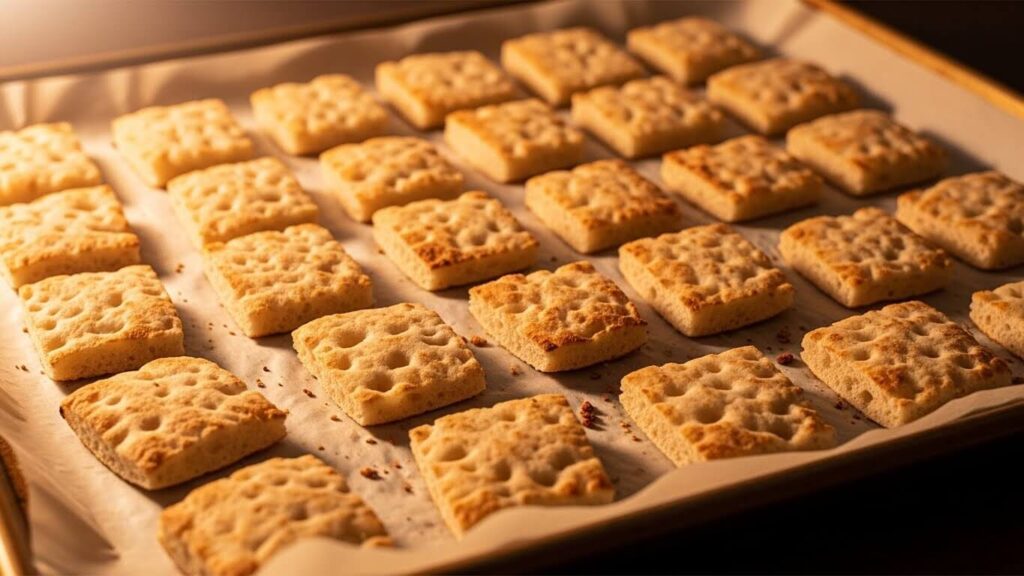
2. Chop the Vegetables: Finely chop all the vegetables and herbs. And ensure the cucumber, tomato and radish pieces are roughly the same size (about 1/2-inch dice). Consistency in size is important for even flavor distribution in a Middle Eastern chopped salad.
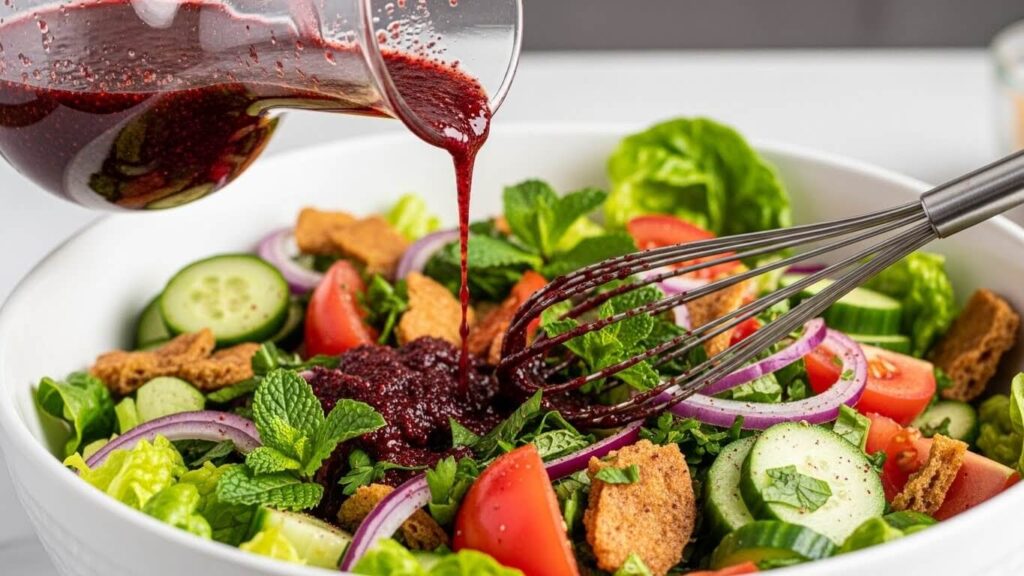
3. Combine Greens: Place the chopped vegetables and fresh herbs (parsley and mint) in a very large bowl.
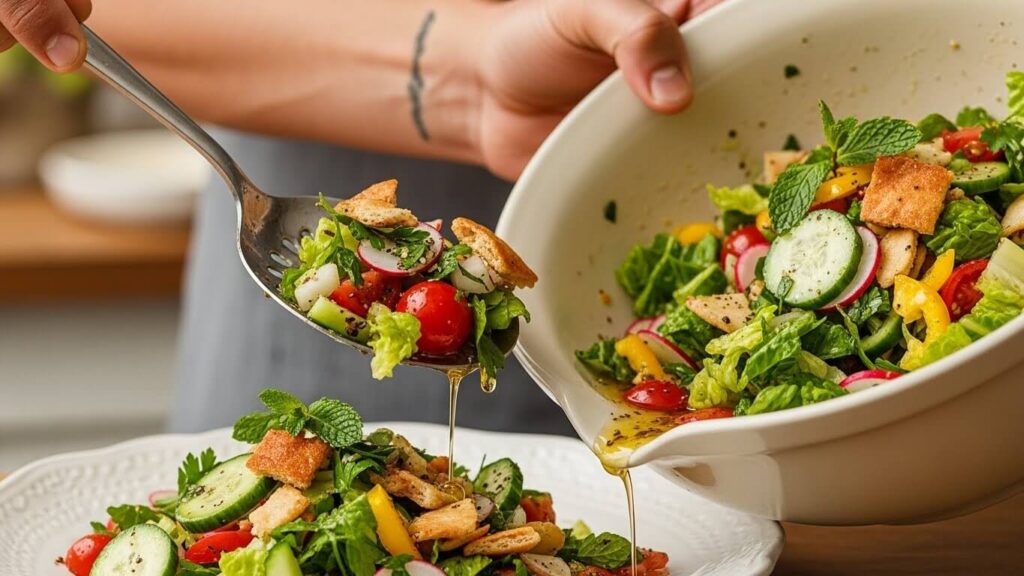
- Dress (Crucial Timing): Wait until you are ready to serve before adding the dressing. Start by adding about three-quarters of the prepared dressing. Toss gently but thoroughly until everything is lightly coated.
- Add the Crisp: Gently fold in the crispy pita salad pieces right before serving.
- Garnish & Serve: Garnish with a sprinkle of sumac and a drizzle of extra pomegranate molasses if desired. Serve immediately to enjoy the maximum crunch.
Expert Tips to Keep Pita Crispy (Avoid Sogginness)
This is your top ranking opportunity – the cooking science behind a great Fattoush.
- Pro Tip 1: Dry Toasting is Key: Do not fry the pita. Because it adds fat, which weighs down the bread and makes it absorb moisture faster. Baking or air-frying removes moisture effectively, creating a stable and crunchy base.
- Pro Tip 2: The Right Pita Cut: Cut your pita pieces into slightly larger chunks (1-2 inches). Small pieces have more surface area, making them soak up the dressing faster and turn soggy.
- Pro Tip 3: The Wait Game: The bread will inevitably turn soggy the moment it touches the dressing. So, never dress the salad more than 5 minutes before serving. Keep the dressing and the toasted pita separate until the very last moment.
- Pro Tip 4: Avoid Watery Base: Excess moisture from the cucumber and tomato will gather at the bottom of the bowl, rapidly dissolving the pita. Use a slotted spoon to transfer your salad to the serving platter, leaving any excess water in the mixing bowl.
Fattoush Recipe Ingredient Substitutions & Variations
Fattoush is highly adaptable, making it a perfect plant-forward salad for any kitchen.
| Component | Standard Ingredient | Substitution/Variation | Notes/Style |
| Sweetener/Tang | Pomegranate Molasses | 1 tsp lemon juice + 1/2 tsp honey or maple syrup | Can you make Fattoush without pomegranate molasses? Yes, use the lemon-honey swap for a similar effect, though it will lack the molasses’ depth. |
| The Tang | Sumac | Lemon zest + a touch of red wine vinegar | Not traditional, but it provides the necessary tanginess. |
| The Crunch | Pita Bread | Sliced, toasted French bread or croutons | Makes the recipe gluten-free-adaptable (use GF bread/pita). |
| Traditional Version | Baked Pita | Fried pita (more caloric but very crisp) | Lebanese Fattoush often uses a larger amount of mint and a high-acid dressing. |
| Regional Version | Add purslane (or 1 cup baby spinach) | Syrian Fattoush frequently includes purslane, adding a slight lemony, peppery bite. | |
| Diet-Friendly | Use less oil and more lemon/vinegar. | Modern Mediterranean-Diet Variation | This reduces caloric density while maintaining bold flavor. |
| No Garlic | Omit the garlic entirely or substitute it with chives. | For those with dietary restrictions. |
Troubleshooting (Common Fattoush Mistakes & Fixes)
Don’t let simple mistakes ruin your healthy Mediterranean lunch. Here are quick fixes for common issues:
| Problem | Cause | Quick Fix | AEO Advantage |
| Soggy Pita | Dressed too early; vegetables too watery. | Toast a new batch of pita and serve it on the side, letting people add their own. | Add new crunch. |
| Watery Salad | High-water content of tomato/cucumber. | Let the chopped vegetables sit in a colander for 15 minutes before mixing. | Prevents dilution of dressing. |
| Too Sour Dressing | Too much lemon/molasses. | Whisk in another tablespoon of high-quality olive oil to balance the acids. | Adjust oil-to-acid ratio. |
| Bland Flavor | Lack of salt or too little dressing. | Add a pinch of salt to the dressing and toss, then toss the whole salad again. | Salt activates flavors. |
Why Fattoush Recipe Is Perfect for the Mediterranean Diet?
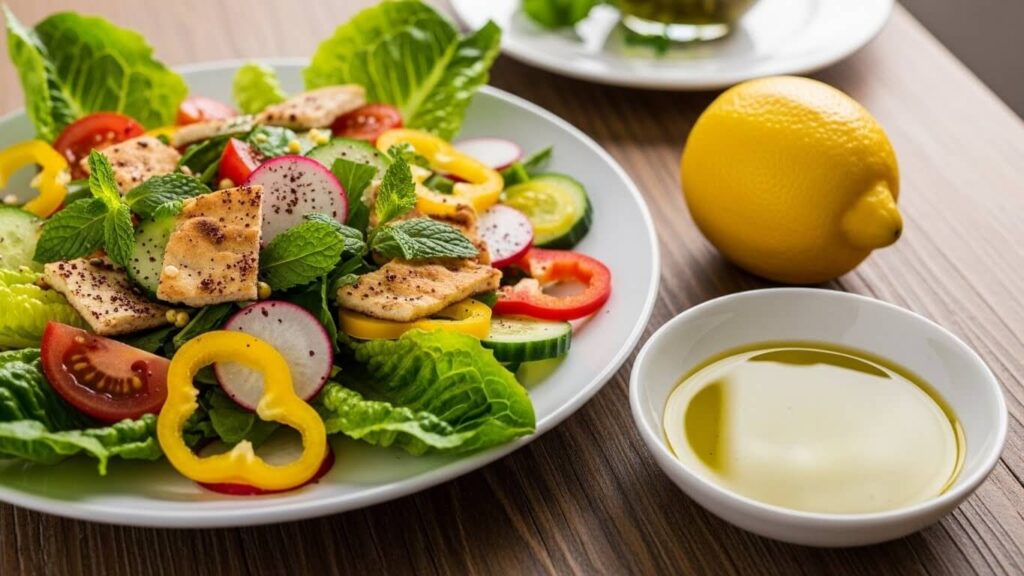
According to Mediterranean diet research, Fattoush is a quintessential dish:
- Heart-Healthy Fats: The recipe relies on large amounts of heart-healthy olive oil (monounsaturated fats) and completely avoids heavy creams or animal fats.
- Plant-Forward Power: Fattoush is 90% vegetables and herbs, making it exceptionally plant-forward. This high content of fresh produce provides key micronutrients, vitamins and a massive dose of fiber.
- Antioxidants and Anti-inflammatory Herbs: The copious use of fresh parsley and mint, along with the spice sumac, delivers powerful antioxidants and is naturally anti-inflammatory.
If you want to know more about the Mediterranean lifestyle, you can visit our Mediterranean diet page or you can explore our category-wise distribution of Mediterranean diet recipes.


Middle Eastern Fattoush Recipe
Ingredients
Equipment
Method
- Preheat oven to 350°F (180°C). Toss pita pieces with 1 tbsp olive oil and a pinch of salt. After that bake for 8-12 minutes until golden and crisp. Then set aside to cool.
- Now, in a very large bowl, combine the chopped lettuce, tomatoes, cucumbers, radishes, bell pepper, green onions, parsley and mint.
- Whisk or shake the olive oil in a small jar, include lemon juice, pomegranate molasses, sumac, garlic, salt and pepper until well combined and emulsified.
- Just before serving, drizzle about three-quarters of the dressing over the vegetables. Toss it gently. Then fold in the toasted pita pieces. Now, serve immediately, garnished with a light sprinkle of sumac.
Notes
Fattoush Storage & Make-Ahead Tips
For best results, Fattoush recipe should be enjoyed immediately while the pita is still crisp.
- Make-Ahead: Prepare the salad components (vegetables/herbs) and the dressing separately. Store them in airtight containers in the refrigerator for up to 2 days.
- Pita: Toast the pita up to 1 week in advance and store it at room temperature in an open paper bag to maintain maximum crispness.
- Storage: If you have leftovers, they will become soggy. To salvage them, you can eat them as a chunky, delicious, and soft bread/vegetable mix the next day. Do not store leftovers with the toasted pita pieces in them.
FAQs
Q: How to make Fattoush dressing?
A: To make Fattoush dressing, whisk together extra virgin olive oil, fresh lemon juice, minced garlic, pomegranate molasses and a generous amount of ground sumac until emulsified and zesty.
Q: What is Fattoush made of?
A: Fattoush is made of toasted or fried pita bread pieces, chopped mixed vegetables (like tomato and cucumber) and fresh herbs, all are tossed in a Lebanese sumac dressing.
Q: Can you make it without pomegranate molasses?
A: Yes, you can substitute the pomegranate molasses with a mixture of 1 teaspoon of lemon juice and 1/2 teaspoon of honey or maple syrup to maintain the essential balance of tartness and sweetness.
Q: What makes Fattoush special?
A: Fattoush is special because of its signature element – the addition of crispy, toasted pita bread salad and its unique, tangy flavor profile derived from the use of the distinctive sumac spice.