
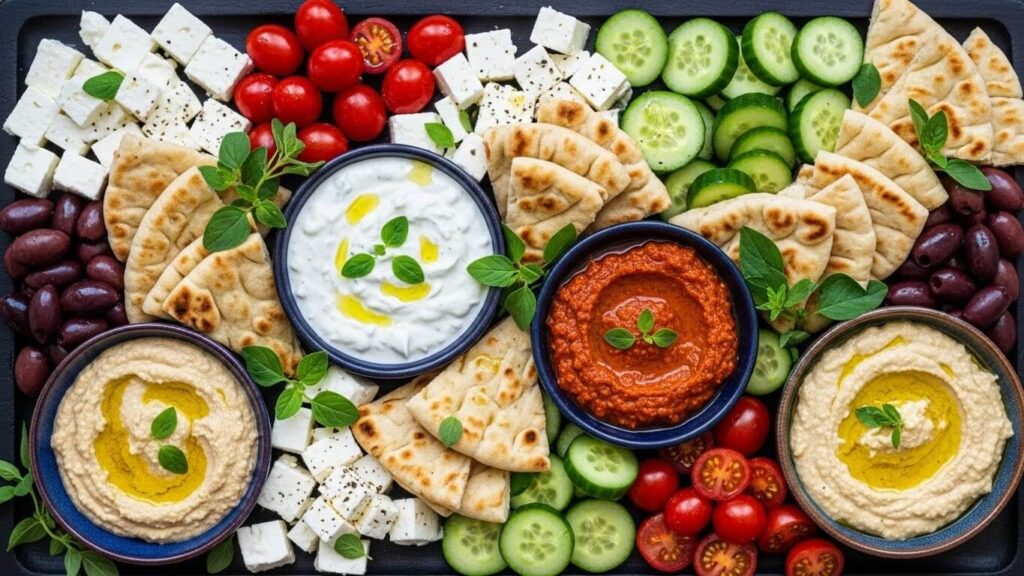
Welcome to your ultimate guide to the Greek Mezze Platter Recipe! More than just a simple appetizer, the mezze platter is a vibrant, flavorful and deeply social way of eating that lies at the heart of the Mediterranean culinary tradition. If you’re looking for authentic Mediterranean diet recipes that perfectly capture the joy of sharing and the benefits of plant-forward eating, this is it.
We’re not just showing you how to assemble a platter; we’re explaining the tradition, breaking down the essential ingredients and demonstrating how to adapt it for a fully vegetarian meal or a stunning dinner party centerpiece.
What Is a Greek Mezze Platter?
A Greek meze (me-ZEH) is not a single dish, but an array of small and savory food items, typically served with a drink like ouzo or tsipouro, designed to be nibbled, shared and savored over a long, unhurried time.
The term mezze (or meze in Greece) is derived from the Persian word mazzeh, meaning “taste” or “snack.” Unlike an appetizer, which precedes a main course, a mezze platter often becomes the meal itself, especially when dining in tavernas or celebrating with friends. It’s an exercise in social eating, where the variety of colors, textures and flavors encourages conversation and connection.
Why Greeks Serve Mezze Platter
Traditionally, meze serves two primary purposes in Greek culture:
- To accompany and enhance spirits: Especially in a traditional ouzeri (ouzo bar), meze is served specifically to complement the strong anise flavor of ouzo, helping to prevent the alcohol from overwhelming the palate.
- To foster social interaction: The communal nature of the platter (everyone reaching, dipping, and sharing) is fundamentally Greek. It’s about slowing down and enjoying life’s simple pleasures.
Why the Mezze Platter Fits the Mediterranean Diet
The Greek mezze platter is a perfect poster child for the Mediterranean diet. Its composition naturally aligns with the diet’s core principles:
- Plant-Forward: It’s heavily centered on vegetables, legumes (dips like hummus recipe), olives and whole grains.
- Healthy Fats: It utilizes ample amounts of extra virgin olive oil, the cornerstone of the Mediterranean diet, in dips and as a drizzle.
- Moderate Dairy and Protein: Cheese and protein are present, but in smaller and more flavorful quantities, acting as accents rather than the main focus.
What Goes on a Greek Mezze Platter?
A great mezze platter is all about balance, color and texture. While there are many variations, a classic Greek platter always includes a combination of creamy dips, fresh vegetables, salty cheeses and satisfying breads.
Here are the key components and how to arrange your Mediterranean mezze platter for maximum visual appeal and flavor synergy.
Traditional Greek Meze Items (Ingredient Breakdown)
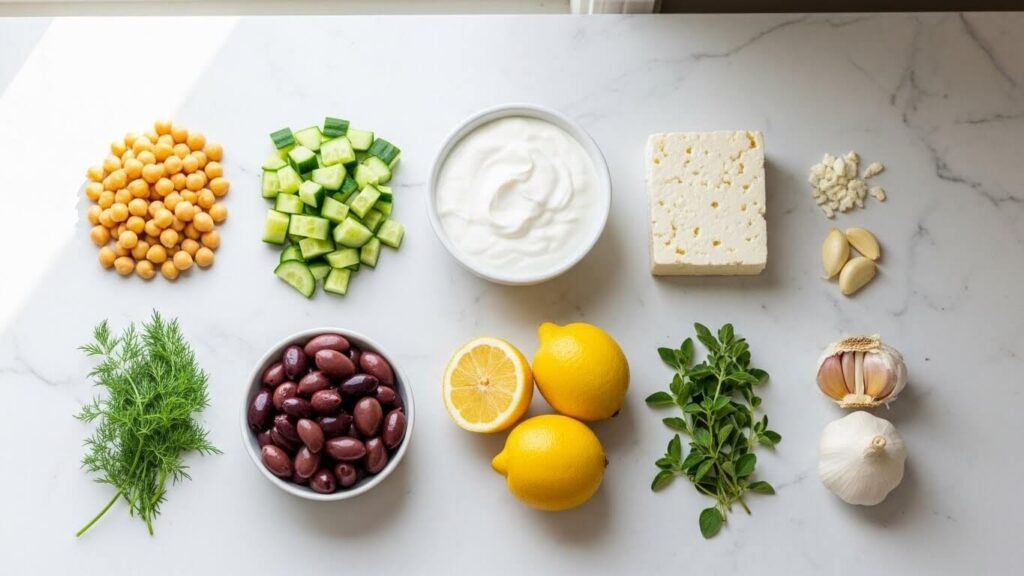
To create an authentic experience, focus on these four categories. (For more flavor ideas, see our guide on The 12 Essential Herbs and Spices for Authentic Greek Cooking).
1. Dips & Spreads
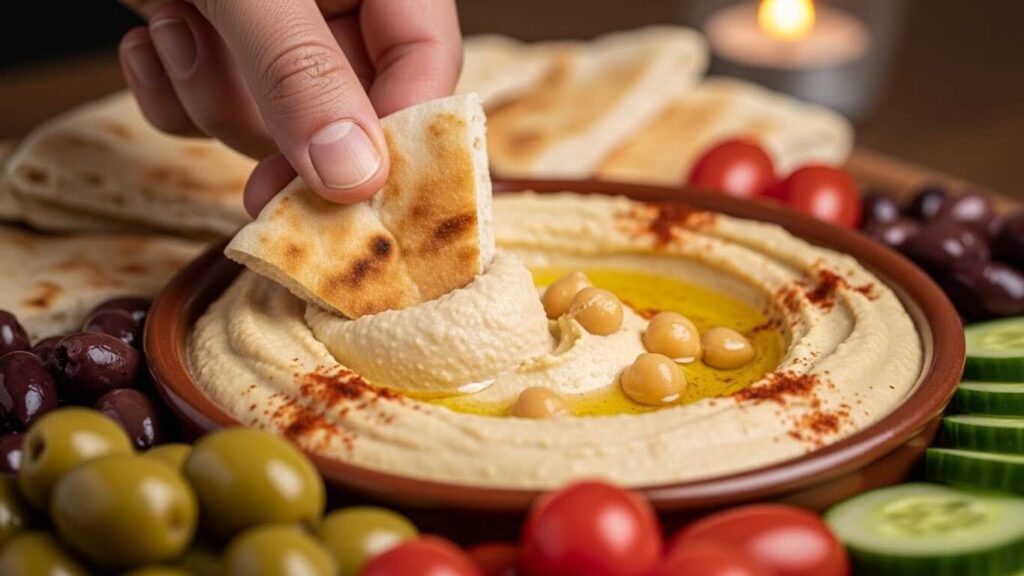
These are the essential building blocks for dipping and spreading.
- Tzatziki: The most classic meze dip and a refreshing mix of Greek yogurt, cucumber, garlic and dill.
- Hummus: Chickpea and tahini dip (See our hummus recipe). A staple across the Eastern Mediterranean.
- Tirokafteri (Spicy Feta Dip): Whipped feta cheese with roasted red peppers or chili flakes for a savory kick.
- Melitzanosalata (Eggplant Dip): A smoky, flavorful dip made from roasted eggplant.
2. Vegetables & Olives
Focus on freshness, color and crunch. These provide fiber and antioxidants.
- Olives: A mix of Greek varieties like Kalamata (the most famous), Volos and Amfissa. Then drizzle them with the Best Olive Oil for Mediterranean Cooking: A Complete Guide.
- Fresh Vegetables: Cucumber slices, bell pepper strips, cherry tomatoes and carrot sticks.
- Marinated Vegetables: Roasted broccoli recipe is a great addition or simple artichoke hearts and pickled banana peppers.
- Dolmades: Stuffed grape leaves, often filled with rice.
3. Cheeses & Proteins
These elements provide savoriness and substance. Remember, in the Mediterranean diet, these are the accents.
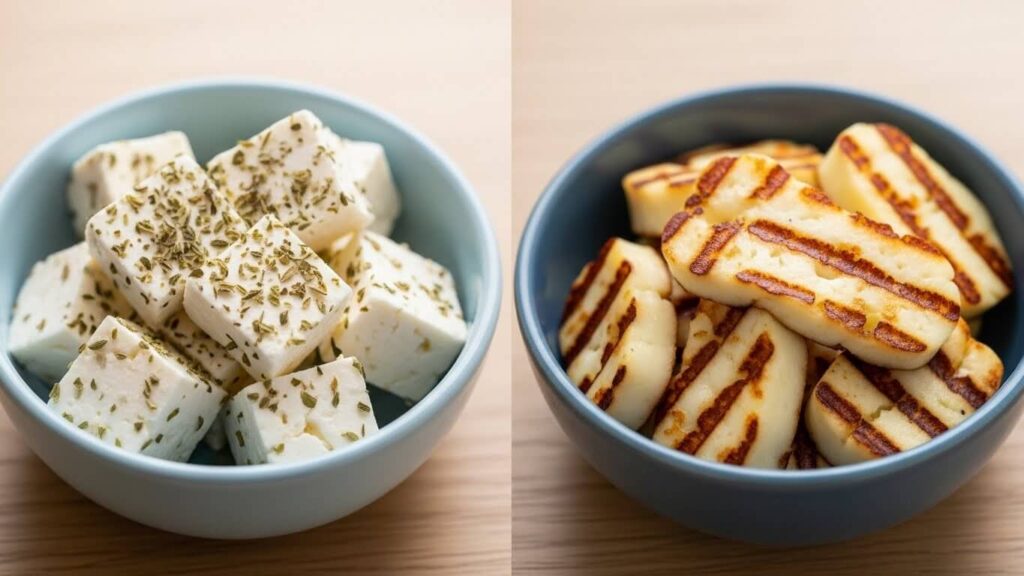
- Feta Cheese: The most important. Serve it cubed and drizzled with a high-quality extra virgin olive oil and a sprinkle of oregano.
- Halloumi: Grilled or pan-fried, offering a salty, squeaky texture (grilled halloumi recipe).
- Saganaki: Pan-fried Kefalotyri or Graviera cheese (if you’re feeling ambitious!).
- Proteins (Optional): Marinated shrimp, sliced Greek Gyro meat recipe or cured meats like pastourma. For a plant-forward platter, focus on legumes like the ingredients in our 3-bean salad recipe.
4. Breads & Extras
The vehicle for all the dips and spreads.
- Pita Bread: Warm, cut into triangles or served as small pockets.
- Crusty Bread: A small loaf of sourdough or French bread cut into slices.
- Rusks (Paximadi): Hard and dried bread perfect for dipping into olive oil or dips.
- Fruit: Slices of apple, orange (orange and olive salad recipe) or figs provide a sweet contrast.
How to Make a Greek Mezze Platter (Step-by-Step Guide)
The beauty of a mezze platter is that it involves very little actual cooking, making it an ideal choice for quick entertaining. The process is assembly and arrangement.
1. The Prep Work (The Few Steps of Cooking)
About 90% of your work is getting the ingredients ready:
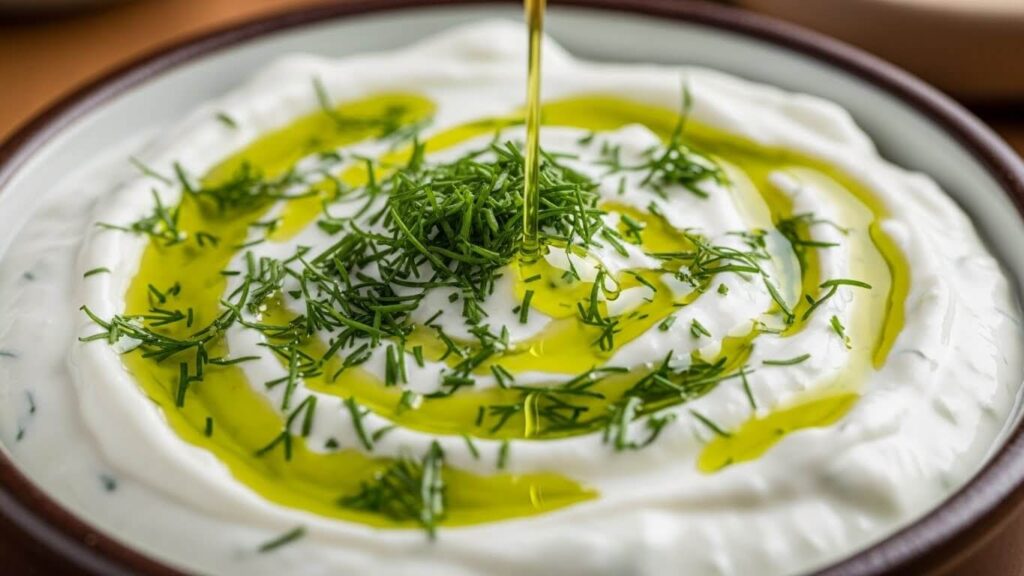
- Make the dips: Prepare your Tzatziki, hummus and Tirokafteri. This can be done 1-2 days ahead.
- Chop and Marinate: Slice all your vegetables. Then marinate the feta and olives if desired.
- Grill (Optional): If adding proteins or a grilled halloumi, grill them about 30 minutes before serving.
- Warm the Bread: Lightly warm the pita bread in the oven or on a grill pan right before assembly.
2. Assembly Logic: Anchoring the Platter
Start with your largest items and build around them.
- The Vessel: Use a large wooden cutting board, a slate serving tray or a large and flat platter.
- Place the Dips First: Put the dips and spreads into small, attractive bowls and place them strategically on the board. These are the anchors of your platter.
- Add the Cheeses & Proteins: Place the cubed feta and any other proteins near the center.
- Scatter the Olives & Dolmades: Use a small bowl or simply scatter the olives to fill the first large gaps around the dips.
- Fill the Gaps with Freshness: Arrange the sliced cucumbers, peppers and tomatoes. And use color to your advantage and place red tomatoes next to green Tzatziki.
- Add the Bread: Place the warmed pita bread along the perimeter or stacked on the side of the platter, ensuring easy access.
- Garnish: Drizzle extra virgin olive oil over the feta and hummus. Then sprinkle paprika, oregano or finely chopped parsley over the dips for color.
3. Balance Flavors & Textures
The key to a truly successful Greek mezze platter is ensuring every bite is a new experience:
| Flavor Profile | Texture Profile | Examples |
| Creamy/Rich | Soft/Smooth | Tzatziki, Hummus and Feta |
| Salty/Umami | Firm/Chewy | Olives, Cured Meats and Halloumi |
| Fresh/Acidic | Crisp/Crunchy | Cucumber, Tomatoes and Bell Peppers |
| Starchy/Base | Chewy/Fluffy | Pita Bread and Rusks |
Greek Mezze Platter Ideas
Your mezze platter doesn’t have to be a one-size-fits-all production. You should adjust the ingredients to suit dietary needs or the occasion.
Vegetarian Greek Mezze Platter
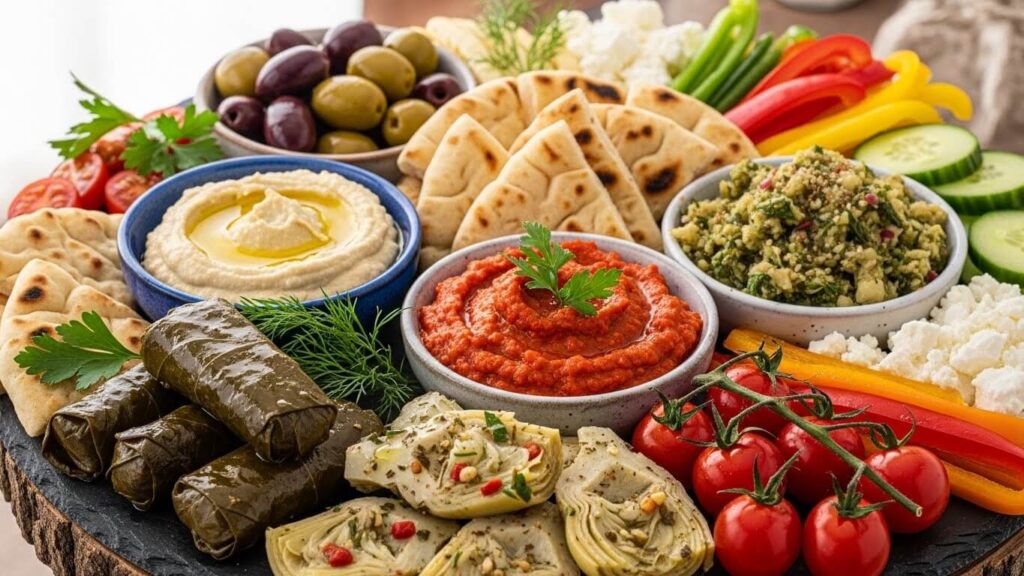
For a fully Greek mezze platter with a vegetarian-friendly presentation, simply emphasize the plant-based and dairy components. The classic version is naturally vegetarian-friendly, but here is how to maximize the focus:
- Double Down on Dips: Include all four dips (Tzatziki, Hummus, Tirokafteri and Melitzanosalata).
- Focus on Legumes: Add a bowl of simple marinated white beans (Tuscan white bean soup uses similar ingredients but in a lighter format) or a small scoop of Greek Quinoa Salad Recipe to provide complete, filling protein.
- Marinated Feta: Ensure the feta is the star cheese.
- No Cured Meats: Replace any meat/seafood with plant-based dolmades or a bowl of marinated artichoke hearts.
Lunch vs Dinner Mezze Platters
The time of day can dictate the size and heartiness of your platter.
| Feature | Lunch Mezze Platter | Dinner Mezze Platter |
| Focus | Light, Refreshing and Quick | Hearty, Rich and Variety |
| Key Ingredients | More raw vegetables, fewer starches. Focus on lighter dips like Tzatziki. | More marinated items, more breads/rusks. Add heartier items like grilled meats or the ingredients for the Spanakopita recipe. |
| Serving Size | Designed for 1-2 people or a small group. | Centerpiece for a larger party (see serving section below). |
Greek Mezze vs Lebanese Mezze vs Antipasto
While all three are small, savory, shared plates, they originate from different cultures and feature distinct ingredients.
| Feature | Greek Mezze | Lebanese Mezze | Italian Antipasto |
| Origin | Greece, Cyprus | Lebanon, Levant | Italy |
| Key Dips | Tzatziki, Tirokafteri and Hummus | Hummus, Baba Ghanoush, Tabbouleh (See our tabbouleh recipe for inspiration) | Pesto, tapenade |
| Star Cheeses | Feta, Halloumi | Labneh, Halloumi | Mozzarella, Parmesan and Provolone |
| Star Proteins | Grilled Halloumi, Kalamata Olives | Kibbeh, Falafel | Cured meats (Prosciutto and Salami) |
| Vibe | Social, Ouzo/Wine Accompaniment | Wide array of meze (often 12+ dishes) | Precedes the main meal (pasta/meat) |
How to Serve a Greek Mezze Platter
Serving a mezze platter is about presentation, setting the mood and managing portions.
Portions for 2, 4, 6 Servings
| Guests | Platter Size | Estimated Total Volume | Dips (Small Bowls) |
| 2 People | Small cutting board | 1 Dip, 2 Cheeses and 2 Veg/Olive varieties | 3-4 Tbsp each |
| 4 People | Medium tray (16×10) | 2 Dips, 3 Cheeses and 4 Veg/Olive varieties | 1/2 cup each |
| 6+ People | Large platter (18+) | 3 Dips, 4 Cheeses, 6+ Veg/Olive varieties | 1 cup each |
Mezze Platter Dinner Party Timeline
This platter is an ideal low-stress option for hosting.
- 1-2 Days Before: Prepare your dips and sauces. Then buy all non-perishables.
- 4 Hours Before: Slice vegetables and cheeses. Now, store in airtight containers in the fridge.
- 1 Hour Before: Begin assembly and place the bowls of dip first, then the larger items.
- 30 Minutes Before: Add the final fresh vegetables, olives and bread. Then cover lightly and let it come to room temperature (this enhances flavor).
- Serve: Serve the platter with small cocktail forks, small plates and napkins. Also, encourage guests to sample and share!
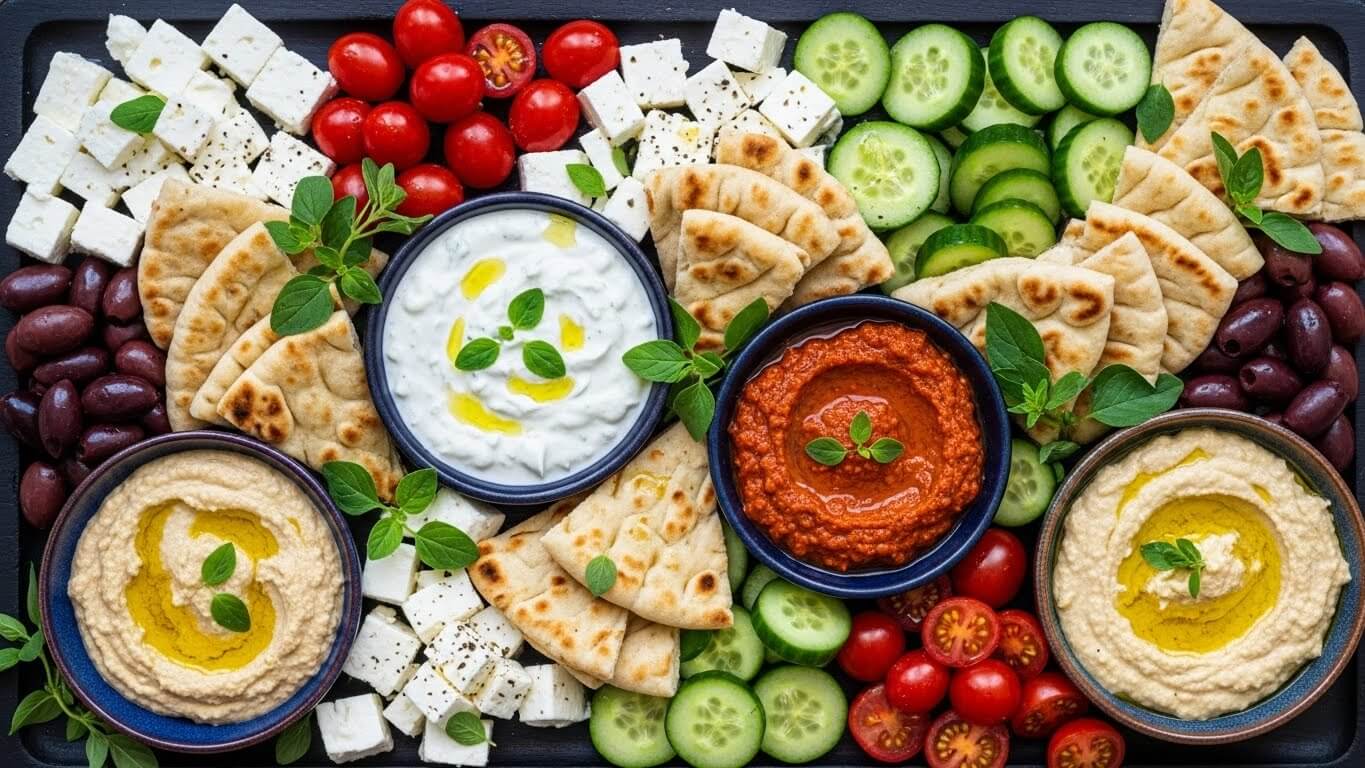
Greek Mezze Platter (Classic Mediterranean Mezze)
Ingredients
Equipment
Method
- Prepare all dips (or scoop store-bought into bowls).
- Then chop all vegetables and slice the feta cheese into cubes. Lastly, warm the pita bread and slice the crusty bread.
- Place the small bowls of Tzatziki, Hummus and Tirokafteri strategically on your large serving board.
- Place the cubed feta on the board and drizzle it with olive oil and dried oregano. And if grilling Halloumi, add it next.
- Scatter the olives and dolmades around the dips.
- Then, arrange the sliced vegetables (cucumber, tomato and pepper) throughout the remaining space.
- Stack the warmed pita triangles and slices of crusty bread along the edge of the platter, ensuring they are easy to grab.
- Drizzle a little high-quality olive oil over the hummus, vegetables and feta. After that, sprinkle with chopped fresh herbs.
- Finally, serve immediately at room temperature.
Notes
- Make Ahead: All dips (Tzatziki, Hummus, Tirokafteri) can be prepared 1-2 days in advance and stored in the refrigerator. This platter is best served at room temperature, so pull the dips and cheeses out of the fridge 20-30 minutes before assembling.
- Customization: The mezze platter is highly customizable. And for a heartier meal, add proteins like cooked shrimp or marinated chicken skewers. For a fully vegan version, ensure you use a vegan feta alternative and coconut/cashew-based Tzatziki.
- Storage: Leftover dips should be stored in airtight containers in the refrigerator for up to 3 days. Discard any vegetables or breads that have been sitting out at room temperature for more than 4 hours.
- Serving Tip: Provide plenty of small tongs or cocktail forks for serving and small individual plates, as this encourages the shared and social style of Greek dining.
Mediterranean Diet Benefits of Greek Mezze Platter
The Greek mezze platter is a perfect snapshot of the health benefits inherent in the Mediterranean diet.
- Olive Oil: A constant feature in dips and as a garnish, extra virgin olive oil provides powerful monounsaturated fats that support heart health.
- Vegetables: The high volume of fresh vegetables ensures high intake of fiber, vitamins (A, C, K) and minerals. This plant-forward focus is key to the diet’s success.
- Fermented Dairy: Ingredients like Greek yogurt (in Tzatziki) and feta are examples of fermented dairy, which contribute probiotics that are beneficial for gut health.
- Shared Plates: The focus on grazing and sharing encourages mindful and slow eating; a cultural habit that contributes to better digestion and satisfaction, as highlighted in How Mediterranean Families Eat: 7 Cultural Habits That Extend Lifespan.
Greek Mezze Platter Nutrition Information (Per Serving)
Disclaimer: Nutrition information is estimated based on an average serving size (approx. 1/6th of a medium platter), focusing on high-fiber and low-meat items.
| Nutrient | Per Serving (Estimated) | % Daily Value (Approx.) |
| Calories | 380-450 kcal | |
| Total Fat | 25-30g | 38% |
| Saturated Fat | 8g | 40% |
| Cholesterol | 20mg | 7% |
| Sodium | 650mg | 28% |
| Total Carbs | 30-35g | 12% |
| Dietary Fiber | 7g | 28% |
| Protein | 15-20g | 30% |
Greek Mezze Platter Recipe
Mezze Platter Ingredients
| Component | Item | Quantity | Notes |
| Dips | Tzatziki | 1 cup | Homemade or store-bought |
| Hummus | 1 cup | ||
| Tirokafteri | 1/2 cup | Spicy Feta Dip | |
| Cheese | Feta Cheese | 8 oz block | Drizzled with olive oil & oregano |
| Halloumi | 4 oz | Grilled or pan-fried | |
| Vegetables | Kalamata Olives | 1/2 cup | Pitted or unpitted |
| Cucumber | 1 large | Sliced or cut into sticks | |
| Cherry Tomatoes | 1 cup | Halved | |
| Bell Pepper (Red/Yellow) | 1 | Sliced | |
| Dolmades | 6-8 pieces | Rice-stuffed grape leaves | |
| Breads | Pita Bread | 4-6 rounds | Warmed and cut into triangles |
| Crusty Bread | 1/2 loaf | Sliced | |
| Garnish | Extra Virgin Olive Oil | 2 Tbsp | High-quality for drizzling |
| Fresh Parsley/Dill | 1 Tbsp | Chopped for garnish | |
| Oregano/Paprika | Pinch | For dusting dips and cheese |
Recipe Instructions for Greek Mezze Platter
- Prepare Dips: Place Tzatziki, Hummus and Tirokafteri into separate, small serving bowls. Then garnish each with a drizzle of olive oil and a sprinkle of a fresh herb or spice (e.g paprika on the hummus).
- Prep Cheese: Cut the feta into cubes and place on a small section of the platter and drizzle with olive oil and a pinch of dried Greek oregano. If using Halloumi, grill or pan-fry until golden brown before adding to the platter.
- Prep Vegetables: Slice or cut all fresh vegetables and arrange them on the platter. After that, place them next to the dips for easy access.
- Place Anchors: Arrange the bowls of dip and the block of feta first.
- Fill the Gaps: Scatter the olives and dolmades around the main components, letting them spill over and fill empty spaces.
- Add Bread: Stack the warmed pita bread triangles and slices of crusty bread along the edge of the platter.
- Final Garnish: Drizzle any remaining olive oil over the olives and vegetables. Finally, serve immediately and enjoy!
FAQs
What goes on a Greek mezze platter?
A classic Greek mezze platter features a balanced combination of items from four key categories:
- Dips and Spreads (like Tzatziki and Hummus)
- Cheeses (like Feta and Halloumi)
- Vegetables and Olives (Kalamata olives, cucumbers, tomatoes)
- Breads and Starches (warmed pita bread).
What is a traditional Greek meze?
A traditional Greek meze refers to a selection of small and savory dishes served in Greece, most commonly in an ouzeri (ouzo bar) or taverna. The purpose is to complement strong spirits like ouzo or to encourage slow, shared and social eating. These items often include dolmades, taramasalata, grilled octopus and feta cheese.
What exactly is a mezze plate?
A mezze plate is simply a platter or board containing an assortment of meze; small and shareable dishes. It’s the Mediterranean version of an appetizer spread, but unlike an appetizer, it is typically intended to be consumed slowly as the main focus of a social gathering rather than just a starter.
What are meze on a Greek menu?
On a Greek menu, meze are listed as individual, small plates for sharing. Its examples include keftedes (meatballs), saganaki (fried cheese), dolmades (stuffed grape leaves) and loukaniko (Greek sausage). The mezze platter is the assembly of several of these items onto one large serving board.
What type of food is mezze?
Mezze is a category of small and savory food items meant for snacking and sharing, popular across the Mediterranean, the Balkans and the Middle East. It is defined by its style of eating (shared, communal and slow) rather than a single ingredient, though it is typically plant-forward.
How do you make a mezze platter at home?
To make a mezze platter at home, first prepare your dips (Tzatziki and Hummus) and chop your vegetables. Use a large board and start by placing your dips in small bowls. Then, strategically arrange the cheeses, olives, vegetables and warmed pita bread around the dips, using color and texture to fill all the empty spaces. Finally, garnish with olive oil and herbs.
Is a Greek mezze platter vegetarian?
Yes, a classic Greek mezze platter is generally vegetarian-friendly and often entirely vegetarian. Its core components are plant-based (vegetables, olives and legumes) and dairy-based (feta and Tzatziki). If you omit cured meats or seafood, the platter is fully vegetarian and perfectly aligned with the plant-forward nature of the Mediterranean diet.