


There is something undeniably comforting about the perfect potato side dish—the kind that makes you reach for seconds before you’ve even finished your first. These Greek potato wedges are exactly that. Imagine a plate filled with golden-brown roasted potato wedges, boasting irresistibly crispy, caramelized edges that give way to a fluffy, melt-in-your-mouth interior. Infused with a vibrant lemon-garlic marinade, they are then generously sprinkled with tangy, salty feta cheese and aromatic fresh herbs, with bright lemon wedges resting on the side.
Inspired by the authentic Greek taverna-style roasted potatoes—often known as patates lemonates—this Greek potato wedges recipe is the ultimate crowd-pleaser. Whether you are pairing them with succulent grilled meats, refreshing salads, or creamy dips like tzatziki, these potatoes bring a touch of the Mediterranean directly to your kitchen table.
What Are Greek Potato Wedges?
Greek potato wedges are a classic Mediterranean side dish that elevates the humble potato into something truly special. At their core, they are a variation of traditional Greek lemon potatoes. Unlike standard roasted potatoes that rely solely on salt and pepper, these wedges are roasted in a bold, aromatic blend of high-quality olive oil, fresh garlic, punchy lemon juice, and earthy oregano.
Often, they are cooked with a splash of broth, which steams the potatoes from the inside out, keeping them exceptionally tender, while the high heat ensures a crispy exterior. Finishing them with a sprinkle of crumbly feta cheese and fresh parsley or dill provides a creamy, salty contrast that separates them from your typical oven-roasted spuds. If you enjoy exploring the Mediterranean Diet, these potatoes are a fantastic, flavor-packed addition to your weekly rotation.
Why You’ll Love This Greek Potato Wedges Recipe
- Perfect Texture: They achieve that holy grail of potato preparation: crispy on the outside and wonderfully fluffy on the inside.
- Authentic Flavors: The combination of lemon, garlic, and oregano is the hallmark of classic Greek cuisine.
- Simple & Reliable: This oven-baked recipe uses simple pantry staples that you likely already have on hand.
- Versatile Side: They pair perfectly with almost any main course, from grilled proteins to veggie-heavy feasts.
- Vegetarian-Friendly: Naturally vegetarian, and easily made vegan by simply omitting the feta cheese.
Ingredients for Greek Potato Wedges
To achieve that authentic Mediterranean taste, the quality of your ingredients matters.
- Potatoes: Yukon Gold potatoes offer a buttery, creamy interior, while Russets provide a starchier, extra-fluffy texture. Both work beautifully, so choose based on your preference!
- Olive Oil: Always reach for extra virgin olive oil. It is essential for the authentic, rich flavor profile of this dish.
- Lemon Juice: Freshly squeezed lemon juice is non-negotiable here; it adds a bright, zesty acidity that cuts through the starch.
- Garlic: Freshly minced garlic is far superior to jarred or powdered versions, providing a bold, aromatic base.
- Oregano: Dried oregano is the quintessential Greek herb, lending an earthy, woody depth.
- Paprika: A touch of paprika provides mild warmth and gives the potatoes their beautiful golden-brown color.
- Broth: Adding a little vegetable or chicken broth to the pan helps steam the potatoes, keeping the insides tender while the edges crisp up.
- Feta Cheese: High-quality, authentic Greek feta, crumbled over the hot potatoes, creates a creamy, salty finish that is addictive.
- Fresh Herbs: A handful of chopped fresh parsley or dill adds a burst of color and a fresh, grassy note to finish the dish.
How to Make Greek Potato Wedges (Step-by-Step)
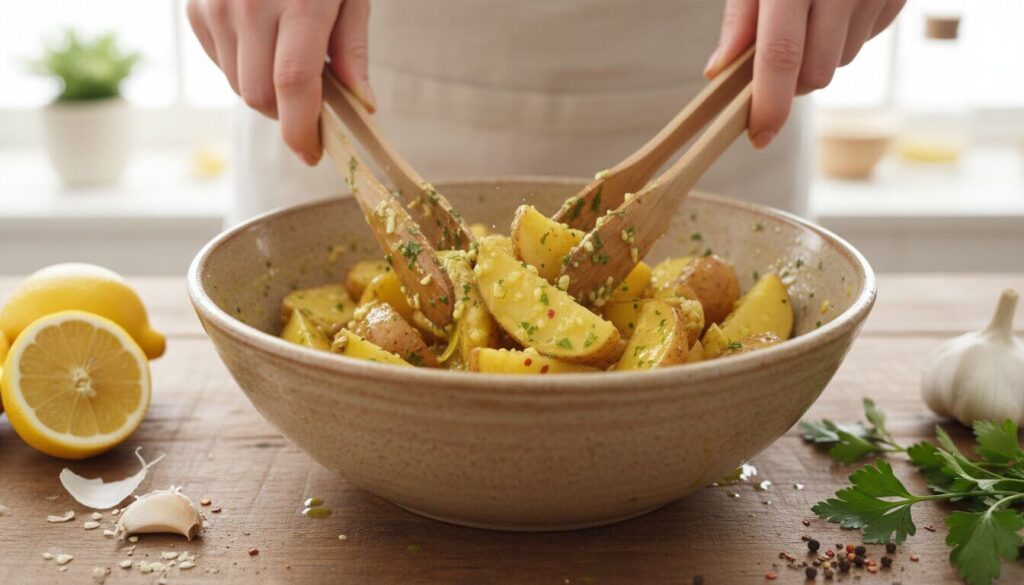
Step 1: Prepare the Potatoes
Wash your potatoes thoroughly. Using a sharp knife, cut them into thick, even wedges. Keeping the wedges similar in size is the secret to even roasting, ensuring you don’t end up with some pieces burnt and others undercooked.
Step 2: Make the Lemon Garlic Marinade
In a large mixing bowl, whisk together the extra virgin olive oil, fresh lemon juice, minced garlic, dried oregano, paprika, salt, and black pepper. This potent mixture is the heartbeat of this crispy Greek potato wedges recipe, ensuring every morsel is packed with flavor.
Step 3: Season the Wedges
Add your cut potatoes to the bowl and toss them thoroughly until every wedge is generously coated in the marinade. If you want an extra tender interior, this is the time to add a half-cup of broth to your baking sheet before arranging the potatoes.
Step 4: Roast the Potatoes
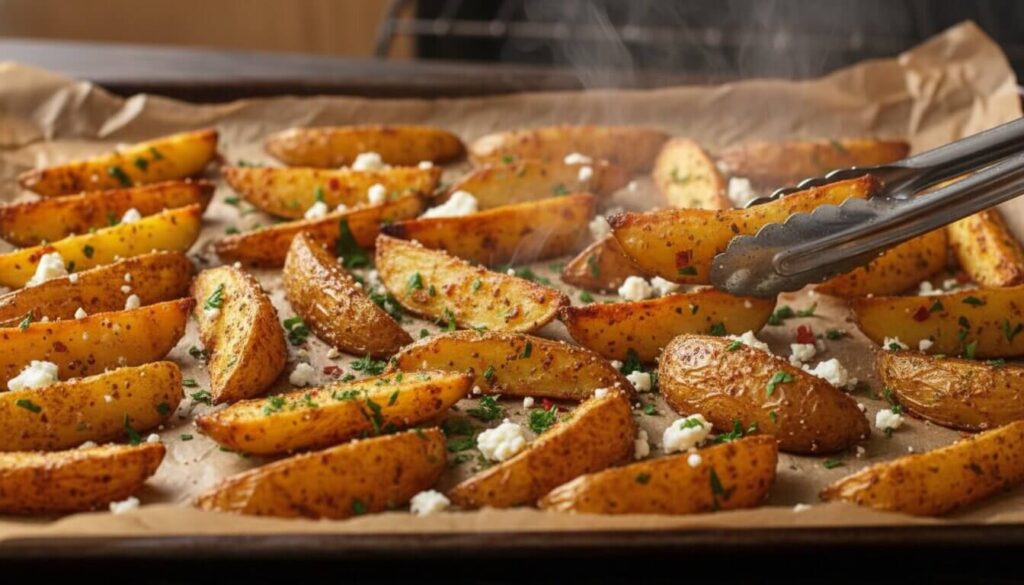
Preheat your oven to 425°F (220°C). Arrange the wedges on a parchment-lined baking sheet, skin side down. Ensure they are in a single layer with enough space between them; overcrowding causes them to steam rather than roast, which is the enemy of crispiness.
Step 5: Flip and Finish Roasting
Roast for 25–30 minutes, then carefully flip the wedges to ensure even browning on all sides. Continue roasting for another 15–20 minutes until they reach a deep, golden-brown color with crispy edges and a soft, tender interior.
Step 6: Add the Mediterranean Finish
Transfer the hot, roasted wedges to a serving platter. Immediately top them with crumbled feta cheese, freshly chopped parsley or dill, and a final squeeze of fresh lemon juice. The heat from the potatoes will slightly soften the feta, creating a divine, creamy coating over the crispy edges.
How to Make Greek Potato Wedges Extra Crispy
To guarantee the crunchiest oven baked Greek potatoes, follow these pro tips:
- Soak: Soak your cut potato wedges in cold water for 30 minutes before roasting to remove excess starch.
- Dry Thoroughly: Moisture is the enemy of crispiness. Pat the potatoes completely dry with a clean kitchen towel before tossing them with oil.
- Don’t Overcrowd: Use two baking sheets if necessary. Potatoes need airflow to crisp up properly.
- High Heat: Stick to 425°F (220°C). High heat is necessary to caramelize the sugars and create a crust.
- Flip Once: Avoid the urge to stir them constantly. Flip once halfway through to allow that golden crust to develop undisturbed.
Best Potatoes for Greek Potato Wedges
- Yukon Gold: These are the gold standard for many, as they hold their shape well while offering a rich, creamy interior that contrasts perfectly with a crisp exterior.
- Russet: If you crave the fluffiest possible center and the most intense crunch, the high starch content of the Russet makes it an excellent choice.
Air Fryer Greek Potato Wedges
If you’re looking for a faster method, your air fryer is a perfect tool. Simply preheat the air fryer to 380°F (193°C), toss the seasoned wedges, and cook for 20–25 minutes, shaking the basket halfway through. The circulating air creates incredible crispiness in a fraction of the time. Don’t forget to top with feta and herbs right before serving!
Serving Suggestions (Mediterranean Style)
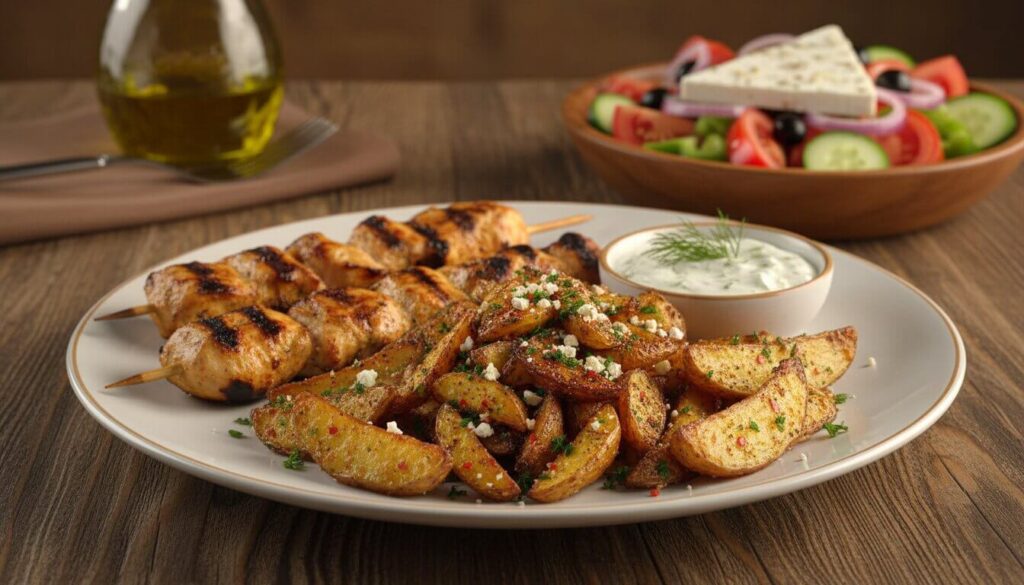
In Greek tavernas, these wedges are rarely eaten alone. Serve them alongside grilled chicken souvlaki or lamb kebabs for a complete meal. They are also the perfect companion to Mediterranean roasted vegetables or a crisp traditional Greek salad. Don’t forget a side of cool, refreshing tzatziki sauce—the contrast between the hot, lemony potatoes and the cool cucumber yogurt is pure culinary magic. For more inspiration, check out our collection of Easy Mediterranean Recipes.
Delicious Variations
- Garlic Parmesan: Add finely grated Parmesan along with the feta for an extra umami boost.
- Spicy Chili: Sprinkle a pinch of crushed red pepper flakes into the marinade for a subtle heat.
- Feta and Dill: Lean into the Greek flavors by using a generous amount of fresh dill instead of parsley.
- Mediterranean Loaded: Top the potatoes with chopped kalamata olives, diced tomatoes, and red onion for a “loaded” Greek wedge experience.
Storage and Reheating Tips
Store any leftovers in an airtight container in the refrigerator for up to 3 days. To maintain crispiness, avoid the microwave! Instead, reheat them in a 400°F (200°C) oven or in your air fryer for 5–8 minutes until they are hot and crisp again.

Greek Potato Wedges
Ingredients
Method
- Preheat oven to 425°F (220°C) and line a large baking sheet with parchment paper.
- In a large bowl, toss potato wedges with olive oil, lemon juice, minced garlic, oregano, paprika, salt, and pepper until evenly coated.
- Spread potatoes in a single layer on the baking sheet. If using, add broth to the pan. Bake for 25–30 minutes.
- Flip the wedges and bake for another 15–20 minutes until deeply golden and crispy.
- Transfer to a platter while hot, top with crumbled feta, fresh herbs, and an extra squeeze of lemon.
Notes
Frequently Asked Questions
Why are Greek potatoes so crispy?
High roasting temperatures, soaking to remove starch, and ensuring they are in a single layer are the keys to achieving that perfect crunch.
What seasoning is used on Greek potatoes?
The classic trio is oregano, garlic, and lemon, often rounded out with paprika, salt, and pepper.
Why do Greek potatoes use lemon?
Lemon juice provides the signature acidity that balances the richness of the olive oil and the earthiness of the potatoes.
Can I make Greek potatoes without feta?
Absolutely! They are still incredibly delicious without cheese, making them a perfect vegan-friendly side.
Are Greek potatoes healthy?
When roasted with high-quality extra virgin olive oil, they are a wholesome, nutrient-dense addition to a balanced diet.
Pro Tips for Restaurant-Style Greek Potatoes
- Heavy Pan: Roasting in a heavy-bottomed or cast-iron pan can help with heat retention and better browning.
- Fresh Lemon Juice: Avoid bottled lemon juice; the flavor difference is significant.
- Herbs Last: Adding fresh herbs at the very end prevents them from burning and keeps their flavor vibrant.
- Flaky Sea Salt: A final pinch of flaky sea salt right before serving elevates the texture and flavor.
Final Thoughts
There is a reason why authentic Greek potatoes are a staple in Mediterranean cooking—they are simple, satisfying, and deeply flavorful. Whether you’re hosting a dinner party or just looking for a cozy side dish for a weeknight meal, these wedges are guaranteed to impress.
We love serving these alongside a variety of our favorite Mediterranean main courses. If you enjoyed this recipe, be sure to explore more of our Easy Mediterranean Recipes and dive deeper into the health benefits and culinary joys of the Mediterranean Diet. Happy cooking!