

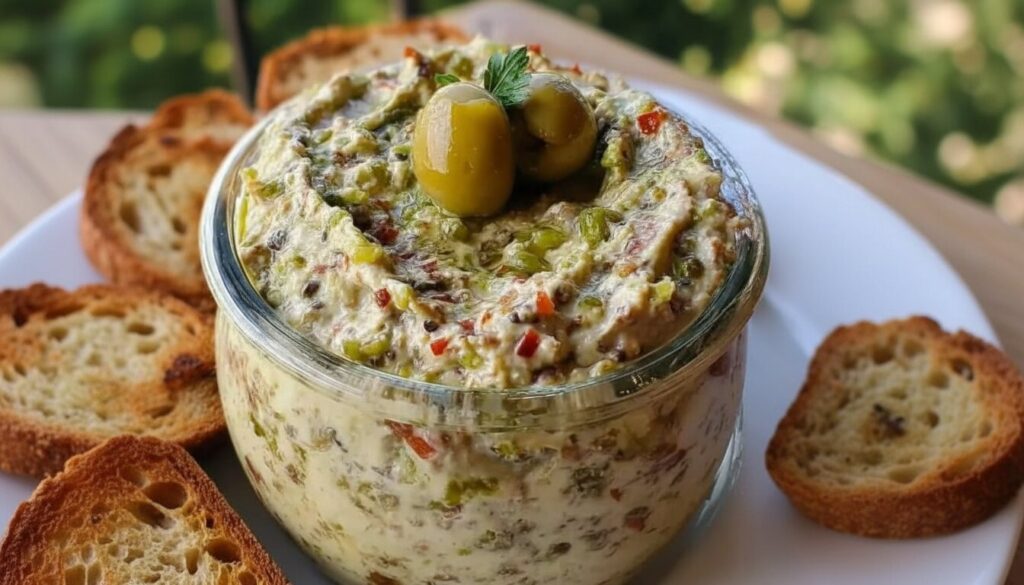
If you are craving a snack that is creamy, briny, and packed with bold, garlicky flavors, this Green Olive Dip recipe is about to become your new kitchen staple. Perfectly balancing the saltiness of Mediterranean olives with the zing of fresh lemon and aromatic herbs, this dip is a testament to how simple ingredients can create a sophisticated flavor profile.
The best part? This easy olive dip recipe is ready in just 10 minutes. Whether you are hosting a last-minute gathering or simply looking for a healthy addition to your lunch wrap, this versatile spread captures the essence of Mediterranean coastal dining. It is naturally heart-healthy, vibrant, and incredibly satisfying.
Full printable recipe card below.
What is Green Olive Dip?
While often referred to as a Mediterranean olive dip or a Greek olive dip, this dish sits at the intersection of several culinary traditions. At its core, it is a modern, creamier evolution of the classic tapenade.
Dip vs. Spread vs. Tapenade
Understanding the texture helps you master the recipe:
- Tapenade: Traditionally a thick, coarse paste made from capers, olives, and anchovies. It is meant to be salty and intense.
- Green Olive Spread: Usually finer in texture, designed to be slathered onto sandwiches or crusty bread.
- Green Olive Dip: Often incorporates a blending technique or a creamy element (like feta or yogurt) to make it scoopable for vegetables and pita chips.
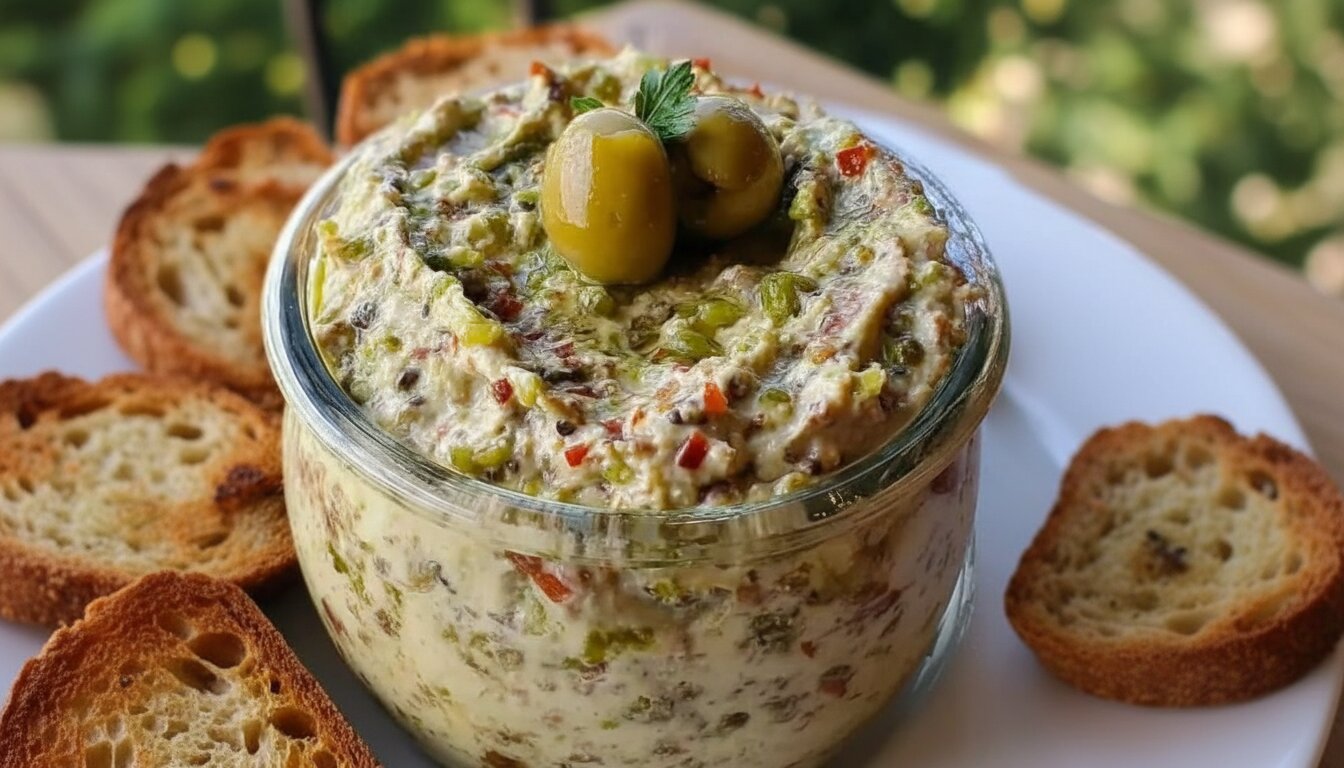
This specific recipe provides the perfect middle ground—it is chunky enough to feel authentic but smooth enough to serve as a crowd-pleasing appetizer.
Ingredients for Green Olive Tapenade
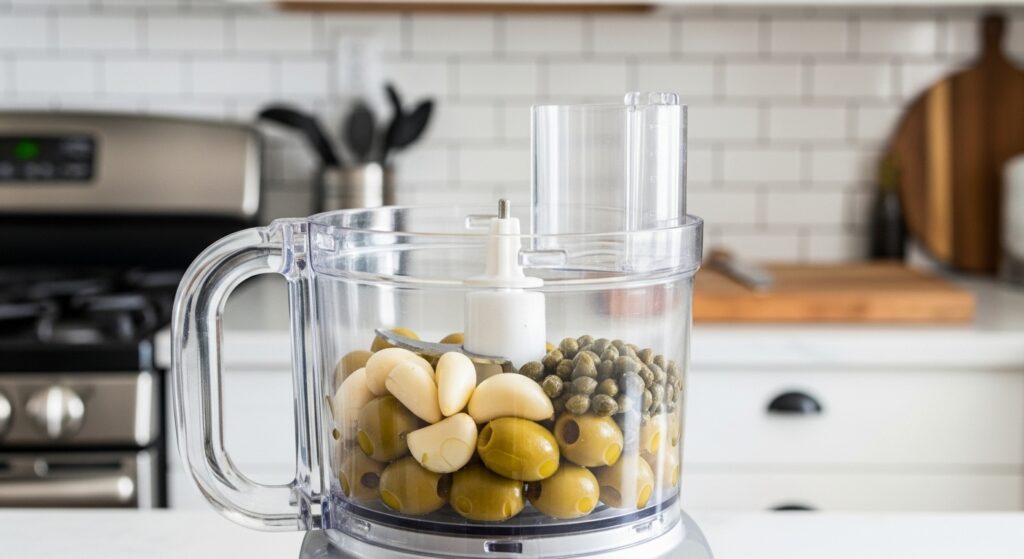
To achieve the best results, quality is everything. Using a green olive spread recipe with inferior ingredients will result in a flat flavor. Here is what you will need:
- Green Olives: The star of the show. Castelvetrano or Halkidiki olives are preferred for their buttery texture and mild bitterness.
- Fresh Garlic: One or two cloves provide a sharp, pungent kick that cuts through the richness of the oil.
- Extra Virgin Olive Oil: Use the high-quality stuff here; it acts as the binder and adds a peppery finish.
- Lemon Juice: Freshly squeezed acidity is vital to brighten the briny notes.
- Capers: Optional, but highly recommended for an authentic, tangy Mediterranean bite.
- Fresh Herbs: A handful of flat-leaf parsley or fresh oregano adds an earthy, garden-fresh aroma.
How to Make Green Olive Dip (Step-by-Step)
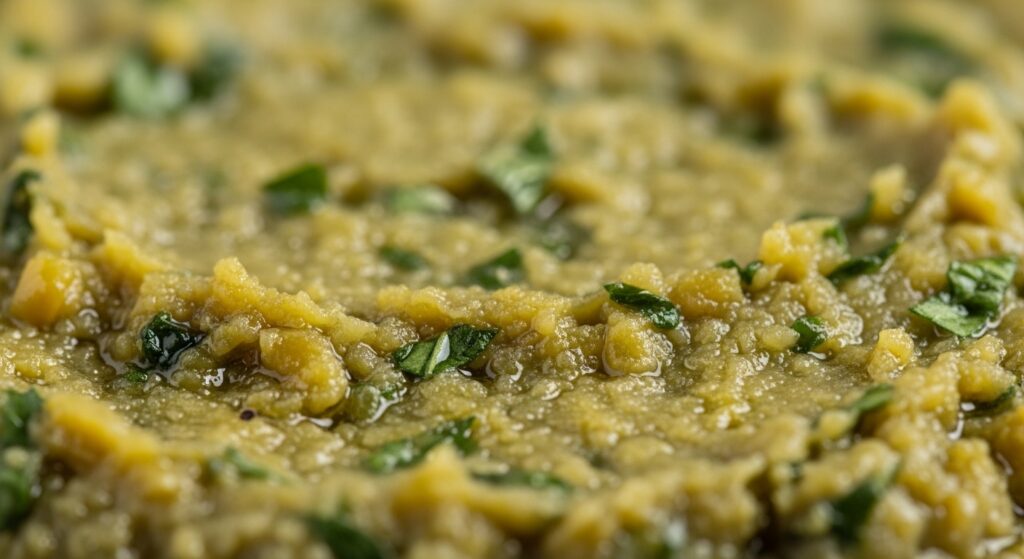
Creating this easy olive dip recipe is a matter of assembly and pulse-control. Follow these steps for the perfect consistency:
- Prep the Aromatics: Place your pitted olives, peeled garlic cloves, and drained capers into the bowl of a food processor.
- Pulse for Texture: Instead of running the processor continuously, use short pulses. You want the olives to be finely chopped but still maintain a “pebbly” texture.
- The Emulsion: While the processor is on a low setting, slowly drizzle in the extra virgin olive oil. This creates a cohesive “bind” rather than a greasy puddle.
- The Finish: Add the lemon juice and fresh herbs. Pulse two or three more times just to incorporate.
- Taste and Adjust: Olives vary in saltiness. Taste your dip before adding any extra sea salt, and add a crack of black pepper if desired.
Tips for the Best Olive Dip
- Rinse the Olives: If your olives came in a very heavy brine, give them a quick rinse under cold water. This allows the flavor of the herbs and lemon to shine through without being overshadowed by salt.
- Texture Matters: Avoid over-blending. If you turn it into a complete puree, you lose the rustic charm that makes a green olive tapenade so appealing.
- Temperature: While you can eat it immediately, letting the dip sit in the fridge for 30 minutes allows the garlic and herbs to infuse the oil.
Ingredients
Method
- Place olives, garlic, and capers in a food processor.
- Pulse 5-8 times until the mixture is finely chopped but still has a coarse texture.
- While the motor is running on low, slowly pour in the olive oil until incorporated.
- Add lemon juice, parsley, oregano, and pepper. Pulse 2 more times.
- Transfer to a bowl and serve at room temperature or chilled.
Notes
-
Olive Selection: Use Castelvetrano olives for a buttery, mild flavor or Halkidiki for a traditional sharp, tangy Greek profile. Always ensure they are pitted before blending.
- Sodium Control: If the dip tastes too salty, stir in a teaspoon of Greek yogurt or silken tofu to mellow the brine without changing the flavor profile significantly.
- The “Pulse” Rule: Never run the food processor on “High” or for long intervals. Use 1-second pulses to avoid turning the dip into an oily paste; aim for a rustic, pebbly consistency.
- Oil Quality: Since this is a raw preparation, use Cold-Pressed Extra Virgin Olive Oil. This provides the polyphenols and peppery finish essential to Mediterranean cooking.
- Make-Ahead Tip: This dip is actually better on day two. Prepare it 24 hours in advance to allow the garlic to lose its sharp raw edge and the herbs to fully infuse the oil.
- Preservation: If storing for more than 3 days, smooth the top of the dip in your container and pour a thin film of olive oil over the surface. This creates a natural air barrier that prevents oxidation.
Health Benefits of Olive Dip
This healthy olive dip is more than just a tasty snack; it is a nutritional powerhouse compliant with the Mediterranean diet:
- Healthy Fats: High in monounsaturated fats (oleic acid) which are known to support heart health and reduce inflammation.
- Antioxidants: Olives are rich in Vitamin E and polyphenols, which help combat oxidative stress.
- Low Carb: This is a naturally keto-friendly and vegan appetizer, making it suitable for almost any dietary requirement.
How to Serve Green Olive Dip
The versatility of a green olive spread recipe means it can transition from breakfast to dinner:
- The Classic Appetizer: Spread generously over toasted crostini or warm pita triangles.
- The Healthy Snack: Use it as a vibrant dip for cucumber slices, bell pepper strips, or raw carrots.
- The Flavor Booster: Add a dollop to your Mediterranean wraps, turkey sandwiches, or even as a topping for grilled white fish or roasted chicken.
Variations
- Greek Olive Dip with Feta: Crumble in 50g of sheep’s milk feta during the final pulse for a creamy, tangy twist.
- Spicy Olive Dip: Add a teaspoon of red chili flakes or a diced Calabrian chili for those who like heat.
- Chunky vs. Smooth: For a chunky green olive tapenade, hand-chop the ingredients with a chef’s knife instead of using a processor.
FAQs
Can I use black olives instead? Yes, but the flavor will be earthier and less “bright.” If using Kalamata olives, you may want to reduce the lemon juice slightly to balance the stronger vinegar notes.
How long does olive dip last? When stored in an airtight container in the refrigerator, this dip remains fresh for 5 to 7 days.
Is olive tapenade healthy? Absolutely. It is a whole-food plant-based spread rich in healthy fats and minerals, though those watching sodium intake should enjoy it in moderation.
Can I make it without a food processor? Yes. You can finely mince the olives and garlic by hand for a more rustic, “hand-chopped” texture.