
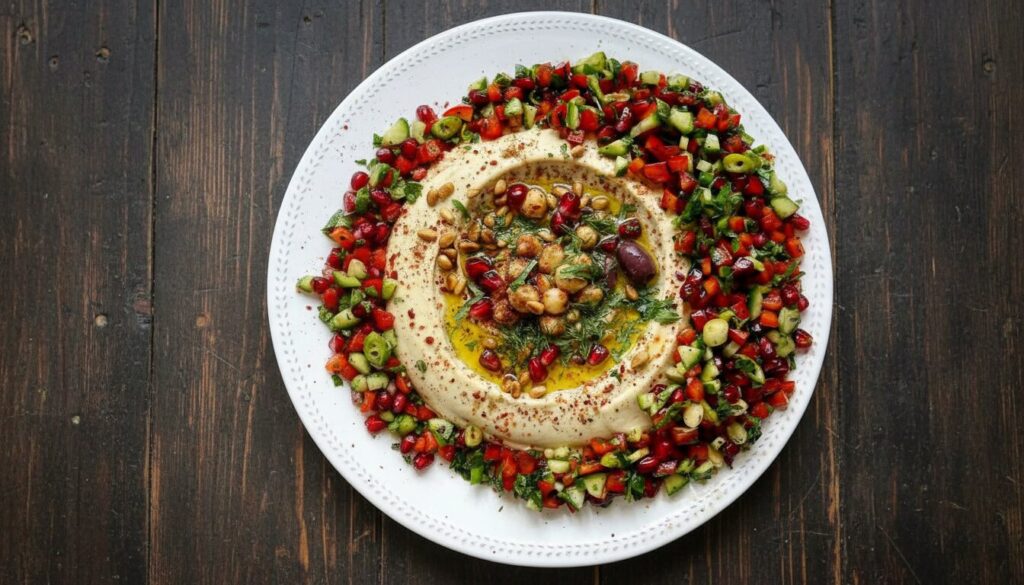
If you love bold Mediterranean flavors, this Loaded Hummus with Sumac Salad recipe transforms classic hummus into a stunning mezze centerpiece. Creamy, velvet-smooth hummus is topped with a vibrant, tangy sumac onion salad, fresh herbs, and a generous pool of rich extra virgin olive oil for the ultimate Mediterranean hummus bowl.
Whether you are looking for a protein-packed snack or a show-stopping appetizer for your next gathering, this dish is a quintessential example of how the Mediterranean diet celebrates simple, high-quality ingredients. It’s naturally vegan, gluten-free, and incredibly heart-healthy.
What Is Sumac Salad?
To understand why this sumac salad recipe is a game-changer, we first have to talk about the star ingredient: sumac.
Sumac is a deep red spice derived from dried and ground berries of the Rhus coriaria shrub. It boasts a unique, bright, and citrusy flavor profile that is often described as “lemony but earthy.” In traditional Levantine cuisine, a sumac onion salad (often called Biwaz) is a staple garnish for grilled meats and kebabs. It consists of thinly sliced red onions macerated in sumac, lemon juice, and parsley.
The sharp acidity of the onions and the tartness of the sumac provide the perfect structural contrast to the fatty, nutty richness of tahini-based hummus. Integrating this into your healthy hummus salad repertoire adds an authentic Middle Eastern flair that elevates the dish from a simple dip to a complex culinary experience.
Internal Link Opportunity: Check out our guide onEssential Mediterranean Spicesto learn more about how sumac compares to za’atar and Aleppo pepper.
Ingredients
Method
- Whip Tahini: In a food processor, blend tahini and lemon juice for 1 minute until creamy.
- Add Chickpeas: Add chickpeas, garlic, and salt. Process for 2-3 minutes until very smooth.
- Lighten Texture: While the motor is running, add ice water one tablespoon at a time until the hummus is fluffy and pale.
- Prepare Salad: In a bowl, toss sliced onions with sumac, parsley, olive oil, and lemon juice. Use your fingers to massage the sumac into the onions.
- Assemble: Spread hummus on a plate, creating a well in the center. Pile the sumac salad into the well.
- Garnish: Drizzle with extra olive oil and a final dusting of sumac.
Notes
- The Smoothness Secret: For ultra-creamy hummus, overcook canned chickpeas in boiling water with a pinch of baking soda for 10 minutes until mushy, then rinse with cold water before blending.
- Ice Water Trick: Always add ice-cold water while the food processor is running. This aerates the tahini, creating a light, “whipped” mousse texture.
- Onion Prep: Slice red onions paper-thin. If they are too “sharp,” soak them in ice water for 5 minutes, then pat dry before adding the sumac and lemon.
- Sumac Substitution: If you cannot find sumac, use extra lemon zest and a pinch of paprika, though the flavor won’t be quite as authentic.
- Storage Tip: Store the hummus and sumac salad in separate containers. If combined, the onion juice will water down the hummus over time.
- Oil Quality: Use Cold-Pressed Extra Virgin Olive Oil. Since this is a raw dish, the flavor of the oil is prominent and acts as a key seasoning.
Why This Loaded Hummus Recipe Works
There is a reason the loaded hummus recipe has taken the culinary world by storm. It moves hummus from the “side dish” category into the “main event” category.
- Contrast of Textures: You get the silky smoothness of the blended chickpeas against the crisp, refreshing crunch of the sumac-marinated onions.
- Nutrient-Dense: Every scoop is packed with plant-based protein and fiber.
- Heart-Healthy Fats: We utilize premium extra virgin olive oil, a cornerstone of the Mediterranean diet.
- Visual Appeal: The bright reds of the sumac and the deep greens of the parsley make this a Greek hummus platter that looks like it came from a professional kitchen.
Quick Stats for the Busy Cook:
- Protein-rich: Great for muscle recovery and satiety.
- Naturally vegetarian & vegan: Accessible for almost all dietary needs.
- Mediterranean diet friendly: Focuses on whole foods and healthy fats.
- Ready in under 20 minutes: Perfect for last-minute entertaining.
Ingredients for the Mediterranean Hummus Bowl
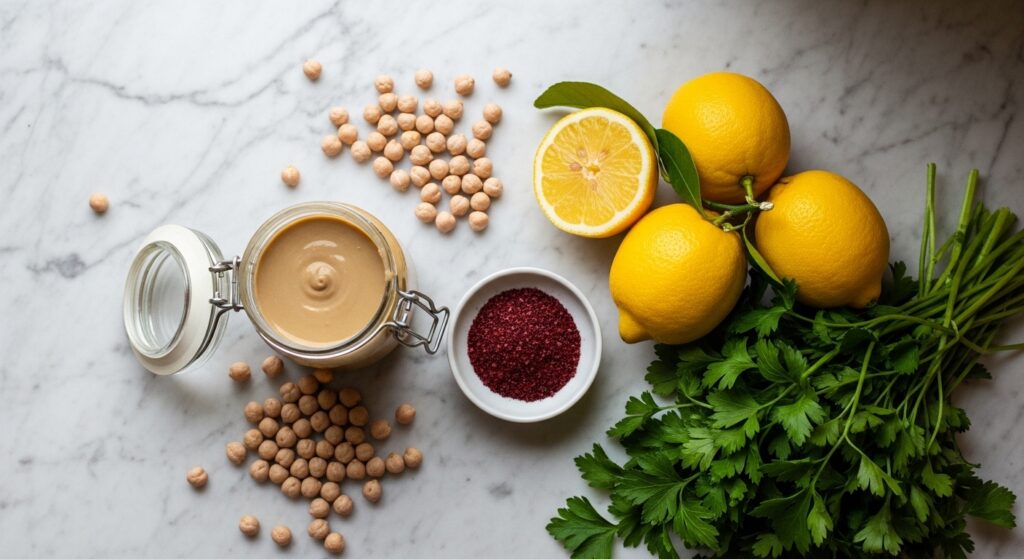
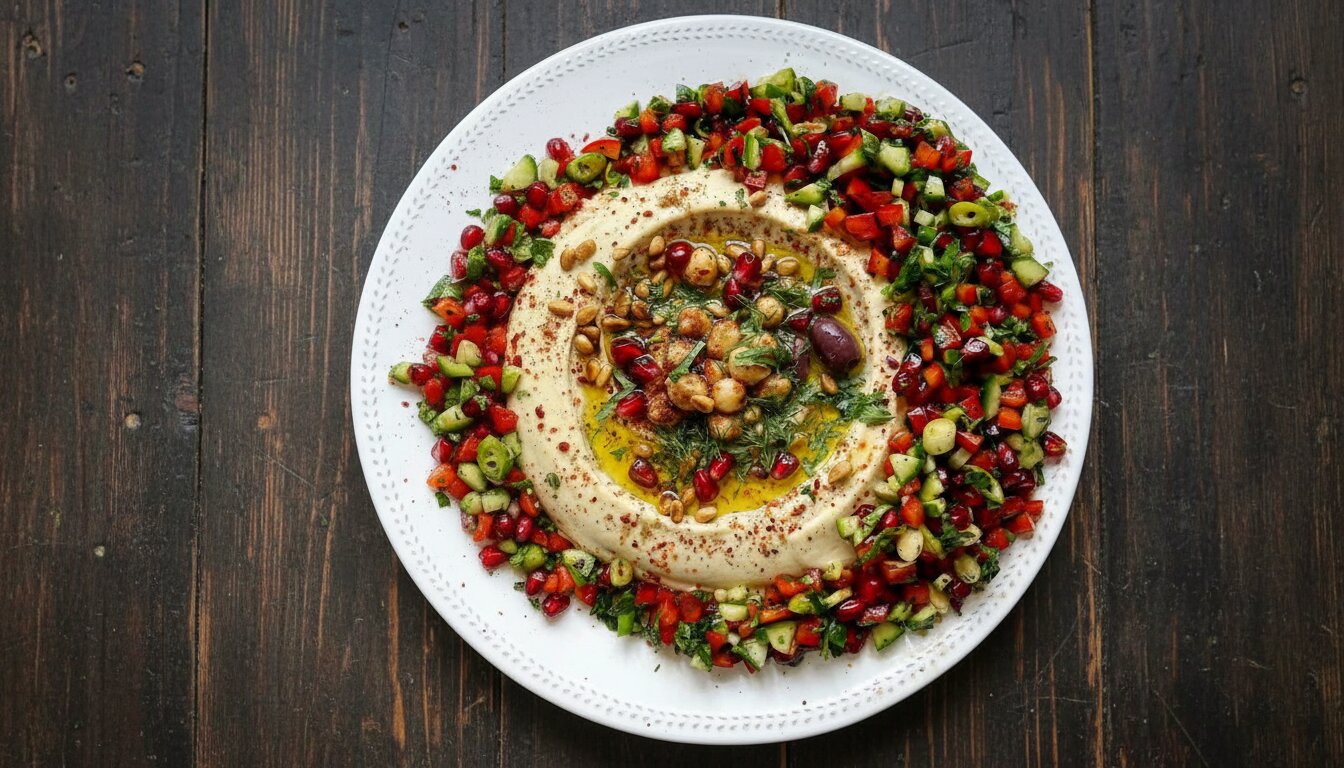
Creating a restaurant-quality Mediterranean hummus bowl requires high-quality healthy hummus salad ingredients. Don’t settle for the bland, preservative-heavy tubs at the supermarket when you can make this at home.
For the Hummus:
- Chickpeas (Garbanzo Beans): Canned is fine, but peeling the skins makes for a smoother texture.
- Tahini: Use a high-quality, runny Ethiopian or Palestinian tahini for the best flavor.
- Fresh Lemon Juice: Avoid the bottled stuff; the acidity needs to be bright.
- Garlic: One or two cloves, smashed and mellowed in lemon juice.
- Ice Water: The secret trick to fluffy, “whipped” hummus.
For the Sumac Onion Salad Toppings:
- Red Onion: Sliced paper-thin (a mandoline is your friend here).
- Sumac: The essential tart, crimson spice.
- Fresh Flat-Leaf Parsley: Chopped finely for earthy freshness.
- Extra Virgin Olive Oil: For drizzling over the top.
- Optional Additions: Halved cherry tomatoes or diced Persian cucumbers for extra bulk.
How to Make Loaded Hummus with Sumac Salad (Step-by-Step)
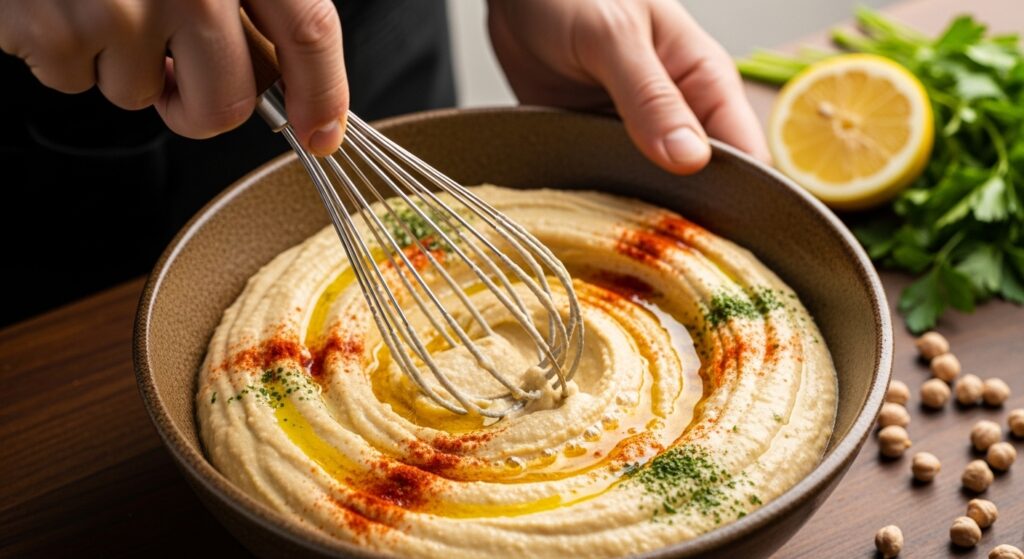
Follow these steps to ensure your sumac salad recipe and hummus base are perfectly balanced.
- Blend the Base: In a food processor, combine tahini and lemon juice first to “whip” them into a paste. Add the chickpeas, garlic, and salt. While blending, slowly drizzle in ice-cold water until the mixture is incredibly smooth and light.
- Macerate the Onions: In a small bowl, toss your thinly sliced red onions with a heavy dusting of sumac and a squeeze of lemon. Use your hands to “massage” the spices into the onions; this softens the bite of the raw onion and draws out the vibrant pink color.
- Plate with Purpose: Spread the hummus onto a wide, shallow platter. Use the back of a spoon to create “swirls” and deep wells—these will hold your oil and salad.
- Load It Up: Spoon the sumac onion salad generously into the center of the hummus.
- The Finishing Touches: Drizzle with your best olive oil, sprinkle a little extra sumac for color, and garnish with more fresh parsley.
Pro Tip: For a Pinterest-worthy Mediterranean hummus bowl, add a few whole chickpeas back onto the plate for texture!
How to Serve This Greek Hummus Platter
While this is delicious on its own, a Greek hummus platter is best enjoyed as part of a larger spread.
- The Classics: Serve with warm, fluffy pita bread or crispy pita chips.
- The Mezze Spread: Add a side of Kalamata olives, cubes of feta cheese, and roasted red peppers.
- The Main Course: Pair this with Grilled Chicken Souvlaki or Falafel for a complete meal.
- Vegetable Dippers: For a low-carb option, use sliced bell peppers, cucumbers, and carrots.
Is This Healthy Hummus Salad Mediterranean Diet Friendly?
Yes! In fact, this is a “gold standard” Mediterranean diet hummus recipe.
The healthy hummus salad is naturally anti-inflammatory thanks to the antioxidants found in sumac and the polyphenols in extra virgin olive oil. Because it relies on plant protein (chickpeas) rather than animal fats, it’s a heart-healthy choice that helps manage cholesterol.
Variations and Customizations
To capture more flavors, try these twists on the original:
- Spicy Loaded Hummus Recipe: Add a teaspoon of harissa paste to the hummus blend or top with red chili flakes.
- Roasted Vegetable Mediterranean Hummus Bowl: Add roasted eggplant or cauliflower on top of the sumac salad.
- High-Protein Greek Hummus Platter: Top with grilled halloumi or a hard-boiled egg.
- Vegan Mediterranean Diet Hummus Recipe: This recipe is already vegan, but you can add roasted pine nuts for extra crunch and protein.
Storage and Meal Prep Tips
- Hummus: Lasts 4-5 days in an airtight container in the fridge.
- Sumac Salad: Best eaten within 24 hours as the onions will eventually lose their crunch.
- Prep Hack: You can blend the hummus 3 days in advance. Simply whip the sumac salad together 10 minutes before serving to keep it fresh and bright.
FAQs
What is sumac salad made of? A traditional sumac salad (Biwaz) is made of thinly sliced red onions, a generous amount of ground sumac, fresh parsley, lemon juice, and salt. Some variations include tomatoes or cucumbers, but the onion-sumac base is the core.
Can I use store-bought hummus? Yes! If you’re short on time, buy a high-quality “Original” hummus and focus your energy on making the sumac salad recipe from scratch. The fresh topping will drastically improve the taste of any store-bought brand.
Is hummus allowed on the Mediterranean diet? Absolutely. It is a staple food in the Mediterranean. It provides healthy fats, complex carbohydrates, and essential fiber.
What does sumac taste like? Sumac has a very tart, acidic flavor similar to lemon juice or vinegar but with a floral, earthy undertone. It provides acidity without adding liquid to a dish.
Final Thoughts
This Loaded Hummus with Sumac Salad recipe is more than just a dip; it’s a celebration of Mediterranean culture. By combining a creamy Mediterranean hummus bowl with the zing of a sumac salad recipe, you create a dish that is as nutritious as it is beautiful.
Try this for your next dinner party or as a healthy meal prep option! If you enjoyed this, please share it on Pinterest or leave a comment below!