
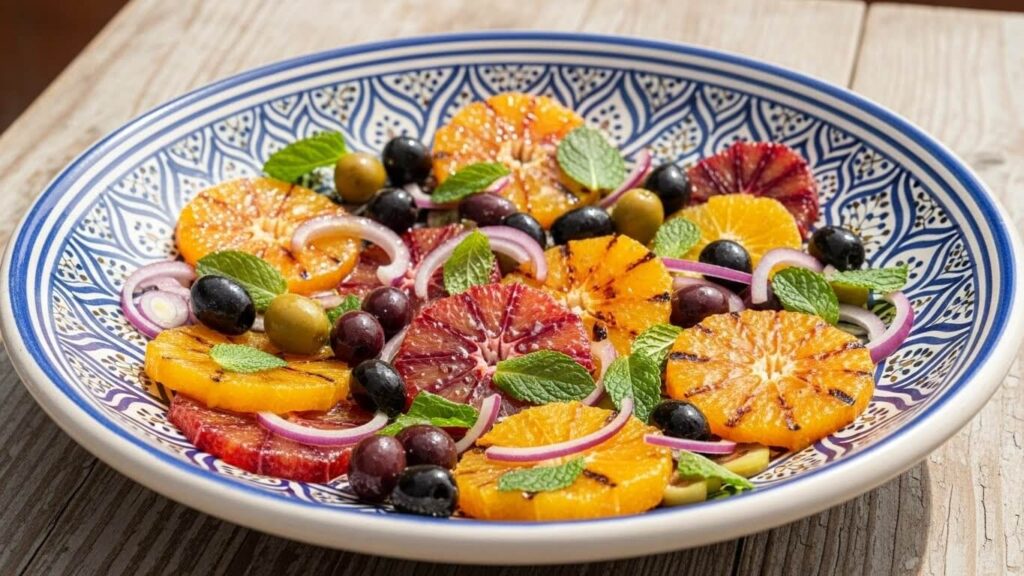
Forget everything you think you know about a typical fruit salad. This simple orange and olive salad recipe offers a vibrant and sophisticated dish that challenges your palate with its perfect blend of sweet, sour and salty. Originating in the bustling kitchens of North Africa, this recipe is a testament to the region’s resourceful and flavorful cuisine, transforming humble ingredients into a spectacular meal.
This version is not just easy; it’s 100% vegan and perfectly compliant with the Mediterranean Diet, making it a powerhouse of health and flavor. Unlike the small side dishes you might see elsewhere, our authentic recipe is hearty and versatile enough to be served as a light, satisfying dinner, especially when paired with simple grains or legumes. With citrus at its peak, there’s no better time to bring this delicious and seasonal classic to your table.
What Is Orange and Olive Salad?
Orange and olive salad, also known by regional names such as salade d’oranges aux olives, is a quintessential dish found primarily across the Maghreb region of North Africa, particularly in Moroccan cuisine. At its heart, it’s a study in culinary contrast: the bright sweetness of ripe oranges is cut by the salty, briny punch of olives, all brought together by a drizzle of exquisite olive oil and a whisper of aromatic herbs.
Traditional Origins and Flavor Profile
The genius of this dish lies in the historical culinary tradition of combining salty, fatty and sweet elements to create a balanced bite. The North African version often leans into a spicier, more aromatic profile, frequently incorporating gentle spices like cumin or paprika and fresh pungent herbs like mint or cilantro. This gives the salad a complexity that goes far beyond a simple fruit and vegetable mix.
The North African Difference
While there are lovely Italian and Spanish versions of a citrus salad, the North African interpretation is distinct.
- North African (Moroccan/Tunisian): Focuses on the core contrast of orange and olive, often adding fresh herbs (mint/cilantro) and optional spices (cumin/paprika). And the dressing is simple; just olive oil. Which makes it rustic and bold.
- Italian (Sicilian): Typically includes fennel and red onion, using parsley instead of mint/cilantro. The focus is on anise-like freshness and sometimes a splash of vinegar is added.
- Spanish: Often features blood oranges and a lighter dressing, sometimes incorporating nuts or a creamy element.
Our recipe stays true to the rustic, bold and simpler flavors of the authentic North African orange salad.
Orange and Olive Salad Ingredients
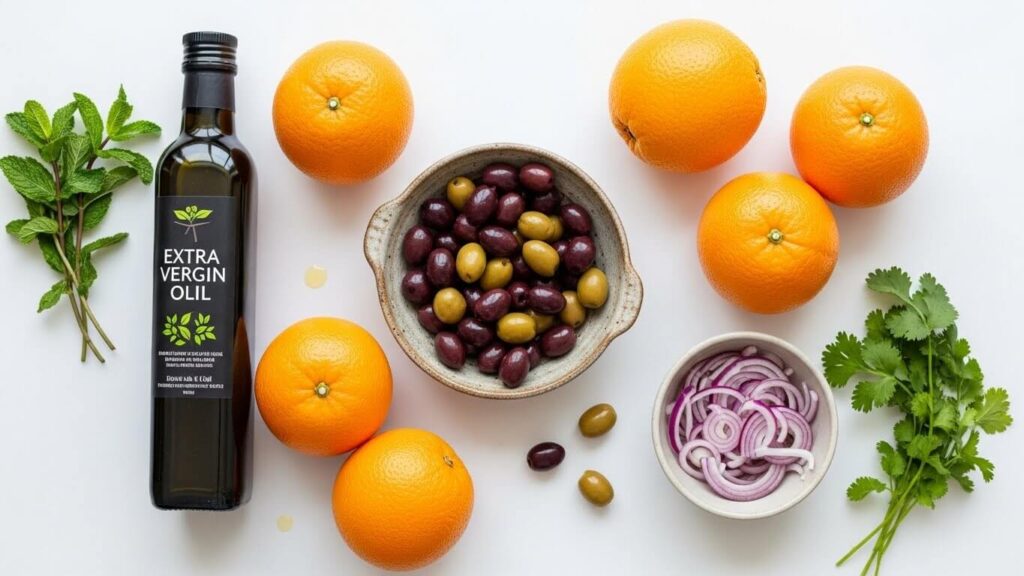
The beauty of a truly authentic recipe is its reliance on high-quality, simple components. For this dish, choose the best ingredients you can find, as they truly shine.
| Ingredient | Recommendation | Notes |
| Oranges | Navel or Cara Cara | Must be seedless and easy to peel. Mandarin orange salad is an excellent alternative (see Variations). |
| Olives | Mixed Black & Green (e.g Kalamata, Cerignola) | Use a mix for color and complexity. Pitting is easiest, but the flavor is better with whole olives you pit yourself. |
| Olive Oil | Extra Virgin (EVOO) | Use high-quality and robust-flavored oil for a heart-healthy dressing. |
| Onion | Red or Shallot | Essential for a savory edge. Slice thinly. |
| Herbs | Fresh Mint or Cilantro | Mint is more traditional in Morocco; cilantro offers a fresher, brighter note. Use one or both. |
| Salt & Pepper | To Taste | Essential for balancing the sweetness of the orange. |
| Optional Spices | Cumin and Paprika (Sweet or Smoked) | A pinch of cumin is very authentic to the region. |
For beginners looking to stock up, link to your article: Mediterranean Diet Pantry Essentials: The Complete Beginner’s Guide.
How to Make Orange and Olive Salad (Step-by-Step Recipe)
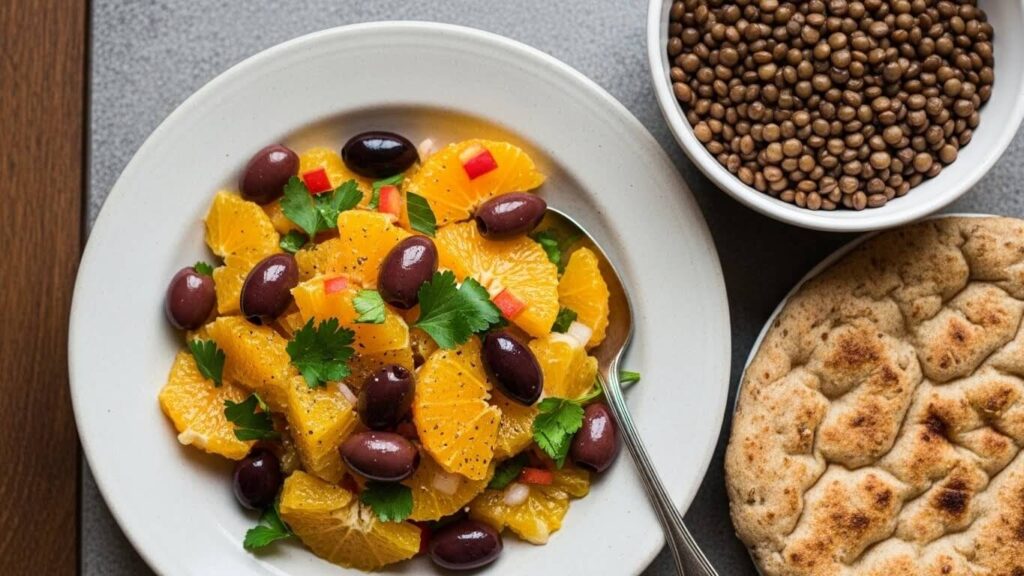
This simple preparation ensures the oranges and olives stay vibrant and distinct. Aim for a bright and fresh flavor, not one that is overly soaked.
1. Prep the Oranges
To achieve the best texture and appearance, peel the oranges completely, removing all the white pith. You can either slice the oranges into rounds or cut them into segments. The key here is to ensure they are pith-free for a clean and sweet flavor. Now, pat them dry gently with a paper towel if they are excessively juicy.
2. Slice the Onions
Thinly slice the red onion or shallots. And to reduce their harshness, you can place the slices in a small bowl of cold water for 5 minutes, then drain and pat dry. Remember: This subtle step is crucial for preventing the onion from overpowering the delicate oranges.
3. Combine Ingredients
In a wide and shallow bowl, gently arrange the orange slices/segments and the olives. Then sprinkle the thinly sliced onions over the top. And if you’re using optional spices, lightly dust a pinch of cumin and/or paprika over the mixture (a little goes a long way).
4. Dress Lightly
Drizzle generously with your best extra virgin olive oil. Here, this oil serves as the only dressing, binding the flavors without adding vinegar, which would compete with the orange’s natural acidity. After that, season with a good pinch of sea salt and freshly cracked black pepper.
5. Rest Before Serving
Toss very gently to combine, being careful not to break up the orange slices. Then let the salad rest for 15-20 minutes at room temperature before serving. This brief rest allows the salt and oil to marry the flavors of the oranges, olives and onions. Now, garnish with a generous handful of chopped fresh mint or cilantro just before serving.
Is Orange and Olive Salad Healthy?
Absolutely, this salad is a perfect example of how delicious food can also be incredibly nourishing. It fully complies with the core principles of the Mediterranean Diet, emphasizing whole foods, healthy fats and minimal processing.
Orange and Olive Salad: A Mediterranean Diet Powerhouse
- Vitamin C Boost: Oranges are a classic source of Vitamin C, a powerful antioxidant that supports immune function and collagen production.
- Heart-Healthy Fats: The cornerstone of the dressing is olive oil, rich in monounsaturated fats. Also, this healthy fat has been shown to improve cholesterol levels and is a key factor in the documented heart health benefits of the Mediterranean diet.
- Anti-Inflammatory Properties: Both olives and high-quality olive oil are packed with anti-inflammatory compounds. And by choosing this over processed dressings, you are actively supporting your body’s health.
- Fiber: The whole oranges and raw vegetables contribute significant dietary fiber, aiding in digestion and promoting a feeling of fullness, which is excellent for weight management.
By positioning this as a Mediterranean Diet orange salad, you are capitalizing on all these high-impact health benefits that many recipes overlook. This simple combination is far more than just a side dish; it’s an intentional, healthy choice. For more details on the lifestyle, you can explore other Mediterranean diet recipes we offer.
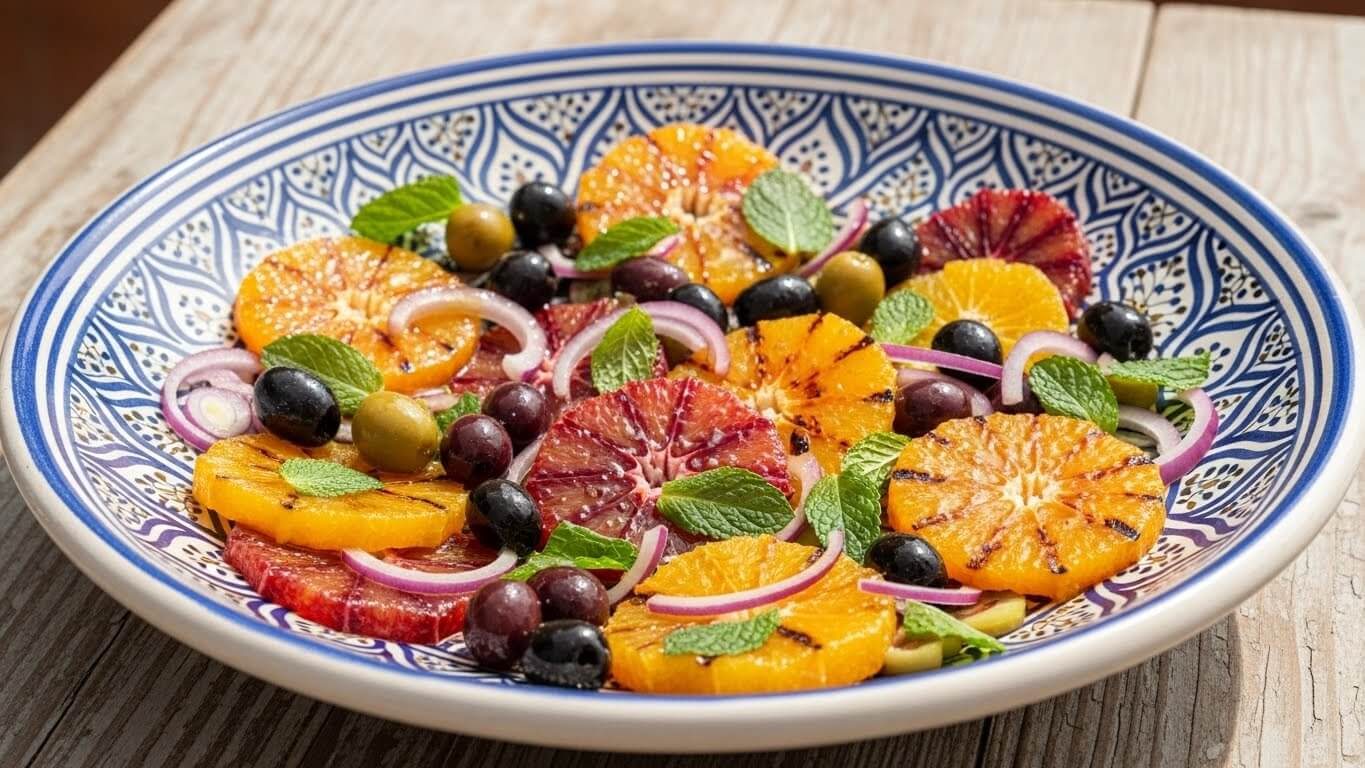
Easy Orange and Olive Salad (Mediterranean Diet)
Ingredients
Equipment
Method
- Peel the oranges completely, removing all white pith. Then slice into rounds or segments and pat dry if overly juicy.
- Thinly slice the red onion or shallots. (Optional: Soak slices in cold water for 5 minutes, then drain and pat dry to reduce harshness).
- In a wide bowl, gently layer the orange slices, olives and sliced onions. After that, lightly dust with optional cumin or paprika.
- Drizzle generously with olive oil and season with salt and pepper.
- Gently toss to combine and let the salad rest at room temperature for 15-20 minutes before serving to allow the flavors to meld. Then garnish with fresh mint or cilantro just before serving.
Notes
Orange and Olive Salad Variations & Substitutions
The simplicity of the core orange and olive salad makes it ripe for customization. Here are several popular and authentic ways to change it up while keeping the integrity of the dish intact.
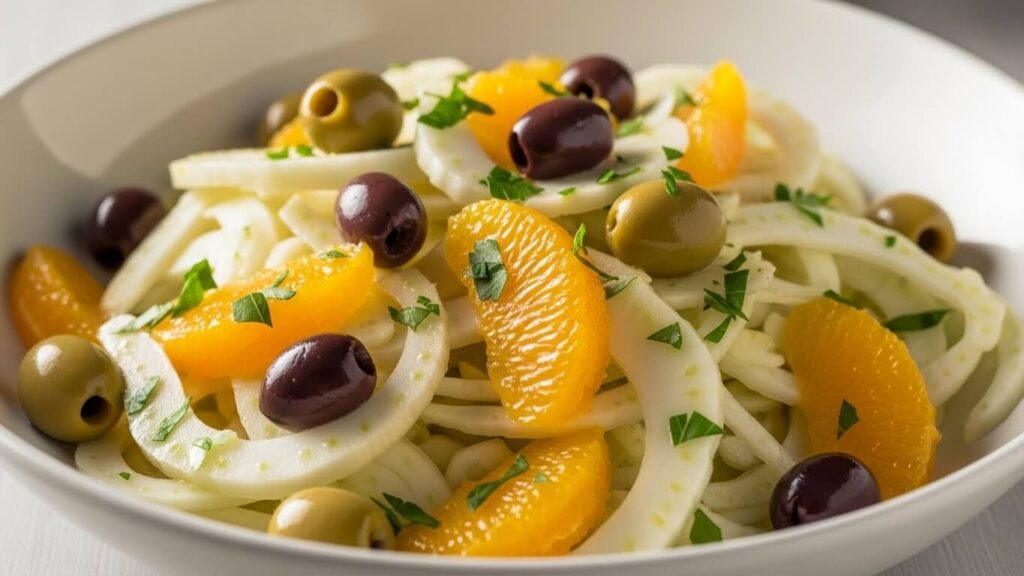
1. Fennel Orange and Olive Salad (The Italian Twist)
To shift the flavor profile toward an Italian-style citrus salad, simply add:
- 1 small bulb of fennel, very thinly sliced.
- Replace mint/cilantro with fresh parsley.
- Optional: Add a pinch of red pepper flakes for heat.
The fennel adds a crisp texture and a subtle anise flavor that complements the sweet orange beautifully. And this variation is also extremely popular.
2. Mandarin Orange Salad (A Simpler Sweetness)
If you can’t find quality navel oranges or prefer a sweeter, easier-to-manage fruit:
- Substitution: Use 3-4 cups of peeled and segmented mandarin oranges or canned mandarins (drained well).
- Adjustment: Since mandarins are sweeter, use slightly more red onion or a few capers for an extra savory balance. This is a fantastic option for a quick, simple orange & olive salad recipe.
3. Spicy Moroccan Twist
To amp up the North African authenticity:
- Add a very small and finely minced jalapeño or a dash of harissa paste to the olive oil dressing.
- Increase the amount of smoked paprika.
- A touch of rose water (a few drops only) can be added to the dressing for an exotic, floral aroma found in some Moroccan sweet-savory dishes.
What to Serve with Orange and Olive Salad
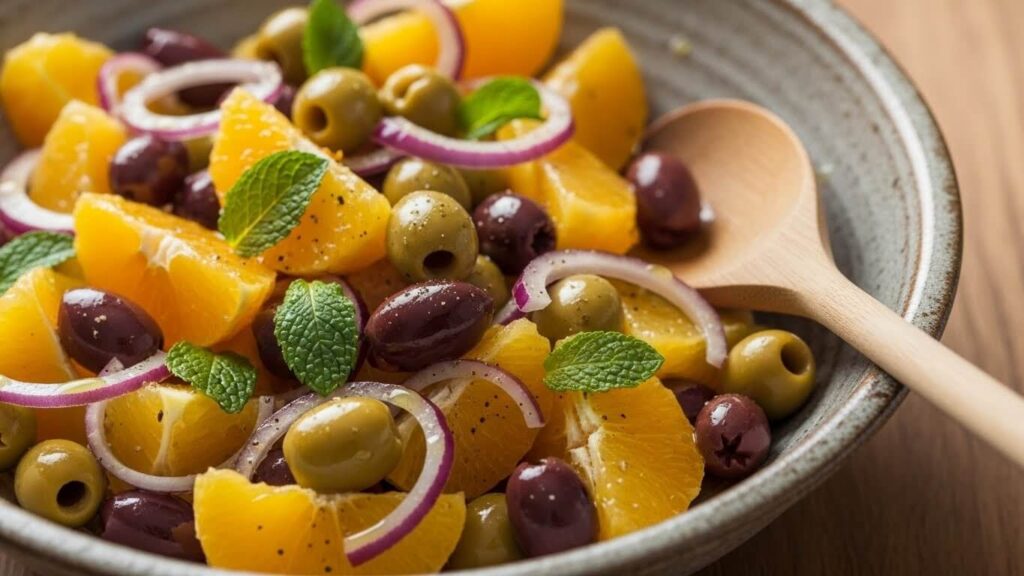
Unlike most competing recipes that pigeonhole this dish as a simple side, this vibrant salad is robust enough to act as a crucial, balancing element to an entire meal, especially when embracing the vegan and Mediterranean Diet ethos.
Orange and Olive Salad Dinner Intent
Serving the salad alongside a high-protein, plant-based dish elevates it to a complete, balanced dinner:
- Lentils & Beans: Serve with a warm bowl of seasoned brown lentils or a chickpea tagine. The cool, bright salad is the perfect counterpoint to the warm, earthy legumes.
- Chickpea Dishes: This pairs beautifully with our Hummus Recipe or a simple pan-seared chickpea patty.
- Grilled Vegetables: Skewered and grilled zucchini, peppers or eggplant drizzled with lemon and herbs are a fantastic and light accompaniment.
- Savory Mains: Pair it with the bold flavors of a vegetarian Shakshuka Recipe or a flavorful Fattoush Recipe.
- Flatbreads: Serve with whole-grain pita or warm, crusty bread to soak up the residual olive oil and orange juice.
By encouraging these pairings, we reinforce the versatility and the potential of this dish for a light yet satisfying dinner.
Cultural Origins of Orange and Olive Salad
The origins of this flavorful dish are deeply rooted in the agricultural traditions and unique culinary crossroads of North Africa.
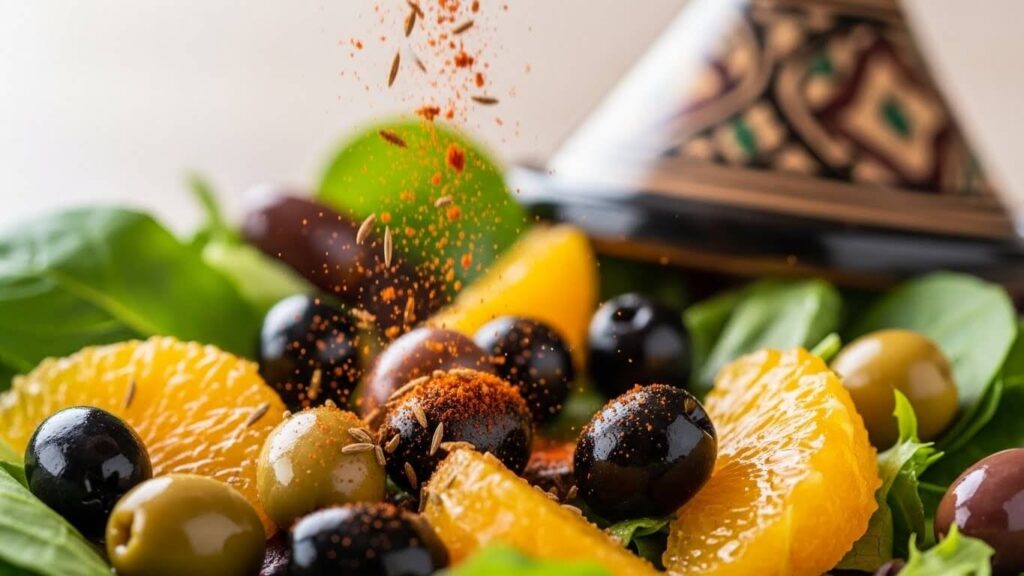
Moroccan & North African Orange and Olive Salad
The use of fresh citrus alongside savory elements is a hallmark of Moroccan cuisine, which often combines sweet and savory in tagines and salads. Oranges became widely cultivated in the region, particularly after their introduction centuries ago and quickly became a staple. The dish arose from the simple necessity and abundance of local produce: sweet oranges, briny olives and homegrown olive oil.
Jewish-Moroccan Influence
The tradition of serving elaborate and diverse cold salads, often featuring cooked vegetables and unique combinations like this one, is particularly strong within Jewish-Moroccan culinary heritage. This cultural exchange has helped keep the practice of making this bright, refreshing salad alive and vital in the region’s kitchens. It also speaks to a long tradition of utilizing seasonal citrus to its fullest potential.
FAQs
Is orange and olive salad vegan?
Yes, this authentic orange and olive salad recipe is entirely vegan. Moreover, it contains only plant-based ingredients: oranges, olives, onion, herbs and extra virgin olive oil.
Is orange and olive salad part of the Mediterranean Diet?
Absolutely, this salad is a textbook example of a Mediterranean Diet orange salad. Additionally, it is rich in heart-healthy fats (from olive oil and olives), fiber and antioxidants (from oranges), and uses whole, unprocessed ingredients.
Can I make a simple orange & olive salad without fennel?
Yes, the traditional North African preparation focuses solely on the contrast between the orange, the olive and the onion. Fennel is a popular addition in Italian-style versions but is completely optional for a simple orange & olive salad recipe.
What olives are best for orange and olive salad?
A mix is best. And for that, you should use a combination of black olives (like Kalamata or Moroccan black) and green olives (like Manzanilla or Cerignola). The brine and texture of the mixed olives offer a better depth of flavor.
Can I use mandarin oranges instead of navel oranges?
Yes, you can use mandarin oranges for a slightly sweeter and easier preparation, often called a mandarin orange salad. Just be sure to use slightly more savory components (like onion or a caper) to balance the increased sweetness.
Is this salad Spanish, Italian or North African?
While similar citrus salads exist in all three cuisines, the inclusion of olives, the simplicity of the dressing (just olive oil) and the use of herbs like mint/cilantro mark this specific version as authentically North African (Moroccan/Tunisian).