

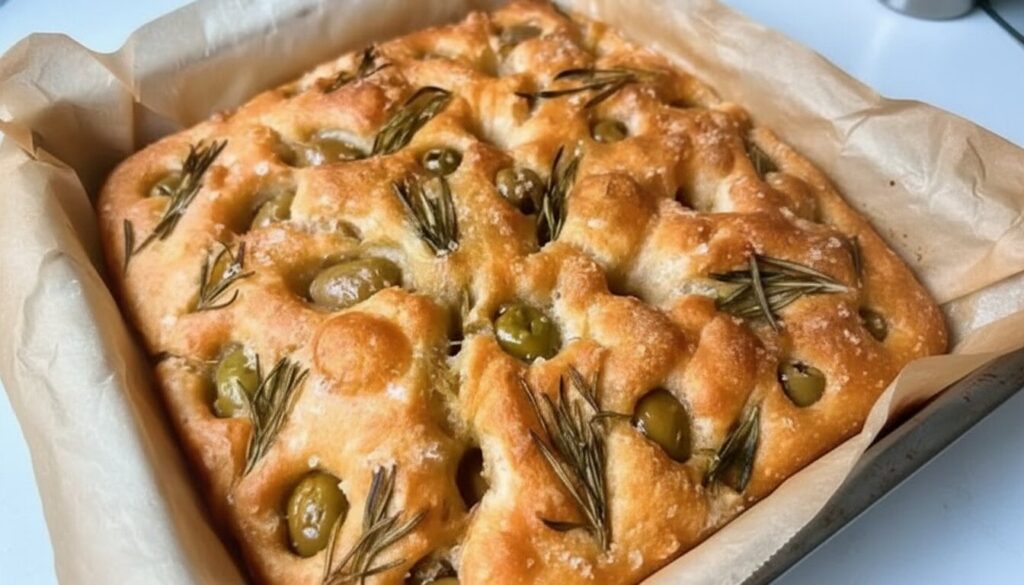
Transport your kitchen to the sun-drenched coasts of the Mediterranean with this Rosemary and Olive Focaccia recipe. There is something deeply soulful about the Mediterranean lifestyle—it’s a philosophy rooted in high-quality ingredients, shared meals, and the slow art of baking. This focaccia embodies that spirit, combining the liquid gold of extra virgin olive oil with the piney aroma of fresh rosemary and the salty pop of briny Kalamata olives. Whether you are a seasoned baker or a novice, this recipe promises a pillow-soft, fluffy interior shielded by a shatteringly crispy golden crust. It’s more than just bread; it’s an invitation to slow down and savor the rustic, bold flavors that define Mediterranean coastal living.
Why You’ll Love This Mediterranean Focaccia Recipe
Adopting a Mediterranean focaccia recipe into your weekly rotation is one of the simplest ways to embrace heart-healthy eating without sacrificing indulgence. Unlike enriched breads that rely on butter, this recipe uses olive oil—a cornerstone of the Mediterranean diet known for its healthy monounsaturated fats.
- Pantry-Friendly: You likely already have the flour, yeast, and oil sitting in your cupboard.
- No Stress, No Mess: There are no complicated laminations or high-stakes techniques here. If you can poke holes in dough, you can make world-class focaccia.
- Versatility: This bread is the ultimate culinary chameleon. It’s the perfect companion for crisp Greek salads, hearty lentil soups, or a platter of creamy dips.
Ingredients for Homemade Rosemary Focaccia
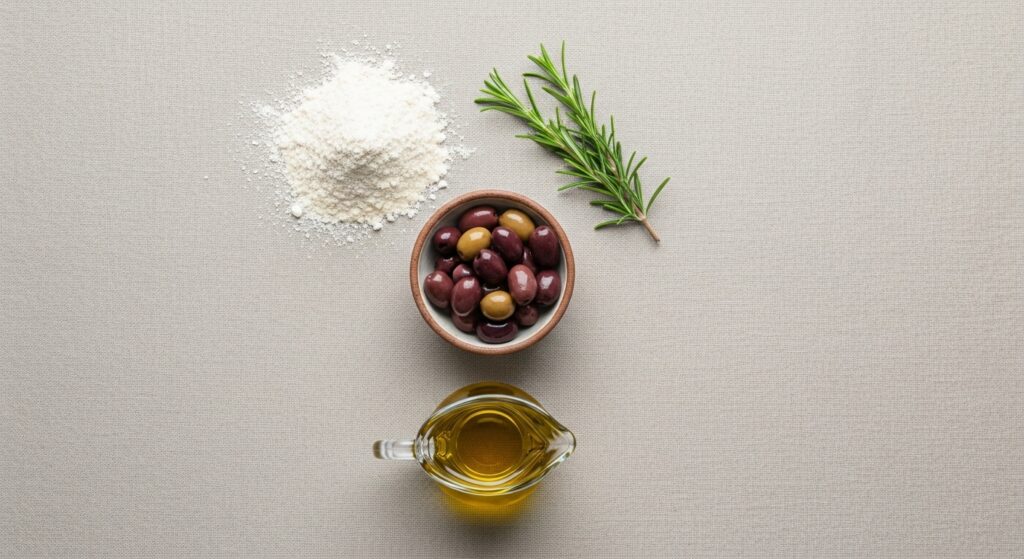
To achieve that authentic, bakery-style homemade rosemary focaccia, the quality of your ingredients is paramount. Since the list is short, each component has nowhere to hide.
- Bread Flour: Provides the high protein content necessary for that chewy, airy structure.
- Active Dry Yeast: The engine that gives our olive focaccia bread its signature lift.
- Warm Water: Essential for blooming the yeast (aim for 105°F to 115°F).
- Extra Virgin Olive Oil: Use the good stuff! A robust, peppery oil will infuse the dough with flavor.
- Fresh Rosemary: Dried rosemary can be tough and woody; fresh needles soften in the oil and release a superior aroma.
- Kalamata or Black Olives: These provide the “brine” that cuts through the richness of the oil.
- Sea Salt: Flaky sea salt on top provides a crucial crunch and flavor boost.
Pro Tip: When choosing olive oil, look for “Cold Pressed” and “Single Origin” labels to ensure you’re getting the highest antioxidant content and best flavor profile.
How to Make Olive Rosemary Focaccia (Step-by-Step)
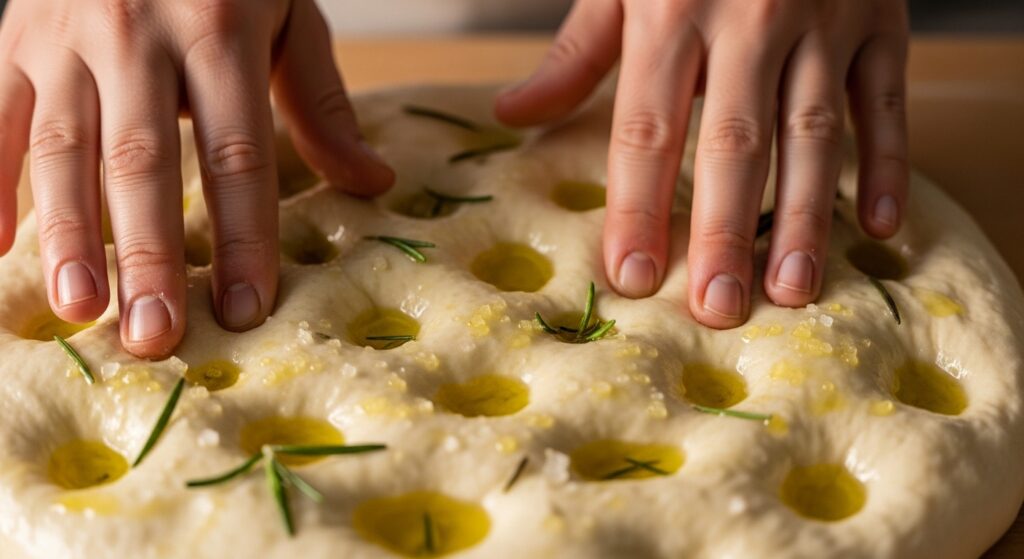
Creating an easy rosemary focaccia recipe is a sensory journey. From the smell of the blooming yeast to the rhythmic dimpling of the dough, it is a meditative process.
Step 1 – Activate the Yeast
In a large bowl, whisk your warm water with a pinch of sugar and the active dry yeast. Let it sit for about 5-10 minutes until a foamy, tan “cap” forms on the surface. If it doesn’t foam, your yeast may be expired—better to start over now than end up with a brick!
Step 2 – Mix and Knead the Dough
Add half of the olive oil and the flour. Mix until a shaggy mass forms. You can use a stand mixer or your hands. Knead until the dough is smooth and slightly tacky, but not sticking to your fingers like glue.
Step 3 – First Rise
Place the dough in a lightly greased bowl, cover with a damp cloth, and let it rest in a warm, draft-free spot. You’re looking for the dough to double in size, which usually takes 60 to 90 minutes.
Step 4 – Shape and Dimple
Generously oil a 9×13 inch baking pan. Transfer the dough and gently stretch it to the corners. Now for the best part: use your fingertips to press deep “dimples” into the dough. This creates little wells that will catch the olive oil and salt.
Step 5 – Add Olives and Rosemary
Press your halved olives deep into the dimples. Sprinkle the fresh rosemary needles and a generous dusting of flaky sea salt across the surface.
Step 6 – Second Rise
Cover the pan and let the dough rise again for 30–45 minutes. It should look puffy and nearly jiggly.
Step 7 – Bake Until Golden
Slide the pan into a 425°F (220°C) oven. Bake for 20–25 minutes. Your kitchen will smell like an Italian villa as the rosemary toasts and the crust turns a deep, mahogany gold.
Tips for Perfect Olive Focaccia Bread
- Don’t Rush the Rise: Yeast works on its own schedule. A slow rise yields a better flavor.
- Be Generous with Oil: The bottom of the pan should have a visible layer of oil; this essentially “fried” the bottom of the bread, making it incredibly crispy.
- Deep Dimples: Really get your fingers in there! If the dimples aren’t deep enough, they will disappear as the bread rises in the oven.
Greek-Style Variation (Mediterranean Twist)
If you want to transform this into a Greek focaccia bread, simply add crumbled feta cheese and a teaspoon of dried oregano during the “Add Olives” step. The salty feta melts slightly into the dimples, creating a tangy contrast to the earthy rosemary. Serve this variation with a side of [authentic homemade tzatziki] for the ultimate appetizer.
Is Focaccia Part of the Mediterranean Diet?
Absolutely. While the Mediterranean diet emphasizes whole grains, traditional white-flour breads like focaccia have a place when prepared correctly. This bread is high in healthy fats from olive oil and flavored with antioxidant-rich herbs. The key is portion awareness and pairing. Instead of eating half a loaf alone, enjoy a slice alongside a plate of roasted vegetables or a lean protein like grilled sea bass.
What to Serve with Rosemary Olive Bread
To build a complete Mediterranean feast, consider these internal linking opportunities:
- [Classic Greek Salad]: The acidity of the tomatoes and cucumbers cuts through the richness of the bread.
- Anchor Text: “Classic Greek Salad”
- [Creamy Roasted Garlic Hummus]: Use the focaccia as a vessel for dipping.
- Anchor Text: “Creamy Roasted Garlic Hummus”
- [Mediterranean Red Lentil Soup]: This bread is the perfect “sopper” for a warm bowl of soup.
- Anchor Text: “Mediterranean Red Lentil Soup”
Ingredients
Method
- Bloom: Mix yeast and warm water in a bowl. Wait 10 mins until foamy.
- Mix: Add 2 tbsp oil, salt, and flour. Mix into a soft dough.
- Knead: Knead for 5-7 mins until smooth.
- First Rise: Cover and let rise in a warm spot for 1.5 hours.
- Shape: Pour 2 tbsp oil into a 9×13 pan. Stretch dough to fit.
- Dimple: Use fingers to create deep wells. Add remaining oil.
- Toppings: Press olives into dough and sprinkle rosemary/flaky salt.
- Second Rise: Cover and let rise for 30 mins.
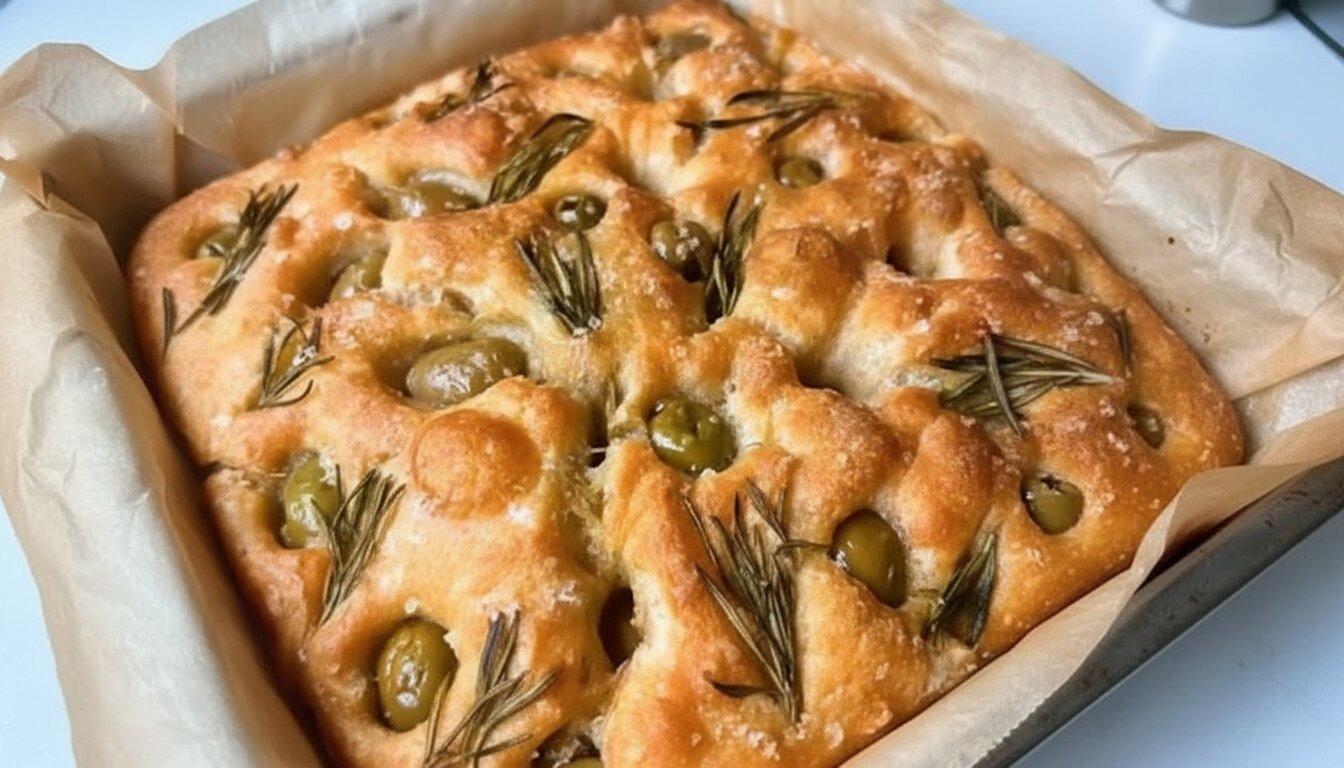
- Bake: Bake at 425°F for 22-25 mins until golden brown.
Notes
- Flour Choice: Use Bread Flour for the best chew. All-purpose flour works but results in a softer, less structured crumb.
- Water Temp: Ensure water is between 105°F and 115°F. Too hot kills the yeast; too cold won’t activate it.
- The “Oil Fry” Effect: Don’t skim on the oil in the pan. This essentially fries the bottom of the dough, creating that iconic shatter-crisp crust.
- Dimpling Secret: Use your finger pads (not tips) to press all the way to the bottom of the pan. This prevents the dough from spring-boarding back during the bake.
- Salt Balance: Since Kalamata olives are naturally briny, use a lighter hand with the sea salt in the dough, but be generous with the flaky salt on top for texture.
- Make-Ahead: For the best flavor, let the first rise happen in the fridge for 12–24 hours. Cold fermentation creates those coveted “bubbles” on the surface.
Storage and Freezing Tips
- Room Temp: Keep in an airtight container for up to 2 days.
- Reheating: To revive the crunch, toast slices in a dry skillet or a 350°F oven for 5 minutes.
- Freezing: Wrap individual squares in plastic wrap and foil. Freeze for up to 3 months. Thaw at room temperature and toast before serving.
Frequently Asked Questions
Can I make rosemary focaccia without a mixer? Yes! This dough is very forgiving and can be easily kneaded by hand on a floured surface for about 8-10 minutes.
Can I use whole wheat flour? You can substitute up to 50% of the bread flour with whole wheat flour, though the texture will be denser and less “airy.”
Why is my focaccia dense? Usually, this is due to “under-proofing.” Ensure your yeast is active and give the dough enough time to double in size during both rises.
Can I prepare the dough overnight? Yes! You can let the first rise happen in the refrigerator for 12–24 hours. Cold fermentation actually develops a more complex, sourdough-like flavor.
Final Thoughts
This Rosemary and Olive Focaccia is a testament to the beauty of simple, high-quality ingredients. It’s a healthy, crowd-pleasing addition to any meal and a wonderful introduction to Mediterranean baking.
Have you tried this recipe? Rate it below and tell us what toppings you added in the comments!