

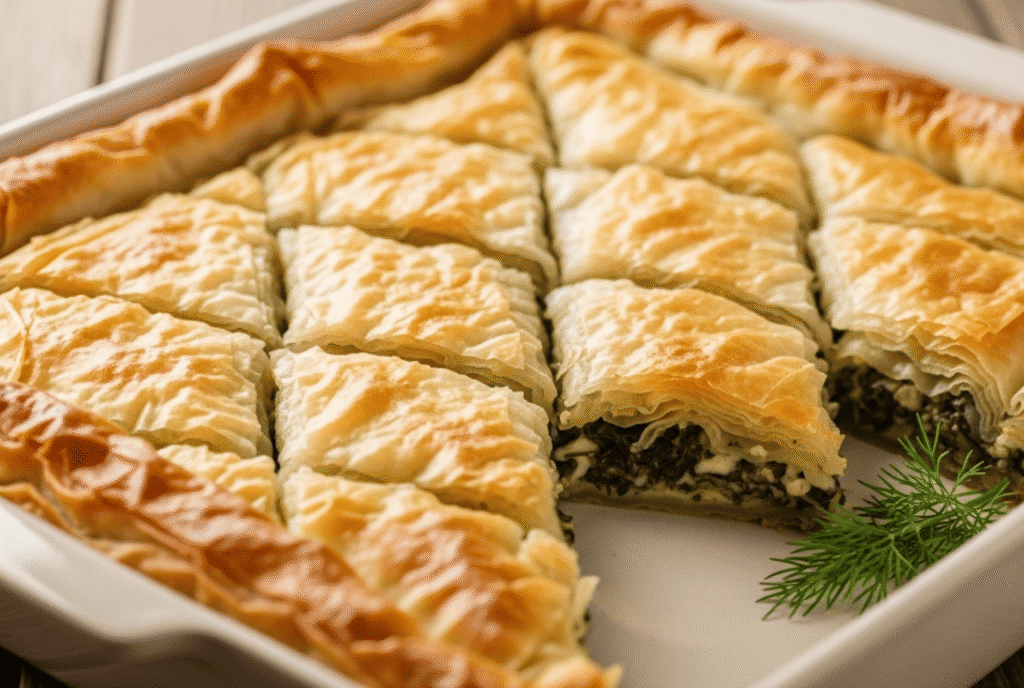
Spanakopita recipe is a Greek spinach and feta pie made with flaky phyllo dough, olive oil, fresh herbs like dill and parsley and layered into a crisp and savory pastry. It is a staple of the Mediterranean diet and often served as a main dish or part of a mezze platter.
Spanakopita is more than just a spinach pie; it’s a piece of Greek heritage that is baked into flaky and golden layers. While many recipes offer the basics, this guide goes deep, addressing every common pitfall and sharing the advanced techniques needed to move past a “good” spanakopita to a truly fluffy-layered, perfectly crispy and authentic Greek spinach pie.
We’re covering the secrets to a non-soggy bottom, how to master phyllo dough and why your spinach-to-feta ratio is crucial. So, get ready to bake the best spanakopita recipe you’ve ever had!
| Feature | Spanakopita | burek/Börek (Turkish/Balkan) |
| Main Dough | Phyllo (Filo) dough | Yufka or thicker phyllo |
| Primary Filling | Spinach and Feta Cheese | Diverse (Meat, cheese, potato and spinach) |
| Texture | Very flaky, delicate and light | Flaky to soft, often denser |
| Serving | Mezze, main dish or holiday staple | Breakfast, snack and also as a main dish |
Origins & Cultural Context Of Spanakopita Recipe
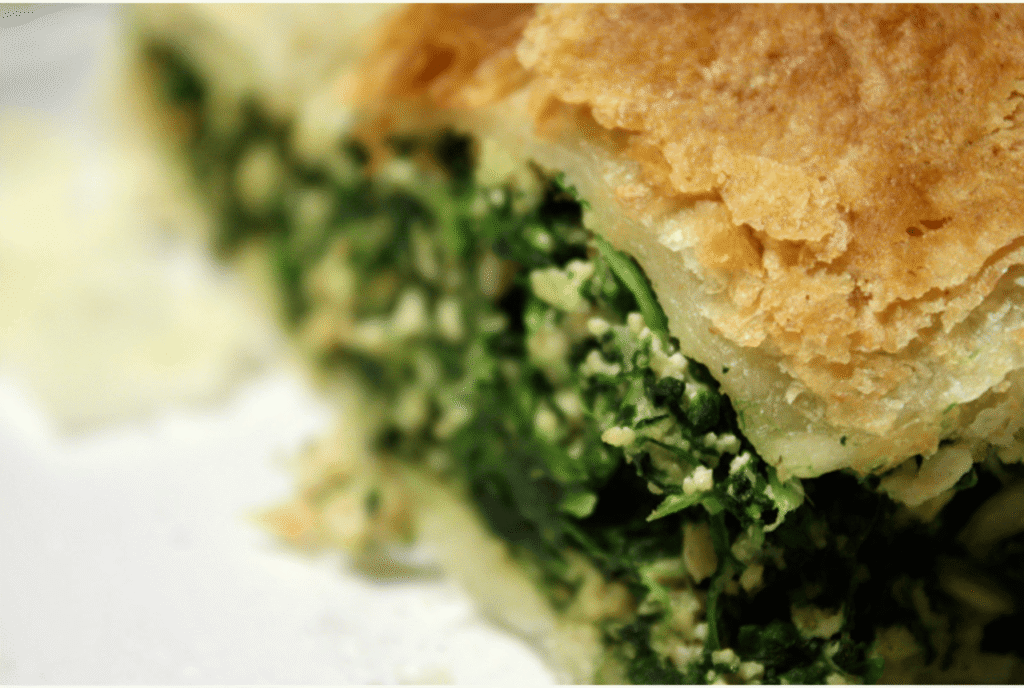

The spanakopita recipe we know today is unequivocally Greek, but its roots are deeply interwoven with the history of the Mediterranean and Ottoman Empire.
- Greek Origin: Spanakopita (literally “spinach pie”) evolved in Greece, where phyllo was perfected into the paper-thin layers we use today. It is a celebratory dish, often served on Easter or as part of a grand Sunday lunch and is a must-have for a Mediterranean mezze board.
- Turkish Influence Spanakopita (Börek Variations): The broader category of savory pies made with layered dough (known as börek) is a culinary legacy across the former Ottoman territories. It’s similar in concept, but traditional Greek spanakopita uses a specific light layering of phyllo and focuses on the spinach and feta pairing, differentiating it from the heavier and more diverse fillings of Turkish or Balkan börek varieties.
- Street-Food vs Home-Baked Spanakopita: You’ll find two styles: the large, round and deep-dish pie (home-baked) and the small, easy-to-eat triangles (street-food/mini spanakopita).
Spanakopita Ingredients Science:
Achieving the perfect flavor and texture is all about understanding the role of each ingredient.
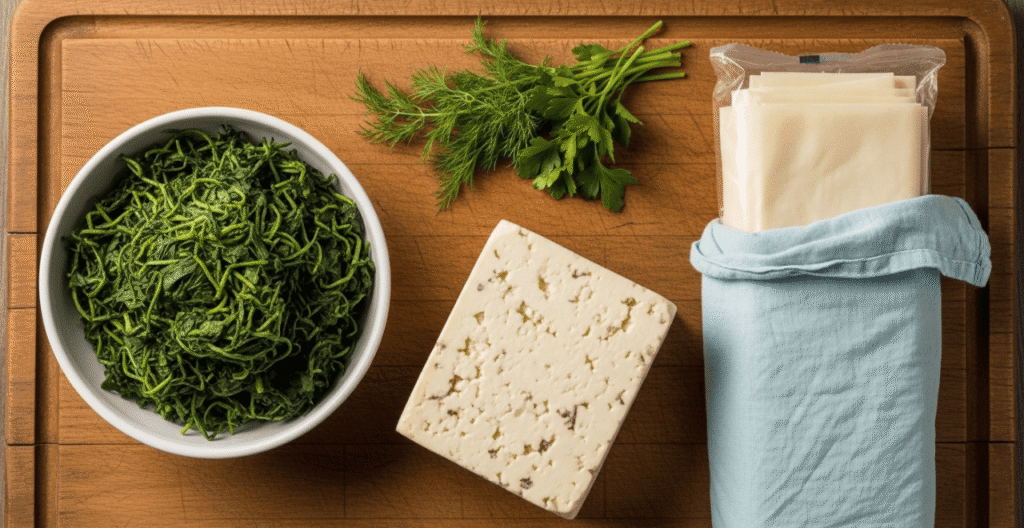
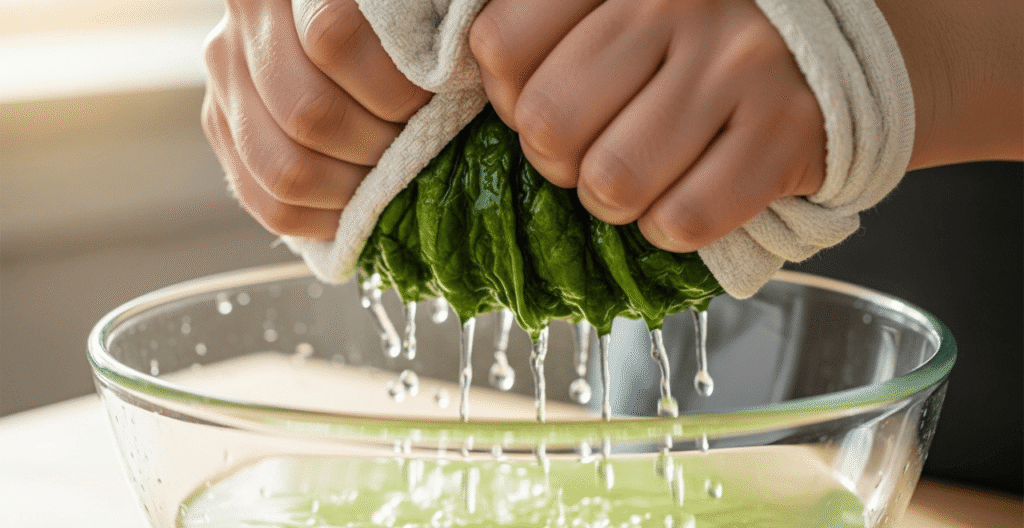
Why Squeeze Spinach Water?
The excess moisture will be released during baking if you skip this step, which will create a soggy and unappetizing layer between the filling and the bottom crust. This is the number one cause for soggy spanakopita. And squeezing the water out concentrates the spinach flavor and ensures a crisp base.
Why Feta Works Best for Spanakopita?
Authentic spanakopita calls for Feta cheese for a reason. Because of its sharp, tangy and salty profile cuts through the richness of the phyllo and the earthiness of the spinach.
Feta vs. Ricotta/Cottage Cheese
While you can substitute, ricotta and cottage cheese are milder and more watery, yielding a much blander filling. But for the best result, I recommend you to stick to a good quality Feta.
Why Use Fresh Dill or Parsley in Spanakopita?
Greek recipes use fresh herbs because they are foundational to the flavor profile. And the fresh dill is non-negotiable for an authentic taste, adding a bright and aromatic lift that dried herbs cannot replicate. Additionally, parsley adds color and freshness to the dish.
Olive Oil vs Butter: Which Makes Crispier Layers?
Olive oil contributes flavor and a soft, fluffy pastry texture, while melted butter (or clarified butter) can lead to a slightly richer flavor and helps the layers crisp up and brown beautifully. Although many Greek bakers use pure olive oil for its distinct taste, a blend is often best.
Phyllo Dough For Fluffy Pastry
A dedicated section for phyllo dough handling tips is your ticket to a fluffy pastry and a crisp and professional finish.
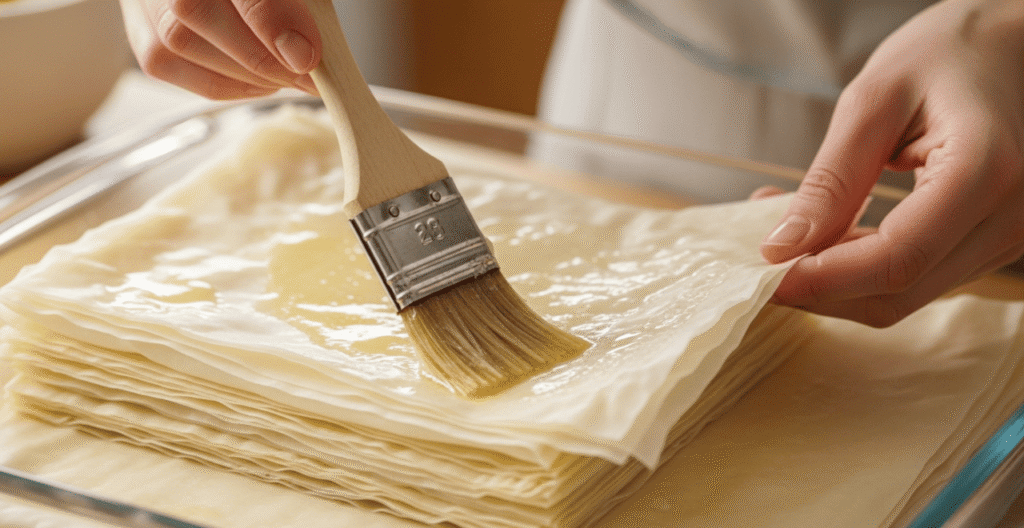
How to Thaw Phyllo Correctly (Timeline and Temperature)
Phyllo is delicate and must be thawed slowly.
- Timeline: Move the frozen package from the freezer to the refrigerator 24 hours before using it.
- Temperature: Transfer the package to the countertop at room temperature for at least 2 hours before you start assembling. Moreover, do not open the package until you are ready to use it.
Preventing Spanakopita Phyllo from Drying
Phyllo dries out almost instantly upon contact with the air, which makes it brittle and impossible to work with.
To prevent this keep the unused stack of phyllo sheets covered with a sheet of plastic wrap, then a slightly damp kitchen towel. Make sure to expose only the sheet you are currently brushing.
Layering Technique To Achieve Fluffy Top Layers
To get the signature crispy spanakopita phyllo layers of:
- Brushing: Brush every sheet (or every second sheet) lightly with your melted butter/oil mixture. The fat creates a steam barrier, separating the layers and making them puff and crisp.
- Fluffy Pastry Tip: Try gently scrunching the final top layers lightly before baking, for a slightly fluffier texture.
How to Cut Before and After Baking
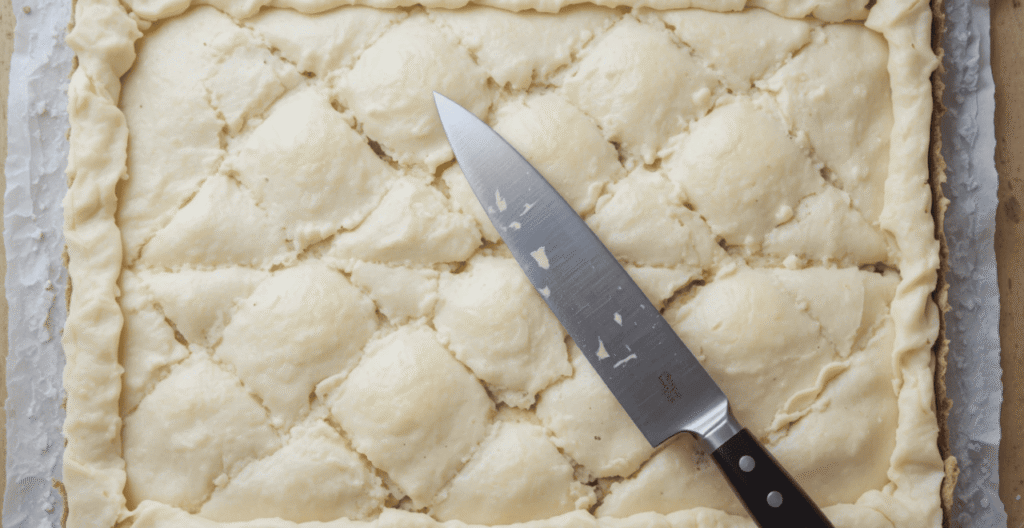
Always cut the spinach pie before baking. This will ensure that the crispy top layers don’t shatter when you try to slice the hot pie.
Troubleshooting Spanakopita Recipe Problems
| Problem | Cause | How to Fix/Prevent |
| Soggy Bottom | Watery filling and not enough fat on the bottom layers. | Squeeze the spinach aggressively. Brush the bottom pan generously with oil/butter. |
| Watery Filling | Unstrained spinach or wet feta cheese. | Drain the thawed spinach completely. Pat feta dry or use less egg in the binder. |
| Phyllo Cracking | The dough was too cold or dried out while working. | Thaw completely at room temperature; keep unused sheets covered with a damp towel. |
| Burned Top but Raw Inside | The oven was too hot or the filling was too cold. | Cover the top loosely with foil halfway through baking. And ensure the filling is at room temperature before assembling. |
| Not Crispy | Not enough fat between layers or baked at too low a temperature. | Lightly brush each layer of phyllo with oil or butter, and one sheet at a time. Additionally, make sure your oven is fully preheated to 375°F (190°C) before baking. |
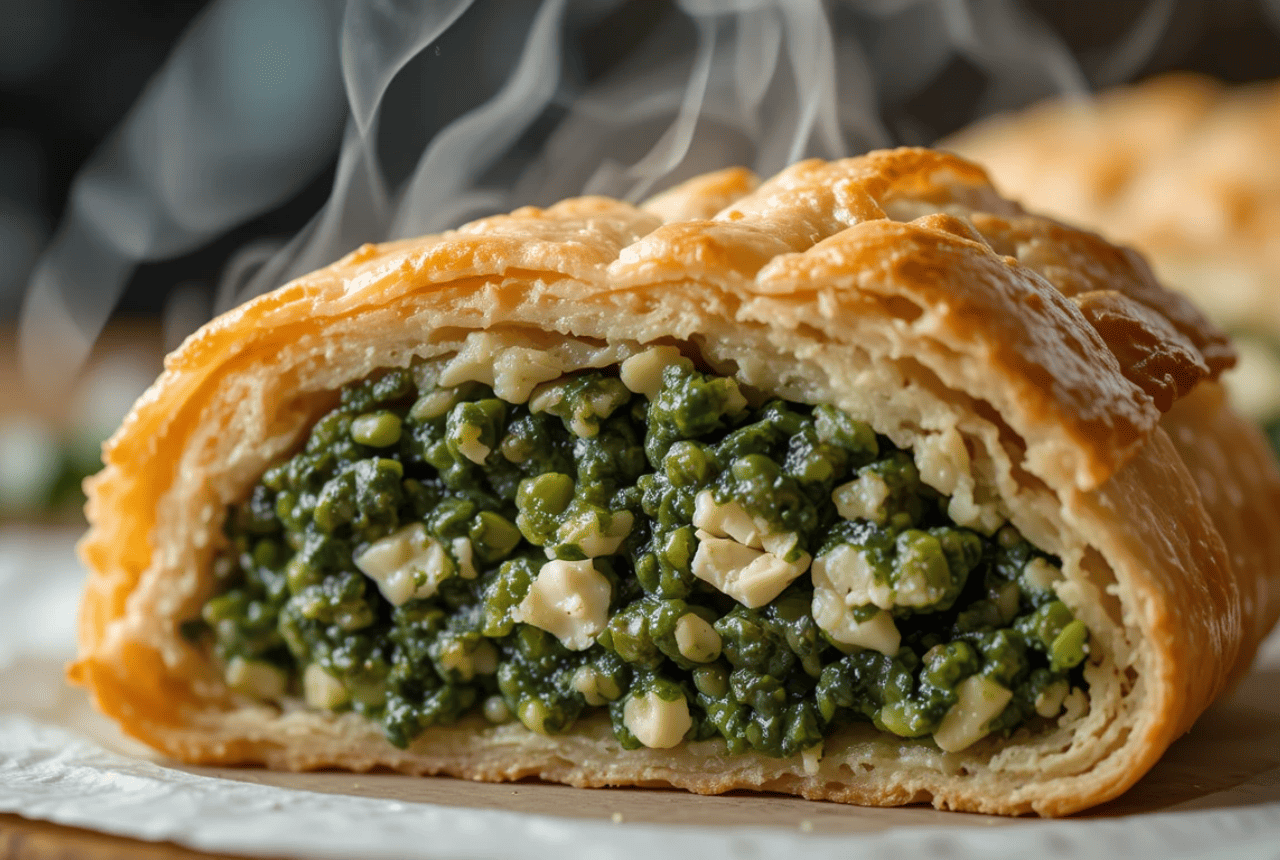
Authentic Spanakopita Recipe (Greek Spinach Pie)
Ingredients
Equipment
Method
- Prepare the SpinachFirst thaw the spinach fully. Then wrap it in a clean kitchen towel or cheesecloth and squeeze aggressively until no more liquid drips out. Then set it aside.
- Saute the OnionHeat 1 tablespoon olive oil in a pan over medium heat. And cook the onion for 5-7 minutes until it is soft and translucent. Then let it cool slightly.
- Make the FillingIn a large bowl, combine the squeezed spinach, sautéed onion, crumbled feta, eggs, dill, parsley, nutmeg, salt and pepper. Now, mix gently until just combined. You can always taste and adjust the seasoning according to your liking.
- Prepare the Baking DishPreheat the oven to 375°F (190°C) and generously brush a 9×13-inch baking dish with melted butter or olive oil.
- Layer the Bottom PastryPlace the first sheet of phyllo in the dish and lightly brush it with the butter or oil mixture. Repeat this process with 10 sheets and brushing between each one.
- Add the FillingNow, you have to spread the spinach and feta mixture evenly over the layered phyllo dough.
- Top Layers of Fluffy PastryAdd the remaining 10 sheets, brushing each with butter/oil. Gently scrunch them before placing them to create a fluffy and wavy texture for the top 2-3 sheets.
- Cut Before BakingUse a sharp knife to cut the spanakopita into 10-12 pieces (squares or diamonds). Doing this will prevent the top pastry from shattering.
- BakeBake for 45-55 minutes, until the top is deeply golden and crisp.
- Rest and ServeLastly cool it for at least 15 minutes so that the filling sets before serving.
Notes
- Squeeze the spinach very well: excess moisture is the #1 cause of soggy spanakopita.
- Thaw phyllo in the fridge overnight and keep it covered with a slightly damp towel while working.
- Brush phyllo lightly, not heavily. Because too much butter makes the layers dense instead of crisp.
- Cut before baking: so the top doesn’t crack and the slices come out clean.
- Use a 50/50 butter and olive oil mix for the best flavor and crispness.
Spanakopita Variations and Make-Ahead Tips
How to Fold Spanakopita Triangles
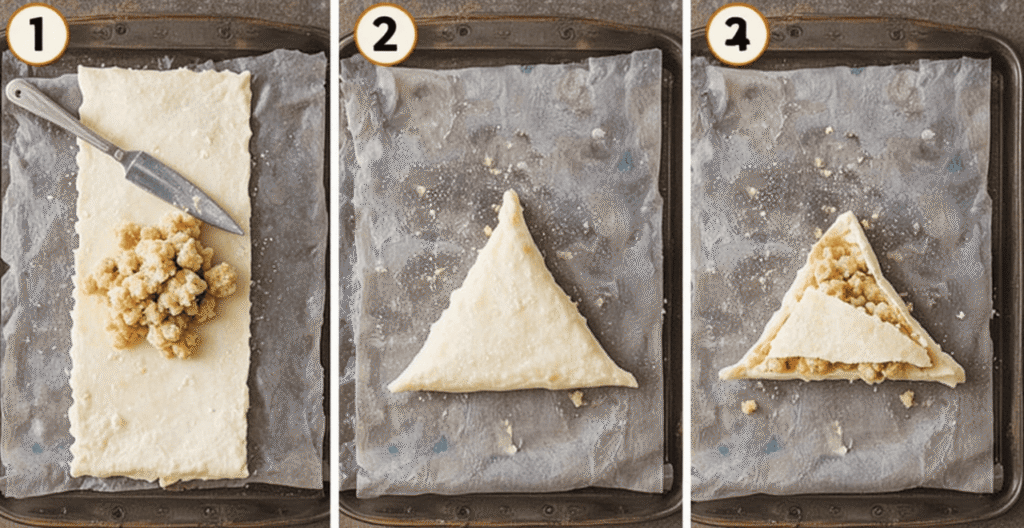
To make spanakopita triangles (which are perfect for party appetizers or mini spanakopita):
- Cut the phyllo sheets lengthwise into 3-inch strips.
- Place a spoonful of filling on one end.
- Fold one corner over the filling to create a triangle, then continue folding the strip like a flag until you reach the end.
- Lastly, brush generously with butter/oil and bake on a sheet pan.
Healthy and Mediterranean Diet Friendly
Spanakopita is a Mediterranean diet-friendly dish as it aligns with whole-food eating, relying on spinach, olive oil and minimal cheese. It also provides protein from the feta and is rich in vitamins and fiber from the spinach.
Make-Ahead and Freezing Spanakopita
If you’re wondering, “Can I make spanakopita the night before?” The answer is: Yes! For that, assemble the entire pie, but do not cut or bake it. Then cover it tightly with plastic wrap and refrigerate. When it’s ready to bake, take it out about 30 minutes before slicing and baking as instructed. You can also freeze spanakopita before baking; wrap it tightly and freeze for up to 3 months. Thaw in the fridge overnight before baking.
FAQs
Why is my spanakopita watery?
This is the most common mistake. It is because your spanakopita is watery, as the spinach was not squeezed dry enough after thawing. To overcome this, squeeze the spinach to remove all moisture before mixing the filling.
Can I use puff pastry instead of phyllo?
You can use puff pastry, but the result will be a richer and denser pie, not the traditional light and flaky spanakopita. Because puff pastry creates a different texture than the crisp, layered effect of phyllo dough.
How do you make spanakopita crispy again?
To make leftover spanakopita crispy, reheat it in a toaster oven or standard oven at 350°F (175°C) for 10–15 minutes, until the top layers are crisp. Avoid the microwave; it will make the pastry soggy.
What is the best cheese for spanakopita?
The best cheese is traditional Greek Feta for its salty tang. While Ricotta is also sometimes used, it will make the pie milder and potentially more watery.
Can I make spanakopita without eggs?
Yes, you can make it without eggs. But if eggs are omitted, the filling will be crumbly. The egg is mainly used as a binder to hold the filling together. But don’t worry, it will still be delicious without eggs.