
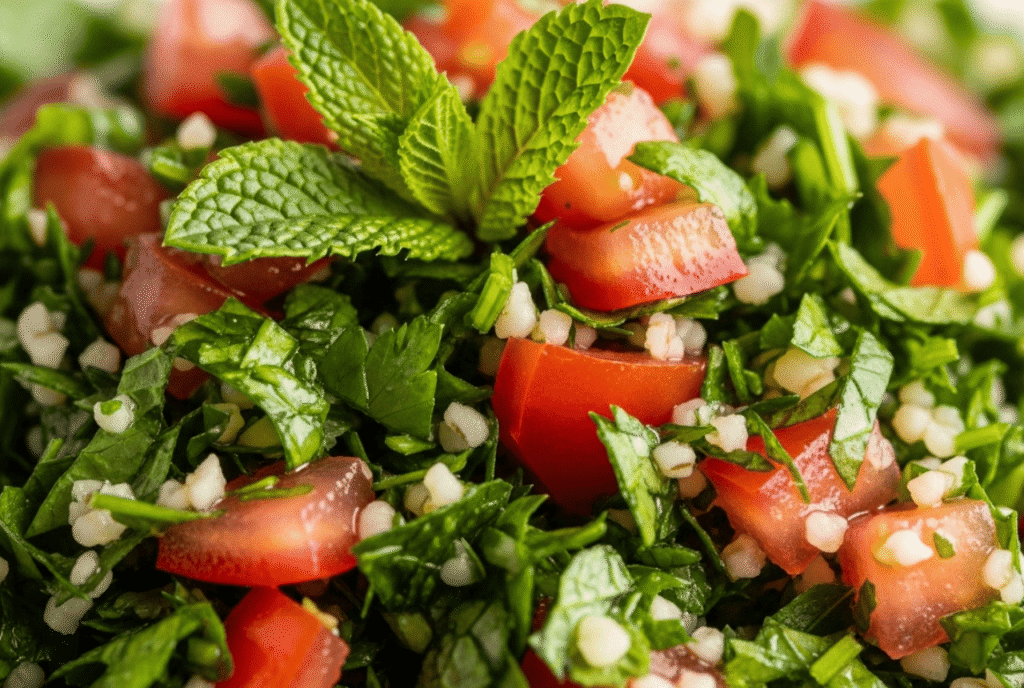
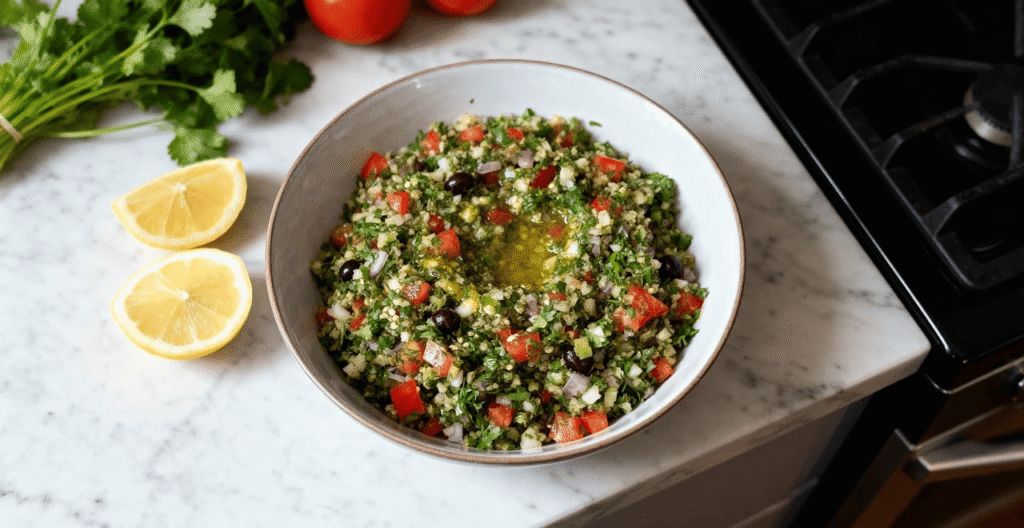
Hello and welcome to my kitchen! I’m thrilled to share the only tabbouleh recipe you will ever need. If you’ve only had the heavy and bulgur-forward versions often sold in delis, get prepared for a revelation. This fresh and authentic Lebanese Tabbouleh or just Tabbouli as it’s often spelled is not a grain salad; it is a vibrant, verdant, intensely flavored parsley salad with just enough fine bulgur to bind the fresh juices.
This simple, refreshing dish is the centerpiece of a Levantine meal and a perfect expression of the healthy Mediterranean diet. Follow this recipe and you’ll master the perfect chop, the perfect texture and the perfect zesty flavor that is pure tradition.
What is Tabbouleh? (Origin, History & Regional Differences)
Tabbouleh (pronounced tah-BOO-lee or ta-BOO-la) is a refreshing Middle Eastern herb salad that is an essential component of the mezze (appetizer) table across the Levant.
Origin and History of Tabbouleh
Tabbouleh is believed to have originated in the mountainous regions of Lebanon and Syria thousands of years ago, long before tomatoes were introduced to the Middle East in the late 19th century. Its name is derived from the Arabic word tābil, meaning “seasoning” or “spice”. The original ancient version was likely a simple mix of edible wild herbs or qaḍb and bulgur wheat. And today, it remains a powerful symbol of Lebanese cuisine.
Lebanese vs Other Tabbouleh Salads
The main question people ask is: What is the difference between tabouli and tabbouleh?
The answer is simple: The distinction is typically one of spelling and ratio:
- Traditional Lebanese Tabbouleh (Authentic): This is the ultimate parsley salad and it uses a vast amount of very finely chopped fresh flat-leaf parsley and a very small amount of fine bulgur (usually just 1/4 cup for a large batch) to absorb the dressing. Moreover, it is bright, light and intensely herbaceous.
- Syrian/Palestinian Tabbouleh: These versions are very similar to the Lebanese.
- Western/Deli Tabbouleh: Often features a much higher ratio of bulgur to parsley (making it a bulgur salad with parsley) and may include ingredients like cucumber, which are not traditional.
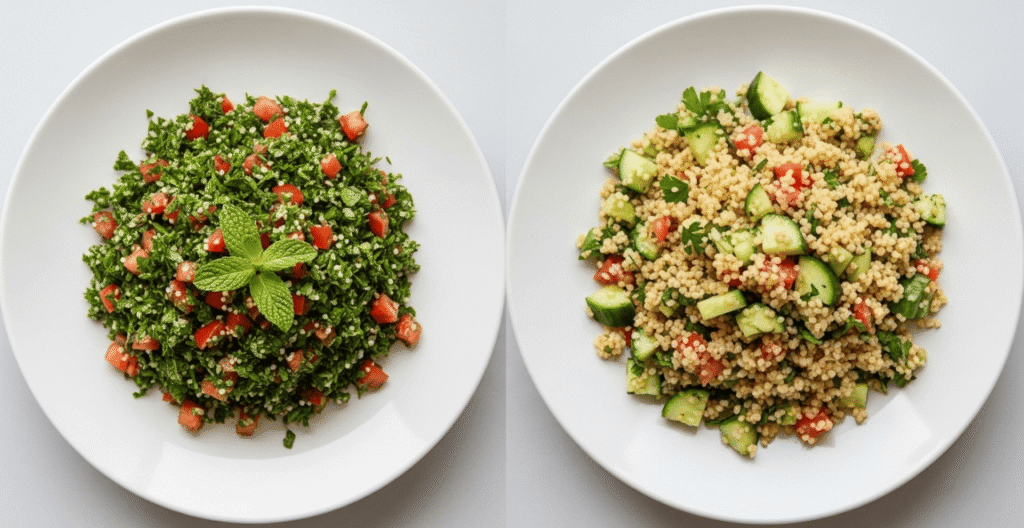
| Feature | Authentic Lebanese Tabbouleh | Non-Traditional/Deli Tabbouleh |
| Main Ingredient | Fresh Parsley (the bulk of the salad) | Bulgur Wheat (the bulk of the salad) |
| Bulgur Amount | Very Small (for texture and binding) | Large (for volume and cost savings) |
| Traditional Extras | None (pure herbs, tomato and onion) | Cucumber, Feta, Bell Peppers, etc. |
Ingredients Used For Tabbouleh:
Every ingredient must be of the highest quality and prepared correctly for a perfect authentic Lebanese tabbouleh.
What is the best parsley for tabbouleh and how to chop it?
Always use fresh flat-leaf (Italian) parsley and avoid the curly variety. Because flat-leaf parsley has a cleaner, less bitter flavor and is easier to chop finely.
How to Chop Parsley for Tabbouleh?
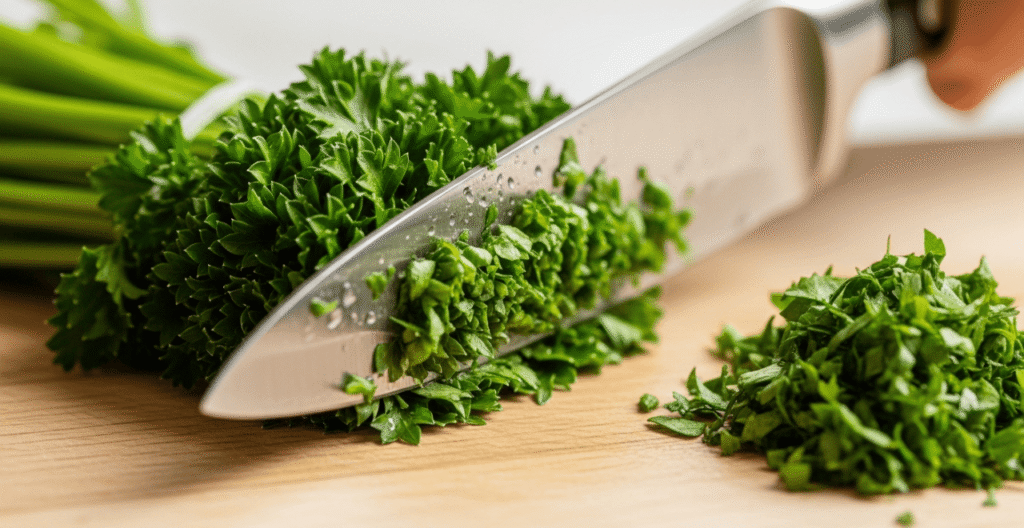
Use a very sharp chef’s knife for this. Hold a tight bunch of parsley in one hand and rock the knife over it repeatedly until it is very finely minced, almost like a coarse dust. In addition, avoid using a food processor, as it tends to bruise the leaves and turn the salad mushy or bitter.
Why Lebanese Tabbouleh Uses Less Bulgur?
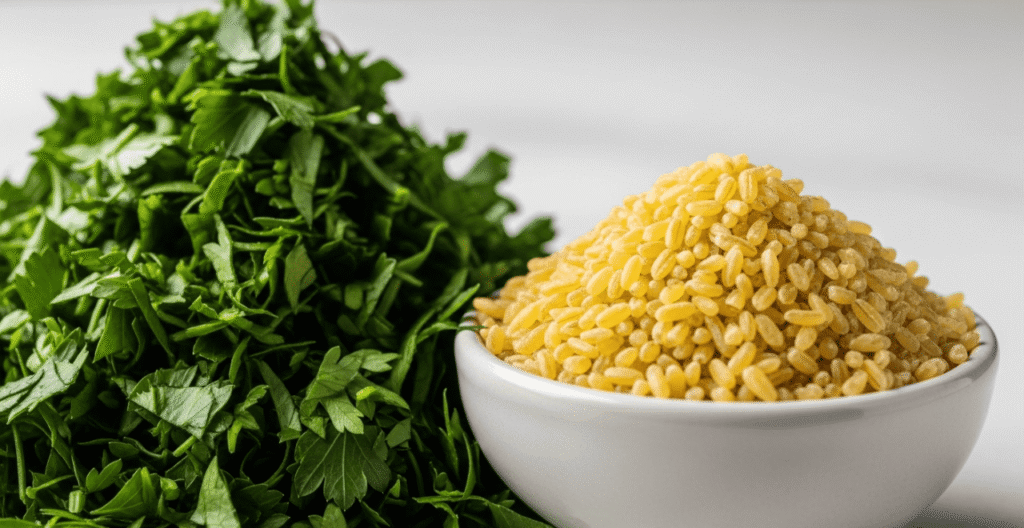
The traditional Lebanese approach views bulgur not as the main component, but as a spice or binder.
It serves three purposes: to add a small amount of chew, to absorb the vibrant juices from the tomatoes, mint, and lemon and finally to add a touch of low-GI whole grain.
Authentic Tabbouleh Dressing
The classic and authentic dressing is exquisitely simple, relying on quality ingredients: Extra Virgin Olive Oil, Freshly Squeezed Lemon Juice and Salt. That’s it! The freshness of the parsley and mint should shine – no need for garlic, vinegar or extra spices like cumin or allspice in this pure version.
How to Prepare Bulgur
The secret to perfectly cooked and fluffy bulgur that won’t make your salad soggy is in the soaking. Keep this in notes: Never boil bulgur for tabbouleh.
- Use Fine Bulgur Only: Look for the finest grind, often labeled as fine-grain bulgur (#1 or #0). This bulgur is pre-cooked (parboiled) and only requires soaking.
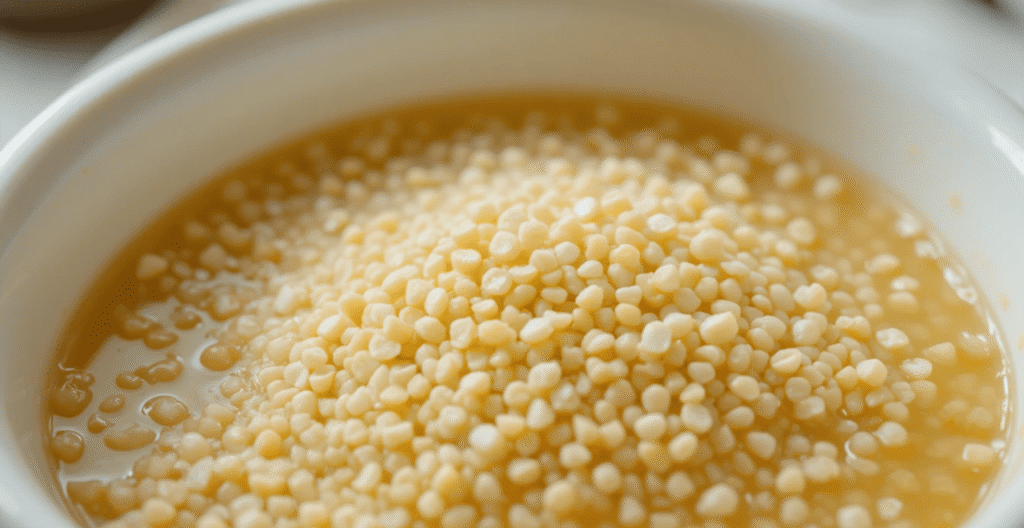
- The Lemon Soak: Rinse the bulgur, then combine it with the amount of freshly squeezed lemon juice called for in the recipe and a pinch of salt. By doing this, the bulgur will absorb the juice, becoming plump and tangy.
- Rest Time: Let it rest for just 15-20 minutes, or until fully hydrated and tender, but not mushy.
- Squeeze Out Excess Moisture: If there is any leftover liquid after soaking, gently press the bulgur in a fine-mesh sieve to remove it. Because, we want it damp and fluffy, not waterlogged.
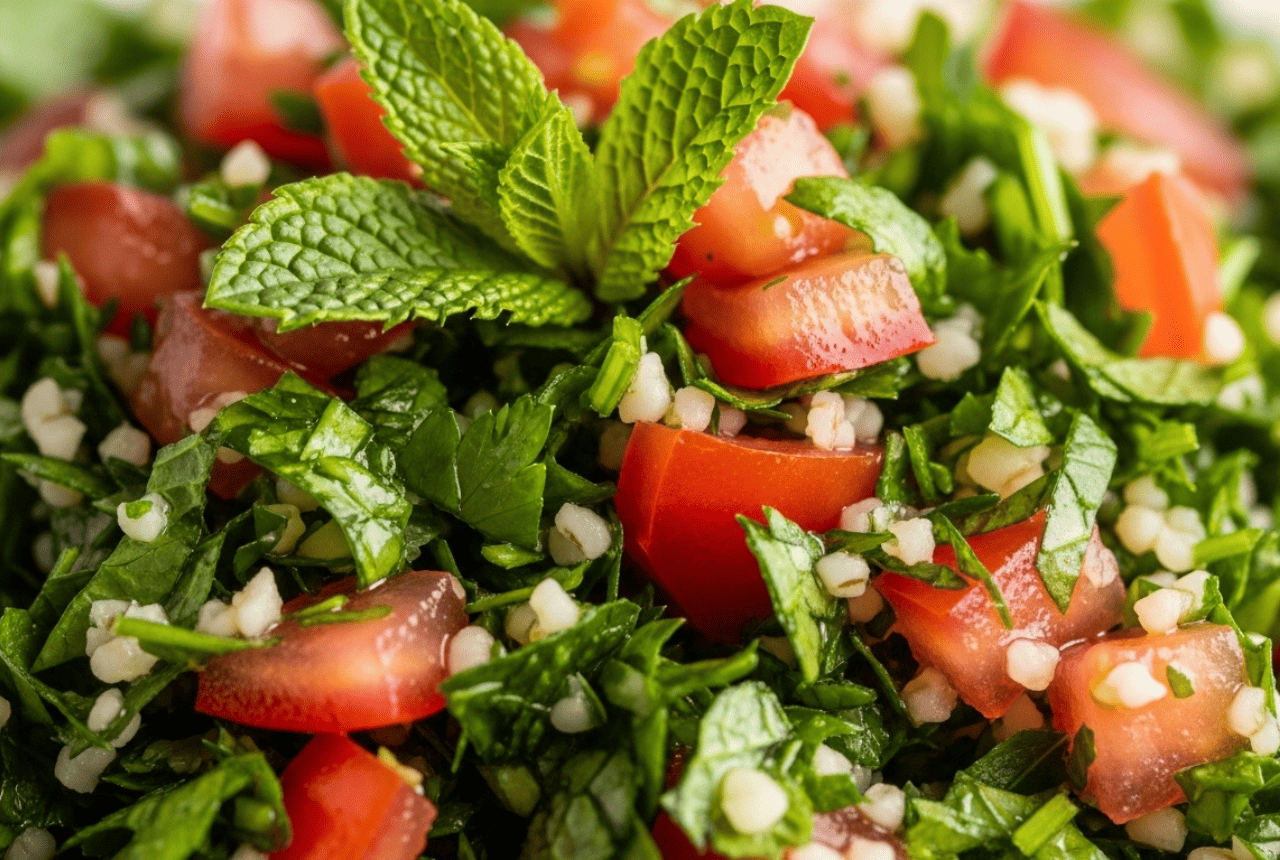
Authentic Lebanese Tabbouleh (Tabbouli) Recipe
Ingredients
Equipment
Method
- Prepare the Bulgur: Rinse the fine bulgur under cold water and place it in a small bowl. After that pour the freshly squeezed lemon juice over the top and stir to combine. And let it soak for 15-20 minutes. Then gently squeeze out any excess liquid and set aside.
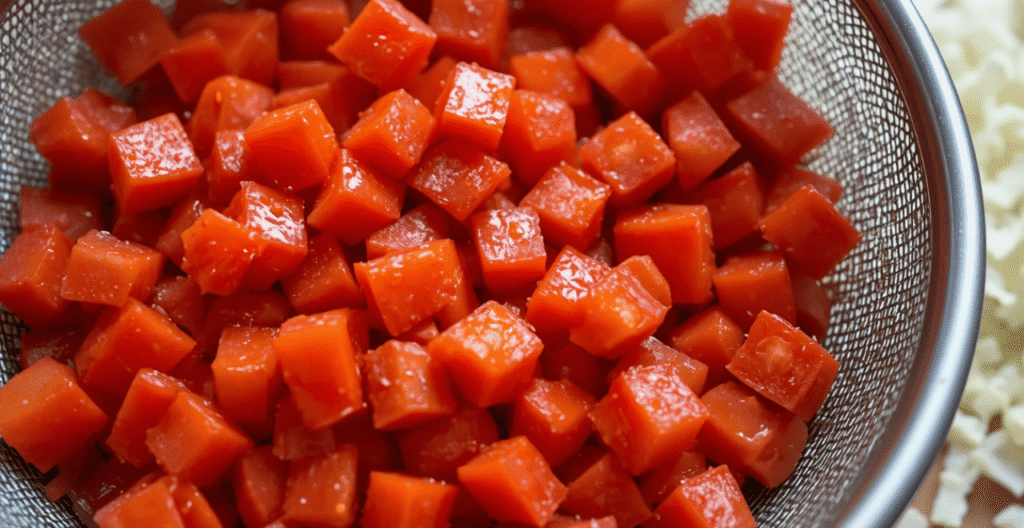
- Chop the Vegetables: Finely dice the white onion that’s ready. Prepare the tomatoes: Dice them finely and place them in a fine-mesh sieve for 10-15 minutes to drain as much liquid as possible. Press them gently to help the process. Note: This step is crucial!
- Chop the Herbs: Wash the parsley and mint well, which helps shake water. Shake it off as much as possible or use a salad spinner for this. Then lay them on a clean kitchen towel to dry completely. Finely mince both the parsley and mint using a sharp knife.
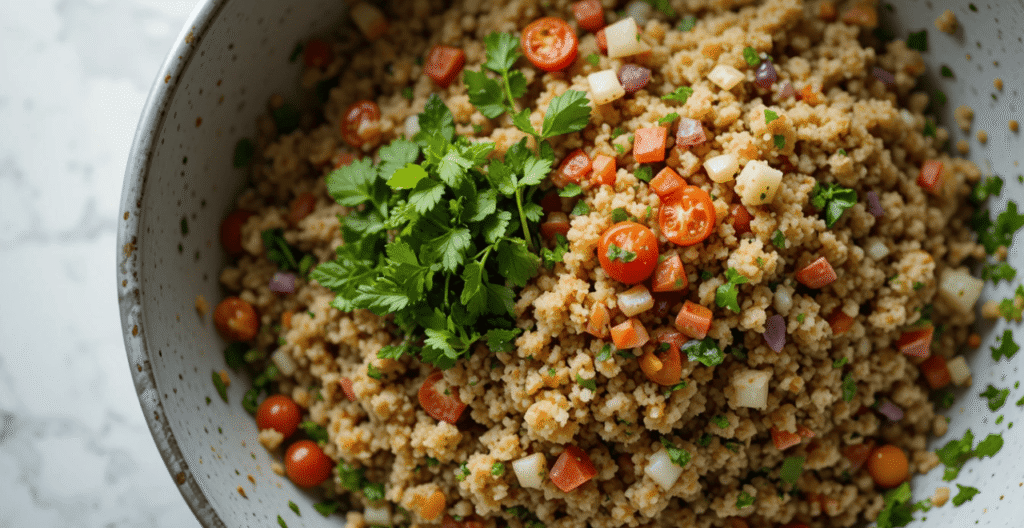
- Combine Ingredients: In a large mixing bowl, gently combine the chopped parsley, mint, diced onion and drained tomatoes. After that add the soaked and fluffed bulgur.
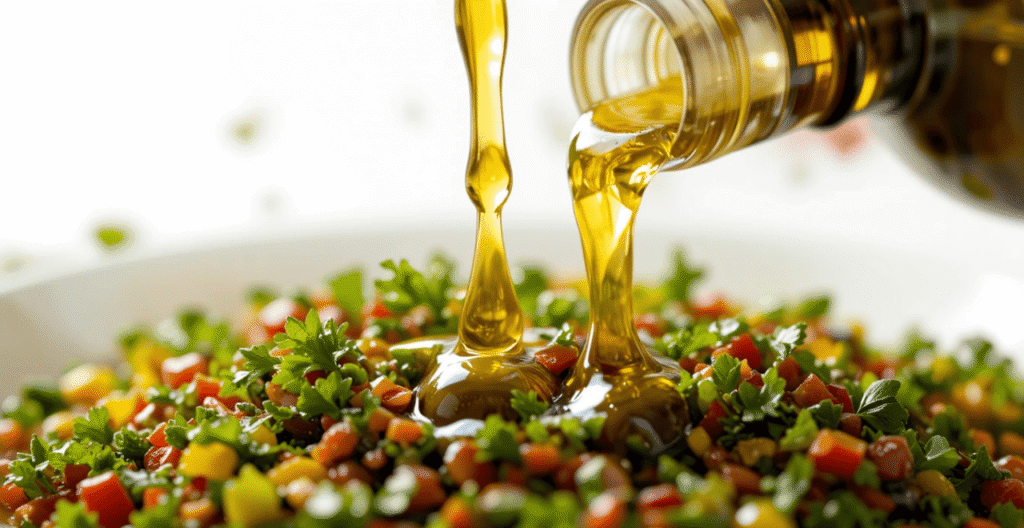
- Dress and Season: Pour the extra virgin olive oil over the ingredients. Add the salt and pepper.
- Toss Gently: Use a large spoon or a light hand to toss the salad. If you want to combine, do not crush the herbs.
- Rest and Serve: Cover the bowl and refrigerate for at least 30 minutes to allow the flavors to meld. Taste just before serving and add a final drizzle of lemon juice or a pinch of salt if needed. Serve it chilled with fresh lettuce leaves.
Authentic Lebanese Tabbouleh (Tabbouli) Recipe
A traditional, herb-forward parsley salad from the Levant.
Ingredients
Instructions
How to Make Perfect Tabbouleh?
Achieving the authentic and fluffy texture requires attention to detail. Here are the keys to a truly perfect, bright and vibrant Tabbouleh:
Master the Chop
The herbs are the star. Chop the parsley very, very finely. Larger pieces make the salad unwieldy to eat.
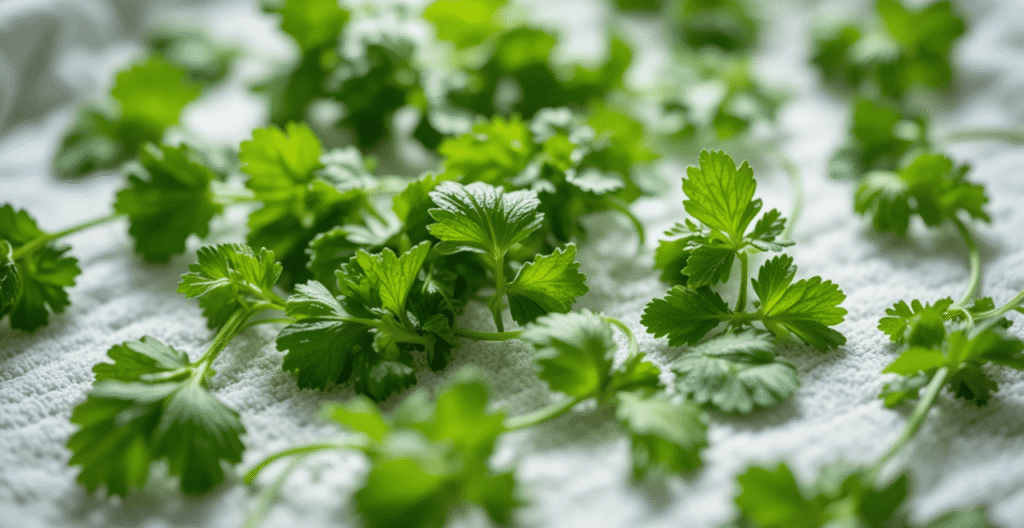
The De-Watering Step
Tabbouleh is ruined by excess moisture. You must drain your tomatoes well. After dicing them, salt them lightly and let them sit in a colander for 15 minutes to weep out their water. Pat the chopped herbs dry after washing.
Bulgur is Last
Add the pre-soaked and fluffed bulgur after the tomatoes have drained and you are ready to combine the ingredients.
Dress at the End
Only add the dressing (lemon juice and olive oil) when the salad is about to be tossed. Never add the dressing right at the start, as the lemon acid can wilt the herbs and the moisture will lead to a watery salad.
Keep it Cold & Fresh
Tabbouleh is best served chilled. The 30-minute rest is a minimum for flavors to meld; any longer than a few hours and you risk the “soggy” mistake (see below).
Common Mistakes To Avoid in Tabbouleh
Avoid these common pitfalls that separate a good tabbouleh from a stellar one:
| Mistake | Cause | Solution |
| Watery/Soggy | Tomatoes were not drained properly; because of too much dressing/lemon juice. | Salt and drain tomatoes for 15 mins. Pat dry herbs and use a precise amount of lemon and oil. |
| Too Much Bulgur | Treating it as a bulgur salad instead of a parsley salad. | Stick to the 1:12 ratio: 1/4 cup bulgur to 3-4 large bunches of parsley. |
| Bitter Flavor | Using curly parsley or chopping the herbs in a food processor. | Always use flat-leaf parsley. And chop with a very sharp knife to avoid bruising the leaves. |
| Mushy Texture | Over-soaking the bulgur or letting the finished salad sit too long. | Only soak bulgur for 15-20 minutes. Mix the salad no more than 2-3 hours before serving. |
| Too Bland | Using bottled lemon juice or low-quality olive oil. | Freshly squeezed lemon juice is non-negotiable. In addition, you should use a good Extra Virgin Olive Oil. |
Variations Of Tabbouleh
This traditional tabbouleh recipe is a perfect canvas for dietary needs and flavor twists:
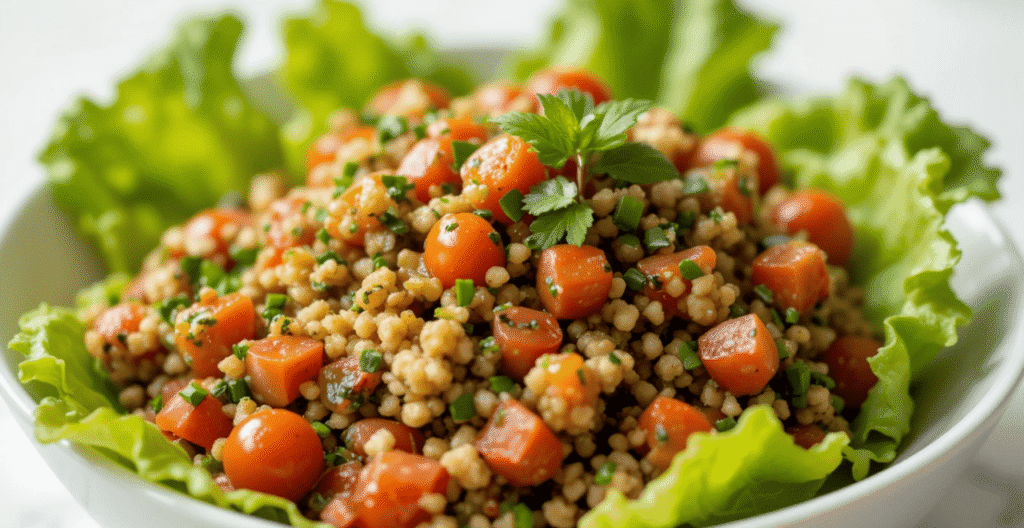
Quinoa Tabbouleh (Gluten-Free Tabbouleh)
This one is the most popular and easiest substitution. For this, just replace the 1/4 cup of fine bulgur with 1/2 cup of cooked and cooled quinoa. Quinoa usually has a slightly nuttier flavor but maintains a similar light and chewy texture.
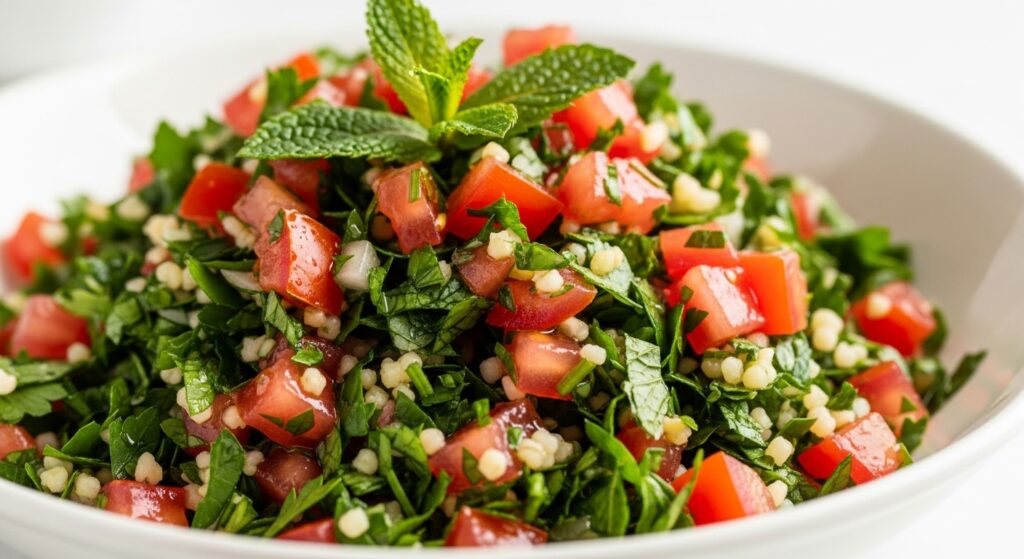
Palestinian Tabbouleh
It often includes a touch of cinnamon or allspice for a deeper flavor profile and sometimes uses more tomato. It also demands addition of a pinch (1/4 tsp) of Seven Spice or allspice to the salad mix.
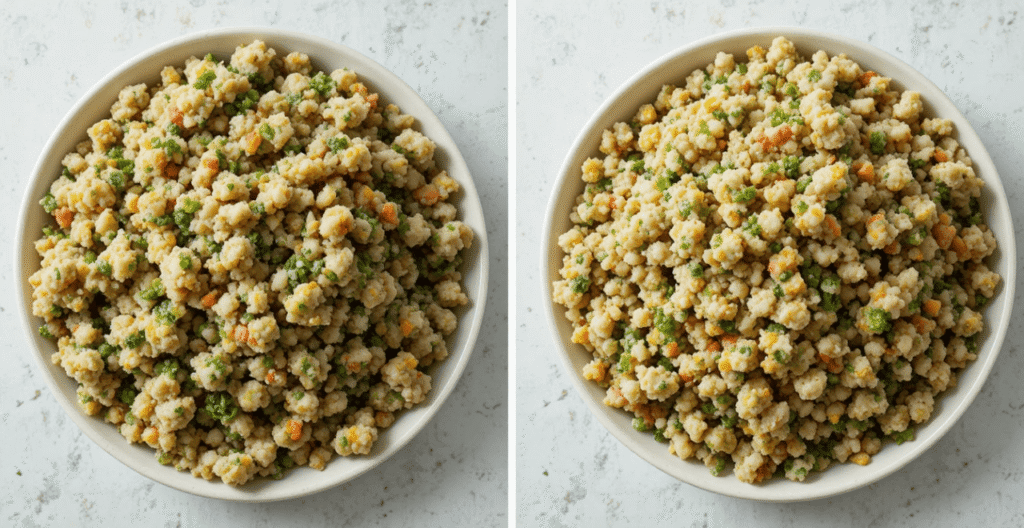
Couscous Tabbouleh
Replace the bulgur with an equal amount of cooked and cooled couscous for a non-traditional twist.
(Note: Couscous is also wheat and not gluten-free.)
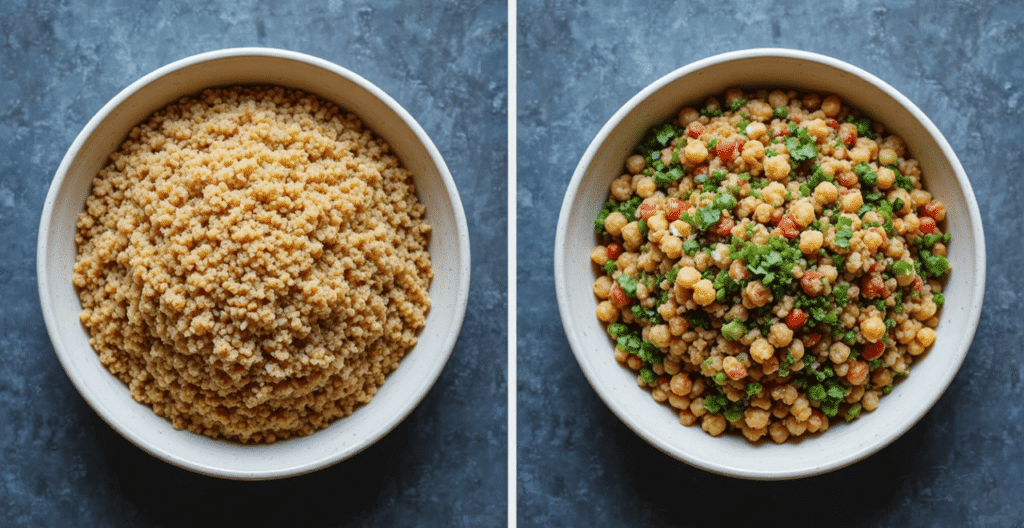
Ottolenghi-Style Tabbouleh
This modern style often incorporates untraditional elements like pomegranate molasses in the dressing, feta cheese or crunchy vegetables like cucumber and bell pepper.
Is Tabbouleh Healthy?
Absolutely, Tabbouleh is an incredibly nutritious dish and is a shining example of the heart-healthy Mediterranean Diet, which is one of the most researched and beneficial diets in the world.
- Rich in Nutrients: Parsley is a nutritional powerhouse, high in Vitamins A, C and K. It’s also packed with antioxidants that help fight inflammation.
- Heart-Healthy Fats: The dressing is pure Extra Virgin Olive Oil and also rich in monounsaturated fats that are essential for cardiovascular health.
- High in Fiber: The bulgur (or quinoa/millet substitute) provides a low-glycemic and whole-grain source of fiber, which aids digestion and promotes satiety, making it excellent for weight management.
- Vegan-Friendly: Tabbouleh is naturally a wholesome and plant-based dish.
Is Tabbouleh Gluten-Free?
Traditional Tabbouleh is NOT gluten-free, as bulgur is a cracked wheat product.
However, it is extremely easy to make a delicious and authentic-tasting Gluten-Free Tabbouleh by substituting the bulgur with a gluten-free grain or vegetable:
- Quinoa: The most common and best alternative (as noted above).
- Cauliflower Rice: For a low-carb and grain-free option, pulse raw cauliflower florets in a food processor until they resemble fine grain.
- Millet or Buckwheat Groats: These cooked and cooled grains also serve as excellent substitutes for a slightly different texture and flavor profile.
Storage and Meal Prep Tabbouleh
Tabbouleh is a fantastic meal prep option, but you need to follow one rule to prevent its sogginess:
- Make-Ahead (Best Method): Chop all your ingredients (parsley, mint, tomatoes and onion) and store them separately in an airtight container in the fridge. Prepare the bulgur and store it in a different container. Whisk the dressing (lemon, oil, salt) and store it in a jar. After that, combine the three components no more than 2-3 hours before serving.
- Storage of Finished Salad: Tabbouleh will keep well for 1-2 days in the refrigerator. But after the second day, the herbs begin to wilt and the salad becomes notably softer.
Tabbouleh Serving Suggestions
This authentic parsley salad is a staple of the Levantine table and is traditionally served as part of a Mezze spread.
- Serve alongside Hummus and Baba Ghanoush with fresh pita bread.
- You can use it as a side for grilled meats like Lamb Kofta or Chicken Shawarma.
- It is the perfect refreshing counterpoint to rich and baked dishes like Moussaka or Sfeeha (meat pies).
FAQs for Tabbouleh
Q: What are the main ingredients of tabbouleh?
A: The main ingredients of authentic Tabbouleh are very finely chopped fresh flat-leaf parsley, mint, diced tomatoes, onion, fine bulgur wheat and a dressing made simply from fresh lemon juice and olive oil that is extra virgin.
Q: How do you make tabbouleh salad less watery?
A: The key is moisture control. For that, you must thoroughly drain the diced tomatoes by salting them and letting them sit in a sieve. Also, ensure your washed parsley is patted completely dry before chopping and mixing.
Q: What country is tabbouleh from?
A: Tabbouleh originates from the Levant region of the Middle East, with its roots traced to the mountains of Lebanon and Syria. It is also widely considered an unofficial national dish of Lebanon.
Q: What is the best parsley for tabbouleh?
A: Flat-leaf (Italian) parsley is superior for tabbouleh. Because it has a cleaner, less bitter flavor and its leaves are much easier to chop into the fine and fluffy texture that is required for the authentic recipe.
Q: What is the correct way to pronounce tabbouleh?
A: The most common pronunciations are tah-BOO-lee or ta-BOO-la. The variant spelling, like tabouli, often matches the spoken pronunciation.