

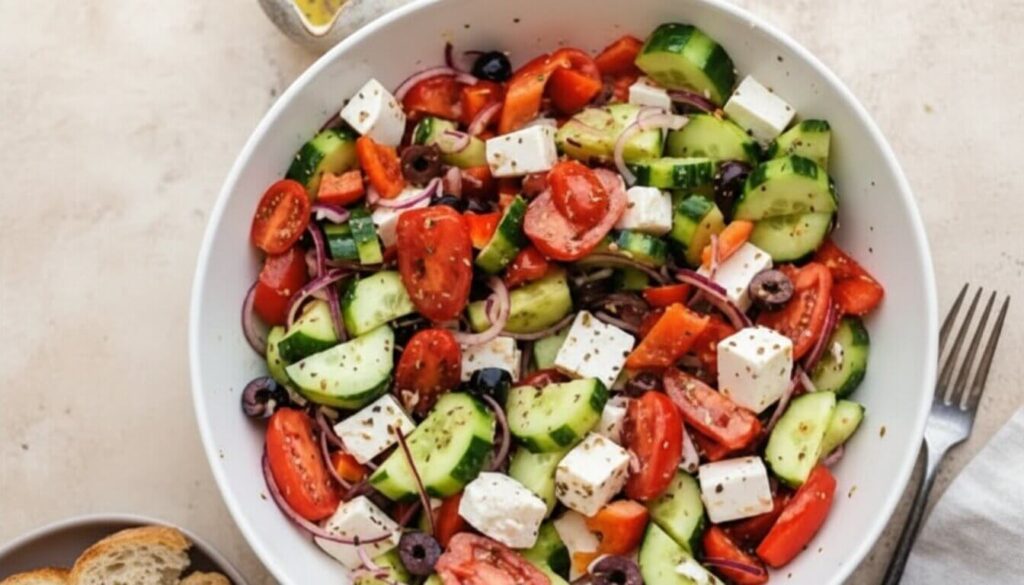
Authentic Mediterranean flavors come to life with simple, fresh ingredients in this definitive guide to the “Village Salad.”
1. Introduction
When people think of the Mediterranean diet, the image that almost always comes to mind is a vibrant bowl of sun-ripened tomatoes, crisp cucumbers, and a thick slab of salty feta. This is the Traditional Greek Salad Recipe, known in its homeland as Horiatiki Salata. As a cornerstone of traditional Mediterranean cuisine, Horiatiki is more than just a side dish; it is a celebration of the harvest.
Despite its global fame, the beauty of this salad lies in its radical simplicity. It is loved worldwide because it relies on the quality of raw ingredients rather than complex techniques. However, there is a distinct difference between the authentic version found in a Greek taverna and the “Westernized” versions often served abroad. Most notably, a true Horiatiki contains no lettuce. By focusing on fresh vegetables and a minimal dressing of extra-virgin olive oil and vinegar, you experience the pure, unadulterated flavors of Greece. This guide will teach you how to master the authentic method, providing cultural background, health benefits, and professional tips for perfect results.
2. What Is a Traditional Greek Salad (Horiatiki)?
To understand this dish, one must understand the word Horiatiki, which literally translates to “village” or “peasant” salad. Historically, this was a rural meal, put together by farmers using whatever was growing in their gardens, paired with a piece of bread and a slice of feta cheese from their own livestock.
The key characteristics of an authentic Horiatiki are its rustic nature and seasonal soul. You won’t find perfectly uniform julienned strips here; instead, the vegetables are chunky-cut to maintain their individual textures. The seasoning is kept simple—usually just dried oregano and sea salt. Perhaps the most significant visual marker of authenticity is the feta cheese. In a traditional setting, the feta is served as a large slab or thick cubes placed on top of the vegetables, never crumbled into tiny pieces or pre-mixed into the dressing. This allows the diner to break off as much cheese as they want with each bite, preserving the contrast between the creamy dairy and the acidic vegetables.
3. Traditional vs Modern Greek Salad: Key Differences
If you are looking for Easy Mediterranean Recipes, it is helpful to know what makes a recipe truly “traditional.” Many modern restaurant versions add “fillers” that dilute the authentic experience.
| Feature | Traditional (Horiatiki) | Modern / Westernized |
| Base Leaf | No lettuce at all | Often uses Romaine or Iceberg |
| Dressing | EVOO | Bottled vinaigrettes or creamy dressings |
| Feta Style | Large slab or chunks on top | Fine crumbles mixed throughout |
| Extra Veggies | Only tomatoes, cucumber, onion, peppers | Radishes, carrots, or beets |
| Protein | Just the feta cheese | Added chicken, shrimp, or chickpeas |
Traditional preparation preserves the flavor balance by ensuring the juices from the tomatoes mix naturally with the olive oil to create its own “sauce” at the bottom of the bowl.
4. Ingredients Breakdown: Why Each One Matters
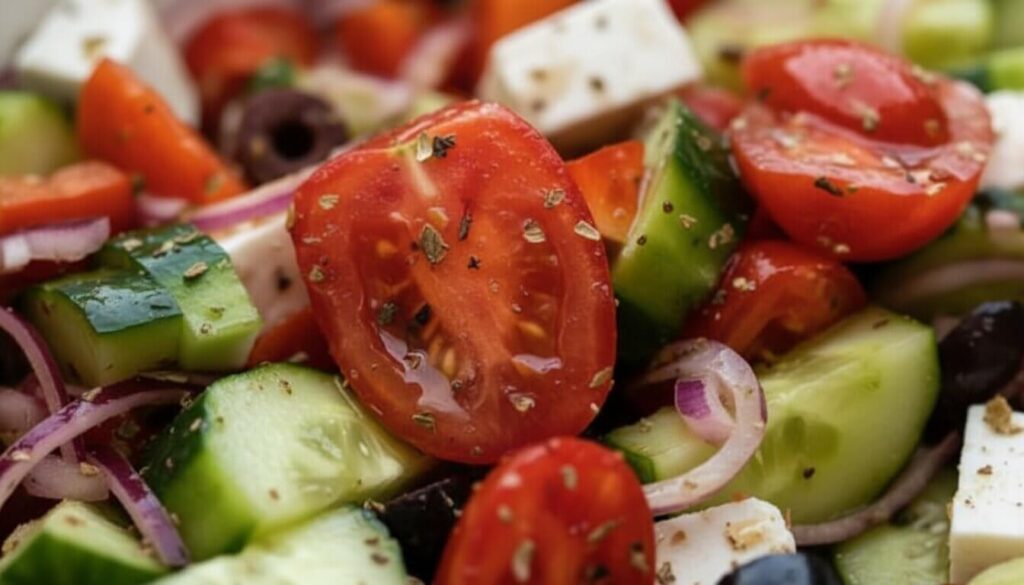
Success in a Traditional Greek Salad Recipe depends 90% on your shopping list and 10% on your knife skills.
4.1 Cucumbers
In Greece, the Persian or Lebanese cucumber is preferred for its thin skin and concentrated flavor. If using an English cucumber, there is no need to peel it entirely; “zebra-peeling” (leaving strips of skin) provides a beautiful aesthetic and great crunch. Thick half-moon slices are the standard to ensure they don’t get soggy.
4.2 Tomatoes
The tomato is the heart of the salad. You must use the ripest tomatoes available—ideally vine-ripened or heirloom varieties. They should be cut into irregular wedges, which allows the juices to escape and mingle with the oil. This “liquid gold” at the bottom of the bowl is why this salad is traditionally served with Rustic Peasant Bread Recipe for dipping.
4.3 Red Onion
Red onion provides a necessary sharp bite. To ensure the flavor isn’t overwhelming, slice them into thin rings. A pro tip: soak the sliced onions in ice water for 10 minutes before adding them to the salad to remove the harsh “sulfury” aftertaste while keeping the crunch.
4.4 Bell Pepper
While modern versions use red or yellow, the traditional choice is almost always the green bell pepper. Its slightly bitter, herbaceous notes provide a perfect counterpoint to the sweetness of the tomatoes and the richness of the oil.
4.5 Kalamata Olives
Never use canned black olives. Authentic Horiatiki requires Kalamata olives—almond-shaped, deep purple, and cured in brine. They add a salty, fruity depth. While pitted is easier to eat, whole olives with pits often have better texture and flavor.
4.6 Feta Cheese
Look for “Greek Feta” made from sheep’s milk (or a sheep and goat milk blend). It is tangier and creamier than cow’s milk versions. Placing a large slab on top is a sign of hospitality and ensures the cheese doesn’t dissolve into a grainy mess before it hits the table.
5. Traditional Greek Salad Dressing Explained
Forget the emulsified, creamy dressings found in grocery stores. An authentic Greek dressing is an “un-dressing.” The star is Extra-Virgin Olive Oil (EVOO). You want a cold-pressed, high-quality oil that tastes peppery and fresh.
The acidity comes from a squeeze of lemon. The most important herb is dried oregano. In Greece, dried oregano is often preferred over fresh for Horiatiki because its flavor is more concentrated and earthy, standing up better to the strong onion and feta. Salt should be used sparingly, as the olives and feta are already quite salty.
6. Step-by-Step Preparation
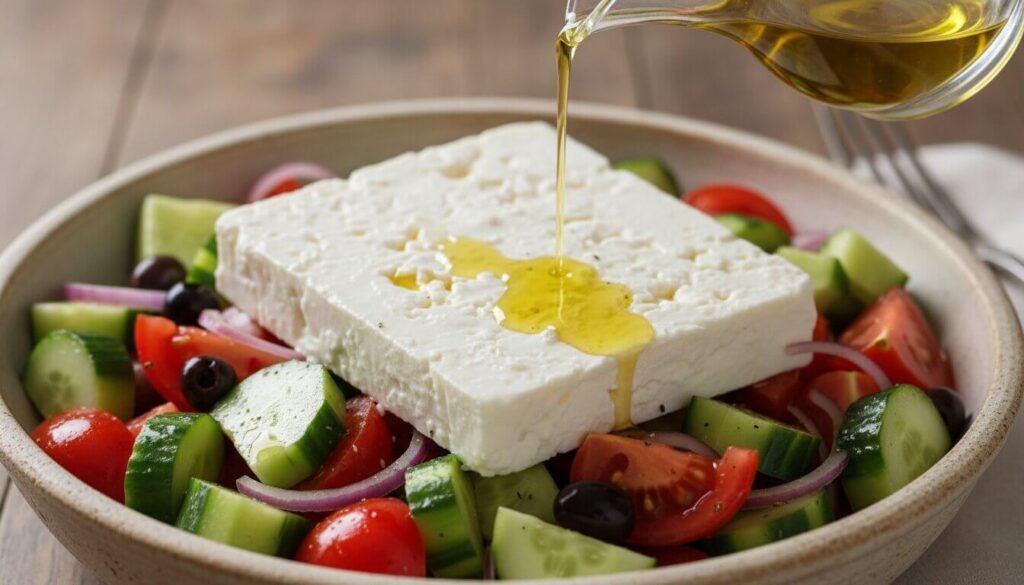
Preparing a Traditional Greek Salad Recipe is a meditative process. Start by washing your vegetables in cold water. Using a sharp knife, cut your cucumbers into thick half-moons and your tomatoes into large, rustic wedges. Slice the green peppers into rings and the red onions into translucent circles.
Place the vegetables in a large, shallow bowl. Do not use a deep mixing bowl; a wide dish allows the ingredients to spread out. Add a generous handful of Kalamata olives. Instead of whisking a dressing in a separate jar, drizzle the olive oil and vinegar directly over the vegetables. Sprinkle with sea salt and a heavy pinch of dried oregano.
Using your hands or two large spoons, give the salad a gentle toss. You aren’t trying to bruise the tomatoes; you just want to coat everything in oil. Finally, place the slab of feta right in the center, drizzle it with a bit more oil, and add one last dusting of oregano. Serve immediately while the vegetables are still cool and crisp.
7. Common Mistakes to Avoid
- Over-mixing: If you toss the salad too much, the tomatoes will break down and the salad will become watery.
- Using Bottled Dressing: The preservatives and thickeners in bottled versions mask the fresh vegetable flavors.
- Adding Lettuce: This is the quickest way to turn a Horiatiki into a generic garden salad.
- Over-salting: Always taste a piece of your feta first. If it’s very salty, you may not need any extra salt in the vegetables.
8. Is Greek Salad Healthy?
From a Mediterranean Diet perspective, Greek salad is a nutritional powerhouse. It is naturally:
- Low-carb and Keto-friendly
- Gluten-free
- Rich in Anti-inflammatories (thanks to the oleocanthal in olive oil)
The combination of healthy fats from the oil and fiber from the vegetables aids in nutrient absorption. Furthermore, the fermented nature of traditional feta provides a small boost of probiotics. To maintain portion control, remember that while olive oil is healthy, it is calorie-dense—a couple of tablespoons per large bowl is usually sufficient.
9. Variations That Still Respect Tradition
While the core ingredients are sacred, minor regional tweaks exist. In the Dodecanese islands, you might find capers or even pickled caper leaves added for extra salinity. Some regions marinate the feta in oregano and oil before serving. During the winter, when tomatoes aren’t at their peak, some Greeks might pivot to a “Maroulosalata” (lettuce salad), but that is considered a different dish entirely, not a variation of Horiatiki.
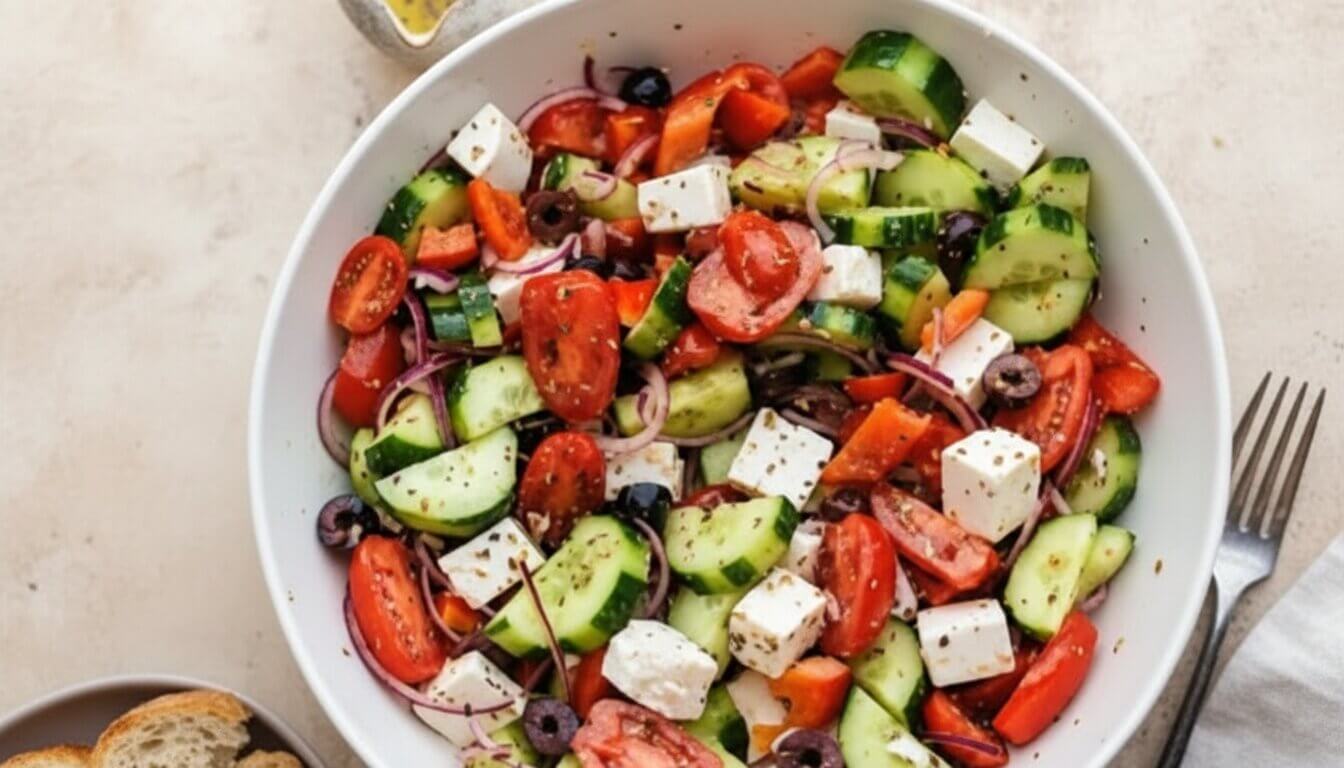
Authentic Traditional Greek Salad (Horiatiki)
Ingredients
Method
- Prep Vegetables: Combine the tomato wedges, cucumber slices, red onion, and green pepper in a wide, shallow salad bowl.
- Add Olives: Scatter the Kalamata olives over the top.
- Season: Drizzle the olive oil and red wine vinegar over the vegetables. Sprinkle with a pinch of sea salt.
- Toss: Gently toss the vegetables so they are evenly coated.
- The Feta: Place the slab of feta cheese directly on top of the salad.
- Garnish: Drizzle a tiny bit more oil over the feta and sprinkle the dried oregano over the entire dish.
- Serve: Serve immediately with crusty bread for dipping in the juices.
Notes
- The Bread Factor: This salad produces delicious juices at the bottom (oil, vinegar, and tomato water). In Greece, “papara” is the act of dipping crusty bread into these juices—it’s the best part!
- Temperature: For the best flavor, don’t serve the tomatoes ice-cold. Let them sit at room temperature for 20 minutes before slicing to bring out their natural sweetness.
- Feta Quality: Always look for feta in brine rather than plastic-wrapped dry blocks for a creamier texture.
10. How to Serve Greek Salad
Traditionally, Horiatiki is served as a center-of-the-table dish for everyone to share. It pairs perfectly with Greek Gyro meat recipe or a simple grilled fish. In a full Mediterranean spread, it often sits alongside a Mezze Platter Recipe. While it is a summer staple, its brightness makes it a welcome side year-round for any roasted protein.
11. Storage & Make-Ahead Tips
This salad is best eaten within 30 minutes of assembly. If you must prep ahead, chop the vegetables but do not add the salt, vinegar, or oil until the moment of serving, as the salt will draw moisture out of the tomatoes and make the salad soggy. Stored in an airtight container without dressing, the chopped vegetables will stay fresh for about 24 hours.
12. Frequently Asked Questions (FAQ)
What is the difference between Greek salad and Horiatiki?
Horiatiki is the traditional “Village” version of the salad, which is defined by its lack of lettuce and the inclusion of a feta slab on top. “Greek Salad” is the international name used for various versions, some of which are not authentic.
Does traditional Greek salad contain lettuce?
No. Authentic Horiatiki never contains lettuce. It relies solely on the crunch of cucumbers and peppers.
Can I make Greek salad without feta?
While feta is a core component, you can omit it for a vegan version or substitute it with a vegan feta alternative. However, it won’t be a “traditional” Horiatiki.
What’s the best olive oil for Greek salad?
Look for “Extra Virgin” and ideally a Greek origin (like Koroneiki olives). It should have a bright, slightly peppery finish.
Is Greek salad keto or low-carb?
Yes! By omitting the bread (pita) and focusing on the vegetables and healthy fats, it is an excellent choice for keto and low-carb lifestyles.
13. Final Thoughts: Why This Recipe Works
The Traditional Greek Salad Recipe works because it honors the ingredients. When you use high-quality oil and sun-ripened produce, you don’t need fancy sauces or complicated steps. It’s a dish that embodies the ease and health of the Mediterranean lifestyle.
Enjoyed this recipe? Leave a comment below or rate the recipe!