Imagine pressing your fork into a thick, pan-seared seafood patty—the exterior breaks with a subtle, golden crisp, revealing sweet, delicate lumps of fresh crab and tender wild shrimp. There is no gummy breading masking the taste, nor is there a heavy coating of oil. Instead, every bite is pure, sweet seafood balanced by a bright squeeze of lemon and warm, savory spices.
The classic Chesapeake Bay crab cake is a legend in American coastal cuisine. Known worldwide for showcasing sweet blue crab with minimal fillers, Maryland crab cakes are a gold standard for seafood lovers. However, traditional versions often rely on heavy mayonnaise and refined white cracker crumbs, which can feel heavy on the palate and weigh down an otherwise light, nutrient-dense protein.
By applying Mediterranean diet principles, you can transform this icon into a vibrant, heart-healthy showstopper. By replacing thick mayo with whole-milk Greek yogurt and extra virgin olive oil, and using whole-grain or nut-based binders, this recipe retains all the rich, luxurious appeal of classic Maryland Lump Crab and Shrimp Cakes while making them nourishing and wholesome.
2. Why You’ll Love This Mediterranean Crab & Shrimp Cake Recipe
- Seafood-Forward: These patties are brimming with real jumbo lump crabmeat and diced raw wild shrimp, keeping bread binders to an absolute minimum so the true ocean flavor shines through.
- Heart-Healthy Swaps: Traditional mayonnaise is swapped for creamy Greek yogurt and rich extra virgin olive oil, delivering healthy fats and probiotics without sacrificing moisture or richness.
- Restaurant Quality at Home: You get a deep golden crust pan-seared in minutes, completed with an emulsified pan reduction sauce made from fresh lemon juice, stock, and fresh chives.
- Dietary Adaptable: Easily tailored for low-carb, keto, gluten-free, or dairy-free lifestyles without compromising structure or taste.
3. Key Ingredients & Smart Mediterranean Substitutions
Creating the ultimate healthy crab and shrimp cakes comes down to respecting high-quality ingredients and knowing how to bind them naturally.
Jumbo Lump Crabmeat
The star of the show. Jumbo lump crabmeat consists of the whole muscle segments from the swimmer fins of the blue crab. Fresh, refrigerated lump crabmeat offers superior sweet flavor and firm texture compared to canned varieties. Be sure to gently pick through the meat beforehand to check for hidden shell fragments while keeping those coveted large chunks intact.
Raw Wild Shrimp
Adding finely chopped raw shrimp serves two purposes. Visually and culinary-wise, it provides a succulent bite that contrasts beautifully with the tender crab. Functionally, raw shrimp acts as a natural protein binder as it cooks, helping the cake set firm without needing extra breading.
The Healthy Binder
Finding the best binder for crab cakes without using traditional mayonnaise is easy with Mediterranean staples:
- Plain Whole Milk Greek Yogurt: Offers the creaminess and tang of mayo with a fraction of the saturated fat, plus added protein.
- Dijon Mustard & Worcestershire Sauce: Provide deep umami notes and a gentle bite.
- Old Bay Seasoning: The non-negotiable Chesapeake staple that delivers classic warmth, celery salt, and paprika notes.
- Egg: Acts as the central binding matrix alongside the proteins.
Whole Wheat Panko or Almond Flour
Whole wheat panko breadcrumbs absorb excess moisture efficiently while adding a delicate crunch. For those seeking low carb crab cakes, almond flour serves as an exceptional 1:1 substitute that binds well without creating a dense, doughy filler.
Extra Virgin Olive Oil & Fresh Lemon
Instead of frying in heavy vegetable oils or smothering the final dish in clarified butter, pan-searing in high-quality extra virgin olive oil and deglazing the pan with fresh lemon juice and stock creates a silky, translucent sauce that coats every bite.
4. Step-by-Step Cooking Guide (With Pro Techniques)
Step 1: Whisk the Wet Mediterranean Binder
In a medium bowl, combine 1 large beaten egg, 3 tablespoons of plain whole milk Greek yogurt, 1 tablespoon of extra virgin olive oil, 1 tablespoon of Dijon mustard, 1 teaspoon of Worcestershire sauce, 1 teaspoon of Old Bay seasoning, and 2 tablespoons of finely chopped fresh Italian parsley. Whisk thoroughly until smooth and emulsified. Gently fold in the whole wheat panko (or almond flour) and let it sit for two minutes to absorb the wet ingredients.
Step 2: Fold the Seafood (The Gentleness Rule)
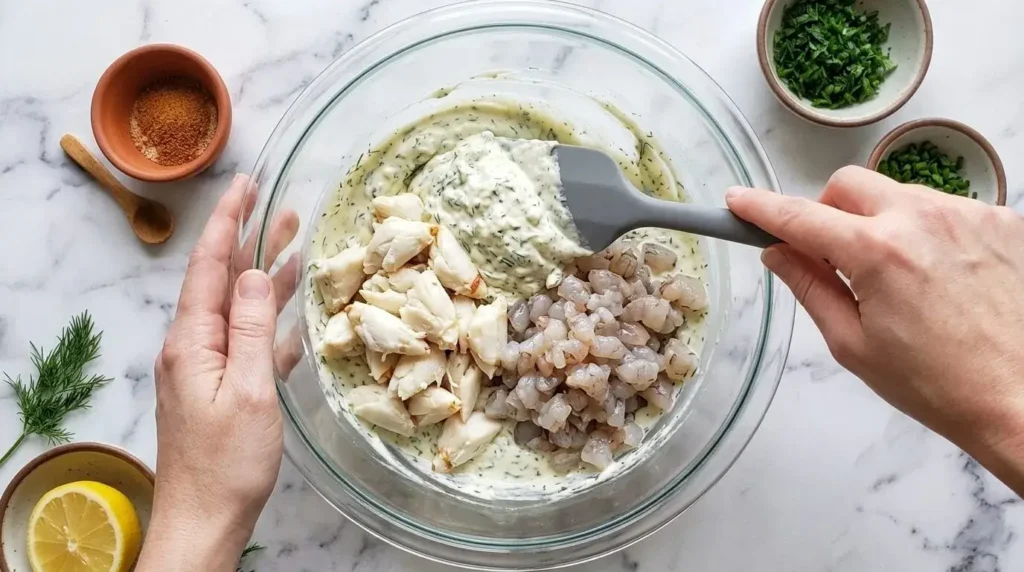
Finely chop your peeled and deveined raw wild shrimp into uniform 1/4-inch pieces. Add the chopped shrimp to the binder mixture first and stir gently to distribute. Next, add the 1 lb of jumbo lump crabmeat. Using a rubber spatula, carefully fold the crabmeat into the wet mixture. Treat the crab chunks with care—you want to keep those large, sweet lumps visible rather than mashing them into a paste.
Step 3: The Critical 30-Minute Chill
Divide the mixture into 4 equal portions and shape them into thick, compact round patties. Place them on a parchment-lined plate, cover loosely, and refrigerate for at least 30 minutes.
Chef’s Tip: Do not skip this step! Chilling allows the starches in the crumbs to hydrate and the proteins in the raw shrimp and egg to rest. This ensures your crab cakes without mayo hold their shape perfectly when pan-seared.
Step 4: Pan-Searing to Golden Perfection
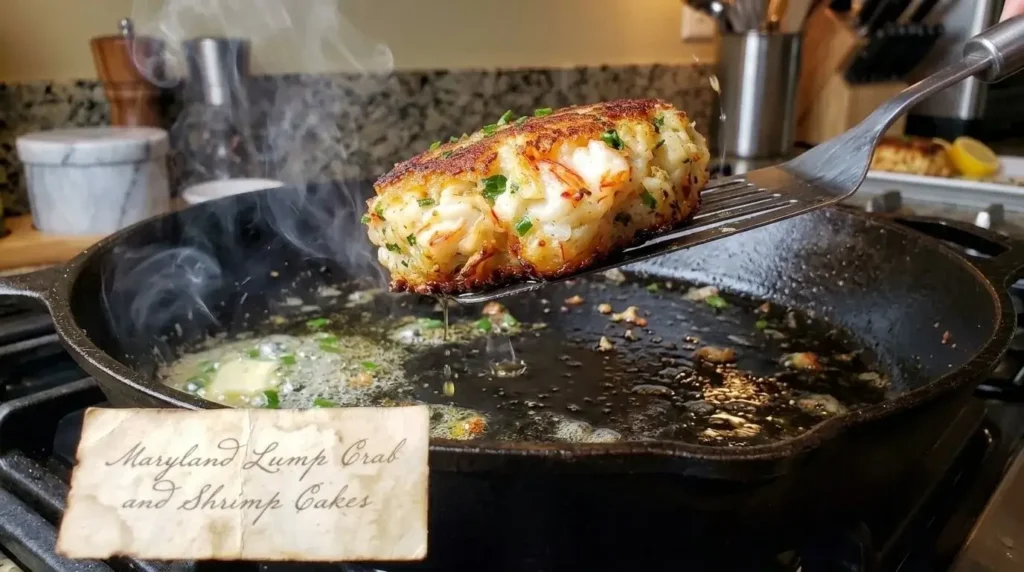
Set a large non-stick or heavy cast-iron skillet over medium-high heat. Add 2 tablespoons of extra virgin olive oil and 1 tablespoon of ghee or butter. Once the oil shimmers, carefully lower the chilled seafood cakes into the skillet. Cook undisturbed for 3 to 4 minutes per side. Look for a deep, golden-brown crust to form before gently flipping with a thin flexible spatula. The internal temperature should reach 145°F (63°C), with the shrimp turning completely opaque.
Step 5: Crafting the Pan Reduction Sauce
Transfer the seared seafood cakes to a warm serving platter. Turn the skillet heat to low. Into the same pan containing the savory seafood drippings, pour 2 tablespoons of fresh lemon juice and 2 tablespoons of low-sodium fish or chicken stock. Use a wooden spoon to scrape up any golden browned bits (fond) stuck to the bottom of the pan. Swirl in 2 tablespoons of extra virgin olive oil and 1 tablespoon of ghee until a glossy, emulsified sauce forms.
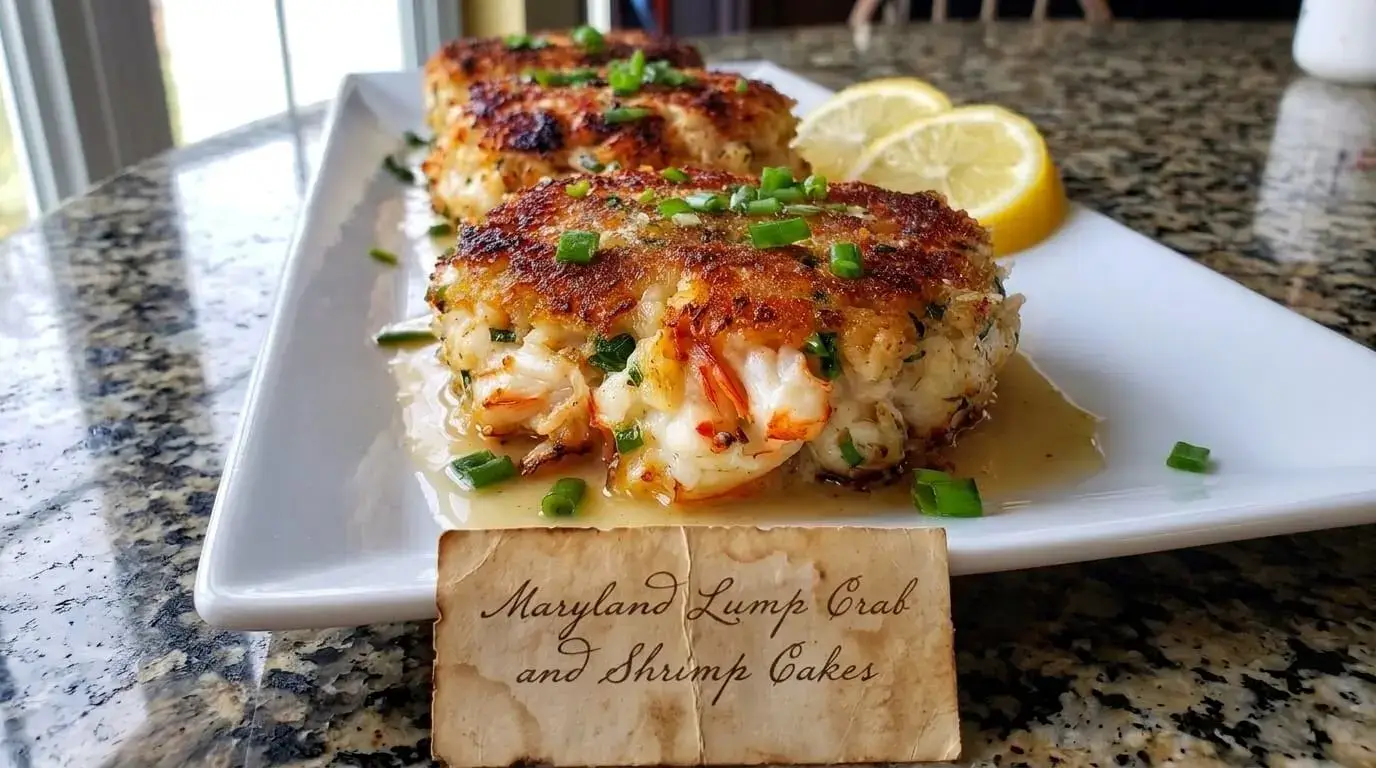
Maryland Lump Crab and Shrimp Cakes
Ingredients
Method
- In a medium mixing bowl, whisk together the beaten egg, Greek yogurt, 1 tbsp olive oil, Dijon mustard, Worcestershire sauce, Old Bay seasoning, and chopped Italian parsley until smooth. Stir in the whole wheat panko (or almond flour) and let sit for 2 minutes.
- Gently stir the finely diced raw shrimp into the binder. Add the jumbo lump crabmeat and fold very gently with a rubber spatula, keeping the sweet crab lumps intact.
- Divide the seafood mixture into 4 equal, thick patties. Place them on a parchment-lined plate, cover loosely with plastic wrap, and refrigerate for 30 minutes to firm up.
- Heat 2 tbsp extra virgin olive oil and 1 tbsp ghee/butter in a large skillet over medium-high heat. Carefully place the chilled seafood cakes in the hot pan. Cook for 3 to 4 minutes per side until a deep golden crust forms and the shrimp is opaque and cooked through. Transfer cakes to a warm serving platter.
- Reduce heat to low. To the same skillet, pour in the fresh lemon juice and stock, scraping up any golden browned bits. Swirl in the remaining 2 tbsp olive oil and 1 tbsp butter/ghee until glossy and warm.
- Spoon the lemon pan sauce over and around the seafood cakes. Top generously with fresh chives and serve immediately with fresh lemon wedges.
Notes
* Low-Carb Swap: Replace the whole wheat panko with equal amounts of blanched almond flour.
* Baking Alternative: Bake at 400°F (200°C) on a parchment-lined sheet for 12–15 minutes.
* Air Fryer Alternative: Cook at 375°F (190°C) for 10–12 minutes after spraying lightly with olive oil.
5. Troubleshooting & Frequently Asked Questions (PAA Focus)
Why do my crab and shrimp cakes fall apart?
Crab cakes generally fall apart due to excess moisture, insufficient binding, or skipping the refrigeration step. Ensure your crabmeat is well-drained before mixing. Using finely chopped raw shrimp provides a natural sticky protein structure that locks the patty together. Most importantly, chilling the formed cakes for 30 minutes in the fridge firms up the fats and binders so they hold together in the skillet.
What is the best binder substitute for mayonnaise?
Plain Greek yogurt is the ultimate swap for mayonnaise in seafood cakes. It replicates the creamy texture and tangy profile while introducing healthy fats and protein. Avocado oil mayonnaise or light olive oil mayo are also great alternatives if you prefer a dairy-free base.
Can I bake or air-fry these seafood cakes?
Yes! Both methods work wonderfully for baked crab and shrimp cakes:
- Baking Instructions: Preheat your oven to 400°F (200°C). Place the chilled patties on a parchment-lined baking sheet, brush lightly with olive oil, and bake for 12 to 15 minutes until golden and cooked through.
- Air Fryer Instructions: Preheat your air fryer to 375°F (190°C). Spray the basket and the top of the cakes with olive oil spray. Air fry for 10 to 12 minutes, flipping gently halfway through.
Should I cook the shrimp before putting them in crab cakes?
No, always use raw, finely chopped shrimp. Pre-cooked shrimp will become rubbery and tough when pan-seared a second time. Raw shrimp pieces act as an adhesive binder as they cook inside the patty, releasing sweet juices that keep the cakes tender.
6. What to Serve with Maryland Lump Crab and Shrimp Cakes
To turn these coastal seafood cakes into a complete Mediterranean feast, pair them with light, fresh, and vibrant side dishes:
- Mediterranean Side Dishes: Complement the rich seafood with roasted vegetables like our crisp Roasted Asparagus and Carrots. Alternatively, serve alongside a bright, crunchy side like a Greek Chopped Feta Salad or Greek lemon-roasted potatoes.
- Sauce Options: While the pan-reduction sauce included in this recipe provides a luxurious finish, you can also serve these with fresh Tzatziki, a homemade lemon-dill aioli, or leftover filling ideas similar to those used in our Crab and Shrimp Stuffed Salmon.
7. Storage, Meal Prep, and Reheating Instructions
- Refrigeration (Uncooked): Uncooked patties can be shaped, tightly wrapped, and stored in the refrigerator for up to 24 hours prior to pan-searing.
- Refrigeration (Cooked): Store leftover cooked cakes in an airtight container in the fridge for up to 2 days.
- Freezing: Arrange raw patties on a baking sheet to freeze solid, then wrap individually in plastic wrap and store in a freezer-safe bag for up to 2 months. Thaw overnight in the refrigerator before pan-searing.
- Reheating Tips: Avoid microwaving, as it makes the seafood rubbery and soggy. Instead, reheat cooked cakes in a skillet over medium-low heat with a drop of olive oil for 2–3 minutes per side, or warm them in a 350°F (175°C) oven or toaster oven for 8–10 minutes until crisp.