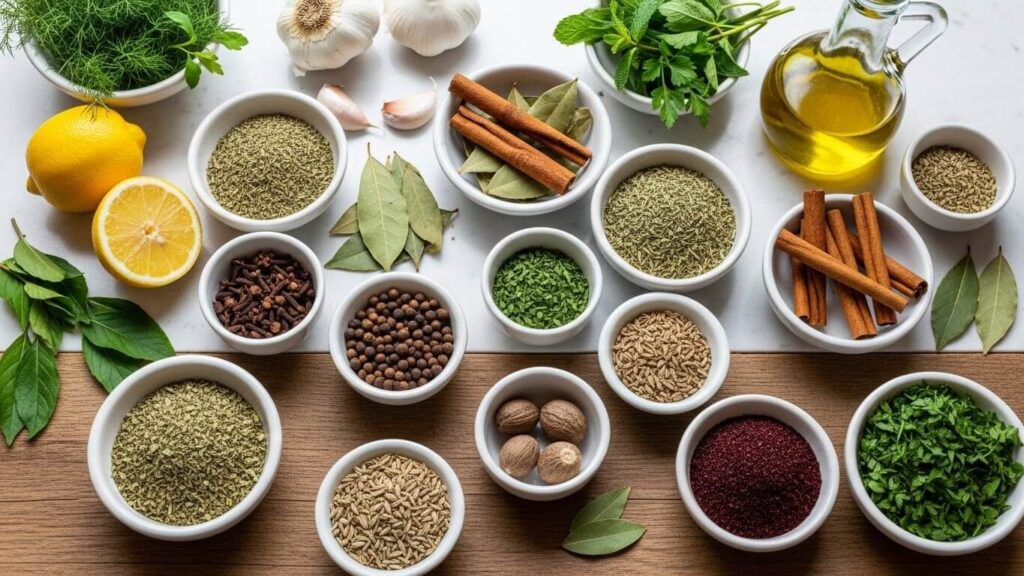
Greek cuisine sits at the heart of the Mediterranean Diet, celebrated not only for its vibrant flavors but also for its connection to longevity, simplicity and seasonal eating. At the core of this tradition are Greek herbs and spices, used thoughtfully rather than heavily, allowing olive oil, vegetables, grains and proteins to shine.
For Mediterranean Diet beginners and home cooks, understanding these herbs and spices is one of the fastest ways to cook more authentically and confidently. And in this guide, we have broken down the 12 most essential Greek herbs and spices, explaining how they taste, where they’re used, why they matter culturally and how to use them successfully at home.
If you’re building your pantry, you may also find it helpful to read Mediterranean Diet Pantry Essentials: The Complete Beginner’s Guide alongside this article.
1. Oregano (Rigani)
Flavor & Aroma:
Earthy, slightly bitter, pungent and unmistakably “Greek.” Greek oregano is more intense than Italian varieties.
Traditional Uses:
- Greek salads
- Roasted vegetables
- Grilled meats and fish
- Tomato-based dishes like Greek Gyro Meat and Chicken and Orzo
Cultural Relevance:
Used since ancient times for both cooking and medicine. Moreover, wild oregano still grows on Greek hillsides.
Health Benefits:
Rich in antioxidants and antimicrobial compounds, aligning well with Mediterranean Diet principles.
Pairing Suggestions:
- Olive oil + lemon
- Garlic + thyme
Substitutions:
Marjoram (milder) and Italian oregano (less aromatic)
Storage & Freshness:
Store dried oregano away from light. Fresh oregano should smell sharp and resinous.
Visual Cue:
Dried leaves should be dark green, not gray.
2. Thyme
Flavor & Aroma:
Warm, woodsy and slightly minty.
Traditional Uses:
- Roasted lamb
- Lemon Chicken Orzo Soup
- Honey-drizzled cheeses
Historical Context:
Highly valued in ancient Greece; associated with courage and vitality.
Health Notes:
Supports digestion and contains antimicrobial compounds.
Pairings:
- Oregano
- Bay leaf
Substitutions:
Savory or rosemary (use less)
Storage:
Fresh thyme lasts longer wrapped loosely in the fridge; dried keeps well for a year.
3. Bay Leaf (Daphne)
Flavor & Aroma:
Subtle, herbal, slightly floral.
Greek Uses:
- Stews
- Bean dishes
- Trahana Soup
Cultural Note:
Bay wreaths symbolized victory in ancient Greece.
Pairings:
- Onion
- Cinnamon
Substitutions:
None exact; omit if unavailable.
Freshness Indicator:
Dried bay leaves should still smell fragrant when snapped.
4. Dill (Anithos)
Flavor & Aroma:
Fresh, grassy and slightly sweet.
Traditional Uses:
- Tzatziki
- Spanakopita
- Yogurt-based sauces like those served with Greek Wraps
Modern Relevance:
Popular in everyday home cooking rather than ancient cuisine.
Health Benefits:
Supports digestion and gut health.
Pairings:
- Lemon
- Garlic
Substitutions:
Fennel fronds (lighter flavor)
Visual Cue:
Fresh dill should be bright green and feathery, not limp.
5. Mint (Dyosmos)
Flavor & Aroma:
Cooling, bright, refreshing.
Traditional Uses:
- Tabbouleh
- Lamb dishes
- Greek Yogurt Bowl recipes
Cultural Role:
Used to balance rich foods and summer heat.
Health Benefits:
Aids digestion and freshness of breath.
Pairings:
- Parsley
- Lemon
Storage:
Store fresh mint like flowers in water; dried mint keeps 6-12 months.
6. Parsley
Flavor & Aroma:
Clean, mildly peppery.
Greek Uses:
- Salads
- Stuffed vegetables
- Greek Quinoa Salad
Historical Use:
Once symbolic before becoming culinary.
Health Notes:
Rich in vitamin K and antioxidants.
Pairings:
- Dill
- Lemon
Substitution:
Cilantro (changes flavor profile)
7. Cinnamon
Flavor & Aroma:
Warm, sweet, woody.
Traditional Uses:
- Moussaka
- Stews
- Desserts like Baklava and Tahini Cookies
Cultural Significance:
Introduced via ancient trade routes.
Health Benefits:
May support blood sugar balance.
Pairings:
- Cloves
- Bay leaf
Freshness Cue:
Should smell sweet, not dusty.
8. Cloves
Flavor & Aroma:
Strong, sweet, intensely aromatic.
Uses:
- Slow-cooked meats
- Syrups
- Holiday dishes
Cultural Context:
Used sparingly; powerful flavor.
Pairings:
- Cinnamon
- Allspice
Storage:
Whole cloves retain flavor longer than ground.
9. Allspice
Flavor & Aroma:
A combination of cinnamon, nutmeg and clove.
Greek Uses:
- Meatballs
- Stuffed vegetables
- Tomato sauces
Modern Staple:
Common in home kitchens rather than ancient recipes.
Pairings:
- Cinnamon
- Bay leaf
10. Nutmeg
Flavor & Aroma:
Warm, nutty and slightly sweet.
Uses:
- Béchamel sauces
- Vegetable dishes
Substitutions:
Mace (lighter)
Tip:
Freshly grated nutmeg is far superior.
11. Fennel Seed
Flavor & Aroma:
Sweet, licorice-like.
Greek Uses:
- Sausages
- Seafood
- Breads
Health Notes:
Supports digestion.
Pairings
- Dill
- Lemon zest
12. Sumac
Flavor & Aroma:
Tangy, citrusy, slightly fruity.
Modern Greek Use:
Increasingly popular in salads and grilled dishes like Grilled Halloumi.
Mediterranean Context:
Common across Eastern Mediterranean cuisines.
Substitution:
Lemon zest (less depth)
Visual Cue:
Should be deep burgundy, not brown.
External Sources
- Oldways Mediterranean Diet resources (nutrition & heritage research)
- Harvard T.H. Chan School of Public Health (Mediterranean Diet studies)
- Oxford Companion to Food (culinary history)
Frequently Asked Questions
Are Greek herbs different from Italian herbs?
Yes, Greek oregano and thyme are more pungent and Greek cooking uses fewer blended mixes.
Should I use fresh or dried herbs?
Dried herbs dominate traditional Greek cooking, especially oregano and bay leaf. Fresh herbs are used seasonally.
How long do dried Greek herbs last?
6-12 months if stored away from heat and light.
What’s the biggest beginner mistake?
Using too many herbs at once instead of letting olive oil and ingredients lead. See 10 Mediterranean Cooking Mistakes to Avoid for guidance.
Do these herbs support the Mediterranean Diet?
Yes, many offer antioxidants and support digestion while enhancing flavor without excess salt.
Conclusion: Building an Authentic Greek Pantry
Mastering Greek herbs and spices is less about quantity and more about understanding balance, freshness and tradition. With oregano, thyme, dill, cinnamon and a few supporting spices, you can recreate authentic Greek flavors while staying true to Mediterranean Diet principles.
Start small, cook often and explore deeper with resources like Best Olive Oil for Mediterranean Cooking and How Mediterranean Families Eat. Over time, these herbs won’t just flavor your food; they’ll connect you to one of the world’s healthiest and most enduring culinary traditions