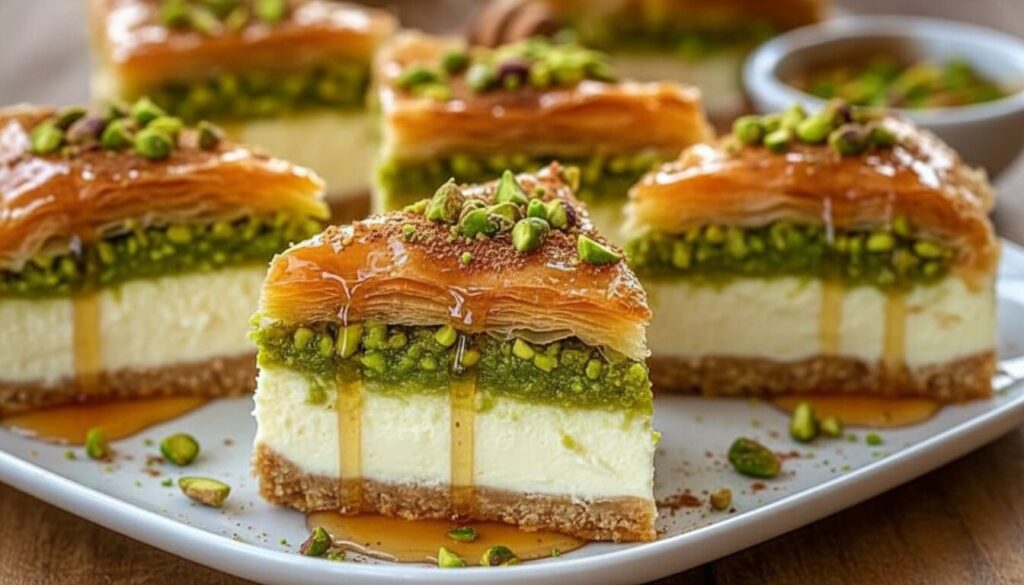
Flaky, golden and perfectly sweet – the Mediterranean dessert loved from Greece to the Levant.
Introduction: The Ultimate Crispy Mediterranean Baklava Recipe You’ll Ever Make
Welcome to the ultimate guide for making crispy, non-soggy and authentic Mediterranean Baklava right in your own kitchen.
Baklava isn’t just a dessert; it’s a culinary symbol of the Eastern Mediterranean, a golden mosaic of paper-thin phyllo pastry, honey syrup and toasted nuts enjoyed everywhere from Greece to Turkey and Lebanon.
If you’ve ever picked up a tray of Mediterranean Baklava with Honey from a market and wondered why it’s never quite as crisp as homemade; this recipe will change that.
We’ve combined the best traits of all regional versions:
- Greek-style honey syrup – rich, citrusy and warmly spiced flavour
- Turkish pistachio layers – vibrant, buttery and aromatic dessert
- Greek technique + Ottoman tradition for a crisp and golden texture that stays perfect for days
The Sultan Baklava secret?
The secret here is the temperature contrast between the chilled syrup and hot pastry. Once you master that, you’ll make the kind of baklava that impresses everyone while staying crisp for days.
What Is Mediterranean Baklava?
Baklava (also spelled baklawa, baclava or paclava) is a layered dessert pastry made with phyllo dough, chopped nuts and a sweet syrup or honey glaze. And each of of its layers is brushed with butter, stacked into dozens of paper-thin sheets and baked until crisp before soaking in syrup.
Is Baklava Mediterranean?
Yes, baklava is widely recognized as a Mediterranean dessert staple, deeply rooted in the cuisines of Greece, Turkey and the Middle East.
It’s reason is, because it uses hallmark Mediterranean ingredients: nuts (pistachios and walnuts), citrus, honey and warm spices like cinnamon and clove.
The Layered History of Baklava: Where It’s From?
Baklava’s history is as rich and layered as the dessert itself.
Ancient Origins (Assyria, 8th Century BCE)
The earliest forms were flatbreads layered with nuts and honey, especially baked for royal banquets.
The Greek Phyllo Innovation (Byzantine Era)
The Greeks developed phyllo (leaf) dough, paper-thin and delicate, giving baklava its signature texture.
Ottoman Refinement (Topkapı Palace and Istanbul)
Ottoman chefs perfected the dessert for the royal court. Additionally, each Ramadan, sultans gifted trays of baklava to elite soldiers in the Baklava Procession, which marked it as a symbol of celebration and luxury.
Today baklava remains a shared culinary treasure across the Mediterranean and Middle East, with every culture adding its own twist and flavors.
Ingredients You’ll Need
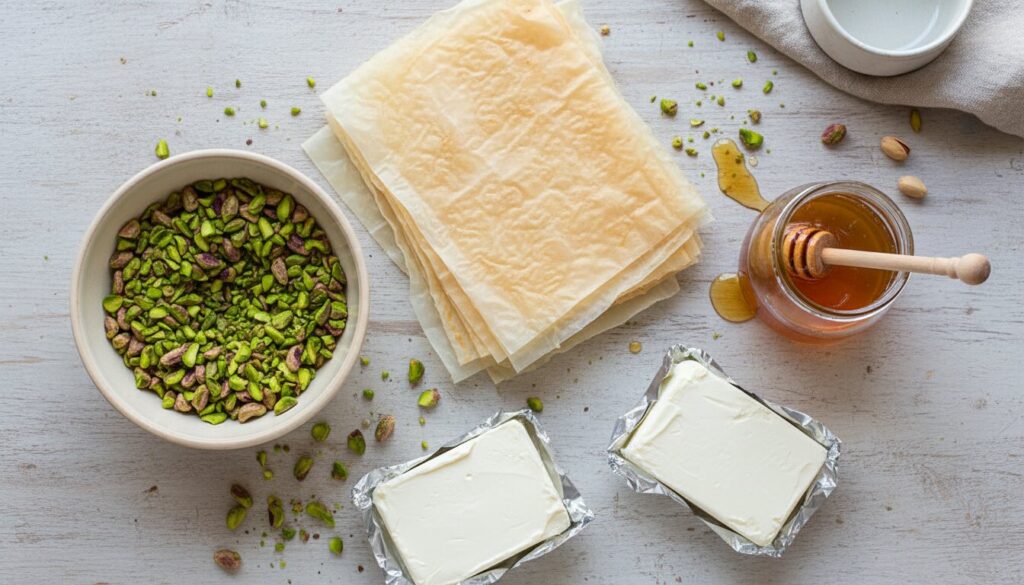
To achieve the best results, try to use high-quality, fresh ingredients. The secret to a great Mediterranean dessert recipe lies in the quality of the honey and the freshness of the nuts.
For the Baklava Base
- Phyllo Dough: About 10–12 sheets, thawed.
- Unsalted Butter: Melted, for brushing between layers.
- Crushed Pistachios: Roasted and finely chopped.
- Honey Syrup: A simple blend of honey, a splash of water, and a hint of cinnamon.
For the Cheesecake Filling
- Cream Cheese: 3 blocks (24 oz), softened to room temperature.
- Granulated Sugar: For a clean sweetness.
- Large Eggs: 3 eggs, room temperature to prevent curdling.
- Vanilla Extract: High-quality extract or vanilla bean paste.
- Heavy Cream: To give that signature velvety mouthfeel.
Optional Toppings
- Extra Pistachios: Roughly chopped for garnish.
- Honey Drizzle: A final flourish of golden honey.
- Dried Rose Petals: For a truly authentic Mediterranean aesthetic.
How to Make Pistachio Baklava Cheesecake (Step-by-Step)
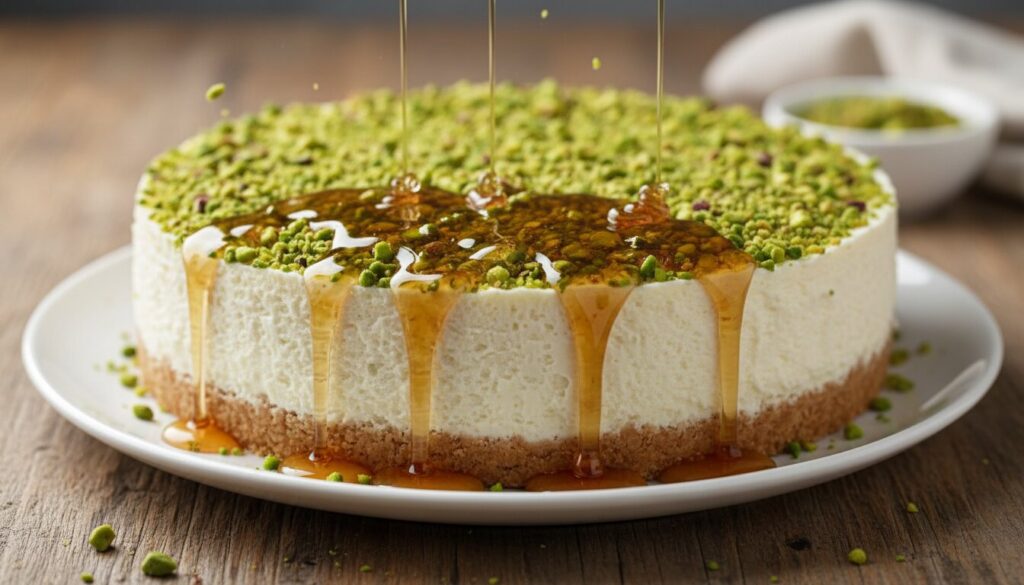
Step 1: Prepare the Baklava Layer
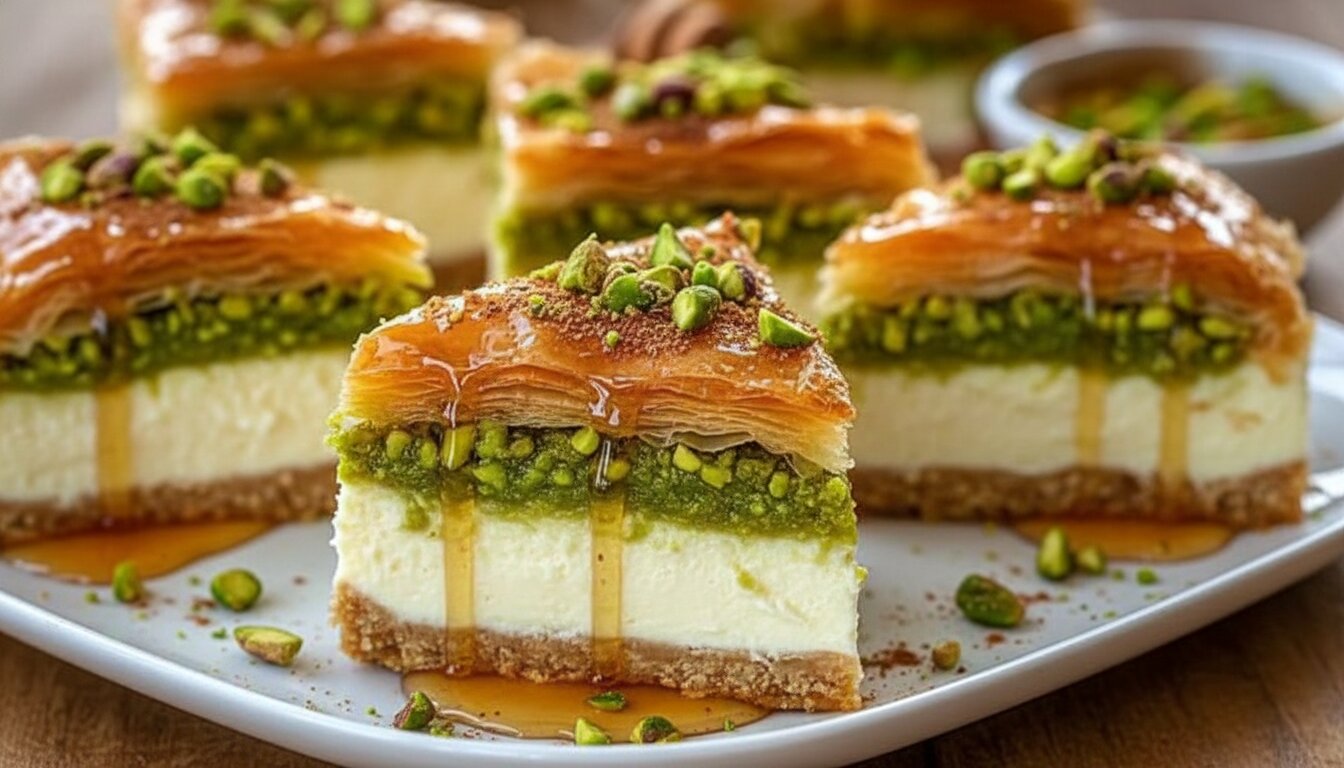
Preheat your oven to 325°F (160°C). Lay one sheet of phyllo dough into a springform pan, letting the edges hang over or folding them in. Brush with melted butter and sprinkle a handful of crushed pistachios. Repeat this for 8–10 sheets. This creates the “easy baklava cheesecake” foundation.
Step 2: Make the Cheesecake Filling
In a large bowl, beat the softened cream cheese and sugar until perfectly smooth. Add the eggs one at a time, followed by the vanilla and heavy cream. Pro Tip: Do not overmix once the eggs are in; you want to avoid adding too much air to the batter.
Step 3: Assemble the Layers
Pour the creamy cheesecake mixture over your prepared phyllo and pistachio base. Smooth the top with a spatula.
Step 4: Bake to Perfection
Bake for about 50–60 minutes. The edges should be set, but the center should still have a slight jiggle. This ensures the perfect texture once cooled.
Step 5: Cool and Add Toppings
Let the cheesecake cool at room temperature before moving it to the fridge. Once chilled, drizzle with honey syrup and pile on the extra pistachios.
Pro Tips for the Perfect Texture
- Don’t Overbake: Cheesecake continues to firm up as it cools. If the top starts to crack, you’ve gone too far!
- Keep Phyllo Crispy: To prevent a soggy bottom, make sure your butter is brushed thoroughly to the edges of the phyllo sheets.
- High-Quality Pistachios: Use roasted, unsalted pistachios. If you only have raw ones, toast them in a dry pan for 3–5 minutes to release their oils.
- The Chill Factor: A minimum of 6 hours (ideally overnight) in the fridge is mandatory. This allows the honey to soak into the base and the fats in the cheese to set.
Authentic Mediterranean Baklava Recipe
Ingredients
Equipment
Method
- Make the Syrup: In a saucepan, combine sugar, water, and lemon zest. Bring to a boil, then simmer for 10 minutes. Remove from heat, stir in honey and lemon juice, and let cool completely.
- Prepare the Nuts: Pulse pistachios and walnuts in a food processor until finely chopped (not powdered). Mix with sugar, cinnamon, and clove.
- Prep Phyllo and Butter: Thaw phyllo overnight in the fridge, then bring to room temperature. Keep covered with a damp towel while working. Melt butter and skim off milk solids if necessary.
- Layer the Baklava:Brush your 9×13 pan with butter. Layer 10 phyllo sheets, brushing each with butter.Add half the nut mixture.Layer 10 more phyllo sheets, buttering each.Add remaining nuts, then top with final 10 buttered sheets.
- Cut Before Baking:Cut completely through into diamond or square pieces using a sharp knife.
- Bake:Bake at 325°F (160°C) for 50–60 minutes until golden brown and crisp.
- Add Syrup:Pour cooled syrup over hot baklava immediately after removing from oven. Let rest for 4–6 hours.
- Serve:Garnish with crushed pistachios and enjoy.
Notes
- Temperature Matters: Ensure cream cheese and eggs are at room temperature to avoid a lumpy batter and ensure a silky finish.
-
Phyllo Care: Keep unused phyllo dough covered with a damp kitchen towel while working to prevent it from drying out and becoming brittle.
- The “Jiggle” Test: Pull the cheesecake from the oven when the edges are firm but the center still wobbles slightly like Jell-O. It will fully set during the cooling process.
- Prevent Soggy Crust: Don’t skimp on the melted butter between phyllo layers; it creates the fat barrier that keeps the crust crispy against the moist cheesecake.
- Clean Slices: For professional-looking slices, dip a sharp knife in hot water and wipe it clean between every single cut.
- Cooling Process: Never skip the room temperature cool-down before refrigerating. A sudden temperature drop causes the surface to crack.
What Makes This a Mediterranean Dessert?
Mediterranean dessert recipes often rely on nature’s candy: honey and nuts. Baklava itself has deep roots across the Middle East, Greece, and Turkey. By combining these ancient flavors with a modern Western staple like cheesecake, we create a bridge between cultures.
If you enjoy this flavor profile, you might also like exploring a Greek Yogurt Bowl recipe for a lighter morning treat or trying our Tahini Cookies recipe for another nutty, Mediterranean-inspired bake.
Variations You Can Try
- Chocolate Pistachio Version: Stir 1/2 cup of mini chocolate chips into the cheesecake batter for a rich twist.
- No-Bake Cheesecake Version: Use a pre-baked phyllo crust and a no-bake cream cheese filling for a faster result.
- Mini Cheesecake Cups: Use a muffin tin to create individual servings. These are perfect for Pinterest-worthy parties!
If you love unique cheesecake recipes, experimenting with different nut bases like walnuts or almonds can also yield delicious results.
Frequently Asked Questions (FAQs)
What is baklava cheesecake?
It is a fusion dessert that replaces the traditional graham cracker crust of a cheesecake with layers of buttery, honey-soaked phyllo dough and crushed pistachios, mimicking the structure of classic baklava.
Can I make this easy baklava cheesecake ahead of time?
Absolutely. In fact, it tastes better the next day! You can store it in the fridge for up to 3 days. Just wait to add the final honey drizzle until right before serving to keep the top garnish fresh.
Can I use other nuts instead of pistachios?
Yes. Walnuts or almonds are traditional in baklava and work beautifully here. You can even do a mix!
How do I keep phyllo dough crispy?
The key is the butter barrier. Ensure every inch of the phyllo is lightly coated in butter. Also, avoid covering the cheesecake with plastic wrap while it is still warm, as the steam will soften the pastry.
Storage & Serving Tips
- Fridge Storage: Keep in an airtight container or tightly wrapped in the fridge.
- Best Served Chilled: The flavors are most distinct when the cake is cold.
- Reheating Not Recommended: This is a cold dessert. Reheating will cause the cheesecake to lose its structure.
Final Thoughts
This Pistachio Baklava Cheesecake recipe is more than just a sweet treat; it’s a conversation starter. It brings the rich heritage of Mediterranean sweets into a format everyone loves. If you are looking for more inspiration, why not start your meal with a Mezze Platter Recipe before ending on this high note?
If you love unique Mediterranean dessert recipes like this, don’t forget to save this recipe and share it with someone who needs to try it!