If you are searching for a vibrant, wholesome, and comforting dish that celebrates the very best of summer produce, look no further than this rustic Roasted Ratatouille Recipe. Imagine a deep metal roasting pan filled to the brim with colorful, thick-cut vegetables, swimming in a rich, deeply savory tomato sauce with beautifully caramelized, charred edges. This recipe captures the essence of sunshine on a plate, bringing together a harmony of earthy and sweet flavors that develop slowly in the oven. It seamlessly combines the soulful depth of traditional French ratatouille with the effortless preparation of a modern Mediterranean sheet-pan vegetable bake.
Featured Snippet Opportunity: Roasted Ratatouille is a Mediterranean-inspired vegetable dish made by roasting eggplant, zucchini, peppers, onions, tomatoes, and garlic in extra virgin olive oil until tender and deeply caramelized.
Why You’ll Love This Roasted Ratatouille Recipe
Packed With Mediterranean Flavor
The secret behind the irresistible flavor profile of this oven roasted ratatouille lies in its simple, high-quality ingredients. By pairing robust extra virgin olive oil with plump cherry tomatoes, crushed tomatoes, pungent garlic, and earthy dried oregano, you create a complex flavor foundation. As these ingredients roast together, the tomatoes burst and mingle with the garlic and oil, forming a luxurious, glossy sauce that coats every single vegetable chunk. It is an authentic taste of the Mediterranean coast right from your home oven.
Easy One-Pan Meal
Traditional stovetop ratatouille often requires cooking each vegetable separately in batches to ensure they do not turn into mush. This easy roasted ratatouille completely reimagines the process by utilizing a single, deep metal roasting pan. Chop your vegetables into large, rustic chunks, toss them with your seasonings directly in the pan, and let your oven do all the heavy lifting. Cleanup is incredibly minimal, leaving you with more time to enjoy your meal and less time scrubbing pots at the kitchen sink.
Naturally Vegan and Gluten-Free
Finding a crowd-pleasing dish that accommodates multiple dietary restrictions can be a culinary challenge. Fortunately, this vegan ratatouille recipe is naturally free from gluten, dairy, grains, and animal products. It relies purely on the nutritional power and intrinsic flavors of whole food, plant-based ingredients. Whether you are hosting a dinner party with diverse dietary needs or simply aiming to incorporate more meatless meals into your weekly routine, this dish satisfies everyone without requiring specialty substitutes.
Perfect for Meal Prep
Unlike many vegetable dishes that lose their structural integrity and flavor after sitting in the fridge, this roasted vegetable ratatouille actually tastes better the next day. As the dish cools and rests, the vegetables continue to absorb the herbaceous tomato sauce, intensifying the overall flavor profile. It holds up beautifully when stored, making it an exceptional option for Sunday meal prep. You can easily portion it out for nourishing lunches or quick weeknight side dishes throughout the week.
What Is Ratatouille?
To truly appreciate this rustic dish, it helps to understand its humble origins. Ratatouille originated as a peasant stew in Provence, France, specifically around the sunny coastal city of Nice. Historically, resourceful farmers created it as a way to utilize a surplus of late-summer garden vegetables like eggplants, zucchini, peppers, and tomatoes before they spoiled. The word itself comes from the Occitan term “ratatolha,” which means to stir up or agitate.
In traditional stovetop versions, vegetables are meticulously layered or slowly simmered together over hours until they break down into a soft, uniform mixture. While that method is undeniably comforting, translating this classic concept into a roasted format elevates it completely. Oven roasting subjects the vegetables to dry, high heat, which coaxes out their natural sugars and yields a far more concentrated flavor with delightful caramelized edges.
This style of cooking vegetables together in a rich olive oil base transcends French borders. It bears a striking resemblance to other beloved regional dishes across the Mediterranean basin, such as Greek Briam and Turkish Türlü. All of these variations celebrate the timeless culinary philosophy of combining local summer vegetables with garlic, olive oil, and herbs to create a satisfying, plant-forward masterpiece.
Ingredients You’ll Need
The Vegetables
The star alignment of this dish relies on selecting fresh, firm vegetables that can withstand a high-heat roast while maintaining their identity:
- Eggplant: Gives the dish a rich, meaty texture. It acts like a sponge, absorbing the herbaceous olive oil and savory tomato juices.
- Zucchini: Adds a mild, sweet flavor and a lovely pop of green. Cutting them into thick half-moons ensures they stay tender without turning mushy.
- Bell Peppers: A combination of red and yellow bell peppers provides a sweet, smoky base note and beautiful visual contrast.
- Mushrooms: Whole button mushrooms bring a deep, savory umami depth that perfectly complements the sweeter vegetables.
- Onion: A large yellow onion cut into thick wedges melts into caramelized sweetness during the roasting process.
- Garlic: Smashed or roughly chopped garlic cloves infuse the entire dish with an irreplaceable, aromatic warmth.
- Cherry Tomatoes: Left whole, these little gems burst open during roasting, releasing sweet, concentrated juices into the pan.
Sauce and Seasonings
The sauce ties the rustic elements together, transforming separate components into a cohesive dish:
- Crushed Tomatoes: One can of high-quality crushed or diced tomatoes creates a thick, luxurious braising liquid for the vegetables.
- Extra Virgin Olive Oil: Divided into two parts, it ensures excellent heat conduction during the first roast and a silky, glossy finish at the end.
- Oregano: Dried oregano provides a classic, robust Mediterranean herbaceous notes that cuts through the sweetness of the peppers and tomatoes.
- Salt and Black Pepper: Essential flavor enhancers that balance the acidity of the tomatoes and elevate the natural profile of each vegetable.
Ingredient Notes and Substitutions
Best Eggplant for Ratatouille
For this specific recipe, standard Globe eggplants (the large, deep purple ones found in most grocery stores) work perfectly because their sturdy flesh holds up beautifully to thick slicing and long roasting times. If you have access to a local farmer’s market, Italian eggplants or graffiti eggplants are also stellar options due to their slightly sweeter profile and thinner skins. If you enjoy cooking with this versatile ingredient, you might also like our savory Mediterranean Roasted Eggplant and Chickpea Salad. Alternatively, if you have leftover eggplants on hand, try making our comforting Eggplant Rollatini with Spinach and Ricotta.
Can I Use Yellow Squash?
Absolutely! If you cannot find zucchini or simply want to introduce more color to your roasting pan, yellow summer squash is an excellent one-to-one substitute. It features a nearly identical moisture content and texture profile to zucchini, meaning it will cook at the exact same rate. Combining both green zucchini and yellow squash creates an exceptionally striking, colorful visual presentation.
Fresh Tomatoes vs Canned Tomatoes
While this recipe utilizes a convenient can of crushed or diced tomatoes to guarantee a rich, reliable sauce base, you can absolutely substitute fresh tomatoes if you have an abundance of ripe, late-summer garden tomatoes. To do so, roughly chop about four to five large, ripe Roma or beefsteak tomatoes, keeping their juices intact, and add them directly to the pan. You may need to extend the roasting time by a few minutes to allow the fresh tomato liquids to properly reduce and thicken.
Herb Variations
While dried oregano or a balanced Italian seasoning blend offers a spectacular, fuss-free foundation during the baking process, you can easily elevate this dish with fresh herbs added right before serving:
- Basil: Tearing fresh basil leaves over the finished dish adds a sweet, anise-like aroma that beautifully brightens the roasted flavors.
- Thyme: Stripping fresh thyme leaves into the pan prior to roasting introduces a subtle, earthy, and lemony depth.
- Parsley: Finely chopped flat-leaf Italian parsley provides a clean, peppery brightness that cuts beautifully through the rich olive oil.
How to Make Roasted Ratatouille
Step 1 – Prepare the Vegetables
Begin by preheating your oven to 400°F (200°C). Wash all your fresh produce thoroughly and pat them dry. Using a sharp chef’s knife, begin chopping your vegetables into large, rustic chunks. Cut the eggplants into thick cubes, the zucchini into generous half-moons, the bell peppers into wide strips, and the yellow onion into thick wedges. Keep the button mushrooms whole (or halved if they are exceptionally large) and leave the cherry tomatoes completely intact. Keeping your cuts deliberately thick and uniform is critical; it ensures that the vegetables hold their individual structures over a long roasting duration without disintegrating into a purée.
Step 2 – Combine Everything in the Roasting Pan
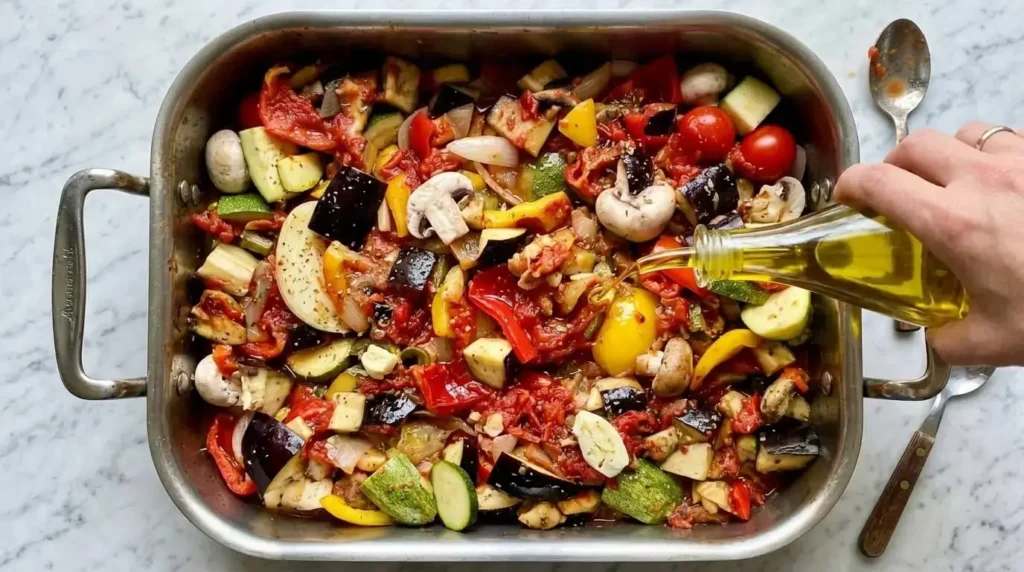
Select a deep, large metal roasting pan, matching the rustic style seen in image. Transfer all your chopped eggplants, zucchini, peppers, onions, whole mushrooms, whole cherry tomatoes, and smashed garlic cloves directly into the pan. Pour your can of crushed tomatoes evenly over the colorful vegetable medley. Drizzle the first 1/4 cup of high-quality extra virgin olive oil across the top. Sprinkle the dried oregano, sea salt, and freshly cracked black pepper evenly over the ingredients. Using clean hands or two large wooden spoons, thoroughly toss and mix everything together right inside the roasting pan until every single chunk is evenly coated in oil, tomatoes, and spices.
Step 3 – First Roast
Spread the seasoned vegetable mixture out into a uniform layer across the bottom of your roasting pan. Place the uncovered pan directly onto the center rack of your preheated oven. Let it bake undisturbed for 40 minutes. During this initial roasting phase, you will notice your kitchen filling with an incredible aroma. The vegetables will begin to soften significantly under the heat, gradually releasing their sweet, concentrated natural juices into the crushed tomato base, creating a loose, flavorful braising broth.
Step 4 – Stir and Continue Roasting
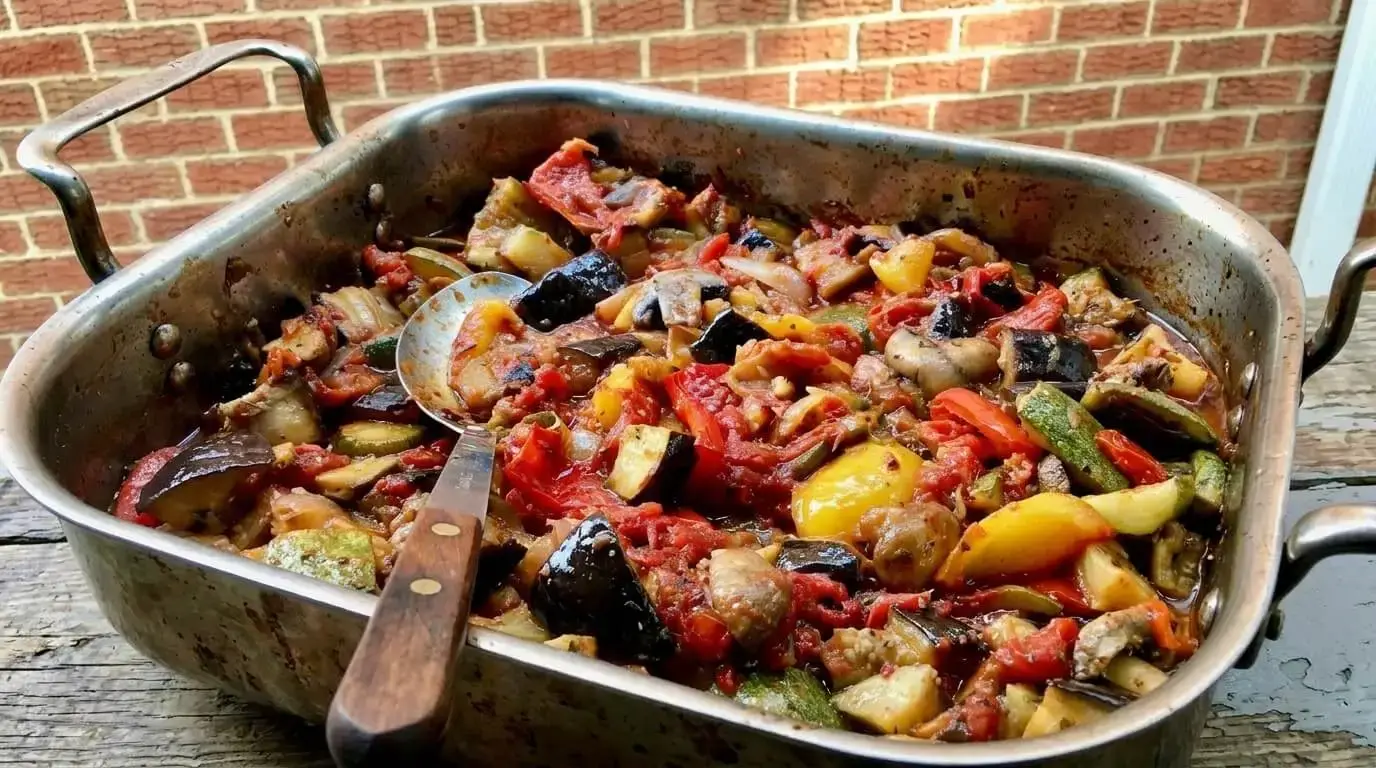
Carefully remove the hot roasting pan from the oven using sturdy oven mitts. Using a large spoon, gently stir and flip the vegetables to ensure even cooking and to bring the bottom juices to the top. Drizzle the remaining 1/4 cup of extra virgin olive oil uniformly across the surface of the mixture—this addition is vital for achieving optimal color and richness. Return the pan to the oven and roast for an additional 25 to 30 minutes. Keep a close eye on it; you want to remove the pan when the vegetable edges develop dark, caramelized chars, the whole mushrooms are tender, and the tomato sauce has reduced into a thick, glossy, and remarkably rich consistency.
Step 5 – Rest and Serve
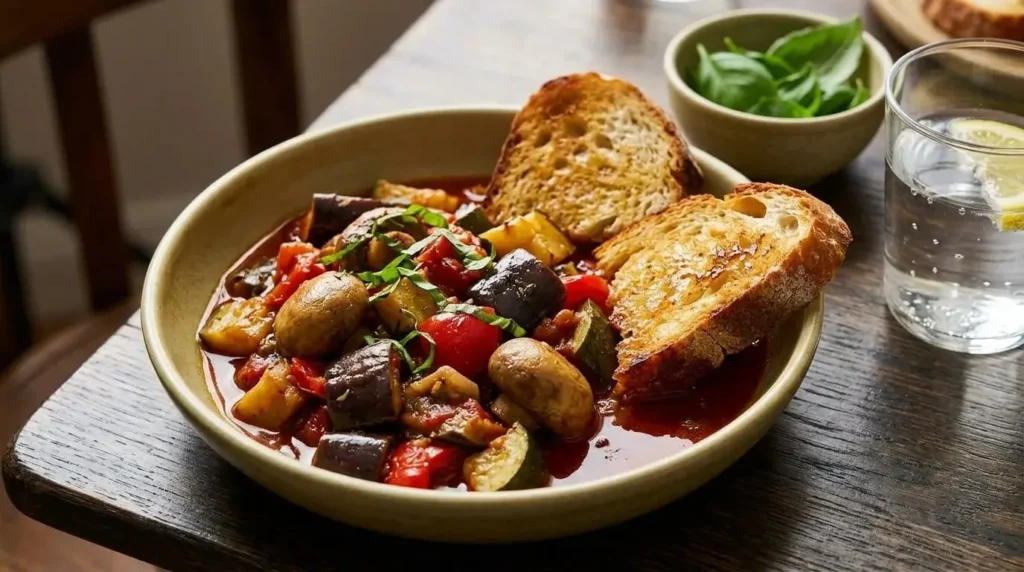
Once the roasting time is complete, remove the pan from the oven. The contents should look deeply golden, tender, and intensely flavorful, perfectly mirroring the comforting dish captured in image. Resist the temptation to dive in immediately; instead, let the ratatouille rest uncovered on the counter for about 10 minutes. This resting window allows the intense heat to subside slightly, giving the rich juices time to settle and thicken further while allowing the individual flavors of the vegetables to fully bloom. Serve it hot, warm, or even at room temperature alongside plenty of crusty artisan bread to mop up every drop of the luxurious sauce.
Expert Tips for the Best Roasted Ratatouille Recipe
Cut Vegetables Evenly
Achieving culinary perfection with this dish requires uniform chopping. If your zucchini is cut into thin slices while your eggplant remains in massive chunks, the zucchini will dissolve completely before the eggplant has a chance to soften. Aim for a consistent, rustic size—roughly one to two inches thick—across all your vegetables to ensure they cook at a synchronized rate.
Use Plenty of Olive Oil
Do not skim on the extra virgin olive oil! Olive oil is not merely a cooking fat in Mediterranean cuisine; it functions as a primary flavor carrier and a structural component of the sauce. Dividing the oil into two separate additions ensures that the vegetables stay beautifully moist during the initial bake and achieve that signature, glossy finish during the final caramelization stage.
Don’t Overcrowd the Pan
To transition from a standard steam to a beautiful, rich roast, your vegetables need breathing room. If your roasting pan is too small and the vegetables are piled deeply on top of one another, they will trap moisture and steam instead of browning. Utilize a large, deep metal roasting pan like the one showcased in image_fa310a.jpg to allow moisture to evaporate cleanly, paving the way for maximum flavor concentration.
Roast Until Slightly Caramelized
The true magic of an oven roasted ratatouille happens in those final fifteen minutes of baking. Do not pull the dish out early when the vegetables are merely soft. Wait for those beautiful, dark, caramelized edges and slightly charred corners to develop on the peppers and onions. Those caramelized bits hold immense amounts of sweet, smoky flavor that elevates the entire dish.
Let It Rest Before Serving
Serving this dish boiling hot straight from the oven obscures the subtle flavor nuances of the summer vegetables. Allowing the dish to rest on the counter for 10 to 15 minutes lets the temperature drop to a comfortable warm state where the natural sweetness of the tomatoes and caramelized onions can shine through brilliantly.
Why Roasting Makes Ratatouille Better
If you have only ever consumed traditional stovetop ratatouille, transitioning to a roasted method is a total game-changer for your palate. Simmering vegetables in a pot over a stovetop involves a moist-heat cooking method. While this yields a wonderfully soft, comforting stew, the high water content of summer vegetables can occasionally result in a diluted flavor profile and a homogenous texture where everything feels soft and uniform.
Roasting, by contrast, relies on dry-heat convection. This environment triggers two essential culinary transformations:
- The Maillard Reaction: A chemical reaction between amino acids and reducing sugars that gives browned food its distinctive, savory flavor profile.
- Caramelization: The pyrolysis of sugars, which coaxes out the deep, hidden sweetness locked within onions, bell peppers, and tomatoes.
By evaporating the excess water inherent in zucchini and eggplant, roasting concentrates the natural sugars and flavors rather than diluting them. The resulting texture is infinitely superior: each rustic vegetable chunk retains its individual identity and chew, while simultaneously absorbing the rich, olive-oil-infused tomato sauce surrounding it. This sophisticated depth of flavor is exactly what helps this modern technique outperform traditional simmering methods in terms of pure taste satisfaction.
Serving Suggestions
With Crusty Bread
The absolute most traditional and deeply satisfying way to serve this rustic dish is alongside a warm, crusty loaf of artisanal sourdough, a classic French baguette, or rustic Italian ciabatta. Slice the bread thick, toast it slightly if desired, and use it as a vessel to scoop up the tender vegetables and soak up every drop of the luxurious, garlic-infused tomato oil pooling at the bottom of your plate.
Over Couscous
Transform this sheet-pan vegetable bake into a hearty, satisfying main course by spooning it generously over a bed of fluffy, warm couscous. The tiny grains of couscous act like a magnificent sponge, capturing the robust tomato sauce beautifully. To create a spectacular, cohesive Mediterranean feast, pairs this combination beautifully with a refreshing, vibrant Mediterranean Couscous Salad Recipe.
With Quinoa
For a modern, nutrient-dense twist, serve your roasted ratatouille over a bowl of cooked tri-color quinoa. Quinoa introduces a delightful, slightly nutty flavor profile and a pleasant, subtle crunch that contrasts wonderfully with the tender, caramelized texture of the roasted vegetables, while simultaneously infusing the meal with complete plant-based proteins.
Alongside Grilled Fish
This flavorful Mediterranean vegetable bake serves as an exceptional, vibrant side dish for seafood. Simply grill or pan-sear a fresh fillet of sea bass, cod, or halibut, seasoning it lightly with lemon juice and sea salt, and serve it alongside a generous mound of the warm ratatouille for a light, clean, and thoroughly nourishing dinner.
As a Mediterranean Side Dish
This versatile creation shines brightly as a standalone side dish within a larger Mediterranean-style spread. Arrange it on a beautiful serving platter alongside grilled chicken skewers, marinated olives, a block of creamy feta cheese, and warm pita bread, allowing your family or dinner guests to assemble their own customized plates.
Storage and Meal Prep
Refrigerator Storage
If you have leftovers, allow them to cool completely to room temperature before transferring them into an airtight glass or plastic storage container. Seal the container tightly and place it in the refrigerator, where it will keep beautifully for up to 4 to 5 days. As mentioned previously, the flavors will continue to meld and deepen overnight, making day-two and day-three leftovers exceptionally delicious.
Freezing Instructions
Yes, you can absolutely freeze this dish! To preserve its texture, ensure the ratatouille is fully cooled, then portion it into heavy-duty freezer bags or freezer-safe, airtight containers, leaving about a half-inch of headspace for expansion. Label with the date and freeze for up to 3 months. When you are ready to enjoy it, thaw the container completely in the refrigerator overnight before reheating.
Reheating Tips
To maintain the fantastic texture of the roasted vegetables, reheat your leftovers in a skillet over medium-low heat on the stovetop, stirring gently occasionally until warmed through completely. Alternatively, place your portion in an oven-safe dish, cover it loosely with foil, and warm it in a 350°F (175°C) oven for about 15 minutes. While a microwave works perfectly fine for a quick lunch, it can occasionally make the zucchini a bit softer than stovetop or oven reheating methods.
Rustic Roasted Ratatouille Recipe
Ingredients
Method
- Preheat your oven to 400°F (200°C). Wash and chop all the vegetables into large, uniform, rustic pieces to ensure they hold their shape perfectly during baking.
- In a large, deep metal roasting pan, combine the chunks of eggplant, zucchini, bell peppers, onion wedges, whole button mushrooms, whole cherry tomatoes, and smashed garlic. Pour the canned crushed tomatoes over the top. Drizzle with the first 1/4 cup of extra virgin olive oil. Sprinkle the dried oregano, sea salt, and black pepper evenly over everything. Toss thoroughly with your hands or large spoons until every piece is uniformly coated.
- Spread the vegetable mixture out into an even layer in the pan. Place uncovered into the preheated oven and bake for 40 minutes, allowing the vegetables to soften and release their natural juices.
- Carefully remove the pan from the oven. Use a large spoon to gently stir and flip the vegetables. Drizzle the remaining 1/4 cup of extra virgin olive oil evenly over the surface. Return the roasting pan to the oven for another 25 to 30 minutes, removing it when the vegetable edges are beautifully charred and the tomato sauce has reduced into a thick, glossy glaze.
- Allow the ratatouille to rest on the counter for 10 minutes before serving. Garnish with torn fresh basil or chopped parsley if desired, and serve hot or warm alongside plenty of crusty artisanal bread.
Notes
Variations
Greek Briam Style
To guide this recipe firmly into traditional Greek territory, simply peel and dice two medium Yukon Gold or Russet potatoes into matching rustic chunks and toss them into the roasting pan along with the other vegetables. The potatoes will slowly bake in the olive oil and tomato juices, turning incredibly tender with crispy, golden edges.
Turkish Türlü Style
To infuse this dish with authentic Turkish flair, introduce additional varieties of peppers, such as sweet banana peppers or green Turkish long peppers. You can also toss in a handful of fresh green beans trimmed into bite-sized pieces, a pinch of ground cumin, and a dash of ground coriander to expand the warm, aromatic spice profile.
Spicy Ratatouille
If you appreciate a kick of fiery heat in your savory dishes, easily transform this recipe by stirring one to two teaspoons of crushed red pepper flakes, a minced jalapeño, or a spoonful of Mediterranean harissa paste directly into the crushed tomato and olive oil mixture before tossing the vegetables.
Protein-Packed Version
To elevate this informational recipe into a highly filling, single-pan vegan powerhouse, drain and rinse one can (15 oz) of chickpeas (garbanzo beans) and toss them directly into the roasting pan with the raw vegetables in Step 2. The chickpeas will roast beautifully, absorbing the savory herbs and adding a fantastic texture and plant protein boost.
Mediterranean Diet Benefits
Embracing a lifestyle centered around the Mediterranean diet is widely celebrated for promoting overall wellness, and this dish serves as a perfect example of that philosophy in action. It is entirely plant-forward, celebrating an abundance of nutrient-dense vegetables rather than relying on heavy animal fats or highly processed substitutes.
The extensive use of high-quality extra virgin olive oil delivers excellent monounsaturated fatty acids, which are classic components of heart-healthy dietary patterns. Furthermore, because the dish utilizes an array of colorful vegetables like eggplants, peppers, and tomatoes, it is naturally packed with dietary fiber, which supports optimal digestive health. It is also rich in essential vitamins and potent antioxidants like lycopene from the cooked tomatoes. This dish proves beautifully that nourishing your body with wholesome, clean ingredients can be an absolute joy for your palate.
Frequently Asked Questions
Is roasted ratatouille the same as traditional ratatouille?
While they utilize virtually identical ingredients, the preparation methods differ. Traditional ratatouille is slowly simmered on a stovetop, yielding a soft, stew-like texture. This Roasted Ratatouille Recipe uses dry oven heat to caramelize the vegetables, concentrating their flavors and creating a richer texture with charred edges.
Can ratatouille be made ahead of time?
Yes, it is an exceptional make-ahead dish. Preparing it a day in advance allows the garlic, oregano, olive oil, and tomato juices to deeply penetrate the roasted vegetable chunks, resulting in an even more flavorful experience when reheated and served the following day.
Why is my ratatouille watery?
Watery ratatouille typically occurs if the roasting pan is overcrowded or if the oven temperature is too low, causing the vegetables to steam in their own juices rather than roast. Using a wide, deep metal pan and roasting at 400°F (200°C) allows excess moisture to evaporate cleanly.
Can I freeze roasted ratatouille?
Absolutely. Let the dish cool completely, seal it tightly within an airtight container or a heavy-duty freezer bag, and store it in your freezer for up to 3 months. For optimal results, thaw it completely in your refrigerator before gently reheating it on the stovetop.
What do you serve with ratatouille?
It pairs magnificently with crusty artisan bread, fluffy couscous, or earthy quinoa. It also shines as a beautiful, vibrant side dish alongside grilled Mediterranean white fish, roasted chicken, or as a component of a large mezze platter.
Do I need to peel eggplant?
No, peeling is completely unnecessary. The skin of Globe and Italian eggplants softens beautifully during the long, two-part roasting process, providing wonderful structural support that keeps the rustic chunks from collapsing into a mushy texture.
Is ratatouille healthy?
Yes, it is incredibly wholesome. It aligns perfectly with a clean Mediterranean lifestyle, offering an abundance of dietary fiber, vitamins, and antioxidants from the fresh summer vegetables, paired with healthy monounsaturated fats from the extra virgin olive oil.
Can I make this recipe without mushrooms?
Yes. While whole button mushrooms introduce a wonderful savory umami depth that perfectly matches the visual presentation in image, you can easily omit them entirely without affecting the cooking times or instructions of the remaining vegetables.
Final Thoughts
In conclusion, this vibrant Roasted Ratatouille Recipe offers an effortless, rustic approach to enjoying classic Mediterranean flavors right in your own kitchen. By trading the tedious stovetop simmering of traditional methods for a simple, high-heat roast in a deep metal pan, you unlock an incredible depth of concentrated sweetness and rich caramelization. It is a stunning, foolproof dish that seamlessly fits into any lifestyle, whether you are planning out a healthy week of vegetarian meal prep, assembling a comforting family weeknight dinner, or hosting a festive summer gathering. Gather your fresh summer vegetables, grab your favorite olive oil, and treat your loved ones to this wholesome, oven-baked masterpiece tonight!