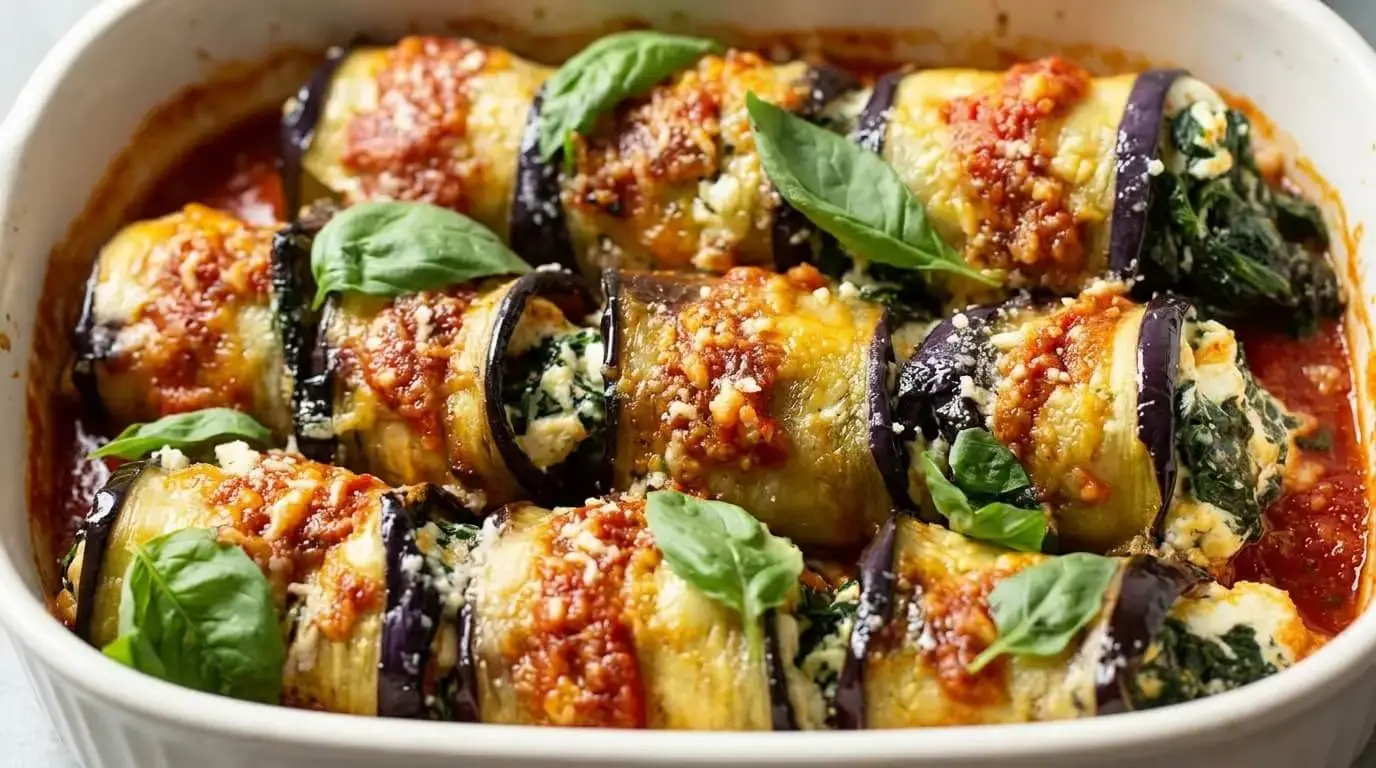
If you are searching for a comforting, elegant, and deeply satisfying vegetarian dinner, look no further than this authentic Eggplant Rollatini with Spinach and Ricotta. This beloved classic is a staple of Italian cuisine and has long been celebrated throughout the broader Mediterranean region for its rich flavor profile and wholesome ingredients. At its core, this dish consists of tender roasted eggplant sheets wrapped around a creamy spinach and herb cheese filling. The rolled bundles are then nestled into a robust marinara sauce and baked until bubbling and golden brown.
While traditional recipes often call for breading and frying the eggplant in heavy amounts of oil, this modern Mediterranean recipe opts for a lighter approach. By lightly brushing the eggplant planks with olive oil and roasting them to perfection, we slash the excess calories and heavy saturated fats without sacrificing an ounce of flavor or texture. This adjustment aligns seamlessly with the core principles of the Mediterranean diet, focusing on vegetable-forward eating, heart-healthy fats, and unrefined ingredients. It is a spectacular option for anyone looking to incorporate a nutrient-dense vegetarian dinner into their weekly routine.
Why You’ll Love This Eggplant Rollatini Recipe
Mediterranean Diet Friendly
This dish embraces the pillars of healthy Mediterranean eating. Instead of relying on refined carbohydrates or heavy processed meats, it highlights fresh produce, lean dairy, and heart-healthy fats.
Packed with Vegetables
With both eggplant and spinach taking center stage, this recipe makes it incredibly easy to hit your daily vegetable intake goals. It’s a delicious way to serve greens to the whole family.
Comfort Food Without Heavy Pasta
If you love lasagna but want something lighter, this is the ultimate alternative. The tender eggplant sheets replace traditional pasta noodles, giving you all the comfort of a baked Italian dish without the carb heavy slump afterward.
Great for Meal Prep
This recipe holds up beautifully when assembled ahead of time or kept as leftovers. The flavors meld together over time, making it tastes even better the next day.
Naturally Vegetarian
Finding a meatless main course that feels genuinely substantial can be a challenge. This dish satisfies both vegetarians and meat-eaters alike thanks to its rich, savory profile and cheesy filling.
What Is Eggplant Rollatini?
The origin of rollatini (often referred to as involtini in Italy) stems from the culinary practice of rolling thin slices of meat or vegetables around a flavorful stuffing. While “Rollatini” is an Italian-American adaptation of the term, the technique remains deeply rooted in traditional Southern Italian cooking.
Many home cooks wonder how this dish differs from other classic Italian bakes. The primary difference between Rollatini and Eggplant Parmesan lies in the structural assembly. Eggplant Parmesan layers sliced eggplant horizontally with sauce and cheese, much like a lasagna. Rollatini, on the other hand, treats each individual eggplant slice as a wrapper for a luxurious cheese blend.
Furthermore, the difference between Rollatini and Manicotti comes down to the casing. Manicotti utilizes a tube-shaped pasta shell to house its cheese filling, whereas our recipe uses thinly sliced eggplant. Why eggplant works as a pasta alternative is simple: once roasted, its naturally mild flavor softens and absorbs the savory nuances of the tomato sauce, while its pliable texture holds the spinach ricotta filling perfectly without tearing.
Ingredients You’ll Need
For the Eggplant
- Globe Eggplants: Look for two large, firm globe eggplants with smooth, shiny skin. These provide the wide, sturdy planks needed for rolling.
- Thin Slicing: Ensuring your eggplant is sliced evenly to a quarter-inch thickness is critical for even cooking and effortless rolling.
- Olive Oil Benefits: A light brushing of extra virgin olive oil not only prevents the eggplant from drying out in the oven but also introduces healthy monounsaturated fats that support cardiovascular health.
For the Spinach Ricotta Filling
- Ricotta Cheese: Opt for a high-quality, whole-milk ricotta cheese to ensure a rich, velvety texture. If you love working with creamy bases, you might also enjoy using leftovers in our savory Hot Honey Tomato Ricotta Dip.
- Spinach: Frozen chopped spinach works brilliantly here. It provides a concentrated dose of vitamins and structural integrity to the filling once properly drained.
- Parmesan Cheese: Freshly grated Parmesan cheese brings a sharp, salty, umami depth to the interior mix.
- Mozzarella Cheese: Shredded mozzarella cheese adds that quintessential gooey, melted texture inside the roll and over the top.
- Egg: A single large egg acts as an essential binder, keeping the cheese filling firmly inside the rolls rather than melting out into the pan.
- Garlic: Mined fresh garlic cloves infuse the ricotta with a sharp, aromatic backbone.
- Nutmeg: A tiny pinch of ground nutmeg is a classic Italian secret that cuts through the richness of the dairy and elevates the spinach.
For Assembly
- Marinara Sauce: Use a premium, low-sodium marinara sauce or a homemade tomato sauce rich in garlic and herbs to form the bed of the dish.
- Fresh Basil: A handful of vibrant, fresh basil leaves torn over the finished dish adds an aromatic brightness that rounds out the baked flavors.
How to Make Eggplant Rollatini with Spinach and Ricotta
Step 1 – Prepare the Eggplant
Preheat your oven to 400°F (200°C) and line two spacious baking sheets with parchment paper. Trim the stems off your globe eggplants and slice them lengthwise into uniform, 1/4-inch planks. If your eggplant feels overly bitter or watery, sprinkle the slices generously with coarse salt and let them sweat on paper towels for 15 minutes before wiping them completely dry. Arrange the slices across the prepared sheets, brush both sides lightly with olive oil, and season with a touch of salt and black pepper. Bake for 10 to 12 minutes until the eggplant is pliable and tender, but not completely collapsed. Remove and let them cool until safe to handle.
Step 2 – Make the Spinach Ricotta Filling
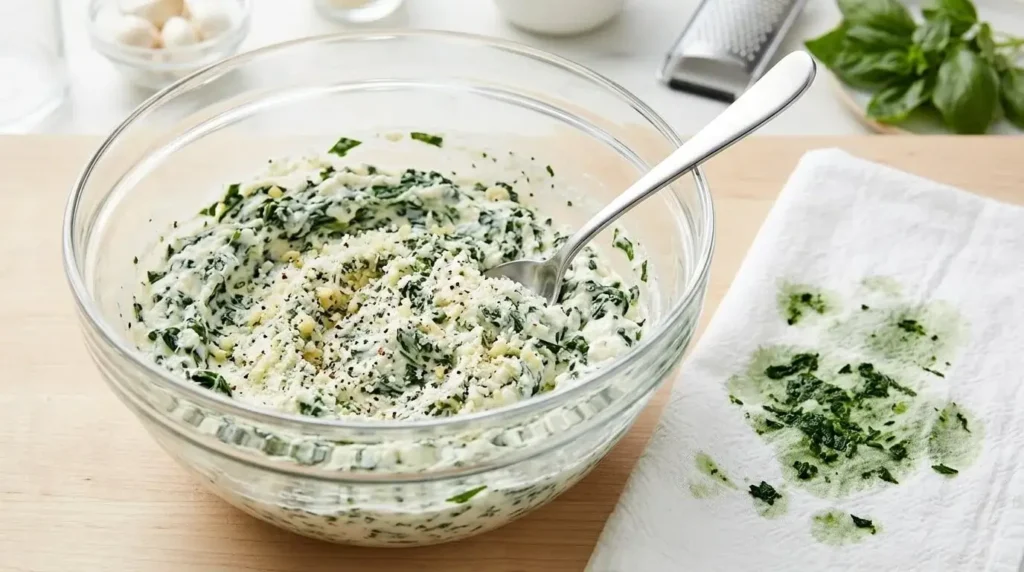
While the eggplant cools, lower your oven temperature to 375°F (190°C). Take your thawed, chopped spinach and place it into a clean kitchen towel or a fine-mesh strainer. Squeeze with all your strength to extract every last drop of excess water. In a medium mixing bowl, combine the bone-dry spinach, ricotta cheese, freshly grated Parmesan, half of your shredded mozzarella, the egg, minced garlic, a pinch of salt, pepper, and that crucial dash of nutmeg. Stir vigorously until the mixture is uniform and holds its shape.
Step 3 – Roll the Eggplant
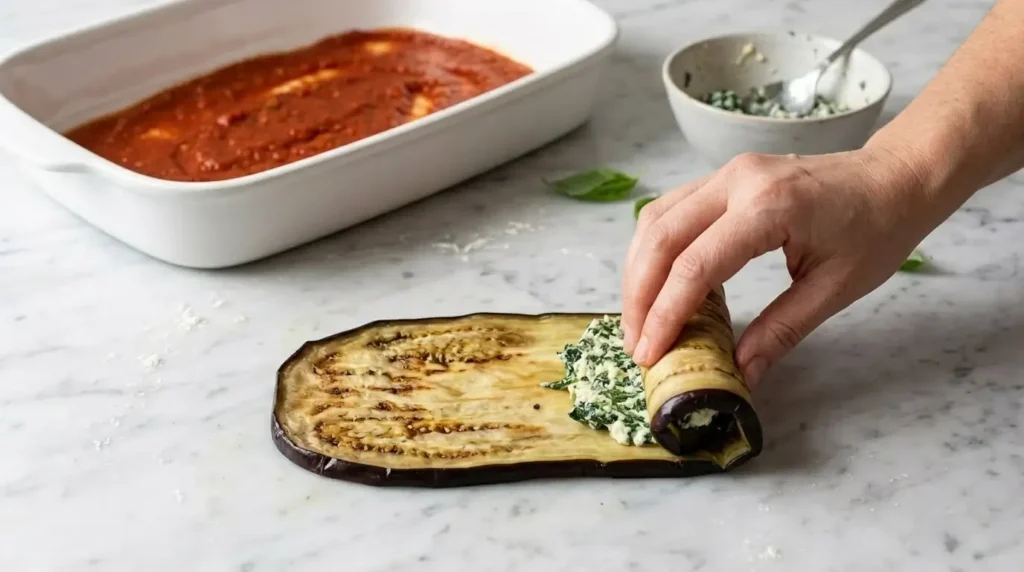
Pour roughly 1 cup of your marinara sauce across the bottom of a 9×13-inch baking dish, spreading it into an even layer. Place a cooled eggplant slice flat onto a clean cutting board or work surface. Spoon approximately 2 tablespoons of the spinach ricotta filling onto the wider end of the eggplant plank. Carefully but firmly roll the eggplant away from you, wrapping it tightly around the cheese mixture. Place the rollatini seam-side down into the sauced baking dish to prevent it from unfurling. Repeat this process for all remaining slices, packing them snugly next to one another.
Step 4 – Add Sauce and Cheese
Once all your rollatini are neatly arranged in rows within the baking dish, take your remaining 1 cup of marinara sauce and spoon it precisely down the center line of the eggplant rows. This keeps the beautiful purple and gold edges of the eggplant visible while infusing the center with rich tomato flavor. Sprinkle the remaining half-cup of shredded mozzarella cheese and an extra dusting of Parmesan directly over the sauced centers.
Step 5 – Bake Until Golden
Slide the uncovered baking dish into the preheated oven at 375°F (190°C). Bake for 20 to 25 minutes. Keep an eye on it—you want the tomato sauce to be vigorously bubbling along the edges and the cheese topping to transform into a completely melted, beautifully golden blanket.
Step 6 – Garnish and Serve
Carefully remove the dish from the oven. Resist the urge to dive in immediately; let the rollatini rest on the counter for 5 minutes. This resting period allows the cheese inside to set up slightly, making the rolls clean and easy to lift. Scatter whole, fresh basil leaves across the top right before serving to add an authentic touch of Mediterranean vibrance.
Expert Tips for Perfect Eggplant Rollatini
Slice Evenly
Invest in a sharp chef’s knife or use a mandoline slicer to ensure your eggplant planks are identical in thickness. If some slices are too thick, they won’t roll easily; if they are too thin, they will tear during assembly.
Don’t Skip Roasting
Roasting the eggplant before rolling is non-negotiable. It par-cooks the vegetable, breaks down its tough fibrous structure, and develops deep, caramelized flavors that steaming or microwaving simply cannot replicate.
Remove Excess Moisture from Spinach
Water is the ultimate enemy of a compact cheese filling. Squeeze your spinach multiple times until no more liquid escapes. Failure to do so will result in a watery sauce and a runny filling.
Use Thick Marinara Sauce
A watery tomato sauce will dilute the structural integrity of your rolls. Choose a high-quality, slow-simmered marinara sauce that boasts a thick, robust consistency.
Let the Dish Rest Before Serving
Allowing the finished bake to rest for 5 to 10 minutes ensures the internal contents bind together. This makes plating simple and keeps your rollatini beautifully intact.
Is Eggplant Rollatini Healthy?
Absolutely. This dish is an exceptional example of how a vegetable-forward dinner can be both incredibly comforting and packed with dense nutrition.
[ Eggplant / Fiber ] + [ Spinach / Iron ] + [ Tomato / Lycopene ] = A Heart-Healthy Main Course
Let’s break down the individual components:
- Eggplant Nutrition: Eggplants are remarkably low in calories but exceptionally high in dietary fiber, which aids digestive health and promotes prolonged satiety.
- Spinach Nutrients: Spinach infuses the dish with essential vitamins A, C, and K, along with non-heme iron and folate.
- Tomato Antioxidants: The cooked marinara sauce provides a massive dose of antioxidants, most notably lycopene, which has been linked to reduced risks of cardiovascular disease.
- Olive Oil Benefits: The extra virgin olive oil provides a dose of heart-healthy fats that enhance the absorption of fat-soluble vitamins.
Because this recipe serves as a lower-carb alternative to traditional baked pasta dishes, it prevents blood sugar spikes while delivering clean, vegetable-based energy.
Variations and Substitutions
Add Crumbled Feta
For a sharp, tangier twist that leans heavily into Greek culinary traditions, crumble 1/4 cup of traditional feta cheese directly into your ricotta cheese mixture.
Use Cottage Cheese
If you want to boost the protein content while lowering the overall fat grams, you can substitute the ricotta cheese with a well-drained, small-curd cottage cheese.
Add Fresh Herbs
While basil is the star garnish, incorporating minced fresh flat-leaf parsley, finely chopped tarragon, or chives into the cheese filling adds an amazing layer of complexity.
Make It Gluten-Free
As written, this recipe is naturally gluten-free because it relies on eggplant rather than pasta or breadcrumbs. Always verify that your store-bought marinara sauce is certified gluten-free if catering to severe celiac needs.
Add Pine Nuts
To introduce a delightful, authentic texture, toast 2 tablespoons of pine nuts in a dry pan until fragrant and fold them into your spinach and cheese filling before rolling.
Extra Mediterranean Version
Transform this into an ultra-savory Mediterranean masterpiece by mixing a teaspoon of dried oregano, a handful of chopped fresh parsley, and the freshly grated zest of half a lemon directly into the filling.
What to Serve with Eggplant Rollatini
To build a well-rounded, colorful feast, look to light sides that complement the richness of the baked cheese and tomato sauce.
A crisp, refreshing option like our Greek Chopped Feta Salad recipe offers an incredible textural contrast with its crunchy cucumbers, bell peppers, and tangy vinaigrette. If you prefer to double down on seasonal produce, consider roasted Mediterranean vegetables or simple garlic green beans. For those wanting a wholesome grain accompaniment to soak up the leftover marinara sauce, a side of lemon herb quinoa works perfectly.
Eggplant Rollatini with Spinach and Ricotta
Ingredients
Method
- Prep and Soften the Eggplant: Preheat your oven to 400°F (200°C). Line two large baking sheets with parchment paper. Cut the ends off the eggplants and slice them lengthwise into thin, uniform planks about 1/4-inch thick. (Optional: Sprinkle slices with salt, let sit for 15 minutes to draw out moisture, then wipe completely dry). Arrange slices on the sheets, brush both sides with olive oil, and season with salt and pepper. Bake for 10 to 12 minutes until pliable and tender. Remove and let cool.
- Make the Spinach Ricotta Filling: Reduce the oven temperature to 375°F (190°C). Place the thawed spinach into a clean kitchen towel and squeeze firmly until completely dry. In a medium bowl, thoroughly mix the squeezed spinach, ricotta, Parmesan, 1/2 cup of the mozzarella, the egg, minced garlic, salt, black pepper, and a tiny pinch of nutmeg until uniform.
- Assemble the Rollatini: Spread 1 cup of the marinara sauce evenly across the bottom of a 9×13-inch baking dish. Lay an eggplant slice flat on your work surface. Spoon about 2 tablespoons of the spinach filling onto the wider end of the slice, roll it up tightly, and place it seam-side down into the baking dish. Repeat for all remaining slices.
- Sauce and Bake: Spoon the remaining 1 cup of marinara sauce evenly down the center line of the rolled eggplant rows. Top the sauced areas with the remaining 1/2 cup of shredded mozzarella and an extra dusting of Parmesan cheese. Bake uncovered for 20 to 25 minutes until the sauce is bubbling and the cheese is fully melted and golden brown.
- Garnish and Serve: Remove from the oven and let rest for 5 minutes to allow the filling to set. Garnish generously with fresh whole basil leaves right before serving.
Notes
- Storage: Keep leftovers in an airtight container in the fridge for up to 4 days.
- Pro-Tip: Make sure the spinach is completely bone-dry before mixing to ensure the filling stays rich and compact during baking.
Storage and Reheating
Refrigeration
Store any leftover rollatini in an airtight container in the refrigerator for up to 3 to 4 days. The flavors will continue to deepen over time.
Freezing
You can freeze this dish either before or after baking. Wrap the baking dish tightly with a layer of plastic wrap followed by heavy-duty aluminum foil. It will keep beautifully in the freezer for up to 3 months. Thaw completely in the refrigerator overnight before reheating.
Reheating in Oven
To maintain the ideal texture, reheat leftovers in a 350°F (175°C) oven for 15 to 20 minutes until heated through and bubbling. Avoid high microwave settings, which can cause the dairy to separate and turn greasy.
Meal Prep Instructions
To meal prep this recipe efficiently, roast your eggplant slices and mix your spinach cheese filling ahead of time. Store them in separate containers in the fridge. When you are ready to serve during the week, simply roll, sauce, and bake fresh. If you love this style of meal prepping, you should also try our baked zucchini roll ups with ricotta for your weekly rotation.
Common Mistakes to Avoid
- Watery Filling: Skipping the step to forcefully wring out your thawed spinach will dilute your filling, making it runny.
- Thick Eggplant Slices: Cutting the eggplant planks too thick will prevent them from bending, causing them to crack and split open when you attempt to roll them.
- Overbaking: Leaving the dish in the oven for too long will dry out the ricotta and cause the eggplant wrappers to disintegrate into mush.
- Using Too Much Sauce: Submerging the rolls entirely in tomato sauce will steam the eggplant rather than bake it, stripping away the unique texture of the roll ups.
- Not Draining Spinach: Always double-check your spinach drainage; it is the number one culprit behind a failed rollatini bake.
Frequently Asked Questions
Do You Peel Eggplant for Rollatini?
No, it is highly recommended to leave the skin on. The purple peel provides critical structural integrity that prevents the tender eggplant from falling apart during roasting, rolling, and baking, while adding beautiful contrast, as seen in image_a1d3a1.jpg.
Should You Salt Eggplant Before Baking?
While modern globe eggplants are bred to be much less bitter than historical varieties, salting remains a highly useful step if your eggplants feel particularly dense or watery. It draws out excess moisture, concentrating the natural flavors.
Can Eggplant Rollatini Be Made Ahead?
Yes! You can fully assemble the dish in your baking pan, cover it tightly, and keep it in your refrigerator for up to 24 hours before baking. Simply add an extra 5 minutes to the baking time if cooking it straight from the cold fridge.
Can You Freeze Eggplant Rollatini?
Yes, it freezes beautifully. For the best results, freeze it tightly wrapped before the final baking stage. When ready to enjoy, thaw it in the fridge overnight and bake according to the recipe instructions.
How Do You Keep Eggplant Rollatini from Getting Watery?
The secret lies in thoroughly squeezing out the thawed spinach and properly roasting the eggplant slices beforehand to evaporate their natural water content.
Is Eggplant Rollatini Keto Friendly?
Yes, this dish is naturally low-carb and keto-friendly because it swaps out traditional pasta sheets for nutrient-dense eggplant planks.
What Is the Difference Between Eggplant Parmesan and Eggplant Rollatini?
Eggplant Parmesan features layered, often breaded and fried eggplant rounds built vertically like a lasagna. Eggplant Rollatini utilizes thin, unbreaded roasted eggplant planks wrapped explicitly around a rich cheese core.
More Mediterranean Eggplant Recipes
If you find yourself with extra eggplants or simply want to explore more ways to feature this magnificent Mediterranean ingredient, check out these excellent additions to your menu:
- Mediterranean Stuffed Eggplant: Roasted eggplant halves scooped out and stuffed with spiced grains, tomatoes, and herbs.
- Roasted Eggplant Salad: A smoky, garlicky cold salad mixed with extra virgin olive oil and fresh lemon juice.
- Eggplant Chickpea Stew: A hearty, slow-simmered vegetarian pot filled with warm Mediterranean spices, tender eggplant, and protein-packed chickpeas.
- Mediterranean Eggplant Bake: A rustic, family-style layered casserole highlighting zucchini, peppers, tomatoes, and melted cheeses.
Conclusion
This Eggplant Rollatini with Spinach and Ricotta perfectly bridges the gap between comforting Italian culinary traditions and wholesome, health-conscious eating. Featuring a luxurious, creamy spinach ricotta filling surrounded by perfectly tender roasted eggplant and smothered in a rich, lycopene-packed marinara sauce, it delivers incredible flavor in every single bite. It is a shining example of how a Mediterranean diet friendly, vegetable-forward dish can easily steal the spotlight at any family dinner table, while functioning beautifully for your weekly meal prep goals.
Have you tried making this recipe at home? We would love to hear how it turned out! Please take a moment to leave a comment and a star rating below to share your experience with our growing culinary community.