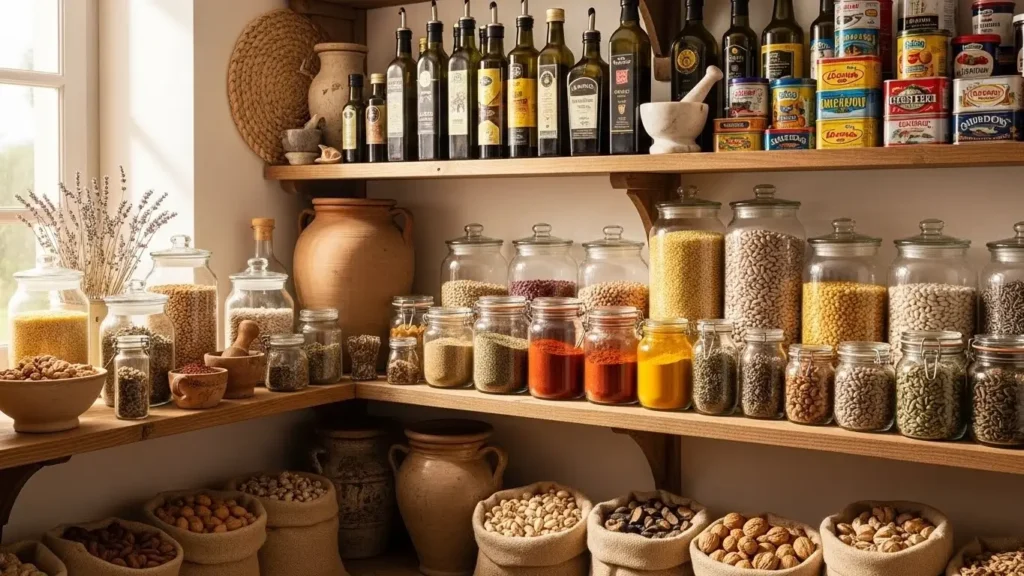
A well-stocked pantry is the quiet heartbeat of Mediterranean cooking. From golden olive oils and nutty whole grains to fragrant herbs, spices, and preserved seafood, your pantry becomes the foundation for thousands of nourishing, effortless meals. If you’re new to the lifestyle, this guide will walk you through the Mediterranean diet pantry essentials every beginner should have, along with how to choose them, store them, and actually cook with them day-to-day.
These Mediterranean pantry staples will become your everyday building blocks, whether you’re preparing Shakshuka, Paella, Tabbouleh, Greek Gyro Meat, Escalivada or Baklava.If you want to know about the diet you can explore our mediterranean diet guide, and if you’re planning to explore recipes, you can explore Mediterranean diet recipes.
1. Olive Oils (EVOO, Virgin and Infused Oils)
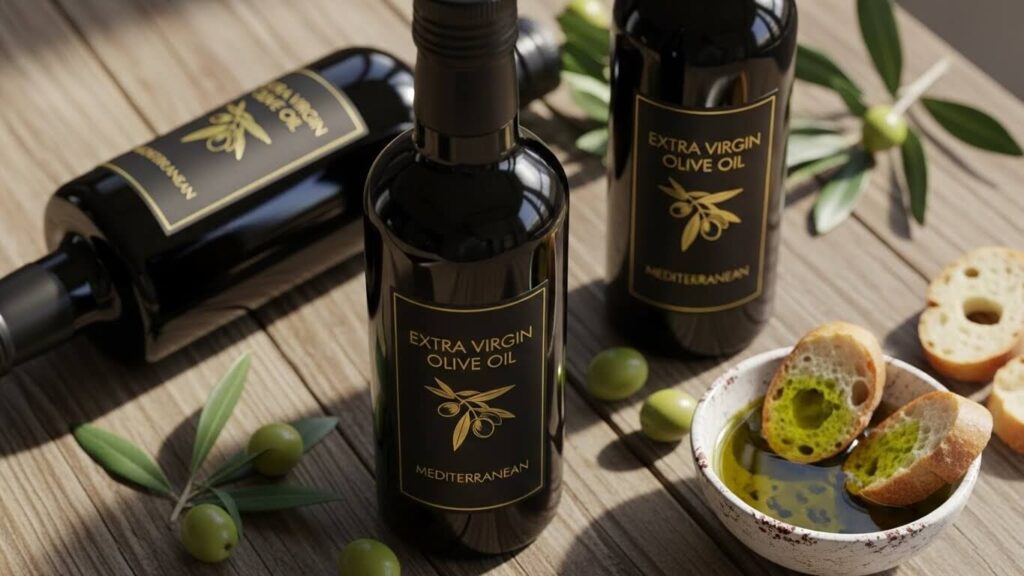
Mediterranean cooking begins with olive oil. It’s the primary fat used for sautéing, dressings, drizzling and even baking. As Lebanese food historian Barbara Massaad says,
“Olive oil is not an ingredient – it is a philosophy.”
What It Is & Why It Matters
Extra-virgin olive oil (EVOO) is rich in heart-healthy monounsaturated fats and antioxidants like polyphenols. Choosing a quality olive oil elevates every dish, from Shakshuka to Escalivada.
How to Choose High-Quality Oils
- Look for cold-pressed, early-harvest, dark-glass bottles and the harvest date on the label.
- Prefer single-origin oils from Greece, Italy, Spain, Lebanon or Turkey
Beginner-Friendly Substitutions
- Avocado oil for high-heat cooking
- Light olive oil for baking
Storage & Shelf Life
- Keep in a cool, dark place.
- Use within 12-18 months of harvest.
Budget-Mid-Premium Brand Examples
- Greece: Iliada, Gaea, Sakellaropoulos
- Italy: Partanna, Monini, Frantoio Franci
- Spain: O-Med, Castillo de Canena
- Lebanon: Zejd, Maknoon
- Turkey: Komili, NovaVera
Comparison Table: EVOO vs Virgin Olive Oil
| Feature | Extra Virgin Olive Oil | Virgin Olive Oil |
| Extraction | Cold-pressed | Cold-pressed |
| Acidity | <0.8% | <2% |
| Flavor | Fruity, peppery, aromatic | Milder, less complex |
| Best Uses | Dressings, drizzling and finishing dishes | Cooking and sautéing |
2. Whole Grains
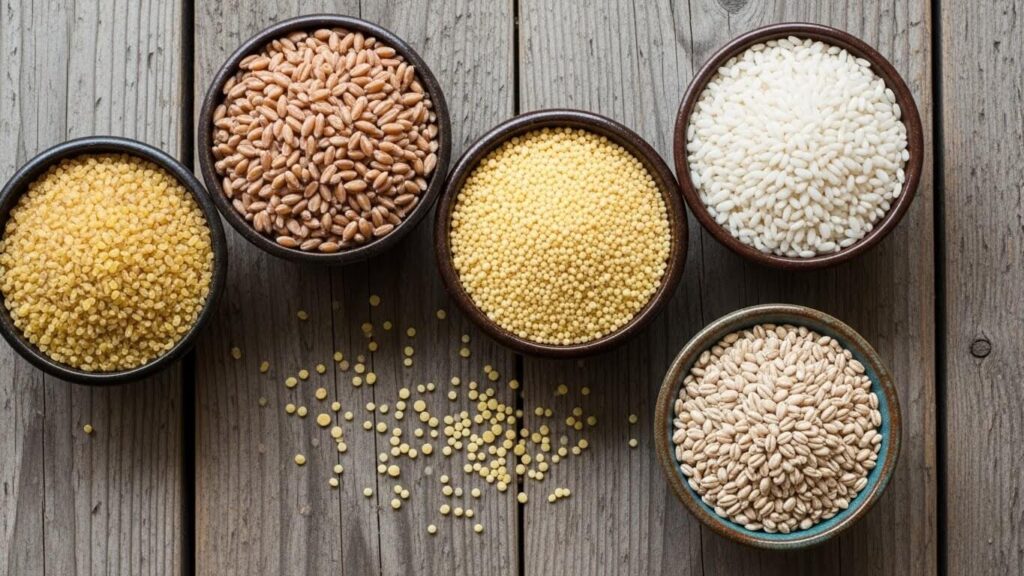
From Greek barley rusks to Spanish bomba rice to Turkish bulgur, grains form the comforting base of Mediterranean cooking.
What They Are & Why They Matter
Grains like farro, bulgur, couscous, brown rice and whole-wheat pasta are nutrient-dense and versatile. They appear in dishes like Paella, Tabbouleh and grain bowls.
How to Choose
- Look for whole-grain or stone-ground labels.
- Medium-grain or short-grain rice for paella.
- Fine bulgur for Lebanese tabbouleh.
Storage & Shelf Lift
- Airtight jar, cool cabinet
- 6-12 months for whole grains
Budget-Premium Brands
- Italy: Rummo (pasta) and Rustichella d’Abruzzo
- Spain: Molí de Rafelet (bomba rice)
- Turkey: Duru Bulgur
- Greece: Kritiki Zymi barley products
3. Legumes: The Heart of Everyday Cooking
Mediterranean families historically relied on beans as an affordable source of protein.
Common Legumes
- Chickpeas (for Hummus, stews and salads)
- Lentils (Greek lentil soup, Lebanese mujadara)
- White beans (Spanish alubias, Italian cannellini dishes
How to Choose & Store
- Buy dried for the cheapest value.
- Keep in airtight jars; good for 1-2 years.
Budget-Premium Brand Examples
- Turkey: Yayla
- Italy: Valfrutta
- Spain: La Legumbre
4. Nuts & Seeds
Used for toppings, pestos, desserts, and Baklava (walnuts and pistachios).
Examples
- Almonds, walnuts, pine nuts, pistachios
- Sesame seeds (tahini base)
Storage
- Refrigerate for long shelf life; oils turn rancid quickly.
5. Spices & Dried Herbs
Aromatic staples include:
- Cumin (Shakshuka, hummus)
- Smoked paprika (Paella)
- Oregano (Greek dishes)
- Sumac (Lebanon & Turkey)
- Aleppo pepper
As Greek cookbook author Diane Kochilas says,
“Mediterranean kitchens rely on aroma as much as flavor.”
Storage
- Store in airtight jars, away from sunlight.
6. Vinegars
Mediterranean cuisine heavily uses:
- Red wine vinegar
- White wine vinegar
- Sherry vinegar (Spain)
- Balsamic vinegar (Italy)
Storage
Stable for 2+ years in pantry.
7. Tomato Products
Tomatoes are the backbone of sauces, soups, and Shakshuka recipe.
Essential Types
- Crushed tomatoes
- Tomato paste
- Sun-dried tomatoes
- Passata
Brands
- Italy: Mutti, Cirio
- Spain: Orlando
8. Canned Goods & Tinned Seafood
Mediterranean pantries often include sardines, anchovies, tuna and mackerel.
Why It Matters
Low-cost protein, long shelf life and omega-3 rich.
Regional Specialties
- Spain: Conservas Ortiz and Ramón Peña
- Italy: Agostino Recca (anchovies)
- Turkey: Dardanel
- Greece: Trata
9. Hallmark Mediterranean Staples
These pantry heroes define the cuisine:
- Tahini (Lebanese, Turkish)
- Capers (Italy, Greece)
- Olives (Kalamata, Castelvetrano and Spanish Manzanilla)
- Harissa
- Pomegranate molasses (Lebanon and Turkey)
Printable Beginner’s Checklist
Mediterranean Diet Pantry Essentials:
Oils
✓ Extra virgin olive oil
✓ Light olive oil
✓ Avocado oil (optional)
Grains
✓ Brown rice
✓ Bulgur
✓ Farro
✓ Whole-wheat pasta
✓ Couscous
✓ Bomba rice
Legumes
✓ Chickpeas
✓ Lentils
✓ Cannellini beans
Nuts & Seeds
✓ Almonds
✓ Walnuts
✓ Pistachios
✓ Pine nuts
✓ Sesame seeds / Tahini
Spices & Herbs
✓ Oregano
✓ Cumin
✓ Smoked paprika
✓ Aleppo pepper
✓ Sumac
✓ Bay leaves
Vinegars & Condiments
✓ Balsamic
✓ Sherry vinegar
✓ Pomegranate molasses
Tomato Products
✓ Tomato paste
✓ Crushed tomatoes
✓ Sun-dried tomatoes
Tinned Seafood
✓ Sardines
✓ Anchovies
✓ Tuna
Mediterranean Staples
✓ Olives
✓ Capers
✓ Harissa
FAQs
1. What should beginners buy first for a Mediterranean pantry?
Start with EVOO, whole grains, legumes, spices, tomato products and canned fish, the core Mediterranean diet pantry essentials.
2. Are canned beans okay for the Mediterranean diet?
Yes, they’re part of a realistic and healthy pantry list and perfect for quick meals.
3. What is the healthiest oil in a Mediterranean pantry?
High-polyphenol extra virgin olive oil.
4. Which grains are most traditional in Mediterranean cooking?
Bulgur, barley, couscous, farro and bomba rice.
5. Do I need expensive ingredients?
Not at all. Families across Greece, Lebanon, Turkey, Italy and Spain rely on budget staples like beans, grains, and vinegars.
6. How long do Mediterranean pantry items last?
Olive oil (12-18 months), grains (6-12 months), legumes (1-2 years), vinegars (2+ years) and nuts (3-6 months refrigerated).