If you have ever sat at a seaside Greek tavern listening to waves lap against the shore, chances are your meal began with an array of vibrant meze plates. Among the crisp salads, warm pita, and briny olives, one dish invariably steals the show: authentic Melitzanosalata. This classic Greek eggplant dip transforms humble eggplants into a velvety, smoky centerpiece that captures the true essence of Mediterranean hospitality.
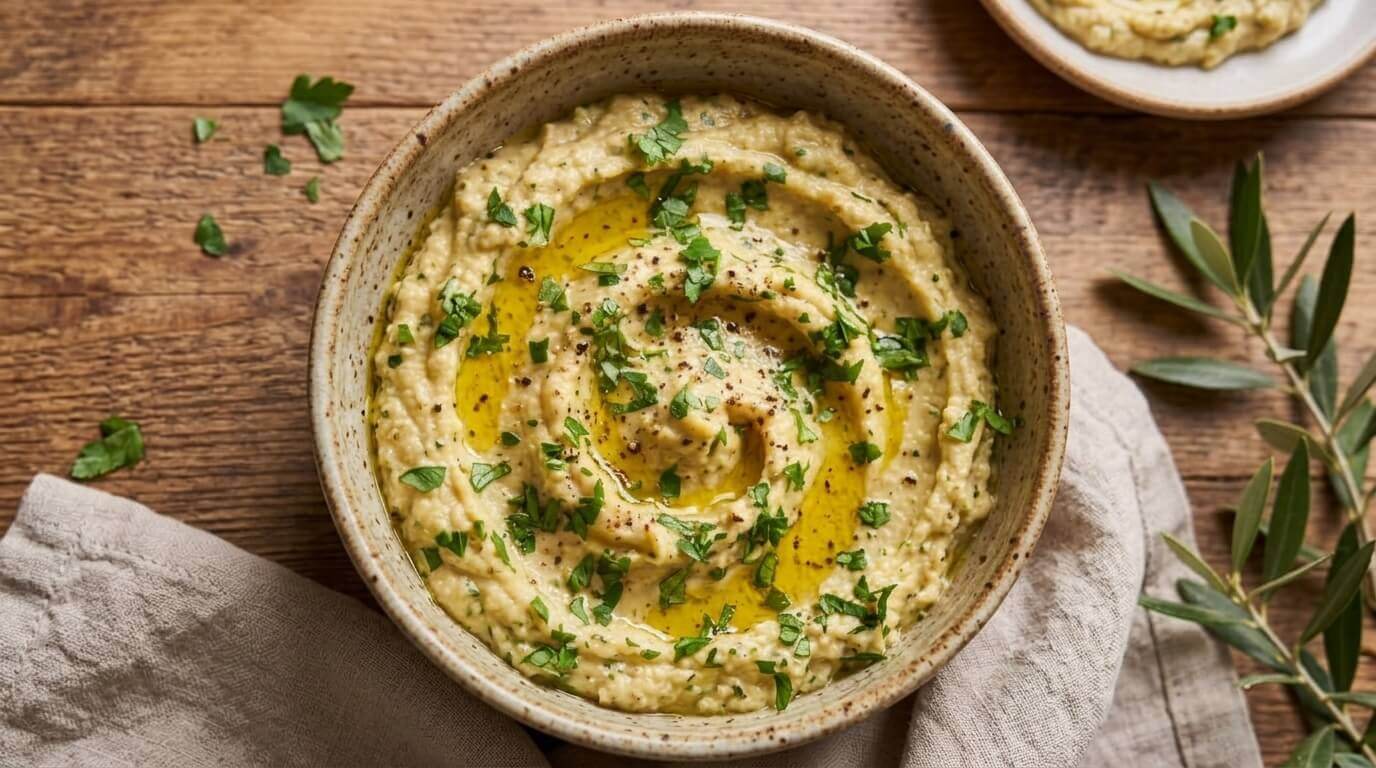
Presented in a rustic stoneware bowl, a proper dish of Melitzanosalata is a work of art. The light, pale-golden whipped eggplant forms a smooth, airy foundation featuring a deep, spoon-swirled spiral groove. This channel holds a glistening pool of cold-pressed extra virgin olive oil, finished with coarsely ground black pepper and a generous shower of chopped fresh flat-leaf parsley.
Beyond its irresistible texture and taste, this easy Melitzanosalata recipe is a stellar representative of the Mediterranean diet. It relies on clean, wholesome ingredients loaded with health benefits:
- Heart-Healthy Fats: Abundant monounsaturated fats from premium extra virgin olive oil support cardiovascular wellness.
- Antioxidant-Rich: Eggplants provide powerful polyphenols, including nasunin, which protects cell membranes.
- Nutrient-Dense & Low-Carb: Naturally gluten-free, low-calorie, and keto-friendly, fitting seamlessly into various modern dietary choices.
Pair this smoky masterpiece alongside a classic Greek Chopped Feta Salad recipe for an authentic Greek dining experience right in your home kitchen.
Melitzanosalata vs. Baba Ghanoush: What’s the Difference?
While both dips feature roasted eggplant as their base, Melitzanosalata and Baba Ghanoush belong to distinct culinary traditions with unique flavor profiles and ingredient compositions.
The Tahini Distinction
The primary difference lies in the reliance on nutty pastes and heavy spices:
- Baba Ghanoush (Levantine Origin): Grounded in Middle Eastern flavors, Baba Ghanoush relies heavily on tahini (sesame paste), ground cumin, and sometimes yogurt or pomegranate molasses to create a dark, intensely nutty, and tangy spread.
- Greek Melitzanosalata: Celebrates the pure, unadulterated flavor of charred eggplant. It uses zero tahini and zero cumin. Instead, the eggplant shines alongside sharp raw garlic, bright fresh lemon juice or red wine vinegar, and fruit-forward Greek extra virgin olive oil.
While Middle Eastern dip spreads such as warm olive-topped hummus showcase sesame and legume bases, Melitzanosalata highlights the clean, smoky garlic-citrus profile unique to the Aegean islands.
Texture Variations
Traditional village-style Melitzanosalata is often hand-chopped on a wooden board or coarsely mashed with a fork, resulting in a rustic, chunky dip with visible flecks of charred eggplant skin. Modern Greek taverna variations—such as the recipe detailed below—whip the eggplant pulp in a food processor while slowly emulsifying in extra virgin olive oil. This technique converts the dip into a light, airy, ultra-creamy spread that spreads effortlessly over crusty bread.
Ingredients & Quality Selection
Creating a restaurant-quality Melitzanosalata requires just a handful of staple ingredients. Because the recipe is simple, the quality of each component directly impacts the final flavor.
+-----------------------------------+-------------------------------------------------------------------------+
| Ingredient                        | Selection Guide & Purpose                                               |
+-----------------------------------+-------------------------------------------------------------------------+
| Globe or Italian Eggplants        | Choose medium, heavy eggplants with glossy, unblemished skin.            |
| Extra Virgin Olive Oil (EVOO)     | Cold-pressed, high-polyphenol Greek EVOO for smooth emulsification.     |
| Fresh Lemon Juice / Vinegar       | Freshly squeezed lemon juice or Greek red wine vinegar for bright acid. |
| Fresh Garlic                      | Firm raw garlic cloves to provide the signature Mediterranean kick.     |
| Seasonings & Garnishes            | Fine sea salt, coarsely cracked black pepper, fresh flat-leaf parsley.  |
| Optional Creaminess Secret        | 1 tbsp thick Greek yogurt or crumbled feta for added body and tang.     |
+-----------------------------------+-------------------------------------------------------------------------+
- Italian or Globe Eggplants: Select eggplants that feel firm yet slightly yielding to thumb pressure. Medium-sized eggplants contain fewer bitter seeds than oversized ones. If you enjoy cooking with this versatile nightshade, explore our savory Roasted Eggplant Rounds with Honey and Cranberries as well.
- Extra Virgin Olive Oil: Look for authentic Greek extra virgin olive oil (such as Koroneiki variety). The oil acts as a structural binder during whipping, turning the dark pulp into a pale, velvety dip.
- Acidity (Lemon Juice or Red Wine Vinegar): Acidity balances the natural bitterness of eggplants and cuts through the richness of the olive oil. A combination of fresh lemon juice and red wine vinegar delivers optimal depth.
- Aromatics: Use fresh raw garlic cloves rather than pre-minced jarred garlic. Fresh garlic creates the signature punch characteristic of tavern-style appetizers.
- Optional Whipping Secret: To achieve an exceptionally velvety finish with subtle tang, blend 1 tablespoon of whole milk Greek yogurt or creamy crumbled sheep’s milk feta into the mixture before final emulsification.
Step-by-Step Culinary Guide
Follow this simple, step-by-step technique to prepare authentic Melitzanosalata at home.
   [1. Char/Roast Whole Eggplants]
                 │
                 ▼
   [2. Drain Pulp (15-20 mins in Colander)]  <-- CRUCIAL FOR TEXTURE!
                 │
                 ▼
   [3. Pulse Pulp with Garlic & Acid]
                 │
                 ▼
   [4. Drizzle Olive Oil to Emulsify]
                 │
                 ▼
   [5. Swirl Spiral Groove & Garnish]
Step 1: Roasting and Charring
Prick 2 large Globe eggplants all over with a fork to prevent bursting. Roast using one of two methods:
- Stovetop Open Flame Method (Most Authentic): Place whole eggplants directly over gas stove burners set to medium-high heat. Turn occasionally with tongs for 15–20 minutes until skins are completely blackened and charred, and the interior collapses completely.
- Oven Broiler Method: Place eggplants on a foil-lined baking sheet under a preheated oven broiler (high setting) for 35–40 minutes, flipping halfway through until skin is blistered and flesh is thoroughly soft.
Step 2: The Draining Secret (Crucial Step)
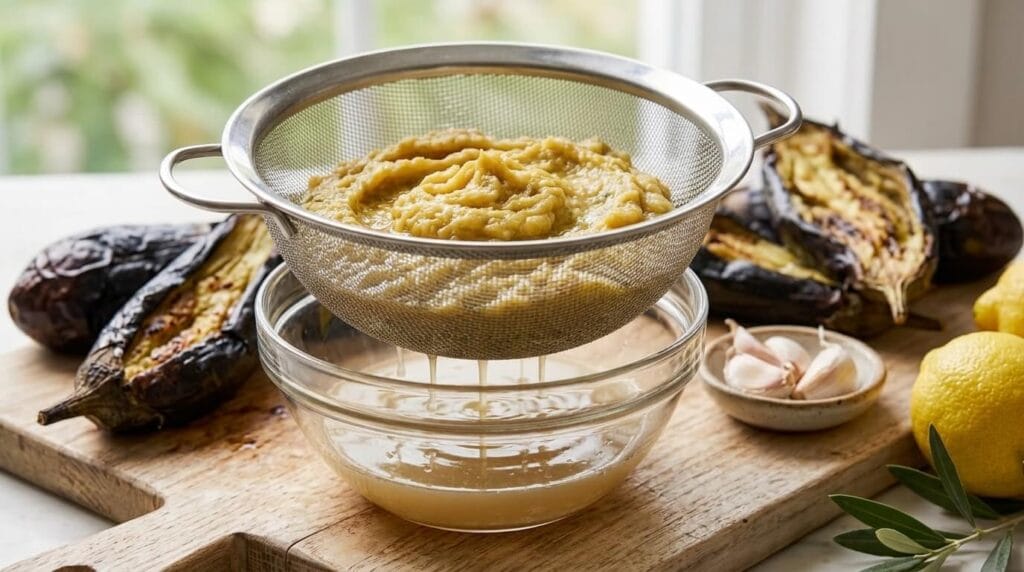
Once cooled enough to handle, slice eggplants lengthwise and scoop out the soft inner pulp using a wooden spoon, discarding the charred skins and tough stem. Place the eggplant pulp into a fine-mesh colander set over a bowl. Let it drain for 15 to 20 minutes, pressing gently with a fork to expel excess liquid.
Crucial Tip: Draining liquid removes residual bitter compounds and prevents your dip from becoming watery during blending.
Step 3: Emulsification and Whipping
- Transfer drained eggplant pulp to a food processor fitted with a steel blade.
- Add 1 minced garlic clove, 1½ tablespoons of fresh lemon juice (or red wine vinegar), and ½ teaspoon of fine sea salt.
- Pulse 5 to 7 times until coarsely combined.
- With the motor running on low, slowly drizzle in ¼ cup of extra virgin olive oil in a steady stream. Watch as the dark pulp turns into a smooth, pale, velvety emulsion. Taste and adjust with extra salt or lemon juice if needed.
Step 4: Plating with the Signature Spiral Groove
- Spoon the whipped Melitzanosalata into a shallow stoneware or rustic ceramic bowl.
- Hold the back of a soup spoon lightly against the center of the dip and rotate the bowl in a continuous circle, pressing gently outward to carve a deep, continuous spiral channel.
- Pour 1 tablespoon of extra virgin olive oil directly into the spiral groove.
- Garnish generously with freshly cracked black pepper and finely chopped flat-leaf parsley.
Pro Tips & Troubleshooting
- How to Avoid a Watery Dip: Never skip the colander draining step. Water released from eggplants breaks the olive oil emulsion and thins out the texture.
- Controlling Garlic Intensity: Raw garlic can become overly sharp. To mellow its bite without sacrificing flavor, let minced garlic sit in fresh lemon juice for 10 minutes before adding it to the food processor. The acid blunts harsh sulfurous compounds.
- Achieving Smokiness Without an Open Flame: If you cannot roast over a gas burner or grill, add ¼ teaspoon of smoked sea salt or a single drop of natural liquid smoke during the pulse step.
Serving Suggestions & Meal Prep
Perfect Pairings
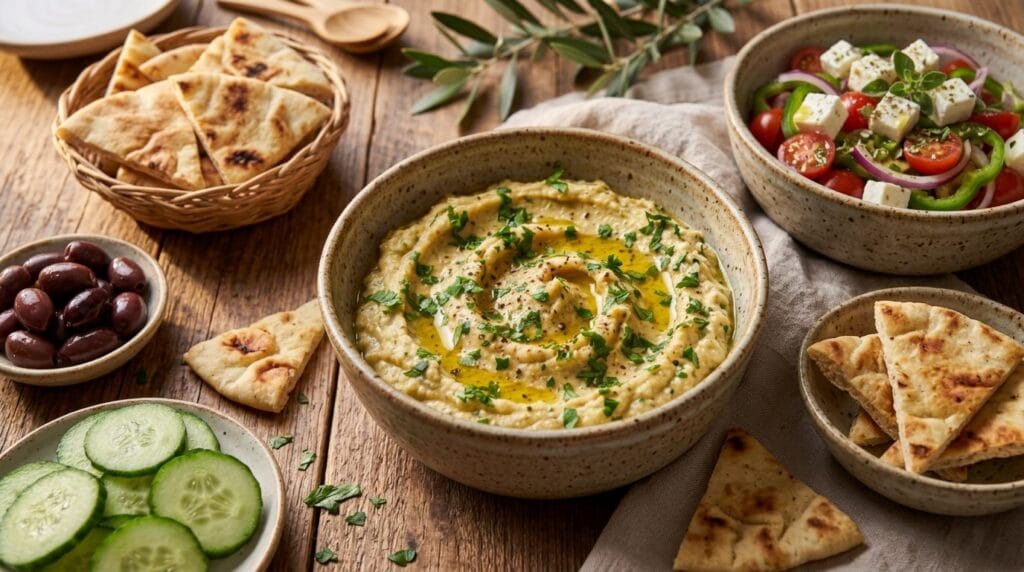
Serve Melitzanosalata at room temperature or slightly chilled alongside:
- Warm, pocketless Greek pita bread triangles or toasted sourdough slices
- Crisp cucumber rounds, radishes, and sweet bell pepper strips
- Plump Kalamata olives and warm grilled halloumi cheese
- Part of a complete meze platter featuring dolmades and tzatziki
Storage & Meal Prep Instructions
- Refrigeration: Store leftover dip in an airtight glass container in the refrigerator for up to 5 days.
- Flavor Development: The garlic and smoky eggplant notes integrate overnight; Melitzanosalata often tastes even better on Day 2. Bring to room temperature for 15 minutes and top with a fresh splash of olive oil before serving.
Authentic Greek Melitzanosalata Recipe
Ingredients
Method
- Prick eggplants 5-6 times with a fork. Roast over a medium-high gas stove flame using tongs for 15-20 minutes, turning regularly until skins are charred and flesh completely collapses. Alternatively, broil on a baking sheet in the upper oven rack for 35-40 minutes until blistered and tender.
- Slice roasted eggplants open lengthwise once cool enough to handle. Scoop pulp into a fine-mesh colander using a spoon, discarding charred skins and stems. Allow pulp to drain for 15–20 minutes, pressing gently with a fork to remove bitter juices.
- Transfer drained eggplant pulp, minced garlic, fresh lemon juice, and sea salt into a food processor. Pulse 5 to 7 times until coarsely combined.
- With the food processor running on low, slowly stream in ¼ cup extra virgin olive oil until the mixture turns pale, light, and velvety smooth. (If using optional Greek yogurt or feta, add now and pulse 3 times). Taste and adjust salt or lemon juice.
- Transfer whipped dip into a shallow rustic stoneware bowl. Press the back of a spoon gently into the center while turning the bowl to create a deep spiral groove. Pour 1 tablespoon extra virgin olive oil into the groove, top with coarsely cracked black pepper and finely chopped parsley. Serve with warm pita or fresh vegetable sticks.
Notes
– Vegan Option: Omit optional Greek yogurt/feta for a 100% plant-based dish.
– Smoothness Secret: Thorough draining is key to achieving an emulsion rather than a watery texture.
Frequently Asked Questions
Is Melitzanosalata low-carb and Keto-friendly?
Yes. Melitzanosalata is naturally low in carbohydrates and high in healthy fats, making it an excellent dip for ketogenic, low-carb, and Mediterranean dietary lifestyles.
Can I freeze Greek eggplant dip?
Freezing is not recommended for whipped versions. Freezing breaks the delicate oil-and-water emulsion, causing the dip to thaw into a watery, separated texture. Fresh preparation or short-term refrigeration yields the best result.
Why is my eggplant dip bitter?
Bitterness comes from two sources: using overripe, seed-heavy eggplants, or failing to drain liquid thoroughly after roasting. Selecting medium-sized eggplants and draining pulp for at least 15 minutes eliminates bitterness.
Should Melitzanosalata contain tahini or mayo?
No. Authentic Greek Melitzanosalata contains neither tahini nor mayonnaise. Its light, creamy texture relies entirely on emulsifying quality extra virgin olive oil with well-drained roasted eggplant pulp.