Classic brunch quiche is undeniably comforting, yet traditional versions rely heavily on refined white-flour pastry crusts and cups of heavy whipping cream. When you want something vibrant, nourishing, and deeply satisfying without the mid-morning heaviness, it is time to reimagine brunch from the bottom up. By swapping refined dough for naturally sweet, caramelized winter squash rings and filling them with an herb-flecked egg custard, you get an impressive individual portion that looks straight out of a seaside café.
This Broccoli, Spinach and Cottage Cheese Quiche delivers all the velvety, melt-in-your-mouth richness of a French custard tart without a single drop of heavy cream. Instead, protein-rich cottage cheese and thick Greek yogurt melt seamlessly into farm-fresh eggs, creating a tender, golden-baked center packing over 20 grams of protein per serving.
Visually and nutritionally, every forkful celebrates Mediterranean abundance. Bright green broccoli florets and earthy baby spinach are folded into the custard alongside tangy sheep’s milk feta and nutty Parmigiano-Reggiano, all nestled inside tender rings of roasted butternut squash or sweet sugar pumpkin. Seasoned on the rim with coarse sea salt, cracked black pepper, and extra virgin olive oil, the squash acts as an edible, nutrient-dense vessel that holds its shape cleanly on the plate.
Why You’ll Love This Recipe:
- High-Protein & Low-Carb: Delivers over 20g of protein per squash cup with zero refined flour or heavy cream.
- Naturally Gluten-Free: Uses thick-cut winter squash rings instead of traditional wheat pastry dough.
- 100% Mediterranean Diet Friendly: Built around extra virgin olive oil, leafy greens, cruciferous vegetables, herbs, and moderate cultured dairy.
- Meal-Prep and Freezer Ready: Individual squash cups reheat beautifully for effortless grab-and-go weekday breakfasts.
Why Cottage Cheese Is the Secret to a Better Mediterranean Quiche
In classic French cooking, quiche achieves its signature richness from a custard made of whole eggs and heavy cream. While delicious, heavy cream adds substantial saturated fat while contributing very little protein. In Mediterranean home cooking, dairy is used thoughtfully—favoring cultured, fermented, and fresh cheeses like yogurt, feta, ricotta, and cottage cheese that bring bright acidity, creamy body, and high nutritional value to simple vegetable dishes.
Cottage cheese is the ultimate culinary swap for heavy cream in baked egg dishes. Because cottage cheese is naturally dense in casein and whey proteins—offering roughly 13 to 14 grams of protein per half-cup—it gives the egg mixture structural stability while keeping the interior remarkably moist. When exposed to steady oven heat, the cheese curds soften and melt into the surrounding eggs, preventing the rubbery texture that often plagues low-fat crustless quiches. Paired with a touch of Greek yogurt and extra virgin olive oil, this Mediterranean cottage cheese quiche achieves a luxurious, custard-like crumb with a fraction of the saturated fat found in heavy cream.
Blended vs. Unblended Cottage Cheese: Which Should You Choose?
One of the most common questions home cooks ask when making a cottage cheese quiche is whether to blend the curds first. The good news is that both methods work wonderfully, depending on the texture you crave:
- Blended Cottage Cheese (Ultra-Smooth): Pulsing your cottage cheese and Greek yogurt in a blender or food processor for 15 seconds completely eliminates the curds. This creates a silky, uniform batter that mimics traditional heavy cream, yielding a sleek, velvety custard throughout.
- Unblended Cottage Cheese (Rustic & Melty): Leaving small-curd cottage cheese unblended—and simply whisking it vigorously with the eggs—creates delightful pockets of melty, ricotta-like creaminess scattered throughout the broccoli and spinach, just like the golden, bubbly cups shown in our hero photos.
Key Mediterranean Ingredients & Smart Swaps
Creating a standout healthy quiche without heavy cream relies on choosing fresh, whole ingredients where every component serves both a structural and flavor purpose. To keep the recipe effortless, divide your ingredients into two simple groups: the squash vessel and the savory filling.
The Squash “Crust”
- Winter Squash Rings: Look for a medium butternut squash with a long, straight, uniform neck, or choose two small sweet sugar pumpkins (or honeynut squash). Slicing the squash into 1½-inch thick rings and scooping out the center leaves a sturdy ½-inch border—thick enough to hold the liquid egg custard without collapsing, yet tender enough to cut cleanly with a fork.
- Extra Virgin Olive Oil (EVOO): Replaces butter on the baking sheet and on the squash rims. High-quality EVOO encourages deep golden caramelization around the edges while infusing the squash with fruity, peppery notes.
- Coarse Sea Salt, Cracked Black Pepper & Parmesan: Pressing these seasonings onto the oiled top rim of each squash ring creates a savory, lightly crisp crust that contrasts beautifully with the sweet winter squash.
The Egg & Veggie Filling
- Broccoli & Baby Spinach: Fresh broccoli florets provide hearty texture and sweet cruciferous crunch, while baby spinach brings earthy Mediterranean flavor. Finely chopping the broccoli ensures it turns tender during the 25-minute bake, while briefly wilting the spinach removes excess water before it touches the eggs.
- Mediterranean Cheese Trio: Full-fat or 2% cottage cheese forms the creamy, high-protein base; crumbled sheep’s milk feta adds authentic briny tang; and coarsely shredded Parmigiano-Reggiano melts into a golden, bubbly crust on top. (If you enjoy Mediterranean egg dishes with feta, you will also love our crustless spinach feta quiche for another easy brunch option.)
- Herbs & Aromatics: Fresh minced garlic, dried Mediterranean oregano, and dried thyme infuse the vegetables with warmth, while fresh flat-leaf parsley adds a bright herbal finish right before serving.
Step-by-Step Instructions: How to Make Broccoli, Spinach and Cottage Cheese Quiche
Step 1: Prep and Carve the Squash Rings
Preheat your oven to 400°F (200°C) and line a rimmed baking sheet with parchment paper. Place your butternut squash on a sturdy cutting board and slice off the top stem end and the bulbous bottom base (save the bulb for roasting later). Slice the cylindrical neck crosswise into 4 thick rings, each about 1½ inches tall. Use a sharp paring knife and a sturdy spoon to carve and scoop out the center flesh of each ring, leaving a uniform ½-inch border all the way around. Tip: Make sure your cuts are level so each ring sits completely flat against the parchment paper, preventing any egg custard from leaking underneath.
Step 2: Season and Par-Roast the Squash
Arrange the hollowed squash rings on the lined baking sheet. Brush the insides, outsides, and top rims generously with 1 tablespoon of extra virgin olive oil. Sprinkle the top rims with coarse kosher salt, freshly cracked black pepper, garlic powder, and 1 tablespoon of the shredded Parmigiano-Reggiano. Slide the pan into the oven and par-roast for 20 minutes until the squash is fork-tender and the rims are lightly caramelized. Remove the pan from the oven and reduce the oven temperature to 375°F (190°C).
Step 3: Sauté the Garlic, Broccoli & Spinach
While the squash roasts, heat the remaining 2 teaspoons of extra virgin olive oil in a medium skillet over medium heat. Add the finely chopped broccoli florets and a pinch of salt, cooking for 2 minutes until bright green. Stir in the minced garlic and roughly chopped baby spinach, tossing for 1 more minute until the spinach is completely wilted and any pan moisture has evaporated. Remove from heat and let cool slightly.
Step 4: Whisk the High-Protein Cottage Cheese Custard
In a large mixing bowl, whisk together the 4 large eggs, ¾ cup cottage cheese (blended smooth or left slightly chunky), 2 tablespoons plain whole-milk Greek yogurt, dried oregano, dried thyme, and remaining black pepper until cohesive. Fold in the sautéed broccoli and spinach mixture, crumbled feta cheese, and half of the remaining Parmigiano-Reggiano.
Step 5: Fill, Bake & Garnish
Carefully ladle the egg and vegetable custard into the warm par-roasted squash rings, filling each cup almost to the rim. Return the baking sheet to the 375°F (190°C) oven and bake for 22 to 25 minutes, until the centers are puffed, set, and golden brown across the top. Let the high protein spinach and broccoli quiche cups rest on the pan for 5 minutes so the custard firms up, then garnish each with the remaining coarsely shredded Parmesan and a fresh sprig of flat-leaf parsley.
Pro Tips to Prevent a Watery Quiche
Vegetables like broccoli and spinach contain high percentages of natural water, and winter squash releases steam as it softens. Follow these four essential techniques to guarantee a firm, velvety custard every single time:
- Never skip par-roasting the squash rings:
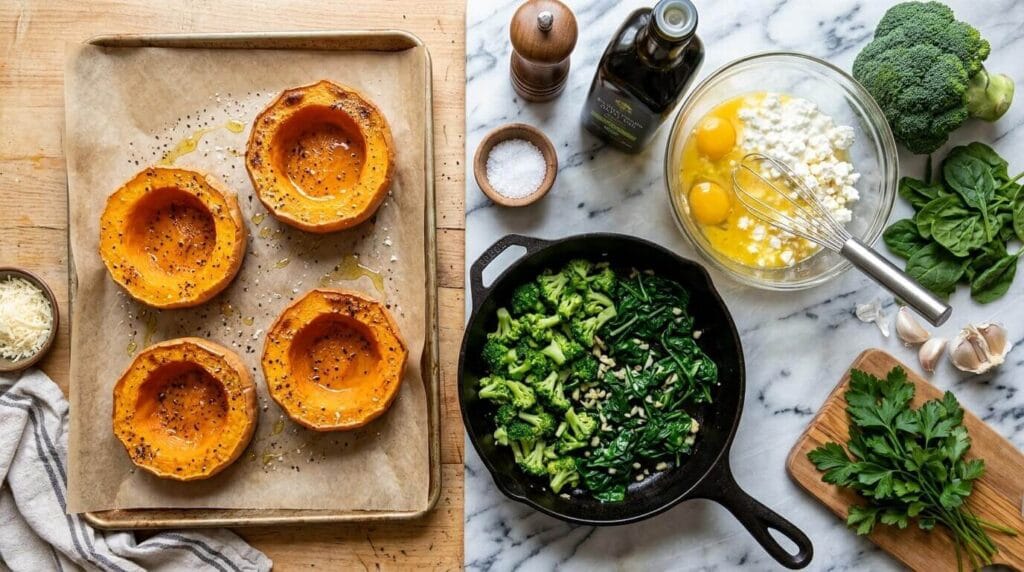
- Baking the raw squash rings at 400°F for 20 minutes drives off surface moisture and softens the flesh before the egg mixture goes in.
- Sauté or wring out your greens: Giving fresh broccoli and spinach a quick 3-minute sauté evaporates excess liquid in the skillet. If using frozen spinach, thaw it completely and wring it out inside a clean kitchen towel until bone-dry.
- Drain liquid from the cottage cheese: Before scooping your cottage cheese, pour off any watery whey pooling on top of the tub so your egg-to-liquid ratio stays balanced.
- Rest before serving: Allow the baked cups to cool for 5 to 10 minutes out of the oven. As the proteins relax, any residual steam settles and the custard slices cleanly without weeping.
Easy Recipe Variations
Standard Crustless Pie Dish Version
Don’t have winter squash on hand? You can easily bake this exact filling as a classic crustless broccoli spinach cottage cheese quiche. Grease a 9-inch glass or ceramic pie dish generously with extra virgin olive oil, spread the sautéed broccoli and spinach across the bottom, pour the egg and cottage cheese custard over top, and bake at 350°F (175°C) for 35 to 40 minutes until golden and set in the center. If you love simple oven-baked cottage cheese breakfasts, check out our Baked Cottage Cheese Eggs for another effortless weekday option.
Traditional Whole-Wheat or Olive Oil Pie Crust
If you prefer a sliceable pastry tart, press a homemade whole-wheat olive oil pie crust into a 9-inch tart pan. Prick the base with a fork, line with parchment and pie weights, and blind-bake at 375°F (190°C) for 15 minutes until lightly golden. Remove the weights, pour in the broccoli, spinach, and cottage cheese filling, and bake for 30 to 35 minutes until puffed and golden.
Mediterranean Flavor Twists
Customize the filling using pantry staples from your Mediterranean kitchen:
- Sun-Dried Tomato & Olive: Fold in ¼ cup chopped oil-packed sun-dried tomatoes and 2 tablespoons sliced Kalamata olives.
- Roasted Red Pepper & Dill: Swap the thyme for 2 tablespoons chopped fresh dill and add ⅓ cup diced roasted red bell peppers.
What to Serve With Mediterranean Cottage Cheese Quiche
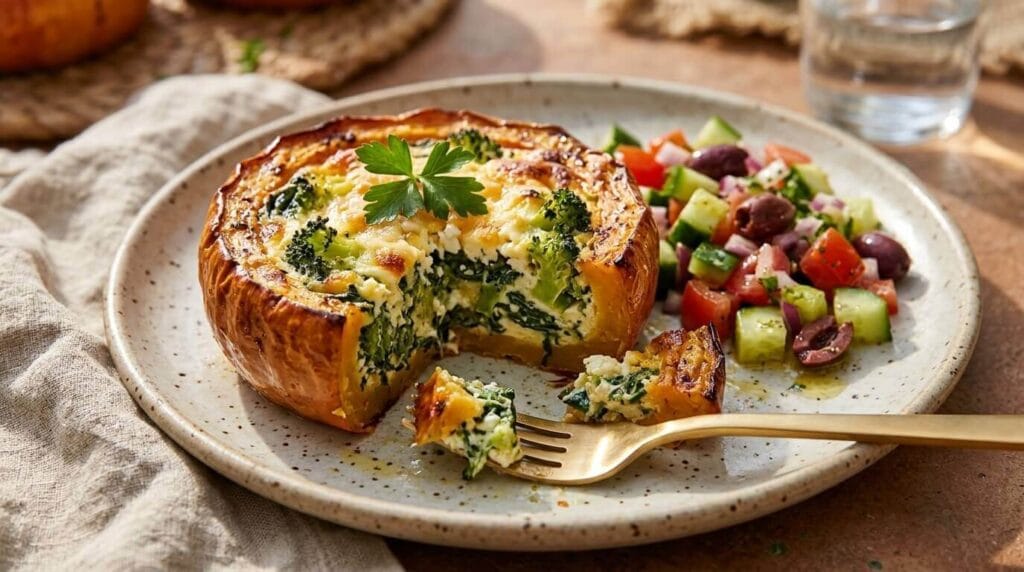
Because each squash ring already pairs complex carbohydrates from the winter squash with high-protein eggs and greens, rounding out the plate takes minimal effort. For a light, bright brunch spread, serve these warm quiche cups alongside a crisp lemon-herb arugula salad or our refreshing Greek Chopped Feta Salad recipe to echo the tangy feta inside the custard. If you are hosting a heartier weekend gathering, add thick slices of toasted whole-grain sourdough brushed with olive oil, fresh seasonal berries, or a bowl of warm marinated chickpeas.
Storage, Freezing, and Meal Prep Instructions
- Refrigerating: Allow the baked squash quiche cups to cool completely to room temperature, then transfer them to an airtight glass container. They will stay fresh in the refrigerator for up to 4 days.
- Freezing: This quiche in roasted squash rings freezes remarkably well for long-term meal prep. Wrap each cooled squash cup tightly in parchment paper, followed by a layer of aluminum foil or a freezer-safe zip-top bag, and freeze for up to 3 months. Thaw overnight in the refrigerator before reheating.
- Reheating: To preserve the caramelized edges of the squash and keep the custard tender, reheat cups in a 325°F (165°C) oven for 12 to 15 minutes, or in an air fryer at 300°F (150°C) for 6 to 8 minutes until warmed through. You can also microwave individual cups at 50% power in 45-second intervals.

Broccoli, Spinach and Cottage Cheese Quiche
Ingredients
Method
- Preheat your oven to 400°F (200°C) and line a rimmed baking sheet with parchment paper. Slice the thick neck of the butternut squash crosswise into 4 even rings, about 1½ inches thick. Use a paring knife and spoon to scoop out the center of each ring, leaving a sturdy ½-inch border around the edges and ensuring flat bottoms so no egg mixture leaks out.
- Arrange the squash rings on the prepared baking sheet. Brush all over with 1 tablespoon extra virgin olive oil and season the rims generously with ½ teaspoon coarse kosher salt, ½ teaspoon cracked black pepper, garlic powder, and 1 tablespoon shredded Parmigiano-Reggiano. Roast for 20 minutes until fork-tender and lightly caramelized on the edges. Remove from the oven and lower the oven temperature to 375°F (190°C).
- While the squash roasts, heat 2 teaspoons extra virgin olive oil in a medium skillet over medium heat. Add the finely chopped broccoli florets with a pinch of salt and sauté for 2 minutes. Add the minced garlic and chopped baby spinach, cooking for 1 minute until wilted and any excess moisture evaporates. Remove from heat.
- In a medium mixing bowl, whisk together the 4 eggs, ¾ cup cottage cheese, 2 tablespoons Greek yogurt, dried oregano, dried thyme, ¼ teaspoon kosher salt, and ¼ teaspoon black pepper until well combined. Stir in the sautéed broccoli and spinach, crumbled feta cheese, and half of the remaining shredded Parmigiano-Reggiano.
- Divide the egg and vegetable custard evenly among the warm par-roasted squash rings, filling each nearly to the top. Bake at 375°F (190°C) for 22 to 25 minutes, until the centers are puffed, set, and golden brown on top.
- Remove from the oven and let cool for 5 minutes so the quiche sets cleanly. Top each squash cup with the remaining coarsely shredded Parmigiano-Reggiano and a sprig of fresh flat-leaf parsley before serving.
Notes
- Blended vs. Unblended Texture: For a silky, heavy-cream style custard, pulse the cottage cheese and Greek yogurt in a blender for 15 seconds before whisking with the eggs. Leave unblended for melty, ricotta-like pockets throughout the quiche.
- Preventing Excess Moisture: Always par-roast the squash rings and sauté the fresh greens first so excess vegetable water does not thin out the egg custard. If substituting frozen spinach, thaw completely and wring dry in a clean kitchen towel.
- Make-Ahead & Freezing: Store leftovers in an airtight container in the fridge for up to 4 days, or wrap cooled individual cups in parchment paper and foil to freeze for up to 3 months. Reheat at 325°F (165°C) for 12–15 minutes.
Frequently Asked Questions (FAQ)
Do you have to blend cottage cheese before putting it in a quiche?
No, you do not have to blend cottage cheese before adding it to a quiche. Whisking small-curd cottage cheese directly into the eggs creates creamy, melty pockets throughout the baked filling. However, if you prefer a completely smooth, traditional heavy-cream custard texture, blending the cottage cheese for 15 seconds works great.
Why is my broccoli and spinach quiche watery?
A watery quiche is almost always caused by excess moisture trapped in raw vegetables or un-drained dairy. To prevent this, always sauté fresh broccoli and spinach for 3 minutes before adding them to the eggs, par-roast the winter squash rings first, and drain any liquid sitting on top of your cottage cheese tub.
Can I make this cottage cheese quiche crustless without the squash?
Yes! You can bake the exact egg, cottage cheese, broccoli, and spinach mixture in a well-oiled 9-inch pie plate or muffin tin without the squash rings. Bake a 9-inch crustless quiche at 350°F (175°C) for 35 to 40 minutes, or bake in greased muffin cups at 375°F (190°C) for 20 to 22 minutes.
What fat percentage of cottage cheese is best for quiche?
Full-fat (4%) or low-fat (2%) cottage cheese delivers the best flavor and creamy texture in a baked quiche. Fat-free cottage cheese contains higher water content and stabilizers that can make the custard slightly watery or grainy once baked.
Can I use frozen broccoli and frozen spinach instead of fresh?
Yes, you can substitute frozen vegetables in a pinch. Thaw both the broccoli and spinach completely first, chop the broccoli into small florets, and squeeze the thawed spinach tightly inside a clean kitchen towel to remove every drop of excess water before sautéing briefly with garlic.