Imagine sitting down to a plate of rich, velvety green pasta that feels luxuriously decadent, yet contains zero heavy cream, butter, or processed dairy. That is the magic of Creamy Avocado Pesto Pasta. By combining the timeless charm of traditional Italian pesto with the smooth, heart-healthy goodness of ripe avocados, this recipe reinvents weeknight pasta into a nourishing Mediterranean delight.
In classic Mediterranean cooking, healthy fats are the star of the table. By swapping out heavy dairy creams for ripe avocados and raw extra-virgin olive oil, this dish delivers an abundant boost of monounsaturated fats, dietary fiber, and essential antioxidants without sacrificing an ounce of indulgence.
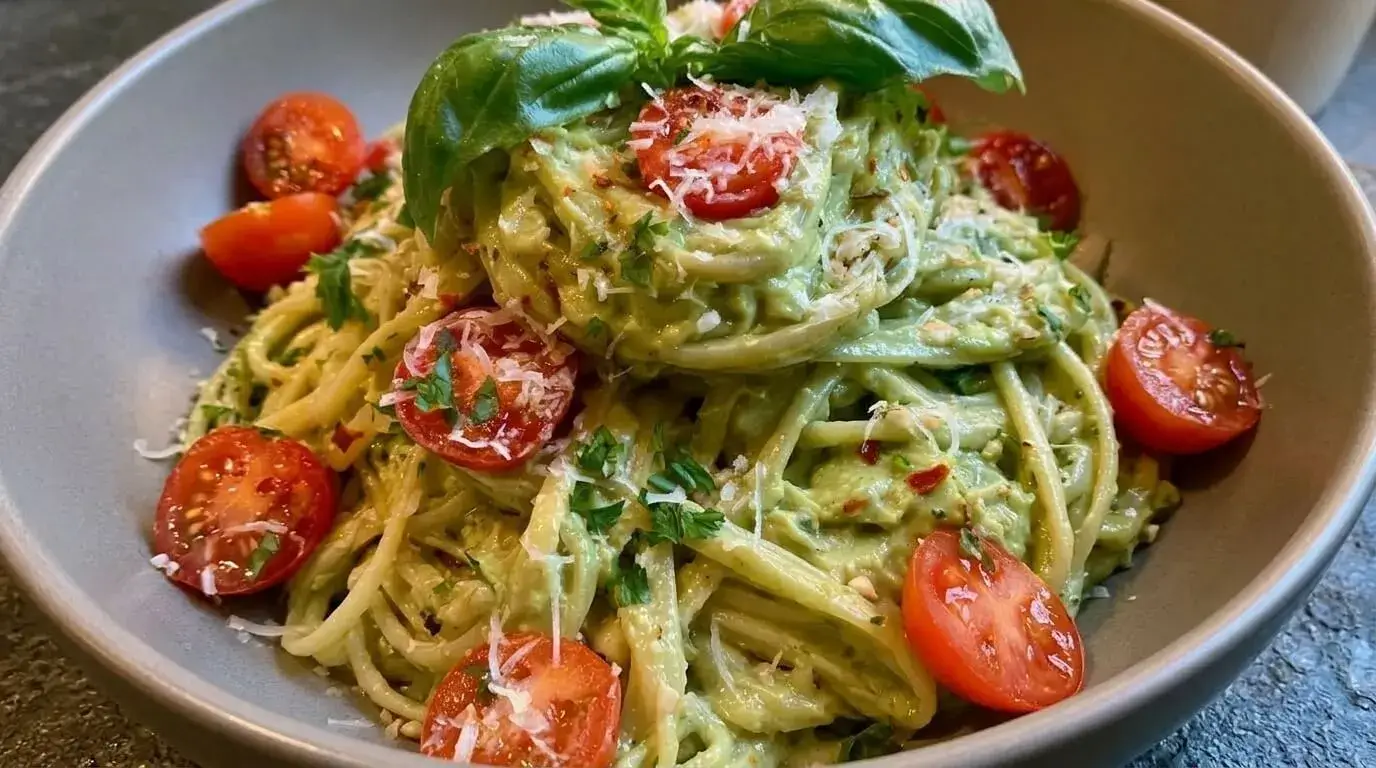
Visually, this dish is a absolute showstopper. Twirls of glossy long pasta are completely coated in a vibrant emerald-green avocado basil pesto, beautifully contrast-accented with sweet, ruby-red cherry tomatoes, a delicate dusting of freshly grated Parmesan cheese, and a punchy sprinkle of crushed red pepper flakes. Whether you are looking for a quick meal after a long day or feeding a hungry family, this 15-minute weeknight dinner uses simple, wholesome ingredients to deliver restaurant-quality flavor right to your kitchen table.
2. Why You’ll Love This Mediterranean Recipe
- 100% No-Cook Sauce: There is no need to stand over a hot stove simmering a sauce. Simply blend your fresh ingredients together in a food processor while your pasta boils, toss, and serve.
- Packed with Superfoods: Every forkful is loaded with nutrient-dense Mediterranean staples, including ripe avocados, fresh basil leaves, raw garlic, extra-virgin olive oil, and freshly squeezed lemon juice.
- Meal-Prep & Family Friendly: This recipe is naturally versatile and kid-approved. It easily adapts to gluten-free, dairy-free, or fully plant-based lifestyle preferences without compromising on creaminess.
3. Essential Ingredients & Smart Substitutions
Creating an extraordinary Creamy Avocado Pesto Pasta relies on selecting high-quality, fresh ingredients that harmonize in flavor, texture, and Mediterranean nutrition:
- Long Pasta: Long strands like linguine, spaghetti, or fettuccine catch and hold the smooth, lush pesto sauce exceptionally well. For added plant-based protein and dietary fiber, feel free to substitute with whole wheat pasta or chickpea pasta. If you enjoy wholesome grain bases, you might also like our Roasted Mediterranean Potatoes with Feta and Tomatoes for another hearty side.
- Ripe Avocados: The foundation of our natural creaminess. Choose medium avocados that yield gently to light pressure so they blend smoothly into a silky sauce base.
- Fresh Herbs: A full cup of tightly packed fresh basil leaves provides that classic herbaceous pesto punch, while chopped fresh parsley adds a crisp brightness and deep emerald color.
- Toasted Pine Nuts or Walnuts: Lightly toasted pine nuts bring a rich, buttery depth and classic pine flavor to the pesto. Alternatively, toasted walnuts offer a delicious nutty crunch packed with plant-based omega-3 fatty acids.
- Garlic & Fresh Lemon Juice: Fresh garlic cloves lend an earthy kick. Meanwhile, real, freshly squeezed lemon juice cuts through the richness of the avocado while providing essential citric acid to keep the pesto green.
- Extra-Virgin Olive Oil (EVOO): The signature cornerstone of Mediterranean cooking. High-quality cold-pressed EVOO provides a peppery finish and binds the raw sauce together smoothly.
- Starchy Pasta Water: The ultimate secret technique of Italian and Mediterranean chefs! Reserving a splash of hot, starchy cooking water allows you to emulsify the thick avocado blend into a glossy, restaurant-standard glaze that clings effortlessly to every strand of pasta.
- Mix-ins & Garnishes: Sweet, juicy halved cherry tomatoes provide a refreshing burst of acidity that cuts through the creaminess. Finish with freshly grated Parmesan cheese (or nutritional yeast for a vegan twist) and red pepper flakes. If you love fresh seafood pairings to complete your dinner menu, consider serving this alongside our Shrimp Spaghetti With Burst Cherry Tomatoes and Herbs or Garlic Butter Salmon Spinach Mushroom.
4. Step-by-Step Instructions
Step 1: Boil & Reserve Water
Bring a large pot of generously salted water to a rolling boil over high heat. Add 12 ounces of linguine or spaghetti and cook according to the package directions until just al dente. Right before draining, scoop out ½ cup of the hot, starchy pasta water and set it aside. Drain the pasta and return it directly to the warm pot (off the heat source).
Step 2: Blend the Avocado Pesto
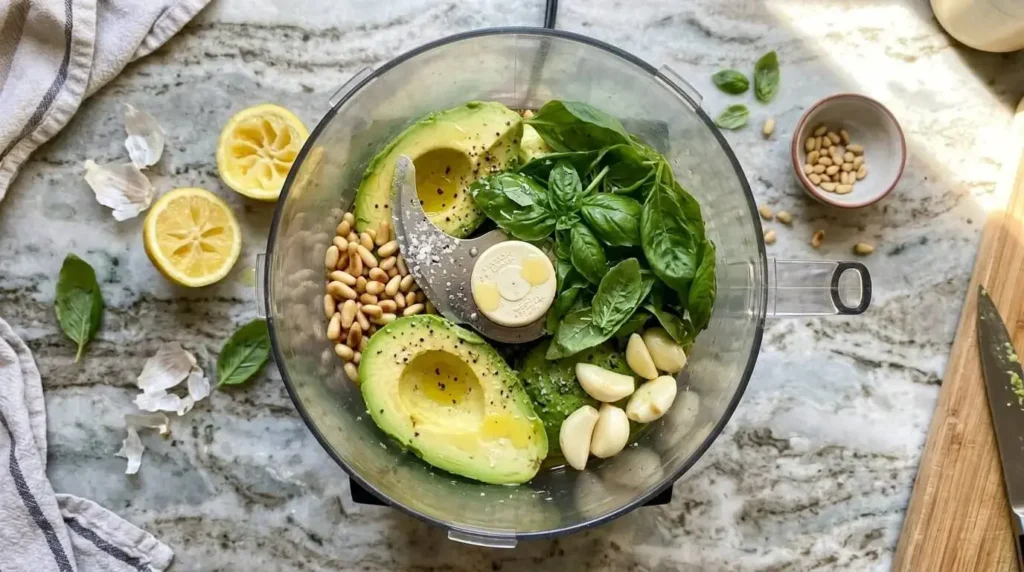
While the pasta boils, prepare your sauce. In the bowl of a food processor or high-speed blender, combine the peeled, pitted avocados, packed fresh basil leaves, toasted pine nuts, peeled garlic cloves, fresh lemon juice, ¾ teaspoon salt, and ¼ teaspoon black pepper. Pulse until the ingredients are finely chopped. With the motor running on low, slowly stream in the 3 tablespoons of extra-virgin olive oil until the mixture becomes silky and smooth. If the pesto appears overly thick, blend in 2 to 3 tablespoons of the reserved warm pasta water.
Step 3: Toss & Emulsify
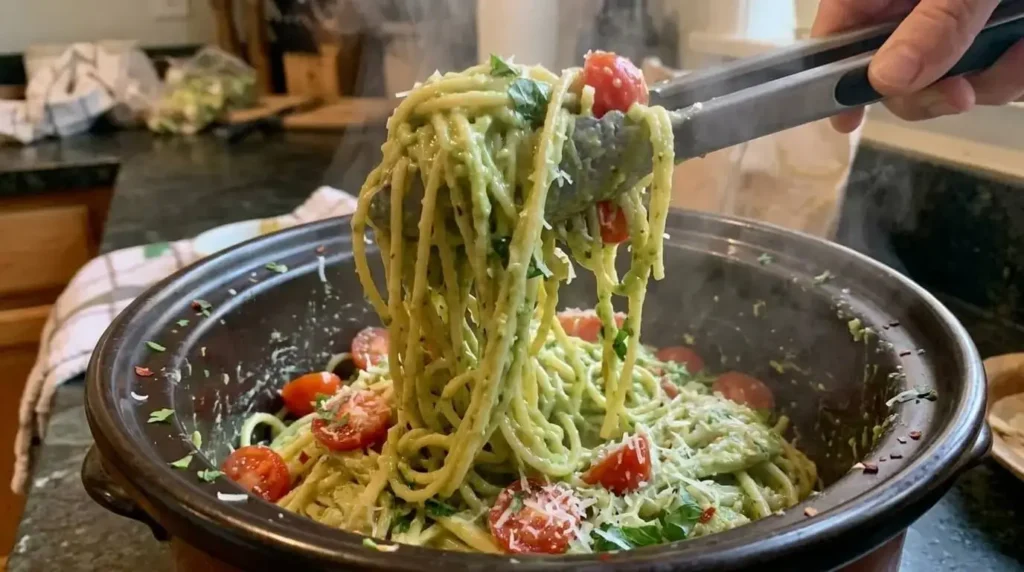
Spoon the freshly blended avocado pesto over the warm, drained pasta in the pot. Using kitchen tongs, gently toss the pasta, gradually adding small splashes of the remaining starchy pasta water as needed until the sauce thins into a velvety, glossy coating that coats every strand. Gently fold in the halved cherry tomatoes and ⅓ cup of freshly grated Parmesan cheese.
Step 4: Garnish & Plating
Twirl portions of the creamy green pasta into wide serving bowls. Garnish generously with additional grated Parmesan cheese, chopped fresh parsley, a pinch of crushed red pepper flakes for subtle heat, and whole fresh basil leaves. Serve immediately while warm.
5. Pro-Tips: How to Keep Avocado Pesto Vibrant Green
Avocados naturally brown quickly when exposed to oxygen, but you can easily maintain a vibrant, bright green hue with these simple scientific kitchen tips:
- The Acid Factor: Citric acid in fresh lemon juice acts as a natural antioxidant, slowing down polyphenol oxidase (the enzyme responsible for turning avocado flesh brown). Never skip the fresh lemon juice!
- Preventing Air Exposure: If preparing the pesto sauce ahead of time, store it in a container and pour a thin layer of extra-virgin olive oil over the top, or press a piece of plastic wrap flush against the surface of the sauce to block air exposure completely.
- Temperature Control: Always toss your sauce with warm pasta off direct heat. Heating avocado pesto directly over a stove burner can cook the delicate herbs and darken the fresh avocado flesh, turning it dull.
6. Recipe Variations & Protein Pairings
Customize your Creamy Avocado Pesto Pasta to suit dietary needs or turn it into a higher-protein feast:
- Make it 100% Vegan: Swap out the grated Parmesan cheese for an equal amount of nutritional yeast or your favorite plant-based, dairy-free Parmesan alternative.
- Nut-Free Option: Replace the pine nuts or walnuts with an equal amount of toasted sunflower seeds or roasted pumpkin seeds (pepitas) for a nut-free, allergy-friendly crunch.
- Mediterranean Protein Additions:
- Grilled Lemon Herb Chicken Breast: Slice juicy grilled chicken breast over top for a classic protein addition.
- Garlic Butter Pan-Seared Shrimp: Succulent seared shrimp pairs beautifully with citrusy avocado basil pesto.
- Crispy Oven-Roasted Chickpeas: Toss spiced, crispy chickpeas into the pasta for a delightful vegetarian protein crunch.
7. Storage, Reheating & Meal Prep Guidelines
- Fridge Storage: Because fresh avocado naturally oxidizes over time, this pasta is best enjoyed fresh. However, leftovers can be stored in an airtight container in the refrigerator for up to 2 days. To retain color, splash a little extra lemon juice over the top before sealing.
- Best Reheating Method: Avoid microwave reheating on high heat, as high microwave temperatures can break the emulsified avocado sauce and cause it to turn bitter or oily. Instead, enjoy leftovers cold as a refreshing cold pasta salad, bring to room temperature naturally, or gently toss in a warm skillet over low heat with a splash of warm water.
Creamy Avocado Pesto Pasta Recipe
Ingredients
Method
- Bring a large pot of generously salted water to a boil. Cook linguine or spaghetti according to package directions until al dente. Reserve ½ cup of starchy pasta water, then drain pasta and return to the warm pot off the heat.
- In a food processor, combine ripe avocados, basil, toasted pine nuts, garlic, lemon juice, salt, and black pepper. Pulse until chopped, then slowly stream in extra-virgin olive oil while blending until smooth and creamy. (Add 2-3 tbsp reserved pasta water if needed to thin).
- Spoon avocado pesto over warm pasta. Toss with tongs, adding remaining reserved pasta water as needed until sauce coats evenly. Fold in halved cherry tomatoes and most of the grated Parmesan.
- Divide into bowls and top with extra Parmesan, fresh parsley, red pepper flakes, and fresh basil leaves. Serve immediately.
Notes
8. Frequently Asked Questions (FAQ)
Can I make avocado pesto ahead of time?
Yes! You can blend the avocado pesto sauce up to 24 hours in advance. Keep it tightly sealed in an airtight container in the fridge with a sheet of plastic wrap pressed directly against the surface of the sauce to prevent browning.
Can you freeze avocado pesto pasta sauce?
Freezing avocado pesto sauce is generally not recommended. Unlike traditional basil pesto made strictly with oil and nuts, the high moisture content in fresh avocados causes the emulsion to separate and break upon thawing, resulting in a watery, discolored texture.
Why is my avocado sauce bitter?
Bitterness usually occurs due to two reasons: using under-ripe avocados or over-processing extra-virgin olive oil in a high-speed blender (which breaks down polyphenols and releases bitter compounds). To prevent this, use fully ripe avocados and stream in your EVOO toward the end of processing, blending just until combined.
What is the best pasta shape for avocado pesto?
Long pasta shapes like linguine, spaghetti, or fettuccine are ideal because their large surface area allows the velvety avocado sauce to cling smoothly to each strand. However, short tubular shapes like penne, fusilli, or rigatoni also work wonderfully by trapping extra sauce and halved cherry tomatoes in their ridges.