This Crustless Zucchini and Tomato Frittata Recipe is a light, protein-packed Mediterranean-inspired dish that is perfect for breakfast, brunch, or a quick weeknight dinner. Built on a foundation of farm-fresh eggs, thinly sliced summer zucchini, sweet cherry tomatoes, and aromatic Mediterranean herbs, this dish delivers sophisticated flavors with minimal effort. Because it naturally omits heavy pastry crusts, it serves as a wonderful low-carb, naturally gluten-free option for anyone looking to eat healthfully without compromising on texture or taste.
If you are a beginner cook, frittatas are one of the most forgiving dishes you can learn to make. Unlike delicate soufflés or tricky folded omelets, a frittata combines simple stovetop sautéing with hands-off oven baking. In just 35 minutes, you will have a thick, golden, and fluffy baked zucchini egg recipe that looks like it came straight from a coastal Greek tavern. Whether you are meal prepping for a busy work week or hosting a weekend family gathering, this vegetarian breakfast recipe is bound to become a staple in your kitchen rotation.
Why You’ll Love This Crustless Zucchini and Tomato Frittata
There is so much to love about this tomato zucchini frittata, starting with how effortlessly it fits into a busy lifestyle. Here is why this recipe will quickly earn a permanent spot on your weekly menu:
- Ready in Under 35 Minutes: Prep takes only 15 minutes, followed by a quick stovetop set and a brief 12 to 15-minute bake in the oven.
- Mediterranean Diet Friendly: Rich in extra virgin olive oil, fresh vegetables, and quality protein, aligning seamlessly with heart-healthy eating principles.
- One-Skillet Wonder: Made entirely in a single cast iron skillet, meaning fast preparation and virtually effortless cleanup.
- Nutritionally Balanced: Packed with vegetarian protein, calcium, vitamins A and C, and essential antioxidants while remaining naturally low-carb and gluten-free.
- Meal Prep Approved: Stores remarkably well in the refrigerator, making it an ideal choice for grab-and-go weekday breakfasts or pre-portioned lunch boxes.
- Family & Crowd Friendly: Slices cleanly into thick, beautiful wedges that appeal to kids, adults, and guest diet requirements alike.
What Is a Frittata?
To appreciate this dish fully, it helps to understand what sets a frittata apart from its egg-based cousins: the omelet and the quiche. Originating in Italy, the word frittata roughly translates to “fried,” referring to the initial stovetop cooking step before the dish is baked or finished.
+-----------------------------------------------------------------------------------+
|                            EGG DISH COMPARISON CHART                              |
+-------------------+--------------------+--------------------+---------------------+
| Feature           | Frittata           | Omelet             | Quiche              |
+-------------------+--------------------+--------------------+---------------------+
| Crust             | None (Crustless)   | None               | Pastry Crust        |
| Cooking Method    | Stovetop + Oven    | Stovetop Only      | Oven Baked          |
| Fillings          | Mixed into Eggs    | Folded inside Eggs | Rich Custard Base   |
| Texture           | Thick & Fluffy     | Light & Folded     | Dense & Creamy      |
| Mediterranean Ties| High               | Moderate           | Low (French origin) |
+-------------------+--------------------+--------------------+---------------------+
Unlike an omelet—which is cooked rapidly over direct stovetop heat and folded over fillings—a frittata mixes veggies, herbs, and cheeses directly into whisked eggs. It cooks slowly over medium heat to set the bottom before transitioning to the oven to puff up. Compared to a heavy quiche, a crustless vegetable frittata cuts out the buttery pastry shell, placing full focus on vibrant produce and fluffy eggs. This lighter, vegetable-forward approach is deeply rooted in Mediterranean coastal cooking traditions.
Ingredients You’ll Need
Creating a tavern-quality feta zucchini frittata starts with fresh, wholesome ingredients. Here is what you need and why each element matters:
                  +-----------------------------------+
                  |   FRITTATA INGREDIENT SPECTRUM    |
                  +-----------------------------------+
                  |  BASE & PRODUCE                   |
                  |  • Large Eggs & Whole Milk        |
                  |  • Thin Zucchini Rounds           |
                  |  • Halved Cherry Tomatoes         |
                  |  • Yellow Onion & Garlic          |
                  +-----------------------------------+
                  |  CHEESES & FATS                   |
                  |  • Extra Virgin Olive Oil         |
                  |  • Grated Parmesan Cheese         |
                  |  • Crumbled Feta Cheese           |
                  +-----------------------------------+
                  |  SEASONINGS & HERBS               |
                  |  • Sea Salt & Black Pepper        |
                  |  • Dried Oregano                  |
                  |  • Fresh Thyme & Basil Garnish    |
                  +-----------------------------------+
Eggs & Dairy
- 6 Large Eggs: The structural foundation of the recipe. Room-temperature eggs whisk more thoroughly, incorporating air for maximum height and fluffiness.
- ¼ Cup Whole Milk: Adds necessary moisture and fat to create a tender custard interior without making the eggs heavy.
Fresh Vegetables
- 1 Medium Zucchini: Cut into thin round slices. Sautéing removes excess moisture while delivering a gentle, sweet vegetable flavor.
- 1 Cup Cherry Tomatoes: Halved to release subtle juices while holding their shape during baking, creating sweet pockets of flavor.
- 1 Small Yellow Onion & 1 Garlic Clove: Chopped and minced to build an aromatic Mediterranean base note.
Cheeses & Healthy Fats
- 2 tbsp Extra Virgin Olive Oil: Used for sautéing the produce, providing authentic Mediterranean flavor and healthy monounsaturated fats.
- ¼ Cup Parmesan Cheese: Finely grated and mixed directly into the eggs to add a salty, umami-rich savory depth.
- ¼ Cup Feta Cheese: Crumbled across the top for a tangy, creamy contrast that complements roasted tomatoes perfectly.
Seasonings & Herbs
- Fine Sea Salt & Black Pepper: Essential seasonings to bring out the natural flavors of the vegetables and eggs.
- ½ tsp Dried Oregano: Adds authentic herbal warmth throughout the egg mixture.
- Fresh Thyme Sprigs & Fresh Basil: Scattered on top right after baking for vibrant color and fresh botanical aroma.
Ingredient Substitutions
This zucchini egg bake is delightfully adaptable. Feel free to customize the components based on what you have in your pantry:
- Dairy-Free Option: Replace whole milk with unsweetened almond milk or oat milk, and omit the cheeses or substitute with your favorite plant-based feta alternative.
- Milk Alternatives: Swap whole milk for full-fat Greek yogurt or cottage cheese whisked into the eggs for an added protein boost.
- Cheese Swaps: If you don’t have feta or Parmesan, mild goat cheese (chèvre), creamy ricotta, or shredded mozzarella work beautifully.
- Vegetable Variations: Substitute or combine zucchini with yellow summer squash, sliced bell peppers, sautéed baby spinach, or sliced cremini mushrooms.
- Herbs: Switch dried oregano for dried basil or Italian seasoning, and garnish with fresh parsley or dill instead of thyme.
How to Make Crustless Zucchini and Tomato Frittata
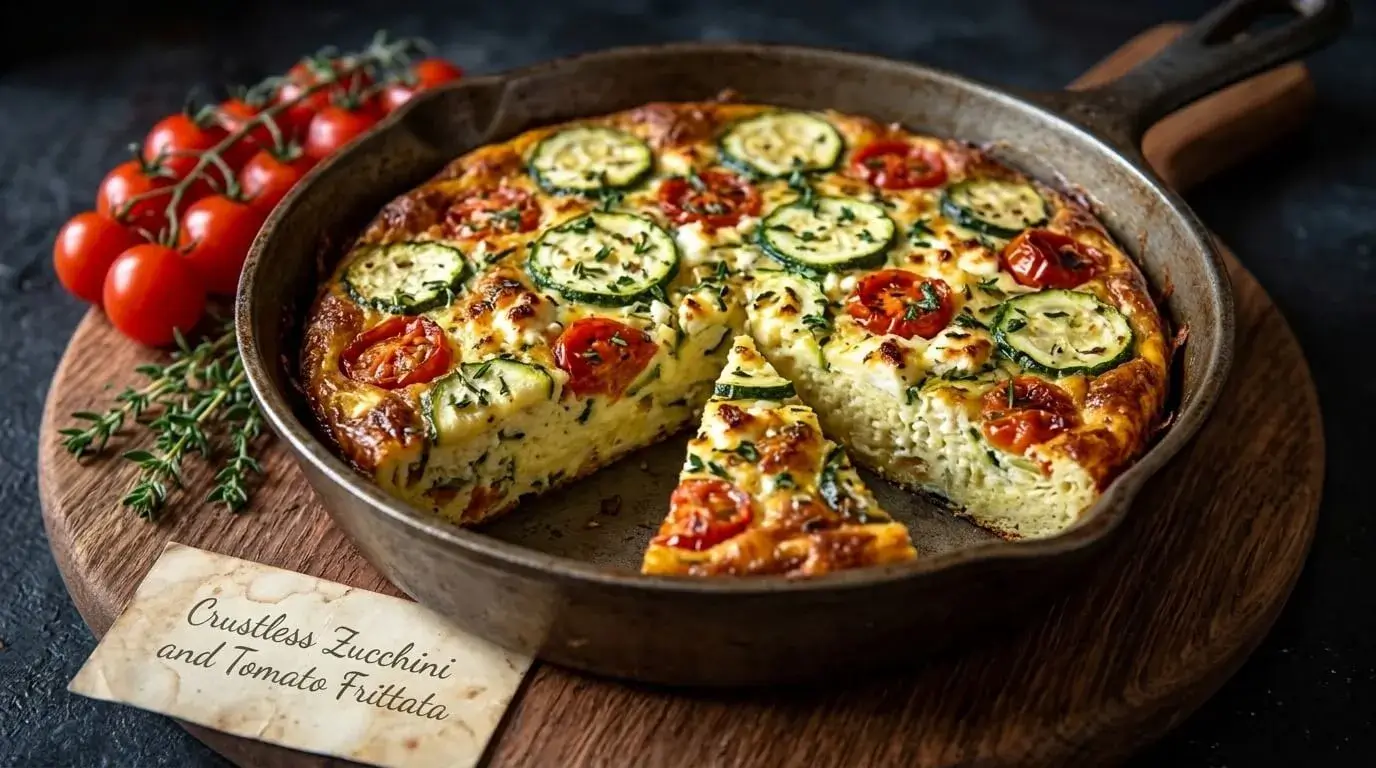
Follow these detailed, step-by-step instructions to achieve a thick, fluffy frittata with golden caramelized edges and a creamy center, perfectly matching visual standards like image_f93e7c.jpg.
+-----------------------------------------------------------------------------------+
|                              STEP-BY-STEP FLOWCHART                               |
+-----------------------------------------------------------------------------------+
|  [Step 1: Preheat Oven 375°F & Sauté Onion/Zucchini/Garlic in EVOO]               |
|                                         ↓                                         |
|  [Step 2: Add Tomatoes Briefly -> Whisk Eggs, Milk, Parmesan, & Oregano]          |
|                                         ↓                                         |
|  [Step 3: Pour Eggs over Veggies -> Top with Feta -> Cook Stovetop 2 Mins]         |
|                                         ↓                                         |
|  [Step 4: Bake 12–15 Mins until Golden & Set -> Rest 5–10 Mins Before Slicing]    |
+-----------------------------------------------------------------------------------+
Step 1: Prep and Sauté the Veggies
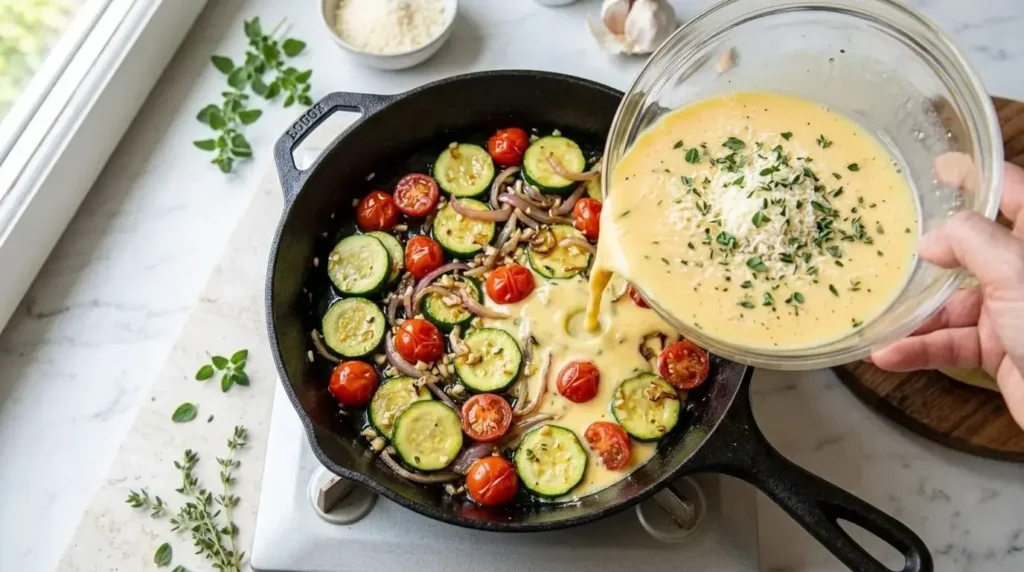
Preheat your oven to 375°F (190°C). Heat 2 tablespoons of extra virgin olive oil in a deep, 9-inch oven-safe skillet (cast iron works best) over medium heat. Add the chopped yellow onion and cook for 3 minutes until translucent. Add the thin zucchini slices and minced garlic. Sauté for 3 to 4 minutes until the zucchini softens slightly and begins to take on golden color.
Step 2: Add Tomatoes & Mix Eggs
Stir in the halved cherry tomatoes and cook for just 1 additional minute— do not let them completely break down or release excessive liquid. Arrange all vegetables evenly across the skillet bottom. Meanwhile, in a medium bowl, vigorously whisk together the 6 eggs, ¼ cup whole milk, grated Parmesan, dried oregano, salt, and black pepper until uniform and frothy.
Step 3: Assemble and Set the Base
Pour the egg mixture slowly over the sautéed vegetables, ensuring even distribution. Sprinkle the crumbled feta cheese evenly across the surface. Let the skillet sit undisturbed on the stovetop over medium heat for 2 minutes. This creates caramelized, crispy edges and sets the bottom before going into the oven.
Step 4: Bake to Perfection
Carefully transfer the cast iron skillet to your preheated oven. Bake for 12 to 15 minutes. The frittata is done when the edges are deep golden-brown, the center is completely set (firm to a light touch), and the top has puffed up slightly.
Step 5: Rest and Serve
Remove from the oven, garnish immediately with fresh thyme sprigs and chopped basil. Crucial Step: Allow the frittata to rest for 5 to 10 minutes. Resting allows the egg structure to settle, ensuring clean, beautiful slices without squeezing out steam or moisture.
Expert Tips for the Best Frittata
To guarantee your baked zucchini egg recipe turns out airy, flavorful, and structurally perfect every single time, keep these professional kitchen tips in mind:
- Pat the Zucchini Dry: Zucchini holds significant moisture. After slicing, pat the rounds dry with a paper towel before sautéing to prevent excess water in the skillet.
- Pre-Cook All Vegetables: Never add raw vegetables directly into whisked eggs. Pre-cooking softens textures and evaporates surface water that would otherwise turn the frittata soggy.
- Use Room-Temperature Eggs: Cold eggs right out of the fridge drop the skillet’s temperature rapidly and do not puff up as high during baking.
- Invest in Cast Iron: A well-seasoned cast iron frittata pan distributes heat evenly across the bottom and sides, producing crisp caramelized edges and uniform baking.
- Don’t Overbake: Pull the frittata when the center has a subtle bounce but is no longer wet. Residual heat in the pan will finish cooking the interior while resting.
- Respect the Rest Time: Slicing immediately out of the oven causes hot steam to collapse the structure. A 10-minute rest yields neat, tall wedges.
Serving Suggestions
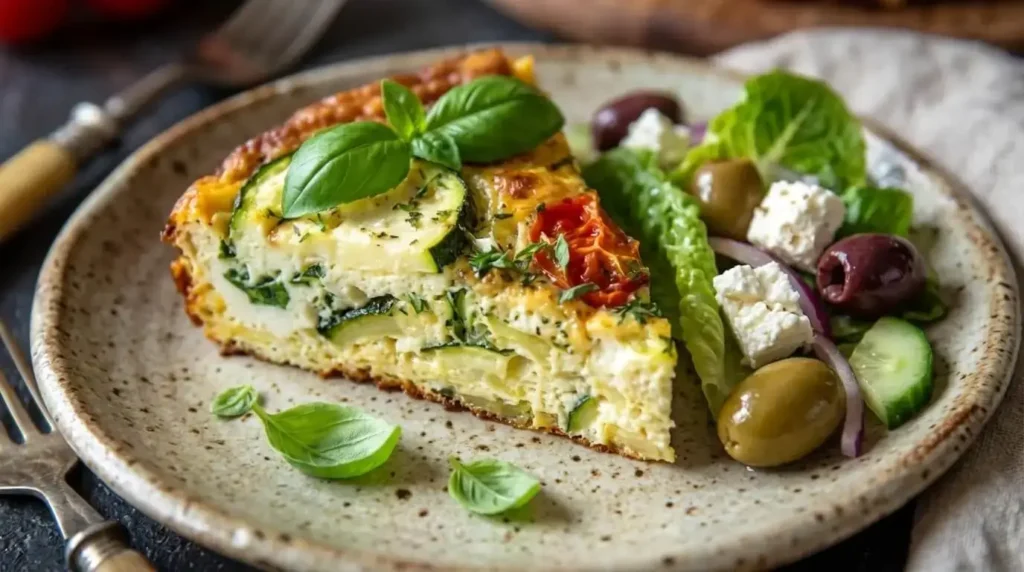
This versatile Mediterranean frittata fits seamlessly into any meal plan throughout the day. Here are classic pairing ideas:
- For a Mediterranean Brunch: Serve hot or at room temperature alongside a crisp Greek salad tossed with kalamata olives, cucumbers, and a red wine vinaigrette.
- Bread & Grains: Accompanied by toasted whole-grain crusty sourdough, warm pita bread, or crisp Roasted Mediterranean Potatoes with Feta and Tomatoes.
- Light Lunch or Dinner: Pair with a generous scoop of classic hummus, avocado slices, or a refreshing cucumber-dill side salad.
- Appetizer Spread: Cut cold or room-temperature frittata into bite-sized squares and serve as part of a Mediterranean mezze platter alongside Baked Parmesan Zucchini Rounds.
Storage and Meal Prep
One of the greatest benefits of a crustless vegetable frittata is its remarkable shelf life. It reheats exceptionally well without losing its tender texture:
- Refrigerator Storage: Allow the baked frittata to cool completely to room temperature. Transfer leftovers into an airtight container or wrap individual wedges tightly in parchment paper and foil. Store in the fridge for up to 4 days.
- Freezing Guidance: Wrap cooked, cooled wedges tightly in plastic wrap followed by aluminum foil, then store in a freezer-safe bag for up to 2 months. Thaw overnight in the refrigerator before reheating.
- Reheating Method: Reheat individual portions in an oven or air fryer at 325°F (160°C) for 5–8 minutes until warmed through. Avoid microwaving on high heat, as this can make egg proteins rubbery.
- Lunch Boxes: Enjoy wedges chilled or at room temperature; frittatas are traditionally served at room temperature across Mediterranean regions!
Recipe Variations
Feel free to adapt this one pan breakfast to showcase seasonal produce or match your favorite cheese pairings:
- Spinach & Goat Cheese: Fold in a handful of baby spinach during the last minute of vegetable sautéing and swap feta for soft goat cheese. For a similar green option, check out our Greek spinach and feta frittata.
- Sun-Dried Tomato & Ricotta: Use oil-packed sun-dried tomatoes instead of fresh cherry tomatoes and dollop whole-milk ricotta across the top before baking. If you love this combination, you will also adore our Crustless Spinach, Sun-Dried Tomato and Feta Quiche.
- Bell Pepper & Mushroom: Sauté sliced bell peppers and cremini mushrooms alongside the onions for a heartier, rustic vegetable mix.
- Fresh Herb Deluxe: Increase fresh parsley, dill, chives, and basil whisked directly into the egg custard for an vibrant green hue and herbal taste.
Crustless Zucchini and Tomato Frittata Recipe
Ingredients
Method
- Preheat your oven to 375°F (190°C).
- Heat extra virgin olive oil in a deep 9-inch oven-safe skillet (preferably cast iron) over medium heat.
- Add chopped yellow onion and sauté for 3 minutes until soft and translucent.
- Add thin zucchini slices and minced garlic. Sauté for 3 to 4 minutes until the zucchini softens slightly.
- Stir in halved cherry tomatoes and cook for 1 minute just to warm through. Arrange vegetables evenly across the skillet bottom.
- In a bowl, vigorously whisk together eggs, whole milk, grated Parmesan, dried oregano, salt, and pepper until uniform and frothy.
- Pour egg mixture evenly over the vegetables in the skillet. Sprinkle crumbled feta cheese evenly across the top.
- Cook undisturbed on stovetop over medium heat for 2 minutes to set bottom edges.
- Transfer skillet into the oven and bake for 12 to 15 minutes until the center is set and top is lightly golden.
- Remove from oven, scatter fresh thyme leaves and chopped basil over top, and let rest 5 to 10 minutes before slicing into tall wedges.
Notes
* Always let the frittata rest 5-10 minutes post-baking for clean slices.
* Storage: Refrigerate leftovers in an airtight container for up to 4 days or freeze up to 2 months.
Mediterranean Diet Benefits
Embracing a Mediterranean lifestyle means choosing whole, nutrient-dense foods that nurture heart and body health:
+-----------------------------------------------------------------------------------+
|                        MEDITERRANEAN NUTRITIONAL PILLARS                          |
+-------------------+---------------------------------------------------------------+
| Ingredient        | Health Benefit                                                |
+-------------------+---------------------------------------------------------------+
| Whole Eggs        | Complete bioavailable protein, choline, and lutein            |
| Extra Virgin Olive| Heart-healthy monounsaturated fats and powerful polyphenols   |
| Zucchini          | High hydration, dietary fiber, and potassium                  |
| Cooked Tomatoes   | Bioavailable lycopene for cellular & cardiovascular support   |
| Feta & Parmesan   | Calcium and protein in portion-controlled, flavorful amounts  |
+-------------------+---------------------------------------------------------------+
By substituting heavy cream with whole milk and using extra virgin olive oil instead of butter, this healthy zucchini breakfast delivers sustained energy without high levels of saturated fats.
Common Mistakes to Avoid
Avoid these frequent pitfalls to guarantee perfect results every time:
- Soggy/Watery Texture: Occurs when zucchini is added raw or cooked tomatoes are broken down completely on the stovetop. Pre-sauté to release moisture!
- Overcrowding the Skillet: Using too many vegetables prevents the eggs from setting into a cohesive sliceable structure. Stick to recommended portion ratios.
- Overbaking the Eggs: Leaving the frittata in the oven too long results in dry, rubbery eggs with liquid separation (syneresis).
- Under-Seasoning: Eggs require adequate salt to bring out their natural rich flavors. Ensure you salt both the cooking vegetables and the egg bowl.
- Slicing Immediately: Cutting hot eggs straight out of the oven causes wedges to lose shape and release excess steam. Always rest 5–10 minutes.
- Using Non-Oven Safe Cookware: Ensure your skillet handle is high-heat safe or cast iron before transferring from stovetop to oven.
Frequently Asked Questions
Can I freeze this crustless frittata?
Yes! Once fully baked and cooled, wrap individual wedges tightly in parchment paper and aluminum foil, placing them in a freezer-safe bag for up to 2 months. Thaw in the fridge overnight and reheat in an oven at 325°F.
Can I make it dairy-free?
Absolutely. Omit the feta and Parmesan cheese and swap the whole milk with unsweetened plain almond milk, oat milk, or water. Add an extra pinch of salt or nutritional yeast for savory depth.
Can I use yellow squash instead of zucchini?
Yes! Yellow summer squash has an almost identical texture and water content to green zucchini. You can use all yellow squash or a 50/50 mix for beautiful color contrast.
Why is my frittata watery?
Watery frittatas are usually caused by uncooked vegetables releasing moisture into the eggs during baking. Always sauté your zucchini and onions first to evaporate surface liquids before adding the egg mixture.
Can I make this frittata ahead of time?
Yes, this is an exceptional meal prep recipe. Bake it completely, let it cool, slice into wedges, and store in an airtight container in the fridge for up to 4 days. Serve cold, at room temperature, or reheated.
How long does cooked frittata last in the fridge?
Stored in a clean, sealed airtight container in the refrigerator, cooked frittata stays fresh and delicious for 3 to 4 days.
Can I use mozzarella cheese instead of feta?
Yes! Mozzarella melts beautifully and creates a gooey texture. Keep in mind mozzarella is milder than feta, so you may want to increase seasonings slightly.
Can I bake this frittata in a ceramic baking dish?
Yes. If you don’t have an oven-safe skillet, sauté the vegetables in a standard pan on your stovetop, transfer them to a greased 9-inch pie dish or ceramic baker, pour over the eggs, and bake at 375°F for 20–25 minutes.
Can I add spinach to this recipe?
Definitely! Add 1 cup of fresh baby spinach to the skillet during the final minute of sautéing the zucchini until it just wilts, then pour over the egg mixture.
Is this recipe suitable for the Mediterranean Diet?
Yes, it aligns perfectly! It relies on extra virgin olive oil, fresh vegetables, moderate cheese, and whole eggs for a balanced, nutrient-rich meal.
Conclusion
This Crustless Zucchini and Tomato Frittata Recipe proves that nutritious Mediterranean cooking can be fast, easy, and undeniably delicious. By combining fresh summer produce with protein-rich eggs and savory cheeses, you create a versatile centerpiece suitable for breakfast, brunch, or a quick dinner. It stores exceptionally well for meal prep, offers effortless cleanup in a single pan, and adapts easily to whatever fresh herbs or vegetables you have on hand. Give this healthy recipe a try this week and experience how simple home cooking brings the authentic taste of the Mediterranean lifestyle straight to your family table!