
Imagine slicing through a golden-brown, bakery-style crust to reveal a tall, savory interior with a texture as light and tender as a delicate cake. Every bite of this deep-dish egg bake offers an irresistible contrast: a lightly caramelized, cheese-topped exterior that gives way to a velvety, moist center flecked with wilted spinach and tangy Mediterranean feta. Unlike thin, rubbery skillet frittatas that deflate the moment they cool, this Fluffy Cottage Cheese and Spinach Frittata stands tall on your plate, delivering high-end bistro quality directly from your home oven.
The secret behind this dramatic height and cloud-like crumb lies in blended cottage cheese. By puréeing low-fat cottage cheese into a smooth emulsion before whisking it with whole eggs, we introduce airiness and rich moisture without resorting to heavy cream or butter. This brilliant culinary twist elevates the dish into a true nutrition powerhouse, packed with clean protein and healthy fats. Inspired by traditional Greek egg dishes like our Greek spinach and feta frittata, this recipe harnesses extra virgin olive oil, garlic, and wild-style greens to bring authentic Mediterranean flavor to your breakfast table.
Whether you are preparing a weekend brunch or building an efficient weekday meal-prep lineup, this versatile, crustless frittata adapts seamlessly to your routine. It slices cleanly, keeps beautifully in the refrigerator, and can easily be modified for gluten-free diets without losing a millimeter of its impressive rise.
The Culinary Science: Why Cottage Cheese Makes Frittatas Unbelievably Fluffy
To understand why this Fluffy Cottage Cheese and Spinach Frittata achieves such exceptional height, we have to examine the chemistry of baking with eggs. Eggs alone consist of proteins that coagulate when heated. If cooked too quickly or without adequate moisture control, egg proteins tighten like sponges, squeezing out water and leaving you with a rubbery texture and a puddle of liquid on your plate.
       [ Whole Egg Base ] + [ Blended Cottage Cheese ]
                                 │
                 (Smooth Dairy-Protein Emulsion)
                                 │
       + [ 1/2 Cup Flour ] + [ 1 tsp Baking Powder ]
                                 │
                                 ▼
   ┌────────────────────────────────────────────────────────┐
   │ 1. Steam Trap: Moisture builds air pockets as it bakes │
   │ 2. Structure: Flour forms a delicate structural matrix │
   │ 3. Chemical Leavening: CO2 bubbles expand the batter   │
   └────────────────────────────────────────────────────────┘
                                 │
                                 ▼
           Result: Tall, Cake-Like, Soufflé Structure
Cottage cheese changes this equation entirely. Packed with slow-digesting casein protein and natural dairy moisture, cottage cheese acts as a thermal buffer. However, the form of cottage cheese you use matters immensely:
- Whole Curd Cottage Cheese: Using whole curds introduces pockets of whey that release excess water during baking. This results in an uneven bake and potential sogginess.
- Blended Cottage Cheese: Blending whole or low-fat cottage cheese in a high-speed blender breaks down the curds into a thick, uniform cream. When folded into eggs, it creates a stable emulsion that traps steam inside the baking mixture.
To lock in that tall, cake-like visual, we add a modest half-cup of flour alongside one teaspoon of baking powder. The baking powder releases carbon dioxide bubbles upon contact with heat, while the tiny amount of flour creates a delicate structural lattice. This matrix holds the expanding air pockets in place, preventing the baked frittata from collapsing into a flat pancake as it cools. Similar to the principles used in our high-protein Baked Cottage Cheese Eggs, this scientific balance creates a tender, soufflé-like crumb that holds its shape slice after slice.
Mediterranean Diet Benefits & Nutritional Spotlight
The traditional Mediterranean diet centers on nutrient-dense whole foods, heart-healthy fats, and lean sources of protein. This recipe modernizes classic egg dishes by drastically paring back saturated fats while maximizing total protein content and micronutrient density.
- Protein Engine without Heavy Fats: Traditional quiches rely heavily on heavy whipping cream and processed cheddar cheese, which flood the dish with saturated fats. By substituting blended cottage cheese and part-skim mozzarella, this recipe offers over 15 grams of protein per slice while keeping fat profiles firmly within heart-healthy parameters.
- Iron and Antioxidant Boost from Spinach: Dark leafy spinach provides dietary iron, magnesium, and vitamins A, C, and K. Sautéing the spinach in extra virgin olive oil improves the bioavailability of these fat-soluble vitamins, ensuring your body absorbs maximum nutrition.
- Heart-Healthy Extra Virgin Olive Oil: Extra virgin olive oil serves as the primary cooking fat, providing monounsaturated fatty acids (oleic acid) and polyphenols known to combat systemic inflammation.
- Synergistic Mediterranean Cheese Pairing: Pairing sharp, tangy Greek feta with mild cottage cheese creates a deep flavor profile. Feta delivers authentic salty, briny Mediterranean notes, while cottage cheese supplies a rich background base without overwhelming the palate.
Ingredient Breakdown & Smart Substitutions
Every ingredient in this Fluffy Cottage Cheese and Spinach Frittata plays a specific functional and flavor role:
- Large Eggs (6): The structural foundation. Whisking eggs thoroughly incorporates air, while the yolks provide rich flavor and essential choline.
- Low-Fat Cottage Cheese (1 Cup, Blended): The key moisture retainer and protein source. Ensure it is blended until completely liquid-smooth before combining with eggs.
- All-Purpose or Whole Wheat Flour (1/2 Cup): Builds the cake-like internal framework.
- Gluten-Free Option: Swap 1:1 with fine oat flour or a 1-to-1 gluten-free baking blend. (Almond flour can be used, though the final rise will be slightly denser).
- Baking Powder (1 Teaspoon): The primary chemical leavening agent responsible for giving this frittata its bakery-style lift.
- Fresh Spinach (1 Cup, Sautéed & Dried): Provides earthy flavor and rich color. Fresh spinach should be cooked down and squeezed thoroughly; frozen spinach works equally well if completely thawed and drained.
- Greek Feta Cheese (1 Cup, Crumbled): Delivers distinct Mediterranean tang and salty accents throughout every slice.
- Part-Skim Mozzarella (1/2 Cup, Shredded): Scattered over the top before baking to form a blistered, golden-brown top crust.
- Aromatics (1 Small Onion & 2 Garlic Cloves): Diced finely and cooked in extra virgin olive oil to establish a savory base note.
- Extra Virgin Olive Oil (1 Tablespoon): Used for sautéing the aromatics and greasing the baking pan.
- Seasonings: A simple mixture of 1/2 tsp salt, 1/4 tsp coarse black pepper, and 1/4 tsp dried oregano (or ground nutmeg) brings out the natural richness of the cheeses.
Step-by-Step Masterclass: How to Get the Perfect Rise
Step 1: Pan Selection & Prep
To achieve the tall, deep-dish silhouette shown in artisan bakery displays, pan choice is critical. Avoid shallow 10-inch pie dishes or wide skillets, as they spread the egg mixture too thin, leading to rapid moisture loss. Instead, select a deep 9-inch cake pan or springform pan with high vertical walls. Line the bottom with parchment paper and brush the sides generously with extra virgin olive oil to prevent sticking and ensure a smooth release.
Step 2: Squeezing the Spinach
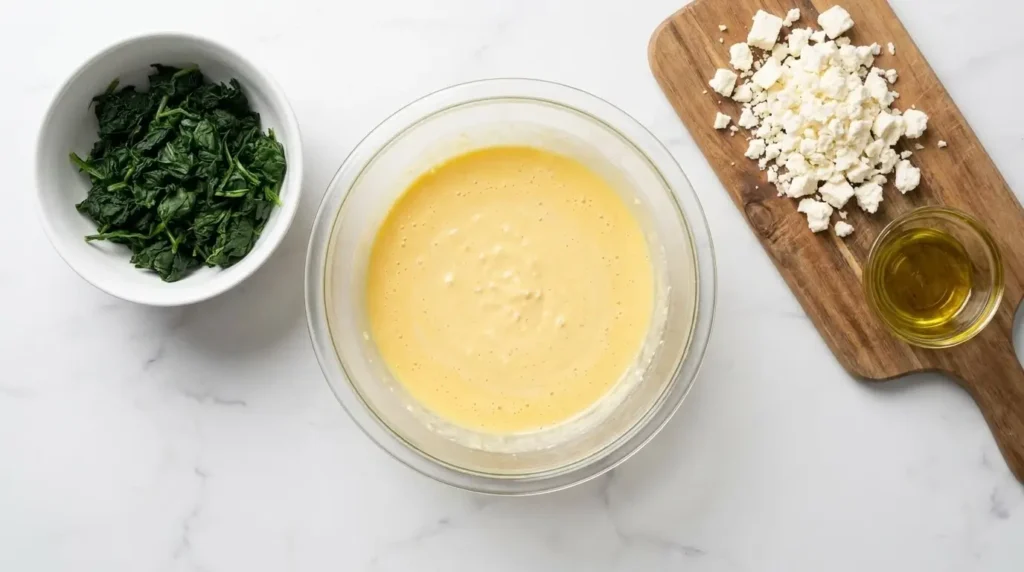
Water is the greatest enemy of a tall, fluffy frittata. Fresh spinach contains nearly 93% water; if added directly to the batter, that trapped moisture turns to steam and creates a watery, weeping egg dish. Sauté diced onions and garlic in olive oil until soft, then add spinach until fully wilted. Transfer the mixture to a fine-mesh strainer or clean kitchen towel, let it cool for 3 minutes, and squeeze out every drop of excess liquid before chopping.
[ Sauté Spinach & Aromatics ] ──► [ Cool 3 Mins ] ──► [ Wrap in Kitchen Towel ] ──► [ Squeeze All Water ]
Step 3: Blending the Base
Place 1 cup of cottage cheese into a small blender or food processor and process on high for 30 seconds until completely silky with no visible curds remaining. In a large bowl, whisk the 6 eggs vigorously for 60 seconds until aerated and light in color. Pour in the blended cottage cheese, flour, baking powder, salt, black pepper, and oregano or nutmeg. Whisk thoroughly until a smooth, lump-free batter forms.
Step 4: Layering & Top Crust
Gently fold the squeezed, chopped spinach mixture and 1 cup of crumbled feta into the egg base using a silicone spatula. Pour the batter into your prepared deep-dish pan, smoothing the surface evenly. Sprinkle the half-cup of shredded part-skim mozzarella evenly across the top. This top layer of cheese melts during baking to seal in steam while forming a rich, brown crust.
Step 5: Baking & The “Resting” Window
Preheat your oven to 350°F (175°C). Place the pan on the middle rack and bake for 35 to 40 minutes. The frittata is finished when the edges are deep golden brown, the center is puffed, and a toothpick inserted into the middle comes out clean.
Crucial Culinary Tip: Do not slice the frittata immediately upon removing it from the oven. Allow it to rest in the pan at room temperature for 10 full minutes. During this window, the hot air pockets settle, and the internal protein network sets, allowing you to cut clean, tall, picture-perfect slices.
If you enjoy meal-prepping crustless egg bakes with rich leafy greens, you can also explore our flavor-packed Crustless Spinach, Sun-Dried Tomato and Feta Quiche.
Meal Prep, Storage, and Reheating Tips
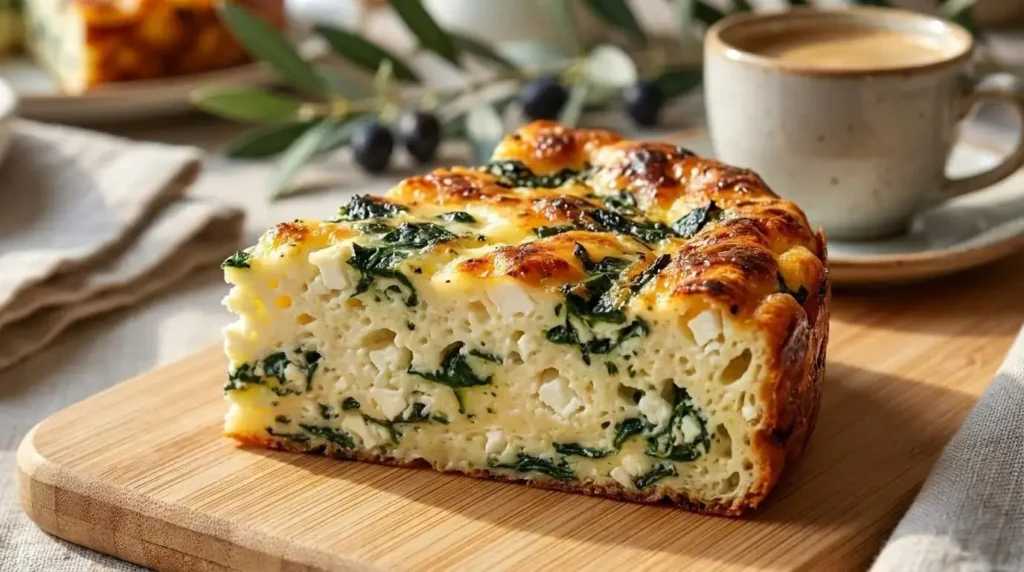
This recipe is ideal for batch cooking and meal prepping ahead of busy weekdays:
- Refrigeration: Store sliced leftovers in an airtight glass container in the refrigerator for up to 4 days.
- Oven/Air Fryer Reheating (Recommended): To preserve the crispy exterior and fluffy crumb, reheat individual slices in an air fryer at 325°F (160°C) for 3–5 minutes or in a toaster oven for 6–8 minutes.
- Microwave Reheating: Microwave on medium power in 30-second intervals until warm. Note that microwaving softens the top crust slightly, though the interior remains tender.

Fluffy Cottage Cheese and Spinach Frittata
Ingredients
Method
- Preheat oven to 350°F (175°C). Grease a deep 9-inch cake pan or springform pan with extra virgin olive oil and line the bottom with parchment paper.
- Heat 1 tbsp extra virgin olive oil in a skillet over medium heat. Add diced onion and garlic; sauté for 3 minutes until softened. Add spinach and cook until fully wilted.
- Transfer sautéed greens to a clean kitchen towel and squeeze out all excess moisture thoroughly. Finely chop the spinach.
- Add cottage cheese to a blender and process until smooth with no curds remaining.
- In a large mixing bowl, whisk eggs for 60 seconds until light and bubbly. Whisk in blended cottage cheese, flour, baking powder, salt, black pepper, and oregano.
- Fold chopped spinach and crumbled feta into the egg mixture using a spatula.
- Pour mixture into prepared pan and top evenly with shredded mozzarella.
- Bake for 35 to 40 minutes until the top is golden-brown and the center is set.
- Remove from oven and let rest in pan for 10 minutes before slicing into 8 wedges.
Notes
– For a gluten-free adaptation, replace all-purpose flour with fine oat flour or 1-to-1 GF baking flour.
– Reheat slices in an air fryer at 325°F for 3 minutes for best texture.
Frequently Asked Questions
Does cottage cheese make frittatas watery?
Whole-curd cottage cheese can release whey during baking, causing wateriness. However, blending the cottage cheese prior to mixing combines the fats and proteins into a smooth emulsion. Combined with a small amount of flour and well-drained spinach, blended cottage cheese creates an exceptionally fluffy, moisture-stable frittata without excess liquid.
Can I make this cottage cheese frittata ahead of time?
Yes, this frittata is an excellent meal-prep dish. You can bake it completely, let it cool, and store sliced portions in the refrigerator for up to 4 days. Reheat individual slices in the air fryer or oven to restore the crisp top crust before serving.
How do I keep my spinach frittata from deflating?
Frittatas deflate when excess steam escapes rapidly or when structural support is lacking. Squeezing all liquid from the sautéed spinach, using a deep-dish cake pan, and adding a small amount of flour alongside baking powder reinforces the internal structure so it maintains its height as it cools.
Can I freeze a baked cottage cheese frittata?
Yes. Allow the baked frittata to cool completely, then slice it into individual portions. Wrap each slice tightly in parchment paper followed by aluminum foil, then freeze in a zip-top bag for up to 2 months. Thaw overnight in the refrigerator before reheating in the oven or air fryer.