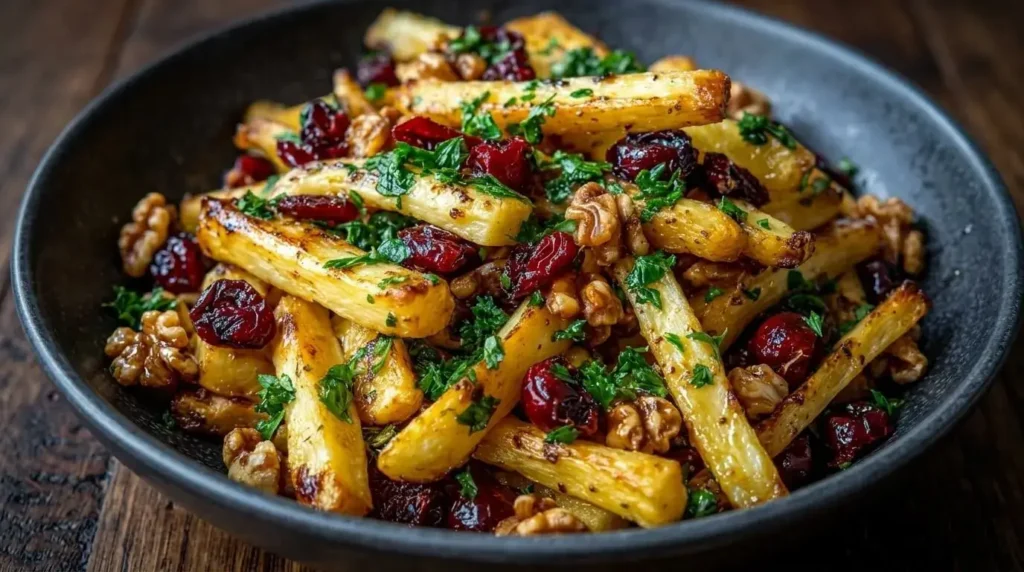
When the crisp autumn air turns into winter’s chill, our kitchens naturally draw us toward comforting, oven-roasted meals. If you are looking to elevate your holiday table or simply shake up your weeknight routine, this Honey Roasted Parsnips with Cranberries and Walnuts Recipe is the ultimate answer. Blending the rustic charm of earthy root vegetables with the vibrant flair of the Mediterranean, this dish is a stunning celebration of contrasting textures and deeply satisfying flavors.
Imagine tender, fork-soft parsnips with deeply caramelized edges, coated in a glossy, golden glaze. Each bite brings together the tart chewiness of plump dried cranberries, the earthy crunch of lightly toasted walnuts, and the bright, clean punch of fresh parsley. It is a sweet-and-savory masterpiece that feels inherently celebratory, making it a perfect holiday side dish for Thanksgiving, Christmas, or intimate family dinners.
While root vegetables are a staple of cold-weather cooking worldwide, this Mediterranean-inspired recipe exchanges heavy, saturated fats like butter for heart-healthy extra virgin olive oil. The result is a vibrant, whole-food side dish that lets the natural sweetness of the earth shine through beautifully.
Why You’ll Love This Recipe
Finding a healthy side dish that pleases a crowd and looks like art on a plate can be a challenge. Here is why this easy holiday recipe will become an instant favorite in your household:
- Easy One-Pan Recipe: Minimal cleanup and effortless preparation mean you can focus on your main courses while the oven does the heavy lifting.
- Naturally Sweet and Savory: The natural sugars of the parsnips harmonize beautifully with raw honey, balanced by a hint of warm spices and savory sea salt.
- Visually Beautiful Holiday Side Dish: The rich contrast of golden roasted vegetables, ruby-red cranberries, and vibrant green parsley creates a stunning mosaic that brightens any holiday spread.
- Mediterranean Diet Friendly: By utilizing whole-food ingredients, unrefined honey, and plant-forward fats, this dish aligns wonderfully with traditional clean-eating principles.
- Make-Ahead Friendly: You can easily prep the vegetables ahead of time or reheat them seamlessly before your guests arrive.
- Healthy Alternative to Heavy Casseroles: Skip the dense, cream-laden holiday side dishes for these vibrant, caramelized parsnips that satisfy without weighing you down.
What Are Parsnips?
If you have never cooked with parsnips before, you are in for a wonderful surprise. At first glance, you might mistake them for pale, cream-colored carrots. While they belong to the same botanical family, parsnips possess a distinct, complex flavor profile all their own. Raw parsnips have a sharp, slightly herbaceous, and woody taste. However, when exposed to the high heat of an oven, a magical transformation occurs.
Are parsnips sweet?
Yes, absolutely! Parsnips contain a high concentration of natural starches. When exposed to dry roasting heat, these starches break down into simple sugars, causing the vegetable to become incredibly sweet, with subtle undertones of nutmeg and white pepper.
Why roast parsnips?
Roasting enhances sweetness far better than boiling or steaming. Dry heat draws out moisture, concentrating the internal sugars and creating those sought-after crispy, caramelized edges. The texture transitions from firm and fibrous to velvety, buttery, and melt-in-your-mouth tender.
Are parsnips healthy?
They are fantastic for your well-being. These roasted root vegetables are packed with dietary fiber, vitamin C, vitamin K, and essential antioxidants. They promote digestive health and provide a clean source of complex carbohydrates, making them an excellent choice for a wholesome diet.
Ingredients You’ll Need
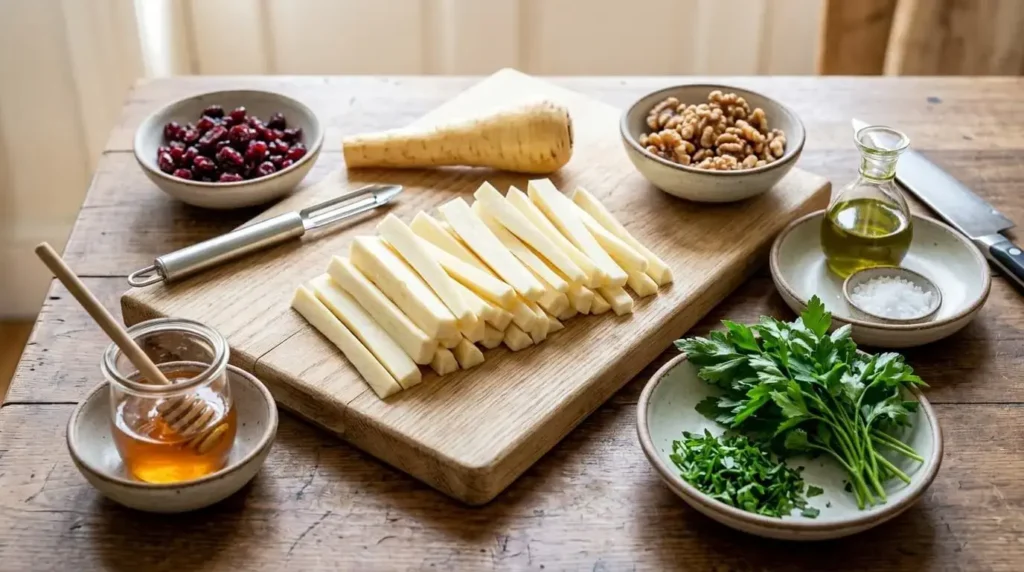
For the Roasted Parsnips
- Parsnips: 4–5 large parsnips, peeled and sliced into thick batons or sticks. Look for firm, medium-sized roots, as overly large ones can sometimes have a woody core.
- Honey: 2 tablespoons of raw honey. This creates a beautifully glossy caramelization as the sugars bake down on the edges of the roots.
- Olive Oil: 2 tablespoons of extra virgin olive oil. A staple Mediterranean-friendly healthy fat that helps crisp the edges while keeping the interior tender.
- Cinnamon: ½ teaspoon of ground cinnamon to add an inviting, festive warmth without overpowering the natural vegetable flavors.
- Smoked Paprika: A subtle pinch (optional) to introduce a very gentle depth and a faint hint of woodsmoke flavor.
- Seasoning: Fine sea salt and freshly cracked black pepper to taste to balance the sweetness.
Mix-Ins and Garnish
- Dried Cranberries: ½ cup of plump dried cranberries to provide an acidic, tart contrast to the honey glaze.
- Walnuts: ⅓ cup of roughly chopped walnut halves. These offer essential crunchy textures and healthy, plant-based fats.
- Fresh Parsley: ¼ cup of finely chopped fresh parsley, used generously right before serving to bring a necessary pop of color and a crisp, herbal finish.
- Finishing Honey: 1 tablespoon of raw honey kept aside for an extra glossy drizzle immediately before presenting the dish.
How to Make Honey Roasted Parsnips with Cranberries and Walnuts
Step 1: Prep the Parsnips
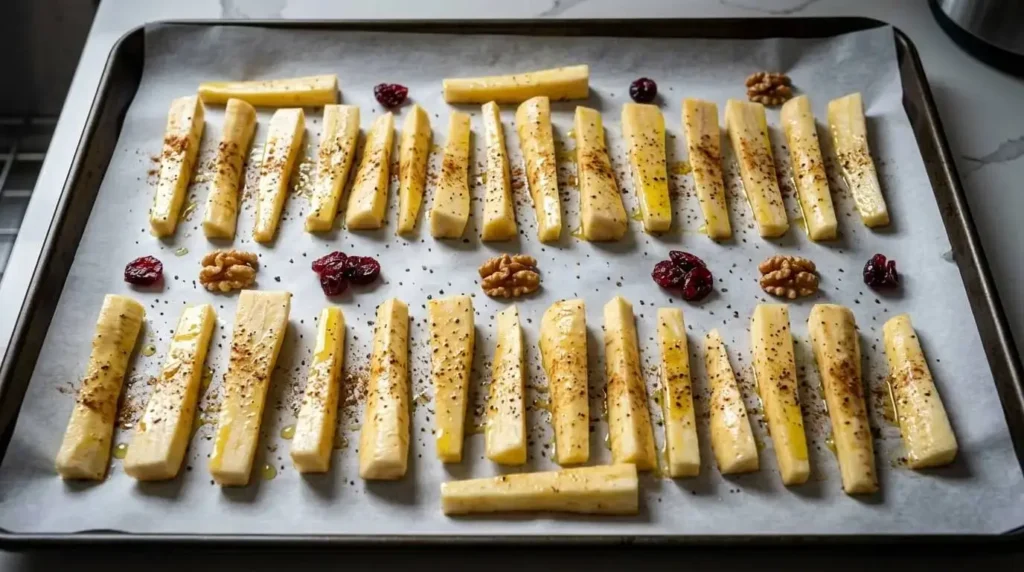
Preheat your oven to 200°C (400°F) and line a large baking sheet with parchment paper to prevent the sweet honey glaze from sticking or burning. Wash and peel your parsnips thoroughly. Cut off the top and bottom tips. Slice them evenly into long, finger-sized thick batons. Ensuring uniform cutting is essential; if your pieces vary wildly in size, the smaller pieces will burn before the larger batons can soften through to the center.
Step 2: Season and Coat
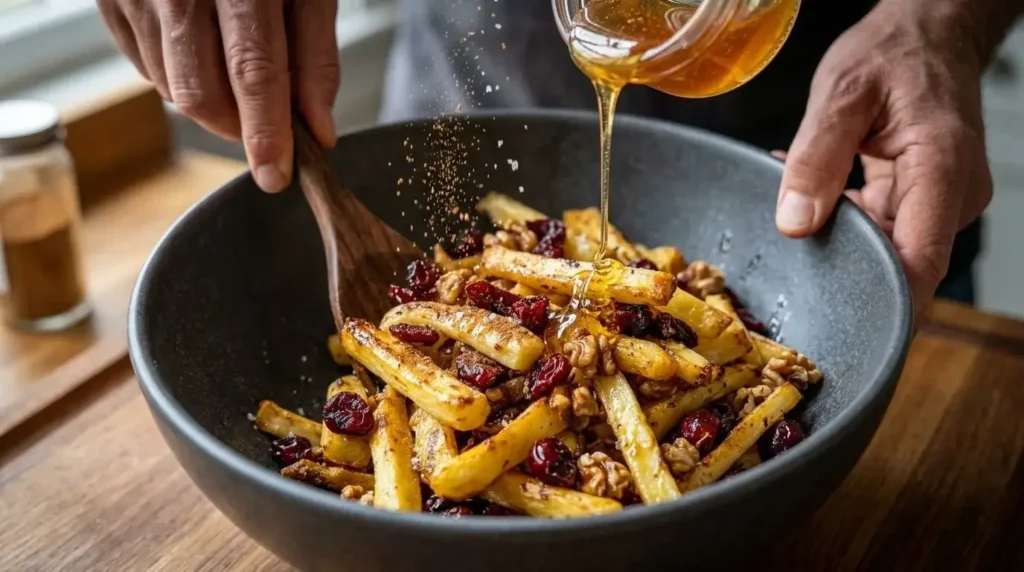
In a large mixing bowl, combine your parsnip sticks with two tablespoons of extra virgin olive oil, two tablespoons of raw honey, ground cinnamon, smoked paprika, sea salt, and black pepper. Use your hands or a large spatula to toss the mixture aggressively. Ensure every single baton is fully and evenly coated in the spice and honey glaze mixture.
Step 3: Roast Until Caramelized
Spread the seasoned parsnips across your prepared baking sheet. It is vital to spread them out in a single layer, ensuring they do not overlap or crowd one another. Place the tray in the preheated oven and roast for 25–30 minutes, using a spatula to flip the pieces halfway through the cooking time. Look for a deep golden brown color and beautifully charred, caramelized edges.
Step 4: Toast the Walnuts
While your root vegetables finish up their oven journey, place your chopped walnuts into a dry skillet over medium heat. Toast them gently for 2–3 minutes, tossing constantly until they become highly fragrant and turn a shade darker. This simple step releases the natural oils within the nuts, drastically improving texture and boosting their inherent nuttiness. Alternatively, you can scatter the walnuts and dried cranberries directly over the roasting pan during the final 3 minutes of oven roasting to warm them through.
Step 5: Assemble and Finish
Transfer the piping hot, roasted vegetables into a shallow serving bowl. Scatter the warmed dried cranberries and toasted walnut pieces evenly across the top. To match the rustic, authentic look of traditional Mediterranean spreads, garnish the dish heavily with your finely chopped fresh parsley. Just before carrying it to the table, drizzle the final tablespoon of honey over the top for a brilliant, eye-catching glossy sheen. Serve warm and enjoy!
Secrets for Perfect Caramelized Parsnips
Achieving the perfect balance of a crispy exterior and a tender interior requires a bit of culinary technique. If you have ever struggled with roasted vegetables coming out lacklustre, keep these tips in mind:
- Don’t Overcrowd the Pan: If your parsnips are piled on top of each other, they will trap steam. Instead of roasting and forming a crust, they will boil in their own moisture. Use two pans if necessary to give them breathing room.
- Roast at High Heat: A temperature of 200°C (400°F) is the sweet spot. It allows the exterior sugars to caramelize efficiently before the interior turns to mush.
- Dry Parsnips After Peeling: If you rinse your parsnips after peeling them, make sure to dry them thoroughly with a clean kitchen towel. Excess water creates steam, which is the enemy of crispiness.
- Add Finishing Honey Later: While we toss the roots with honey initially to build a base layer of caramelization, adding a fresh drizzle right at the end provides that beautiful visual shine without risking a burnt, bitter taste.
- Use Parchment Paper: Honey can turn into a stubborn, sticky mess on a bare pan. Silicon baking mats or high-quality parchment paper will save your bakeware and your sanity during cleanup.
Why are my roasted parsnips soggy?
Sogginess is almost always caused by overcrowding the pan, using too much oil, or roasting at too low a temperature. Ensure your oven is fully preheated and give your vegetables plenty of physical space on the tray.
How do you caramelize parsnips?
Caramelization occurs when the natural starches and added honey are exposed to consistent, dry heat. Flipping the pieces halfway through ensures that all sides of the batons get direct contact with the hot pan surface.
Should you boil parsnips before roasting?
While some cooks prefer to parboil root vegetables to cut down on oven time, it is not necessary for this recipe. Direct dry roasting from a raw state preserves more flavor and results in a much firmer, more satisfying bite.
Mediterranean Diet Benefits
While parsnips are a classic cool-weather root crop, this specific preparation method infuses them with the nutritional philosophies of the Mediterranean coast:
- Olive Oil Instead of Butter: Many traditional holiday recipes rely heavily on dairy fats. Swapping in extra virgin olive oil introduces monounsaturated fatty acids, which are widely celebrated for supporting cardiovascular health.
- Walnuts Provide Healthy Fats: Walnuts are an incredible plant-based source of alpha-linolenic acid (ALA), an essential omega-3 fatty acid that fights inflammation and supports brain function.
- Fiber-Rich Root Vegetables: Keeping your digestive system happy during heavy holiday seasons is easy with fiber-dense choices like parsnips.
- Antioxidant-Rich Cranberries: These tart little berries are loaded with polyphenols and vitamins that support immune function and combat oxidative stress.
- Herb-Forward Cooking Style: Using an abundant handful of fresh parsley isn’t just for looks; it introduces fresh enzymes, vitamin C, and a bright contrast that balances dense, rich meals naturally.
Variations and Substitutions
Feel free to adapt this versatile dish to match what you have on hand in your pantry:
- Maple Syrup Instead of Honey: If you prefer a deep, woody sweetness, you can substitute pure maple syrup in equal measures to create delicious maple roasted parsnips.
- Pecans Instead of Walnuts: If you do not have walnuts, raw pecans or slivered almonds make an exceptional alternative for roasted parsnips with nuts.
- Rosemary or Thyme Additions: To add an earthy, savory dimension, toss a few sprigs of fresh rosemary or woody thyme onto the baking sheet during the roasting phase.
- Orange Zest for Brightness: Grating a bit of fresh orange zest over the final assembled dish cuts through the sweetness beautifully with a vibrant citrus aroma.
- Vegan Option: Simply swap the honey out for high-quality maple syrup or agave nectar to make a completely vegan roasted parsnips dish.
What to Serve with Honey Roasted Parsnips
This sweet-and-savory side dish is incredibly adaptable, pairing seamlessly with a wide variety of main courses:
- Holiday Showstoppers: It serves as a beautiful Thanksgiving vegetable side dish or an elegant Christmas side dish recipe next to a traditional holiday turkey or roasted ham.
- Savory Meats: Pair these sweet vegetables with the rich, robust flavors of roasted lamb chops or classic Mediterranean Chicken and Peppers.
- Seafood Mains: The honey glaze offers a spectacular flavor contrast when served alongside pan-seared salmon or light, flaky white fish.
- Cozy Warm Salads: Toss any leftovers directly into a nutrient-dense winter grain bowl, or serve them alongside a crisp Roasted Butternut Squash with Feta and Cranberries salad for a spectacular vegetarian feast.
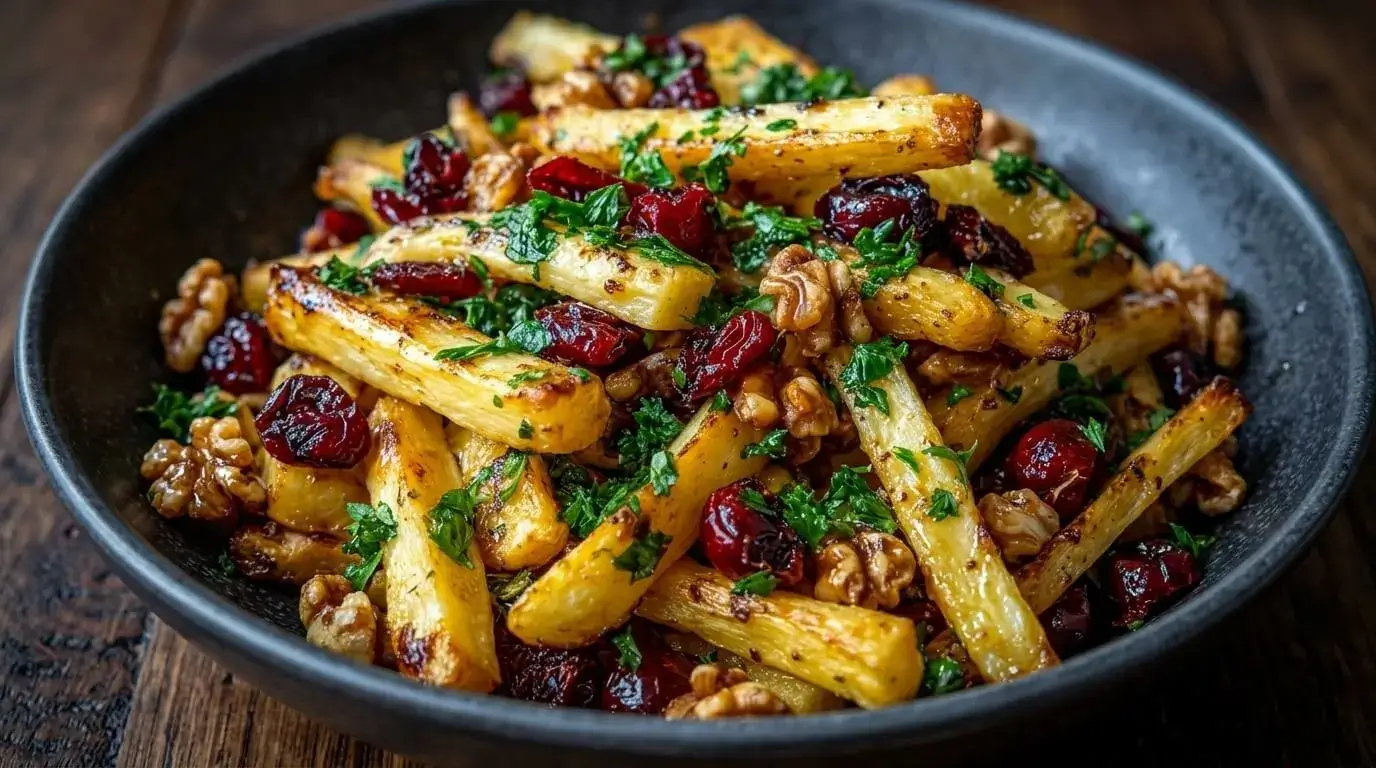
Honey Roasted Parsnips with Cranberries and Walnuts
Ingredients
Method
- Prep the Oven and Pan: Preheat your oven to 200°C (400°F). Line a large baking sheet with high-quality parchment paper to prevent the honey from sticking or burning.
- Cut the Parsnips: Carefully peel the parsnips. Slice them evenly into uniform, finger-sized thick batons to ensure they cook through at the exact same rate.
- Season and Coat: In a large mixing bowl, toss the parsnip sticks thoroughly with the extra virgin olive oil, raw honey, ground cinnamon, smoked paprika, sea salt, and black pepper until every single baton is evenly coated.
- Roast Until Caramelized: Spread the coated parsnips out onto your prepared baking sheet in a single layer, ensuring they do not overlap. Roast for 25–30 minutes, flipping the pieces halfway through the cooking process. Look for a deep golden brown color with beautifully caramelized, slightly charred edges.
- Toast the Add-ins: While the parsnips are in the oven, toast your chopped walnut pieces in a dry skillet over medium heat for 2–3 minutes until highly fragrant. Alternatively, you can scatter the walnuts and dried cranberries directly over the parsnips during the last 3 minutes of oven roasting to warm them through.
- Assemble and Finish: Transfer the hot, roasted parsnips into a shallow serving bowl. Scatter the dried cranberries and toasted walnuts over the top. Garnish heavily with the finely chopped fresh parsley and finish by drizzling the final tablespoon of honey across the entire dish for a brilliant, glossy sheen. Serve warm.
Notes
- Pan Spacing is Key: Do not overcrowd your roasting tray. If the parsnips are overlapping, they will trap steam and boil rather than roast, leaving you with a soft texture instead of crisp, caramelized edges.
- Make it Vegan: Swap the raw honey for pure maple syrup or agave nectar in equal measurements.
- Pre-Chopping Tip: You can peel and slice the parsnips up to 24 hours in advance. Store the dry batons in an airtight container in the refrigerator until you are ready to season and bake.
- Nut Substitution: If you don’t have walnuts on hand, raw pecan halves or slivered almonds make an excellent substitute.
Make Ahead, Storage, and Reheating Tips
- Prep Ahead Instructions: You can peel and chop the parsnips up to 24 hours in advance. Store the dry batons in an airtight container in the refrigerator until you are ready to coat and roast them.
- Storing Leftovers: Place any leftover parsnips in an airtight container and store them in the fridge for up to 3 to 4 days. Keep your leftover toasted walnuts in a separate small bag at room temperature so they maintain their signature crunch.
- Reheating Roasted Vegetables: To avoid a soft, mushy texture, avoid using the microwave. Instead, spread the leftovers out on a baking sheet and heat them in a 180°C (350°F) oven for 10–12 minutes until warmed through and recrisped.
- Avoiding Sogginess: If you are planning a holiday meal prep routine, roast the parsnips until they are just tender, then do the final assembly with the cranberries, walnuts, parsley, and final drizzle of honey right before serving.
- Can I freeze roasted parsnips? It is not highly recommended. While they will remain safe to eat, freezing alters the cellular structure of root vegetables, causing them to become watery and soft upon thawing.
Frequently Asked Questions
Can I make roasted parsnips ahead of time?
Yes! You can fully roast them a day in advance, store them in the refrigerator, and then reheat them in a hot oven for 10 minutes right before your dinner begins to restore their texture.
Are parsnips sweeter than carrots?
When cooked, yes. While carrots retain a distinct earthiness, roasted parsnips develop a more concentrated, dessert-like sweetness due to their unique starch-to-sugar conversion process.
Can I use fresh cranberries?
If you prefer a sharp, bursting texture, you can add fresh cranberries to the baking sheet during the last 10 minutes of roasting. However, dried cranberries provide a reliable, chewy sweetness that perfectly mimics the visual appearance of this specific dish.
Why are my roasted parsnips soft instead of crispy?
This happens if the oven temperature is too low or if the pan is overcrowded, causing the vegetables to steam rather than roast. Make sure to space them out evenly on your baking sheet.
What herbs go well with parsnips?
Fresh flat-leaf parsley is the absolute best choice for a clean finish. However, woody herbs like thyme, rosemary, and sage also pair beautifully during the baking process.
Can I make this recipe vegan?
Easily! Simply substitute the honey with pure maple syrup or agave nectar for an identical glossy finish.
Conclusion
This Honey Roasted Parsnips with Cranberries and Walnuts Recipe perfectly demonstrates how simple, whole-food ingredients can be elevated into something truly spectacular. The balance of caramelized roasted sweetness, sharp tart fruit, earthy crunch, and fresh herbal accents makes it a versatile addition to any menu. Whether you are building an elaborate holiday spread or looking to bring a touch of nutritious Mediterranean inspiration to your weekly family dinners, this vibrant side dish is guaranteed to impress.
Don’t be afraid to experiment with your own creative twists—swap in maple syrup, try different nut varieties, or add a pinch of fresh herbs to make it uniquely yours. Give this recipe a try tonight, and let us know how it brightened up your dinner table!