There is nothing quite like a bowl of silkily smooth, authentic Mediterranean dip sitting in the center of a dining table, inviting everyone to dive in. If you have been searching for the ultimate comfort food that balances rich, velvety textures with bright, zesty notes, this hummus topped with olive oil and paprika is your holy grail. Forget the dense, pasty store-bought tubs that leave you parched; this homemade recipe yields an incredibly lush, airy, and creamy hummus recipe that rivals your favorite upscale Mediterranean restaurant.
By utilizing classic Levantine techniques and simple kitchen essentials, you can transform a humble can of garbanzo beans into a culinary masterpiece. Infused with nutty tahini, bright freshly squeezed lemon juice, and sharp garlic, it is beautifully rounded out with a luxurious swirl of extra virgin olive oil and a warm dusting of sweet paprika. Let’s explore why this classic chickpea dip recipe deserves a permanent spot in your weekly meal rotation.
Why You’ll Love This Hummus Recipe
- Ultra-Creamy Texture: By mastering the balance of emulsified fats and ice water, you will achieve an incredibly light, whipped consistency that melts in your mouth.
- Authentic Mediterranean Flavor: No unnecessary fillers or artificial preservatives—just clean, vibrant, and traditional ingredients that let the true flavors shine.
- Easy Pantry Ingredients: You likely already have almost everything required hiding right inside your kitchen cupboards and refrigerator.
- Ready in 15 Minutes: It is an incredibly fast, low-effort starter that delivers maximum culinary impact in mere minutes.
- Healthy and Mediterranean Diet Friendly: Packed with clean plant-based proteins, heart-healthy monounsaturated fats, and excellent dietary fiber.
- Perfect Appetizer or Snack: Whether you are hosting an extravagant weekend dinner party or just looking for a wholesome afternoon snack, it fits every single occasion.
What Is Traditional Hummus?
To truly appreciate a spectacular Mediterranean hummus recipe, it helps to understand its profound historical roots. The word “hummus” itself translates directly to “chickpea” in Arabic. This iconic spread boasts a rich history spanning centuries across the Levantine region of the Middle East and the broader Mediterranean basin.
Historically, an authentic hummus recipe relies on a harmonious union of four core elements: chickpeas, tahini (ground sesame paste), lemon juice, and garlic.
Traditional Hummus Base = Chickpeas + Tahini + Fresh Lemon Juice + Garlic
Did You Know? In traditional settings across countries like Lebanon, Israel, Palestine, Jordan, and Syria, hummus is rarely served plain or cold. Instead, it is treated as a centerpiece dish, always presented with a generous pool of local olive oil to seal in moisture and a dusting of ground paprika or tart sumac to contrast the earthy richness of the sesame paste.
Ingredients You’ll Need
Achieving the perfect balance of flavors requires understanding what each component contributes to the food processor.
For the Hummus
- Chickpeas (Garbanzo Beans): 1 can (15 oz), drained and rinsed. They provide the starchy, satisfying base for our dip.
- Tahini: 1/3 cup high-quality sesame paste. Look for a brand that is fluid, smooth, and pours easily; old, chalky tahini will ruin the emulsion.
- Lemon Juice: 3 tablespoons, freshly squeezed. Avoid bottled juice at all costs, as it lacks the bright, clean acidity needed to slice through the rich fats.
- Garlic: 2 small cloves, minced. A little goes a long way when raw; it adds a pleasant, sharp bite without overpowering the dish.
- Olive Oil: 2 tablespoons extra virgin. This goes directly into the blend to help establish a velvety mouthfeel.
- Ice Water: 2 to 3 tablespoons. The secret weapon for turning a dense paste into a gorgeous, pale, fluffy cloud.
- Cumin: 1/4 teaspoon ground. Adds an incredibly subtle, warm, earthy undertone that anchors the dip.
- Salt: 1/2 teaspoon. Crucial for elevating all the ingredients and tying the flavors together.
For the Toppings
To mirror the stunning aesthetic of a professional kitchen, your hummus topped with olive oil and paprika needs a vibrant, intentional garnish setup.
- Olive Oil: 1–2 tablespoons of your finest extra virgin olive oil for a beautiful, shimmering pool.
- Paprika or Sumac: 1 teaspoon for a sweet, smoky, or tangy dusting that adds immediate visual contrast.
- Fresh Parsley: 1 tablespoon finely chopped, adding a pop of bright green color and an herbaceous note.
- Whole Chickpeas: 5–6 whole chickpeas reserved prior to processing, placed delicately right in the center.
How to Make Hummus Topped with Olive Oil and Paprika
Follow these simple, step-by-step instructions to create a flawless, restaurant-style spread.
1. Blend Tahini and Lemon
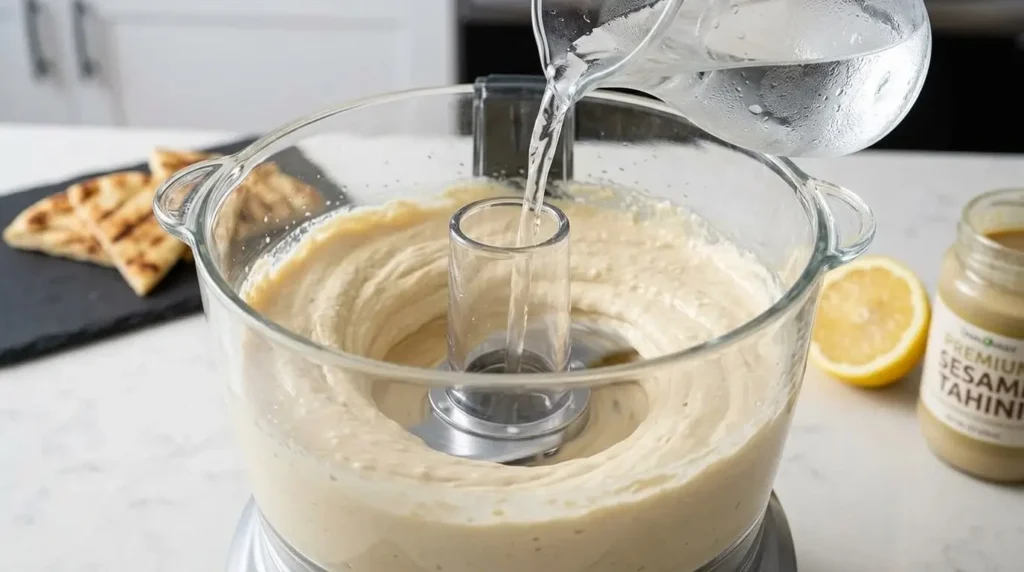
Add your premium tahini and freshly squeezed lemon juice into the bowl of a high-speed food processor. Whip these two ingredients together for a full 60 seconds. You will notice the mixture turn pale, thick, and almost paste-like. Whipping the tahini first introduces air and ensures the citrus juice completely mellows any bitterness in the sesame.
2. Add Oil and Aromatics
Scrape down the sides of the bowl. Pour in the 2 tablespoons of extra virgin olive oil, minced garlic, salt, and ground cumin. Process for an additional 30 seconds until everything is perfectly smooth and highly aromatic.
3. Process the Chickpeas
Drain your chickpeas thoroughly. Reserve a handful of whole chickpeas to use later as an elegant garnish. Add half of the remaining chickpeas to the food processor and run it for 1 minute. Add the second half of the chickpeas and let the machine run continuously for another full minute until a thick, uniform paste forms.
4. Thin with Ice Water for a Creamy Texture
With the food processor running, slowly drizzle in your ice water one tablespoon at a time. Watch through the feed tube as the friction and cold temperature work magic, rapidly changing the color from a dull tan to a beautiful, light cream while creating a delightfully fluffy texture.
5. Plate and Garnish Like a Restaurant
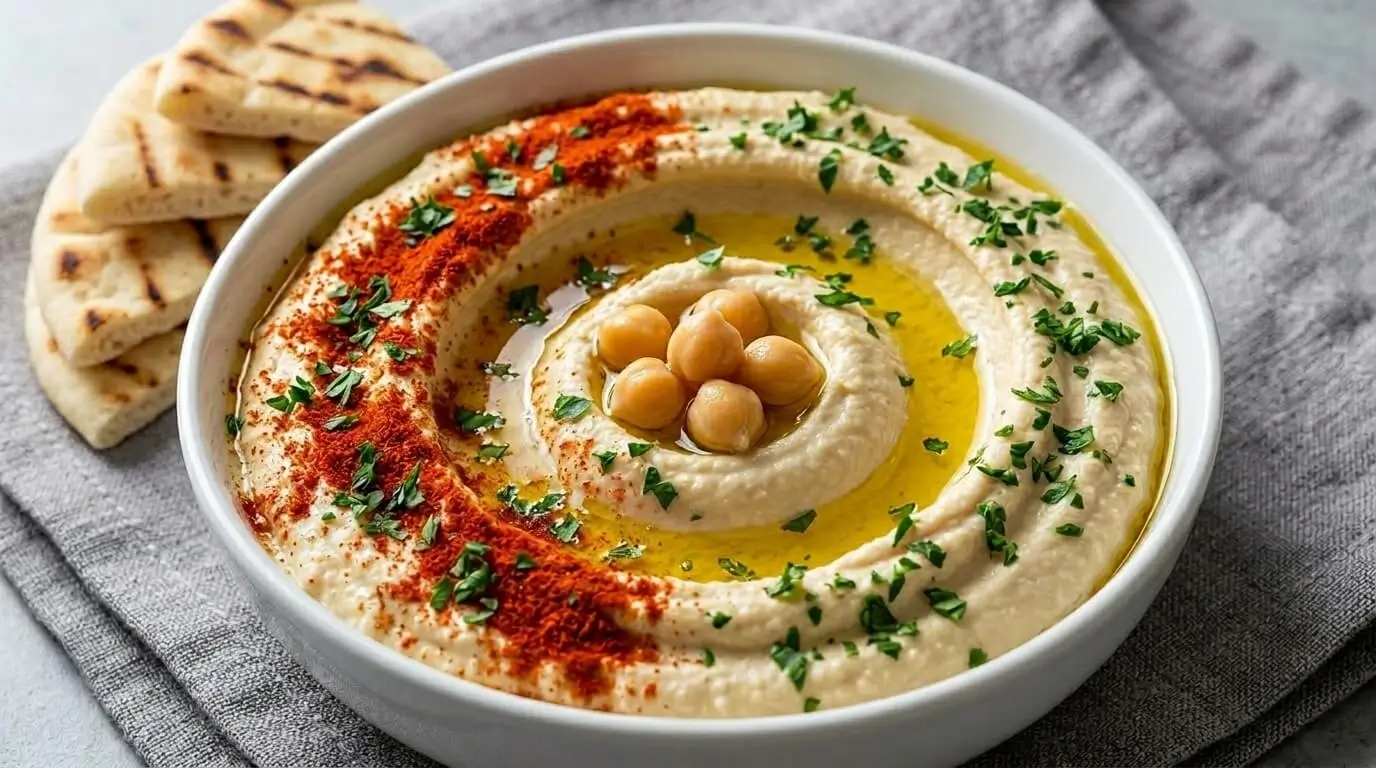
Spoon the smooth mixture out into a shallow serving bowl. Take the back of a large spoon, press it gently into the center, and rotate the bowl to create a beautiful, deep swirling well. Pour your extra virgin olive oil generously into the grooves. Dust the sweet paprika across the surface, sprinkle with fresh parsley, and arrange your reserved whole chickpeas right in the center.
Chef’s Secret for Extra Creamy Hummus
If you want to achieve an absolutely flawless restaurant style hummus, there are two critical culinary techniques that most standard home recipes completely overlook.
Baking Soda Method
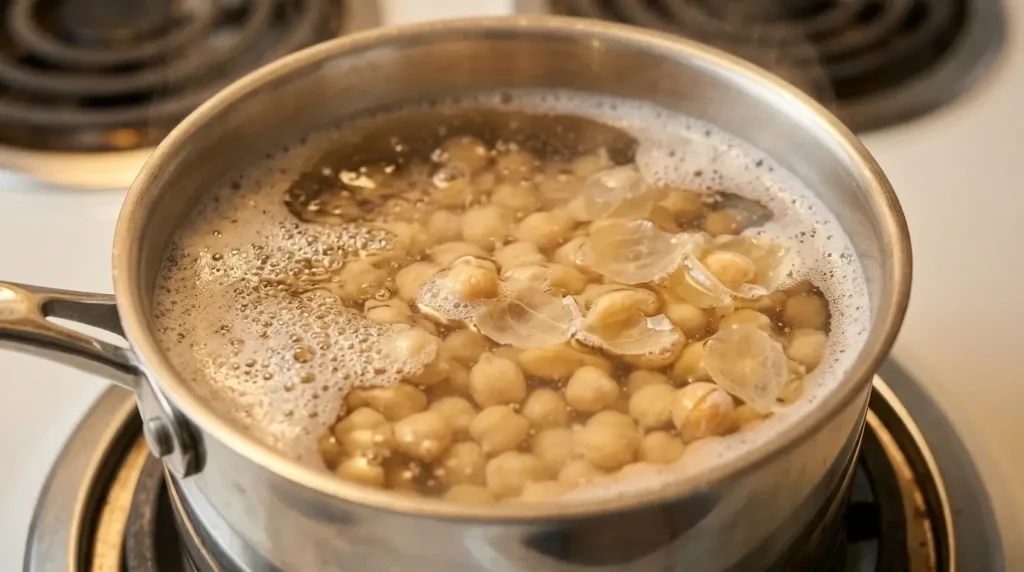
If you have an extra 10 minutes to spare, empty your canned chickpeas into a small saucepan, cover them completely with water, add 1/2 teaspoon of baking soda, and bring to a boil.
The baking soda raises the pH level of the water, which helps rapidly break down the pectin structural bonds in the chickpea skins. After boiling for 10 minutes, the skins become incredibly mushy and soft, allowing them to pulverize completely in the blender for an ultra creamy hummus recipe.
Ice Water Method
Why use ice-cold water instead of room-temperature water? It comes down to basic kitchen science. Blending creates a significant amount of heat from motor friction. Drizzling ice water rapidly cools the fats inherent in the tahini and olive oil, causing them to emulsify and aerate much like making a mayonnaise or a classic vinaigrette. This results in an incredibly light, whipped texture.
Peel Chickpeas or Not?
| Method | Pros | Cons |
| Boiling with Baking Soda | Fast, breaks down skins effortlessly, hyper-creamy results. | Requires dirtying an extra small pot. |
| Hand-Peeling Skins | Extremely smooth end product. | Incredibly tedious, takes 15–20 minutes of pinching skins. |
| Straight from the Can | Zero extra steps, fastest meal prep time. | Can leave tiny specks of skin texture in the dip. |
Why Olive Oil and Paprika Are Added on Top
Drizzling oil and dusting spices over a traditional hummus recipe is far more than just a superficial aesthetic choice; it serves a practical culinary purpose.
Olive Oil
The fat content from a premium extra virgin olive oil acts as a natural protective barrier. Hummus loses moisture quickly when exposed to air, forming a dry, unappealing skin on top. A generous pool of oil locks in that precious moisture while contributing a peppery, fruity richness that beautifully complements the earthy chickpeas.
Paprika
Sweet or smoky paprika provides a gorgeous visual contrast against the pale ivory dip. Flavor-wise, it offers a subtle, sweet, and smoky warmth that punctuates the rich, heavy profile of the sesame tahini without introducing any overwhelming heat.
Sumac Alternative
If you want to try an authentic variation, swap the paprika for ground sumac. Sumac is a vibrant crimson spice popular in Mediterranean cooking that delivers a sharp, astringent, and delightfully tangy citrus flavor profile.
Best Ways to Serve Hummus
This versatile dish shines brightest when paired with classic Mediterranean accompaniments.
Grilled Pita Bread
Warm, fluffy pita bread cut into triangular wedges is the quintessential vessel. Brush your pita lightly with olive oil and place it on a hot grill pan for a few minutes until beautiful char marks appear. The smoky crunch of the bread contrasts perfectly with the velvety dip. If you are looking for another fantastic chickpea option for your weekly meal prep, check out this crisp and vibrant Tzatziki Chickpea Salad.
Fresh Vegetables
For a low-carb, gluten-free dipping experience, arrange an assortment of crunchy, refreshing vegetables around the bowl:
- Crisp cucumber slices
- Sweet red and yellow bell pepper strips
- Crunchy baby carrot sticks
- Crisp radish discs
Mediterranean Mezze Platter
Transform your easy hummus recipe into a spectacular feast by building a beautiful mezze platter. Fill a large wooden board with hot falafel balls, rich baba ganoush, briny Kalamata olives, stuffed grape leaves, and blocks of creamy feta cheese. You can even pair it alongside a unique alternative like this warm olive-topped hummus to offer your guests multiple delicious dipping choices.
Mediterranean Diet Benefits of Hummus
Incorporating a healthy hummus recipe into your regular lifestyle provides a massive boost of functional nutrients.
- Chickpeas: An exceptional source of dietary fiber and clean, plant-based protein. The complex carbohydrates present promote stable blood sugar levels and long-lasting satiety.
- Olive Oil: A foundational staple of healthy Mediterranean diet food, loaded with powerful monounsaturated oleic acids and antioxidants that support long-term cardiovascular health.
- Tahini: This rich sesame paste delivers vital minerals including calcium, magnesium, iron, and zinc, alongside healthy fats that nurture radiant skin.
If you are trying to find more creative ways to introduce nutritious legumes into your dinner rotation, try serving your dip alongside these delicious Harissa Roasted Carrots and Crispy Chickpeas.
Variations to Try
Once you have mastered this classic base, feel free to customize your dip with these exciting flavor variations:
- Roasted Red Pepper Hummus: Blend in one roasted red bell pepper for a sweet, smoky twist.
- Garlic Hummus: Roast an entire head of garlic in the oven and blend the soft, sweet cloves directly into the base.
- Spicy Paprika Hummus: Stir a pinch of hot cayenne pepper or smoked hot paprika into your garnish oil for a bold kick of heat.
- Za’atar Hummus: Swap out the paprika topping for a generous tablespoon of wild Mediterranean za’atar (a blend of wild thyme, toasted sesame seeds, and sumac).
- Lemon Herb Hummus: Blend fresh basil, dill, and a touch of extra lemon zest directly into the processor for a refreshing summer profile.
Authentic Hummus Topped with Olive Oil and Paprika
Ingredients
Method
- Add the premium tahini and fresh lemon juice to the bowl of a food processor. Process for 1 full minute until the mixture becomes pale, thick, and perfectly creamy.
- Scrape down the sides of the processor bowl. Add the 2 tablespoons of extra virgin olive oil, minced garlic, salt, and ground cumin. Process for another 30 seconds until completely integrated.
- Add half of the drained chickpeas to the mixture. Process for 1 minute. Add the remaining half of the chickpeas and process until the dip becomes very thick and smooth.
- While the food processor is running continuously, slowly drizzle in the ice water one tablespoon at a time through the feed tube. Continue blending until the texture turns ultra-creamy, light, and airy.
- Spoon the smooth hummus into a shallow serving bowl. Use the back of a large spoon to create a beautiful, concentric swirling well. Drizzle your topping olive oil generously into the grooves. Dust with sweet paprika, scatter the finely chopped fresh parsley, and place the reserved whole chickpeas right in the center. Serve immediately alongside warm grilled pita bread.
Notes
– Storage: Keep in an airtight container in the fridge for 3-5 days. Revive leftovers with a tiny drop of warm water and a vigorous stir.
Storage and Meal Prep Tips
- Refrigeration: Store your dip inside a tightly sealed airtight container in the refrigerator for up to 3 to 5 days.
- Freezing: You can freeze hummus for up to 3 months! Store it in a freezer-safe container, leaving a small amount of headspace as it expands slightly when frozen. Thaw it completely inside the refrigerator overnight.
- Refreshing Leftover Hummus: Leftover hummus can sometimes stiffen up and lose its shine in the cold fridge. To restore its original restaurant-quality splendor, place it in a bowl, add a tiny splash of warm water or fresh lemon juice, and stir vigorously with a spoon. Drizzle a fresh layer of extra virgin olive oil on top right before serving.
Common Mistakes to Avoid
- Using Dry, Chalky Tahini: Always vigorously shake or stir your jar of tahini before measuring. The oil separates naturally, and using the dense sludge at the bottom of the jar will make your dip unpleasantly bitter and pasty.
- Not Blending Long Enough: Patience is key. Give your food processor ample time to completely break down the fibrous skins of the chickpeas.
- Skipping Ice Water: Regular tap water will not provide that signature fluffy, whipped, light-colored emulsion.
- Using Too Little Lemon: The acid from fresh lemons balances out the intense richness of the sesame paste; without it, the dip tastes flat.
- Overloading Raw Garlic: Raw garlic intensifies significantly as it sits. Stick to 1 or 2 small cloves so it doesn’t mask the delicate flavors of the chickpeas.
Frequently Asked Questions
What is traditional hummus made of?
Traditional hummus is made from a simple blend of cooked chickpeas, sesame tahini, fresh lemon juice, minced garlic, salt, and occasionally a touch of ground cumin. It is almost always served with olive oil and spices on top.
Why is hummus topped with olive oil and paprika?
The olive oil seals the dip, stopping it from drying out and developing a hard skin while adding a smooth richness. The paprika provides a gorgeous visual pop of contrasting color along with a subtle, warm sweetness.
Can I make hummus without tahini?
Yes, you can substitute tahini with sunflower seed butter or Greek yogurt, though it will technically alter the authentic flavor profile and won’t be considered a traditional Levantine recipe.
How do restaurants make hummus so smooth?
Restaurants achieve maximum smoothness by overcooking their chickpeas with baking soda to completely soften the skins, blending the ingredients while they are still warm, and emulsifying the mixture with ice water.
Is hummus healthy?
Absolutely. It is an incredibly nutrient-dense option filled with fiber, plant protein, and healthy monounsaturated fats, making it a stellar addition to any balanced lifestyle.
Can hummus be frozen?
Yes, it freezes beautifully for up to 3 months. Just make sure to store it inside an airtight container and stir it vigorously after thawing to restore its texture.
What can I serve with hummus?
It pairs perfectly with warm grilled pita bread, crisp fresh vegetables, falafel, or as a flavorful spread inside wraps, sandwiches, and Mediterranean grain bowls.
What is the difference between paprika and sumac on hummus?
Paprika offers a mild, sweet, or smoky pepper flavor with a bright red look. Sumac offers a deeply tangy, astringent, and sour citrus profile with a darker burgundy tone.